You're listening to Roundtable. I'm Steve Hatherly, together today with Niu Honglin and Yu Shun.
Coming up, a breakthrough in film technology could give global audiences better access than ever before.
But this is the very same reason why the artists who bring these stories to life are sounding the alarm.
The world's comfort level with dubbed films could become a lot more comfortable, but is there a way to move forward without leaving talent behind?
After that, thanks to you, we have a busy day of roundtables heart to heart.
Stay tuned for that as well. Our podcast listeners can find us at Roundtable China on Apple Podcasts.
And please don't forget that we'd love to hear from you as well.
You can send us an email, but we prefer the voice notes.
You can talk about any of the things that we talk about here on the show.
Here's how you get in touch, roundtablepodcast at qq.com.
One more time, roundtablepodcast at qq.com.
And now... The film industry is on the brink of a transformation that could change how stories travel across languages and cultures.
Behind the scenes, new technology is emerging that promises to break down barriers, making global storytelling faster, cheaper and more accessible. than ever before.
But this innovation comes with a pretty significant cost.
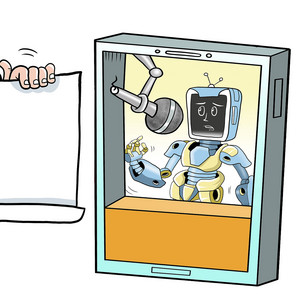
While studios of course see a lot of opportunity here, the artists who bring these characters to life with their beautiful voices and their incredible talent they are facing an uncertain future it's a tension between progress and preservation where the efficiency of tomorrow could change the creative process of today this is a really really hot issue in the voice acting and film community, in the game industry, the voice side of the game industry.
There's a lot to talk about here. But Yuxin, let's go back a little bit because AI isn't exactly brand new to the film or gaming industry.
It's been around for a while. Yeah, the use of AI voices in...
A lot of areas that say entertainment isn't a new phenomenon.
It began as early as in the 1980s. But the technology was very basic and often sounded robotic and basically it's quite obvious that you can tell that they are robotics.
And the true impact began to grow significantly in the last decade as advanced text-to-speech or TTS and voice cloning became more sophisticated.
A major benefit of early AI voice tech was is cost-effectiveness and speed because you don't need to book a voice, actor's time, or studio And you can just do it directly on your computer.
If you're listening to the radio of our show, one of our teasers are made by AI.
So it is quite... authentic when you listen to it.
You can barely tell. Yeah, I mean that's AI kind of what the tech can do. in terms of voice replication, right?
But this is more about In the film industry specifically, right?
And there's a couple of really good examples. where it was used positively.
I don't know if you saw this movie or not, Top Gun Maverick. the Tom Cruise film.
Heard of it. Anyway, AI was used to create a realistic voice for Val Kilmer's character, Iceman.
His health was really suffering at the time and he was unable, apparently, to deliver the lines.
And with the help of AI, I didn't even realize this when I was watching the film.
That's how good... It is now, right? So that's proof right there that it can be in the films now and people don't even know.
Yet, we do also see some downside. One of the downsides was the loss of emotional depth and authenticity.
And early iVoices lacked any human nuance, which limited their use in storytelling.
Because if we're talking about a promo or announcer, We are using AI mainly even for us, for radio professionals.
We're using AI to do the narration because relatively speaking, most of the narration is neutral and it's clear.
It takes you to the scenario, whereas the actors in the story needs to be emotional in a good way, needs to be Strong in their presenting and their acting in a good way.
And in the video game Cyberpunk 2077. Oh, that was a disaster.
Right? I haven't played this game. Was it that bad?
It was so clunky. It was just so... I don't know if I was influenced by this before I... Because I knew this, right?
I knew people were complaining left, right, and center about this game, and that may...
To be fair, that may have had a heavy influence on my enjoyment of playing the game.
But yeah, I didn't really like it. But anyway, that's totally off topic.
Yeah. But the idea is that the voice actors sadly passed away during the production of the game expansion.
So the game can make a choice of hiring a new actor and redo everything or use AI to recreate. the actor, the passed away actor's voice, which caused a lot of debate among fans and voice actors and, well,
There's the ethical question there, right?
Yeah. Yeah. I mean, it wasn't really about the tech per se.
It was about should that be used or not?
But anyway, the advancements now, as I mentioned in the opening, I mean, it's really quite astonishing what's available. now.
So what is new in AI dubbing specifically?
The latest AI models are now just capable of generating voices that are nearly indescribable from humans.
I listened to an audio clip generated by some AI models.
Of course, they're not for film work, but Still, they are like TTS, text to speech.
And it was in Mandarin with a Beijing accent, breathing. the pause and even that certain speech habits where when you're speaking, right? um you know that kind of thing yeah they they they did it with remarkable realism But some people also printed out that when Chinese text is input, the generated audio doesn't convert certain vocabulary. unique to local dialects.
So still, we are seeing a lot of advancements through these kind of things.
And new technology like LipDub AI analyzes the on-screen actor's facial movements.
This is the big part right here. Yeah. And then automatically adjust the visuals to sync with the new audio, which means let's say Chris Pratt is speaking English before and then when they are having a dubbed version in Chinese of Jurassic Park he's speaking Chinese.
Do you know how crazy it is when I see some famous actors from the United States or from China UK speaking Chinese and their lip movements are correct.
It's so creepy. Yeah, because this is the major advancement, right?
I mean, we know that AI can replicate human breathing and pauses and mistakes. pretty well, almost perfectly now.
But the advancement here is about the tech being able to match the facial movements and then adjust the visuals to sync with the audio.
And this, fixes a huge problem in dubbing that existed before because it's much more believable.
It's much more immersive. for the viewer because part of the problem of dubbing is timing.
That can be a big issue, right? Because when you translate languages, Some sentences take longer to speak for saying the same thing in different languages.
So that can be a problem. And then the other issue is just... the movements, they don't match up, right?
And it's so frustrating for the viewer That suspension of disbelief is gone, right?
And you realize you're watching a dubbed... thing and it makes it takes away from the enjoyment of the experience this new tech fixes that problem I don't know I mean looking or watching Harry Potter speaking Chinese is weird for me I it that sheer fact that he is speaking perfect Chinese takes me out of the context as well.
He could just do a spell. Evoso Chinese-o.
Oh, that's a good one. You know what? Because back then, in my childhood, we watched a lot of dubbed films.
And we watched a lot of cartoons. And cartoons, they don't have that kind of, you know, lip-doing language, right?
They're speaking different languages, but you still can feel that kind of immersive feeling that they are actually speaking the language that you can actually understand.
So I wouldn't say that is that. Big of a deal when they can actually change the mouth movements.
Yeah, sorry, finish your thought. But the thing that they can actually do that without spending a ton of time doing that kind of special effects is the thing that we're astonished.
Yeah, yeah, exactly. They can cross-reference now.
The AI analyzes the audio, right? to recognize the individual units in the sound of the language.
Then the AI cross-references this huge database to find the visual lip shapes that correspond to the sounds.
And then it uses a generative model to create a new realistic visual layer... that seamlessly replaces the original actor's mouth movements to make the actor look like they are actually speaking the language.
Do you know what's even more astonishing is that during this year's CMG Forum, I saw an exhibition technology exhibition and apparently not only can this technology be used in movies in different scenarios it can also be simultaneous meaning that if a reporter is on-site reporting in Chinese and talking to the host in the studio, that image can simultaneously be transferred to any language that viewer would require with the right movement of lips.
That's amazing, isn't it? In the West, I think it's fair to say, and I've got some statistics to back this up, that people don't like dubbed films.
And I think this is the big difference that this can make in the film industry.
There was a survey done by Preply, And this was the result.
80% of Americans prefer subtitles over dubbed audio.
94% of Gen Z favor subtitles over dubbed audio. the West and again, I think this is fair to say because of the issues I mentioned before right the timing is off sometimes the voice actors as talented as As they are, it can be very difficult to stand in a studio and emotionally connect with the the script that you're reading off of, right?
So for those reasons or others, it's just been made clear that in the West people generally speaking don't enjoy dubbed films.
I think the big deal here is that this could open up a whole new world of films to the Western audience, albeit in whichever Western country you're talking about here.
Or conversely, films coming to Asia, too. where you're able to maintain that suspension of disbelief because you're not focused on the mismatched timing. you're able to enjoy the characters acting as it's meant to be enjoyed and the script as it's meant to be enjoyed.
I think it depends on why you're watching the film.
When you're watching the film, At what scenario are you watching the film in a theater or are you watching it on your iPad? while enjoying your meal there are so many different scenarios and also what language we're talking about because if I'm watching an English language movie I would rather have the authentic English.
I do not care about the subtitle. I do not care for the dubbed version.
Yet, if I'm watching a Spanish movie that I do not understand, I don't mind having the dubbed version so that I can do it simultaneously with other things.
So there are so many scenarios. So I do not think the real problem is do we like it?
I think the thing here is that now we have the choice.
We have the choice to enjoy the original one, to enjoy the original one with subtitle, or enjoy the one that Harry Potter speaking Chinese?
Yeah, that's a fair point, I suppose. The downside here is... for the the voice actors right sure um you should there was a report from reuters they did an investigation and the impact is already being seen Yeah, the Reuters report reveals that 68% have surveyed SAG-AFTRA.
That is... That's a union, right? Yeah, a labor union for artists.
Voice actors have found their voices replicated in AI training data sets without consent.
And one anonymous actor discovered their clone voice used in Korean mobile game despite never being hired for the project.
And as veteran dubbing actor Carlos Segundo told our Reuters, they are not just replacing us, they are stealing our vocal fingerprint.
And also we see that AI dubbing tools like DeepDub and TrueVoice are replacing human actors in 30% of low-budget streaming location projects, And Mexico City's Dubbing Studios, it is a global hub for Spanish-language films.
They have seen a 40% drop in entry-level roles since 2008.
2023 with unions warning AI could eliminate 70% of niche language dubbing jobs by 2027.
But I don't know because I think in previous years, there was this discussion about dubbing actors or voice actors. making the product much, much better because of their marvelous job.
Because some actors, they are good at acting at dropping some tears, at giving you the shiniest smile that is very inviting and would make you believe in the character and the plot.
Yet their lines are not that good, yet the voice actors come up or compliment that, make up for that.
So the problem is AI is getting pretty good at doing that as well.
But I think AI now is still replicating what a real voice actor is doing instead of creating for now.
Those voice actors need to be protected for sure.
There's no question about that. It's a hot issue.
I don't think it's going to be resolved anytime soon.
You're listening to Roundtable. Stay with us.
We've got Roundtable's Heart to Heart on the way.
Roundtable, heart to heart. Well, as I mentioned before, thanks to you, we have a busy day on Roundtable's Heart to Heart.
So let's start with an email that we received. from Joseph that says this.
Good evening. I just wanted to say that I enjoyed the discussion about watching videos on increased speeds.
My fiancé watches education videos on increased speed, and I don't think she can go back to normal speed.
For me, I'm still stuck. on one X. I also believe that this will become more common with younger and younger generations as well.
And I just wanted to say I listened to the discussion via shortwave radio broadcasted from Cuba, I believe.
And I'll be sure to tune in again. Thanks for the email, Joseph.
Really cool how you were able to catch the show too.
Yeah. You know, so after we had that discussion, right?
And I said, I never watch stuff on 2X. So I thought, I better learn why people are doing this, right?
So I started listening to my podcasts on 2X a little bit.
Were you hooked? You can't go back. You can go back.
That's the problem. Oh, my God. People sound so boring when they're speaking at normal speed.
Yeah. Right? I didn't know. Joseph, don't do it, man.
Don't go 2X. When you go 2X, you can't go back.
That's what they say. Again, Joseph, thanks for getting in touch with the show.
We appreciate it. All right, so that's our email for the day.
Now let's move to our audio messages, our voice notes that we got.
And this first one is from our longtime listener.
Craig greet This message is for my friends at roundtable from Craig in the United States over the weekend I had the privilege of watching a Chinese film at an American cinema.
The film in question is an excellent one, dealing with the difficult subject matter of the Nanjing massacre.
The story of the Nanjing Photo Studio, or Dead to Rights, is really a story about your neighbors, friends, and family members set during wartime.
The visual language of cinema is a very valuable way through which to convey something with tremendous historical, cultural, and artistic value.
The photos from the Nanjing studio and the film itself are all about telling the truth.
One of China's strengths is in its historical literacy, but there are still many Westerners who do not understand the extent of Japanese aggression during the war.
Certainly some parts of the film are shocking and difficult to watch, but it's important for people to spend time with the weight of history. despite the caliber of Japan's war crimes and an immense loss of life.
There is indeed a hopeful message from the film.
During World War II, China was a great ally who sacrificed so much.
And today, China is a rejuvenated nation with a respect for the past and a belief in the future.
I really appreciate the work that you guys do, and I promise that I will continue to learn from your example.
Thank you and I'll talk to you soon. Thank you, Craig, for getting in touch.
You're right. It's a really powerful film.
And this is The Other Side... of the importance of the film industry is that, yep, they're meant to make us laugh and meant to show us cool action scenes, but showing us stories that happened in the past so that people can be further educated on the true things that happened in history is one of the more powerful sides of the film industry.
The film is absolutely, uh, reminder of how ordinary individuals can show extraordinary courage, right?
And for those listening who hasn't heard of this film, it's not just about...
History is also about the choices people make when humanity is at stake.
And I also feel especially pleased and fortunate that Dead to Rights is being screened in multiple overseas regions, allowing more people to see it.
And it gives those who are unaware of this history a chance to learn about it and also challenges those who deny it to confront the facts.
Yeah. And also, at the same time... An update is that when our show aired, the summer box office stood at 9.5 billion and now it's surpassed 10 billion right now.
One line from the film stayed with me, as well as many viewers. photographs may fade, but history does not.
So there's also a little part of the, well, not little, significant part of history that is During the six weeks after occupying Nanjing by the Imperial Japanese Army, over 300,000 people were killed.
20,000 to 80,000 women were raped or gun raped.
One third of Nanjing's buildings were destroyed.
And till the May 2025, registered survivors there are only 27 so these 27 registered survivors I think this movie to a certain extent makes up for their losses as well we're really happy craig that you were able to find that film on on the other side of the world and again thanks for getting in touch Ray also sent us a voice note.
Let's see what this one's about. hi all the hosts from roundtable china my name is ray and right now i'm a postgraduate student I have been a very truthful listener of your show, and I have just finished listening to the episode called Defending Apprentice Rights.
Currently I'm doing my internship far away from home.
My colleagues and I live and work pretty much together.
One night at 10 PM, I have received a message from my colleague saying that go and find me in my room and i replied back that it's late what happened 12 minutes later, he texted me back saying that it's work stuff and I'm working too.
Apart from this, he is constantly telling other people that I haven't done enough of my work.
And what annoys me most is that one time he asked my roommates to help him with something in 12 am.
And after knowing that I have already fallen asleep, he asked my roommates to wake me up.
After knowing this, I cannot stand anymore, so I called him and asked, what do you mean by wake me up in the middle of night do you have some problems with me and don't ever never joke like that again.
Perhaps it's because my loud and serious voice, he hand up on me and report this to our leader.
So all I want to share through my experience is that whether you are an apprentice or an intern like me, when you feel uncomfortable, You just need to stand out and defend yourself.
Never afraid of confronting the so-called senior colleague, who has been bullying you.
Thanks for sharing, Ray. Yeah, that's a really uncomfortable situation, isn't it? you are in your dorm it's really late at night and you're getting messages from colleague you know even wake her up to your roommate we have to work on this right now Ray stood up for herself.
Yes, good job. What do you think? Yeah, go on.
Because for women, I think it is... we would think about the situation we face and we would, one of the worst thing that our gender faces that we would think whether or not we're thinking too much.
Maybe this is professional situation. Maybe this is an urgent that he needs my help with.
Maybe these maybes are sometimes the reason or sometimes what's stopping us from standing up for ourselves. from reporting the formal complaint to the leaders in the company And I'm very glad you're not doing that.
You understand the real scenario and you defend your rights.
I think it's a really inspiring story not only for her but for all the listeners if any of you you are in these kind of scenario, make sure you can talk to this person directly.
If it really is a professional situation, he's still making you uncomfortable.
And you can still voice your true feeling.
Absolutely. This person can find a better way to communicate and it does not affect your professionalism.
Yeah, you're not only protecting yourself, but also sending a message that bullying is in any form is unacceptable.
That's a difficult spot to be in. And you never know, right, whether you're supposed to say something or not. but i think you bring up a really good point there you know when you said ray feels Disrespected and bad about what's happening.
That's the answer right there. If you feel bad and disrespected, voice it.
Let people know. Kind of reminds me when after we shot that TV show and then when it went to post-production. the desks behind me, they were editing and I said, Oh, can you guys edit out my belly?
A small voice from behind a computer screen in front of me said, That's impossible.
That was the voice of Yushin. Yeah. That is impossible.
Ray, you've inspired me to stand up for myself, Ray.
Ray, good luck, and thanks for sharing. Honestly, thanks for sharing.
All right, that's it for today's roundtable.
Thank you very much for being with us for today.
For Nyo Hong Lin and Yushin, I'm Steve. Join us again.