From The New York Times, I'm Natalie Kitraloff.
This is The Daily.
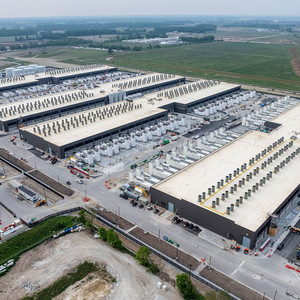
Tech companies are racing to build thousands of massive data centers to power the AI revolution.
And to find the land they need, they're barreling into rural communities across America.
Their pitch is that data centers will bring good jobs, revenue and a foothold in a rapidly changing economy.
But not everyone's buying it.
Today, my colleague, Karen Wise tells the story of one county pushing back against big tech and what happens when AI comes to town.
It's Monday, February 16th.
Karen, I'm so happy to have you back on the show.
So happy to be here with you.
Okay, we've come to you because you cover some of the biggest tech companies in America.
And what that's meant recently is covering artificial intelligence.
And specifically, what you've been focusing on is the infrastructure that drives the AI revolution, which they're all involved in.
And that's data centers.
You've been reporting on the conflicted and often complicated way that communities are responding to these data centers.
And that's what we want to talk about today.
But before we get there, just help us understand this data center boom.
What does it actually look like?
Yes, exactly.
I mean, when ChatGPT first came out, initially a lot of the reporting was about chatbots.
But very quickly this major theme started emerging every quarter, when the companies would report their earnings.
And what you started seeing is more and more money being spent building data centers all around the country and the globe.
And what's happening is the data centers are getting bigger and there's more of them.
And so the scale is just really hard to wrap your head around.
What do you mean by that?
What are we talking about here?
Well, in the last year, just four companies Amazon Google, Meta and Microsoft spent 400 billion on capital expenditures.
And most of that is data centers.
And just to put a fine point on it, like $400 billion is giant.
I mean, like we're talking GDP of countries level money.
Yes, exactly.
And it's actually become this powerful economic force across the country.
You have people moving all over the country to build these projects.
You have kind of almost every industry you can imagine is getting pulled into this.
You have speculators, you have developers utilities, energy generators that come in together and push these projects in so many places because there is such a big demand for the computing power that lives in these buildings right now.
And we're at this moment where, despite all of this building and all the speed, there's actually not enough data centers available for the demand that people have.
So the companies are racing to get them up as quickly as they can.
So tell me about that demand.
Why is there so much money going into data centers?
So it's for artificial intelligence.
And this is both to train artificial intelligence.
These are the systems and models that underpin the technology that we use when you ask ChatGPT something or there's a system behind the scenes at your company doing some process that someone used to do manually.
And some of it is to use artificial intelligence, because the way they power their ideas is by running a lot of calculations at once.
And so you need bigger data centers, more powerful chips, much more power to cool those chips.
And the largest AI data centers could use as much power as a million American homes.
Whoa.
In the data center world.
What people talk about is not the square footage of a building like you might think about for a commercial building.
They talk about the power demands, because the power demands is what is most important and really symbolizes the true size of a project.
And that power demand requires a lot of resources, I have to assume.
Yes.
So you have a bunch of different things happening here.
You need a lot of buildings for the data centers themselves.
You need the power lines and the substations to transmit the power to them.
And we're also seeing this kind of boom in new generation of power, because electricity use was relatively flat for quite a long time in this country.
And now we're seeing this big growth in demand primarily because of data centers.
So now the tech companies are scouring the country for places to build.
They want big lots of land with available power, with good transmission lines, good connectivity and ideally, a community that wants them.
And now we have communities all over the place trying to figure out Is this what they want?
So what do they want to get out of it?
And do they have power to support it or stop it?
And it's really led to this kind of ground up swell in so many places.
It's hard to actually keep track of the number of places that are now having these debates, in all these kind of wonky small places, municipal spaces, in like county commission rooms and in utility commissions, because it drags up all of these questions about what do we want our valuable resources, our space, our power, our water?
What do we want it to be used for?
OK, I want to dig in on these fights.
I want to understand how they work at a really granular level.
You have visited many of these sites and I wonder if there's one that you would pick that would help us kind of get inside what this actually looks like, how it plays out.
Yeah, I would look at St.
Joseph County, Indiana.
And it had no data centers a couple years ago, essentially.
And then in the past two or so years, you've seen tens of billions of dollars flow in there.
And a community that went from not much response to kind of an overwhelming tide shifting against these projects.
And so I really think it shows some of these dynamics that we're seeing repeated all over the country.
All right.
What has happened there?
It sounds like this development has happened really quickly.
Yes.
So St.
Joseph County, it's in the northern part of the state.
South Bend is the big city, but the rest of the county is primarily agricultural.
And the regional economy has been looking for new opportunities.
It's kind of like the upper Midwest towns that saw a lot of work bottom out.
Studebaker was based there, and they lost all those automotive jobs.
And the county has been working to attract industrial clients for a long time.
Now flash forward to May 2023 and the utility comes to the county economic development office with Amazon.
And this is exactly what's happening around the country is the utilities found themselves in this business of matching the customers, these tech companies, with the lands they know of in their territory that are available and would be well suited for this type of project.
And what do they see as the benefits of an Amazon coming to town in this way?
Just sketch that out for me.
The Economic Development Office sees this as a great project.
It is enormous.
It's $11 billion at least.
And from that, they see a source of tax revenue.
They see it as a great jobs producer, particularly during construction, and just a way of using their land and resources to be part of this future economy that we all hear about, that this technology is the future.
And it turns out that this was this flagship AI data center that Amazon was building for one of the leading AI labs called Anthropic.
You may have heard of their chatbot called Claude.
And they were building this data center to act as one giant computer for Anthropic to use, to train its next generation of models and eventually to be able to use it to start deploying AI services as well.
And so...
For both sides, this became a really kind of valuable opportunity.
They see it as a win-win.
So huge project for Amazon, it sounds like.
What is the community feeling at this point?
Initially, not much.
I mean, there was not a huge debate locally.
I believe only two people voted against it in the county council because it just wasn't a big deal.
People didn't know much about it.
And so they got going and they built very quickly.
I mean, within a year, they had, I believe it was like a dozen buildings up.
And very quickly, you end up with thousands of workers on site every day.
And that is both a good and a bad.
You have a lot of money flowing through that.
The hotels are full and the occupancy tax for hotels is flowing back to the county.
You have people locally getting jobs.
The apprenticeships programs have grown.
All of these benefits.
But you also end up with a lot of downsides.
There is legitimately terrible traffic around there.
There's safety concerns about accidents.
You know, there's just a lot of commotion that comes with a project this large.
And people start wrapping their heads more around the power use and the water use.
And those are very sensitive issues.
And at the same time other data center projects start popping up around the county and the region more broadly.
And so Microsoft goes into contract on a site in another part of the county.
And then there's other rumors constantly swirling.
When we were there, oh, we heard this parcel might be a meta project.
There's Google doing something.
There's just this constant crescendo of new projects popping up.
And people are... just unnerved by it, basically, particularly as they're living through this.
And then there comes this new project last year, even bigger than the Amazon project, potentially 13 billion or 1000 acres.
But with this one, there's a catch.
They need a zoning change to be able to build this big data center.
And that means that it needs to go before the community, before the county council, to decide will they approve this project or not.
And that means these elected officials now need to listen to their community and decide.
Do they want more data centers or have they had enough and are they going to draw a line?
We'll be right back.
Karen, you just set up this big choice facing St.
Joseph County, whether to greenlight this new data center, this new massive project, or say no.
So how does that play out?
What actually happens?
So this new project, it's not clear who's behind it.
It's an anonymous LLC.
There's only a handful of companies in the world that would use this much computing power, but no one knows who it is.
And that anonymity really amplifies the anxiety over the project.
And the project needs zoning approval from the county to continue.
And so the supporters of the Dana Centers start mounting their own campaign, trying to say yes, some people don't want it, but there's kind of like a silent majority that really wants this and wants the tax dollars that we desperately need.
And eventually there's a hearing in December.
That's kind of the final yay or nay on this rezoning.
Good evening, ladies and gentlemen, and welcome.
The regular meeting of the St.
Joseph County Council for Tuesday, December the 9th, 2025 is now called to order.
And it becomes kind of the capsule for all of this argument for and against it.
Creator God, we take a deep breath.
We pray this evening for wisdom.
And it's in South Bend.
It's in the main municipal building.
It's sort of a windowless room with a bunch of seats.
There's at least 100 people in the main lobby, in addition to the crowd that is out in the side lobby, in addition to the crowd that's here in the main room.
This is amazing.
There is total overflow capacity.
They have people signing on on Zoom.
They actually max out their Zoom capacity.
Wow, it's packed.
It's packed.
It's packed.
Folks.
I was saving this, but I'll say it now.
It's going to be very, very important that we keep decorum tonight, because we have a very emotional topic we're going to be discussing.
And the county council starts out by really pleading for peace.
We're going to address a number of misinformation items right off the bat.
First up are representatives for the new project and they come forth and try to make their case, as this project does not require the amount of water that has been previously discussed.
They say they've addressed the water and energy concerns that the community has been raising.
You could not pick a more perfect location, based on infrastructure and electrical infrastructure, than this site.
And that the project should be approved.
And with that, I will stop talking for a while.
And then comes the moment that people have sort of been waiting for.
We will open the public hearing on bill number 42-25.
Which is the public testimony, where people can voice their concerns.
Is there anyone in the room who would like to speak in favor of the bill?
Please sign in and state your name and address for the record.
You have three minutes.
And they open it up to supporters of the project.
James Gardner, representative of the International Union of Operating Engineers and part of the state building trades.
Good evening, my name is Murray Mill.
I'm the business manager for the Laborers Local 645.
Jason Piantek, assistant business manager with IBW 153.
Bob Byers, business manager for Ironworkers Local 292 here in South Bend, Indiana.
Hello, my name is Nicholas Klein.
I'm a business representative for IUOE Local 150.
I'm here to speak in favor of the rezoning on behalf of trades workers all over our county.
So the majority of the supporters of the project are either union workers or people who represent union workers.
And they're saying The job site has helped me support my young family with steady work and great benefits.
With the projects that are going on currently.
We have over doubled the size of our apprenticeship and we look to do the same again if this gets rezoned and goes through.
This has been a huge boon to the people that live locally.
I was accepted to the Operating Engineers Local 150, at 19 years old, with no student debt, making great money.
This is only possible through the economic developments like these projects.
Take a drive around Indiana.
Towns that have had a factory close or refused new development projects become ghost towns.
Don't take it for granted.
The improved county economy happens because we have said yes to new development opportunities, not because we have turned them down.
And then there's another group of supporters, primarily business leaders and advocates, who are making a broader appeal.
They're basically saying we should adapt and be part of this future.
It's about planning smartly, ensuring our land use aligns with our future needs and giving our community the tools to thrive in a competitive economy.
And this is a technological necessity and we have to ride with that.
We have to go with that.
We can do this data center and we can all win.
Thank you.
So you have these business leaders at the county level kind of parroting what the Silicon Valley folks have been saying, that this is part of what's happening in our economy and we just need to get on board.
And at the same time you have the union folks making a very tangible argument, saying that pitch that the company and our local officials made about the promise of these data centers that's actually paying off for us.
Like, this is a huge benefit for those of us that are blue collar workers.
These jobs are very good.
They pay a lot of money.
I mean, I've talked to electricians that make $200,000 a year.
I mean, yes, yes, it is real money.
And people are moving there if they don't live there already.
The hotels are full.
You have RV parks.
I mean, people are feeling this and feeding into this economy.
Right.
Is there anyone else online who would like to speak in favor of this bill?
Okay.
But after about 25 minutes.
We'll move on then.
Is there anyone in the room who would like to speak in opposition to this bill?
Please sign in.
State your name and address for the record.
You have three minutes.
They turn to the opponents.
What I want to say is a family, 68 years ago, came here for the peacefulness, the quiet, the small-town quality of life.
And that's where you start hours upon hours of testimony of people talking about why they don't want this project.
The public has a right to know up front who is vying for our land and tax abatements.
Some people talk about more procedural concerns.
Our children deserve more than concrete and traffic.
They deserve a place where they can freely run, ride bikes down quiet roads and gaze at a sky full of stars.
And other people talk about kind of quality of life issues, of what it's like living through this construction.
I was mowing the grass beside the road when cars going opposite direction at high speeds passed right beside me.
Not only did it scare the hell out of me, it sprayed gravel all over me and all over the mower.
Other people talked about environmental concerns.
Data centers are significant contributors to local air pollution.
Yeah, wells are going to dry up.
Primarily, it's the loss of the open lands.
And you also heard concerns over the future of artificial intelligence.
I have done my research and I know that technology is evolving.
And in the next few years the next generation of data centers won't need as much electricity or water or space.
What happens if these buildings aren't necessary anymore?
What do we do when we're left with hundreds of big empty shelves?
Would we be stuck with all these empty buildings?
And you also just saw a broader anxiety that this is a future that we're not sure we want.
Where stocks continue to rise while employment falls, allowing for the owners to get richer at the expense of the working class.
This correlated precisely with the creation of ChatGPT.
I don't really think that human extinction is coming, but the fact that the people who know this way way better than any of us are totally freaked out about it really should give us pause.
So it really ran the concern from the kind of practical local, kind of ground-level community stuff to these bigger picture.
What is this all even for?
Why are we racing to support this?
There's a reason they're coming here to build this, guys.
It's because they think we're stupid.
They think that no one cares about us.
They think that we're desperate.
And they think they're going to get away with it.
They don't trust the future that is being presented to them.
So the only real question that you should be asking yourselves is will you once again believe the false promise of industry?
Thank you for your time.
And so after all this testimony, you get to the end.
And with those comments, I will take a motion.
It's like 4 a.m.
Whoa.
And yes, this ran all night.
Oh my gosh.
Motion to deny.
They vote.
The denial motion is... 7-2.
7-2.
7-2 denial.
And ultimately, they reject the project.
They had decided enough.
Meaning the council essentially has said, we're done with this.
So this was, from the perspective of the community overall, a successful fight against this one data center in St.
Joseph County.
Is that a pattern that you're seeing, Karen?
I know you're looking at this across the country.
Are other places coming together in this way and having success from blocking these data centers?
Yes.
I mean, this is happening.
You see communities reject projects.
But the amount of building is only going to grow in the coming years.
The companies all announced their investment plans for this year, and it is way more than last year.
I mean, we're going to blow past half a trillion dollars this year.
Wow.
OK, I want to talk about that.
But first, how are the tech companies, if at all, responding to the pushback?
I mean, are they contending with the concerns people have?
Yes.
I mean, you're starting to see more acknowledgement of these issues.
And some are subtle.
Some is literally branding.
So increasingly, you hear the tech companies talk about data centers more as AI factories.
Yeah.
Everyone likes a factory in that it produces something useful in the economy.
And that is, of course, why they are trying to pursue this opportunity is they see it as a great opportunity that it can make companies and people more productive?
It can solve cancer and all of these things.
And so they're trying to elevate this industrial building basically and say it contributes to this future.
You also see more acknowledgments to what the community might want.
Like Microsoft came out with a pact saying that they wouldn't ask for property tax breaks.
They said that they would disclose water use in different locations.
Amazon, in a different project in Indiana, made very substantial upfront financial commitments.
I believe it was about 100 million to this one town that they're looking to put a new data center in.
So you're starting to see ways that they're responding now.
And they're also just activating politically.
I mean, it came out in this hearing.
People were saying they got text messages, they got door-to-door knockers.
There were TV ads saying come, support these projects.
So there's a sense that they're projecting of this is the future.
This is an inevitable future and you should be part of it.
And you can choose to opt out.
But if you opt out, you could be left behind.
You will not capture that tax revenue.
You will not have these great construction jobs that actually maybe are harder to replace with AI.
You know that you are missing out on all these opportunities that are going to happen.
And that you can support, that you can be the person that, because this is in your community, you know we have better doctors in rural areas that you can help solve cancer in a weird way, because that's what they're talking about of the potential benefits for these systems.
And so they're making this sell that.
It is both an economic benefit locally, but also you're part of a good transformation that is happening and you don't want to miss out.
Right.
So you have these companies kind of explicitly raising the stakes for all of the people that are now faced with the decision of whether to let this happen or not.
And at the same time you also have the federal government really doubling down on AI tremendously and doing a lot to turbocharge this AI revolution.
And so these communities are also contending with a White House and a president that is very much behind this push.
Absolutely.
Yeah.
The Trump administration has been very supportive of all this.
They see it as a national security imperative.
It's obviously been very important for maintaining economic growth.
And they have done things like fast track data centers on federal land.
They want to speed up the creation of new electricity sources and interconnections and things like that that you need for data centers.
You've even seen some states start considering ways to claw back power from local governments over this and not wanting things to get held up by these zoning concerns or these mechanisms that people can use to resist them.
You know, I wonder how much of this you feel, Karen is about people feeling as though they don't have control in the middle of this AI revolution.
You know, the companies are pitching this as inevitable.
Get on the train or the train's leaving the station without you.
The Trump administration is fully behind it.
And if you're just a regular person, you may feel like AI in general and data centers in particular.
All of this is kind of just being imposed on you and you don't have a say in it.
I think that's right.
You do hear those anxieties over and over again.
But I also think that we're seeing ways communities are recognizing their own power and that they do have leverage.
I mean, the tech companies need these projects to happen.
It is critical for them.
And so it's a real problem for them if these keep getting shut down, because there's only so many places where you can go and build and do this.
And so communities are realizing that they do have some leverage.
And it's not every community, but you do see places where people will pull out of projects, where they'll relocate or get concessions.
And that is a kind of new dynamic, because if you have good land and you have power, you actually have something extremely valuable right now.
And so people are learning their way that locally they can take control.
And it's not through federal policy.
It's through these like tiny little windowless rooms where you sit through hours and hours of community hearings, saying what you want in your community.
And that is how things are structured in America.
And there is local control over many of these issues, state control over many of these issues.
And people are finding those pressure points.
Democracy in action.
There you go.
Well, Karen, thank you so much.
I really appreciate it.
Anytime.
We'll be right back.
Here's what else you need to know today.
On Friday, Secretary of State Marco Rubio addressed the Munich Security Conference, where he emphasized the shared history between the United States and Europe.
He also reiterated the Trump administration's public warnings that the West faces so-called civilizational erasure.
We opened our doors to an unprecedented wave of mass migration that threatens the cohesion of our societies, the continuity of our culture and the future of our people.
Rubio urged European nations to put stricter limits on who enters their borders and to spend more on their own defense, something President Trump has long pushed for.
But his diplomatic tone came as a relief to many in the audience who had become used to a more confrontational approach from the administration.
Rubio lavished praise on Europe for its cultural gifts to the world.
It was this continent that produced the genius of Mozart and Beethoven, of Dante and Shakespeare, of Michelangelo and Da Vinci.
From the Renaissance masters of the Beatles and the Rolling Stones to rock and roll legends.
And after stressing over and over again the deep ties between the US and Europe.
Our home may be in the Western Hemisphere, but we will always be a child of Europe.
Rubio received a standing ovation from the mostly European crowd.
And It's important to recognize that the majority of the American people find this behavior deeply troubling.
Former President Barack Obama indirectly addressed the racist video that President Trump posted about him earlier this month.
The video depicted Obama and his wife, former First Lady Michelle Obama, as apes.
In an interview, podcaster Brian Tyler Cohen asked Obama about how the public discourse had devolved and mentioned the video as one example.
There doesn't seem to be any shame about this among people who used to feel that, Like you, had to have some sort of decorum and a sense of propriety and respect for the office.
Obama lamented what he called a clown show on social media and TV and said that respect for the dignity of public office had been lost.
Today's episode was produced by Diana Nguyen and Aastha Chaturvedi, with help from Michelle Banja, Anna Foley, and Muj Zady.
It was edited by Mark George and Rachel Quester, with help from Brendan Klinkenberg.
Contains music by Pat McCusker, Diane Wong, and Rowan Nemisto, and was engineered by Chris Wood.
That's it for The Daily.
I'm Natalie Kittroweth.
See you tomorrow.