Hello and welcome to the NVIDIA AI Podcast.
I'm your host, Noah Kravitz. Quick note before we get into today's episode, please take a moment to rate and review and subscribe to the podcast if you haven't already.
Thank you. and type in AI podcast. You can listen there to all of our past episodes.
And we're recording today at GTC 19. So we'll have plenty of new episodes coming your way if they haven't gotten out there already by the time you hear this.
We'll be right back. at GTC 2019, they will have by the time you hear this, entitled Imaging Nearby Habitable Planets with the Largest... astronomical telescopes, and GPU-powered adaptive optics algorithms.
Like I said, they're looking for aliens.
We're going to talk about exoplanets. We're going to talk about real-time optics and all kinds of stuff that they can speak to much better than I can.
So I'm going to introduce to you Olivier Guillaume and Damien Gratador.
And they can repronounce those names correctly because I don't think I did justice to them.
Olivier is an astronomer and instrument developer for Subaru Telescope and the University of Arizona.
And Damian is an associate professor at the Observatoire de Paris and an instrument scientist at the Australian National University.
Guys, I know that at least one of you was up all night last night observing through a giant telescope in Hawaii.
So thank you for staying awake. and coming on to tell us about exoplanets and looking for aliens.
Sure. Actually, we're both up all night.
Well, there you go. Astronomers can't sleep at night.
So first things first, did you find alien life last night?
Well, probably not. But, you know, it actually takes a lot of work.
Once we get the images to analyze them, it can take several months because the data is just a lot of processing that needs to happen.
So we usually don't find on the spot. So how does it work?
That's actually probably a great way to jump into how you guys are using high-performance computing and GPUs and AI.
How does the process work? Yeah, maybe I can quickly describe what we're trying to do and then Damien can explain how we do it.
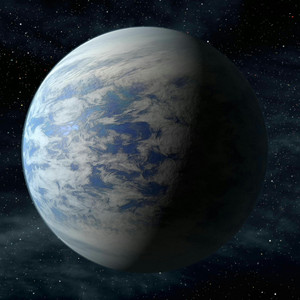
What we're trying to do is essentially image planets orbiting other stars.
And the reason it's difficult is the planet is much, much fainter than the star around which it orbits.
So when we think about an Earth-like planet, is going to be millions or billion times fainter than the star on which it orbits.
And the main problem If we use today's largest telescopes, which are on the ground, we have to go through Earth's atmosphere, which blurs the image.
So then comes the adaptive optics system.
This is a system we use on the telescope to compensate for the effect of the turbulence on the image.
This is pretty similar to what you see above a hot road during summer.
You see the images are blurred because of the turbulence that is developing just above the road.
And here you have to imagine that we have 15 to 20 kilometers of air above our telescope that is producing pretty much the same effect on a larger scale.
So we have this adaptive optics system that are designed to compensate for this effect, but this has to work in real time.
And when we talk about real time, we are talking about a one millisecond rate at which we need to introduce corrections on the wayfront.
So this is where high performance computing comes into play to understand the compensation we have to apply, we have to analyze data at this frame rate.
So every one millisecond, we get a batch of data that we need to analyze in real time to produce the compensation at the focus of the telescope.
And so the compensation is a mechanical process, the actual adjusting the optics.
So it's done using a deformable mirror. So pretty much like the mirror you would use in the morning to brush your teeth, things like this. we can deform the surface at the micron or few microns level.
So the surface, moves with small bumps and small holes.
But the amplitude of these bumps or holes is only a few microns.
But this is enough to compensate for the effect and retrieve almost perfect image quality.
What are you, what is all of this geared towards?
What are you trying to see? You're trying to see the exoplanets more clearly because they're kind of obscured by the brightness of the stars they're orbiting?
That's right. So we're trying to basically take an image where we would see the planet, hopefully a planet not too different from Earth, as a point of light, as a separate point of light, well separated from the much brighter glare of the star.
And once we do that, we can take what we call a spectra.
We essentially look at the colors. We look at the colors of that point of light.
And it's by looking at the colors that we can infer the nature of the planet.
Is it covered in water? Is it rock? If we look at the color with more detail, we take a higher quality spectra.
We can actually identify oxygen, water, methane. and even possibly plant life.
So those are the things we're trying to look for.
So it's interesting, earlier, as we record this, earlier today, Here at the show, I interviewed an astrophysicist, a guy named Brent Robertson, and he's working on using GPUs, high-performance computing, to make sense of these massive wide format images that they're taking It's just too much data for a human to process.
And so they run it through this AI framework they've developed. to turn it into something that they can use.
And we were speaking before we started recording Olivia and you were saying, yeah, that's kind of like, A similar thing with at the opposite end of the spectrum because you're working in real time.
What are some of the, I'm sure, many challenges that you face in trying to do these real-time adjustments?
And... How does the high-performance computing and the GPU and the machine learning help you do it?
Well, again, I can talk a little bit about the requirement and Damien can talk about how we get there.
But when you look for a planet around the star, there is very little room for error.
The planet is so much fainter than the star that we need to push this technique, extreme adaptive optics, to its extremes.
That's actually why... What we do, adaptive optics to look for planets, to image planets, is called extreme adaptive optics.
It's the most challenging. form of adaptive optics, the one that requires the higher precision.
So it's extremely demanding. in terms of speed, computing accuracy, and that's why it's very demanding in high-performance computing.
Damien can talk a little bit about you know how we get there but it's the most demanding type of adaptive optics And one particular aspect that makes our application very special is the fact that Not only do we need to go fast, but our computing performance must be very stable during an observation. to ensure that our closed-loop system remains stable and we can use the highest compensation gain possible on the system.
So not only we need to deploy very high computing throughput, But the time to solution, to solve our problem every millisecond must be highly deterministic. at the level of few tens of microseconds.
And so this implies that the way we ingest the data from our sensors and the way we perform the processing task must be done very specifically.
And this is where we merge high performance computing with time critical real time systems.
And this is very special in astronomy. what I'm saying is valid for any adaptive optics concept.
But as Olivier was saying, to reach to the level where we can actually observe an exoplanet and try to measure a spectrum on this object, we need to achieve an accuracy in the atmospheric compensation that is so high That leaves us very little margin in terms of error in our computing pipeline, but also time budget.
We have very little time, time margin to perform our computation.
When you speak of doing an observation, how long is a typical observation?
Is it ongoing or are these defined events?
That's the question you had this morning, right?
Yeah, so... Well, we typically, it depends how bright is the planet and how deep we want to go.
But typically, let's say a couple of hours.
Okay. But the thing to keep in mind is during these two hours, we take a few thousand images every second.
Right. Yes. And those images are not just science images, but they're also part... of this process that Damien was describing of identifying, understanding what is wrong every millisecond and how to fix it.
Right. And as Damien said, essentially the instrument is not allowed to blink.
Right, right. Yes, our demanding taskmasters.
So let's talk about the instrument itself.
And we don't we don't always get into the speeds and feed stuff on on this podcast but i'm curious Are we talking about one telescope in particular?
Are there multiple sites? And then what kind of compute power are you running?
Well, so I work specifically on a system at the Subaru Telescope, but there are multiple teams essentially racing to...
You know, we're all extremely impatient because we know the planets are out there.
We want to be able to imagine. So it's a pretty worldwide sort of collaborative effort, a very challenging effort. and multiple telescopes are engaged in this, the thing we're really excited about is the upcoming generation of what we call extremely large telescopes.
They're roughly four or five times larger in diameter than the current generation.
And the current generation, there's a Subaru telescope you're using.
It's about eight meters. That's right. There's several telescopes around that size.
The very large telescope in Europe. there's four of them actually the Keck telescope there's two of them Subaru there's one Gemini there's two and they're all eight, 10 meter.
There's a few more just below that size also, but we're about to make a significant jump from those telescopes. to what we call 30-meter-class telescopes.
There are three projects going up. And with these extremely large telescopes, the computing power should upscale by a factor which is the square of the increase in diameter.
So Olivier was mentioning a factor of four to five in diameter, so it means the computing power will increase by a factor of 25.
Right. Getting to this next generation of instrument is certainly nothing trivial for us.
To keep the same level of accuracy and determinism in time to solution, it's pretty difficult.
What's the timeline for these coming online?
So we have already performed a number of preliminary design studies.
For most of this project, we are entering the final design phase and let's say the pre-construction will start in two years from now. for a first light around 2025.
And so you're banking on, planning on, I should say not banking, but planning on compute power that we don't have yet to scale up to that 25-fold.
Yes. Well, we believe that we are close to have this compute power.
But what is probably the main challenge for us is... to go from experiments on telescopes where We are here to manage the instrument and correct for errors in real time if we see anything. to these giant facilities that would require a production level software. including all these smart features mixing real time and HPC, which is really new and really researched.
And we have to transform this research work into a production level software.
And this is a common requirement for these, let's say, science mega factories. where there will be a single operator at the telescope and this guy will know nothing about high-performance computing and GPUs or whatever.
But he will have to run the system. It should run very stable.
There's something interesting that when I first attended this conference, the GTC conference, I was talking about, oh, we'd like to do real-time HPC, and And folks were saying, oh, yeah, we do that with the self-driving cars.
We do that all the time. Then you start talking to them.
For them, real time is maybe... 10 or 50 millisecond.
Right. For us, it's below one millisecond.
It's below one, yeah. So we are really, as Damien explained, we're really pushing into...
Into a territory for which there is not a large number of people that have experience.
Yeah. Well, it takes a unique kind of person to go looking for aliens and mean it, you know, so.
We're speaking with Olivier Guion and Damien Gratidor.
They're both astronomers and they are working on... and we joke, I just like the phrase looking for aliens, but they are working on better ways to observe exoplanets in the search for what else is out there in the universe beyond Earth.
And we're talking about GPU-powered adaptive optics, and extremely high-performance computing.
Let's switch gears for a second and If I can hear from each of you guys, kind of your backstory, how you got to where you are now on this podcast after staying up all night. doing an observation.
Were you always interested in astronomy and or performance computing?
Did you kind of fall into it? What happened?
Let's start with you, Damian. So yeah, I was always interested by science when I was younger by many different kinds of science.
But astronomy was a child's dream for me. when the opportunity came to start studying fundamental physics at the university when I was 20, 21.
I knew that I was going this way and I knew that it was a difficult path.
You know, there are not so many... available positions to be an astronomer.
So it's quite a long path, but I knew I wanted to do that.
And I did. Was the technology something that you were interested in initially, or did that kind of come along the way just as a requirement of advancing in the field?
Yeah. So I was always interested by this, but I must admit that doing research on technology, on the computing technologies, came a bit later.
And it occurred to me maybe six or seven years ago. that this was something that was not sufficiently covered by my colleagues in our domain. and I could bring something to our field in exploring this bridge between astronomical instrumentation and computer science.
And Olivier, how did you wind up in this field?
I was 11 years old. A friend of the family gave me a book about astronomy.
I was fortunate to live in the countryside, so I could see the stars, and that was it.
I decided when I was 11 years old that I was going to be an astronomer.
Fantastic. It never changed. It just happened.
What, if anything, stands out to you as kind of surprising moments along the way particularly since you started working with this kind of extreme adaptive optics and the high performance tech, Or even not, but are there things that you kind of think back and there were these real moments of surprise, either something that you discovered? or sort of something you were expecting to happen, but it took a left turn instead of a right?
So I have something in my mind that is echoing to what Olivier was saying before.
It's an observation we made of Beta Pictoris in 2003 with a colleague of mine.
And at the time I was a young PhD student and I was, you know, one of the first guy on the planet using adaptive optics on the very large telescope, a European facility in Chile.
And so we were observing the star, trying to find planets around the star.
And at the moment, in real time, we tried to analyze the data, but we didn't see anything.
And then I finished my PhD, so three additional years.
I went to another telescope facility, Gemini, worked there for almost three years.
And when I came back to France, my colleague, she wrote me an email saying, hey, Damien, do you remember 2003?
The data from Beta Pictoris, I think I found something.
Please have a look at the data again and let me know if you see something.
And bam, we could, with additional post-processing many years after that, and this data we took in 2003, we could see the planet.
And this is the day we discovered this planet around Beta Pictoris, which is one of the youngest planet that has been observed directly so far.
And it was really a remarkable moment for me.
Yeah, that's fantastic. And was that a product of...
The technology having advanced so you could better post-process the image or just a fresh set of eyes on it or...
Both. I think we had more computing power, so we could test new post-processing algorithm on the data.
Plus the fact that my colleague came back to me saying that there must be something in this data.
I'm seeing something. Combining the two, I really tried to push as much as I could on the processing to see the plan.
We made additional observations the same year and a few years later.
And we could see the planet moving around the star.
And we knew it was real. Yeah, yeah. A real planet discovery.
So when you're doing an observation, what are you hoping to see?
And I don't know if that's too broad of a question, but I'm thinking in my head. oh, I'm hoping to see in real time the planet moving, or I'm hoping to see a UFO spaceship, because these are the things that movies have put into my head.
And I'm sure that's not actually it. But in the course of, and I don't know if it's during the observation or when you're post-processing later.
Even like right now, is there a certain area you're focused on, certain kinds of discoveries that get you excited because they're kind of leading further down the path?
When we observe exoplanets, the observation, as Damien was explaining, the observation is so challenging that usually we don't expect to see anything sort of live.
Yeah. On the image. It takes a lot of work and processing.
But that's what Damien is describing is exactly what we're looking for.
We're looking for... that little faint point of light that's next to the star.
And we're looking for, you know, watching it move around the star.
Sometimes we also look for disks. And we often talk about planets, but disks are also extremely important. essentially dust around the star.
And because that's what really forms the planets. at young planets, actually Damien mentioned beta pictories, which was known before having a planet to have a very massive disk and the planet conveniently and it's not but by coincidence is sitting inside the disk.
So I think that's what's exciting is with the current telescopes, we can actually see the birth of planets.
We can see the disk, which is actually sometimes a remnant of the formation of the star, but sometimes it's actually due to... two planets and asteroids colliding each other and creating additional dust.
We can see this around many stars. And we're starting to see the interplay between the disk and the planet.
So not just looking at a planet as an isolated object, but we're looking at essentially the extra solar systems being born.
And I find this very exciting because we're really... piecing things together.
And we understand how planets and stars form together.
We also understand how that relates to our solar system.
So obviously the work that you're doing is focused on finding the exoplanets and not necessarily looking for intelligent life forms. extraterrestrial beings, aliens, if you will.
But do you have a sense from your work, either scientifically or kind of more just on a gut level, If there are other Earth-like planets supporting life out there right now, and my own sort of layperson view is, well, there must be because... we're not so wonderful as earthlings that we're the only things out there.
But from a scientific standpoint, how do you think about that?
I think from a scientific point, we can almost certainly say, yes, there is.
And it's just based on the number. There are 300 billion stars in our galaxy.
We know that give or take half of them have rocky planets that have temperate temperatures.
Temperature, essentially. Right, yeah. So you take that number.
That's 150 billion, yeah. 150 billion years.
If you're pessimistic, you can multiply it by 200 billion galaxies in the observable universe.
It would be... it would be nearly impossible not given those numbers.
I think the question is how frequent is it?
How frequently does it evolve from, you know, bacterias or very, very... simple forms of life to things that are much more complex, like us.
What does it become? And those questions actually relate back to us.
So they're very interesting questions. Gentlemen, if people want to learn more about the work that you're doing, are there places online where they can go?
I think all of the telescopes have websites and, you know, part of... you know, our work is supported by essentially taxpayers.
And so One of the ways we return the favor is outreach and all of the telescopes. are making good efforts into promoting science and highlighting the discoveries we make every day.
So the Subaru telescope, Gemini, they all have their own homepages and that's a good place to start.
Easy enough. Perfect. Well, thank you both for coming on the podcast.
And I don't know if I should end by saying get some sleep.
You know, get back to work, whichever works for you.
But all the best and hope to talk with you guys again in the future to learn more about how it's going.
Thank you. Thank you, Noah. ¶¶