Grownups, Wondery Plus subscribers can listen to Wow in the World early and ad-free right now.
Join Wondery Plus in the Wondery app or Wondery Kids Plus on Apple Podcasts.
Hey, Wowzer fans, Mindy here.
And before we start the show, I gotta let you know that this November, with a special new episode featuring our friends at Circle Round and Terrestrials on Radiolab for Kids,
And don't miss when Elmo from Sesame Street stops by Wow in the World to make us all belly laugh on November 24th.
Oh, but that's not all, Reg.
On December 1st, we are sharing our 250th episode of Wow in the World with all of you.
We think this one is going to be music to your ears.
Literally.
Did I mention it's a musical?
And if you're a member of the World Organization of Wowzers...
Oh boy, do I have a surprise for you.
You can listen to our 250th episode early with me and other members from around the world on Saturday, November 22nd, at 7 pm.
Eastern.
That's right, we are throwing another listening party.
Join us as we dance along to our new songs.
React to the episode with other members in the chat and more.
Grownups.
If you want your wowzer to join this members-only listening party, you can sign up to become a member today at Tinkercastcom.
Slash wow.
Already a member?
Well, you can find the link and password to join the event when you sign in at Tinkercastcom.
Slash wow.
That's it.
It's going to be a November to remember.
But for now, let's get on with the show.
Woo!
Finally, some peace and quiet.
Just me, my latest issue of the Philosophical Transactions of the Royal Society and a warm mug of raishi mushroom tea.
Now I'm just going to get settled here in my new 50 square foot micro house, all alone secluded in the middle of the forest, where no one will ever find me.
Oh, no.
Are you out here?
Can't find you anywhere.
You didn't even tell me we were playing hide and seek.
Hey, Roz?
Hey, Rozzy?
Uh, maybe I can hide under the bed and wait this out.
Come out, come out, wherever you are.
There's no room.
Whose idea was it to put the refrigerator under the bed?
Marco?
Polo?
Guys?
Ron?
Wait, wait.
I can hide in the bathroom. the toilet doubles as the kitchen sink.
There's the banana scooter.
I found ya!
Hey, little buddy, you in this tiny house?
What is this thing anyway?
Is it a toy?
Is it running batteries?
Mindy!
Guy Razzi!
What are you doing here?
Uh, what are you doing here?
Did you know that you are out here in the middle of the woods alone?
Are you lost?
Well, actually I was hoping to get a little peace and quiet from all the commotion of the neighborhood.
Are you suggesting that our neighborhood is noisy?
Yes.
Oh, hi, Mrs. Johnson.
How's everything going?
Yeah, I still don't see what you mean.
Anywho.
What is this little house anyway?
Well, well... Can I come in?
Well uh, it's an eco-friendly micro-house Mindy, and it's really only built for one person to occupy at a time.
Oh, is this a toilet or a sink?
Well, uh... Is this the bottom bunk of your bed a refrigerator?
It's, well... How did you manage to drag this thing all the way out to the middle of the woods?
Oh, well, it's so small I was able to hitch to the back of my banana scooter.
Oh, you mean the one that your best friend Mindy invented for you?
Yes, that is true.
Thank you for that.
Anyway, I was able to hitch it to the back of the scooter and tow it all the way out here.
Well, that's what I'd call a mobile home.
So, what do you want to do?
Well, I was hoping to sit down with a warm mug of reishi mushroom tea and a good academic journal, uninterrupted.
Oh, okay.
Well, don't let me stop you.
I'll be right here if you need me.
Now, just scooch over, because, um...
Well, there's only one spot to sit in this place besides the kitchen toilet sink so, Oh well actually Mindy, what I mean by uninterrupted is that I Come on, get a ding-ding move on it fingerling.
I ain't got time to move in slow motion.
I'm a-coming, I'm a-coming.
Mindy!
Mindy!
Oh, Grandma G-Force, um...
Hey, Forest, can't you hear nothing?
Mandy is right over there.
Oh, no.
Mandy?
Is that you?
Grandma G-Force, it's me.
Come see Guy Raz's tiny house.
It's so cute and cramped.
Actually, it's only made for one person, so you better... Ooh, say now.
Would you look at that?
What kind of siding you got here?
Cedar?
Ah, nope, that's T-111.
That's what that is.
What?
Some kind of a Debbie Doll dream hut?
No, actually, it's a solar-powered, environmentally-friendly, passive micro-house built for one.
Well, I like fun.
Darn tootin'.
Come on in.
You're not going to believe this place.
It only has room for one cup.
Oh.
Well, now I got to see this cup.
Oh, uh, oh, ah.
There's only room for one person at a time, and it's probably Now a toilet in the kitchen sink.
That's an idea I can get behind.
And look, if you unlock this wall here, there's a two and a half foot bed.
Hope you like folding yourself in half to sleep.
Now, how are we all supposed to fit in that bed?
Took the words right out of my mouth.
What?
Say, what's that sound?
Is it a bird?
Is it a plane?
It's Bo!
Reggie?
Reggie!
What in the world wide web have you been feeding that pigeon?
Hey Reg, you gotta come check out Guy Ross'
Actually, it's a 50-square-foot micro-house made entirely out of sustainable materials, and it's probably not Well.
Get in here, you old bird.
What?
No, I... I'm not sure we can accommodate a wingspan of... Check it out, Reg!
Guy Raz's new tiny house is smaller than your nest!
And like a nest, it's only built...
Or one?
Did everyone hear that?
One!
One person!
You know what, Guy Raz?
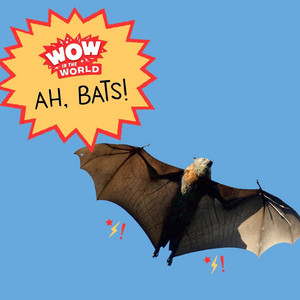
This kind of makes me feel like we're a bunch of vampire bats.
Vampire bats?
Yeah, you know those black-winged mammals that all huddle together in caves or the hollows of tree trunks.
Whole colonies of 100 to even 1,000 bats or more.
Those flappy little bloodsuckers always live ain't got room for no bats in this place.
So in the wild, these vampire bats are all crammed into one cave or tree trunk?
Yeah, and for like 23 out of 24 hours a day.
These colonies are like their bat versions of microhouses.
But unlike bats, humans are not designed to live that way.
What'd he say?
Just hear me out, Guy Raz.
There's actually a scientific explanation for this.
Huh?
You have a scientific explanation for this?
Uh-huh.
So I was just reading this new study on vampire bats by a group of researchers at Ohio State University who met up with another group of researchers down in Panama at the Smithsonian Tropical Research Institute.
Oh, yeah?
And what were they studying?
Well, one of the researchers, Dr Gerald Carter, who studies cooperation in vampire bats as a behavioral ecologist,
Oh, and a behavioral ecologist is the type of scientist who studies why animals do what they do and how they work together or compete against each other right,
You know it.
And after learning that vampire bats are not only really good at cooperating and sharing within their own families, they wanted to see how these bats were when it came to sharing with bats that were outside of their families.
So they wanted to see if bats would go from treating their fellow bats like friends to treating them like family.
Exactoritos.
You know what this place is a-missin'?
A back door, that's what.
Gotta have an escape route, that's what I always say.
Now go fetch me a sledgehammer, son, and I'll get to work.
Son?
See?
Looks like it's already happening in our little colony right here, Guy Raz.
This is not a colony.
This is a vegetable-powered micro-house built for one.
This house is a microwave?
By golly, what will they think of next?
So as I was saying, the thing with vampire bats is that they're really good at sharing.
Now, do you mind if I wear your robe?
Yes, yes, I do mind.
That robe is made for one, one person.
See, I even have my initials monogrammed on it.
See, that's a G right there.
Looks like a G for G-Force to me.
Ahem!
You know, some might say that humans can learn a thing or two from the sharing style of vampire bats.
Uh, sorry, their sharing style?
Yeah, so bats share like their lives depend on it.
And why do they share like their lives depend on it, you ask?
Because their lives depend on it?
Bingo, Guy Raz.
So, while baby vampire bats drink milk from their mothers, adult vampire bats are the only mammals that feed entirely on blood.
They are also the only mammals that can fly.
Except I got a feeling I can fly off of this here top bunk.
What?
No!
Here we go.
Okay.
Well, I'll be.
That was my coffee table.
Sorry about that, Mr. Ozzie.
Now, what was that about coffee you said?
You ain't got room for coffee in here.
So...
As I was saying, vampire bats live on blood.
And in order to get that blood, they've got to creep out in the middle of the night every 48 hours or so and hunt for fresh blood.
Hence the reason they're called vampire bats.
So where do they go to hunt for fresh blood?
Well, uh, cows, horses, pigs.
Oh, like down at my old friend Gerald McDonald's place.
He's got a farm.
Exactly.
So then how do the bats, uh, you know?
Okay, so here's how it all goes down, Guy Raz.
Step one.
The vampire bat goes out on a late night hunt and spots a sleeping cow.
Step two, the bat strikes from the ground.
Getting on all fours.
She approaches the cow using a little heat sensor on her nose to detect the perfect spot for maximum warm blood.
And step three?
Step three the bat uses her tiny razor-sharp teeth to bite the cow and the blood starts trickling out.
Oh!
I'm with you, Pigeon.
This story is freaking me out, dude.
But and this is a big but there is some evidence that a lot of cows don't even wake up during these bat bites.
So one could assume that not only is it not painful, but that maybe the cows don't even feel it at all.
But what about the blood, Mindy?
How much blood is the cow losing?
Well, since the vampire bat's body is only about the size of an adult human thumb, it can only take in about a tablespoon or two of blood at all.
So the cow probably doesn't even notice its blood is gone.
You know it.
But to get this amount of blood, the bat's got to feast for about 30 minutes straight.
And by feast, do you mean sucking the blood?
I told you they were little blood suckers.
Actually, vampire bats are not blood suckers at all.
They're not?
Nope.
Step four.
Once the blood starts flowing, the bat laps it up with her little bat tongue.
And to keep the good times rolling.
Her saliva keeps the blood from clotting or stopping at the surface.
This sounds like a lot of work just to get food, Mindy.
Right.
And that's where the sharing comes into play.
Now, you mind if I eat this turnip?
No, no, that's my... Fine, you can eat my turnip.
And will you cook it for me?
What?
No!
As I was saying, Dr Carter and his team knew that the vampire bats shared their blood feasts with their families back at the colony.
But if a bat eats all the blood, how are they able to share it with the other bats?
Oh, well, they, um... They what?
They, um... They what, Mindy?
What do they do?
They... barf it into their bat family's mouths.
Oh, heavens!
You're telling me they regurgitate their food into the mouths of their family members?
I used to chew up my food and barf it into Mindy's mouth when she was a baby.
Oh, that's true.
I didn't grow teeth until I was four.
Well, when you think about it, I guess it's not all that out of the ordinary.
See?
I mean, there are actually a lot of animals that do this.
Like bees.
They regurgitate nectar for the other bees in the family hive.
Uh-huh.
And penguins regurgitate food into the mouths of their baby chicks.
Oh, yeah.
Reggie says that his mom used to barf food into his mouth when he was just a little squab.
Oh, isn't that nice?
But what Dr Carter and his team discovered was that these bats will not only barf up blood into the mouths of their family members, but and this is kind of the butt of the whole study these researchers found that vampire bats will sometimes share their hard-earned blood barf with bats who are not part of their family.
I barfed on a stranger in the post office once and she didn't even think.
Kids, these days are so rude.
So let me get this straight.
We know that vampire bats will share their blood meals with other bats in their family.
Mm-hmm.
So what would make them share their blood meals outside of the family, especially if it meant less for themselves?
Well, that's what Dr. Carter and his team wanted to find out.
Oh, yeah?
So what did they do?
Well, they decided to set up...
An experiment.
Oh, I love a good experiment.
So first, the researchers set up their own version of a tree hollow in a laboratory.
And then they invited a bunch of vampire bats from different colonies in the wild to move in and make it a home.
Oh, like what we done in your Debbie doll dream hut here.
OK, no one is moving into my micro hut, I mean house, but me.
Mr. Guy.
Do you have any other pants?
These ones aren't fitting.
Stop wearing my pants.
Fine.
Red isn't my color anyway.
I'm more of an autumn.
The next thing they did was set up a bunch of cameras so that the researchers could all watch them on TV.
Gnarly.
And they did this for more than a year.
So they just threw all of these bat strangers together into one cramped micro house?
I mean, hive?
Well, there was some thought behind how they introduced the bats to this makeshift hive.
OK.
First, they put in two bats who didn't know each other at all.
So similar to how a teacher on the first day of school might pair you up with another student you haven't yet met.
Exactly.
And then the researchers dropped one stranger bat in with three other bats who had lived together before.
So similar to an exchange student from another country coming to live with a family in a new country.
Uh-huh.
And then they put these two groups together and spied on them for the next 15 months.
Spied on them?
Well, spied on them for science.
Using cameras, the researchers recorded the vampire bats' behavior to see how they socially bonded or made friends with each other over time.
And what?
What did they find?
Okay, so first they noticed that the bats who were put in by themselves as pairs, seemed to be the first to bond or to form relationships.
Hey, just like you and me, G-Force, you old bat.
Can it, Fingerling.
I'm trying to hear the story.
And Mindy, how could these researchers actually know that these bats were bonding?
Well, they noticed that over time, the bats started grooming each other.
You know, licking each other's fur to give each other baths.
And I'm guessing that this was an early sign of friendship?
Sort of like their way of building trust exactoritos.
But they also noticed that the larger groups who were put in together took a little longer to bond, especially if some of the bats already knew some of the other bats.
Hmm, sort of like when you've got a bunch of people at a lunch table and some of them already have friends and others don't.
Yeah.
In fact, the researchers also observed, or noticed, that the strangers were more likely to bond when their other bat friends weren't around.
Interesting.
So sort of like how it's sometimes easier to make new friends in a group where no one knows each other yet.
And over time, the researchers started to notice some pairs of bats grooming each other more and more.
Becoming more and more friendly with each other.
Mm-hmm.
And then they discovered that some of the bats would actually start to share blood, you know, as food, if they knew that one of their new bat friends was hungry.
And just to be clear, these were not bats in the same family.
Nope.
These were complete strangers who eventually built up trust.
Enough trust to barf blood into another bat's open mouth.
So let me get this straight.
First, they groomed each other.
Which honestly wasn't a huge deal because grooming doesn't require anyone giving anything up.
But giving blood?
You know, as food?
Well, that's a whole other level of giving.
But I guess I'm still trying to figure out why.
I mean, I understand friendship, but I'm still not willing to let Thomas Fingerling take all of my pants.
What?
Who said I wanted your pants?
You did.
Well, I don't remember that.
But, Guy Raz, what if you knew that there would be a chance that someday you might be in need of a pair of pants?
Huh.
Now, who needs pants?
Pants!
No, please keep your pants on.
Oh, I get it.
You only wear fancy pants.
Well, I'll have you know these have an elastic waistband.
Booyah!
What I'm getting at here, Guy Raz, is that these vampire bats just want to know that they can trust in someone to share their food if say, for instance, one of their family members suddenly disappeared and was no longer around to provide it for them.
Oh, well, in that case, Thomas Fingerling, please feel free to help yourself to my pants.
Way ahead of you.
Also, if anyone needs a place to stay for the night, I'm sure we can fit more than one in my micro house.
I call top bunk.
Could I interest anyone in some of my homemade reishi mushroom tea?
No.
Wait, Dairaz, why are you doing this?
Why the sudden change of heart?
Well, I just know that all of you would do the same for me, right?
I mean, that's what friends are for.
Well, like my grandma G-Force never says...
Friends are the family you choose.
That's true.
She always never says that.
Mindy!
Guy!
Where are you?
Are you over here by this tool shed?
Dennis?
Oh, there you are.
What are you all doing in here?
Ooh, is this a tiny clubhouse?
Can I be in your club?
What's our club name?
Is it the Fun Bunch?
No, wait.
The Little Rapscallions.
No, wait.
The Dallas Cowboys.
Please say I can join.
Please say, please, please, please, please, please, please, oh, please, oh, please, oh, please.
Actually Dennis, I'm sorry, but Actually it's time I take a cue from the vampire bats and kindly welcome Dennis into my hive.
I mean, hut.
I mean, ecologically sustainable micro house built for wonderful friends.
Come on in, Dennis.
Have a seat.
I think there's an open spot on the toilet sink.
Huzzah!
Wait.
You pee in the sink?
Wow, be right back, grownups.
This message is for you.
Hey grownups, it's mindy and guy roz here from wow in the world.
Mindy and i have some brand new wow in the world toys out in the world just in time for the holidays, made for the kids who love science and for the ones who don't.
Yet, from our 100 experiments that wow kit to the Telescope and Astronomy Kit, our Wow in the World toys help your wowzer learn about their world through play.
Plus, you can hear exclusive audio content from me and Guy Raz to help your wowzer discover even more wows.
Grown-ups.
Give the gift of wow and wonder this holiday season with our latest Wow in the World toys designed with your curious wowzer in mind.
You can shop our Wow in the World toys at Tinkercast.com slash toys.
That's Tinkercast.com slash toys.
That's it.
Back to the show.
Wow in the World.
Hi, thanks for calling Wow in the World.
After the beep, get ready to record.
Hi, Wow in the World.
My name is Franklin, and I'm from California.
UC, California, USA.
I know that's obvious.
And my wow in the world is that beagles use their ears to track scent, not just their nose.
Bye.
I'm Indian Guy Raz.
My name is Everett, and I live in Marietta, Georgia.
My wow in the world is that kangaroos can jump over a school bus.
Can you jump that high?
Say hi to Dennis.
Hi!
And Grandma G for... Oh, isn't that nice?
And Reggie for me.
Oh, and Dennis, do you have a pet?
Well, in my house, I'm the pet.
And I'm a good boy, aren't I?
Yes, I am.
Yes, I am.
Oh, Dennis, do you want a treat?
Hi, my name is Avi Anna, and I'm from Fresno, California.
And my wow in the world is the average person has 10,000 taste buds...
And those taste buds get replaced every two weeks.
Say hi to Reggie for me.
Bye.
Hi, Mindy and Guy Ross.
This is Julia from Meridian, Idaho.
My wow in the world is that most flies beat their wings 200 times per second.
I wish I had wings like that.
I hope everyone stays healthy.
Bye.
Hello, Mindy and Guy Ross.
My name is James.
I live in Denver, Colorado.
And my wow is that the toy Lego is older than space travel.
Hi, I am Inga.
And I am Dobbit.
And we live in Hanoi, Vietnam.
Our wow is that dark-colored popsicles melt faster than light-colored popsicles.
Bye.
We love your show.
Say hi.
My name is Ethan, and I live in Ankeny, Iowa.
My wow in the world is that coral reefs are healthier if more sharks are present.
Say hi to Static Man and Reggie for me.
Bye.
Hi, Mindy and Guy Ross.
My name is Sarah, and I live in Yukon, Oklahoma.
My wow is forever.
You is that there are approximately 400 million pigeons in the world.
Isn't that crazy?
Oh, and i have a question.
End of messages.
Hey everyone, thank you so much for hanging out with us this week on wow in the world.
And to keep the wow rolling, check out this week's scientific conversation starters at our website, wowintheworldcom.
And grown-ups.
There you can find more info on how your kids can become members of the World Organization of Wowzers shop, our Wow Shop.
Upload photos and videos to us and check dates for our upcoming live events.
That's wowintheworld.com.
Our show is produced by Jed Anderson.
Who provides the bells, whistles, and silly characters.
Say hello, Jed.
Hello.
Our show is written by me, Guy Raz, and Thomas Van Kalken, who also provides silly characters.
Tom?
Hello there.
Thanks also to Jessica Bode, Anna Zagorski, Rebecca Caban, Kit Ballinger, and Alex Curley.
Meredith Halpern-Ranzer powers the wow at Tinkercast.
Our theme song was composed and performed by The Pop-Ups.
For more on their three-time Grammy-nominated all-ages music, find them at thepopups.com.
And grown-ups, you can follow Wow in the World on Facebook, Instagram, and Twitter at wowintheworld.
And our email address is hello at wowintheworld.com.
And if you're a kid with a big wow to share with us...
Call us at 1-888-7-WOW-WOW for a chance to be featured at the end of the show.
Also, if you haven't already done so, please subscribe to Wow in the World on Apple Podcasts or wherever you get your podcasts.
Yeah, leave us a few stars, a review, or just tell a friend about the show.
Thanks again for listening.
And until next time, keep on wowing.
Jinx!
And before you go, tell us about yourself by filling out a short survey at wondery.com slash survey.