Welcome to The Logan Bartlett Show.
I am your host, Logan Bartlett.
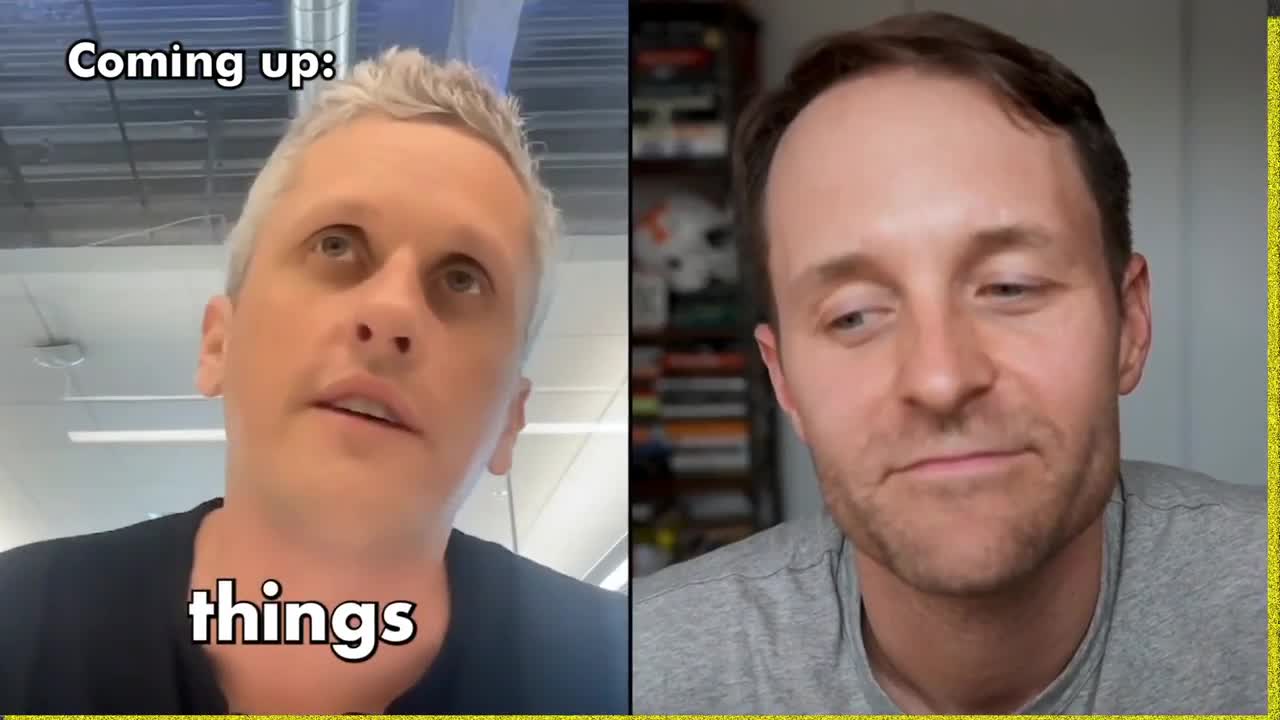
And on this episode, you're going to hear a conversation that I had with Aaron Levy.
Aaron is the founder and CEO of Box, a business he dropped out of USC in 2006. to start.
Fox has gone on a wild journey from a very high growth unprofitable business in the private markets to a profitable, mature company in the public markets.
Aaron and I discuss best practices around operating and how he was able to mature as a leader.
Some people will say things like founders need to be responsible for the first X number of million in revenue.
Well, we actually had a head of sales that was way better at it than I was.
And very quickly I realized I was literally 22 years old and I would have been a liability for the deal.
We also discuss all things AI whether Aaron believes in the AI doom, as well as the opportunity that exists for new companies to go after this market.
I think there's a lot of spaces that are either in the blind spots of those incumbents.
So find opportunities where there's some kind of inherent innovator dilemma challenge with that incumbent.
So a really fun episode with Aaron that you'll hear now.
Thanks for doing this.
I haven't seen you in a while.
The last time I saw you was at a party in New York.
And Weinberg, I think a few drinks in, referred to you as the big Jew himself when you walked in.
So that was the last time I actually saw you.
But we're now at a year, I think, since you've done this.
Now you're the second second person I've had on.
Oh, nice.
Yeah.
Keith, your boy beat you to be the first.
I guess Weinberg was a recurring character.
But Weinberg, are you doing anything with him anymore, or what?
Yeah, he comes on every so often.
He canceled on me last week.
I don't know why.
He claims he wants to rail on the market and explain how down rounds are going to be bad and how founders need to.
I don't know.
Buckle up or whatever.
And he'll tweet about it.
And then he'll say he's too busy running his company to actually hop on and talk about it.
I don't know.
I don't know how that works out.
Well, I went back and listened to our last episode, which was like a year ago.
We talked about crypto falling off.
We talked about how the market needed the correction and We talked about how technology industry needed a new frontier.
So I don't know.
I feel like I feel like all of those things have sort of played off.
Cryptos continued to fall off.
The market actually did correct.
And we have a new frontier here, right?
Artificial intelligence.
Those three things kind of played out.
I did not I mean obviously couldn't have known that the AI piece was going to happen with the level of force that it did.
But yeah, pretty incredible what happens in six months in this industry right now.
I went through your tweets last night, and it seems like you're excited about AI to say the least.
And I know Box is innovating here now as well.
Yeah. are you most excited about or what what was kind of the aha moment for you here?
Yeah, my wife, my wife literally tells me to stop tweeting as much on the topic.
So so I have I think I've expressed my feelings.
But well, the reason why the reason why I am like like peak level of excitement is these latest kind of wave of large language models solved for us specifically at Box is something that we could really have only dreamed of even a couple of years ago.
What is inside of every single document in our platform is lots of language.
And so, for the first time ever, you can actually use AI to reason through that information in a way that was literally never possible before.
So I think if you look at a continuum of software based on how big of a deal are LLMs for software, we would be in the upper.
We'd be like the 97th percentile of impact to the potential of what we do.
Box specifically.
Not just software at large.
Box specifically because what we deal with are documents, and what LLMs can help you reason through is lots of language.
It can look at a contract and tell you literally anything you want to know about that contract.
What are the risky clauses?
What are the terms of the contract?
What might be missing in the contract?
It can look at a marketing document and give you suggestions of how to improve it.
It could take an HR handbook and let you ask HR policy questions and instantly get an answer.
So kind of like every use case you could dream of, like an instant expert based on the data that you already have, the ability to improve your content, the ability to answer any kind of question that you would otherwise maybe take hours or days to figure out the answer to.
All of these problems can be solved by what's inside of the content that you have and the combination of AI models.
And so for us, this is just a major breakthrough.
And that's why I'm quite literally obsessed, diagnosably obsessed with the topic right now.
Was it like a lightning bolt hitting you that you typed something in?
You were like, holy shit, this is going to change our business in a meaningful way.
What was that moment that sort of sank in?
It's a little embarrassing because I should have had that moment in the OpenAI playground with GPT-2 and GPT-3.
That's when it should have initially occurred.
But it just didn't at the time.
It wasn't as obvious to me how this next token or next word prediction was going to be so powerful for our particular set of use cases, like the things that we theorized about was you could give a document to some GPT model and you could say please classify this document.
And it would read the document and tell you, OK, it's a movie script or it's a contract.
And that was really cool.
But it didn't open up an incredible wealth of opportunity.
And what ChatGPT did, was it sort of just combined the right interface with an improved model with 35
And it sort of let you explore the sort of you know the almost limitless boundaries of now, what we can do with these large language models.
And so basically in early December like a week or two after, you know, starting to play with after the release of Chachaputee, after a couple of days that I'd been playing with it, We kind of got the team together and we said like how big of a moment is this for our business?
And we kind of concluded it's going to be massive.
So throughout December we sort of pivoted the roadmap and put a team on the problem and started building from there.
How do you go about actually, when you recognize this moment is going to be transformative and you have people that are used to operating at some course in speed and running kind of linearly at this problem?
That's a big one, you know, documents in the cloud and all that stuff.
But how do you actually shift people's mindset to like hey, we're going to go back to you know reinvestment mode, and thinking about how we can do everything different from a first principle standpoint?
And like, how do you actually do that?
Yeah well, these days it's a little bit less dramatic because you're like okay, like new Zoom meeting and you know everybody gets on a video call.
Like it used to like, let's get in a war room and, like you know, turn off the shades and everybody's stuck in here with pizza for for the next month.
And now it's like okay, like who's got the, who's got the dial in?
And um uh, and you know we, we kind of look through it and and um yeah, i think, i think there's a little bit of of you have to do a little bit of of kind of like, um know, sort of thinking through the extrapolating, you know on the decisions which are like okay um, what's the right model to bet on?
Do you have to move, like is there a first mover advantage or or can we wait and see what the rest of the market starts to do?
Um, you know what, where is the level of value creation?
Is it like, how deep in the model is it versus an abstraction layer?
So you're going to have to work through all of that.
And then you decide how important of a moment is this.
And then you decide what's the level of people on it.
And we have to go and adjust our roadmap appropriately.
And so it's a lot of boring stuff like that, but just all normal execution with again some kind of strategic decisions built into it.
How did you go about actually making those decisions?
I assume you had your lieutenants together, or whoever your executives are, and you're just sort of reasoning through all this stuff.
Hey, should we bet on open AI?
And how do we?
How much uh failure mode are we going to be willing to tolerate in the product right, or how much hallucinations are we going to be able to have in our users like, is it just sort of talking that stuff through out loud over a bunch of sessions?
Yeah, and then as quickly as possible, just literally seeing it?
A lot of stuff in AI is like you're wasting your time if you're talking about it versus just playing with it.
And so, within probably days of our initial sort of set of meetings, that said hey, this is a really big deal.
We had prototypes that we had built out of interacting with content.
And so very quickly, we realized, what's the surface area of this?
What kind of things do we have to get good at?
For instance, your point.
You know, one of the big areas is, OK, we have to reduce hallucinations.
So how do you do that?
What kind of prompt do you write?
How do we how do we kind of make sure that it's not trying to make up information?
You know, another big, another big scenario is like how, how much do you bet just on OpenAI versus?
Do you build an abstraction layer that lets you plug in different models that are going to be good at different use cases?
So we spend a lot of time on that.
Where'd you decide there, by the way?
Well, by the virtue of our platform, we've always been a kind of a platform neutral type of technology provider.
Like we work with Microsoft and Google and Apple and Amazon.
So it's already in our DNA to make sure that we're as neutral as possible.
That's sort of what allows us to be differentiated.
And so, while we're very close to OpenAI, because they've obviously exceeded most other benchmarks in terms of just how the models have performed and that's our initial launch partner we do want to make sure that we have components that come from various providers.
So a lot of our time has been building out this abstraction layer that sort of is the in-between you know, your data and your content and these AI models.
And what we're trying to solve for customers is otherwise you'd have to go and work with, you'd have to find a way to get your data in a good you know kind of tactical taxonomy and organization structure.
You have to solve the data permissions problem.
Then you have to plug it into multiple models and you have to do so securely.
So we handle kind of all that, you know, with the software that we're building out.
Do you have a handful of customers that are OGs from 2006 2007, that have sort of been along the journey, and you're texting them about this?
Or are you guys at the scale now that you're just kind of You generally are intuitive enough to sort of know what the people are going to want.
And so you're just sort of...
Obviously, you need to bring it to market and get feedback on it.
But initially, were you sanity checking it with people?
Yeah, yeah, yeah.
A lot of sanity checking.
The only reason I laughed is like literally I was text messaging customers.
And I mean, I think I probably like if I were a customer of Box and interacting with me like Aaron, I would be probably scared because it's like, Who is this erratic founder that is texting me late at night about AI?
You'd kind of think it's a crazy person.
But I just got way too excited about the technology.
And so we had to show it to some of those kind of close OG customers.
We got really great feedback.
We had use cases that we never would have thought of.
You know the way that we kind of think about it is.
You know the mental model that we have internally is is any kind of today discrete task, in the future maybe multi multi, you know kind of task sequences but any kind of discrete task that you would give out to another person who maybe was an engineer or maybe was an MBA, or maybe was a marketing expert or maybe was an HR person.
Any discrete task you would give a person that dealt with content.
We believe AI will get to a point where we can have the AI do that task for us.
And so the use cases that started to emerge as we talked to customers were what kinds of things do you have other people do with content?
And once you start to kind of ask that question of an enterprise, you get hundreds or thousands of use cases.
There are some organizations where they have a document come in.
It's a 200 page document.
They need that document to be reviewed, summarized, and they have to go through a particular checklist on that document. and they can only get to a certain amount per day.
And so there's always this massive backlog.
People never actually are able to kind of keep track of what was reviewed.
It's too much data.
And so now AI can basically do that in maybe 20 to 30 seconds.
You can have AI do what normally would take maybe four or five hours for a human, and you would thus never be able to really afford to have kind of humans do that across all of the documents that are coming in.
And so we found all these use cases where actually people are doing these highly, you know, kind of just laborious, often kind of just not really exciting tasks on content that now we can farm out to AI.
And that is the engine that we're building.
But it really kind of came from talking to customers that we got all these use cases.
I won't make you live demo like other podcast hosts, but maybe describe this.
Actually, I actually enjoy it.
So you don't want to you don't want to threaten me.
Well, I mean, I don't know enough people watch this on YouTube, but I think we can describe what it is.
I saw one of the things that that i saw you.
You demo was basically box is a content repository and so you can some like you're gonna have a document sitting there and you can summarize that document.
Right, it could be hey, can you give me the five most important bullets out of this document?
Right, are there other things?
That sort of will will help people internalize all the different things that you guys are thinking about?
Yeah, yeah.
So so the summarization was actually like that was our initial go to and we're like oh, we could summarize anything.
And then very quickly you're like OK, that's actually like very rudimentary relative to what, what the technology is capable of.
So, so you know, you take a contract and you say pull out.
What are the riskiest clauses in the contract that I really need to make sure to be aware of?
And it'll go and read through the contract and say here are all the things that you should basically pay attention to.
You can take an invoice and have it automatically read the invoice, extract all of the relevant data from that invoice and then eventually build an automated workflow based on the data that's inside that invoice.
So again, it used to take a human to go read through the invoice and type in the information themselves.
I bring up the kind of HR use case.
But if you think about the amount of times and the amount of time that workers spend just trying to find facts from large data sets but the problem is they don't know what data to go ask, they don't know where in that data, the answer is going to be that's the kind of stuff that ai can now solve across large amounts of unstructured data.
So um, you take a 50-page you know hr document and you just want to know, like what's the, what's our?
Like you know jury duty policy?
Um like, if i have to go on journey to do it, like how long does that take?
Like how long do I have?
And literally like that's a two second answer.
With AI that might be an hour or two of finding the right information, finding the right document, pinging somebody to figure out what the answer, all of that, all those kinds of problems get solved instantly.
And then you have the content generation side.
So you're looking at a product specification document and you say please write a sales pitch to a customer in a certain industry that I can go pitch this product to them.
And it'll read the whole document, synthesize it and then create a sales pitch based on the underlying kind of content that you're working with.
And so anything where you want to either ask a question or generate new information off of existing information.
These are the kind of use cases that we can solve.
As a public company CEO like you have this lightning bolt, aha moment and you're certainly not pivoting, but you're investing and this is going to be an important thing customers need to talk through and think about.
And I assume it's important to the street as well.
Like, do you wait for your next earnings call that you flag this?
Do you issue a press release as kind of a warning shot?
Like, how does that actually work?
So we just lucked out.
We actually had a financial analyst day in March.
And so that was sort of right the window where you couldn't really be in public with investors and not talking about AI if you had an AI strategy, um.
So we were able to kind of expose some of our, our philosophy and and kind of you know, some of the inner workings of what you're working on.
So that was just well-timed totally, totally fortuitous but um, but you know, i think i mean, if you look, if you just actually you know we've used ai to analyze this um uh, if you just look at earnings calls uh, over the past quarter, if you're in tech, you know it is the number one topic of every single financial analyst call of what are you going to do about it?
And what's interesting is that I actually think rapidly, Wall Street has sort of already figured out that you can't really necessarily differentiate winners right now in AI in terms of who is going to gain the most.
What you can do is you can start to assess risk of people that might be in a more troubled spot.
It's hard to sort of have a sense for who are the big winners, other than, like Nvidia is gonna win no matter what, like the dollars are gonna flow there.
But I think what's happening is largely it's being priced into almost all software that AI is going to be a component in every single piece of enterprise software.
And so it's sort of hard to then parse where.
Is this a meaningful driver of growth versus it's just table stakes for competition in the future that everybody's gonna have to have?
10 years ago, while maybe 15 years ago, on earnings calls, you probably talked about your mobile strategy.
But pretty quickly, everybody had a mobile strategy.
And mobile was not really a major divider of winners and losers, unless just literally, for some reason, you didn't adapt to mobile.
But everybody figured out that you had to do mobile.
I think AI is going to be the same thing.
I think it's going to be a platform capability that anybody you know who's doing their job in software understands.
It's going to have to be embedded into your software going forward.
It's interesting because mobile is that the technological shift I guess I've drawn on as well, trying to internalize where equity value is going to be created here.
Uh, and it's clear to me that people such as yourself are going to benefit from it.
Right, and i get people with distribution, people that already have data, like are going to be able to find the incremental gains from it.
Do you think there's a bunch of net new equity value that's going to be created by startups and venture-backed opportunities when we're looking out 10 years from now?
I do think there are, partly because, partly because I just think, like with the level of creativity that's happening, that like there will always be something that emerges with that.
So so at a fundamental level, I believe, you know, definitely the answer is yes.
I think some very obvious things just to call out first, and then you can kind of get to maybe the less obvious.
The very obvious things are some parts of AI require new tooling and new dev infrastructure.
So automatically, that's going to create the MongoDBs of AI.
You're going to have five or 10 of those just almost guaranteed.
The vector database market has blown up overnight, right?
Are you guys using vector database at all for feeding stuff in?
We are actively sort of deciding what our vector database approach is.
It's crazy.
I mean, it's clear that's happening and a bunch of people are investing behind it, right?
So I agree 100%.
There'll be tooling around that stuff.
Right.
And so like let's call that a maybe I don't know like a 15 billion, you know, plus you know category of software in terms of market cap that kind of gets created in all the AI.
There's Langchain and Pinecone and just all these things that you're going to need to be a developer and you'll pay money for that.
OK, that one's easy.
Another relatively easy category are vertical or even line of business applications where there's not an obvious incumbent to solve the use case that AI can now solve kind of.
Come up with some examples, but it's just easy to think about it as like what things right now are kind of like undersolved by software because they kind of required human, you know kind of intellect to go and review something or look at something or answer a question.
And so then there's not like an obvious incumbent winning in that market because you just couldn't do it with software previously.
I think there's a whole space around there where you'll have lots of vertical plays, you know, in health care, in finance and in in customer service software.
Like, I think there's there's, you know, I don't know. hundreds of billions of dollars that have to get created in dozens or hundreds of kind of B2B software companies around those spaces.
I'm trying to think of what the cloud analogy of that is.
I guess.
I mean there are all these feature like solutions that have just built massive, like DocuSign or Calendly or whatever.
That, like the distribution advantage, the feedback loops, the network effects sort of allowed something that if you were carrying a bag at Oracle it would have never made sense to pay someone 500K, 500K OTE to go sell.
But because of the internet, because of cloud, it was uniquely able to solve that problem.
Well, so there's two ways to cut it.
So I think you've gone down the vector of, of like the more like feature tactical capability.
And that that is totally one.
There's another which is just like, which is just cloud enabled um, just more efficient delivery of software in verticals.
That otherwise like.
It's just like like how do you kind of build the, the network effects, fast enough and and kind of get all the customers together and just like cloud was so efficient, so like Like a very basic example, but I think is the kind of vertical point I'm making is like Viva.
I don't know today's market cap, but let's say 30, 40 billion company doing life sciences software that 15 years ago we would not have been able to imagine.
A 30, 40 billion life sciences software company just focused on that vertical.
And so I have to imagine that there's a bunch of use cases where AI for the first time can let you automate workflows that we never did through software.
And people that really deeply understand the vertical will be in a good position to go build software for those spaces.
And then you'll build kind of really strong businesses as a result of that, because you can go and say hey, we can make your business 20 more efficient by using our vertical expertise on top of an LLM.
With this particular workflow it might not be a net new company created necessarily, but it might take what was a 200 million outcome and make it a 5 billion outcome because of the whatever.
You can do things in a different way than were possible and address it more scalably because of the customer support, ticketing or whatever it is right.
That's a fantastic point.
I think there are some people who this opportunity just landed right in front of them, where you know maybe they were doing, you know some particular, you know limited workflow.
All of a sudden LMs become like the big, the big kind of market opportunity opener for them and they're in the right position with the right software.
And so those are the two obvious categories where I just believe there will be venture kind of scale outcomes that come from that.
And then the third category, which is like the raging debate six months ago I think now would be interesting if the debate has changed is sort of like you know what are the?
What are like the big Google scale and or and or just like, like you know, disrupting an existing incumbent type type, type approaches.
And I think we're very quickly realizing that incumbents are pretty, pretty fast to adapt to this new technology cycle.
And nobody's sort of sitting around, just sort of waiting to be disrupted.
And so I think if you were to say hey, we have an AI first CRM system, I think it'd be more difficult, because Salesforce is not going to just let AI go and disrupt CRM.
So it's been impressive to watch big tech execute in the last six months, 12 months.
And it's every, I mean, Microsoft was out in front of this.
Google was maybe caught slightly flat-footed in terms of the LLM world, but I mean, they've certainly thrown all their resources behind it, right.
I'm sure Amazon and Apple are figuring out their strategy.
What do you think it is about this?
Because none of them are founder-led companies. companies at this point right uh they're all on at least their second if not their third generation of leadership uh there at least the big big tech folks with the exception of facebook i guess with zuckerberg um what do you think it is do you think everyone's just read andy grove enough and And, you know, have been paranoid enough about the prior generations of companies that have become too fat and lazy?
Or why do you think they've been able to execute as well as they have here?
Or at least is paranoid?
I would love to.
I'd love to sort of officially dispel the founder, the founder concept.
Let's do it here.
Let's just yeah.
This is the breaking.
This will be the breaking news of the of the podcast.
But you know, I like listen.
As a founder, I think it's like great that you know when, when founders are sort of you know, perceived as as sort of having some kind of particular intuition on the product of the business.
I mean, I think a lot of times that's accurate.
But but this idea, that sort of like, like these big founder led moments of the company, like I think we've sort of invented that as a mythology, like Bob Iger was not the founder of Disney.
And and he obviously, you know, put the most bold stamp of of strategic decisions on that company.
You know more than i think anybody could have would have ever imagined.
So so like, i just think that, like there's, like there are executives that are super competent well well, read on how disruption theory works And the reason that they're the CEO of that company hopefully, is due to their competence.
Satya is unequivocally founder or not, just one of the strongest, smartest executives on the planet.
So like.
So like he can just see a technology emerging and realize how big of a deal that's going to be for Microsoft and decide that that's a moment where you have to kind of pivot the business.
Um and uh, and I I don't mean like, like.
Alternatively, I know lots of founders where where they're reluctant to do that because the thing looks so different from the thing they created that actually they're not in a position to go and rapidly pivot in that kind of case.
So I just think that, like We have a market right now to your exact point, that understands Clayton Christensen.
Everybody understands disruption.
We've sort of seen the examples.
We saw what happened to Blackberry when Android and iPhone emerged.
Obviously, everybody saw what happened to various chip makers over time as you had new disruptive architectures.
We've seen what happened in the 90s to a variety of businesses, as the internet kind of went after those companies.
And so I think everybody sort of is just well versed in how disruption works.
And then it's just about kind of like a resource alignment.
How do you kind of get everybody working in the right direction?
You know, the thing that Google faced was actually, you know counterintuitively, they had like too much AI.
So it's like, we got AI everywhere.
Why do we have to go and change something as a result of this?
And ostensibly, from what I've read, Sundar realized like okay no, we actually have to drive better coordination.
We have to execute on the strategy better.
And I would say, like you know, six months later, after the initial chat GBT launch, I would say, like you know, the the they're in a very strong position.
And and I don't think like I think they aren't at risk of major business model disruption.
I think they're going to have an approach.
I think ChatGPT will have an approach.
I think Bing will have an approach.
And we're just going to see a lot more innovation in the search space as a result of that.
One thing that I was interested.
We kind of touched on this in that second bucket of equity value creation.
But if you were a young, enterprising founder right Aaron Levy of 2006, in 2023, and you know you have the urge to go start a company in some way, how do you even go about doing that?
What would you go?
Do think for a while, then start talking to prospective people to validate that idea.
Or I assume you work in AI, I would guess, based on your enthusiasm, if you were 20 years old today.
But how would you go about doing that?
Yeah, I mean, I would definitely, I'm pretty confident it would be an AI.
But I mean, this is how we did it for Box, actually.
We were like, we were pretty I mean like as rigorous as 19 and 20 year olds could be on sort of business strategy.
We did like the work, like we looked at the market, we analyzed the market, we tried to figure out our competitive advantage.
We sort of attempted to assume what incumbents might do in the market and and how we would compete with them.
And so I think that there is.
I think there are some situations where, like you, just totally you know, capture a zeitgeist moment like a, you know a Facebook or you know a product like that, where you build something for fun and it works and clicks and it takes off and it sort of takes over the world.
There's that category.
And I would say like at your own risk, pursue that approach.
And then there's the category which is like, hey, we analyze the market.
We think there's an opportunity.
If we build better software for this, then let's go and kind of create this thing.
And that's the approach we took.
I think AI probably requires a little bit of that as a result of, as a result of the incumbent advantage that does exist in this space.
So, like I think, if you just go and say like oh, I built this really cool thing and obviously it's amazing and I'm gonna pursue this as a startup opportunity,
Well, if that cool thing again is like right head on in front of Salesforce and their AI strategy, I would just say like, Like that's going to be very, very hard to scale because Salesforce is going to get very good at this.
And the same would be true of Atlassian or ServiceNow or whatnot.
That being said, I think there's a lot of spaces that are either in the blind spots of those incumbents or areas where the business model of those incumbents is in sort of direct conflict with pursuing that opportunity.
There's a lot of use cases where you have an enterprise software company that sells seats of software And they're not going to be as good at going after use cases that either are just you only need one seat of the software to do the whole thing or they actually reduce the seats of the software by the virtue of using it.
And so find opportunities where there's some kind of inherent innovator's dilemma.
Challenge with that incumbent.
It feels like you've been totally re-energized by all of this stuff.
You've been on this journey for 17 years.
Is that a fair characterization?
Has this given you a whole new excitement about Box?
And absent this, were there periods that you kind of Obviously it's amazing you crossed a billion in revenue and you're a big public company and all that.
But has this extended the window at which Aaron Levy is going to be excited as the CEO of of box?
Did you ever get like bored, or was it just constantly new challenges and this is just a new, exciting one for you?
I would say um, something about me.
Um finds excitement in kind of any any hard problem um, and so so i, i would say i, i didn't need there to be a platform shift.
Yeah, to be excited about all the things that we're- I'm sure this is more re-energizing the activist investors.
If you were to put this- Compared to proxy battles.
Yes.
This is substantially more fun.
But so I would say my energy level was already pretty high.
But what this did was this opened up a different set of areas.
You know, you know my brain or, I think, a lot of other entrepreneurs brains that that were not as activated, which is purely like on the imagination side like, like what is what, what is going to happen as I rolls out into every enterprise on the planet.
How will work change?
What are, what's the nature of of a knowledge worker in five or 10 years from now, as AI advancements continue to to dramatically improve?
What are all the the ways that this can be exposed inside of our software?
So I think that has a lot of you know incredibly exciting components to it and is very reenergizing.
And again like, and again.
I'm a like, extremely annoying on this front, but like, but it's just like we are.
We are uh uh we're, we're so excited because of how much impact they can have directly on our, our product and experience and um, and that's what, what compels us to to kind of pursue this um, you know, so aggressively.
One of the things you guys have done with your own AI is like making the phrasing pretty clear.
According to this document,
And we touched on a little bit like hallucinations and all of that.
I assume I know there's some other use cases you guys are thinking about that involve a broader knowledge set than just the self-contained element of it.
Right, and there's definitely some applicability that exists outside of the the document itself and what, what you're able to do with it.
But do you worry about uh, the world of misinformation that we could be entering into with just like?
I mean, there's all these dystopian elements of the things about people, their girlfriends and their best friends, or AI?
Right and now We could have infinite content that's AI generated, and misinformation, deep fakes and all that.
Does it concern you, or are you just so focused on what you have going on right now that you don't really give it much thought?
I'll say that percentage of my time more is going into the exciting, optimistic scenarios that we're building out.
However, obviously, it would be irresponsible to avoid what the downsides are.
Deepfakes, very alarming.
I actually don't know the theory of of how we're supposed to solve that.
I think there's some really interesting sociological questions, which is like, if I receive an email from you that was AI generated like, is there something happening in my brain?
That sort of is like is like different from Logan emailing that like, and like you know that you put in that little ounce of of extra effort to
I'm sure we went through with the handwritten note versus the email as well, right?
There's, like, still elements of both, but I agree, yeah, 100%.
Yeah, and this one, I mean, it's hard to know exactly where you take the analogy, like, okay, well, is it, like, autocorrect?
Is it, like, spellcheck?
But, you know, by the point that something's producing, like, multiple sentences...
It's hard to argue that that's similar to anything else we've seen in history, because that's almost the equivalent of I copied and pasted a block of text and sent it to you as my own.
And so I think there's some really interesting elements of what's the social contract on information that we produce.
I've asked a lot of people like hey, if you found out that, like I wrote that internal memo with AI, does that change your, your sort of like the trustworthiness of the information?
Or you know, because we use we use the creation of information as as not to use like a crypto term, but like almost like proof of proof of knowledge or proof of work that I did some work to create, evidence that I know the subject that I'm talking about.
And that work was like I wrote the I mean the Amazon you write the six page memo.
You know they don't want AI writing the six page memo, because the whole point of the memo was it proved that you've thought this through and that you've really had to like, actually like game out what the strategy is.
And now and like it's not about the document as much as inputs as much as the outputs.
Right.
It's for other people's benefit, but also for your own.
So it's doing two things on that dimension.
So it's everybody else's educational, but it's your own introspection and thinking.
But then there's a third thing, which is just the human social system element, which is like I now trust you because I know that you did that and I know I can believe what I believe you know.
And that means that when you go and execute, I know that you know those things because you literally created them.
And so all of a sudden, if AI is writing that out, do I really know that you know how to execute on that strategy in the same way that I used to know, because you had written the whole document yourself?
And so there's like I think there's like gonna be a lot of those kinds of questions in this new world of work.
And I'm more fascinated by them than worry about them.
But I think that it's gonna like, be really, really interesting to think through.
How do you prove that you know something in a world where you have AI generating so much information?
Obviously, you've got the election challenges and disinformation.
Um, and this is not even touching on, you know the the, you know Eliezer, you know uh sort of vector of of, of risk.
Yeah, exactly.
Um, and, uh, uh, and so what's your doom perspective?
I I, I had I do one podcast with Eliezer and uh, and now I've had more people ask me, like what my actual opinion is on this.
Right.
And I, uh, I don't know.
I'd be curious on yours, like where you are in all of this or how far down that rabbit hole you've gone.
Yeah, I've gone like I've gone like the shallowest part of the rabbit hole.
I was.
I know I didn't get into sci fi growing up like everybody's got their favorite sci fi book and like I'm like I've never heard of that um, so i'm like a very boring, like practical technology person like you build software to, like help people, like with crm and erp and writing emails, so like that's how i think about technology, not like robots, you know, taking over the world, um and so, um and so i i think my brain isn't wired down, the down some of this, the more sci-fi dystopian you know, you know kind of uh scenarios i i totally, you know, trust and appreciate that people are thinking through those things, worried about them.
I think that they sometimes underestimate our ability to go and actually correct for those risks, whether that's directly in the things that we control or within the AI models themselves.
So sometimes I think that there's an incredible imagination on the downside and a very limited imagination on how you would then go and mitigate those things if those were starting to occur.
And I also think they sometimes underestimate all the risks that already exist today in the world, that we've found ways to put guardrails around.
Half the scenarios that people sort of say that AI will do to us.
You could literally do tomorrow with one bad guy if you just wanted to.
And the world somehow has found ways to prevent those things from happening.
And so I don't know.
It's not intuitive to me why AI all of a sudden, you know sort of becomes the unlock for those things to now occur at a greater scale.
But you know clearly this is a space that is going to warrant a ton of work and and capability around.
But, but I think all that said I would.
I would just say like more regulation, more auditability.
You know more controls being put in place around.
You know AI models.
Those are only good things.
Because at some point, this is a superpower that we need to have guardrails around.
Yeah, I think we have the same person in both of our ears on this AI doom topic.
And I'm not totally sure where I net out on it.
I just know there's a lot of smart people that like I trust their intuition.
I too didn't grow up with sci-fi.
I was like reading baseball cards as a kid.
So I sort of missed this whole thing, but there are a lot of smart people that believe and I've realized I have a hard time internalizing probabilities after the Trump election and COVID right.
I sort of realized low probability tail events.
I just, I don't have the right calibration around that stuff.
And so, yeah, there are a lot of smart people that are concerned.
And so I guess it makes me very curious, but I don't know if I have the intellectual horsepower to go totally down the rabbit hole and think about all the different permutations of this stuff.
The only concern I have is that a lot of those fears are adjacent to also the belief that AI sort of takes over all aspects of life as as well.
And and I tend to think that sort of like not as not giving humans as much credit, or and or just maybe even a more basic level, not appreciating that humans just like humans more than robots and that we're a species that is going to continue to wanna find human connection.
And so, like a lot of the things that we believe, like wow, like AI will totally replace X, category of thing is like no, because actually, like I wanna be able to call a lawyer And and just like I just need to, I need somebody to patiently walk me through this contract at the end of the day, and what risk I'm taking on.
And so the most knowledgeable, the friendliest AI bot in the world will never replace why you call a lawyer at the end of the day, or why you talk to a therapist, or why you go to a restaurant and want to have really great service.
And so I think these things are all usually under the umbrella of AI takes over everything.
And it's just like, no, actually, I think that the base case is we use AI as a productivity boost.
It acts as a way to connect dots on information at 1,000 times faster than a human can.
And then we just all get this sort of new capability that we can leverage.
And so that's sort of, I think, the base case.
And I think we will put the right kind of guardrails, Like the market will end up creating guardrails around this technology, whether it's through government action or just, you know, self-regulation.
I think people all equally understand that we don't want the risky scenarios to be high probability.
And so ultimately, I think that we will begin to solve a lot of the potential risk on that.
I sure hope you're right.
Every time I think I understand something, I hear a story.
I guess one of these I forget if it's Character, AI or Replica or one of these things, but their subreddit there's an entire section dedicated to the emotional trauma when you go through, when they go through an upgrade, and like how to emotionally deal with the connection you built around the AI and then like what you do restarting that relationship.
And I'm like, I, I don't know what's going on here.
So I agree.
I hope you're right in all of this.
But the human connection thing.
I mean you look at some of the adoption of these tools and these chat.
It's just crazy how many people are just communicating only with building friends with these different characters and all that.
But now I'm really freelancing on opinions on this.
I've thought this through exactly like now six seconds.
Perfect.
That's what we're here for.
Yeah.
I think that's another element, though, where our relationship with AI is still being figured out.
So, as an example, you know like that set of scenarios represents the beta testers of humans interacting with AI at a more personal level,
And what we're finding out is actually there are real risks of developing that deep of a connection with something that somebody controls, one line of code in a computer and can upgrade for everybody.
And so probably in a few years from now, we will have to all evolve to either decide do you build those kinds of relationships with AI?
And what's the social contract with the enterprise that creates those AI bots?
Or actually is that actually too risky to build that kind of relationship, because they do get upgraded and we actually have to treat these things as more ephemeral, you know, kind of interaction tools.
And I would just say that these are the like, that set of scenarios is the untested, uncharted water of this versus like the like, the stable equilibrium that's going to exist in 10 years from now.
That's the episode title, by the way.
Aaron Levy encourages incels to touch grass.
I just saw it.
Go outside.
Go make some human connections.
Stop doing this.
So one other thing I guess I'm curious as we sort of put the AI topic to bed.
So operating profit.
Like what would you encourage companies that are now sort of finding this for the first time and having to slam on the brakes or, at least you know, cool off the gas a little bit?
You know it's hard to be too generic because some people are like it depends on how, like No, you're a VC now.
I want you to be a VC for a second.
Just give platitudes that aren't rooted in substantive information.
Just like talk in broad strokes.
Okay.
So my Twitter thread on the topic then would be I mean, it's just, it's hard because it's so trite, because I think everybody now fully understands it.
But like...
But we're in a world where I think that the complete shift from revenue multiple to more of a balance of profitability and growth is probably somewhat temporary and somewhat just driven by the macroeconomic circumstances.
But I think some of it is not transitory and is going to be with us forever, which is, which is you know, the kind of like.
Like you know, you know, 18 to to 22 period of revenue multiples, I think are probably just done, they're fully over, because I think we figured out that you can't sustain, you literally can't sustain those in the exit scenario in the public market And so, by definition, all of the subsequent rounds can't sort of require that level of multiple to be maintained, because if you're investing and if you believe that your valuation is sort of 30 or 50 X revenue,
The public market eventually will converge on some discount or free cash flow way of measuring your business.
Whether it's the first year of going public or the fifth year, who cares.
At some point, that is what you're going to converge on.
And so all of your subsequent rounds need to assume that, which means that all of your subsequent investors need to also get a return, which means that they can't be paying for two rounds from now's sort of valuation.
So if you kind of assume all of that, Then if you're an entrepreneur and a builder, you need to be just thinking about all of the normal boring business things.
What kind of gross margin will likely produce a five or 10x revenue multiple company in the public market?
Well, that gross margin probably needs to be, you know, 70 to 85, let's just say, to make up kind of large numbers.
What is the rough operating profit?
What's a rough, you know, kind of efficiency you need from your sales and marketing teams?
How much can you invest in R&D as a percentage of revenue?
Like all of these kind of things, like like you should be working backwards from like what is a public company likely going to get valued on and and making sure that you're always within i don't know, the ability to like toggle the business so you could get there in one or two or three years, versus building a business model where it's always going to take you five to ten years and you're going to keep kind of like kicking that can down the road.
Those days, i think, are fully over and so so i think that ability to be in a position where you can always sort of see cashflow positive.
You can always see having like real operating profit to the business.
It doesn't mean you have to run the business that way like tomorrow, but having those kinds of capabilities and levers I think is now increasingly important.
When i was crowdsourcing uh questions and this is from an executive friend of mine he said he feels like you're an operator's operator in some ways, that like you get just managing expectations and execution and all of that and your market.
I feel like you guys have had a bunch of tailwinds like like macro cloud being the big one tailwinds at your back, but i also.
The competition's probably been fierce at different points in time and you've executed well to get to where you are.
Are there things that you look back on and you feel like gosh.
I'm really glad we had the operating dashboard as tied out as it was and there were KPIs across the business that everyone knew to go after.
Really, if you were to leave one lesson of like operational excellence, what you feel like something box did really well.
I think we do a lot of this.
Well, I think we're always kind of improving many dimensions of it.
So so it's sort of like you know, there's like Apple, like level discipline, and then there's like some large gap, and then there's us.
And so so there's a lot of you know, still still.
You know distance from from, let's say, that level of intensity.
But but you know, I think, if you distill it down to the component parts and you sort of say like OK, There's KPIs that are the important KPIs to the business, like cost per employee, your pipeline, how much you're spending on RD as a percentage of revenue,
There's 30, 50 KPIs like that.
And we we have a very good handle, i believe, on all of them, uh to to the ones that we can forecast and understand and so like, having very, very good people in finance and and kind of financial planning and analysis is like that's a function that when we started the company we wouldn't have been able to, you know kind of spell and and now it's like we run the business with, with that kind of discipline.
So having a very very, very strong finance team is incredibly important for literally any company.
Probably have passed like 10 million in revenue that can understand all of these KPIs.
I think, being extremely rigorous on your investment decisions.
I think there's really only two major problems financially that companies really can get into in startup software land that has any remote kind of success.
It's either you over invest, And that could be too many growth initiatives, too many markets you've entered, too many product priorities, any form of over-investing with the hope or bet that it'll all work out.
That's one big category of mistake.
And then another big category mistake is just like the thing you're doing is just literally not working.
Like you, maybe like just the product is, is is failing, or you have to pivot, or the market has changed.
So so, and then like and then what will happen is like your revenue goes lower, your costs have maintained, and then you're kind of screwed.
So like those are the those are the main failure modes past past like product market fit.
And so and so then, like operational discipline, I think is just like is some version of of of avoiding those two outcomes.
Like, how do you not over invest?
Well, like you have a sequence to, or a set of heuristics of like, when will we enter a new market?
Like how profitable does our core business have to be before we enter new product categories or new geos?
How many new product categories can we afford to manage in any one time that are net new?
How do we make sure that we don't dilute our efforts by being in five product categories instead of two?
It's all those kind of things.
And that's why it's hard to be generic, because every business has a different version of that it's.
It's usually stuff that is just like a deep, a deep understanding of value creation in your particular category like like where, where we think a lot about like, where are our actual literal points of leverage?
As in like, as in like 10 engineers, building this thing enables, enables all of the business to improve at at this level, instead of of 50 engineers going off and building all those other things.
And and we don't get any leverage from from that kind of investment.
So we're thinking a lot about kind of where the points of leverage, What things require the smallest kind of investment to the greatest output.
And we're always sort of squishing all that information together and then sort of driving that as our strategy.
Basically,
What's a piece of startup advice that you hear out there that makes you want to pull your hair out because you just think it's so wrong?
Okay.
That's really funny.
I like that one.
Um I I, so I think probably the one that um, that I, I hear um more often uh, and then I get confused by is is sort of um but, but I don't know, because I think this stuff goes both ways, depending on literally who's the who's the who's sending the advice.
But like um,
I think there's a lot of fake, not fake, I'll give you two categories.
I think there's a lot of ways that we sort of simplify, like these sort of points of scale like zero to 10 million, 10 million to 100 million.
And there's always this thing of like, this is definitely gonna change at this.
And it's like, no, we've had employees that went from exactly zero to 500 million in revenue.
We've had processes that went from zero to 500 million in revenue.
We've had processes that went from zero to a billion revenue.
And then we've had things that have had to change at like 50 different steps along the way.
So like.
So I think like there's like all these like magical you know, sort of like like really like very simple neat, you know sort of like step functions that we kind of simplify advice in.
So I tend to disagree with a lot of that.
Yeah.
But your VP of sales that gets you from zero to one isn't going to be the guy to get you from one to 10 or and it's Like I mean, maybe not right.
Like it's sort of the best.
So that's a classic one.
So our first, our literal first person we hired, literally the first human that sold software at Box took us from zero to 100 million as the head of sales.
And so it's just like, yeah, that advice is actually just not, it's just not true.
And then you get into.
Some people will say things like you know, founders need to be responsible for the first X number of million in revenue, or whatever.
And you have to.
You you're going to like know how to you're going to do all the selling yourself or whatever.
And it's like, well, we actually had a head of sales that was way better at it than I was.
And and very quickly, I realized I shouldn't be in any sales conversation because I was.
I was literally 22 years old and I would have been a liability for the deal if anything.
And so like I so.
So I think more of those kind of things where you try and oversimplify and overgeneralize is is is just like I'm kind of like you know, I don't know.
Like there's a lot of different scenarios.
You said two.
Was there another one or was that was that both of them?
I think I think the secondary element of like, like founders, like just like anything that feels like like you know, sort of this like overarching question of yeah, I feel I can see I sense you reject broad based advice in general, like as I've tried to give you, get you to, You know you're like.
Well, I mean, every situation is different, right.
I've just seen too many different ways of succeeding and failing.
And so not like like just from friends.
And you're just like.
You're like wow, like like that person has never been on a sales call in their life.
And that business is billions of revenue.
And then that person sells all day long and And it's not working.
And so it's just like, you just can't.
I think actually, ironically, my solution would be to tell everybody to read everything possible.
Because you might as well at least train your human LLM on everything possible.
Because you might see a scenario emerge where you could be like oh, that's when Salesforce decided to invest in this strategy, versus that's when Twilio or Stripe decided to do this approach.
Learn everything you can.
But the idea that one of the paths is the right one is, or at least a priori, is not likely.
What book would you recommend?
For this particular moment in time, I'm actually recommending this book called Fit for Growth.
Um uh, way too frequently.
And what it is, it's a book about how to spend less and grow.
Um, and it's like uh, you know, you need probably a budget of at least 20 50 million a year annually for it to be impactful.
But like if you're at that scale or beyond, like I, I think it's a very fascinating book on just like all the ways to drive efficiency.
And then, separate from that, I think, just all the classics Innovator's Dilemma Only the Paranoid Survive.
High Output Management, all these things just end up helping you.
Yeah.
Last one.
You said once, as a startup, some of the best decisions come by doing the exact opposite of what is done before.
And equally, some of the best mistakes come from trying to reinvent things that won't change.
What's one thing that you tried to reinvent?
That you would again every situation is unique but that you would say hey Guys, just don't do that.
Just I went down that path and it's just not worth reinventing X, Y, Z thing.
Our head of enterprise sales joined and we had like four enterprise sales reps.
We were only doing inside sales prior to that.
And he joined and he was like OK, our strategy is we're going to have salespeople all out in these cities, everywhere in the country.
And I was like, no, no, no.
Like, like.
Our whole, our whole expertise is that like is like we're all in this headquarters and we just drive efficiency and like we can talk to everybody over the phone and it's way more efficient.
And like, you know, and like, obviously that was like, like done.
So like, but like, it's not like that.
Like like, we're like, we're like you think that you're like, you're going to kind of like, invent some new thing.
And it's like, no, no.
Like after thousands of experiments, like we've proven out like many best practices at this point.
I mean generally.
It's something sales related that I feel like founders want to reinvent in some way.
And it's just like, don't innovate on sales.
I promise innovate on everything else, right?
It's just like everything else is great, but don't do sales.
Like I would prefer HR innovation than sales innovation.
So, Actually, I would say don't innovate on HR, though.
Again, I would prefer neither of them.
Legal as well.
You're not going to reinvent how corporate counsel works.
I think there's no reason to innovate on any function in the GNA section of the business.
And then sales is like a go-to founder reinvention, because I think we were like oh, we don't want to do all the same classic sales stuff that Oracle did.
But it's just like, just don't change that.
Yeah, exactly.
Cool.
Well, Aaron, thanks for doing this.
Thanks, man.