
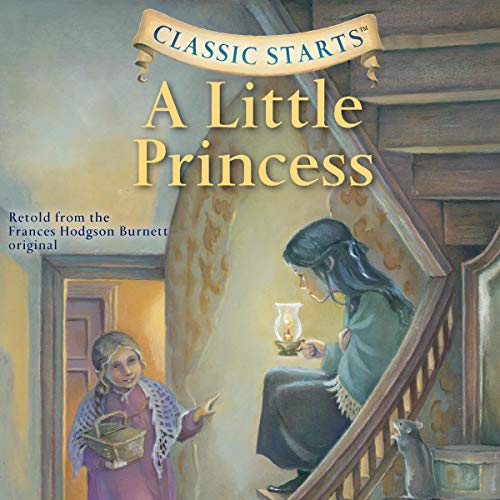
[The Princess in Rags: An Act of Selfless Compassion]-[A Little Princess - Part 10]
📋 Summary
The Princess in Rags: An Act of Selfless Compassion
The Burden of Poverty and the Discovery of Fortune
In the bleak winter, Sarah and her companion Becky endure harrowing conditions, suffering from extreme cold and hunger while performing "drudge work." Sarah’s situation is particularly dire, as her "raggedy clothes" and "holy shoes" provide no protection against the "damp, cold mist" of London. During a particularly difficult morning, Sarah’s fortunes appear to shift when she discovers a few coins in a "muddy gutter." Despite her desperate need for sustenance, Sarah’s integrity is immediately apparent. Rather than spending the money impulsively, she attempts to find the owner, showing a moral fortitude that earns the "respect" of the local baker.
The Moral Dilemma: Choosing Between Survival and Empathy
After confirming that the coins were unclaimed, Sarah purchases buns from the bakery. The baker, noticing Sarah’s extreme hunger—as if she "could eat one hundred in one big bite"—generously provides a "baker's half dozen" instead of the four Sarah could afford. However, Sarah’s journey home is interrupted by a life-altering encounter. She spots a "little figure" in even worse condition than herself, described as a "bundle of rags" with "hungry eyes."
Faced with this sight, Sarah asks herself a pivotal question: "What would a princess do?" This internal mantra guides her actions, overriding her own physical suffering. Despite being "starving herself," Sarah chooses to share her meager resources, handing over five of her six buns to the starving beggar child. The child consumes the food with "wild delight," a scene that leaves Sarah momentarily weak but spiritually resolute as she walks away with only one bun left.
The Ripple Effect of Kindness
Sarah’s act of selflessness does not go unnoticed. The baker, watching from her shop, is moved to tears by the sight of a starving girl giving away her own food. This display of humanity inspires the baker to extend her own kindness, inviting the beggar child into the shop for warmth and sustenance, declaring, "It's the least I can do for that young girl's sake." Through Sarah's sacrifice, the cycle of indifference is broken, creating a chain reaction of compassion in an otherwise cold city.
The Unrecognized Mystery
As Sarah returns to the school, she encounters a scene of departure. A man named Mr. Large is preparing for a journey, and in a moment of dramatic irony, his companion Guy Clarence calls out to find a "little girl" and "give her our love." Sarah, "lugging her heavy basket," observes this exchange without realizing the significance of the mystery. The narrative concludes with the revelation that Sarah is the very person they are searching for—the "little lost daughter of Captain Crew."
Ultimately, this chapter highlights the contrast between Sarah’s external circumstances and her internal nobility. Even when reduced to living in a "cell" and wearing "rags," she maintains the mindset of a princess, proving that character is defined not by wealth, but by the willingness to prioritize the humanity of others over one's own basic survival.

Deep Learning with ListenLeap


