
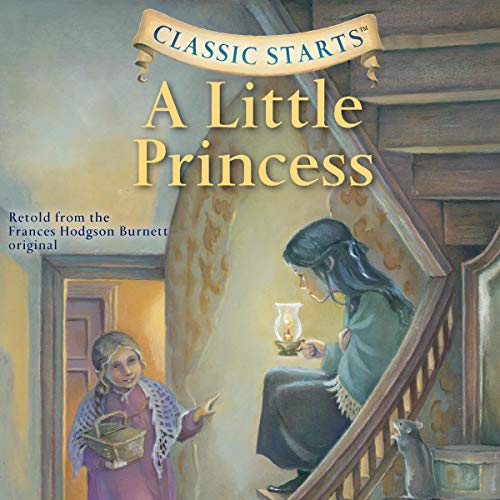
[A Summary and Analysis of 'A Little Princess' (Classic Starts Edition)]-[A Little Princess - Part 01]
📋 Summary
The Resilience of Imagination: A Summary of 'A Little Princess'
Introduction: The Transformation of Sara Crewe
'A Little Princess,' retold by Tanya Zamorski and based on the original work by Frances Hodgson Burnett, presents a poignant narrative of internal fortitude. The story centers on Sara Crewe, a young girl whose life undergoes a radical transformation from a privileged student at Miss Minchin's Select Seminary for Young Ladies to a destitute servant. Throughout the narrative, Sara’s character is defined by her unwavering belief that "every girl is a princess," a mantra she uses to maintain her dignity regardless of her external circumstances.
The Power of Storytelling as a Survival Mechanism
One of the most compelling aspects of the text is Sara’s reliance on her "active imagination." When faced with the harsh realities of being forced into the attic and treated as a "drudge," Sara does not collapse. Instead, she utilizes her storytelling abilities to escape her bleak environment. As noted in the narrative, she views herself as a princess in disguise, suggesting that her status is not determined by her wealth or the "fine clothes" she once wore, but by her behavior and mindset. This psychological reframing allows her to endure the cruelty of Miss Minchin and the isolation of the attic, demonstrating how narrative can serve as a shield against hardship.
The Moral Compass in the Face of Cruelty
Sara’s character is tested repeatedly by the antagonistic Miss Minchin. Despite the "cruel treatment" and the loss of her father, Sara consistently chooses kindness. Even when she is starving, she displays a profound sense of empathy, most notably when she shares her meager food with a beggar girl. This act of altruism reinforces the central theme that nobility is a matter of the spirit rather than social standing. The text emphasizes that Sara’s "gentle nature" remains intact, serving as a beacon of light in a school environment often characterized by vanity and superficiality.
The Role of Unexpected Discovery and Justice
As the story progresses, the arrival of the mysterious neighbor, Mr. Carrisford, serves as the catalyst for the narrative resolution. The discovery of Sara’s true identity and the restoration of her fortune are not merely plot devices; they are the validation of her steadfast character. The text illustrates that while Sara was "the little princess" even while scrubbing floors, the external world eventually aligns with her internal truth. This transition underscores the classic literary motif of virtue being rewarded, providing a satisfying conclusion to her journey of suffering and endurance.
Conclusion: The Enduring Legacy of Sara’s Spirit
Ultimately, 'A Little Princess' is a testament to the idea that one's environment does not dictate one's worth. Through Sara Crewe, listeners and readers are taught that "imagination" and "kindness" are the most valuable assets a person can possess. Whether she is living in a comfortable room or a cold attic, Sara’s identity remains constant. Her story continues to resonate because it champions the human capacity to remain hopeful, dignified, and generous, even when the world seems determined to strip those qualities away. The Classic Starts retelling effectively captures the essence of Burnett’s original message: that true royalty is found in the heart.

Deep Learning with ListenLeap


