Hi, this is Eric Kim with New York Times Cooking.
As a recipe developer, I spend a lot of my time trying to come up with dishes that are quick, easy, but also very special.
For me, that means dishes like cochugrado salmon. It's a crispy salmon filet with a salty, sweet glaze that bubbles up in candies.
I love cooking this because it only takes 20 minutes.
You can get this recipe and so many more ideas on New York Times Cooking.
Visit nytcooking .com to get inspired.
From the New York Times, I'm Rachel Abrams, and this is The Daily.
A 90 -second failure of Newark Airport's air traffic safety systems, which blacked out communication to planes carrying thousands of passengers, has prompted a new level of concern in air travel.
Today, my colleague Kate Kelley explains what the problems at one of the country's biggest airports tell us about air travel safety in the United States.
It's Thursday, May 8.
Kate Kelley, welcome to The Daily.
KATE KELLEY Thanks for having me, Rachel.
Kate, there have been a string of incidents in U .S. air travel in recent months that have really, I think, shaken consumer confidence in flying.
For example, we had the deadliest plane crash in decades in the U .S., happened in January in Washington, D .C.
And then there have been all these reports of near misses, near collisions.
And then finally, now, most recently, we have this major failure in air traffic control systems in Newark.
We have talked on the show before about how aviation, generally, the system is under a lot of pressure in this country.
But what's happening with Newark feels like an even more of an escalation from the problems that we've discussed before.
And I think a lot of people are wondering what on Earth is going on and is it actually less safe to fly right now?
It's a really great question, Rachel, and one that I've been asking myself and my colleagues.
are we just paying more attention in the wake of the DCA crash to issues whether it's wing bumping or actual crashes in the national airspace or are there actually more occurring?
Anecdotally, it certainly feels like the latter.
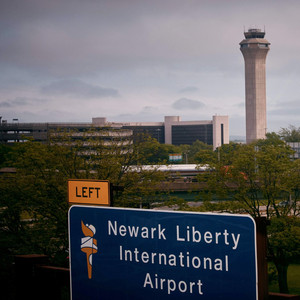
But what I think has really caught people's attention are these issues at Newark Liberty International Airport, which is one of the busiest in the national air system in the US, they had a major radar and radio outage on Monday, the 28th of April, that led to essentially chaos for passengers and a public outcry among government officials and even among some controllers themselves that the system was not safe and was not necessarily reliable for all the people flying in and out of that airport.
So, talk a little bit about that system failure more.
Like, what exactly happened?
Picture a relatively normal early afternoon at an air traffic control hub.
Where you have these air traffic controllers who essentially guide planes in and out of airports, sitting at workstations in front of, what we call, scopes, radar scopes.
And this is kind of circular screen that tells you within a certain diameter of airspace which aircraft are flying in and out.
So they're watching these they have a headset and the headset is attached to a radio frequency through which they can have two -way communications with pilots who are in the air.
So they're sitting there and out of nowhere some of the radar scopes essentially go dark, not all of them, but some of them.
And all of the radios go silent.
so they can't see the planes and they can't communicate with the pilots correct So what happens then is one person starts shouting, I've lost my radar feed.
A supervisor rushes over to see what's going on.
Another controller grabs a landline telephone, calls colleagues in air traffic control who are based in Long Island, and says, please hold your planes in the LaGuardia airport airspace because I don't know if my planes are going to drift into your planes.
I have no way to communicate with my planes." They lost three radar screens left black.
They lost all the radios that approached.
Just got told that the approach lost all the radars.
Three of the four radar screens left black, and they have no frequency.
And then at the same time controllers gathered around one of the radar screens that was functioning.
And as it was described to me, they were just trying to figure out what else they could possibly do to improve the situation, ensure that crashes didn't happen, or get in touch with other colleagues who could help them.
But there wasn't a whole lot left for them to do other than hope for the best and hope that their visuals and their audios came back.
After a while, the radio frequencies did return.
And they were able to talk again to pilots.
We just lost our frequencies and radios for a minute everywhere, so I think we're just gonna have to cut you loose VFR because we're stopping everything.
In case that happens again to the radar service.
We lost our radar and it is not working correctly.
Radar service terminated, Squawk VFR, freeze change approved.
If you want to brothel clearance, you can just call the towers and get closer.
Okay I'll avoid that frequency from you okay?
Okay, no. The Squawk VFR, look up the tower frequencies.
We don't have a radar so I don't know where you are.
And a short while after that, they also got the radar back.
MATT MCCROSSIN, CAPCOM 1169, we got him turn on bow two.
MATT MCCROSSIN, CAPCOM 1169, roger that you are number four for departure.
MATT MCCROSSIN, CAPCOM 1169, at a three two three in the event of lost comm, the frequency is one two zero eight five.
MATT MCCROSSIN, CAPCOM 1169, we're lost com.
MATT MCCROSSIN, CAPCOM 1169, roger that you are number four for departure.
What usually happens in these situations, and I think what happened here is other controllers who are in the building come and take over because the experience of those that on those positions is just so terrifying that they can't be expected to just pick right up on the work.
And, you know, there was one person in the hallway, apparently, who was just trembling.
And others who went home and cried and are having nightmares at this point.
Yeah. Understandably.
I mean, this sounds like the scariest thing that could possibly happen to you in your entire career.
Yes. Controllers have told me, Rachel, that this is the worst type of thing that can happen other than an actual crash.
How long did that outage last, in total?
To the best of our understanding, the radio came back after roughly 30 seconds, although to those who were in the room witnessing this, apparently it felt like unity.
The displays took a little bit longer, so that was closer to a minute and a half.
Obviously a minute and a half does not sound like a long period of time, but can you just explain to us why that period of time could even matter?
90 seconds is a long time when you consider the fact that these aircraft are supposed to be separated, varying depending on their location and how close to landing or takeoff they are by at least a couple of miles, two, three miles and at least a thousand vertical feet.
So within 90 seconds, you could well see how just mathematically you could have planes crashing into each other without proactive guidance from an air traffic controller.
So Kate, after the systems come back online, the radars, the scopes, what kind of effect does this have on Newark?
To the best of our understanding, flights were circling, they were delayed in landing, they were delayed in taking off.
Clearly what had happened created a disruption and flights had been unable to proceed essentially, so they tried to get those flights back on track.
But in the days that have followed, there have been flight cancellations, there have been delays.
Passengers that colleagues of ours have talked to at the airport have been frustrated.
They said they're waiting on customer service calls for 45 minutes or an hour.
They don't know what to do.
People broadly are nervous about flying in and out of Newark Airport.
They're wondering if it's safe.
This has had a cascading effect of creating anxiety and mistrust in the public.
It's unlikely that there's a quick fix.
OK, so let's talk about exactly what went wrong here.
Help me understand how this all happened.
Yeah, so I think the show has covered really well some of the issues bedevilling the United States' airspace and air traffic control in particular.
But in my opinion, Newark has become sort of this recent crucible for a combination of two pretty major strands fraying at the same time, both technology that we all collectively rely on to keep air travel safe and staffing issues.
So all of that is combining for probably the most public, most nerve -wracking air travel disruption that we've seen in recent years.
It's all coming to a head at Newark, basically.
Yes. Well, let's start with the technology piece of it.
Can you just explain what exactly is going wrong with the technology at Newark?
Yeah, so start with the notion that system -wide, the FAA is working with pretty dated technology.
Two lawmakers this week have referred to the fact that this Newark outage generated with a quote, unquote, fried copper wire.
I haven't been able to verify that with government officials, but it's been spoken of and written about and is probably a plausible metaphor, if not a real explanation, because you are dealing with copper wiring in a lot of these locations.
Got it. So even if copper wire didn't literally get fried here, the point that I think you're making is that this technology is old and it's prone to breaking down?
That's right. The other problem with this agent system is that it's prone to hiccups and delays that can make it extremely difficult at times for air traffic controllers to keep up with what is happening.
The air traffic information they're getting may not be real time or maybe frozen or interrupted by glitches along the line.
Just explain that. So the way that air traffic control works at a lot of airports might actually be different than what you think it is.
You might have an image of a bunch of people sitting in a tower at a place like Newark Airport with radar or maybe even with binoculars looking out the window and directing those flights in and out, watching them land and take off from the runway.
That's actually not the full picture.
You do have people sitting in a tower at the airport, but you also have a whole bunch of people sitting offsite in locations that might be dozens of miles away, watching that air traffic as well, and using radar scopes and two -way radio communications to guide those airplanes.
When it comes to Newark for a long time, decades, many of their air traffic controllers were working at a hub in Long Island in a town called Westbury, New York.
But last summer, the FAA decided to relocate a bunch of those people from Long Island to Philadelphia.
And in order to safely relocate those people to Philadelphia, and make sure that they had the technology to do their jobs there, the FAA did sort of a workaround for the data feeds that go from Newark Airport to Philadelphia.
Sorry, just explain what is a data feed exactly?
Like what are we talking about?
So, when you have planes in the air at Newark and you have flight plans and vectors, meaning the angles at which airplanes come into the airport, that all represents a whole lot of data.
So, the data that's generated from Newark airport typically would be sent via copper wiring or broadband to the air traffic control hub.
So rather than route that data straight from Newark to Philadelphia, the FAA for whatever reason decided we'll keep our feed from Newark to Long Island and then we'll send it from Long Island to Philadelphia.
In and of itself, with fast transmission in this day and age, that shouldn't be a problem.
But technology experts tell me it has created latency issues, like very slight delays, and it's also made that Philadelphia data feed vulnerable to other hiccups in the system.
So basically, it sounds like they added a pitstop along the way for this data, but that pitstop seems like it came with more opportunities for failure.
Is that right? Yeah, that's right.
And we saw a manifestation of that potential for failure last September 2nd.
And what happened was that several of the radar scopes in the Philadelphia location where the newer controllers were working froze up.
So wait, they actually had another outage before this latest one?
Like, this isn't the first time this has happened?
So there have been three outages that we know of, including the one that occurred last week.
The first one I'll come back to in a second, because it's sort of a horse of a different color.
But the one I was mentioning, it resulted from the sort of pit stop idea that we were talking about it.
It essentially related to the fact that this data was traveling a little bit further and the data stream that feeds into these Newark air traffic controller screens was affected by data issues at a different local airport that were sort of overstressing the system.
And what was the third outage that you mentioned, that you said was kind of different?
So that one was a more significant disruption.
It occurred last August 27th.
And what happened there was that an outside vendor working for the FAA accidentally clipped or unplugged literally a feed of data.
Oh my God. Yeah, so you could hear the air traffic controller who was dealing with the downed technology saying, attention all aircraft. Radar contact is lost. radar contact is lost when you listen to the audio recordings from that day.
That was another 90 -second outage.
It doesn't seem like it should be that easy to cause such a dangerous system failure.
The idea that like one guy pulls out the wrong plug.
Like should there be some sort of, I don't know, safety net to prevent that from happening?
Yeah, I remember somebody who was around at the time told me they don't even necessarily care what the exact causes are of this outage, whether it's someone with a big pair of scissors or someone you know knocking a plug out of the wall Regardless this should be the Fort Knox of aviation data in other words This should be an impenetrable system with multiple backups that is never permitted to fail You know Kate I have to say even though I've been Obviously an avid listener of the daily and consumer of the New York Times I had no idea that the technology issues in air travel were this bad and this terrifying.
Yeah, Rachael, the technology really is problematic.
But where you have a toxic combination here is when you throw in the fact that Newark has already been struggling for a while now with chronic staffing shortages.
And all of that is impeding these controllers' ability to function.
We'll be right back.
I'm Dane Brugler. I cover the NFL draft for the athletic.
Spending the whole year working on a draft guide, I'm looking at thousands of players, putting together hundreds of full scouting reports.
All the nitty -gritty details, the testing data, the stats, but extensive background research as well.
Every journey is a little bit different.
I'm on the phone with a lot of these guys, hey, when did you start playing football?
What other sports did you play?
Tell me about your family.
You know, learning more about these guys as people.
Our draft guide picked up the name the beast because of the crazy amount of information that's included.
I have no idea how to quantify the hours I've spent putting it together.
I've been covering this year's draft since last year's draft. There is a lot in the beast that you simply can't find anywhere else This is the kind of in -depth, unique journalism you get from The Athletic and The New York Times.
You can subscribe at nytimes .com slash subscribe.
So Kate before the break you'd mentioned that there have been staffing issues within air travel and specifically at Newark.
So can you talk a little bit about that?
What has been going on with staffing at Newark specifically?
Yeah, so as your listeners know, because you guys have talked about this, there have been air traffic controller shortages nationwide.
So why has Newark been a particular crux of the problem?
It has to do with the complexity of it and the amount of experience that's needed and expected.
So if you want to become an air traffic controller, you would start with a training process in Oklahoma City, which is where the FAA's academy is.
you would have had to apply for that and be admitted to the program.
Then after that you would probably go to a pretty light airspace, at least relative to these New York City airspaces, Fargo, North Dakota for example.
And maybe you would do that for a couple of years and maybe after that you would do something like Indianapolis, Indiana.
And then after you had done that for a while, you might eventually work your way up to an airspace like Newark but even when you arrived at New York.
Even if you were coming from a major airport like O 'Hare, you would still need to train for roughly a year to learn all the nuances and all the techniques associated with that Newark airspace.
So even if today, the FAA identified 10 new people that it wanted to send to do air traffic control at Newark, that would be a year give or take before they'd be ready.
In other words, just because you say, okay, we're going to give you the money to hire 10 new people, 100 new people, that does not mean that you have 10 or 100 new people that are ready tomorrow to take a job at Newark, one of the busiest airports in the country?
That's right, and these staffing issues at Newark are not new.
In fact, part of the reason that these people we're talking about were relocated to Philadelphia in the first place was to solve for a problem that Newark controllers were having with low personnel.
They had been working in Long Island for many years, controlling this Newark airspace from Long Island." And there were ongoing issues, recruiting and retaining people who could work that airspace.
Some of it had to do with cost of living.
Long Island, New York area, an expensive place to live, an expensive place to try to buy a house or raise a family.
So it's been several years trying to convince controllers and their union that they should move to Philadelphia.
The FAA reasoned that with the lower cost of living in the Philadelphia area, they might be able to recruit and retain more people.
So that move to Philadelphia, did that help with the staffing issues ultimately?
Well, no. And to be fair to the FAA, it was always going to be a long term play, given this kind of long pipeline we were just talking about, but a variety of issues have meant that their numbers are actually down at this point.
So let me just walk you through it.
For a long time the FAA had set the air traffic controller target associated with this Newark space at over 60 people.
63 is the number that I heard. But around the time that they proposed and undertook this move of people to Philadelphia, they changed the target to something like 42 air traffic controllers.
That would be a full staff for controlling Newark airspace from this particular hub.
But wait, initially they said that they needed 60 -something controllers and now the FAA is saying they only need 42.
Why did they change that?
I don't have a clear explanation for that and controllers think it's strange.
But they lowered their expectations at some stage in time, maybe because they were just trying to be pragmatic about the numbers that they had.
Now, almost a year into this relocation, the FAA now says they have 22 people who are fully certified to work the airspace.
But let me put that in context for you.
So according to a government document about staffing that I've reviewed, a full day shift an eight hour shift should be 10 people, and a night shift should be 14 people.
At the time of this radar outage that we're talking about, you had four controllers on duty sitting in front of those radar scopes.
So basically what you're saying is that at the time of outage, they had a third of the people that they actually need to run air traffic control at a super busy time at Newark.
Yeah, under normal staffing guidelines, that's what they would have. Given the numbers of the air traffic controllers that are actually working at Newark, is there a safe number of flights that can fly in and out?
How many planes ideally should be going in and out of that airport if there's only four people who are working at any given time.
Well, let me tell you what the CEO of United Airlines says about this.
He's working in close contact with the FAA.
He wrote in a letter today, in ideal weather with full staffing and with perfectly functioning technology, the FAA tells us that the airport can only handle 77 flights per hour.
And yet the FAA regularly approves schedules of 80 -plus flights per hour almost every day between 3 and 8 p .m. This math doesn't work.
So then, what's the role of the government here?
Like at what point is the FAA supposed to come in and say, this is not safe, you can't fly, you do not have enough people for these planes to land and take off safely?
Like isn't that the whole point of the FAA?
At a certain point, the FAA will say that.
When enough controllers don't show up for work, for whatever reason, they have what are called staffing triggers and they just can't run the airspace.
They either have to dramatically reduce the number of flights that can come in and out on that day, or they have to engage in a ground stop.
One famous example of this occurred in 2019, when there was a government shutdown and about 10 controllers in different spots around the country called in sick on a given day.
And the political pressure with stranded passengers and canceled flights became so great that the government essentially reopened.
And so there are cases in which the staffing is just so low that the FAA says, Basta, we can't continue flying.
They are case by case periodically, slowing flights or grounding flights, but to my knowledge, they haven't proactively cut off the number of flights that can come in and out of Newark right now.
So just to be clear, we know there have come points where the FAA has said, these conditions are not safe, you're not allowed to fly.
and we know that that hasn't happened at Newark, but we don't actually know where the line is.
Do I have that right?
You do. So given the fact that the FAA isn't actually pulling the emergency break, people can't just be expected to continue with the status quo at Newark, right?
Like so is anybody proposing any kind of solutions?
Yeah, so Transportation Secretary, Sean Duffy, who just came in in January, has been pretty outspoken about this in general and in recent days.
He has said that the technology is antiquated.
He has said that we need to move far ahead in terms of modernizing that technology.
He also wants to solve for the staffing problems. He's already introduced some enhanced pay and incentives for people to consider joining the FAA as controllers.
And they seem like they're committed to cutting red tape, investing where necessary, putting in better technology, and so on.
So I think the momentum and the commitment are there in theory.
And I think they may be able to move more expeditiously than some of their forebears.
On the other hand, these are not quick fixes.
Maybe they'll come up with some innovative ideas for bringing in new fresh talent and fast -tracking them.
But they can only track them so fast. And if the technology is not backed up and consistent, it's not going to help anyone.
Kate, I feel like as journalists when you see a major failure like what happened at Newark within a system that more broadly we know has problems. I feel like our first instinct is to assume this is probably not the only really big problem here.
And so I guess the question becomes, are there more Newarks around the country?
Yeah, I think it's a fair question and one that I can't readily answer.
I do know something about air traffic control, for example, in Washington, D .C.
And it's absolutely got its own set of challenges.
And while staffing has been a problem there too, they have a totally separate issue, which is just the complexity of their airspace with helicopters flying in and out.
And that became the issue during this terrible crash in January.
So I think what's tricky about this conversation is every airport, every airspace is nuanced in its own way.
That's why these controllers spend years even getting up to par on the place where they're working.
But it's a very valid question.
I mean, it's sort of interesting to note here that in the past, if you were a nervous flyer, you were sort of treated as a bit irrational because everybody would say, oh, it's so safe, it's much more dangerous to be in a car.
But now it feels like to be nervous is normal just from reading the news.
Yeah, it's rational.
But I also think statistically aviation is safe.
The FAA does have basic guardrails.
that we need to rely on them to put in place.
And even in this case, the airline that is a major user of this particular airport is telling us, we're keeping safety first and foremost, we're dialing back some of our operations here and we're gonna lean on the FAA to do more as well.
Right as nerve -wracking as it is to maybe read the news and maybe to listen to this episode, it's still probably important to remember that air travel still remains overwhelmingly safe, and, frankly, probably still much safer than getting in a car.
That's right. What about you, Kate?
Like I'm just sort of curious, you've been covering these issues for weeks now.
Have your personal feelings about air travel changed?
Like, are you more nervous?
Yeah, I am. And I have to say, I'm not a nervous flyer.
But I've had a hard time flying out of Washington, Reagan since the crash in January that I've been covering, just because I know how complex that airspace is.
and I know that they too are dealing with staffing shortages.
In terms of Newark, I don't fly them a lot but I was in a group chat recently with some people who were involved in a trip out of Newark, and I was really uncertain of how to reply.
I have my own opinions, which is that the system is stressed right now and I do know of some of the particular challenges that Newark has.
At the time though, I really didn't know any more than the other people knew.
And as we used to say, when I worked at the Wall Street Journal and we were covering the beginning of the financial crisis, you don't cry fire in a crowded theater.
If you don't have a specific and credible reason to tell people that a crisis is afoot, you don't say it.
Because it's not fair and it's not ethical to alarm members of the public.
Even your friends and family, if you don't know for sure that there's an issue.
It basically sounds like you're saying we should not be calling fire yet.
No, I'm not. I'm not.
Let's see how this plays out.
Do you have any trips planned?
Yes, I'm actually out of town right now and I will be returning to New York to LaGuardia.
We'll be right back.
Here's what else you need to know today.
Three former police officers were acquitted of charges including second degree murder in the beating death of Tyree Nichols back in 2023.
The killing sparked nationwide outrage and was held up as an example of police brutality against a black man.
Nichols, a FedEx employee, was pulled over by the officers who used pepper spray and a stun gun on him before chasing him down and beating him after he broke free and started running to his mother's house.
And the Federal Reserve left interest rates unchanged on Wednesday for a third meeting in a row, as officials pointed to heightened uncertainty about how significantly President Trump's tariffs will raise inflation and slow growth.
While the Fed acknowledged the labor market was still solid in a statement, policymakers also noted uncertainty about the future economic outlook work, and that the risks of higher unemployment and inflation have risen.
Today's episode was produced by Rob Ziebko, Mary Wilson, Jessica Chung, and Michael Simon Johnson.
It was edited by MJ Davis Lynn and Devan Taylor, contains original music by Rowan Ni Mysto, Alicia Beetyup, and Marian Lizano, and was engineered by Chris Wood.
Our theme music is by Jim Brunnberg and Ben Landsberg of Wonderly.
That's it for The Daily.
I'm Rachel Abrams. See you tomorrow.