
[The Architecture of Enigma: Varian Johnson on Crafting Mysteries and Character-Driven Narratives]-[A Conversation with Varian Johnson]
📋 Summary
The Architecture of Enigma: Varian Johnson on Crafting Mysteries
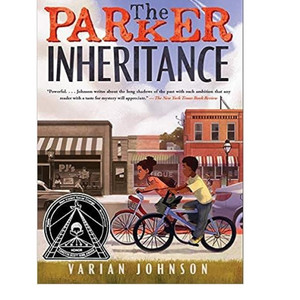
In this bonus edition of Book Club for Kids, host Kitty Felde interviews author Varian Johnson, the creative mind behind The Parker Inheritance. Johnson provides a fascinating look into his literary philosophy, comparing the construction of a mystery to "building a clock," where each component must precisely connect to the next clue to ensure the narrative mechanism functions perfectly.
The Philosophy of "No Rules"
When asked about his specific "rules" for writing a mystery, Johnson offers a surprising caveat: "There are no rules." He emphasizes that every story possesses its own unique requirements. However, as both a reader and a writer, he gravitates toward narratives that balance surprise with logical consistency. He notes that a successful mystery should not provide a solution that "comes out the blue." Instead, upon reflection, a reader should be able to identify a clear "pattern" of clues that led to the resolution. Johnson finds immense satisfaction in books that reward rereading, allowing the audience to discover previously missed details that were hidden in plain sight.
Misdirection and the Reader Experience
Johnson admits he enjoys being "manipulated" by a book. He appreciates the technique of drawing the reader’s attention to a "big to-do" in a scene, effectively masking a "minor thing" that contains the actual answer. While he acknowledges the utility of "red herrings," he prefers subtle misdirection where the solution is present but overlooked. His goal is to make the reader feel "smart enough to figure it out," yet he finds genuine pleasure in being "had a bit" by a clever plot twist.
Mystery as a Vehicle for Growth
Beyond the mechanics of the plot, Johnson highlights the importance of "character growth and character development." He believes a mystery is most effective when it forces the characters—or even the reader—to "re-examine" themselves or their understanding of the world.
He specifically underscores the concept of solving mysteries for the "greater good." In The Great Green Heist, the stakes, while seemingly small, are significant to the students involved in stopping a rigged election. In The Parker Inheritance, solving the mystery does more than provide financial gain; it "re-affirms and clears her grandmother’s name." For Johnson, revealing the history of a family "driven out of Lambert" adds a layer of depth that makes the narrative "really interesting and really satisfying."
Every Book is a Mystery
When shifting away from traditional capers or mysteries, Johnson maintains that his approach remains fundamentally rooted in mystery. "Every book is a mystery in some type of way," he explains. He argues that in any novel, the core challenge is figuring out what a character truly wants.
Characters are often "unreliable" narrators of their own desires, struggling to admit whether they are seeking "a relationship," "family," or simply to feel "appreciated or validated." Consequently, the author’s task involves a strategic "mystery" of pacing: deciding "how much to reveal" and managing the gap between what the reader knows and what the character understands about themselves. Even in voice-driven novels where the plot is less "tightly structured," these foundational mystery elements remain essential in the craft of novel writing.

Deep Learning with ListenLeap


