
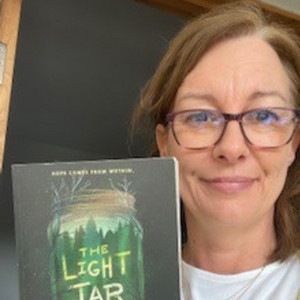
[Bridging Worlds: Empathy, Accessibility, and the Craft of Writing with Lisa Thompson]-[A Conversation with Lisa Thompson]
📋 Summary
Bridging Worlds: Empathy, Accessibility, and the Craft of Writing
In this insightful bonus edition of the Book Club for Kids, host Kitty Felde sits down with British author Lisa Thompson to discuss the universal nature of storytelling, the evolving landscape of children's literature, and the technical nuances of writing for diverse readers.
The Universality of Empathy
When asked about the differences between American and British young readers, Thompson emphasizes that the core experience of reading is remarkably consistent. She notes that the "backbone of empathy" is a universal trait among children. Thompson explains that her writing process is intentionally designed to challenge initial perceptions; she aims to write characters where, "as you read... that's why they're behaving that way." By encouraging children to "step in another child's shoes," Thompson fosters a deep, cross-cultural connection that transcends geographic boundaries.
The Challenges of Modern Reading Habits
While the fundamental ability to read remains strong, Thompson expresses concern regarding a recent "drop in reading for pleasure." She identifies several contemporary culprits, including the influence of the pandemic, the ubiquity of smartphones, and the distraction of gaming. Thompson argues that fostering a passion for books must start with adult engagement—if parents stop reading or teachers lack the time to read in class, the impact is tangible. However, she remains optimistic, noting that when she visits schools that possess a "passion for books," it is immediately evident in the "variety of books" students choose to have on their desks, ranging from poetry to nonfiction.
Inclusive Storytelling: Writing for Dyslexia
A significant portion of the conversation focuses on Thompson’s work with the publisher Barrington Stoke, which specializes in "dyslexia friendly books." Thompson provides a fascinating look into the technical constraints and editorial considerations required to make literature accessible:
- Linear Storytelling: Thompson avoids "flashbacks" because they can cause "cognitive issues" for dyslexic readers who are working to follow a primary storyline.
- Editorial Pacing: Editors ensure that "difficult words" are not placed on the first page, allowing the reader to build momentum before encountering challenges.
- Physical Accessibility: The books utilize "creamy coloured paper" and specific font spacing to reduce visual strain.
- The Power of Achievability: By condensing stories (e.g., a 10,000-word book compared to a 60,000-word novel), these books become an "achievable" goal for students, making them highly effective tools for teachers aiming to boost reading engagement.
The Intersection of Broadcasting and Prose
Drawing on her background in radio, Thompson reflects on how her experience in broadcasting informs her fiction. She highlights that the "power of your ears" is an often underestimated tool in writing. For Thompson, writing is akin to being a "film director," where she must visualize every movement and action. She describes her process as involving a form of "acting," where she physically acts out a character's motions—such as "the tops of his arms went up"—to describe them accurately in prose. While she finds dialogue comes naturally, she admits that the prose requires "a lot more work," demonstrating a disciplined approach to translating spoken rhythm into written narrative.
Conclusion
Lisa Thompson’s reflections offer a compelling look at the responsibility of the author. Whether through championing empathy, advocating for accessible formats, or utilizing the performative aspects of dialogue, Thompson demonstrates that the ultimate goal of children's literature is to keep the reader engaged, understood, and inspired.
Deep Learning with ListenLeap


