I've spent the last decade immersing myself in finance a degree, an accounting qualification and then a career in investment banking.
And what surprised me most through all of it is this.
Most people don't feel like they don't have enough because they don't earn enough.
They feel like they don't have enough because of nine small habits they repeat every day without realizing it.
So in this video I'm going to walk you through all nine and exactly how to break out of that feeling.
Let's dive in.
Number one, the space edit.
I don't know about you, but my environment really, really affects my mood way more than I used to realize.
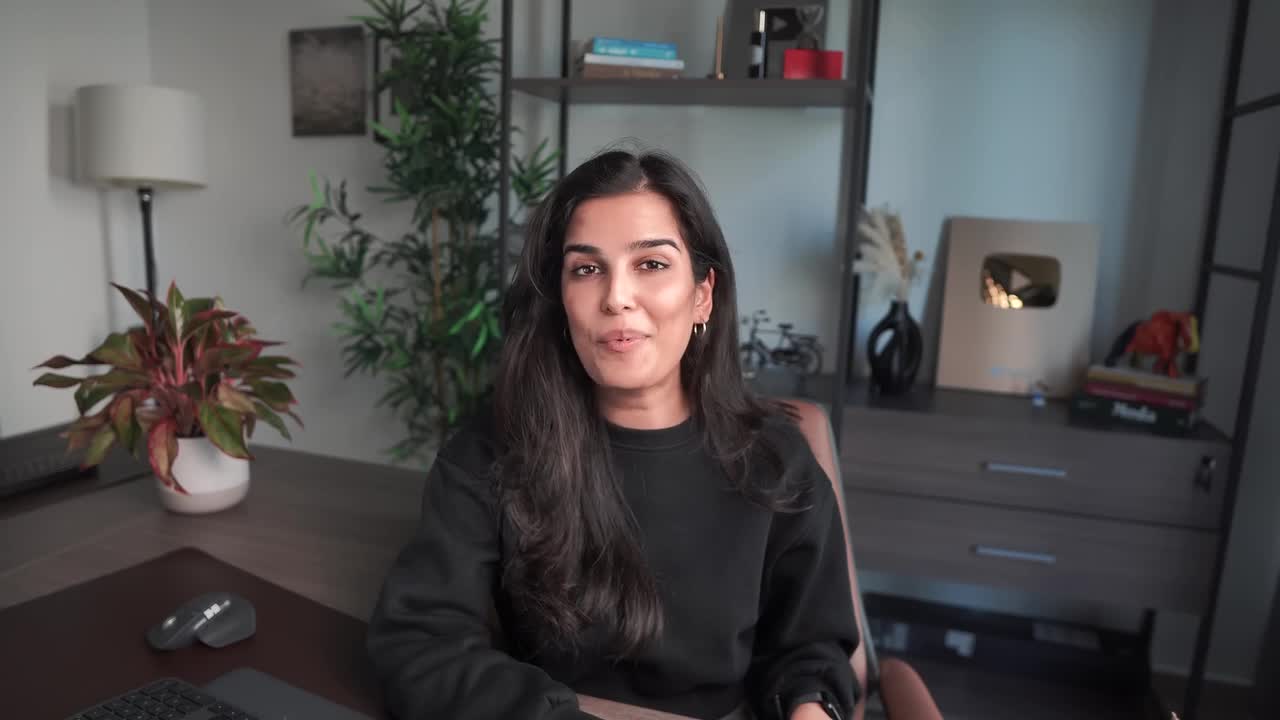
Just a few days ago, I walked into my home office so this room here after a long day, and I just stood at the entrance.
There was stuff everywhere.
I had my notes everywhere, papers that I hadn't looked at from like, Someone from like a year ago, a mug from the evening before random cables everywhere.
I remember thinking, no wonder I feel chaotic.
I'm literally surrounded by chaos.
There's research that backs this up.
Clutter increases cortisol, which is your stress hormone.
But honestly, you don't need a study to tell you that.
You could probably just feel it.
When your space is messy, your head feels messy too.
So I started doing something really, really small.
Every evening before I finished off work, I spent two minutes just clearing up my desk.
Not deep cleaning, just resetting.
Putting things back to where they belong, closing the tabs, both literally and mentally.
It sounds so tiny, but over time your space just starts to feel intentional, like curated, like someone who had their life together, like someone who has their life together, lives there, even when you don't fully feel like that person yet.
So start small.
Clear your home office. just your desk in your home office maybe today.
Remove one thing and see how it feels.
Number two, the micro luxury.
Something I've noticed about people who seem genuinely at ease with money is not that they spend more, it's that they experience things more deeply.
And there's actually research to back this up.
A study tracked over 2500 adults and found that people who focused on experiences, even small, everyday ones, reported higher frappiness than those who focused on material purchases.
And here's a bit that surprised me.
It didn't matter how much that experience cost.
For instance, a 5 coffee, enjoyed slowly, can buy more satisfaction than a 500 gadget that you stop noticing after a week.
So here's the habit.
Upgrade one daily experience.
Not by spending more, but by paying more attention to what you could do to make that experience better.
So maybe it's drinking your coffee from a proper mug instead of gulping it from a travel cup.
Maybe it's lighting a candle while you work.
Maybe it's putting music on while you cook.
Maybe it's going for a walk without a phone.
I started doing this when I realized how much of my day I was just getting through.
I was just eating lunch at my desk whilst answering my emails.
I was drinking coffee whilst scrolling or doing something else.
I often find myself going through phases like this when I'm not really in the moment.
When I started treating one small part of my day as something worth savoring, even just 10 minutes, it made such a big difference.
It's about building these small, rich habits into a random Tuesday.
And that's the thing about feeling rich.
It's not really about how much you have, it's about how much you notice, and noticing is free.
And this has made such a big difference to me that I actually took some time out to write out all the things that I've been doing on a recurring basis, all the tasks, all the areas that I keep doing over and over again that feel so mundane, and then came up with ways to make those Exact things feel like a luxury to me.
Number three, the morning handcuff.
How do you spend the first few moments of waking up?
For most people, the answer is the same.
Eyes open, phone in hand before they set up, before they've had a glass of water, before they've even registered what day it is.
And here's what that's actually doing to you.
Research shows that people who check their phone within five minutes of waking have significantly higher stress hormones for the next few hours.
It's like starting every day already overdrawn.
You haven't even made a single decision yet and you're already in the red emotionally mentally, before breakfast.
I did this every single morning for years, scrolling through emails and messages before my feet even hit the floor.
And I'd carry that feeling, that low level panic of everything I needed to catch up on.
I'd carry that feeling for the rest of my day.
So the habit here is simple.
Don't check your phone for the first 15 minutes after you wake up.
And I just said 15 minutes because I really feel like if you've never done this before, any longer than that can feel a bit unrealistic or not sustainable if you're just getting started.
But 15 minutes, that belongs to you before the world gets in.
That really can make such a difference.
Sit with your thoughts, look out the window, drink your coffee, whatever it is, just do it without a screen.
And when you start doing this, you realize that you're not going about your day, feeling like you're just catching up.
You actually put a lot more control of that morning, but also that sets the tone for the entire day.
Number four, the freedom block.
Here's something that took me a while to realize.
You can have money in the bank and still feel like you don't have money if you don't have time.
And it took me a while to realize this was happening to me because every evening was accounted for.
Every weekend was recovery from that week that I just worked.
I was technically doing fine financially, i felt exhausted all of the time, and exhausted doesn't feel rich.
Exhausted feels like you're barely keeping your head above water.
And yet most of us are constantly optimizing for money and completely ignoring time.
We'll spend hours researching how to save 50 on a flight, then spend zero hours protecting our free time from being swallowed by work, by admin, by other people's priorities.
So So here's the habit.
Block one hour a week.
Just start with one hour, minimum, where no productivity is allowed.
I call it the freedom block.
And I don't mean exercise.
I don't mean meal prep.
I don't mean catching up on things or anything that you could put on a to-do list.
I mean actual guilt-free time off, a walk with nowhere to be book you're reading just because sitting in a cafe doing absolutely nothing.
I know it sounds indulgent maybe, but that's kind of the point for me.
I actually put that blog in my google calendar like a meeting so it comes up as a blocked time.
If anyone's trying to book a meeting, they know that i'm not free.
I actually have something scheduled.
Because here's the thing if your life feels rushed, it doesn't matter how much money you make.
You won't feel rich.
You will just feel like you're surviving.
Before I get into the next rule, I want to talk about one of the most common ways that people lose money without even realizing it, especially if you travel, work internationally or send money abroad.
And that is, some banks don't give you the real exchange rate.
They could be charging you a hidden markup on the exchange rate on top of any transfer fee, so you could be losing money over time.
But i have a smart solution.
Wise, who is sponsoring today's video Wise, uses the mid-market exchange rate, so it's the rate you actually see on Google.
No hidden markup baked in.
They've also launched a current account.
Whether you're at home or abroad, you can get paid, hold different currencies, send money, spend abroad in 160 countries all in one place and a couple of things that i personally like.
You can earn around 323 variable on your balance when wise assets is on and still spend normally.
Second, you can get paid your salary and international transfers into one place with over 20 local account details, truly instant, low-cost global transfers and over 74 of transfers arrive in under 20 seconds.
So if you've got any kind of international money flow, it just makes things way simpler and transparent.
I've partnered with Wise and they're offering a free first transfer up to 500 pounds.
If you want to try it, you can use the link in the description.
Thank you so much Wise, for sponsoring today's video number five, the pause test.
There's probably something sitting in one of your baskets, in one of your tabs, that you have open up right now, and you probably convinced yourself that you need that though.
Yeah, so let's talk about that.
Research shows around 64 of people who make impulse purchases end up regretting them, And more than half say those purchases have actually delayed their biggest financial goals.
So here's a tiny habit that costs nothing and takes almost no effort.
The 24 hour rule.
You would have seen me speak about this in some of my other videos on my YouTube channel as well.
Essentially, anytime you want to buy something non-essential, something that isn't food, that isn't bills, that isn't a genuine emergency, you wait 24 hours before you buy it.
In those 24 hours.
Sometimes you forget about that thing completely, which tells you everything you need to know.
Sometimes you come back and you still want it, in which case, buy it, no guilt.
But most of the time that urgency it just fades because the I need this quietly becomes.
I wanted it for a moment.
I've been doing this for a couple of years now and honestly, it has saved me probably thousands, if not tens of thousands.
Not because I stopped buying things, but because I stopped buying things that I didn't really want.
Number six, the have list.
You've probably heard of gratitude journaling.
This is a similar idea, but for your spending.
At the end of your day, write down three things you paid for that you actually used or enjoyed.
So this isn't big purchases or one-off items.
This is the everyday stuff you don't even notice.
If you went to the gym this morning, write it down.
If you went to sleep in a new pyjama set that you bought last month, write it down.
If you had a coffee with a friend or a colleague, if you use your Spotify on your commute, if you cooked with groceries that you actually bought, write it down.
Because here's what happens when you do this consistently.
You stop seeing your money as something that's just disappearing.
You start seeing it as something that's actually working for you and what you're able to enjoy to make your life better every single day.
Most people only think about money when it's leaving.
A bill arrives, a payment goes out, a balance drops.
So money becomes associated with loss.
But when you start logging the return, even the small things, that association, it shifts.
You're not someone who's constantly spending, you're someone whose money is buying them a life.
Number seven, the evidence list.
Most people walk around feeling behind even when they're actually making progress.
And if you're watching this and you watch other videos on this channel, you are almost certainly one of them.
I do this still all the time.
I hit a goal and immediately move the goalpost, finish a project and focus on what I haven't done yet or what the next project should be.
It's like, no matter what I achieve, my brain always is pointing at something that I'm missing out on or something that I'm not doing yet.
So this is one that I'm actively working on right now.
And that is keeping what I call an evidence list.
Whenever something good happens, whether it's a small win, a moment of discipline, any kind of progress, I either write it down or I record myself in that moment, just explaining what's happened and what I feel like I've overcome.
And it's just building evidence for yourself.
Got through a tough workout, evidence.
Published a video that I was nervous about, evidence.
Saving money instead of spending it, evidence.
Had a difficult conversation that I've been putting off evidence.
What you're doing is you're building a case to yourself that's proof that you're moving forward, even when it doesn't feel like it.
And this is important, because your brain is really bad at remembering wins.
It's wired to focus on threats problems, gaps.
So unless you actively record good stuff, it's so easy for it to disappear and you're left feeling like you're just not getting anywhere.
So now, whenever I have those days, whenever I'm doubting myself, whenever I feel like I'm behind and everyone's doing so much more than me, I just look at that evidence list.
I go into that and every time I'm just surprised by how much is actually there.
Things I've completely forgotten, progress I just stopped noticing.
So it takes 10 seconds to add an entry, but over time it really does change how you see yourself.
You stop feeling behind and you start feeling like someone who's just getting somewhere.
Number eight, the rich script.
There's a phrase you probably say all the time and it's making you feel broke, without you even realizing it.
I can't afford that harmless right, responsible maybe even.
But here's what actually happens.
When you say it, you're telling yourself and anyone that's listening that you don't have options, that money controls you, not the other way around.
It becomes how you see yourself, and psychologists call this self-perception theory.
Basically, we build our identity from the words that we use and that we say aloud.
If you keep saying I can't afford that, you're reinforcing a story to yourself, and that story is I'm someone who doesn't have choices.
I'm at the mercy of my bank balance.
Now compare that to that's not a priority right now.
Same outcome you're not buying the thing, but now it's your choice.
Suddenly you're someone who could afford that if you wanted to.
Whether it took you 10, 20 years to afford it or not, that's not the point.
But you could afford it.
You're just choosing not to.
You have options.
You are in control, whether it takes five years to afford that.
So here's a habit.
For the next week.
Catch yourself every time you're about to say I can't afford that and swap that in for that's not a priority right now.
And number nine, the future bet.
Here's what nobody tells you about feeling rich.
It's not about what you have right now.
It's about knowing you're becoming someone valuable.
Let me explain that.
There's a version of you that exists in the future, the one who's further along, more skilled, more experienced, more confident, more free.
And the gap between who you are now and who that person is.
That's where the feeling of not enough often lives.
But the flip side is that when you're actively investing in that future version of yourself, whether it's through learning, through building skills, through looking after your health, through making connections, you're closing that gap.
And you start to feel richer with every step you take to close that gap, when you notice it or reframe it that way.
You start to feel richer richer now before those results even show up.
So the habit here is once a week do something for your future self.
It doesn't have to be big.
Read a chapter of a book that stretches your thinking.
Watch a video that teaches you something new.
Go for a walk that just clears your head and makes you think expansively.
Reach out to someone you admire.
Do a workout that makes you stronger.
Because here's something i noticed feeling rich is not about what you have.
It's about knowing you're progressing or you're in motion, or you're feeling fulfilled in some way, and that feeling it can start today.
That's it.
Nine tiny habits.
None of them require you to earn more or to spend less.
All of them shift how you experience your life, which is actually where the feeling of wealth actually lives.
Thanks for watching.
Don't forget to subscribe if you haven't already, and I'll see you next week.