Hey there, it's Ira with a quick message before the podcast starts.
Maybe you heard the little announcement episode that we dropped into the feed a few days ago, but if not, I just want to say here, we just launched a new subscription version of our show.
And we did that, like I explained in that episode, because the podcast industry has changed in ways that have affected everybody's ad revenue.
We're making a third less from advertising this year than we have in recent years.
And so we needed to replace that money.
And we wanted to do it in a way that could also be kind of nice for our listeners.
And so we launched this premium subscription version of the show that we're calling This American Life Partners.
And the idea is that if you subscribe, you get an ad -free version of the show.
You get exclusive bonus content, stuff that we're going to put out regularly only for subscribers, and you get a brand new Greatest Hits archive.
Basically, what we do with this is I handpicked over 250 favorite episodes, and those will appear right in your podcast app, like just below the new episodes.
But mainly, of course, when we're asking you to subscribe, the thing that we're asking you to do is to just join us in making the show.
I really think that this is the future of the show, is making it with listeners.
Okay, the very last thing I'm going to say is it would really help us to sign up as many people as we can right at the launch.
And so to encourage that, we are offering a discount price on the subscription.
But we're only offering this for just one week.
Okay, so if this seems like the kind of thing that you might want to be part of and try out, I really would encourage you to do it right now.
It's better for us to sign up people with the launch, and it's better for you because you get a cheaper price.
So go to thisamericanlife .org slash lifepartners.
That link is also in the show notes of this episode.
And if you happen to listen on Apple Podcasts, you can sign up right in the app on our show page.
Thank you to the thousands of people who have already signed up since Wednesday when we launched.
That really got to us here.
All right, I'm going to stop there.
Here is this week's episode.
From WBEZ Chicago, this is American Life.
I'm out of class. So this is going to be one of those shows where I'm just going to say a few things here and then get out of the way.
It's based on a single, kind of remarkable recording, everything that happens all over the country, but you never really get to hear it.
It's a parole hearing in Illinois.
Thirteen people in a small room having to decide, should a man be released from prison?
This fact surprised me.
Parole hearings, the system where somebody with a long sentence comes before somebody and gets a chance to get out, that's been abolished in about a third of all the states.
Most other states have limited it in various ways.
The reasons for that, people in prison and their advocates said it was really subjective, racially biased, unfair.
There was no way to repeal the decisions.
They said too few people were being set free.
Conservatives, meanwhile, found it too lenient.
They said too many people were being set free.
So very few people get out of prison thanks to a parole board hearing determining if it's time for their incarceration to end.
Though right now, there is a lot of talk about expanding the use of parole boards, making more people eligible.
There's a bill in the New York State Assembly, two competing bills in Illinois, and there are other states too.
Reporter Ben Austin got interested in the question at the heart of all this.
What is actually happening in those parole board hearings?
How do they make these monumental decisions?
What sways them? What doesn't?
These boards are trying to adjudicate these very squishy, nearly impossible questions.
Like, when is a person rehabilitated?
How can you tell? When should a long prison sentence end?
This next question is almost too grand to say out loud, but it is in there too.
What is justice? All this plays out in this weird backwater of the judicial system.
It doesn't get a lot of scrutiny.
Can you remember the last time you saw a news story, any news story, about a parole board hearing?
And for all the TV dramas about, I have to say, almost every aspect of the criminal justice system in all of its parts, there is none set in a parole board.
Ben goes in Illinois and spent more than a year going to every parole board hearing there.
They happened once a month, each one looking at five or ten cases, and he put together what you're about to hear.
The man they're considering for release in this case is 72 years old, been locked up for almost 50 years, most of his life.
The parole board has some information about the case, but definitely not everything you would want.
That's part of what makes this so interesting, listening to this, hearing how they deal with that.
This is actually one of the hearings that Ben sat through on his very first day going to these hearings.
Basically, he and his producer Bill Healy showed up, threw two recorders at the table in the middle of the room, and captured this conversation that you're about to hear.
And it just stuck with him, this case.
Not just the difficulty of the decision that they had to make, or all the stuff that they wish they knew but didn't know, but the ruling they came to.
It stuck with him. Okay.
Enough said. Here's Ben Austin.
I'm surprised by how plain the hearing room is.
How small. There's barely enough space to fit a wood conference table.
And squeezed around it, 13 board members.
They're sitting elbow -to -elbow.
These are people who spend a lot of time together.
They're from different parts of the state, and in between the cases, they debate things like who has worse traffic, worse snow.
You guys don't get it like we did in Peoria.
You know. I know, we're still about 50 miles south.
You don't get it. They tease each other about being long -winded.
Keep it short, Banana.
Oh, look at you tell me to keep it short.
Oh, okay. They hunch over laptops and coffee cups and fat accordion files filled with case documents that go back way into the previous century.
There's a former public school principal and a high school guidance counselor, former prosecutors, and three retired cops.
By law, the parole board includes both Democrats and Republicans.
They're appointed by the governor, approved by the state senate, and it's a full -time job in Illinois.
They're currently paid about $100 ,000 a year.
The next case is Mr.
Henry D. and Ms. Martinez.
The hearing starts.
The chairman acknowledges Virginia Martinez, one of the board members.
She's seated near the head of the table, and she begins to talk about the person they're considering for release.
This is a case of Henry D.
number C01657. Mr. D.
is currently 72 years of age, having been born on August 24, 1946.
I interviewed him at Stateville Correctional Center.
If you look around the small conference room, one person you won't see is Henry D., the guy up for parole.
He's still in a prison more than 100 miles away.
The way these hearings work.
One board member travels to the prison and interviews the parole applicant.
The pairings are chosen at random.
It was Martinez's turn.
Now she'll walk her colleagues through the details of the case and what she learned in the interview, and she'll give her recommendation for or against D's release.
The other board members don't have to follow it.
Often they don't. They'll debate, and after that, they'll vote.
The whole thing takes less than an hour, and for some cases, way less.
It may be serving 100 to 200 years for two counts of murder to run consecutively and 20 to 40 years for two counts of robbery.
His projected discharge date is June 27, 2162.
Martinez says the release date is 2162.
D was given up to 200 years.
It's what people in prison call Buck Rogers time, like out of science fiction.
Henry D, that's his last name, DEE, first came before the parole board in 1981.
People who are rejected get another hearing every 1 to 5 years, and D has had 2 dozen hearings since.
To make parole, you need a majority of the board's votes.
D has never even come close.
In fact, in all his years of coming up for consideration, only one board member has ever voted for release.
That's it. Just one.
A big reason? The severity of the long -ago crime.
The facts of the case in the early morning of August 17, 1971, kept driver Arthur Snyder stop at his Chicago home after his evening shift.
He was accosted by inmate D and co -defendant James Sales, who were armed and forced their way into the Snyder's apartment.
The details, they're painful to listen to.
The crime is brutal.
If you're listening with kids, this is a heads -up.
Once inside, the offenders, Hawktied, gagged, and blindfolded Arthur Snyder, leaving him in the kitchen.
They then took Edith Snyder into the bedroom where they bound, gagged, and blindfolded her.
This was a robbery.
The men stole some valuables.
And then? The offenders then beat her to death with a claw hammer, brutally striking her about the face, skull, and body.
They then returned to the kitchen where they beat Arthur Snyder with the same hammer, striking him so hard that the hammer became embedded in his skull.
Mr. Snyder was 52 and his wife was 46 at the time of their murders.
Before leaving with a number of items taken from the apartment, the offenders turned on the gas jets in the oven and set the mattress on fire where Mr.
Snyder's body was laying.
There was evidence of rape, but no charges were brought.
They stole Arthur Snyder's car, his taxi, and drove off.
All this information is from Dee's original trial.
But listening to it in this room, it feels present tense, like these terrible events just happened.
You quickly lose sight that this took place in 1971, that a half century has passed.
The inmate and co -defendant were tried together, found guilty in a jury trial.
The verdict was affirmed on appeal.
In considering release, board members weigh different factors.
Public safety, the suffering of victims.
One of the most important things they want to hear is that the parole candidate feels remorse, that they're repentant, that in prison they've changed, which is a big problem for Henry D., because he insists he can't say he's sorry.
Another reason he's only ever gotten one vote in a couple dozen parole hearings.
The inmate's version is that he states and has always stated that he's innocent, that he's never killed anyone.
He states that the blood that was found on his clothing was a minute amount, so small that it could only be tested once.
He had tried to get the blood tested again and they told him that it was impossible.
He claims that he had given a palm print that didn't match the bloody print on the hammer and that that evidence has disappeared.
He said he was never in the cap.
He had gotten a call to meet Sails and went to Sails' Southside apartment.
Sails is James Sails, the other person charged with this crime.
Dee says he met Sails at a writer's workshop.
They became friends.
They volunteered together at a free breakfast program run by the Black Panthers.
So that night, Dee says, they were hanging out at Sails' apartment.
Then later, Sails was walking the inmate back to the train.
That is when they were arrested.
The cab driver and his wife were white and lived on Chicago's Northside.
Henry Dee and James Sails were black and lived miles away on the city's Southside.
The taxi was found later on the Southside, but Dee says he and his friend had nothing to do with it.
The police arrested the wrong guys, framed them.
He's been saying the same thing for 48 years.
At the trial, the inmate, Dee did testify and he testified that he and Sails left Sails' apartment at about 2 .35 a .m.
and were crossing 62nd Street when they had to hurry to avoid a speeding car.
Moments later, they were called over to a police car and questioned as to their identity and activities in the area.
He testified the police then took both Sails and he to a cab park in Washington Park.
They both denied any knowledge of the cab.
According to inmate Dee's testimony, they were kicked and beaten by the police.
The police then took items out of the cab and threw them on the ground.
The police also added whatever the two had in their pockets to the same pile.
So Dee says the police took them to the cab, planted evidence on them and beat them.
The police say they saw them running from the cab.
At trial, a doctor undercut Dee's version of events.
A doctor testified at trial that two had not said anything about being beaten and did not observe any recent injuries or bruises on the defendants at the time of the arrest.
The inmate states that everyone he has asked to look into the case has said they can't because there's no DNA and everyone involved in the case is dead.
He said he could have pled guilty and was offered 20 to 40 years.
But he didn't take it because he's innocent.
He believes he would have been out by now.
So what to believe after all these years?
Henry Dee's version or the police version?
A parole hearing isn't a trial.
These 13 people are not here to decide whether Henry Dee is innocent or guilty.
Parole was set up to assess everything that's happened since a conviction.
But of course, as the board wrestles with accountability and remorse, it's impossible to ignore that question of guilt.
What if he never committed the crime?
How could he show regret?
Another thing the board is supposed to consider, the person's behavior in prison.
How has he conducted himself there for the past half century?
Has he used the time productively?
Short answer? Yes, he has.
That's where Virginia Martinez goes next.
Henry Dee has basically been what they call a model prisoner, with two rather spectacular exceptions.
These floored me when I heard them.
First one. In 1979, inmate Dee escaped from custody of the Department of Corrections while at the U of I hospital for kidney tests.
That's right. He escaped from prison.
This was early in his incarceration.
He was able to do so by using what looked like a homemade weapon.
He stated that he handcuffed the two officers and left the keys and their weapons in the trashcan so that when someone went in they could uncuff them.
He was apprehended the next day at a motel with his girlfriend.
It's a crazy story.
He made a fake gun like a stage prop.
And when he locked up the officers, he was polite.
He didn't take their guns.
He left them along with the keys somewhere easy to find.
He wasn't even charged with a crime, though they did punish him by moving him out of the general prison population for a year.
It's hard to gauge how this will play with the parole board, especially since a year later, Henry Dee tried again.
Another attempted escape.
He tried to walk away from MCC, the Metropolitan Corrections Center, while he was downtown in federal court on a civil rights case that he and others, I think he and others had filed which he said he won.
So he tried to walk away and the Federal Marshals caught him and charged him.
So he's got a three year sentence on that.
So he won and lost?
Yes. Yes. A board member makes a joke that Dee won and lost.
The man's name is Pete Fisher.
He's white, bald, a former police chief from Central Illinois.
During his time on the board, he's voted against parole like 200 times and for release in only a couple of cases.
He tells me later when I interview him that what always matters most to him is the severity of the crime, no matter how much time has passed or how much someone has accomplished in prison.
Virginia Martinez goes on to describe Henry Dee's accomplishments.
After those escape attempts, in 1979 and 1980, she sees someone doing about as well in prison as anyone could hope.
In the past 30 years, inmates' overall adjustment has been very positive.
He has received only four tickets.
Tickets are disciplinary infractions and having just four of them over all that time is extraordinary.
He's currently assigned to a dietary department and has previously worked in correctional industries receiving certifications for working with sheet metal, which is where I think he made this what looked like a gun.
He makes file cabinets and other metal furniture.
He has also worked in the canning plant.
He's never posed a threat to others except for the use of what looked like this weapon to escape.
In 1983, his attitude was described as energetic, friendly, and cooperative.
In 1984, inmates' institutional adjustment was described as remarkable.
Since 1998, the words model prisoner have been used.
Because Henry Dee isn't there, he's like a distant character in all the stories swirling about.
He's turned into less a person than some abstraction of crime and punishment.
But Martinez now gets to say what it was like to sit with him in the present, to talk with him, to get a sense of who he is today at age 72.
He's got a lot of health issues.
The inmate is insulin dependent and also suffers from hypertension, hyperactive thyroid, and abnormal heart rhythm.
He recently underwent I think it's a second surgery for his heart condition.
When I interviewed him, his speech was slow and clear.
He was very cooperative and responsive to questions.
He had come with his according file of information.
He keeps all of his information in a file.
For people Henry Dee's age, older than 65, the arrest rate is really low.
Statistically, people age out of crime.
That's just a fact.
But the board still wants to know if they do release him, that he's got a stable place to live, an income, a plan.
His parole plan, he's always said that he wants to live with his mother Ruby in Chicago.
She's got to be in her 90s, he says over 85.
But that over 85 has been consistent over the years.
So she's got to be 90 something.
She requires a caretaker now.
He has been saving money for his and her needs and currently has over $11 ,000.
He believes that he can get work in either a food service or a sheet metal based on his experience and certifications.
Additionally, we received a letter at the end of January of an offer from Juan Rivera, a former Stateville inmate who was found to have been wrongfully convicted and won a $20 million civil rights suit based on that wrongful conviction.
Mr. Rivera states that the inmate that inmate D is in great part responsible for the person he is today.
He met inmate D while he entered Stateville, angry for having been convicted of the rape and murder of an 11 year old girl, a crime that he did not commit.
He says inmate D taught him that he was not who the legal system portrayed him to be.
He is now owner of Legacy Barber College and is a director of Justice for Just Us, a nonprofit providing support for innocent people who are exonerated and released from prison.
He offered inmate D a place to live in his home, a job with the Barber College and whatever he needs.
Martinez is done presenting the case to her 12 colleagues around the table.
The other board members will get a chance to ask questions and deliberate before there's a vote.
I can't even tell at this point how Martinez is going to vote.
But right now she says there are people who sent letters to the board who continue to oppose release.
I don't know if it's the victim's family members or who.
She doesn't say. The Board Chairman asks us to pick up our recorders from the table so they can discuss the protests in a closed session.
And we go in the hallway and wait.
Ben Austin, coming up, the members of the parole board puzzle through everything you just heard, all the pros and cons, whether Henry D should go free and they cast their votes.
Stay with us. It's his American life, my ragas.
Today's program, this is the case of Henry D.
The story of a single parole hearing for a man who was incarcerated since he was 24 years old at the time of the hearing.
He's 72 years old. So here's where we are.
The parole board members have heard about the crime.
They've heard about how Henry D.
has used his years in prison.
Now they have to discuss and decide should he be allowed out.
Again, here's Ben Austin.
The board members take their seats again and settle in.
They have to decide whether after 48 years behind bars, after this terrible crime, that some unquantifiable measure of justice has finally been served.
There's Henry D.'s incredible record in prison too, and also his two escapes.
And then there's D.'s assertion that he's innocent.
It's maybe the biggest hurdle to voting for him.
Innocence, at this point, calls into question the work in the past of police, prosecutors, judges, and also all those parole boards dating back to the 1980s.
All of them would have needed to get it wrong.
As I mentioned, the codefendant in this case was paroled in 2004.
The hearing resumes.
Virginia Martinez now has to give her recommendation for or against Henry D.'s release from prison.
How to decide? Martinez previously worked in nonprofits representing women and children in American Latinos.
She was actually one of the first two Latina lawyers ever to be licensed in Illinois in 1975.
As far as how often people on this board vote for release, Martinez is somewhere in the middle.
She sometimes talks about her fears of making what she calls a mistake, recommending someone for parole who goes on to commit another crime.
And the crime in this case, she told me later, gave her nightmares.
But she now tells her colleagues.
She's open to the idea that Henry D.
might be telling the truth, and police, prosecutors, judges, and previous parole boards might have gotten it wrong.
I found it hard to believe that these two men, convicted of what is absolutely, has to be one of the most brutal and barbaric murders that we have, that they never exhibited any violence while incarcerated at Stateville, which you all know about.
Even when they lost their appeal, an event that the psychiatrists and counselors predicted would set them off, neither became violent.
In May, D did escape and was disciplined.
He wasn't charged with the IDOC escape.
He did not harm the officers and did not take their weapons.
In the federal case, he tried to walk away, again, no violence.
His release would show other inmates that there is hope.
I believe inmate D is ready to reenter society.
He has saved money and he has the financial and other support from Juan Rivera.
His institutional record, age, and physical health would be an indicator that he's not likely to reoffend.
It's clear. Martinez is gonna vote for release.
Only Henry D's second vote ever.
The board members now get to ask questions.
Colleagues. Well, I don't want to get into retrying it, but you've had the case.
You've had the file.
Is Joe believed that he's innocent?
Just curious. I don't know whether he is or he isn't.
I think it's possible.
You think it's possible to be innocent?
I mean, he had another case of an excellent record.
He says he completely, sales says he completely changed himself.
Mr. D has completely changed.
Whoever he was at the time, I mean, he's now 73 years old.
And, you know, if part of our part of the goal of the Department of Corrections is to rehabilitate individuals, here is a person who has been rehabilitated.
Even if he is guilty and won't admit it, she said that whatever we think a long prison sentence is supposed to accomplish, after 48 years, he's done it.
They should set him free.
This gets at something so basic.
What is the purpose of punishment?
It's a question we as a country have never really answered.
And yet it's here for the board somehow to wrestle with.
I just have a couple questions in regard just to the actual end of the claim.
The victim, Sir Snyder, owned the cab.
Yes. Another board member seated a couple of feet from Martinez, Joseph Ruggiero.
He's white, a criminal prosecutor for 30 years.
And he starts to grill Martinez about the crime like he's got her on the witness stand.
It was Dee, according to the opinion, found in possession of the victim's watch.
No, I think he he had certificates or something.
But again, Dee says that this stuff was inside the cab.
And what wasn't Dee found in possession of the 1893 Buffalo Head nickel that belonged to the victim?
There were some things that they found on him and some things that they found on sales.
That's what they said.
And his criminal history twice earlier that year, two separate occasions, he was charged with stealing the car.
Sort of in third time he was stolen from the car.
Ruggiero seems like a clear no vote.
Next board member with questions, Donald Shelton, a police officer from Downstate, the only black Republican on the board.
And he also wants to revisit the police account of this arrest, which dates back to when Richard Nixon was president.
In my mind, I have there's a small vacuum in my understanding how they came to be arrested.
The police saw this vehicle driving dark.
The car pulled over and these guys got out of the car.
Is that right? Were they arrested in the vicinity of the car?
Had they crossed the park, were they on the other side of town?
I don't understand how they connected into the car.
He said, I don't know this outside well enough to know where the parking lot to the swimming pool of.
I think that's where it was.
It was near the swimming pool of Washington Park where they parked and then ran.
So that's some college group.
Go ahead. That's why I'm just trying to figure out where they got stopped in relation to the car.
Because that's kind of.
It was near. It was.
Compared to courtrooms, parole hearings can feel like there are no rules.
This was one of the reasons many states abolished it.
Suddenly here they are, debating the layout of Washington Park, something they could just look up on their phones.
It's unclear what any of this is getting them.
The trial wrapped two generations ago.
There's no new evidence and no one in this room was involved in the case.
If this were a retrial, there would at least be witnesses, evidence.
But here, it's just circling the same old court documents.
And even if he is guilty, that's who parole is for, right?
People who were found guilty, rightly or wrongly, to decide whether today they're ready to rejoin society.
But like in so many hearings I've seen, the board members again travel back in time to the original conviction.
Let's just speak at this time.
They were convicted.
I get that. That's why we're sitting here.
So I'm not arguing about, he says he was innocent.
Miss Martinez, is the, you know you mentioned he claims he's innocent.
Okay, has that remained consistent over the years?
Yes, absolutely. And he's had appeals and he's had other things and that's all exhausted.
Was there any, with your interview of him, was there any remorse on his part?
Or I guess it's hard to have remorse if you think it's - He just said, I have never killed anybody.
I didn't do this, I have never killed anybody.
Next, visitors are allowed to speak.
In support of parole or against it.
Sometimes it's relatives of the victims.
Their testimony is almost always crushing.
I remember one guy.
His father had been killed when he was a child.
He told me how hard it was to live with that.
Then to have to come back here every few years and hear the details of the crime again and again.
Other visitors include the lawyers for the parole candidates or their family members.
But that's not the case today.
Relatives of Arthur and Edith Snyder, the couple who was killed, aren't here.
And Henry D doesn't have any family here either.
He doesn't even have a pro bono lawyer.
Miss Futorian, are you here to speak for Mr.
D? Yes. Please. Only because he doesn't have a lawyer and I'm not representing him.
But you are a lawyer.
The woman who responds is sitting right next to me.
Her name's Aviva Futorian.
She's in her 80s and she advocates for parole candidates in Illinois.
Meeting with them in prison, trying to improve their chances.
For years, she attended nearly all of these hearings.
Writing up notes and sharing them in a newsletter.
So the board chairman turns to her and asks, does she have anything that might offer some insight?
It turns out, she does.
A while ago I was in Stateville and one of the correctional officers came up to me and said he was a big fan of Henry D's and he knew Henry was claiming to be a lawyer.
He was innocent and he said, could you talk to him about this and tell him that if he doesn't admit it, he may never get out.
And that's what I did.
I put an illegal call to him and I told him who I was and I told him that I thought that there was a good chance he would not get out if he didn't acknowledge his guilt.
And he said, I understand that.
I know that. And if it means I have to stay in for the rest of my life, I can't admit to something I didn't do.
So that's the only insight I can add to it was my conversation.
Next the board chair calls on a state's attorney from the county where the crime occurred.
There's someone like this at nearly every hearing I saw.
She's there to say why the prosecution still opposes release after 48 years.
But she has no connection to the case.
I'm nearly certain no one from her office has spoken to Henry D in the decades since the trial.
So I understand that it may sound like a synthetic story of somebody who's claiming that they're innocent but the fact of the matter is that she stands convicted of this brutal heinous double homicide.
The appellate court reviewed the evidence that was presented and found that the conviction should be affirmed and that's what happened.
This is not the place to talk about actual innocence.
I think him denying this would deprecate the seriousness of the offense, granting him parole would also do that.
And I ask that you deny parole.
Thank you. It's almost time for the vote.
So far only one of the 13 board members has said they support release.
Another board member speaks up.
Sal Diaz. He's seated by the door because he showed up last.
He's a former Chicago cop, old school.
He's wearing a tracksuit.
He says he knows that in Chicago there are a lot of documented cases of false arrest.
This attorney says that you've convicted but we all know some convictions even though they include the appellate level are bogus.
Okay let me understand that.
I don't know for police but I've seen that over and over again.
Bad arrest but he had the victim's property on him.
That's what the police say.
That's what he is. But even some of that property's property that would have been in the cab.
In the cab. Not on the victim.
Not on the victim. So there's some of the police.
Yeah and if they dumped it all on the floor it's all out.
Simply because the police chase people doesn't mean that the police are lying and they catch them.
You know it can be 50 -50.
50 -50? Those seem like terrible odds the police might be lying.
Still Diaz says he'd be more ready to vote for parole if Henry D.
just hadn't said he was innocent.
I wish for me he would have said no comment as opposed to a medicine.
And that would have made me feel a little more comfortable.
At the same time he's done a lot of good work and Martinez has you know has put his case very well and sometimes I think we had to just say hey there may be some doubts here I like the guy.
He's impressed me but he needs to go home and I understand that.
And that's all I'm going to say.
At first Diaz seemed like a definite no.
Now I'm not so sure.
The chairman, Craig Finley, has been on the board longer than anyone else.
He's a former state legislator, a moderate Republican.
He says he's also troubled that Henry D.
never accepted responsibility for the crime.
The other man arrested with Henry D.
eventually did. Initially, James Sails also said he was innocent.
Their stories lined up.
Then after years in prison, Sails admitted he was guilty, that they did the crime.
And after that, he got paroled.
Voting to parole Mr.
Sails was probably the most difficult vote I ever cast in that.
It was probably 2005 or 2006.
Yeah it was 2005 but yeah.
That was probably my most difficult vote at the time because of the gruesome nature of the crime.
Mr. Fatori and correct me if I'm wrong, but it seems to me Mr.
Sails not only admitted his own guilt but indicated that Mr.
D was his co -defendant.
Much as I would like to support Mr.
D, I'm troubled to consider parole.
The chairman looks like another no vote for parole.
There's often a randomness to these hearings.
Sometimes the outcome seems like it's a hundred percent certain.
And then a board member will offer a stray comment and it swings the momentum in the opposite direction.
There's a board member who's barely spoken today, Lisa Daniels.
She's black in her fifties.
Tattooed on one of her forearms are the words, I am forgiveness.
At these hearings she'll occasionally bring up how her own son was murdered.
He was trying to rob another young man in a drug deal when he was shot.
She'll mention this to stress that her son shouldn't be summed up by one terrible moment, that nobody should.
And right now she says she wants to share a theory.
Can I ask something, or offer something for consideration?
Mr. Torian mentioned earlier that Mr.
D was told that if he did not acknowledge committing the crime, that he would never be paroled.
Maybe we want to take into consideration that Mr.
Sales took that advice, that Mr.
Sales was given that same advice and that he took it.
That's exactly what I was going to say.
It's like something in the room shifts.
I see a few heads nodding.
People are agreeing.
We don't know. I mean, we don't know and we'll never know, but I would like to offer it as a consideration.
I asked him that. Sales.
He said, no. He said, no, we brought it up.
But he didn't point a finger at that.
Just one more thing.
The reason I brought that up is because what I'm not hearing, and maybe Ms.
Martinez can speak to that, is that typically when someone completely changes their behavior and their mindset, there's a point.
There's a religious conversion.
There's some sort of eye opening, life altering event that changes a person.
And I'm not hearing that that took place for either one of these gentlemen throughout their period of incarceration.
And so my mind is wondering, how is it that these two men could have committed such a violent, violent, heinous crime, but then moved on to live a life of peace or such a peaceful existence without some point of term?
That's my question, too.
How could these two individuals who at Stateville have such an incredible record and not only for themselves, but for D to be a mediator, which the counselors tell us to.
They mediate between, fights between inmates as well as between the staff and the inmates.
How could somebody who did these were horrible, horrible.
We could. Yeah, we could.
I mean, pictures are there.
They're horrible. But how could that, and especially when even the psychiatrist said, oh yeah, but as soon as, if they don't win their appeal, they're going to go off.
No, they lost their appeal.
And, they didn't. They didn't, you know, they didn't go crazy.
They didn't cause any problems in the institution.
There really isn't a way to prove any of this, that someone who commits a terrible act of violence couldn't go on and live a life of peace, other than a feeling.
Has he had prior counsel?
Not for us, I don't think.
He had the same counsel with sales for the appeal, but I don't think, after that I don't think he's had an attorney.
I don't think he's ever been represented before.
But he's been eligible for parole previously.
1981, he came before us for the first time, and all that time he's gotten one vote.
And there was actually also a statement in one of those decisions about, you know, he needed a little more time to have it now.
But I think it was 1983, he might have been later, the board said he needed a little more time.
He's had it. He's had 46 years.
I don't believe that, I believe that he's being rehabilitated.
And I believe that he presents an acceptable risk.
And so I moved that.
Overall, did you did you say?
Is there a second to the motion?
Second. Ms Harris, Ms Perkins.
Did you say he just had four tickets in 30 years?
Four tickets in 30 years.
At Stateville. At Stateville, I keep thinking about that.
Easy place to get tickets.
Yes. And then, after this discussion that zigged and zagged, suddenly the conversation's over.
It's finally time. The board members will cast their votes.
Henry Dee needs eight yeses to get parole, a majority of the 14 -member board.
This is even harder today, because one of the board members is absent.
He still needs eight votes, though.
Those are the rules.
All right, any further discussion?
Hearing none, the motion is to grant, and I, yes, notice to grant parole to Mr.
Henry Dee. Please say, if you want.
Ms Martinez. Yes. Mr.
Norton. No. Ms Perkins.
Yes. Mr. Rajeiro. No.
Mr. Shelton. Yes. Mr.
Toopy. No. Ms. Wilson.
Yes. Ms. Daniels. Yes.
Mr. Diaz. Well, I think he's dirty, but I'm going to vote for him.
Sal Diaz, the Chicago cop, certainly not soft on crime, says he's dirty.
He still thinks Henry Dee is guilty, but he shrugs.
He'll vote for him anyway.
Mr. Dunn. Ms Harris.
Yes. You can hear a gasp from someone in the room, because that was the eighth vote.
Chairman Phil. I'll go with Sal, yes.
He's dirty as days alone.
Thank you. Please read the results.
He did receive seven or eight votes, is that correct?
Nine. Nine votes. We will, the board ordered, parole be granted, do we need 90 days, Samantha?
After 48 years of incarceration, Henry Dee was going free.
The whole thing took less than an hour.
Of the seven cases the board considers today, this is the only one granted release.
And I can't stop thinking about it.
It's all my producer Bill and I talk about on the three -hour drive back from Springfield to Chicago, because we just saw a long prison sentence end.
It's impossible to sit through these hearings and not think about what decision you would make.
For me, there's no question.
I would have voted for release.
And I want to be clear about what it means to say that, because two people were murdered.
And I don't think we'll ever know what happened.
I'm saying that even if Henry Dee did kill Edith and Arthur Snyder back in 1971, and lied about it all these years, even then, to me, it was time to let Henry Dee out.
Past time. We spent a long time trying to get in touch with the family of Edith and Arthur Snyder.
I did eventually reach their daughter.
She's now about 80 years old.
She told me she strongly opposed Dee's release, had written a letter to the board before this hearing, and for nearly every one of his hearings over the years.
She believes he's guilty.
And she says, even if you're a saint in prison, if you take a life, it's forever.
So you should never be let out.
We talked for a while about parole, about our different views on punishment.
She said, had your loved ones been killed, maybe it'd feel the same way I do.
I told her that was a fair point.
I still believe what I believe, but it's true.
I haven't gone through what she has.
I didn't say this earlier, but Illinois is one of the states that got rid of parole way back in 1978.
So only people like Henry Dee, sentenced before 1978, are still eligible for hearings like this one.
So the people who come before this board are mostly in their 60s and above, their senior citizens, which means on any actuarial table, they pose very little risk of committing another crime.
And still, the parole board only says yes to a tiny percentage.
In the 15 years before Dee's hearing, just 6 % of them.
So who makes the cut?
In the numerous cases I've seen, the people who did get released, there's always a story that enough board members were able to latch onto.
Something that allowed them, finally, to move beyond that magnetic pull of the long -ago crime.
In Henry Dee's case, it was the unbridgeable distance between the brutality of the murders and the peacefulness of his life in prison.
Another guy I saw get paroled.
He had a surgery that left him bleeding in his cell for years.
The horror of his medical care in prison made his offense seem to the board almost beside the point.
And then this other time, a man not only escaped, but lived under an alias in a different state for years.
He was a beloved member of that community before he was apprehended again.
The board, to my shock, saw that time when he was at large like a test case for the positive life he'd live if they gave him another chance.
I've thought a lot about whether Illinois and the rest of the country should bring back parole, whether it makes sense to get more people in front of boards again.
Paroled decisions can be racially biased, completely focused on the original crime, and just random.
But even knowing all this, I think we need more systems of second chances.
The United States locks up more people than any other country, about one in six of all the incarcerated people in the world.
There are hundreds of thousands of people in prisons like Henry D.
They've spent decades behind bars.
Many will die there.
They deserve another look.
When we come back, Ben tries to track down Henry D.
That's in a minute from Chicago Public Radio when our program continues.
This American life from Ira Glass.
Ben Austin picks up the story again.
Even after sitting through Henry D.'s parole hearing, I didn't really know him.
I hadn't even seen or heard him, so I tried to find out more.
Here's what I learned.
After Henry D. makes parole, people at the prisons celebrate, even the staff, and the day he walks out the front gate, he's getting hugs and congratulations from everyone.
His mother's still alive, in her 90s.
She's not walking. She can't meet him there.
But Henry is ecstatic to see her.
He gets outside, his first free air in 48 years, and there are federal officers waiting for him.
They handcuff him, put him in a car.
Henry has no idea what's going on.
He eventually learns it's for one of the attempted escapes all those decades ago.
He's been granted parole by the state, but the feds are tacking on two more years.
He's driven to a federal prison in Pennsylvania.
His mom dies during that time.
27 months later, the feds put him on a plane to Chicago.
He's never flown before, has no idea how to board, where to sit.
The flight attendants learn his story and move him to first class.
He has to turn down the free drinks because he doesn't want to violate his parole.
From O 'Hare, he gets on a train.
He's got directions written out on paper.
He doesn't have a cell phone.
He makes it to a Salvation Army on the city's west side.
That's where he sleeps.
He later moves to a homeless shelter.
The friend from inside who won the wrongful conviction suit, who promised Henry a job and a home, it doesn't pan out.
So Henry's trying to figure out his new surroundings, his new life, but he has medical issues.
Eventually, he's admitted to the hospital.
He has diabetes, fluid on his lungs.
And after a few days there, he's dead.
Henry D. was incarcerated for 50 years.
He lives free after his release for less than 12 months.
I tracked down a few people who knew Henry D.
well. I want to take these last few minutes to tell you some things about him.
Henry D. wore a frog pin around the prison.
He'd leave the cell house, walk onto the yard, and dozens of stray cats would appear.
He'd feed them. He was a large man, hands like catcher's mitts.
When young guys asked him who his gang chief was, he'd tell them his mom.
Because of his diabetes, he could get jittery or pass out on the toilet in his cell, and his friends were always on watch for him.
For nine years, the person who lived with him in a six by eight foot cell was a guy named Jacob Rivera.
Henry was funny, man.
Henry, I was sitting in the cell on lockdowns and writing these letters, and not having a very good educational background.
Whoever I was writing to, I tried to make it seem like I was educated.
I would try to use these big words.
I told Henry, hey Henry, what word can I use for a blah, blah, blah, blah, blah?
He was like, what are you trying to say?
I would tell him what I was trying to say, and he would say, just say that.
I'm like, oh yeah. He had a way.
Jacob called him grandpa.
A chaplain at the prison told me she called him Father Abraham, because she saw him as a man of wisdom and love.
Those times he came up for parole, the entire prison felt hope.
Here's another man who was locked up with him, Andre Ruddock.
All of the guards, all of the officers, all the way up to the warden, everybody would get engaged.
Everybody knew Henry D goes, boy, he's going to the board.
They might let him out finally.
This might be his year.
When Henry D finally got released, Andre was already out.
When he learned that Henry was sleeping in a homeless shelter, he was furious.
So Andre raced over to the shelter, called some people, and they got Henry D an apartment.
They recorded a video of him seeing it for the first time.
Here he is, Henry D.
That's your living room, right?
This is your little kitchen area.
Ooh, Lord. You got a brand new bathroom.
A brand new bathroom.
Look at it. Look at it.
This is wonderful. This is more room than I done had in the last century.
Henry has a full white beard.
He's wearing a wool hat and a gray hoodie, and he uses a walker as he enters the remodeled kitchen.
There are granite countertops.
Everything is bright and freshly painted.
Henry is jubilant. They all are.
Come look at your bathroom.
Man, I see it all from right here.
I've been living in a bathroom smaller than this all my life.
Ooh, look at that. Hopefully you'll enjoy your space.
I do. I enjoy it all the time.
You've done a wonderful job.
Thank you so much. What's your name?
I don't believe you.
Henry had 351 days of freedom.
I saw a video of him from one of those days.
He's surrounded by three little dogs, leaping all over him, and he's giddy.
He loved to play the lottery.
And he had this new makeshift family, the people who knew him in prison, who now just wanted to be around him.
But he never slept in the new apartment.
A night he'd go back to the homeless shelter.
For five decades he'd been surrounded by hundreds of people.
He was terrified of being alone.
Andre told me that in prison, Henry was a giant.
After all that, after all that he survived, he was a powerhouse.
This is what we all knew.
Henry D was so big, you know, and he talked about his hands being at this deep, powerful voice.
This was the character, but then he came home.
And the real world shrunk him.
It shrunk him and then defeated him.
And he never got a chance to do anything that he really wanted to do.
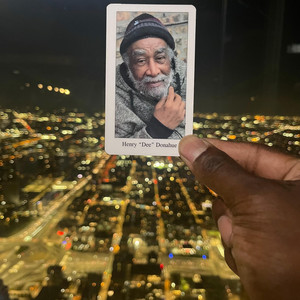
And one of the things he told me when he was in the hospital, that he wanted to go to the observation deck on Willis Tower.
The Willis Tower, also known as the Sears Tower, is Chicago's tallest building.
I told him that's the first thing I'm going to do when you get out of the hospital.
I'm going to take you up there.
But since he died, he, you know, obviously couldn't.
So I took his picture that you have that a bitch where I took it up to the observation deck and took a picture of it.
I was like, yeah, Henry D, you made it.
We got you up here.
So... As far as I can tell, Henry D out of prison was the same person Virginia Martinez saw in prison.
The same person prison officials had been describing to the parole board for decades.
Ben Austin. He wrote a book about the parole system and the odysseys of two men trying to go free.
It's called Correction.
He also hosts a new podcast called The Parole Room, which centers around a different case than the one you just heard.
Kind of famous case in Chicago, actually, with lots of twists and turns, including a guy on parole who gets out and then insists on attending parole hearings with Ben.
You can find all eight episodes right now at audible .com slash parole.
This story was produced and edited by our senior editor, David Kestenbaum.
Today's gonna be like yesterday.
I will not cause an unholy scene.
Will not hurt no more.
I will not hurt no more.
I might get mean with stubborn John.
Short with you. I will not raise a hand to them.
I will not lie to you.
I will not lie to you.
Our program is produced today by Aviva the Cornfeld.
People with together today's show include Sean Cole, Michael Comite, Henry Larson, Seth Lynn, Catherine Ray Mondo, Stowe Nelson, Nadia Raymond, Ryan Rummery, Alyssa Shipp, and Matt Tierney.
Our managing editor, Sara Abderraman, our executive editor, Emmanuel Barry.
Today's show is fact checked by Christopher Switala.
He's the person on staff who first heard Ben's podcast and thought we might collaborate on a story with him.
Fact checking help from Hina Shavastava and Rudy Lee.
In the years since his 2019 hearing that you just heard, one of the board members, Saul Diaz, has died.
A special thanks today to Ben's producer, Bill Healy, to the Invisible Institute, who funded some of the early reporting that Ben and Bill did on this.
To Seiya Kaveto, Lori Wilbert, Jason Suhoy, Josh Christ, Marcian Tanjata, Lauren Osohn, Jelly Monteiros, Ashley Lusk, and Jake Shapiro.
Thanks also to all of our Life Partners.
That is everybody who has signed up for the new premium subscription version of our show, which I heard you mention at the top of the episode.
You can join them, join us as our partner in keeping the show strong at thisamericanlife .org slash Life Partners.
Thisamericanlife is delivered to public radio stations by PRX, the Public Radio Exchange.
Thanks to all of his tour programs co -founder, Mr.
Torrey Malatia. You know, he actually screen tested, back in the day, for the little girl character in E .T., the Drew Barrymore part.
But the scene where they open the closet and see E .T.
and scream, Torrey just could not deliver.
They call action. He looks at E .T.
and boards out. I like the guy.
He's impressed me. But he needs to go home.
I'm Harold Glass, back next week with more stories of This American Life.