Support for This American Life comes from your part -time controller, the nonprofit accounting specialists.
For over three decades, YPTC has provided customized financial management to nonprofit organizations with their U .S.-based staff.
From bookkeeping to financial reporting, budgeting, cash flow management and dashboards, to CFO -level strategy, YPTC takes care of the numbers so nonprofit leaders can focus on what matters most, your mission.
YPTC will help maximize your impact.
Learn more at yptc .com.
From WBEZ Chicago, it's This American Life.
I'm Emanuel Berry in for Ira Glass.
In the last year, DEI programs have been blamed for an astonishingly varied set of disasters.
The Los Angeles wildfires, the Baltimore Bridge collapse, Boeing jets falling apart, the Secret Service failures leading to the assassination attempt on Donald Trump, And memorably, the midair collision between a helicopter and a passenger plane in Washington, D .C.
last month. All of that, obviously, was the fault of diversity, equity, and inclusion.
In other words, marginalized people having jobs means bad things happen.
I'm a Black person.
I'm doing my job right now.
And so, of course, today's episode may very well fall apart because I'm hosting.
Let me read you a list.
Disney, GM, Google, Toyota, McDonald's, and Walmart.
All of them have rolled back DEI efforts.
These companies are really just following President Trump's lead.
He signed an executive order on January 20th, ending all federal DEI initiatives.
To comply, research agencies have scrubbed words from their work like women, disability, bias, Black, and gender, as well as socioeconomic and systemic.
Three years ago, we did an episode about the pushback to critical race theory, which is really just DEI in a different font.
And we thought we'd play it again today because it tried to describe a turning point.
The beginning of the backlash that's playing out with such force in the first few weeks of Donald Trump's return to office.
Not just diversity programs being wiped out of existence, but being blamed absurdly for anything bad that happens in America.
The story that started the episode began before the backlash, in the summer of 2020.
That was kind of, you know, peak woke America, if you remember.
The murder of George Floyd had forced the country into another racial awakening.
That summer, everyone was sending out emails and tweets about race and racism in America, statements of unity from corporations.
One shoe brand tweeted, We are not asking you to buy our shoes.
We are asking you to walk in someone else's.
Remember when everyone on Instagram posted black squares for a day to show solidarity with the black community?
I'd started to roll my eyes at all the MLK and Baldwin quotes.
In a school district outside Dallas, Texas, Dr.
James Whitfield had just been promoted to high school principal, the school's first black principal.
And he was watching everyone send out these emails, not just corporate brands, but also his peers, other educators and administrators.
I had been up pretty much all night, could not sleep, and I woke up at 4 .30 in the morning and I said I have to craft something.
His email started by talking about the killings of George Floyd, Ahmaud Arbery, and Breonna Taylor, and how these events have brought forth the familiar enemy of racism in America.
Quote, For so long, these atrocities have occurred, and we've simply moved on with our daily lives.
Now it appears as though we are collectively using our voice to denounce systemic racism and the inequities that people of color face on a daily basis in our country.
He goes on to write from a personal perspective of a Black man who grew up in Texas.
He writes, I will be 42 years old next month, and never in my life have I experienced this level of support when it comes to issues of race.
I cannot begin to tell you how encouraging it has been to have so many of my white brothers and sisters buck the status quo by calling, texting, unashamedly saying that Black lives do indeed matter.
He continued, I'm here with you to do whatever we need to do to disrupt systemic racism and eradicate it.
Whitfield ends his email the way he ends many of his emails and messages, by telling people he loves them dearly, Which is kind of who he is.
Approachable, warm, a beloved figure, a cardigan -wearing dad.
People appreciated the email.
Parents, teachers, and students wrote to say thank you.
Some said they were ready to learn more.
One parent mentioned how refreshing it was to see a school leader send out this kind of letter.
A year passed. Whitfield's first year as principal.
And it's a tough one because, you know, the pandemic.
But he made it through.
And then he arrived at the summer of 2021.
It is a very different landscape from the summer of 2020.
In fact, the script has flipped.
Public conversations have moved from let's all try and understand and talk about systemic racism to let's never mention systemic racism.
This is especially true in Texas, where Dr.
Whitfield is. In Texas, the conversation is suddenly all about banning critical race theory.
Critical race theory, CRT, you've probably heard about it.
It's a way to chart how racism is ingrained in the American legal system and other institutions.
But at this moment, CRT has become kind of a boogeyman, a quick shorthand, to shut down anything acknowledging racism or even Blackness.
Texas passed a law in 2021 banning CRT in schools.
And during the school year, Dr.
Whitfield heard that some people were grumbling about him on social media, saying he was a race warrior.
The online grumblings became public at a school board meeting in July, when a resident points to Whitfield's email.
His email where he basically says, it seems like we're ready to talk about race as a country.
He points to that email as proof that he is indoctrinating students with critical race theory.
Tonight, I would like to express my concerns, not only of myself, but of many in our community, about the implementation of critical race theory in our district, specifically the views and goals of the principal of the local heritage high school, James Whitfield.
I was first made aware of Mr.
Whitfield's extreme views on race when a concerned friend of mine shared with me a letter he sent to parents and students in the summer of 2020.
To be clear, Dr. Whitfield is not teaching CRT.
He didn't propose educational reforms in his email.
He wasn't reshaping the curriculum.
He did support an existing program at the school that tried to get kids into college who wouldn't traditionally go.
He got flack for that, but the program predated him.
People complained about an approving mention of the Southern Poverty Law Center, but also that he quoted Gil Scott Heron in an email, saying the revolution will not be televised.
And, of course, that email from 2020, where, like everyone else in 2020, he denounces systemic racism.
Mr. Clark, we really prefer that you don't criticize a particular employee of the district.
If you have any issues, we...
How about you fire that?
Sir. How about you fire that?
Sir. At the time, it seemed absurd that this would actually happen.
that Dr. Whitfield would be fired.
A handful of people at a board meeting demanding a respected and newly hired principal be fired for promoting an academic theory he wasn't promoting, that seemed hard to imagine.
But over the next few months, that is what happened.
In August, the board placed Dr.
Whitfield on paid administrative leave, but didn't give a reason why.
He talked to the media about it.
In September, Dr. Whitfield defended himself at a board meeting.
One of the items on the agenda was should the district renew Whitfield's contract for the next year.
Whitfield showed up for the public comments and like everyone else, he got one minute to speak.
Hello, I'm Dr. James Whitfield, Dr.
Ryan, Board of Trustees.
I first want to express my gratitude for all the love, support and encouragement from the community, especially our students who have regretfully been criticized for their speaking up in this matter.
I stand before you today no different than I was when I came in in 18 -19.
The 2018 -2019 school year, when he was first hired by the district.
I'm an advocate for all kids.
I believe every student, regardless of race, religion, sexual orientation, whatever bucket you want to put them in, I believe they all have access to a, they should have access to excellent, equitable education.
Yes, I said those words.
Unfortunately, my unapologetic stance for those things has brought us here tonight, which is disheartening.
The attacks from people outside is one thing, but the outright silence and direct actions taken towards me by GSD leadership team, GCISD leadership team, sorry, trying to get this in, are what's absolutely heartbreaking.
I can assure you I have not changed.
I'm still the same man.
Today's when you hired me in 18, 19, you promoted me twice in three years.
So I ask you what has changed since July 26th.
Thank you, Dr. Whitfield.
Dr. Ryan. Thank you, Dr.
Whitfield. The board's response, they vote not to renew his contract.
I reached out to the district and they said they were not going to talk about this.
But in public statements they made earlier, they said the decision was not based on people calling for Dr.
Whitefield to be fired.
They list a bunch of other reasons, stuff like insubordination.
A Facebook post he wrote defending himself was not OK with them against professional conduct.
He talked to the media instead of filing formal complaints with the school.
As they read this list at the meeting, you could hear students and parents who came to support Whitfield scoff at the items being read.
The fifth reason for the recommendation, Dr.
Whitfield has diminished his effectiveness by dividing large sections of the community by continuing to raise...
The response went on for so long, she never got to finish the statement.
It said he was dividing large sections of the community by, quote, continuing to raise issues of critical race theory.
Dr. Whitfield lost his job.
What changed over the last year?
As Whitfield said, not him.
That email didn't change.
The black squares are gone from Instagram.
The random reparations money from friends, gone.
We went from anti -racist books crowding the bestsellers list to banning kids' books about Rosa Parks.
For Dr. Whitfield, the consequence of getting caught in this backlash is he's no longer in the one place he really wants to be.
When I spoke with him in early November, he told me he was still dropping his kid off at elementary school.
The high school is across the street.
Oh, I mean, I look over there every—I can't just not look, right?
Right. My wife is just like, well, just try to try to look the other way.
I can't. It's, you know, as I'm driving by, you can see, you know, down the main one of the main hallways.
Right. There's these big windows and you can see right down the hallway.
And so as I'm walking by, I'm envisioning the different classrooms and the teachers that I would check on every morning.
And, you know, it's three stories.
And so by the time the morning, by the time the first bell had rung, I was already at 10 ,000 steps, right?
Because I'm running around this place checking in on teachers.
And so I think about that every morning.
And so, yeah, it's really hard to pass by a place that you love and know that there's staff members that you love in there.
There's students that you love in there.
And that's, you know, that's where you're supposed to be.
But you're not allowed to be in there, right?
Like it's like, what kind of person is not allowed to be in there, you know?
It's disheartening.
the line of what's acceptable to say about race and racism in America it moved it's as though we were having one argument and then the terms changed and that shift has left many black people exposed and vulnerable and living with those consequences this backlash it's not meant to the war on drugs.
Obama to Trump. So no, it's not surprising that there is backlash.
But what I am surprised by is the way people have been caught up and tangled in it.
The choices they've made to either further twist themselves along the line of what's acceptable or move away from it.
The way Black people have had to reconsider what to say and the fallout that comes with those choices.
Our show today, two stories of people trying to figure out what to say or if they should say anything in this moment of backlash.
Stay with us. your brand or business into an elevated online presence with curated premium quality content automatically added and matched to your profile and aesthetic head to squarespace .com slash american for 10 off your first purchase of a website or domain support for this american life comes from your
part -time controller the non -profit accounting specialists for over three decades yptc has provided customized financial management to non -profit organizations with their U .S.-based staff.
From bookkeeping to financial reporting, budgeting, cash flow management and dashboards to CFO -level strategy, YPTC takes care of the numbers so nonprofit leaders can focus on what matters most, your mission.
YPTC will help maximize your impact.
Learn more at YPTC .com.
It's This American Life, Act One, Incident.
The place that this backlash is playing out most dramatically is in schools, in particular school board meetings.
Sometimes parents are angry about something as small as the email Dr.
Whitefield wrote, or a specific book they don't like, or an effort to diversify a library's collection.
Sometimes it's a new resolution to promote equity in the school.
And a lot of these parents repeat the same talking points in these meetings across the country.
They say microaggressions are not real.
What about reverse racism?
And somehow, Martin Luther King Jr.
comes up a lot. But what these examples boil down to is we shouldn't be talking about racism because it's not a thing anymore.
First thing I want to say, and it's a fact, that Traverse City is not a racist city and the U .S.
is definitely not a racist nation.
This is from Traverse City, Michigan.
This thing about this racism, we have been marching away from racism by leaps and bounds for decades upon decades.
I keep wondering, what is it like to be a kid in one of these towns?
For kids of color especially, when some adults are saying racism is a problem and other adults are saying it's not one at all.
For instance, the meeting you just heard from Traverse City, what's so remarkable about this particular meeting is that what these parents are partially responding to is a clearly racist incident in their schools.
I've been talking to a kid who was targeted in that incident, a 16 -year -old Black biracial girl named Nevaeh about what happened to her.
And her story is so much more personal and immediate than what you get from any of these meetings.
A quick warning, this story might not be appropriate for kids.
Here it is, Act 1. A year ago, Nevaeh was a sophomore in high school who didn't think about her blackness too much.
Yes, she lives in a mostly white town, 90 % white.
And yes, she's often the only person of color in a given room, including her family.
She's adopted. They're white.
But her journals were not filled with tragic black girl and whitetown cliches.
She was writing fiction, fantasy, young adult, romance.
I love fiction writing more than anything.
I could not write poetry or nonfiction.
And then I'm also really interested in psychology.
I've taken that class for, I'm on my second year taking it now.
I find it really interesting.
When you say psychology, what is it about psychology that you're interested in?
I love learning about why people act the way they do in certain situations.
The brain is cool, but I'm more onto the behavioral aspect of psychology.
Nevaeh is a self -proclaimed overthinker.
And she does this thing when you talk with her that makes her feel both mature and young at the same time.
It's that when she doesn't know something, she says she doesn't know it with such confidence that you feel assured that someday she will know that thing.
A year ago, Nevaeh would have described her high school and her experience there as typical.
I mean, like, there are groups here and there, but it's not like the, oh, you can't sit with us, you're not that type of person.
It's not mean girl situation.
No, it's not like that at all.
Nevaeh had a lot of friends.
She wove in and out of a bunch of different groups at school.
And then she had her inner circle.
One of her closest friends in that circle, someone she talked to daily, I'll call Katie.
We met in seventh grade and we went to the same school for seventh and eighth grade.
And so we were really close.
And the ninth grade came along and I moved schools, but we still kept in contact and we still like talked all the time.
During the pandemic, they would sit on FaceTime together and hang out.
Katie was a person who could talk Nevaeh down when she was stressed, especially about school.
They were also goofballs together.
They'd go to the mall just to try on outrageous outfits and crack each other up.
The racist thing that happened to Nevaeh, the thing that led to those heated school board meetings, that happened in the spring of 2021.
And it started with a text from Katie.
And just said that she was in this really, like, messed up group chat with her friends.
It was late at night, and I was tired, so I didn't really, like, I was like, oh, okay, if it's really that bad, you should leave.
I'm going to go to bed.
Nevaeh wasn't really sure what Katie was talking about, so she brushed it off.
She woke up the next morning to more messages from Katie about what happened in the group chat.
She texted me, and she was like, hey, like, you were in it.
And I was like, oh, I was in it?
Like, what's it about?
And then she told me, she was just like, oh, they're like bad stuff.
They're like selling people.
And I was like, oh.
A slave auction. Apparently, Nevaeh was one of the people in the chat who was quote -unquote put up for sale.
My first reaction was, how much did I go for and who did I go to?
Full honesty there.
And she said that I went to her for free.
The chat is essentially a private text thread that after some time disappears, a feature of the Snapchat app.
Some students tell the school district about the chat.
The school calls Nevaeh's mom and the parents of other students.
And it's while her mom's on the phone with the school that it all starts to sink in.
And at that point I was like, oh, like, I was sold.
Like, I don't know how bad that is, but I assume it's not the best.
And so then, I asked my friend to give me screenshots, and she did.
This is what they say.
First screenshot. One student.
What up, niggas? New group chat for making fun of Black people.
In reply. Very nice.
Another screenshot.
All Blacks should die.
Let's have another Holocaust.
Yay, someone cheers.
I concur, says another.
Picture of a Black kid.
Homo goes for 50. Man sus.
He comes as a bonus.
He's free. Someone else adds man so gay, I'll kill him for Jesus.
Another screenshot.
Picture of another black student.
Negative 10 for autism, someone says.
50 % off sale. Picture of two black teenagers.
Someone says they can run but they can't hide.
100 each. Double the trouble.
They like picking cotton.
Someone makes an offer.
I'll take them for $150 as the pair.
Another screenshot.
Picture of Nevaeh. She's in a red crop top and jeans and a hat, posing near a tree.
Written underneath.
Starting bid $100. Eww someone comments.
Another eww, followed by another.
And then just then and there, like, everything, like, hit.
I was disgusted to the gut.
Like, it was just like, oh my gosh.
Like, I joked with these students before.
Like, I couldn't believe that they would think of typing something that they thought, like, it would be OK.
After, like, everything with Black Lives Matter this last year, it was just like, wow, OK.
Showed me the type of person they were.
It's almost like Nevaeh's inside the darker, not funny version of the Eddie Murphy skit.
Maybe you've seen it.
the one where he goes undercover as a white man and discovers all the things white people do when there aren't Black people in the room.
She had a new window into who her classmates were in private in these screenshots.
It was the spring of 2021.
Luckily, she was in remote school.
She wouldn't have to face them until her junior year started in the fall.
Nevaeh's mom, Jayla, saw the screenshots and the words, all Blacks should die, and worried for Nevaeh's safety.
She emailed all the school board members, went back and forth with school administrators.
She felt like no one was taking it seriously.
She called the police.
The police investigated the group chat.
A few weeks later, they told Jayla that there were no chargeable offenses.
Jayla's confused. I said that doesn't make any sense because there was talks of killing all Black kids and started another Holocaust.
To me, that was a direct or indirect threat of something that could potentially happen.
And he just disregarded it as, you know, kids being kids and talking smack.
The school gets back to Jayla and Nevaeh about how they will handle the Snapchat incident.
Ultimately, they say they will follow the district's policy for discipline, but they couldn't say specifically what that meant.
Nevaeh was worried.
It seemed like the whole thing was just going to be swept under the rug, and she wanted people to know what happened.
She hadn't done anything to be a part of this Snapchat except be Black.
Should she speak up?
But she worried over that too.
If I say something, will people think I'm overreacting?
But if I don't say anything, will anyone else even know about this?
In the end, Nevaeh made the decision to speak.
She talked to the press about what happened.
Instead of disappearing, the story of mostly white high schoolers auctioning off their Black classmates in a secret slave auction, it got a lot of attention.
At first, Nevaeh felt good talking about it.
She got a lot of support.
People reached out.
She felt a sense of relief.
But just as quickly as is happening in many parts of America, talking about racism in Traverse City led to backlash.
Nevaeh speaking up set off other bigger conversations about racism in the community, which led to that heated school board meeting where some adults insisted Traverse City is not a racist place and that any discussion of racism causes division.
But something that was more important to Nevaeh was the backlash she got from her peers.
Some kids started to get tired of seeing Nevaeh on the news, and to Nevaeh it seemed almost irritated.
She noticed a gradual change, even among some of her friends.
They've always been nice, and I've always hung out with them a lot.
And I thought that we, like, kind of had the same viewpoint and opinions on a lot of things.
And so then when this whole thing happened and they started to say, oh, why are people still talking about it?
Why is it such a big deal?
That really showed me like, oh, we disagree on such a big topic here like racism.
Like, where do they stand?
And should I let something like this determine my friendship with someone or not?
This question, where do the people around me stand?
It was a question that kept coming up again and again and again as the summer passed and the school year approached.
In the fall, she went back to school in person for the first time since the incident.
Nevaeh is a junior.
She looked around and wondered, who are my friends?
Who can I trust? Who thinks it's okay I was sold in a slave trade?
Nevaeh thinks to herself, I can be friends with anybody.
One of the kids who participated in the Snapchat slave trade, I'll call him Luke.
They were texting right after the incident and again just before school started.
The text said, like, oh, my gosh, I'm so sorry, blah, blah, blah, blah.
And then I've had other students come up to me and be like, he's really sorry.
He is in the Snapchat slave trade.
I'll call him Luke.
They were texting right after the incident and again just before school started.
The text said, like, oh, my gosh, I'm so sorry, blah, blah, blah, blah.
And then I've had other students come up to me and be like, he's really sorry.
He is scared of you now.
He is good. Yeah, he's scared of me now.
The second time he sent me an apology, he was like, oh, I want to be friends with you again.
And I was like, okay, like, I'm cool with being friends with anybody.
They texted a little, but it wasn't the same.
Luke's a chatterbox in a jokester, Nevaeh says.
They were old friends.
They've known each other since middle school.
But she couldn't talk to Luke about what happened.
It seemed like he just wanted to move past it without ever addressing it.
And then it just got weird because it felt like, I mean, And there was something we couldn't discuss between each other.
And it was a thick line between us that was just, like, kind of awkward.
And so I just stopped talking to him.
Luke was the first friend Nevaeh was forced to make a decision about.
Maybe she couldn't be friends with everyone.
As the weeks passed, she started ignoring him.
Like, if she sees him in the halls, she'd look at her phone, walk to the other side.
Staying away from Luke meant she distanced herself from other friends.
Like, her one friend I'll call Leah.
she's like hey like I know how wrong like what he did but I am friends with him and I've told her like hey like I'm not gonna be the one to tell you who you can and cannot be friends with like if you want to be friends with him you can be friends with him and I've just been like hey if you if but if you
are friends with him you have to understand and consider the fact that like I'm not going to be around as much like I'm not going to hang out with him when you're hanging out with I'm not going to hang out with him at all in general I think it's just hard for her to like I guess, let him go?
So Nevaeh tries to navigate this new social landscape on her own.
But it's not simple.
Take this one time a couple months ago.
Nevaeh was meeting Leah at a football game.
She got to the stands, and Luke was there.
Nevaeh had no idea he would be there.
I'm not going to be a baby about this.
I can be mature, and I don't have to speak to him.
I'm not going to make a big deal out of this.
So then I was just like, OK, like, I want to watch the game, so I'll stay.
The game started. Leah called a player trash for making a bad play.
Then Luke, who's behind Nevaeh with his buddies, defends the player, mocks the girl who shouted, calling her mean, telling her he'd never say something so mean.
It wrung in Nevaeh's ears.
Then I just, like, I stopped, but I, like, turned around and I was like, Really?
And then he looked at me, and his mouth just, like, dropped open.
And then his friends started like, Nevaeh, Nevaeh, you don't need to bring that up.
Like, come on. No, no thank you.
Like, he's already been through enough.
Nevaeh didn't want to cause trouble for Luke.
She wished him well.
She just couldn't pretend that nothing happened.
And she couldn't stop questioning a lot of her relationships.
Even her relationship with Katie.
It was never clear to Nevaeh if Katie had participated in the chat.
They were friends. Katie's the one who told her about the chat.
It didn't make sense that she would have joined in.
But Katie had said she'd bought Nevaeh for free.
That detail stuck with Nevaeh.
Then she started to hear from other people that Katie had said stuff.
Was that true? The screenshots Katie sent Nevaeh didn't have the full conversation.
In the screenshots she does have, Katie says nothing.
Was it possible there was something in the missing parts of the chat?
Nevaeh wondered, did she laugh at me?
Did she place any bids?
No, she probably stayed quiet, didn't say anything.
She's the reason I even know what happened.
Nevaeh was scared to ask her, so she didn't.
They continued to be friends, but the uncertainty weighed on Nevaeh.
As much as I'd like to think she wasn't the type of person to do this, all of these people who were in the group chat were her friends.
She hung out with them every day.
She was surrounded by them all the time.
She FaceTimed them.
She joked with them all the time.
And they made jokes like these all the time.
The guy who started it, that was his personality.
He was just a rude, racist person.
And so if she's surrounding herself with such rude, racist people like that, eventually, she's going to adapt that and adopt that kind of behavior.
I mean, I learned it in psychology.
Sorry. I contacted Katie through her mom.
I wanted them to know that Nevaeh and Katie's friendship would come up in this story.
She told me they were not interested in talking and were moving past this incident.
Nevaeh started to withdraw from Katie.
When Katie confronted her about why she was ignoring her, the conversation Nevaeh had been avoiding happened.
And I was just like, hey, like, can you just straight up be honest with me right now?
did you say something about me?
Have you participated in this group chat?
And then we got into a bit of an argument.
She called me rude and low for ever suggesting a thing.
And that I was just like a bad friend for even like thinking that.
And then I was just like, okay, if you, she told me that she wasn't involved in it, I don't know what to think about it.
And And so I just was like, hey, OK, I'm going to distance myself from you.
And that was it. Nevaeh hasn't talked to her since.
The Snapchat slave trade was almost nine months ago.
Because there was a school investigation and a police investigation and a Title IX investigation, lots of adults, school administrators, police, know exactly what was said in those messages.
But Nevaeh doesn't.
It really bugs her.
How odd to have an otherwise ordinary rite of passage for any high schooler.
What did my friend say and do behind my back?
Actually have a documented answer.
Nevaeh says she asked for the full conversation from the school, but they never gave it to her and told her Katie shouldn't have shared it.
They told her if she wanted to see more, she could file a Freedom of Information Act request or a FOIA request.
So she did. I did too.
And then Nevaeh waited.
I asked her, you know it could say some really hurtful stuff, right?
It may really hurt me.
I think that if I see it, I can handle closure, like if Katie participated or not, because I'm still questioning that.
Was it the right decision to just cut Katie off, or was I just paranoid, you know?
What else was... I mean, I, you know.
And so just seeing if Katie participated or not and then seeing what else was said about me, those two things will just give me, like, the most closure ever.
My FOIA requests came in first.
It was close to 500 pages printed out, e -mails after e -mails, police reports, disciplinary hearing forms.
But it's heavily redacted, which is honestly pretty normal for a FOIA.
I brought it to Nevaeh's house, and she, her mom, and I sat at the kitchen table trying to sort through it all.
There's so much information behind these black squares.
I just, wow, really.
I just, like, cross out their names, but show me what they said.
The screenshots Nevaeh was hoping to see fully blacked out.
There were little bits of information here and there in the report, but it was hard to decipher.
There was some new information in there.
For one thing, this Snapchat wasn't the first time that a group of kids sold their black peers in a slave auction.
In the FOIA, the kid who started the slave trade in Traverse City said they saw it on TikTok.
There was another one in Texas.
Second, the FOIA made it clear that there were more screenshots than the ones Nevaeh had seen.
All of them are blacked out.
I could see the frustration and disappointment on Nevaeh's face as she flipped through page after page.
it's really frustrating to look at these just like tons of black pages and just boxes that are completely then again i just want to know what they said like i don't realize i don't understand how why that's so difficult to just like hand it over to me i was i was in this group chat i was a target and so i
feel like as someone who's in the group chat and talked about in the group chat i should be given the right to see what else was said about me because you know Nevaeh saw something in the FOIA that gave her pause.
The names are blacked out, but she could see in the report that someone in the chat didn't participate.
She kept seeing that over again.
Blacked out name did not participate.
50 pages later, blacked out name did not participate.
Was that Katie? It just makes me question, like, maybe Katie was telling me the truth and here I was just brushing it off because of how strongly I was focused on finding out if she was in it or not.
So I guess, if anything, it just makes me question myself more and my judgments more.
The next day, Nevaeh sent me a text.
She made the choice to believe that the blacked -out name, the person who did not participate, was Katie.
Reading the FOIA made Nevaeh think about their relationship, about who she could trust, something she'd been struggling with.
Before this incident, she had no reason to think that Katie wasn't an honest person.
She said she reached out to Katie to apologize, and Katie had responded.
Nevaeh did not just want to know what was said about her in the chat.
She wanted everyone to know.
She wanted to talk about it.
But the message she felt like she kept getting, from her school, the police, her friends, from the school board meeting in her town, from the 500 -page blacked -out FOIA, was, we don't want to talk about this.
We don't want to talk about racism.
It's the same message that has been on repeat everywhere in this moment of backlash.
And as a kid, if that's the message you're getting, bury the racism.
What do you do with that?
About an hour after I left their house, Nevaeh's mom sent me a picture.
Nevaeh in her room, sitting on her bed, surrounded by the foyer, which she'd arranged in many little stacks of paper, like a detective sorting and sifting through the clues still puzzling still trying to find something to help her make sense of it all Since this story aired a few years ago Nevaeh has started
college she's studying psychology still trying to figure out how people work Coming up a person who does not want to know anything about what's being said behind their back that's in a minute from Chicago Public Radio when our program continues.
Support for This American Life comes from BetterHelp.
Relationships of all kinds are complicated, and they tend to come with a lot of tough questions.
From questions about coworkers to family to romantic partners, therapy can be your safe space to talk about challenges you face in any of life's relationships.
BetterHelp offers therapy 100 % online, and sign -up takes only a few minutes.
Visit BetterHelp .com slash T -A -L to get 10 % off your first month.
That's BetterHelp .com slash T -A -L.
This message comes from Capital One.
Say hello to stress -free subscription management.
Easily track, block, or cancel recurring charges right from the Capital One mobile app.
Simple as that. Learn more at CapitalOne .com slash subscriptions.
Terms and conditions apply.
support for this american life comes from squarespace the all -in -one website platform with features to help you start a fully custom on -brand website use squarespace's latest ai enhanced website builder blueprint ai it can transform basic information about your brand or business into an elevated online
presence with curated premium quality content automatically added and matched to your profile and aesthetic head to squarespace .com slash american for 10 percent off your first purchase of a website or domain.
It's This American Life.
I'm Emanuel Berry in for Ira Glass.
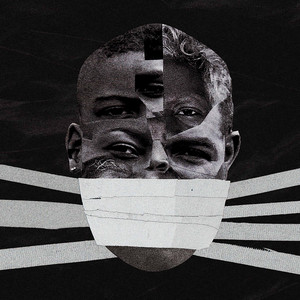
Today, our show, Talking While Black.
This episode originally ran in 2022.
We're rerunning it at this moment when anti -DEI measures are sweeping the country.
In the last five years, we've gone from companies tweeting out Black Lives Matter, all these diversity initiatives, to now, where it feels like even just saying something is black is controversial.
States are passing laws to limit conversations about racism.
Black people are losing their jobs for talking about race too much.
I keep returning to this question over the last few months.
In this backlash, what are you allowed to say?
Like, as a Black person, like, what about Black lives or the Black experience is actually okay to talk about?
This next story gets at this question.
We've arrived at Act II of our program, Act II, The Farce Awakens.
One place where you can see this dizzying whiplash is books by Black people and about Black people.
After the murder of George Floyd, sales of Black books skyrocketed.
Ibram X. Kendi stamped from the beginning, The New Jim Crow, So You Want to Talk About Race, were all of a sudden bestsellers.
For a window of time, people really wanted to hear what Black authors had to say.
And then they dramatically did not want to hear any more.
Not only did sales slow, but there are now efforts to ban many of these books that were so celebrated.
Producer Hannah Jaffe -Walt spoke with one author who found his book banned and whose professional arc is sort of a mirror for this backlash.
Here's Hannah. I learned about this particular banned book from Deborah Caldwell -Stone.
She's a director of the American Library Association's Office for Intellectual Freedom.
Her job is to track efforts to censor and ban books.
And she was telling me she's never seen anything like this fall before.
In her decades on the job, just the number of books being challenged, removed from school library shelves.
Many books about LGBTQ people, she says those have been contested for years.
But more recently, Toni Morrison, Dr.
Ibram X. Kendi, The Hate U Give, a novel about the aftermath of police brutality.
And in Texas, there was a mother who halted author presentation by Jerry Craft by claiming falsely that New Kid represented critical race theory.
New Kid? Of course.
Yeah, like comic book, the graphic novel?
Yes, New Kid. New Kid is a book my children read.
It's about a 12 -year -old Black boy who goes to a new school.
Jerry was scheduled to give an author presentation to the kids in Katy, Texas.
And they lined up this big event.
All the kids were anticipating meeting Jerry via Zoom.
And one mother stopped the whole thing by claiming that it was critical race theory.
Jerry Craft has been invited to speak to thousands of schools over the years to do author presentations like the one in Katy, Texas, because New Kid was widely acclaimed.
It won a ton of awards.
It was a number one New York Times bestseller translated into a dozen languages.
New Kid is a semi -autobiographical graphic novel about a boy, Jordan, who wants to be an artist and go to art school.
But his parents put him in a fancy private school.
Jordan is one of only a few Black kids.
A lot of the kids are wealthy.
The campus is vast.
And you watch Jordan, this funny, earnest kid, Navigate a new environment.
There's culture shock.
There's new friendships.
It's part fish -out -of -water story and part just kid in middle school figuring out crushes in the cafeteria and things like should he do sports or the musical.
Jerry Craft told me when he put New Kid out there, the response was amazing.
Everything. It was all like a great big hug from the world.
People wrote him to say, My kid wants to be an artist now.
My kid loved your book.
Or, hey, you know, my kid has never been a reader before, and he read your book three times.
Like, that's what I'm used to.
When it's like— Love.
Right, exactly. I used to love and admiration.
Right. So now it's like, hey, can you comment here in the BBC?
I'm like, no. Like, what is this?
This is not his thing.
Controversy. Jerry was a kid who loved to draw, who became an adult who kept drawing.
He spends most of his time in a room by himself making pictures.
When he published New Kid in 2019, Jerry had been writing comics for decades.
This was the book he'd always wanted to write.
The book he wished he'd had as a kid, with a black character who seemed just regular.
Jerry says he remembers going to the library as a kid, and it was always the general books and the black books.
The general books are wants to live better, and our books just wants to live.
You know, your books, his father's king, our books, his father's gone.
you know lives in the magical kingdom lives in the hood all the books with black protagonists were history or misery you know no kid like me ever made it to the end of a book the there was no dad there was nothing you know the kids always lived on the south side of somewhere that was just really horrible
you know and it was gangs or slavery or civil rights or police brutality.
And I'm like, can I just see a kid who the biggest problem of the day is whether he wants to play Xbox or PlayStation?
And that's why I do what I do.
I make those books that I wish I had.
That's the thing about New Kid being banned.
So many of the other Black authors with banned books are writing explicitly about racism or history, books about how slavery has shaped America, police brutality, how to be an anti -racist.
But Newkid, this is not a history book.
It's not about police violence or slavery or civil rights.
It's a story about finding your place in middle school.
There are racial slights in a sort of daily way.
White classmates and teachers make assumptions about where Jordan's from, that he's a great athlete.
They say ignorant things, try to touch a Black friend's hair.
Administrators continue to call a longstanding Black teacher coach, even though he's never coached anything.
Jordan often finds his stuff funny.
He laughs about it with another Black classmate.
Sometimes he finds it confusing or annoying, but it's not tragic.
These are just things that happen on the way, alongside lots of other experiences with his white classmates and teachers, including good experiences.
Honestly, the most dramatic thing that happens in this story is that Jordan loses his sketchbook.
What is there to object to?
When I talked to Jerry, I didn't know the specifics of the objections in Texas, and I kind of expected Jerry to fill me in.
But he knew even less than me.
He read enough of one article to understand that a white parent had complained about his book, was calling it critical race theory link that I guess they filmed the school board and I just refuse to watch that because you know like when I'm sitting for 16 hours a day drawing like humorous stuff for kids
I have to protect my own brain and my own psyche because I don't want you know my next book kids to be like wow Mr.
Craft used to be funny now he's so depressing you know so I have to be in a really good mental space for that um so I did you knew I mean it sounds like you knew that that was something that you weren't going to want to watch.
Yeah, I did not want to go down that rabbit hole.
What did you imagine was down that rabbit hole that was scary to you?
The complaint that I saw was that I'm teaching kids critical race theory.
So the college course that mentions things such as institutional racism and all these really heavy, deep things that they are studying and picking a part in college.
I was now breaking that down for fourth and fifth graders, apparently.
So... Oh, sorry. That's not supposed to happen.
Oh, is that for me?
Is that Katie, Texas?
They're like, we want equal opportunities.
They want to know what you're talking about.
We have to give an opposing viewpoint.
That's how I do my interviews.
I just, like, in the middle, I get a call from the opposing side and then the two of you do get out.
Right, there you go.
I did not stage a call with the mom who complained about Jerry Craft's books.
But I did talk to her.
And I watched her testimony at the Katy School Board meetings, the ones Jerry Craft would not watch.
Her name is Bonnie Anderson.
She has three kids in the schools.
She's very involved in local school politics.
She's part of a lawsuit against the school district's mask mandate.
And she ran for school board last spring, but lost.
Bonnie told me she first encountered Jerry's book when she got a flyer in her kid's backpack announcing the author visit.
So she got the books, New Kid, and the follow -up book, Class Act, and read them both herself.
I don't know if you've read these books.
Yeah, my kids read them.
Okay, okay. I don't even know where to start.
So the first thing that I noticed is all of the microaggressions that the author is depicting.
Microaggressions. meaning the everyday, thoughtless stuff white people in the book say around Black kids.
Bonnie worried how reading those depictions might make white kids feel.
The district told me there was another parent, too, who apparently filed a complaint that New Kid includes vulgarity, but they would not provide that person's name.
Bonnie, though, was very public.
She cared enough about this to create a petition demanding the district cancel Jerry Craft's event.
It got 400 signatures.
To Bonnie, the book has a clear agenda.
Jerry set out to convince people systemic racism is real and show how privileged and awful white people are.
He's dressing it up with funny or dramatic moments that to her seem totally over the top.
Like the scene where the dad gets pulled over by the cops and is super nervous.
She says, you really think that happens?
Or the white mom who worries her kid's black friend might take offense if she serves watermelon for a snack.
Come on, she says. A lot of our conversation was Bonnie questioning parts of the book and me saying, I think that's based on Jerry's own life.
Do you really think that Jerry Craft went to an all -Jewish school, which he did, and do you really think he was given KFC gift certificates?
Because he says these are things he went through.
Wait, it's not a Jewish school.
he did he went to a mostly jewish school he went to fieldston which is not a jewish school but i mean i don't you're saying you don't believe that that actually happened to him regardless let's just pretend that all the things he wrote about being called an oreo all those things actually happened um
regardless let's just pretend for a second that all those things happened or let's take his word all those things happened it doesn't matter wait why doesn't that matter.
Because you don't harm future generations of children because you went through a bad experience.
You don't poison the minds of my children, even if it happened.
You do not poison the minds of other kids and make them feel like they have to make confessions for being white.
This is an idea that is repeated in a lot of the efforts to ban books.
The idea that these books will psychologically harm children, usually white children.
When you say it poisons the minds of your kids, what's the thing that you're worried is going to happen to your kids reading these books?
So these books teach children the preordained conclusion that white children have wealth, status, and race privilege, while children of color must suffer the racist ignorance of these privileged families.
You remember from the books that the white mom does nothing but play yoga all day and the white boy feels neglected and they live in a mansion and they drive in the Range Rover.
It's a Mercedes, but sure.
For Bonnie, these characterizations would be damaging to her kids if they read the books, which they haven't.
New Kid is a book that is entirely focused on the perspective of a black boy, the things he sees and experiences.
There are white characters.
Some of them are mean.
Some of them are Jordan's best friends.
One of them talks to everyone through sock puppets.
But they're peripheral.
The story's about Jordan.
So I would assume, like with any well -told story, kids reading this book would identify with the main character, since he's the protagonist of the story.
I want to say something here I feel obliged to say, but it also feels a little embarrassing for all of us that I have to say it at all.
This book, Jerry Craft's book, New Kid, is not critical race theory.
Jerry Craft did not create a fictional 12 -year -old black boy, Jordan Banks, to promote a complex legal theory about systemic racism.
And although it is a work of fiction, most of what Bonnie objects to in these books did actually happen.
Like, how much of this is just your direct life experience?
There's a lot of it.
I was the light -skinned African -American kid born in Harlem, grew up in Washington Heights.
Though it is a work of fiction, most of what Bonnie objects to in these books did actually happen.
Like how much of this is just your direct life experience?
There's a lot of it.
I was the light -skinned African -American kid born in Harlem, grew up in Washington Heights.
The house where Jordan Banks lives is a brownstone that is literally the house where I was born and spent the first 25 years of my life.
my mom and dad did not want me to go to art school but you like Jordan Banks wanted to go to art school so they sent me to a school in Riverdale and here they send Jordan Banks to a school called Riverdale Academy Day School or RAD for short Jordan Banks felt out of place Jerry Craft felt out of place
Jordan Banks' classmates all inexplicably wore pink but called it salmon same with Jerry Craft the whole Vineyard Vines thing That was like the unofficial uniform.
So I changed it in New Kid to Grapevine Groves.
It's like, wow, you kids sure wear a lot of pink hair.
It's like, no, it's not pink.
It's salmon. And all the things Jordan Banks observes or experiences, a white mom who worries about serving watermelon, a nerve -wracking interaction with a cop, white classmates touching your hair, assuming you like basketball, they happened to Jerry or Jerry's kids.
Being called the wrong name, you know, hey, DeAndre, I'm not DeAndre, I'm Drew, Like that's the other one?
Right. That's the other one.
That's what's so interesting to me about this book in particular being kind of drawn into this CRT battle that's supposedly about history.
But your book is not a history book.
This is like literally just you writing down the story of your life.
Right. Yeah. It literally is like based on what I actually see.
There's nothing that I haven't lived myself.
With one exception, those KFC gift certificates.
Jerry says he made that up.
One other thing Jerry pointed out that really happened to him.
The last chapter of New Kid, it's called The Farce Awakens.
It's when Jordan loses his sketchbook, the one he carries everywhere.
He's super stressed because it has all his thoughts and drawings from that year.
It's sort of like a visual diary.
It turns out his teacher, Miss Raul, is holding his sketchbook when he comes into the classroom.
She's read it. And she reads and she's like, Jordan, you know, why are you so angry?
It's like, I'm not angry, you know, and like.
And the teacher's upset about what's in the notebook.
Right, because he will complain about being called the wrong name or, you know, just different things like that or people touching his friend's hair.
And so she's like, Jordan, you're special, you know, like you're here.
And he's like, yeah, but Ms.
Roal, like, would you take a job at a school in my neighborhood so you can be special?
And she, like, kind of gets on him.
He's like, so let me get this right.
It's OK for this stuff to happen to me.
It's just not OK for me to talk about it.
And that sums up this whole thing that's going on now.
Oh. Right? There are things based on my life and based on my kids' lives.
Does it feel like a grown up version of of what happens to Jerry Banks in your novel?
I love how you said Jerry Banks, because that is right.
Jordan, you're right.
It is Jerry Banks. We are one and the same.
No, it's it's exactly the same.
Yeah, it is. You know, Miss Rall found Jordan's sketchbook and said that it's a polemic and that it's angry.
And this woman found my book and says it's a polemic and it's angry.
And yeah, I went back to that last.
chapter recently, and what stood out reading it this time, knowing it had been banned, is that even 12 -year -old Jordan Banks knows that his account of his own life will not be acceptable to his white teacher and is better kept in the safety of his journal.
He knows his teacher won't be able to read it without feeling personally attacked.
He knows that what has happened to him will not matter as much as how it makes her feel to read about it.
He already knows that even if it's all real?
She'd rather he keep it to himself.
Eight states have recently passed legislation restricting the teaching of racism and bias in public schools.
Texas is one of them.
Nearly 20 more states have introduced or plan to introduce similar legislation.
These laws almost never list specific books you can't teach.
They talk about feelings.
They prohibit teaching any lessons that might make students feel, quote, discomfort, guilt, or anguish because of their race.
After Bonnie's petition and the complaint about New Kid including vulgarity, the district responded, launched an investigation, and said it was using the New Texas Law to evaluate the book.
It also pulled Jerry's books from the library and called off his author visit.
In Pennsylvania, a group of parents got the school board to ban a list of diverse books, including a children's book about Rosa Parks.
They worried the books could be used to make white children feel guilty.
A group of white moms in Tennessee have demanded a book about Martin Luther King Jr.
and the March on Washington be removed from the curriculum.
They also objected to a chapter book called The Story of Ruby Bridges because it makes it seem like white people are bad.
These are parents who claim reading books about Black experiences or Black history or just a Black kid going to middle school will harm their children and their desire to protect their kids from discomfort is now enshrined in the law.
The investigation into New Kid lasted 10 days at which point the district announced their findings.
No inappropriate material.
Children would be allowed to read this book in Katy, Texas, and Jerry's event with the kids was rescheduled.
It went fine. Kids ask the same questions they always do.
What inspired you? Is there going to be a movie?
But that same day, the Katy school board had a meeting.
Parents showed up to complain that the event was allowed to go forward, that critical race theory was infiltrating the schools, and they demanded a full audit of the whole library, which, just recently, they won.
There was one mom who got up to defend New Kid and to say what the book means to her family.
She's a black woman standing before a line of board members who all appear to be white.
Here's what she had to say.
Even though the books will be placed on shelves again, I am concerned to what led to them being removed.
Can you count on your hand and tell me how many people of color you've ever had at your home?
If you're having trouble or just can't remember a day or time, please tell me, what do you possibly know about what's wrong with a book you've never lived?
Have you ever went to work for two years and have someone call you Brittany every morning?
I have because my name is Courtney.
You know the correlation if you've read the book New Kid by Jerry Craft.
Did you read it? Have you ever served this great country in the Washington, D .C.
inauguration of 2000, Korea, 2001, Iraq, 2003, Afghanistan, 2015, Fort Hood, 2016, only to have your 15 -year -old twin son call you in the middle of a workday saying he doesn't like his Pato High School and learned that the doctor visits of anxiety and stomach pains for the last 12 months were only due
to a white teen calling your son the n -word for the last year of 2018?
Well, I have. If you read the book, you'd understand the correlation once again of the Oreo joke.
How dare you 444 signatures remove what little representation my culture has to show its reality and literature form on the modern -day shelves.
I don't applaud you for placing the books back on the shelves.
My only hope is that you not allow the unknown and false narratives to sway your judgment on needed representation of us all.
Representation does matter.
Please don't thank me for my service.
I do it because I love it.
Many friends in battles have died and bled for it.
As for KDISD, do what you should and need to do to uphold the standards of fairness, justice, and representation for this school district so I can thank you for yours.
Thank you. Thank you.
The next speaker is Emily Lewis.
Mr. President, I seem to have a problem.
In so many corners of the country right now, parents, usually white parents, are showing up to meetings just like this to express their fear.
To say they don't want their children harmed or feeling uncomfortable.
Courtney is talking about harm that is already happening.
And Jerry Craft is already uncomfortable.
He wrote a whole book about feeling uncomfortable.
He told me, you just learn to deal with it.
He never had any laws protecting him from discomfort, or school boards worried about his discomfort.
What he had was the ability to write it down, to talk about it.
Hannah Jaffe -Walt is one of the producers of our show.
Some just ain't right I see the falling lights I don't know But I ain't gonna Come back again He's trying to argue And I'm not He's talking Marxism Critical race theory Yeah, yeah, I'm getting weary Say they names But Amanda George Floyd Did that move you?
Breonna Taylor And all the church could do Was debate you Our program was produced today by Robin Simeon and me, Emmanuel Berry and edited by Hana Jaffe Waltz The people who put together today's show include Bim Adawume Susan Burton in Ben Calhoun, Zoe Chase, Dana Chivas, Sean Cole, Michael Comete,
Andrea Lopez -Cruzado, Damian Grace, Seth Lynn, Mary Marge Locker, Tobin Lowe, Lina Masitsis, Michelle Navarro, Stone Wilson, Katherine Raimondo, Elise Spiegel, Laura Sarcheski, Christopher Swatala, Matt Tierney, Julie Whittaker, Chloe Weiner, and Diane Wu.
Our managing editor is Sarah Abdurrahman and our senior editor is David Kestenbaum.
Help on today's rerun from Angela Gervasi.
Special thanks today to New Leonard Media of Traverse City, Mark L.
Wilson, Nicole Hannah -Jones, Orlando Dial, Eve Ewing, Rob Kerr, Sophia Hussein, Seven Forsen, Andrea Grace Makuna, Dami Lola Awofisayo, Jewel Coulter, Ami Chum, Michelle Togby, and Gianna Maltby.
Since we first ran this show, Dr.
Whitfield, the principal from Texas, has accepted a new position as superintendent of a small public charter school in the Dallas -Fort Worth area.
Our website, ThisAmericanLife .org.
This American Life is delivered to public radio stations by PRX, the public radio exchange.
To become a This American Life partner, which gets you bonus content, ad free listening and hundreds of our favorite episodes of the show right in your podcast feed, go to ThisAmericanLife .org slash Life Partners.
That link is also in the show notes.
Thanks, as always, to our boss, Ira Glass.
You know, he's instituted this new rule in the office.
he gets to take one bite of anyone's lunch and when I told him that was insane he got pretty upset I don't understand why that's so difficult to just like hand it over to me I'm Emanuel Berry see I didn't break the show Ira Glass will be back next week with more stories of This American Life Next week
on the podcast with This American Life.
Not long ago, Zach's father called to warn him that the country's power grid was about to be wiped out.
I know it sounds like conspiracy theory, but.
He believes a lot of conspiracy theories.
Zaka's trouble getting him to see the facts.
And then they figured out a way to settle their arguments once and for all.
See eye to eye. That's next week on the podcast on your local public radio station.
support for this program comes from texas mutual insurance company a workers comp carrier dedicated to handling claims proactively to help injured employees get back on the job and policyholders get back to business more at texasmutual .com slash claims chains.