This episode is sponsored by Hive.
Britain revolutionised the future with the might of industrial power.
But now you can transform your own energy future and take control with the power of Hive, with solar panels, turning sunlight into greener electricity and enabling you to sell excess back to the grid.
And Hive's thermostats make it possible for you to heat your home without lifting anything more than a thumb and an impressed brow.
Their heat pumps draw warmth from the air and they keep it exactly where you want it.
No smoke, no waste.
Hive's EV charger lets your car charge quietly overnight, recharging while you do too.
Hive brings it all together.
Heating, charging and solar. managed from one simple app in a quiet revolution.
In the long history of power, Hive helps you finally know yours.
Head to hivehome.com to find out more.
Subject to survey and suitability.
Hive app compatible with selected technology.
Paid for surplus requires SEG tariff.
Hi, everybody.
Welcome to The Rest Is History and Happy New Year.
And welcome back to the recording of the live show that Tom and I did at the Royal Albert Hall in London on the 4th of May 2025.
Now on Monday, you should have heard the first half of that show, which was the episode on the Russian composer Tchaikovsky.
And in today's episode, we'll be broadcasting the second half of that show.
And this is in one of the most influential, incendiary and controversial composers, indeed artists of any kind, in world history.
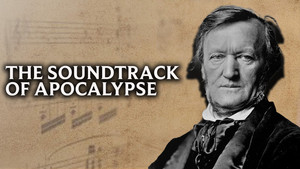
And the name of that man is Richard Wagner.
¶¶
¶.
I don't know.
I don't know.
I don't know.
¶¶
Thank you.
Helden hast sich geliebt!
¶¶ ¶¶
Thank you.
Oh, my God!
Ladies and gentlemen, please welcome back to the stage the hosts of The Rest is History Tom Holland and Dominic Sambrook.
Thank you.
Thank you very much.
Welcome back, everybody.
Tom, amazing to see that some people are still here.
Few.
So...
That was, as many of you will know, the ride of the Valkyries from the opera Die Valkyrie the Valkyrie, the Divine Shield, Maiden.
And our Divine Shield Maidens tonight were Christine Burrus, Mari Wynne-Williams, Ella de Jong, Rebecca Afonwi-Jones, Katie Stevenson and Marta Fontanel-Simmons.
And weren't they spectacular?
Thank you.
And Dominic, we ended part one with a banger and we've begun part two with another absolute banger.
One of the most instantly recognisable pieces of music ever written.
Exactly.
So if any of you are planning to strafe a Vietnamese village from a helicopter, this is the ideal accompaniment, as you will know if you've seen the film Apocalypse Now.
It is, of course, emblematic music of the man who wrote it, the composer who is the subject of our second half, and that is Richard Wagner.
And Tom.
In the first half we talked about how Tchaikovsky was described by his governess as being as brittle as porcelain, and that is not a description that anyone has ever applied to Richard Wagner.
No no, not at all, because Wagner, in all honesty, was a bit of a bruiser.
This is a man who essentially bent the whole of the 19th century to his own purposes.
And in fact, I would go so far as to say that he is the single most controversial composer in the entire history of music. agree with that i would absolutely agree i mean remember that this is a man who wrote savagely anti-semitic essays who was adolf hitler's favorite composer and whose operas to this day have never been staged in the state of israel yeah and so it's uh it's not really surprising that there's a slight whiff of sulfur about wagner's um the public reputation i think the word we use tom is uh pungent yes you you as you said pungent um and so i think the question is Does his antisemitism, which is absolutely gross and palpable, it is absolutely out there, does it taint his music?
Are his operas in some sense a prefiguring of nazism?
And this is an argument that has been raging among wagner scholars since really the late 60s, and it's obviously a very important, a very heated debate and we will be coming to it in due course.
But it's absolutely not the only reason why wagner matters and why he is a completely worthy theme for a history podcast, let alone a music podcast, And I think the reason why Wagner casts such a kind of outsized shadow over the 20th century is because he's such a massive, massive influence on the 19th century.
And in fact I think it's hard to think of any composer, perhaps any creative artist whose influence on the 19th century, the cultural influence, was more titanic than Wagner's.
Right, I agree.
Some of you may have come a year ago when we did Mozart and Beethoven.
Beethoven was Wagner's favourite composer, wasn't he?
His great hero.
Beethoven had started a process that Wagner carried to its extreme, which is to take music out of the court, out of the palace, and to take it to the public, to take it into the heart of public life.
Where it still is to this day.
So here we are in the Royal Albert Hall, but this is not a palace, this is a kind of public theatre.
And Wagner is really the midwife of institutions like this, partly because he was such a genius, partly because his music was so influential.
But also, and I think just as significantly, because Wagner never for a moment doubts that he is a genius.
Dominic, I mean, we have experience of colossal egotism, don't we?
We do, from our producers.
But Wagner's egotism is off the scale.
But the thing is that not only I mean unlike us not only is Wagner's egotism justified, but it enables him to bulldoze his way through obstructions that would absolutely have halted a less self-confident and less assertive composer, so that by the end of his life,
It's not Wagner who is paying court to royalty, but the other way around.
It is kings and emperors who are paying court to Wagner.
Yeah and Tom.
I think there's also another reason why Wagner is such an extraordinary subject for an event like this.
If you compare him with Tchaikovsky, or indeed with Mozart and Beethoven, or with Johann Sebastian Bach or most composers that you choose to mention.
There are all sorts of flamboyant biographical details in Wagner's life that have no equivalent in the lives of other composers.
And often kind of unexpected details.
So to look at one of them Wagner, compared to every other composer who is kind of his equal, is an unbelievably late developer.
So he's born in Leipzig in Saxony in 1813.
So what's that, about 25, 30 years before Tchaikovsky?
Yep, and it's just a few months after Napoleon has begun his retreat from Moscow.
So the Napoleonic Wars are raging all around Wagner when he's born.
And baby Richard, which it's very hard to think of Wagner as baby Richard, but he was at one point.
He is the last of nine children fathered by a man who then promptly dies in a very Wagnerian fashion.
And his mother then marries again and Wagner later in life seems to have wondered whether his stepfather had actually been his father.
And, as we will see, this theme of people with kind of uncertain paternity is a theme that runs throughout Wagner's operas.
And something really important about this stepfather, though, Tom.
So his stepfather was not a musical man, but he was a man of the theatre, and that was to really shape Richard Wagner's life.
Yes. and lots of Wagner's elder brothers were also very involved in the theatre.
And I think because of this kind of familial influence Wagner grows up as a boy and then a young man who is at least as obsessed by the theatre as he is by music.
I mean, he's very proficient at music, he's very interested in it, but he's not an absolute maestro in the way that Mozart is from the age of three months or whatever.
So you may wonder, this being so, why does Wagner aspire to become a composer?
And I think the answer essentially is because he wants to set plays to music.
Right, and that's why Wagner is drawn to opera above all, isn't it?
Because when we think of Wagner, we don't think of any other musical form, really, but his operas.
Yeah, I mean, that's essentially pretty much exclusively what he writes.
And his interest in opera is not just as a composer.
He wants to write the librettos, he wants to design the theatre.
He essentially wants to control every last detail of the production.
But I guess the problem for somebody like that is gargantuan ambitions.
But does he have gargantuan means and opportunities?
Well, in his teens, in his 20s and then going into his 30s?
No, he absolutely doesn't, because he's from a very humble background, relatively speaking.
And all the powers of patronage in Germany at this point still lie overwhelmingly with courts.
And Germany is a kind of patchwork of kingdoms and princedoms and archbishoprics and so on.
And these are the people who are really effectively, the only employers that a musician can look to um.
And so this is the uh, the course, the slightly humiliating course from wagner's own perspective that he has to follow as a young man.
And so if we look at him in, let's take a year at random 1848.
When Wagner is 35, he's kind of done okay by the standards of most musicians.
He's head of music at the Royal Court of Saxony in Dresden.
But Wagner is pretty miserable.
And he's miserable because he feels that his status as court musician is a humiliating one.
On special musical occasions, he has to wear a blue coat with a kind of harp on the collar.
And to Wagner, this is like the livery of a servant.
He despises the local theatre.
He thinks it's absolutely hopeless.
He wants to pull it down and build a new one.
And he hates the musical tastes of his employer and of the locals, because they are essentially interested in operettas.
And this is not where Wagner is at all, because what Wagner wants to do is write titanic operas about mythology, about men of destiny, about revolution.
When you mention revolution Tom, and you claimed you'd chosen a year at random, and I think that was a lie.
You are correct.
So 1848, as some of you will know, is the year of revolution in Europe.
And by May 1849 Tom, incredible scenes.
The storm clouds of revolution are gathering above Dresden and Saxony and putting Wagner in their shadow.
They absolutely are, Dominic.
And Wagner couldn't be happier about this.
And it may surprise people who think of Wagner as being, well, you know, let's face it, right wing.
Because actually, that's unfair.
He has certain right-wing opinions, can't deny that.
But in his essentials, he's a bit of an anarchist.
In fact, I would go so far as to say a bit of a hippie, and we'll hopefully be justifying this in due course.
And certainly when the threat of revolution comes to the court, he's very, very excited about it.
And that May, as the revolutionary fervor spreads across Saxony, it absolutely catches Wagner up.
And so he starts publishing inflammatory pamphlets, to which he puts his own name.
He starts distributing flyers around the barricades.
And at one point he shins his way up the tallest spire in Dresden to serve as a lookout, looking for the forces of reaction who are trying to snuff out the brave revolutionaries.
Right, and this is a problem if you're working for the person who's running Saxony, right?
Because as everybody knows, the revolutions of 1848 and 1849 get crushed.
So Wagner has effectively been backing a losing horse.
He's been backing a losing horse, and the winning horse is his ex-employer, who he's been insulting in pamphlets and flyers.
So he's clearly guilty of treason, and the penalty for treason in Saxony is death.
So Wagner is in terrible peril.
He has to flee for his life, and he only just gets away from Saxony.
And adding to the kind of the disastrous state that he finds himself in is the fact that there's no obvious place of sanctuary in the rest of Germany, because everywhere in Germany has experienced these revolutions.
And now that they've been crushed...
Nobody wants to have anything to do with this failed revolutionary that Wagner has now become.
And so essentially, across Germany, he has made himself persona non grata.
So he ends up in Switzerland, which for some absolutely unfathomable reason he finds really boring.
And I guess...
You know, beggars can't be choosers.
What can you say?
Well Dominic, you say beggars, and that is literally what Wagner is, because it's not just that he's skint.
He's massively in debt.
He's a man who all his life loves splashing the cash.
So he has no money.
He has no patron.
He has no theatre where he can put his operas on.
And The next five years, he writes almost no music at all.
And again, this is something that is unusual about Wagner when you think of the great composers.
It's hard to think of another composer of Wagner's stature who for five years in the middle of his life just stops writing music.
And you might think he's doing this because he's a bit depressed, he's a bit down, he's lost his self-confidence.
Not a bit of it.
Wagner has lost nothing of his self-confidence.
And the five years following his escape from Dresden are absolutely not wasted, even though he isn't writing music.
Because what he's doing instead, he is reading, he is writing, he is dreaming.
And the fruit of these dreams will be the single most astonishing cultural achievement of the whole of the 19th century.
And it will tell the story of a ring. of gods, of Valkyries, of heroes.
And I think it's time now for some music.
And so let's hear one of these heroes.
He is called Siegfried.
He has been raised by Mima, a dwarf, as the dwarf's own son.
So there's the kind of the theme of confused patrimony.
But in truth, Siegfried is the son of a dead hero whose sword Notung, had been shattered to pieces by Wotan, the king of the gods.
And Siegfried.
He comes into Mima's forge and he finds the fragments of Notung and he picks them up and he marvels at them.
And do you know what he says?
He says, Notung!
No, Tom.
Night liquor's shit.
That is what he says.
Tom, it's applause born out of pity and embarrassment.
I don't think so.
Because that is exactly what Siegfried says.
He then cracks up the bellows.
He then gets in some Viking laughter.
Ha, ha, ha, ha.
As the bellows are rearing, as he sets to forging, Notung Mima is watching on all kind of scheming and tricksy and out comes the hammer and a sword that was broken and had long seemed beyond repair starts to be repaired.
Right, well, to banish the memory of what just happened... LAUGHTER
Let us hear the exultant singing of Siegfried, in which we hear, I think, the resolve and the implacability and, if you're a big Wagnerian, I suppose, the heroism of Richard Wagner himself.
So please welcome Toby Spence and John Findon as Mima and Siegfried for the forging of Notung, Siegfried's forging song.
Ho ho ho ho ho ho ho ho ho ho ho ho ho ho ho ho ho ho ho ho We'll be right back.
Thank you very much.
Er schafft sich ein scharfes Schwert, Fafner zu fällen, der Zwergefeind.
Ich brau ein Trugketten, sie mit zu fangen, dem Fafner viel.
Gelegen muss mir die Licht, lachen muss mir die Luft.
Thank you.
Thank you.
¶¶
Thank you.
Der Bruder schuf den schimmelnden Reif, in dem er gezaubert zwingende Gras das helle Gottesherrn herrschend macht.
Ihn hab ich gewonnen, ich halte mein.
Aber es hat sehr.
Eint mich man zum Zwerg gefroren, zwing ich ihn nun auf die Blumen, wüsterlich da nieder gehochen, soll mich alles helfen.
Der verachtete Zwerg, wie wird er geehrt?
Zu dem Horde hindrängt sich Gott und hält.
Von meinem Wickel neigt sich die Welt.
Von meinem Zwerg wickelt sie mich hin.
Gut, gut, weit wie gespielt.
Jetzt haftest du wieder den Held.
Dann fahr ich müßig nie mehr nicht mehr.
Du hast nur zwei, ich zwang dich zu ganz.
Ein Schlag soll nur dich mir zerschlagen.
Dem Schafen habe ich ihn geschafft.
Den stirbenden Vater zerstrang der Stahl.
Der liebende Sohn schlug ihn heu.
Lacht in sein heller Scheu.
Seinen Schwelzen schneit ihn heut.
Mieme, wie ich fühle Mieme, wie ich fühle Mieme, wie ich fühle Mieme, wie ich fühle.
Hey mime, wie blügt sie die Zorn.
It's too late.
It's too late.
It's too late.
This episode is brought to you by the Philharmonia Orchestra, who are turning 80 this year.
And to celebrate, they're giving away 80 free tickets for first-timers for every concert in their 2025-2026 London season.
Now, if you've never booked with the Philharmonia before, you can choose any concert in their London season.
They're all at the South Bank Centre.
You can get two tickets completely free.
There is no catch.
Just world-class music live.
So the philharmonia's first concert was in 1945 and ever since then they have been a part of britain's cultural fabric, constantly evolving and always ambitious.
They have scored more than 150 film soundtracks and video game soundtracks.
They've collaborated across all kinds of genres classical icons, jazz.
They've even done heavy metal.
I mean, this is not just orchestral.
It is adventurous.
So this is your chance to experience one of Britain's great orchestras and some of the world's top soloists in one of the world's great venues.
To book, head to philharmonia.co.uk slash free tickets.
That is philharmoniacouk dot co dot uk slash free tickets.
Come for the music, stand for the ovation.
So absolutely bravura stuff there from Toby Spence and John Findon.
And that is from the opera Siegfried, the third in a cycle of four operas that are, of course, known as the Ring Cycle.
And Tom, you know I'm a massive fan of J.R.R.
Tolkien.
I do. a sword that was broken being reforged, a magic ring.
All of this does sound very familiar.
And I guess the question for me and for a lot of people is how much was Tolkien with say, The Lord of the Rings?
How much was he influenced by Wagner?
Because Tolkien always denied it, didn't he?
He said, oh, I have nothing to do with Wagner.
But it does seem a coincidence, to say the least.
Well, so to look at the possible relationship of Tolkien and Wagner...
I think the best thing is to look at how it is that Wagner comes to write The Ring Cycle.
And the thing is that, like Tolkien, he is obsessed by the mythology and the literature of the ancient north.
So early medieval German poems, but also Viking mythology, the sagas of Iceland, all of that.
And essentially in those five years when he's not writing music and he's in Switzerland following his exile from Saxony, this is what he's doing.
He's sitting there immersing himself in Nordic myth.
And it's happening a whole century before Tolkien writes The Lord of the Rings.
And absolutely Wagner is the first creative artist to recognise this, the incredible potency of this kind of Norse, medieval material.
And specifically, what he recognizes is the huge potential that it has for someone who wants to create his own mythological world.
And so this is what Wagner does.
And first of all, he writes it up as poetry.
So again, this is what he's doing in his five years.
He's reading, but he's also writing his own kind of mythic account.
And in this mythic account, you get Rhine maidens, you get Valkyries, of course, you get Valhalla, you get Wotan, the king of the gods, you get dragons, you get the magic swords that we've just seen being forged.
And all of this Wagner is putting into poetry, and he's a very, very good poet.
And then having done that, he composes the music for it.
And then having done that, he wants to put it on.
And so he devotes himself to the exhausting task of trying to raise the money that will enable him to stage the four operas of the Ring Cycle in the kind of scale and style that he has in his mind's eye.
And essentially, what Wagner wants for the Ring Cycle is for it to be, and Dominic, I'm afraid there's only the one word for what he wants it to be, he wants it to be a sacral experience.
Right.
Tom Holland, bingo there.
But the amazing thing is that he succeeds, doesn't he?
Because if we fast forward to 1876, by which time he's actually in his 60s, all his dreams are about to be fulfilled.
He now has his own theatre in a small town in northern Bavaria called Bayreuth.
He has effectively single-handedly invented the look, the appearance of Norse myths.
So the classic thing, of course, the horned helmet that we associate with the Vikings.
And the people who travel to Bayreuth for the premiere...
For them it is like a cross between going to a theatre in ancient Greece and a kind of religious pilgrimage, isn't it?
Right.
And it's hard to get your head around just how massive achievement this is.
But you asked about Tolkien before.
So imagine that Tolkien, he writes The Lord of the Rings, but they're not content with that.
He raises the money for the films of Lord of the Rings.
And then, having done that, he personally comes up with all the special effects for the films and he designs the costumes and, of course, he composes the music.
And this is not something that Tolkien would in a million years have thought to do, but Wagner does.
And he can do it because he is not only a great musical genius, but he is also at the absolute cutting edge of culture and technology today, in the 19th century.
So the Ring Cycle has its Valkyries and magic swords and all that kind of thing.
But it is also, when it goes on at Bayreuth, the most futuristic musical spectacle ever staged in the 19th century.
It is the kind of ultimate fusion of ancient and modern.
And this fusion touches almost every aspect of the production.
So there is a dragon in the ring cycle.
And Wagner commissions a dragon to be forged in a foundry in Birmingham.
And all the bits get sent to Bayreuth, except for the neck which by accident goes to Beirut in Lebanon.
And so this dragon comes on, and it has no neck.
You have celebrity guests.
So you have the Kaiser, not the Kaiser that we do impersonations of on the rest of history, but his dad.
Tchaikovsky turns up a host of other composers and very much friend of the show Dom Pedro II of Brazil.
Oh, lovely to have him back.
Great to have him back, isn't it?
And he arrives and he's put up in a hotel and he's given the ledger and it asks him for his name, so he writes it down, and then it asks him for his occupation, and so he puts down emperor.
He's not wrong.
Yeah, exactly.
And all kinds of things about... about musical production begin with Wagner and with Bayreuth.
So part of the way in which Wagner himself had raised money for it was to go on tour as a conductor conducting his own work.
And he becomes the first celebrity conductor.
So, Olli's pedigree begins with Wagner.
On the stage, the curtains part in the middle rather than being raised.
Again, something new with Wagner.
And on the first night, the reviews don't just go around Germany, don't just go around Europe.
They're cabled across the Atlantic to New York.
So that sort of sense of being at the cutting edge, that fusion of ancient and modern, of old myths and the latest technology.
You can see that there is a parallel there with Wagner's most famous subsequent admirer, who is of course Hitler.
Because Hitler is obsessed, as Wagner is, with Nordic myths.
Like Wagner, he has a kind of diabolical genius for using the latest technology, the latest kind of media innovations.
And so that takes us back to the question that's hung over this since we started, the question we began with, which is how much do you think the ring cycle, as some critics do, is laced with the poison of Nazism from the very beginning?
Well, absolutely.
As you say, there are critics who argue that the ring cycle is absolutely putrid with kind of incipient fascism, that it's virulently nationalist and, more specifically, that the operas are rife with anti-Semitic stereotypes.
So it is often claimed, for instance, that Mima, who we saw in the scene that was just performed, is intended as an incredibly negative portrait of a Jew, drawing on all the anti-Semitic stereotypes going.
So he's dwarvish and malevolent and cringing, and this is counterpointed to the, the blonde heroic Siegfried, but for what it's worth.
Personally, I think I think that this is completely wrong.
I think that had Wagner intended the ring cycle to be anti-semitic, he would have made it very, very anti-semitic and he would have left no one in any doubt about it, because Wagner, throughout his life, was never a man to hide his opinions.
And that, after all, is how we can be certain that he was an anti-Semite, because he absolutely trumpeted it.
Right.
And isn't it interesting that the Nazis themselves, when obviously the Nazis adore Wagner and they love the Ring, but actually they don't make a big deal of the Ring being anti-Semitic, do they?
Not at all.
Not at all.
It's never mentioned.
And you would think that you know, if there was an obvious anti-Semitic subtext of the Ring cycle, the one person who would notice it would be Hitler.
So if it's subliminal, it's very, very subliminal indeed.
And that's why I think it's not subliminal, because I just don't think it's there.
And it's not just because of the reception of the ring cycle.
It's because of the drama that is within the ring cycle.
So I said that Wagner is actually a bit of a hippie.
The ring cycle is not a celebration of power and domination, but the absolute opposite.
So the ring does promise power to those who take it and who want to use it.
But Wagner shows the ring enslaving all of those who look to master it.
Right, and that's something that obviously would be very familiar to readers of The Lord of the Rings.
But this is something that Wagner himself coined, right?
Because this is not something that you find in Norse or Germanic myths.
There are magic rings, but there are no kind of addictive rings of power.
Right, and I think that this is because the idea of a ring of power is actually a very, very 19th century one.
Because again, it's about this issue of technology.
Wagner is writing his operas at a time where it is becoming evident that the power of technology to cause destruction is becoming greater and greater.
And of course, in the decades that follow, it will result in the destruction of the First World War.
But Wagner is being prophetic here.
And so that's why I think that you asked is Tolkien influenced by this idea of the ring as something that is malevolent?
I think he is.
Because I think that, as you say, it's not a notion that is there before Wagner.
Right.
And actually the interesting thing again is that what Wagner pits against the power of the ring, the counterweight to it, is actually something that the Nazis did not rate at all, which is love, the power of love.
You see, absolute hippie.
So what Wagner shows us at the end of the ring cycle?
Siegfried is treacherously killed and he has the ring on his finger at the time.
And to Siegfried the ring is nothing, it's just a trinket.
He's perfectly able to resist it, because for Siegfried, the great thing is love, and when he dies it's with the name of his beloved on his lips.
And that beloved is Brunhilde, who is a Valkyrie, who has become immortal.
And she, in her grief that her beloved has died, that Siegfried is dead, removes the ring from his finger.
And she renounces all of its power in the name of love.
And then having done that, she lights Siegfried's pyre.
And she climbs onto his horse and she gallops into the flames of the pyre.
And the flames rise and rise and they consume Valhalla, the halls of the gods.
And so the ring cycle ends.
And what you are witnessing is Götterdammerung, the doom of the gods.
And the message that the ring cycle ultimately ends up teaching is not a fascist one but the opposite that set against the ruin of worlds ultimately there is only love .
.
.
Thank you.
Thank you.
¶¶
¶¶
¦ ¦
¶¶
¶¶
¶¶
¶¶
Thank you.
Wow.
So that was Siegfried's funeral march from the third act of Gütterdammerung.
And it's a lamentation over Siegfried's death his Tod in German but it was also a celebration of his life and his love, his Liebe.
And Tom, those two German words, the pairing of them Liebe, love and Tod death.
It's associated with another opera, in particular another Wagner opera, and it's not an opera that's in the ring cycle.
Yes, so this is Tristan and Isolde.
So let's get into Tristan and Isolde.
Obviously, if you've heard the music, if you've seen it, you'll know that it's 12 hours long.
It's a love story, more obviously a love story than the ring cycle.
What I'm now going to do is try and tell you what happens in about 30 seconds.
So it comes from Arthurian myth.
You have Tristan.
He's a famous knight.
He's the adopted son of King Mark of Cornwall.
So King Mark is pledged to marry Isolde.
And Isolde is an Irish princess.
Now, inevitably, it's an opera.
There's a love potion.
So Mark and Isolde are meant to drink this potion.
But again, it's an opera.
So Tristan ends up drinking it instead.
Tristan and Isolde drink it.
Everything goes wrong, inevitably.
There are various operatic shenanigans that we don't need to go into.
Tristan dies in Isolde's arms.
Isolde then consummates their love by dying as well, but not before she has sung the single most beautiful and most devastating piece of music in the whole history of opera, and that is her Liebestod.
Yeah, it's swooning, it's overpowering.
Yes, folks, it's sacral.
Above all, perhaps, it's climactic in every sense of the word.
It is the climax of the opera.
But Tristan and Isolde is, throughout its entire length, unbelievably erotic.
There are climaxes everywhere.
And, Dominic, do you want to know what Friedrich Nietzsche, the... Yes, you do.
The great...
The great philosopher who admired and despised Wagner in equal measure.
Do you know what he said about Tristan?
I would love to know.
Okay, you asked for it.
So Nietzsche said of Tristan I have never found a work as dangerously fascinating with as weird and sweet an infinity.
Oh, so Nietzsche, who generally bonkers, but in this respect, quite right.
Yeah, yeah.
This isn't the talking to a horse Nietzsche.
This is the shrewd and analyst of opera Nietzsche.
So, we've talked about Wagner as a hater.
He's obviously a very good hater.
We've talked about his anti-Semitism, but, Dominic, he also hates the French, which I imagine you're slightly more favourable towards.
Yeah, he's not all bad.
LAUGHTER
He also, I'm very sad to report, he hates London.
He comes here several times and he always thinks the weather's terrible, it's too foggy, people are too obsessed with business.
So that's very sad.
But Wagner's not just about hating things.
He is also very, very good at being in love.
And perhaps, before we end this show in the most climactic manner possible by hearing the Liebestod um, perhaps we could just give a shout out to two people with whom wagner had very intense affairs.
Okay, i think everybody would absolutely love that.
Well, and the reason i want to give a shout out to these two in particular is because um, they're very intimately connected to tristan and isolda, and the first of these is a woman called um, matilda vessendonk.
Um, and Wagner has a tempestuous affair with her while he's in the process of composing Tristan.
And both Wagner and Matilda were married at the time.
And Matilda was actually married to one of Wagner's most generous benefactors.
And I think for Wagner, the sense of betraying somebody who had always shown him nothing but kindness and financial generosity seems to have slightly changed, titillated.
It seems to have excited him.
Yeah, Wagner was just a bit of a shit, wasn't he?
So that's a sort of echo of the plot of Tristan and Isola, isn't it?
So Wagner is betraying a man who has been very generous to him, just as Tristan is betraying King Mark.
Well, you say he's a bit of a shit.
He's an artist.
And where an artist has to be a shit, an artist has to be a shit.
Because for Wagner, the experience of writing music is always a very intensely sensory and emotional experience.
So, for instance, he likes to wear beautiful silk clothes.
He likes to breathe in the sweetest perfumes.
Like you when you're podcasting.
Absolutely.
And I suspect that to write Tristan, he needed to feel the thrill of an illicit love.
And actually, he writes the whole of the second act while he's on holiday in Venice with Matilda.
And they've both, you know, Wagner's left his wife behind, Matilda's left her husband.
And you can see that this would get the creative juices flowing, I suppose.
Well, yes.
Well, I mean, the result is listen, the result is one of the great masterpieces of 19th century culture.
But the problem for Wagner, I guess, is he's written Tristan and Isolde, but putting it on is a very different matter, because basically he doesn't have any money.
Right, yes.
And this is certainly the case for the first five years after he's completed Tristan.
But then, brilliantly for Wagner, massive stroke of luck.
In 1864, he meets the second of the great loves of his life that I wanted to talk about.
And this is not a woman, but a man.
And he's called Ludwig.
He's only 18 years old.
And he has just recently been crowned as King of Bavaria.
He's the second Ludwig to be king of Bavaria, so Ludwig II.
And he, more than any of the superfans that we talked about in the first half, I mean, he's the ultimate superfan, possibly in the entire course of the history of music, because it is Ludwig who funds Wagner's theatre at Bayreuth and it is Ludwig, in 1865, who coughs up the cash that enables Wagner to put on the first production of of Tristan.
And I think Wagner was not gay, unlike Tchaikovsky, but there is an almost erotic quality to his relationship with Ludwig.
So ministers of kings throughout history have always worried about their royal master chucking cash at a royal mistress.
And the ministers of Ludwig II are kind of very similarly anxious about the amount of money that Ludwig is is shoveling towards wagner.
And there is something, there is a kind of quality of two lovers about their relationship, locked in a kind of very intense passion.
They're always quarreling, making up, pledging eternal love, and then the kind of the cycle goes round again and again, and again.
And you talk about ludwig as a super fan.
I mean, ludwig is the first of many, isn't he?
You know, composers had inspired devotion before, of course mozart beethoven whoever, but In Wagner's old age, and then especially after his death, he inspires an adoration of a kind that no composer has ever inspired before.
So he really is a composer with fans, with super fans.
And I guess that's partly because...
He's an extraordinary self-promoter, but also because, as we've heard, there is just an unbelievable power and intensity to his work.
Yeah, and so I think that Europe gets gripped by what you could legitimately call Wagner-mania.
And Wagner-mania among Wagnerians is still very much a going concern.
And certainly, if Wagner is hated and there are lots of people who have hated him and who do hate him then so also is he passionately, passionately adored.
And I can't think of any composer actually, who has, before or since, who has been the focus of such extremes of emotion.
And when you listen to the Lieberstadt, as we're about to do, from the end of Tristan and Isolde, I think you can see why.
Right.
So, ladies and gentlemen, that brings us towards the close of tonight's show, and that is what we are going to end with.
But first we have a host of thank yous.
So first of all, thank yous to our brilliant Goldhanger team.
Executive producer Tony Pastor, who's with us tonight, a great man.
We have backstage Hannah Aaliyah, Izzy and Julian, who have been shoveling sushi down Tom Holland's throat and fueling Arthur Sandbrook with pizza.
We have our dear, dear friends in business class, our producers Theo Young-Smith and Tabby Syrett.
The other two members of the Rest Is History quartet.
And, of course, we have our brilliant conductor, Oliver Zeffman, one of the most talented young conductors out there, without whom we would not be here tonight.
And our thanks also to the Philharmonia Orchestra.
And if there are any people here who are here tonight who have not.
So I just wanted to say, if there's anybody here who this is their first experience of listening to a live orchestra I mean the Philharmonia Orchestra powerfully demonstrate why it's so much better to come and listen to a live orchestra than to hear music on Spotify.
Absolutely.
Not least when you have the brilliant soloists that we've had this evening.
Marta Fontenelle-Simmons, Christine Burrus, Mari Wynn-Williams, Ella de Jong, Rebecca Aronwi-Jones, Katie Stevenson, Lea Zhu, Toby Spence and John Flindon.
What brilliant, brilliant performers they have been.
And finally, our thanks to Ingela Brimberg, who now, over the corpse of Tristan, will sing of love and death.
So thank you and goodbye.
Goodbye.
.
.
.
Wild und leise, wie ihn lächelt, wie das Auge, Seht ihr's nicht?
Immer lichter, immer lichter, immer lichter, immer lichter, immer lichter.
Wie das Herz im Auge schmerzt, Ab und her dem gruselnden Knirn.
Alleluia!
Wiesbaden, Wiesbaden, Wiesbaden, Wiesbaden, ¶¶
Sie sind es nicht!
¶¶ ¶¶
O'er the land of the free and the home Alleluia.
Alleluia.
So thank you so much for listening, everybody.
Now, we will be back next week.
And I'm sorry to say there will be no musical accompaniment because it will be business as usual.
And on Monday, we'll be resuming our normal service with a mighty series based on medieval history.
And it is the life and career, the extraordinary achievements of one of the very worst people in history.
That person is, of course, Joan of Arc.
So a massive thank you once again to Oliver Zeffman, to the Philharmonia Orchestra, to the Royal Albert Hall and to our brilliant soloists Lesu, Ingele Brimberg, Toby Spence and John Finden.
Thank you very much, and Happy New Year, everybody.
Bye-bye.
Bye-bye.