
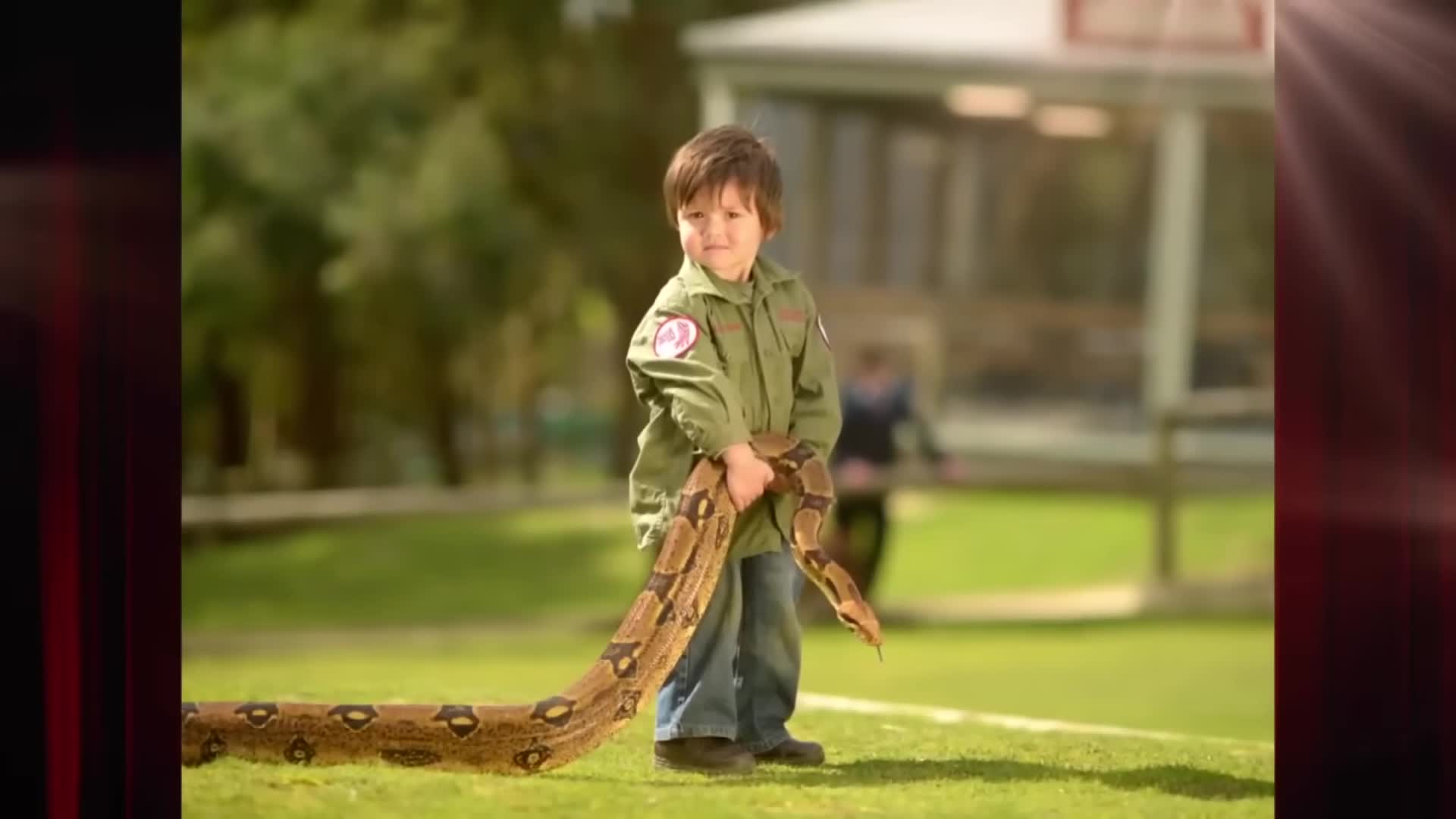
[The Fearless World of Seven-Year-Old Reptile Ranger Charlie]-[6 Year Old Reptile Ranger Charlie Shares His Love For Wildlife @BestLittleBigShots]
📋 Summary
The Fearless World of Seven-Year-Old Reptile Ranger Charlie
In a captivating segment of Little Big Shots, the audience is introduced to Charlie, a seven-year-old “reptile ranger” whose comfort level with dangerous creatures defies conventional logic. Despite his young age, Charlie demonstrates an encyclopedic knowledge and a profound lack of fear regarding animals that typically induce panic in adults, including snakes, alligators, and spiders.
The Roots of Fearlessness
Charlie’s unique passion began early; he recounts that he “started to hold” his first snake at the age of two and immediately “started to like it.” This early exposure served as the foundation for his current expertise. His collection at home is far from traditional, featuring a lizard, a pygmy python, and even a “bird-eating spider” named “Creepstick,” which Charlie describes as being “about as big as my hand.” When asked about his bravery, Charlie explains that he “used to hold alligators when I was about four,” allowing him to get “used to them” through consistent care and feeding.
Handling the Predators
During the show, Charlie provides a masterclass in animal handling, even attempting to help the host overcome his own phobias. When the host expresses concern about a snake “squeezing” his hand, Charlie calmly clarifies that the snake is not a threat because it “doesn't have a big enough mouth” to kill a human, though he acknowledges that a “Burmese python” would be a different story.
Charlie also shares harrowing yet instructive anecdotes from his experiences. He describes an incident where a two-foot alligator “latched on” to his finger for “about two hours.” Rather than appearing traumatized, Charlie discusses these events with the clinical detachment of a seasoned professional, emphasizing that the animals are simply acting on instinct. For instance, he explains the survival mechanism of the “shingleback lizard,” noting that its tail “looks like the head” to trick predators, allowing the lizard to escape if the tail is grabbed.
Scientific Insight and Practical Wisdom
Beyond just showing off his pets, Charlie demonstrates a keen understanding of animal biology. He instructs the host to pick up a leopard tortoise “like a hamburger,” explaining that they “eat bones for calcium.” This practical advice highlights his hands-on approach to animal husbandry.
Perhaps the most intense moment of the show occurs when Charlie introduces an “albino Burmese Python,” the “fourth biggest snake in the world.” As the massive reptile wraps around his foot, Charlie remains unfazed, noting that the snake “hasn't given any signs” of aggression. His mother, who also works with the animals, mirrors his calm demeanor, stating that she “often” sees him wrapped in a snake and that “he's fine.”
Conclusion
The segment concludes by highlighting Charlie not just as a child with exotic hobbies, but as a young expert who has cultivated a deep, respectful relationship with the natural world. By demystifying creatures that many find terrifying, Charlie challenges the audience to replace fear with curiosity and understanding. His presence on Little Big Shots serves as a testament to the idea that with early exposure and proper guidance, children can develop a profound and brave connection with even the most intimidating members of the animal kingdom.
Deep Learning with ListenLeap


