Hi there, let me tell you about something really exciting.
Our next challenge, the Learn English with AI challenge, is starting next Monday, the 2nd of March.
Over the course of four weeks, you'll learn the best ways to use AI and tools like ChatGPT to improve your English.
We're We ran this challenge last year.
It was super popular, so we are running it again.
But this is a completely new version of it.
I've rebuilt the challenge from scratch with new lessons, prompts and practical tasks, all updated for 2026.
So, whether you already use AI to learn English or you're just curious, I think you will find this incredibly valuable.
We start on Monday, so check it out before midnight on Sunday.
There is a link in the description.
Okay then, now it's time to enjoy the show.
Hello hello, hello and welcome to English Learning for Curious Minds by Leonardo English, the show where you can listen to fascinating stories and learn weird and wonderful things about the world at the same time as improving your English.
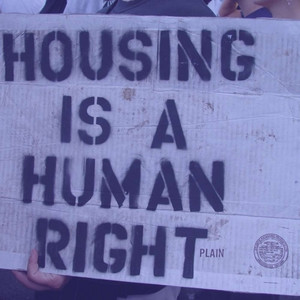
I'm Alistair Budge and today we are going to be talking about the global housing crisis.
All over the world, with very few exceptions, house prices have been rising, outstripping incomes and making home ownership harder than ever before.
So in this episode we'll be looking at what's actually happening, what are some of the causes and effects of this and what, if anything, can be done about it.
I will warn you, this is quite a long episode, but it's an important and complicated topic, so I hope you will excuse this being a somewhat longer than usual one.
But before we get right into this episode, let me briefly remind you that you can become a member of Leonardo English and follow along with the interactive transcript and subtitles over on the website, which is leonardoenglishcom.
Membership of Leonardo English gives you access to more than double the number of episodes, plus all of our learning materials, including instant translations in 12 languages, study packs and much, much more.
So if you are ready to take the next step on your English learning journey, the place to go is leonardoenglishcom.
Okay then, let's not waste a minute and get right into it.
In British English, we have an expression you might not have come across before.
Safe as houses.
Something is safe as houses or as safe as houses.
It's an unusual expression on the one hand.
Grammatically, it's odd.
It's safe as houses, plural, even though you're describing something singular.
You say something is as safe as houses, not as safe as a house.
If you had to guess what it meant, I imagine you might think very safe, because a house is safe with a door and a lock and so on.
That would be a perfectly reasonable guess.
And it's partially right.
Safe as houses doesn't just mean safe in a general sense.
It typically means something is a safe and good investment.
After all, you can see a house.
Nobody can steal your house or take it from you.
You can also live in it, which is something you can't do with most investments.
And if you are lucky enough to have some extra cash and are looking for a sensible investment opportunity.
Historically, buying property and renting it out has been considered a good option.
Of course, this isn't a uniquely British phenomenon.
Investing in property is popular all over the world for similar reasons, with people in some countries tending to do it more so than others.
And, as you may know, in the UK house prices have continued to rise almost every year for the best part of a century.
Slowly but surely, up and up they went.
In 1952, the average price of a house in the UK was £1891, which is the equivalent of around £48000 today.
Last year, in 2025, the average house price was £271,188.
And even in inflation-adjusted terms, house prices have increased by more than five and a half times.
Now, the fact that the price has increased so drastically isn't a terrible thing in itself.
In fact, for several decades, from the 1950s to the mid-1990s, house prices increased very gradually every year at the same rate, more or less as average incomes.
House prices went up, but so did salaries, so it all evened out.
Being able to buy a home on one person's regular salary was perfectly possible.
But then, starting in the late 1990s, something changed.
Instead of going up slowly but surely, property prices in the UK started to increase steeply.
And importantly, they started to significantly outstrip the growth in wages.
In the 1950s, the average home cost the equivalent of four years of wages.
In 2021, the average home in London cost the equivalent of almost 13 years of wages, and rent has increased at a similar pace.
The average rent in the whole of the UK is £1,400 a month, while in London it's a whopping £2,200.
Now, as I'm sure you know, this is far from a uniquely British phenomenon, and the UK is not even the worst in terms of house prices and housing affordability.
In fact, in many countries, the situation is even more extreme.
Cities like Sydney Toronto Vancouver, Hong Kong and even in parts of Europe have all seen similar, and in some cases even sharper, rises in house prices over roughly the same period of time.
So, what's going on?
Why, almost the world over, has there been such a surge in property prices, where a roof over your head has gone from something most people could reasonably expect to afford to something that increasingly feels out of reach?
Well, there are some unique factors that apply to specific areas, which we'll go into later in the episode.
But there are also some global forces, factors that affect the global property market.
The first and most important shift was that buying a home gradually became less about income and more about access to credit.
For much of the 20th century, if you wanted to buy a house, how much you earned placed a fairly strict limit on what you could afford.
Mortgages were relatively conservative, deposits were large, interest rates were often in the double digits and banks were cautious about how much they would lend.
In other words, you couldn't borrow very much money, and borrowing money was very expensive.
But from the late 1990s onwards, borrowing became easier and cheaper.
Interest rates fell, not just in the UK, but across much of the developed world.
Monthly mortgage payments became more affordable and banks became increasingly willing to lend larger multiples of people's incomes.
This had a powerful effect on prices.
It pushed them up dramatically.
Estate agents increasingly encouraged prospective buyers to think not about the sale price but rather the monthly mortgage payments.
After all, if your monthly payments are affordable, the price of your house is just a number.
It doesn't really matter.
And anyway, it would almost certainly go up.
They always did.
As long as interest rates stayed low, house prices were allowed to keep climbing.
And like with anything, the more prices rose, the more attractive property became as an investment opportunity.
For many years.
It was very attractive in the UK especially, which had all sorts of incentives encouraging people to become landlords.
After all, the bank would only require a small deposit.
A tenant's monthly rent would more than cover the monthly mortgage costs and the price would continue to rise.
What this meant was that housing increasingly stopped being treated primarily as a place to live and started being treated as a financial asset.
Then, of course, came the great financial crisis of 2008.
This crisis, which began with risky mortgages in the United States, showed what could happen when housing prices became completely disconnected from economic fundamentals.
As you'll know, when the bubble burst, millions of people lost their homes, banks collapsed and the global economy went into freefall.
You might think this would have taught everyone a lesson, that it might have led to a complete rethink of housing as an investment vehicle.
But what actually happened was, in many ways, the opposite.
Governments and central banks were absolutely terrified of another collapse.
So, instead of allowing prices to fall to more affordable levels, they did everything in their power to support the markets and prevent prices from dropping too far.
They pumped lots of money into the financial system and kept interest rates extremely low for a very long time.
In some countries, rates stayed close to zero for more than a decade.
The aim was to make borrowing cheap, encourage spending, and keep economies alive.
And in many ways, it worked.
The world bounced back.
But there was a side effect.
A huge inflow of capital into assets stocks, bonds and crucially property, and this is where the idea of housing as a global market starts to make a little more sense.
In the past, the price of a home was mostly determined by local factors – local wages, local demand, local supply – because the people buying and living in them would be locals.
But increasingly housing prices were being influenced by global money.
Money looking for safety, money looking for returns.
And this money isn't abstract.
It comes from pension funds, insurance companies, investment firms and wealthy individuals, all looking for places to park large sums of money in assets that feel stable and predictable.
Compared to complex financial products, housing looks reassuringly simple.
It exists physically.
It generates income through rent, and governments have a strong incentive to stop its value from collapsing.
And once housing becomes part of the global flow of capital, it stops behaving like an ordinary good.
At that point, it doesn't really matter whether a flat is in London, Lisbon or Toronto.
What matters is that it's in a country with a stable legal system, strong property rights and a reputation for safety.
That's why similar patterns started to appear in very different places.
A fireman in Paris was now no longer bidding for a property against the local greengrocer, schoolteacher and wedding photographer, but against sophisticated international investors.
So demand for housing soon started to significantly outstrip supply in most major cities, further pushing up prices.
Now, the obvious question is, if demand is so high, Why don't we just build more houses?
This is where we need to talk about housing supply.
Because, alongside all these financial factors pushing up prices, there's also been a chronic failure to build enough housing where people actually want to live.
In the UK, the planning system is notoriously complex and restrictive.
Getting permission to build can take years.
And even when permission is granted, local opposition often delays or blocks development entirely.
There's actually an acronym for this.
NIMBY, which stands for Not In My Backyard, and describe someone who opposes new construction in their area, worried it will change the character of the neighbourhood or reduce their own property value.
And then there are the practical constraints.
You can't build more land in central London or San Francisco or Hong Kong.
These cities are hemmed in by geography, and the most desirable areas are already built up.
Add to this rising construction costs, labour shortages and the fact that developers sometimes hold onto land rather than building on it, hoping values will increase even further.
And you have a situation where supply simply can't keep up with demand.
So even if the money side of things were sorted out, we'd still have a fundamental shortage of homes in the places where people actually want to live.
And demand keeps growing, not just from population growth, but from changing demographics.
People are living longer.
More people are living alone.
In much of the developed world, the average household size has been shrinking for decades, which means you need more units of housing for the same number of people.
Add to this an increasing number of people, both domestically and internationally, migrating into cities and you have even more pressure on the housing supply.
All these factors mean that even maintaining current affordability would require building significantly more homes than we currently do.
So prices are almost guaranteed to rise.
This isn't just speculation or financial engineering.
It's basic arithmetic.
More people competing for the same number of homes pushes up both rents and prices, regardless of how sensible or well-intentioned housing policy might be.
And there is more.
Just when it seemed like low interest rates might last forever, everything changed again.
In 2022, inflation came roaring back.
Central banks, which had spent over a decade keeping rates at historic lows, suddenly had to do a U-turn.
In a matter of months, interest rates went from near zero to levels not seen in over a decade.
In the UK, the base rate went from 0.1% to 5%.
In the United States, rates rose even faster.
For anyone with a mortgage, this was a shock.
If your rate wasn't fixed, your monthly payments soared.
People who had borrowed the maximum amount when rates were 2 suddenly found themselves paying twice as much each month.
You might have thought this would have led to a fall in house prices, as people wouldn't have been able to borrow as much as before.
But here's the thing.
House prices didn't collapse.
They did fall slightly in some areas, and sales slowed down dramatically.
But prices remained stubbornly high.
Why?
Well, because many people who already owned homes simply stayed put.
If you had a cheap mortgage locked in, selling rarely made sense, because wherever you moved next will almost certainly come with a much more expensive loan.
This created a kind of gridlock.
Not enough homes for sale, still too expensive for first-time buyers to afford, but with even higher monthly costs due to expensive mortgages.
In other words, the problem got worse, not better.
So, by this point, housing is being pulled in several directions at once.
Cheap money, pushing prices up, global capital treating homes as assets, more people competing for housing in the same cities and a system that struggles to build enough homes where they're needed.
And these are often exacerbated, made worse, by specific local conditions.
So let's talk about some of those now.
Particularly in Europe and in almost any reasonably sized city.
An oft-cited culprit is short-term rentals, and one name in particular coming to mind Airbnb.
Landlords were choosing not to rent out their apartments long-term to locals, but to tourists on a short-term basis.
The economic rationale for this is pretty obvious.
A landlord can typically make much more money.
But the effect on the local property market, as no doubt many of you will know all too well, is that it has reduced the supply of available housing for locals and significantly pushed up prices both to buy and to rent.
In Madrid and Barcelona, for example, over the past decade, rents have risen by an average of 60 and prices by 90.
And then there are the countries which courted wealthy foreigners with citizenship or tax incentives on the condition that they invested in property.
In Malta, the tiny Mediterranean island where I used to live, citizenship was given to foreigners on the condition they bought property over a certain value, thereby reducing the housing supply for locals and pushing up prices.
On the other side of Europe, Portugal had a similar scheme which offered residency to people investing in the local property market.
In both of these cases, these policies successfully attracted lots of foreign money that would otherwise not have come, but it also helped push up prices to unprecedented levels.
In Malta, property prices have doubled in the past decade.
The average asking price in Malta is €414,000, yet the average salary is under €25,000.
And it's a similar situation in Portugal.
In places like this, home ownership for anyone without family help is now something of a pipe dream.
And this brings us to one of the most insidious effects.
Housing wealth is becoming hereditary.
Increasingly.
The only way young people can afford to buy is with help from parents money for a deposit, co-signing mortgages, sometimes buying outright.
If your parents own property, you might still get on the ladder, as the expression goes.
If they don't, you're locked out, regardless of how hard you work.
It means your ability to own a home depends less on your income than on whether you were lucky enough to have parents who bought property decades ago, when it was still affordable.
So this is the picture so far.
Global forces push prices up everywhere.
Local factors make the problem worse in certain places.
And Once prices reach a certain level, you get the situation that exists in many towns and cities all over the world today.
Whether it's paying sky-high rent or not being able to afford a deposit for your first home, just having your own roof over your head is more expensive than ever.
So, this brings us to the trickiest part of the story.
What If anything, can be done about it.
It's a problem that lots of people like to see easy solutions to.
Build more homes, control rents, tax speculation, restrict short-term rentals and stop prices from rising so fast.
The reality is that all of these solutions come with their own share of problems.
Building takes time, and in many countries, especially in the UK, it is fraught with regulations.
Removing planning constraints sounds simple, but in practice it rarely is.
Rent control is one of the most debated solutions.
The idea is simple how much landlords can increase rent each year, making housing more affordable for tenants?
But in practice, it's complicated.
Economists often point to cities like San Francisco or Stockholm, where strict rent controls led to some landlords taking properties off the market entirely, either selling them or leaving them empty.
This creates a paradox.
By trying to make rent cheaper for some, it often makes it harder for others to find a home at all.
That said, some cities have found some middle ground.
Berlin tried strict rent controls, had to partially reverse them, but maintained some protections.
The key seems to be balancing tenant protection with incentives to keep landlords in the market.
It's not a silver bullet, but it's not entirely useless either.
Restricting short-term rentals is something that many cities have now started to do with some success.
But there are question marks about how deep an effect this will have on revenue from tourism.
Taxing speculation is a nice idea in theory, but it quickly comes up against another uncomfortable reality.
Homeowners, who in many countries make up a majority of the voting population, have a vested interest in prices not coming down, especially if they took on a large mortgage.
For millions of people, their home isn't just somewhere to live.
It's their main asset, a large part of their retirement plan, their financial safety net.
So when house prices rise, homeowners feel richer and more secure.
But when prices fall, or even stop rising, the same group feels threatened.
So governments face a dilemma.
On the one hand, high house prices lock younger people out of homeownership, increase inequality and put pressure on rents.
On the other hand, falling house prices risk angering existing homeowners and losing voters, destabilising banks and triggering wider economic problems.
So, instead of dramatic reform, what we often see are small, cautious adjustments.
Adjustments that don't always have the intended consequences.
Governments announce ambitious plans to build more homes, like the new Labour government did in the UK.
But planning slows down everything, and they quickly miss their targets.
They launch initiatives to help first-time buyers with interest-free loans, but these often end up pushing prices higher by increasing demand.
They talk about controlling rents, but make promises to potential investors that their rights will also be protected.
They make pledges to crack down on Airbnb, but all that happens is the implementation of token tourist taxes.
And then there's the issue of timing.
Even if a government decides today to build significantly more housing, the effects won't be felt for several years.
Planning the actual construction, building in places where people actually want to live that all takes time.
So where does that leave us?
Can house prices keep rising faster than incomes indefinitely?
The optimistic view is that they can't.
At some point prices must correct, either through a crash or through a long period of stagnation, while wages gradually catch up.
The pessimistic view is that we're not in a traditional bubble waiting to pop.
This is, as they say, a new equilibrium.
As long as housing is seen as one of the safest places to park wealth, as long as there's more capital looking for safe returns than there are good investment opportunities, as long as people continue to move to towns and cities, and as long as we don't build enough homes in desirable locations, prices will keep climbing.
The truth is probably somewhere in between, and will vary by location.
Some markets may see corrections, others may plateau, or even continue to rise.
Unfortunately, it seems that the fundamental tension between housing as a human necessity and housing as a financial asset is here to stay.
Okay then, that is it for today's episode on the global property crisis.
As always, I would love to know what you thought of this episode.
How have property prices changed in your city?
How has this affected your life?
And what do you think can be done about it?
Let me know in the comments below if you're listening to this somewhere where you can comment.
And for the members among you, you can head right into our community forum, which is at communityleonardoenglishcom, and get chatting away to other curious minds.
And as a final reminder, if you enjoyed this episode and you are wondering how to more than double the number of episodes you can get, plus learn with our interactive transcripts, subtitles and key vocabulary, then the place to go for that is leonardoenglishcom.
You've been listening to English Learning for Curious Minds by Leonardo English.
I'm Alistair Budge.
You stay safe and I'll catch you in the next episode.