Hi there, Alistair here.
Let me quickly tell you about something really exciting.
We have just opened registrations for our next challenge, the 30 for 30 challenge.
This challenge is all about getting you comfortable and happy using English.
So every day for 30 days, there will be a new task for you to work on.
They aren't long and it shouldn't take you more than 30 minutes each day.
And if you complete every task, there is a special reward, a prize which is a one-on-one lesson with me.
The challenge starts on Monday, the 13th of October, and I would love for you to take part.
I've put a link in the description where you can find out more and sign up directly.
Hello hello, hello and welcome to English Learning for Curious Minds by Leonardo English, the show where you can listen to fascinating stories and learn weird and wonderful things about the world at the same time as improving your English.
I'm Alasdair Budge, and today it's the start of another three-part mini-series, this time on Tyrants of the Roman Empire.
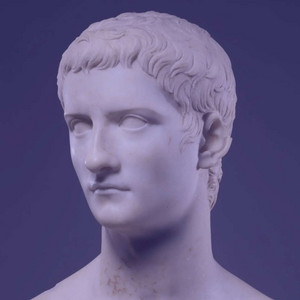
In today's episode, we're going to talk about the original Roman despot, the bloodthirsty, depraved and ruthless Caligula.
In part two we'll talk about one who wasn't much better the emperor who supposedly fiddled while Rome burned Nero.
And in part three, we'll be looking at Commodus.
He might have been the son of Marcus Aurelius, the philosopher emperor, but his exploits as emperor, From claiming to be Hercules reborn to fighting in the ring as a gladiator, were not something you'd find recommended in meditations.
Parts 2 and 3, as with all of our mini-series now, will be member-only episodes, so now is my time to briefly remind you that you can unlock those, as well as hundreds of others, along with interactive transcripts PDF, study packs and more over on the website, which is LeonardoEnglishcom.
Okay then, let's not waste a minute and get right into the story of Caligula.
Perhaps you can think of a dinner party you've been to where someone around the table burst out in uncontrollable laughter.
Once they composed themselves, perhaps they revealed a joke they'd just been told or a funny story that they had just heard about someone they knew.
Others most probably joined in the merriment, and the dinner party continued as usual.
At one dinner party in ancient Rome hosted by the then-emperor Caligula.
The host burst out in raucous laughter.
Nobody seemed to have told the young emperor anything.
Nobody had slipped over on a stray grape or spilled the wine over someone's head.
There was no obvious cause for this outburst.
His consuls, who were sitting next to him, asked him why he was laughing.
He turned and said, what do you suppose?
Except that at a single nod of mine, both of you could have your throats cut on the spot.
We have no historical record of what happened next, but presumably a gulp from one console, perhaps an embarrassed laugh from the other.
Haha, good joke.
It was a joke, right?
These two consuls, two of the highest elected officials of the Roman Empire, presumably knew that Caligula was deadly serious.
A single wave of his hand or nod of his head, and anyone in Rome, no matter how powerful, would be put to their death.
This was a man who revelled in public humiliation, showed little regard for human life and held his elected officials in utter disregard.
But it was not always this way, or at least if it was always his character, he kept it well hidden.
To understand the tyranny of Caligula's reign as emperor, we must go back to his birth.
And indeed, we must remind ourselves of a little ancient Roman history.
As you may know or remember from our mini series on ancient Rome three years ago, the politics and structure of ancient Rome can be broadly divided into two the Republic and the Empire.
The Republic officially ended in 27 BC and Rome became an empire ruled by its first emperor, Augustus.
Augustus was a much-loved emperor, but there was the problem of who would succeed him after his death.
A problem, as you'll see, that crops up again and again and again in the story of ancient Rome.
Augustus had no biological children.
But there were several stepchildren and grandchildren knocking about, some more capable than others.
After much maneuvering, he named his stepson Tiberius as his heir, on the condition that Tiberius adopt his nephew Germanicus as his own son.
So the title of emperor would pass first to Tiberius, then to Germanicus.
In AD 14, Augustus died and Tiberius duly became emperor.
Now, Tiberius was not exactly a people's favourite.
He was stern, often absent from Rome, and a man whose suspicious nature only deepened as he grew older.
He was also sadistic and bloodthirsty and could certainly have appeared in a miniseries on tyrants, were there not others who were even more tyrannical.
Despite his relative unpopularity, his rule did provide some stability and he would go on to rule from AD 13 to AD 37, 23 years in total.
But...
With no direct heirs, all eyes turned, yet again, to the next generation.
Here there was a clear frontrunner Germanicus Tiberius' adopted son and, by this point, a decorated young man and accomplished military leader.
Germanicus was everything the Romans admired.
A brilliant general, a charismatic leader, and importantly, the great-nephew of Augustus himself.
So he had that all-important pedigree, the blood tie to Augustus.
What's more, he was married to a granddaughter of Augustus, Agrippina the Elder.
Together, they formed what many saw as the perfect imperial couple.
However, tragedy struck.
Germanicus.
This heroic military leader, who seemed poised to become the next emperor, died suddenly in Syria in AD 19 at the age of 33.
There are rumours he was poisoned, perhaps on Tiberius's orders, or perhaps it was one of the many bugs that could have proved fatal for travelling soldiers back then.
In any case, he left behind a widow and six children.
Among them was a boy named Gaius Julius Caesar Germanicus.
But the soldiers had another name for him.
As a child.
This boy would often visit his father's military camps dressed in a tiny soldier's outfit, complete with little leather boots.
The soldiers nicknamed him Little Boots, Caligula in Latin.
Although he is believed to have hated the nickname as an adult and never used it himself, it stuck and I'll continue to use it for the rest of this episode.
Now, after Germanicus's death, his widow openly accused Tiberius of murder, which was not a particularly smart thing to do, especially to an emperor as malicious and sadistic as Tiberius.
She was banished and she eventually died of starvation.
Two of Caligula's brothers were either imprisoned or executed.
Caligula, however, survived.
And not only did he survive, but when he was 19 he was brought to live with Tiberius in Capri, just off the coast of Naples.
Now Caligula knew what Tiberius stood accused of the murder of his father, and he knew what Tiberius had done to the rest of his family.
And on the island, he also saw what fate awaited anyone who crossed the sadistic emperor being pushed off a high cliff if they were lucky, and being slowly tortured to death if they weren't.
So if Caligula did feel resentment towards Tiberius, which was clearly perfectly reasonable, he kept those feelings locked up inside.
He flattered Tiberius.
He never mentioned his father once, and he learned how to play the role of the obedient servant.
When Tiberius finally died in AD 37, Caligula was 24 years old.
Now there are some rumours that Caligula murdered Tiberius, with one account having him suffocate the man with a pillow, but these are unsubstantiated.
Tiberius was 77 years old, which was a ripe old age at this time, and there is simply no evidence to suggest it was anything other than natural causes.
It was, of course, good news for Caligula.
Although he was relatively unknown as an individual in Rome and he had little knowledge of the workings of Roman politics or the Roman army, he seemed like the obvious successor.
He was the son of the heroic general Germanicus and the adopted grandson of Rome's first emperor Augustus.
He seemed to embody a golden future, a new chapter for Rome.
And sure enough, he arrived in Rome and was hailed as emperor.
The transition from unknown boy to commander of the world's most powerful empire at the time was incredibly smooth.
And for the first few months of his reign, Caligula seemed to live up to the hopes and dreams of the people of Rome.
He threw vast gladiatorial games in celebration.
He honoured all of his predecessors' last wishes.
He gave every citizen of Rome a cash payment.
And he made sure to double the cash payment for the Praetorian Guard, the emperor's personal armed unit.
He also made a big deal of publicly destroying all of Tiberius' written records of suspected treachery among the senators, symbolically burning them as if saying this was the past, tomorrow is a new day.
He even said that he hadn't read them, which would turn out to be a lie.
In any case, the first few months of his rule were, as one contemporary historian put it, a golden age of happiness and prosperity.
But seven months or so after becoming emperor, he fell seriously ill.
It's not clear what this illness was, whether he caught it randomly or whether he was poisoned in some way.
But for almost a month, he was at death's door.
It looked like he could have died at any moment.
This being ancient Rome, senators were scurrying around making preparations both for the eventuality that he wouldn't recover and succumb to his illness and that he would make a full recovery.
One politician and man of noble blood, Atanius Secundus, had what he must have thought was a cunning idea.
He publicly pledged that he would fight in the arena as a gladiator if only Caligula recovered.
Presumably, he thought it was a win-win situation.
If Caligula died, which seemed highly probable, he could point at how dedicated he had been to the emperor and how he'd been willing to fight and most probably die in the arena for his cherished master.
And if Caligula made a full recovery, he would hear of this pledge and be so impressed by the man's loyalty that he would be richly rewarded.
Caligula did make a full recovery, but it seems that after this return from the brink of death, something changed.
He heard about the senator's bold promise to fight in the arena and told him in no uncertain terms OK, then get on with it.
The man, who was not in great shape and had never held a sword before, was duly marched into the gladiatorial arena and mown down by a professional gladiator.
From that point on, the honeymoon period of Caligula's reign was well and truly over.
The generous young emperor, the son of Germanicus, the darling of Rome, seemed to vanish.
What replaced him was a ruler who seemed to revel in cruelty, humiliation and excess.
Executions became an almost daily occurrence.
He would invite senators to dine with him, serve them the finest food and then, at the height of the feast, casually order their deaths.
He delighted in seeing people squirm.
Prisoners were executed in front of him for sport.
Sometimes he would order people slowly tortured so he could watch their agony.
The Roman historian Suetonius even claims he enjoyed watching executions scheduled for his mealtimes, as if it were a form of light entertainment.
Then there were the humiliations.
Senators were forced to run long distances alongside his chariots like stable boys rather than statesmen.
And this was layered on top of the sexual depravity.
He is said to have prostituted the wives of noblemen, inviting senators and their wives to banquets, then forcing the wives one by one into side rooms, forcing them to have sex with him and then describing their performance in intimate detail publicly in front of their husbands.
There are accounts of him creating a brothel inside the Imperial Palace, complete with hundreds of women and young boys.
And when it wasn't humiliation and sexual depravity, he is also remembered by historians as an ineffective and cowardly leader of Rome.
One account has him marching his troops northwards as if to attack Great Britain.
But after lining his troops up on the beach in Gaul, he orders them to collect seashells instead of continuing their mission, declaring these the spoils of the ocean.
To many, this became a perfect image of his reign, playing at war while humiliating Rome's soldiers.
And then, perhaps most famously, came his obsession with divinity.
Previous and subsequent emperors became deified after death, but Caligula demanded worship in his own lifetime.
He had temples erected to his own glory, with priests appointed to offer sacrifices to him, as though he were Jupiter.
He appeared in public dressed as Apollo, Mercury, even Venus, the female goddess of love.
He reportedly once appeared in the theatre dressed as Venus, complete with wig and dress, delighting in the outrage of Rome's conservative senators.
He simply didn't care what Roman high society thought about him.
He threw money hand over fist at the Praetorian Guard and knew that this money assured loyalty and therefore protection.
Well, it did for a while, as we'll discover in a few minutes.
Protected by a seemingly loyal imperial guard and with his ruthlessness against political enemies well known, it seemed there was nobody or nothing to stop him.
He spent lavishly, not just on himself, but on public projects.
He built pleasure galleys to cruise the Bay of Naples, vast ships with baths colonnades, banquet halls and even vines.
In a lake just south of Rome, Lake Nemi, he launched colossal barges with marble flooring.
As a quick side note for the seriously dedicated listeners among you, you may remember these barges from episode number 516 on the history of underwater exploration.
Well done if so.
Anyway, back to Caligula.
At the start of AD 41, not even four years into his rule, clearly some people were thinking enough was enough.
On January 24th, AD 41, he was preparing for a trip to Alexandria in Egypt.
He had been doing one of his favourite activities watching gladiatorial games and was heading inside for a spot of lunch.
He had been told that there was a group of young boys who were practising, and could he come and spare a few words?
As he was about to address the boys, two of his trusted Praetorian guards pounced on him, stabbing him a total of 30 times in the neck, chest and genitals.
One report even has them stripping and eating his flesh.
Caligula Little Boots was dead.
Now, as for the motivations behind this assassination, there is no evidence of a wide plot among senators for moral grounds, for the purposes of saving Rome, or anything like that.
One hypothesis is that it was more personal.
The man who is said to have landed the first blow.
Cassius Caerea was a brave and distinguished Praetorian, but he was often teased by Caligula for having a high-pitched voice and being effeminate in his manners.
So, yes, Caligula might have been seriously unhinged and utterly inappropriate as a Roman emperor.
But one theory is that he was murdered for being a bully, rather than anything more strategic than that.
And, on this note, much of what we know about Caligula as a man and his reign comes down to only a few sources that were written decades after his death.
These were second, often third-hand accounts, and there is little way of verifying these claims.
The most famous example is one that you might be surprised hasn't come up yet that he made his favourite horse a senator, and this is an example of how insane he was.
Firstly, this isn't historically accurate, in that the historian recalling it says that Caligula suggested that he would make his horse a consul.
And secondly, it was almost certainly a joke by Caligula, and one that the historian didn't get.
We know that Caligula loved playing jokes, and had a devilish sense of humour.
And it seems much more probable that either he was planning on doing this to ridicule his senators or that he made a passing comment along the lines of so-and-so is so useless that my horse could govern better than they could.
He wasn't actually planning to make his horse a senator.
So to wrap things up, Caligula met his end at the hands of the men he thought he could trust.
And they didn't just kill him.
Shortly after he was killed, so too were his wife and young daughter, in order to completely eradicate all lines of succession.
Instead, his uncle Claudius, was made emperor, and he ruled for 13 years before the subject of the next episode Nero, took over.
As for Caligula, he didn't even rule for four years, but his name is forever associated with cruelty, despotism and the perils of unchecked absolute power.
Okay, then that is it for today's episode on Caligula.
The potential golden boy turns sadistic killer.
I hope it's been an interesting one and that you've learned something new.
As always, I'd love to know what you thought of this episode.
Let me know in the comments below if you're listening to this somewhere where you can comment.
And for the members among you, you can head right into our community forum, which is at communityleonardoenglishcom, and get chatting away to other curious minds.
As a reminder, this is part one of a three-part miniseries on the theme of Roman tyrants.
Next up, it'll be Nero, and in part three, it will be Commodus.
As with all of our miniseries now, parts two and three will be member-only episodes, so if you'd like to unlock those, as well as our entire library of more than 550 episodes, plus learn with our interactive transcripts, subtitles and key vocabulary, then the place to go for that is leonardoenglishcom.
You've been listening to English Learning for Curious Minds by Leonardo English.
I'm Alistair Budge, you stay safe, and I'll catch you in the next episode.