Hello, hello, hello!
And welcome to English Learning for Curious Minds by Leonardo English, the show where you can listen to fascinating stories and learn weird and wonderful things about the world at the same time as improving your English.
I'm Alistair Budge, and today we are going to be talking about Hannibal.
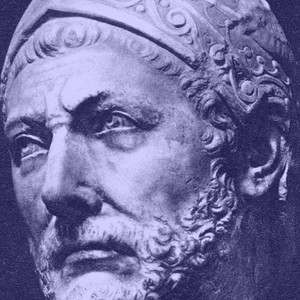
He was the Carthaginian general who marched on Rome is remembered as one of the greatest tacticians in military history, and almost destroyed Rome 200 years before it could declare itself an empire.
But before we get into all of that fantastic and bloody stuff, let me quickly remind you that you can become a member of Leonardo English and follow along with the interactive transcripts and subtitles for this episode over on the website which is leonardoenglish .com membership of leonardo english gives you access to more than double the number of episodes plus all of our learning materials including instant translations in 12 different languages study packs and much much more so if you are ready to take the next step on your english learning journey the place to go is leonardoenglish .com.
Okay then, let's get started and talk about Hannibal, Rome's greatest enemy.
There are lots of promises you might have made as a child.
A promise to your parents that you'd always tidy your room, or that if you got a dog, you would always take it out for a walk, even if it was raining.
Maybe it was a promise to a best friend that you'd be best friends forever.
Or a promise to a first girlfriend or boyfriend that nothing would ever come between you.
Now, most children, and I'd have to include myself in this category, are not so good at keeping promises.
Life happens, we change, and after all, it wasn't that important in the first place.
But for one young boy, a promise made before his 10th birthday would be something he would spend his entire life consumed by.
According to one legend, this nine -year -old swore to forever be an enemy of Rome, or to put it more precisely, he was forced to say, I swear, so soon as age will permit, I will use fire and steel to arrest rest the destiny of Rome.
The boy's name was Hannibal.
Now, to understand why a father might make his child swear eternal hatred towards another state, we need to look at the world Hannibal was born into.
He was born in 247 BCE, in Carthage, in modern -day Tunisia.
At this time, Carthage was the heart of a strong maritime power.
Its navy dominated the western Mediterranean, its harbours were filled with goods from across North Africa, southern Spain, Sicily, even as far as the British Isles.
Its strength came primarily from sea trade.
Rome, on the other hand, was mainly land -based.
At this point in the late 3rd century BCE, it wasn't yet the mighty empire you're probably picturing.
It was a regional republic with control over much of the Italian peninsula.
But many of the towns and cities it had brought into the fold were resentful.
Some had been defeated in battle, and forced into uneasy alliances.
Others had been diplomatically absorbed, sucked up by this increasingly dominant power.
The term Rome at this point meant a powerful rising state, but not an empire, not yet at least. This all changed with a war that came to be called the First Punic War.
It began in 264 BCE as a struggle for control over Sicily, the large wealthy island that sat between Italy and North Africa.
It was under the control of Carthage, but Rome wanted it for itself.
What followed was a brutal 23 -year conflict.
Rome had no navy to speak of when it began, but it built one from scratch. Carthage, the great naval power was pushed back, humiliated, and eventually forced to sign a peace treaty that saw it lose Sicily and pay heavy reparations.
It was embarrassing and expensive.
And it wasn't only the loss of territory that was problematic.
Carthage tended to rely on mercenaries, paid for soldiers, and at the end of the war, there were tens of thousands of these mercenaries who hadn't been paid and were saying, where's our money?
Carthage didn't have the means to pay.
The mercenaries rose up and there was a violent rebellion that almost destroyed the city.
During all of this chaos, Rome snuck in and also took the Mediterranean islands of Sardinia and Corsica.
Now that is a very brief summary, but it's in the aftermath of these twin humiliations, defeat abroad and chaos at home, that we find Hamilcar Barca, Hannibal's father.
He was a talented general and a proud Carthaginian and, perhaps reasonably, he blamed Rome for all of this.
In his eyes, it was Rome that had dragged Carthage into a ruinous war.
It was Rome that had crippled Carthaginian power and taken advantage of its internal disarray.
So when Hamilcar set off to rebuild Carthaginian influence in Spain, where the silver mines were rich and the terrain made it an ideal place to train troops and launch future campaigns, he took his son Hannibal with him.
And before they left, so the legend goes, he made Hannibal swear that he would never be Rome's friend.
Hannibal was a man, or boy at that time, who clearly kept his promises.
And it would be in the Iberian Peninsula, in modern -day Spain, that he would learn the skills that turned him into such a formidable military commander.
commander. Like Alexander the Great, who grew up under the watchful eye of his father, Philip of Macedon, Hannibal spent his youth in military camps on campaign, learning not from books but from battlefields.
He saw sieges, skirmishes, the management of supplies and morale.
By his late teens he was already commanding men.
men. He had no formal schooling, his education was war.
After the death of his father, and then his brother -in -law, Hannibal took command of Carthage's forces in Iberia.
He was only 26 years old, but he would prove to be more than capable.
He was charismatic, brave and cool under pressure.
His men loved him, his enemies feared him.
And he was a master tactician, as we'll come to talk more about in a few minutes.
But, even with all of that, the idea of going to war with Rome was still a bold move.
Some Some might even say reckless.
So why did he do it?
Most historians believe the plan was not necessarily to destroy Rome completely or to conquer the city, but rather to regain the territory that Carthage had lost after the First Punic War .
specifically, Sicily, Sardinia and Corsica.
The surest way to do this, Hannibal thought, was to take the fight to the Romans, in Rome.
After a couple of years fighting in Iberia, and then the successful siege of a city that was allied with Rome , the stage was set.
In the spring of 218 BCE, Rome declared war on Carthage.
The only question was, where would the fighting take place?
The Carthaginians were in modern -day Spain.
The Roman army was in modern -day Italy.
Two Roman legions were sent across the Mediterranean to face Hannibal.
But, But when they arrived, they found that Hannibal had done something they hadn't bargained for.
Instead of taking the quickest route by ship, he had marched his men northwards up through Spain and southern France.
This Carthaginian force, which included tens of thousands of soldiers, cavalry and war elephants, would march across the Pyrenees Mountains through Gaul in modern day France, and over the Alps into northern Italy.
And this wasn't just a ragtag group of Carthaginians.
His army was a multi -ethnic coalition.
Libyans, Numidians, Iberians, Gauls and Carthaginians.
Each group brought different strengths.
The Numidians, from what is now Algeria, were exceptional light cavalry, fast, agile and used to hit and run tactics that confused heavier Roman formations.
They didn't wear armour, rode bareback and were masters of harassment and retreat, perfect for skirmishing and flanking.
The Libyans were often used as heavy infantry.
Though they were originally supporting troops, many of them had been trained and equipped in the Roman style, with long spears, oval shields, and discipline drilled into them by years of warfare.
They gave Hannibal a solid, reliable core.
The Iberians, from what is now Spain, were fierce and mobile, and were especially suited to mountainous terrain.
Their weapon of choice was a curved sword with devastating cutting power.
They weren't as heavily armoured as Roman troops, but they were bold and adaptable.
Then there were the Gauls, the recently conquered conquered or allied tribes from southern France.
They were unpredictable, loud, often drunk and at times undisciplined, but they could bring raw power and overwhelming force when unleashed in a charge.
The army was a microcosm of Carthage itself, diverse, pragmatic and driven by a combination of loyalty to Hannibal and a shared loathing of Rome.
And, of course, there were the war elephants, not particularly numerous but terrifying.
Roman horses had never seen creatures like these, and neither had most Roman soldiers.
The elephants were difficult to control and not always particularly reliable, but their presence caused fear and chaos on the battlefield.
field. It was this army that marched through southern France and crossed the Alps in the summer of 218 BCE.
It is still not clear EXACTLY which route Hannibal took, but there was and still is no easy route across the Alps.
Managing it was a feat so bold that Roman historians historians, centuries later still couldn't quite believe it had actually happened.
The terrain was treacherous and the weather brutal.
They lost thousands of men.
The elephants struggled in the snow.
Hannibal himself is said to have gone blind in one eye from an infection during the crossing.
But against all odds, they made it.
it. And what Hannibal found when he descended into northern Italy was… opportunity.
Many of the tribes and cities that had been brought under Roman control were not especially loyal.
They resented Roman taxes, Roman military conscription and Roman interference in local affairs.
They would do almost anything to be rid of their oppressor, and Hannibal was was ready to take full advantage.
He had no illusions about being able to conquer Rome by himself.
His strategy relied on breaking Rome's alliances, encouraging these Italian communities to join him and rise up against the Republic.
If he could do that, if he could isolate Rome, then maybe, just maybe, it would fall.
And the first step in that plan?
Win battles, win them quickly, and win them dramatically.
And that's exactly what Hannibal did.
Now, there have been tens of thousands of pages written about the genius of Hannibal's military strategy.
So if you are a military history buff, you'll have to excuse the brevity with which we'll be covering them today.
day. The first sensational victory came at the river Trebia in 218 BCE, not long after Hannibal had emerged from the Alps.
A large Roman force was sent up to meet him.
And, just in case you need a reminder, Roman soldiers were incredibly well -drilled and well -trained.
But they were were ill -prepared for a master tactician.
At Trebia, the Romans assumed Hannibal and his army would be weak, cold and demoralised after the gruelling crossing.
They were wrong. Hannibal sent his light cavalry to the bank of the river to try to draw the Romans across.
cross. The Romans took the bait and marched through the freezing river, assuming their superior forces would have no problem defeating the seemingly small number of Hannibal's cavalry.
Little did the Romans know that it was a trap.
Hannibal's men, well -rested and hidden in ambush Bush positions, attacked the Romans while they were mid -stream.
It was a slaughter.
The Romans were soaked, shivering, and unorganised.
Hannibal's cavalry outflanked them, and a hidden unit he had concealed in nearby reeds attacked from behind.
The Roman line collapsed.
Thousands were killed killed or taken prisoner.
It was a textbook example of Hannibal's genius.
He didn't just fight, he manipulated, he shaped the battlefield to his advantage.
He attacked not only the Roman army, but Roman arrogance, their assumption that strength alone would be enough.
The following year, 217 BCE, the Romans sent sent another army to stop him.
This time, they met at Lake Trasimene in central Italy.
Once again Hannibal lured them into a trap.
He hid his army in the hills and waited for the perfect moment.
As the Roman column marched along a narrow path at the edge of the lake, his troops launched a surprise attack from the high ground.
ground. The Romans were trapped, the lake on one side, the hills on the other, and enemy soldiers pouring down upon them.
It was another massacre.
Roman sources claim that 15 ,000 were killed and another 10 ,000 captured.
It remains one of the largest ambushes in military history, and is quite a testament to Hannibal's supreme supreme authority and control over his men.
Men who would have spoken dozens of different languages, and many who would be itching for the chance to avenge murdered loved ones and relatives at the hands of the Romans.
There were something like 40 ,000 men who lay hidden in the wood above the hills, watching carefully as the Roman army marched far enough past for Hannibal to give the order to finally attack.
And the result was, well, one of history's deadliest ambushes and another devastating loss for Rome.
Rome, at this point, was in a state of panic.
This foreign general had marched across the Alps, destroyed two Roman armies, and was now in the heart of Italy.
Whispers began to spread.
threat? Would he march on Rome itself?
But Hannibal didn't.
Not yet. And this decision, perhaps more than any other, has puzzled historians for centuries.
Why didn't he go straight for Rome?
There are a few possible reasons.
Firstly, Rome was well fortified.
Its walls were high and thick.
Hannibal didn't have the siege equipment to breach them.
Secondly, he may have hoped that with enough victories, Rome's allies would desert it, and the city would collapse from within.
A siege, he knew, would be long and costly, and his army had never been particularly good at sieges.
Ambushes and surprise attacks on the field, that was his thing.
And so, instead, he continued his campaign through Italy, trying to weaken Roman alliances, break their hold on the peninsula, and draw them into more battles.
Which brings us to 216 BCE, to the fields of Cannae.
Here, the Romans had had enough.
They raised the largest army they had ever assembled.
Estimates Reports vary, but some sources suggest up to 80 ,000 infantry and 6 ,000 cavalry.
Two Roman consuls, each commanding half of the force, led them out to finally crush Hannibal.
Hannibal had perhaps 50 ,000 men.
He was outnumbered nearly two to one.
And yet, he won. one.
Not just one, he annihilated them.
At Cannae, Hannibal demonstrated perhaps the most perfect example of battlefield strategy in ancient history.
He deliberately placed his most lightly armoured troops – mostly Gauls, whom the Romans viewed as fierce but undisciplined warriors – in the centre of his line.
As the Romans advanced, this centre later slowly gave ground, forming a crescent, then a sort of half -circle.
To the Romans, it looked like Hannibal was collapsing, so they pushed harder, deeper, funnelling themselves into the curve.
Little did they know that that was exactly what Hannibal wanted.
Once the Romans were surrounded on three sides, his elite African infantry attacked from the the sides.
His cavalry, having driven off the Roman horsemen, came in from behind.
The Romans were surrounded in every direction.
They couldn't move.
They couldn't fight.
They were too packed together to lift their weapons.
They couldn't even run.
What followed was a killing field.
Estimates vary wildly, but it's believed that around 50 ,000 Roman soldiers were killed in a single day.
It was one of the worst defeats in Roman history, and by some measures more Roman soldiers were being killed per minute than would be by machine guns on the battlefield.
And still Hannibal didn't march on Rome.
Why not? Again, we can only speculate.
Perhaps he lacked siege equipment.
Perhaps he didn't believe the city would fall.
all, perhaps he hoped Rome would finally sue for peace.
But Rome didn't. And this is where the tide began to turn.
The Romans changed their strategy.
They adopted what became known as the Fabian Strategy, named after the general Quintus Fabius Maximus.
Rather than face Hannibal in open battle, they avoided direct confrontation.
transportation. They harassed his supply lines, they wore him down.
Now, Fabius Maximus had been advocating for this strategy since the early Roman defeats, but it was not a popular one with the Roman leadership.
Rome was a military power, Romans gained honour and glory in battle, and running away from the battlefield, instead of towards it, seemed the antithesis of everything Rome stood for.
Yet after these three catastrophic defeats, it was agreed that perhaps Fabius Maximus might have a point.
Years passed. Hannibal's army remained in Italy, but was fighting a war of attrition.
The Romans would launch little attacks on parties foraging for food, they would burn fields and crops, and they would do everything they could to make surviving difficult for Hannibal's forces.
As for the Carthaginians, they were far from home, with no reinforcements, no steady supply of men or food.
Hannibal's initial hope that Rome's allies would rise up and join him had largely not transpired.
Some did, but most stayed loyal to Rome.
Rome Eventually, Rome took the fight back to Carthage itself.
A seasoned Roman commander, Publius Cornelius Scipio, fresh from victories in Iberia, led a daring campaign in North Africa.
To counter this threat, and because not much progress was being made in the Italian peninsula, Kempensile.
Carthage recalled Hannibal and his forces.
And it was there, at the Battle of Zama in 202 BCE, that Hannibal finally met his match. Scipio had studied Hannibal.
He knew his tactics, he knew the advantages and disadvantages of his various types of soldiers, and he knew how Hannibal Hannibal liked to fight.
Scipio outmaneuvered him, used Roman discipline to resist the initial elephant charge, and then exploited gaps in the Carthaginian line.
Hannibal was defeated, and Carthage was forced to surrender.
Hannibal lived on for another couple of decades.
He entered politics, tried to reform Carthage, and later went into exile.
of exile. He continued to advise other Kings and even plotted further campaigns against Rome.
In one display of particularly creative military thinking – in a battle between two naval powers in modern -day Turkey – he advised for poisonous snakes to be put into clay pots and then thrown onto the enemy ship the logic being that soldiers on ships don't tend to wear many clothes, and they can't exactly run away.
So having hundreds of angry poisonous snakes slithering around is any sailor's worst nightmare.
Despite the fact that he had been exiled from Carthaginian society, Rome never forgot him.
They pursued him across the Mediterranean, determined to stamp out the threat once and for all.
Eventually, cornered in what is now modern -day Turkey, and with Roman forces bearing Bearing down upon him, Hannibal took poison rather than be captured.
His last words are said to have been, let us now relieve the Romans from the fear which has long disturbed them.
He was 64 years old.
Yet, more than 2 ,000 years later, the fear he inspired, the brilliance he displays, the legacy he left behind, still lingers on.
Hannibal didn't destroy Rome, but he very nearly did.
And in so doing, he showed the world what a determined brilliant mind could achieve, with limited resources, a deep sense of purpose, and an oath made as a child that he never forgot.
Okay then that is it for today's episode on Hannibal.
If you're interested there are some some really good videos about these battles on YouTube with all sorts of people recreating them in astonishing detail.
So if that sounds like your kind of thing, just search for Hannibal on YouTube and you'll find some good stuff.
And as a final reminder, if you enjoyed this episode and you're wondering how to more than double the number of episodes you can get, plus learn with our interactive transcripts, subtitles and key vocabulary, then the place to go for that is LeonardoEnglish .com.
And And if you aren't yet ready to become a member, but you would like to do something to support the show, then I would love for you to think about leaving a review or a star rating on your favourite podcast app.
It takes less than 30 seconds to do, but they are super helpful and each one brings a smile to my face.
You've been listening to English Learning for Curious Minds by Leonardo English.
I'm Alistair Budge, you stay safe, and I'll catch you in the next episode.
Transcription by CastingWords