Hello, hello, hello, and welcome to English Learning for Curious Minds by Leonardo English, the show where you can listen to fascinating stories and learn weird and wonderful things about the world at the same time as improving your English.
I'm Alastair Budge and today is the start of another three -part mini series, this time on Modern Egypt.
In part one this episode we are going to be talking about the Egyptian Revolution.
In part two the next episode we are going to be looking at the huge new city Egypt is trying to build in the desert and ask ourselves whether it is a much -needed modernization of the country or a sign of something more sinister.
And in part three we are going to talk about the case of Giulio Reggiani, the Italian PhD student who was abducted from the streets of Cairo, tortured and brutally murdered, almost certainly by the Egyptian police.
As with all of our mini -series now, parts two and three will be member -only episodes, so here is your customary reminder that if you'd like to listen to those, as well as learn with our interactive transcripts, with translations in 12 languages, study packs and more, I'd love for you to check out our membership.
We have members from all over the world, including Egypt I should add, and if you're ready to start improving your English in a more interesting way, well, the place to go is LeonardoEnglish .com.
Okay then, let's get right into it, and talk about the Egyptian revolution.
Revolution. With the benefit of hindsight, most revolutions look obvious.
Whether it is an autocratic leader, an unsympathetic elite, widespread faring, police brutality, systemic corruption, high unemployment, runaway inflation, the lack of political freedom, or some combination of any or all of these, it's easy for historians to look back and say the conditions were ripe for revolution.
Egypt in 2011 would have had a tick in the box for practically all of those things.
High unemployment, inflation, police brutality, lack of civic freedoms, corruption, and of course an autocratic leader in the form of Hosni Mubarak.
But Egypt had had all of these, including Mubarak, for three decades.
The majority of living Egyptians had known nothing else.
On the 6th of October 1981 Egypt's third president Anwar Sadat was assassinated during a military parade.
His assassins were islamists who did not agree with Egypt's increasingly close relationship with Israel and held president Sadat wholly responsible.
With Sadat dead, blown up by grenades, his vice -president, the then 53 -year -old Hosni Mubarak, was sworn in eight days later, becoming President of the Middle East's most populous country.
Mubarak used the threat of Islamic extremism to continue the country's state of emergency, which gave the state heightened powers to arrest, detain and question, if there was even the tiniest inkling of wrongdoing.
And, in many cases, even if there wasn't.
Protests were banned, political opponents were jailed, and the secret police kept a watchful eye on anyone who dared to whisper a complaint.
For three decades, Mubarak ruled the country with an iron fist, using the military and security forces to suppress opposition and maintained control over the population.
To the outside world, Mubarak sold himself as a steady hand, a stable and strong leader in a volatile region, better a friendly dictator than, well, the unknown.
And for a while, it worked.
The West, especially the United States, propped him up with billions in aid, happy to have a reliable ally who kept the peace with Israel and the oil flowing through the Suez Canal.
For Mubarak and his cronies, his family and his allies, life was good.
Very good. One estimate put his wealth at as much as $70 billion.
On the president's official salary of $70 ,000 a year, it would have taken him a million years to save that much money.
But perhaps he was just a canny investor.
No, he was egregiously corrupt, and he and his allies siphoned off huge amounts of the country's wealth and stashed it in Swiss banks and foreign property.
Of course, this was at the expense of the average Egyptian.
Like in any highly corrupt regime, The loss isn't just the direct loss of money flowing out of the country to offshore bank accounts.
It's the fact that business is harder.
Foreign companies don't want to invest in the country.
The corruption drags everything down.
And beneath this international facade of stability, the Egyptian people were suffocating.
In 2011, nearly 40 % of the population still lived below the poverty line, scraping by on less than $2 a day.
Young people, who made up a huge chunk of Egypt's 100 million strong population, faced a grim future.
University graduates full of hope, ambition and qualifications found themselves driving taxis or selling fruit on street corners because there simply weren't enough jobs.
Inflation was eating away at what little money people had.
Bread, a staple of the Egyptian diet, became a luxury for some families.
And if you dared to speak out about it?
Well, the police were more than happy to remind you who was in charge, often with a baton or worse.
The tipping point, or at least what most commentators see as the first domino to fall, came in late 2010, 2 ,000 km to the west in Tunisia.
A 26 -year -old street vendor called Mohamed Bouazizi had been a regular target for Tunisian police.
He was frequently hassled and shaken down for bribes, forced to pay money to the police.
On December the 17th, 2010, the police came up to him again.
It's not clear exactly what happened, and there are varying accounts.
But most reports suggest that the police knocked over his fruit cart and took his weighing scales.
With no way to make money and still needing to pay his supplier for the produce that he was planning on selling that day, he went to the local governor's office to explain what happened and demand the return of his scales.
He had borrowed money to pay for the goods and now the police had destroyed his only way of earning enough to pay back his debt.
The governor wouldn't listen.
Boazzese then went to a petrol station, bought a can of petrol and returned to the governor's office.
He stood outside in the street, lifted the petrol can up above his head, emptied it all over himself, shouting, How do you expect me to live?
He then lit a match, engulfing his body in flames.
Watchers -on rushed to him and were able to put out the flames.
He was rushed to hospital, but he didn't make it.
He died 18 days later.
The story of Mohamed Bouazizi spread like wildfire.
Social media posts, Videos, and news reports captured the attention of millions.
In Tunisia, protests erupted almost immediately, and soon the streets were filled with people calling for change.
Within a month, Tunisia's president, Zine Elabedin Binali, had fled the country.
A dictator who had ruled for 23 years, brought down by the power of a single act of defiance.
And as the news spread, so did the spirit of protest. In Egypt, the frustration and anger that had been simmering for decades were finally ready to boil over.
Bouazizi was just like millions of other young people all over the Arab world, struggling everyday to make ends meet, with seemingly no way out of the situation, and at the mercy of a corrupt police state.
Add to the fire social media, Facebook, Twitter, and YouTube.
These became powerful tools for mobilising protesters, bringing people together and sharing information.
Facebook Pages sprang up calling for demonstrations, and videos of the Tunisian protests were shared widely.
One page in particular, named We are all Khaled Zayed, became a focal point for activists.
Khaled Zayed was a young Egyptian man who'd been beaten to death by the police.
And his story had sparked outrage across the country.
Then came January 25, 2011.
It's National Police Day in Egypt, a day that commemorates the more than 50 Egyptian police officers who were killed by the British Army in 1952.
In theory, it's a day where the Egyptian people remember and honour the police.
But this day in 2011 would be marked for a different reason.
Through social media, people were encouraged to take to the streets.
Not to support the police, but to protest against them.
This was very much a grassroots protest. People who organized Facebook pages, people encouraging others on Twitter.
It was not led by any one individual or group.
Still, people came out in their droves.
Thousands of people gathered in Cairo, Alexandria and cities across the country.
Their demands, initially, were more about living conditions and social justice than anything else.
The right to live a decent life, free from police harassment.
It was about fairness, the ability for ordinary Egyptians to feed their family, and live without the fear of being extorted or murdered by the police.
They chanted for bread, freedom, and justice.
At first the government's response was predictable.
Tear gas, rubber bullets, arrests, the textbook response of an authoritarian regime in the face of public protest. But unlike previous protests, the demonstrators didn't disperse.
They stood their ground, buoyed by the sense that this time something was different.
Tahir Square, right in the heart of Cairo, became the epicentre of the uprising.
Day and night, people occupied the square, camping out despite the threat of violence.
Then, two days later the country went dark.
The largest internet service providers were turned off, as were telephone lines.
Mubarak and his cronies had seen this movement was being partially facilitated through social media – Facebook, Twitter and YouTube – and clearly thought that simply blocking this – switching it off – would bring about an end to it.
It did not work and only served to light a greater fire in the belly of the Egyptians on the street.
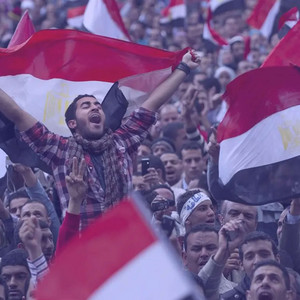
As the days went on the protests only grew larger with some outlets reporting that a million people had gathered in Tahrir Square.
The government began to panic.
Mubarak tried to placate the crowds by promising reforms and shuttling his cabinet.
But it wasn't enough.
The army was deployed but, in a twist, they refused to fire on the protesters.
Soldiers and demonstrators mingled and some soldiers even showed solidarity with the people.
Mubarak's position was becoming increasingly untenable.
The United States, which had supported him for decades, was now calling for restraint and even reform.
Finally, on February the 11th, 2011, after 18 days of relentless protest, Mubarak stepped down.
The announcement was made by his vice -president and the crowds erupted in jubilation.
The crowds in Tahrir Square danced and cheered.
The dictator was gone.
The Egyptians had done it.
They had overthrown a man who had ruled their country for 30 years.
But the joy would prove to be short -lived.
Toppling Mubarak was one thing.
Figuring out what came next was a whole different beast. For several months, in the immediate aftermath, the military stepped in to run things, promising elections.
Meanwhile, political groups that had been crushed under Mubarak, from secular activists to youth movements, trade unions to fledgling political parties, they all scrambled to organise, sensing their opportunity.
But the problem was that Mubarak had spent decades rigging the game, leaving only token opposition.
And the main opposition, or rather the main apparent opposition, was the Muslim Brotherhood.
This wasn't exactly a new player on the scene.
It was founded in 1928, and had grown into Egypt's largest and best organised Islamist movement, preaching social justice through a large network of charities, schools and mosques.
For years Mubarak had banned it outright, jailing its leaders and branding it a threat, yet letting it linger in the background, as something of a bogeyman.
Mubarak had always framed it as a simple choice.
Me, the tough military man you know or the Islamists.
In other words, better the devil you know than the devil you don't.
Now with Mubarak out of the picture, the Muslim Brotherhood saw it's moment.
It had a tremendous head start.
Unlike other political parties, it wasn't starting from scratch. Its decades underground had built a machine no other group could match. While secularists and youth rallied in Tahrir Square with passion but little structure, the Brotherhood had members, money and a plan.
Still, initially, it lacked mass appeal.
Egypt might be a Muslim majority country, but that didn't mean the majority of Egyptians wanted to be ruled by an Islamic group.
To try to appeal to a broader population, the group softened its more radical edges, talking more about jobs and fairness than sharia law, and launched a new political party, the Freedom and Justice Party.
This wasn't the Muslim Brotherhood.
It was something new, refreshing, and idealistic.
Not everyone bought it.
To some, especially the urban middle class and Coptic Christians, it smelled like a power grab dressed up as reform.
To others, people who'd grown weary of corruption and poverty, it offered hope of a new dawn.
Polls from late 2011 showed a mixed picture.
About 30 % of Egyptians back them, far ahead of any rival, but trust was shaky, with many fearing an Islamist agenda was hidden behind the smiles and promises of prosperity.
Then, in May of 2012, 14 months after the fall of Mubarak, Egypt held its first democratic presidential election.
The Egyptian people faced a stark choice.
On one side was Ahmed Shafiq, a former air force officer, and Mubarak's last prime Minister who promised continuity and stability.
A safe pair of hands, albeit not so different from those the people had just overthrown.
On the other was Mohamed Morsi, a softly spoken former engineering professor and the Brotherhood's pick to lead its Freedom and Justice Party.
It was close, but Morsi scraped it with 51 .7 % of the vote to Shafiq's 48 .3%.
Turnout was just over 50%, so Morsi won the votes of around a quarter of the country's population.
The Brotherhood had seized its chance.
For the first time, Egypt had a democratically elected president, and Morsi promised a new era of openness and reform.
But he'd inherited a country on its knees.
Tourism was practically dead.
Foreign investors had bolted, and bread lines were sparking riots.
Morsi, like many political leaders, found that governing the country was a lot harder than winning the election.
The Muslim Brotherhood had spent decades as an underground movement, organizing charity networks and building grassroots support.
But it had precious little experience in the business of actually administering a country.
And it showed. To make matters worse, the military wasn't exactly thrilled to see an Islamist calling the shots.
Yes, Mubarak was gone, but the police and the military were just as powerful as before, and they were circling like vultures.
Then, Morsi made a fatal miscalculation.
He overreached. In November of 2012, he issued a decree giving himself near -absolute power, claiming it was temporary to protect the revolution from the judiciary, which he believed was still loyal to the old regime.
Then came a new constitution rushed through by his allies.
Secular and Christian groups walked out calling it an Islamist takeover and when it passed in a referendum barely a third of Egyptians voted.
Too many Morsi wasn't building a new Egypt he was turning it into an Islamic State.
Protests erupted once again, but this time, they were directed at the new president.
The sense of unity that had characterised the anti -Mubarak protests was gone, replaced by deep political polarisation.
All this optimism had, within 12 months really, given way to disappointment.
And the army, which had craftily positioned itself as a kind of neutral protector, began to reassert its influence.
By mid -2013, The discontent with Morcy had reached boiling point.
Some polls pegged his approval rating as low as 30%.
Millions took to the streets, demanding his resignation.
But this wouldn't prove to be a people's revolution.
The military saw their chance.
On July 1st, they issued an ultimatum.
Sort this out in 48 hours, or we step in.
Morcy dug his heels, insisting he was the legitimate president, elected by the people, which of course technically he was.
But legitimacy doesn't mean much when the country is against you and the army is itching to act.
On July the 3rd 2013 General Abdel Fattah el -Sisi, the head of the armed forces, went on TV and announced that Morsi was out.
Morsi, it seems, did not have much of a say in the matter.
Tanks rolled into Cairo, President Morsi was arrested and an interim government was set up.
Sisi, this stern -faced military man with a knack for staying in the shadows suddenly became the face of Egypt's next chapter.
To Morsi's supporters, this was a coup, plain and simple, a betrayal of the democratic dream they'd fought for.
The Muslim Brotherhood and its supporters organised sit -ins demanding Morsi's return.
For weeks they held out.
But on August 14, 2013, the military cracked down.
What happened next was called by Human Rights Watch a crime against humanity.
Security forces stormed the camps, firing live rounds into the crowds.
It was one of the bloodiest days in modern Egyptian history, with some reports saying that more than a thousand peaceful protesters were killed by the army.
The Brotherhood was outlawed again, its leaders jailed or executed.
But Sisi didn't stop there.
Tens of thousands — activists, bloggers, even students — were rounded up in a sweeping crackdown that made Mubarak's repression look mild by comparison.
In 2014, Sisi ran for president, winning in a landslide against a token opponent.
The world watched on with mixed feelings.
The US, wary of losing an ally, avoided calling it a coup, while Gulf states like Saudi Arabia cheered, glad to see the Brotherhood crushed.
Sisi had done it and he has remained Egypt's president to this very day.
To his fans, he was a saviour, the strongman Egypt needed to stop the chaos.
To his critics, he was Mubarak 2 .0.
Same military playbook, same authoritarian tendencies, just a new face.
Protests were crushed, journalists locked up, and that state of emergency Mubarak loved so much, Sisi brought it back with a vengeance.
The revolution's dreams of bread freedom and social justice faded into the background, as stability, however harsh, took center stage.
So, after Egypt's roller coaster ride from Mubarak to Morsi to Sisi, the country is stuck with another military dictator.
Is he any better than the last one?
Well, that's a debate Egyptians are still wrestling with today.
Okay then, that is it for today's episode on the Egyptian revolution.
As a reminder, this was part one of a three part miniseries on the theme of Modern Egypt.
Next up will be an episode on this bold new project to build a capital city in the Egyptian desert, and in part three, we will look at the gruesome but important case of the murder of Giulio Reggiani.
As I mentioned at the start, those will both be member -only episodes, so if you like the of those as well as more than 250 other member -only episodes, interactive transcripts, study packs, key vocabulary lists and more.
The place to go for that is LeonardoEnglish .com and if you aren't yet ready to become a member but you'd like to do something to support the show then I'd love for you to think about leaving a review or a star rating on your favourite podcast app.
It takes less than 30 seconds to do but they are super helpful and each one brings a smile to my face.
You've been listening to English Learning for Curious Minds by Leonardo English.
I'm Alistair Budge, you stay safe, and I'll catch you in the next episode.