You're listening to Life Kit from NPR.
Hey, everybody.
It's Marielle.
And with us, I have Beck Harlan, Life Kit's visuals editor.
Hi, Marielle.
Hey.
I have something I really want you to listen to.
Ooh, let's hear it.
That is so tall, Gus.
That's so tall.
So tall.
That must be one of the tallest Lego airplanes I've ever seen.
Wow.
Oh, my God.
OK, this is really, really sweet.
I just what am I actually listening to?
You don't just want to, like, listen to me and my two year old play with Legos.
Kind of do, though, all day.
But yeah, I know it's really cute.
Right.
But what if I told you that we're actually engaging in a research backed practice that's proven to strengthen a caregiver's relationship with their child?
Well, that sounds very official.
I know, right?
I'm excited to share this tool with you.
I've been nerding out over this behavior management technique all week.
It's called special time.
That's it?
That's it.
Special time.
A more formal way of describing it would be child-directed interaction or child-directed therapeutic play, but commonly it's known as special time.
Okay, so what is it?
Special time is one of the foundational components of parent-child interaction therapy, which is proven to strengthen the bond between a caregiver and a child.
And one of its benefits and this is a really big one is that it can make your kid more likely to listen to you.
Ooh, that's good.
We like that.
Yeah, that's a big one.
Before we get too deep into what special time is and how it works, I want to take a minute to remind ourselves how it feels to be a kid.
I don't want to wake up.
Get dressed.
I don't want to get dressed.
I didn't even want to wake up.
Brush your teeth.
I never want to do that.
Eat your breakfast.
I'm not hungry.
It's too early.
Get in the car.
Get out the car.
Sit down.
Stand up.
Get on a line.
Come to the circle.
And so we know that, from a child's perspective, my entire day consists of receiving commands and demands to comply from adults that I'm simply just expected to comply with.
That's Roger Harrison, the division co-chief for the Division of Community Care and Wellness in the Department of Child and Adolescent Psychiatry and Behavioral Sciences at Children's Hospital of Philadelphia.
And he says special time is so special because it's a break for kids from dealing with a relentless flood of demands, commands and questions.
And it allows them to do what they're best at. which is play.
So special time becomes a tool that disrupts that cycle and increases the positive interactions, increases opportunities for play, increases opportunities for closeness between a parent and a child.
And as that closeness, that attachment, that bond is building, it actually increases the likelihood that a child is going to listen or value what a parent has to say.
Oh, that really does sound special.
It does, doesn't it?
So this episode of Life Kit, how do you use special time with your kids?
It's free, it's easy, it's effective, and it involves an acronym.
Stick around.
This message comes from Whole Foods Market.
Follow your wellness goals and save big with sales on supplements and vitamins.
Explore an abundance of high-quality multivitamins, probiotics, and protein powders.
Keep good habits going strong.
Cook homemade meals featuring sustainable wild-caught sockeye salmon and many more delicious and lean protein options.
For wellness when you need it.
Shop smart meal shortcuts to stay motivated, like ready-to-eat salad kits.
Shop all things wellness at Whole Foods Market.
This message comes from ServiceNow.
People should do the creative work they actually want to do, not boring, busy work.
Now, with AI agents built into the ServiceNow platform, you can automate millions of repetitive tasks in every corner of your business IT, HR and more.
So your people can focus on the work that they want to do.
That's putting AI agents to work for people.
It's your turn.
Get started at servicenow.com slash AI dash agents.
This message comes from NPR sponsor Adobe.
Introducing the all new Adobe Acrobat Studio, now with AI powered PDF spaces.
Need to turn 100 pages of market research into five insights with a click?
Templates for a sales proposal that'll close that deal?
Or an AI specialist to tailor the tone of your market report?
You can do all that with the all-new Adobe Acrobat Studio.
Learn more at adobe.com slash do that with Acrobat.
Okay, back.
So let's get into some details.
What does special time actually look like?
How does it work?
So you're going to want to set aside five to ten minutes a day with your kid.
You could do it every day, but Roger Harrison says try to fit it in at least four times a week.
Build it into your routine.
And you're going to say to your kid, OK, we're going to have special time now.
And then you'll start whatever activity you're going to do.
Harrison suggests anything that engages a kid's imagination.
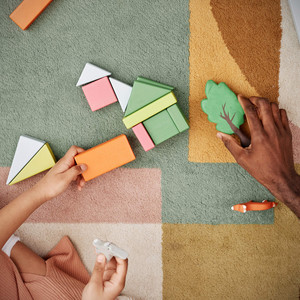
So it could be drawing, building with blocks, playing with dolls.
And you need to call it special time like that.
Yeah, you do.
He says that as adults, we have the power to make something feel special to a kid just by calling it special.
Imagine that you are a child and I come to you and I have two cookies in my hand, these two Oreos.
One is a regular Oreo and one is a special Oreo.
Which one would you like?
What would you choose?
I would choose a special Oreo.
Every time.
Yeah, me too.
Every time.
Plus, special time has some unique rules.
So by kind of delineating when it's actually special time, you're letting your kid know that you're entering that special time zone.
Okay, so just like you tell your kid, we're doing special time.
Yep.
And, you know, some of those unique rules that I just mentioned, I'll go over them.
Here's what you're not going to want to do during special time.
Get ready.
Do not give your kid any directions.
No commands.
No questions.
And ignore any behaviors that you don't like unless they're legitimately dangerous.
Wow.
This sounds hard.
Honestly, it's really hard.
The no questions is a surprisingly difficult rule to follow.
Oh, Gus.
Are you?
Gus, you built a car.
Did you hear me stop myself right there?
Yeah, I did.
Parents ask kids questions all the time.
And when I tried this with Gus, I had to stop myself so many times.
And then you sort of diverted to like, oh, wow, look at that car.
Do you just like kind of change modes and try to describe something you like?
Yeah, you're going from kind of question asking to being more declarative.
So I am assuming that you should not be on your phone while you're having special time.
You assume correctly.
I believe in you.
Leave your phone in the other room and give your child your full attention.
And Harrison says that you shouldn't withhold special time for bad behavior or use it as a reward.
It just is.
Got it.
So don't cancel if they, say, had a temper tantrum that morning.
Right.
Now for what to do.
There's an acronym.
Oh, I love an acronym.
It's called PRIDE.
Harrison lays it out.
PRIDE, of course, being an acronym, the P stands for praise.
And we like praise to be specific.
So rather than saying, good job, because kids hear that all day long.
Good job.
Good job.
Good job.
I'm going to say, I love the way you stack those blocks that high.
I want the praise to be specific.
That is the P.
Okay.
Be specific with praise.
Got it.
Yep.
And the R is reflect.
So you're going to repeat a lot of what the child says.
If they say, and it crashes, I'm going to say, and it crashes.
I'm also looking to reflect the emotion that I see in my child as they're engaging their imagination and their creativity during special time.
So I might say something like, ooh, they look sad.
And And if I'm wrong, my child is going to go, no, they're not sad.
And that is okay because it is child directed and I'm doing my best to connect with what I imagine is happening as I'm paying attention.
So the next letter, I, is imitating.
So if I see Gus stacking Legos, I stack Legos.
I'm trying to do what they're doing so that I'm joining them in a parallel manner in this play.
And this is.
It might mean very little to you as the parent, but it means the world to a child to have you join them this way.
The D is to describe what your child is doing like a sportscaster, like someone who is calling the game.
They're not coaching the game.
They're not telling the players what to do, but they're really describing what they're seeing as if it were for an audience.
I feel like that'd be really fun for a kid.
Yeah, I imagine it makes them feel super special, like what they're doing really matters and that you're really paying attention to it.
So the last letter is E, and that's for enthusiasm.
And Harrison notes that obviously every parent shows excitement in their own way.
Because what really matters in the E in Pride is that you are authentically communicating verbally and non-verbally to your child that you're interested and that you're excited to be with them.
I'm having so much fun with you.
Yeah, I'm excited.
That was me showing my enthusiasm to Gus.
That's really sweet.
His voice is just so sweet.
It's the cutest.
I mean, I'm biased, but I think it's the cutest.
Okay, so it's praise, reflect meaning, kind of repeat what they say imitate, describe and be enthusiastic.
Nailed it.
You're a quick study.
It sounds pretty simple, but I would say it's not exactly intuitive.
Like, this takes some practice.
In part because Harrison says we're used to teaching our kids constantly.
Parents are naturally teachers.
And so I've seen parents who are engaging in special time or we might be building blocks and the child starts to build a block.
And the parent says something like, oh, you have a block.
What color is the block?
How large is the block?
Do you remember the formula for calculating the area of a block?
How about volume?
And it's like, no, we're not.
We're not doing that.
In special time, we're not using it as an opportunity for teaching.
I think to sit back and really let your kid take the lead requires a lot of practice.
Like any other skill, when you first try it as a parent, you might not master it.
And so special time, the skill at special time increases over time.
But also the bond that is being built between a parent and a child increases as parents get better at special time.
Coming up, how special time can help improve your kid's behavior.
That's after the break.
So you mentioned that this is supposed to actually improve a kid's behavior.
That sounds like a big claim.
Yeah, it is a big claim.
And I should say that even Harrison said he was skeptical at first.
He told me a little story.
And so I'm working in a clinic where I am right now and families would come in and there might be a three-year-old who's been kicked out a couple of daycares because they're hitting.
Parents are at their wit's end because they're at risk of losing their job and they're in a bad place when they come in to see me.
As a young clinician, I did not value this idea of play.
Harrison says he wasn't so sure about the power of play when he first started out, but he trusted the science so he gave it a shot.
We'd start laying this off of parents to say I know this feels crazy, but we're going to ask you to start incorporating this special playtime about four or five times per week and then come back.
And I was amazed as a psychologist by the number of families who would come back, even in my disbelief, when I would ask so how did this week go?
And hear families say a little bit better because like many parents out there.
I did not appreciate the power of play and how, from a child's perspective, receiving this direct attention from someone who I love and who's everything to me matters so much that I change my behavior as a result of receiving this kind of attention.
Yeah.
So like what age of kids does this actually work for?
Good question.
Harrison says this is typically suggested for toddlers to school-aged kids.
One more thing he says is that you want to make sure that special time is one-on-one.
So if you have more than one kid, do separate special time with each of them?
Yes.
Yes.
Absolutely.
And who should try this?
Like is it only if your kid has a behavior problem that they're hitting or biting or something in school?
Also a really great question.
And I love what Harrison had to say when I asked him who should consider trying special time.
This is really only for parents who want to have a stronger connection with their child and who want to improve not just the relationship but the way that their child feels about themselves and the way that the child feels about the connection with their caregiver.
So it's for everyone.
Yep, you got it.
It's for everyone.
It's a great tool for every caregiver to have in their toolbox.
And I've got to say, when I tried it with Gus, he loved it.
More special time?
Okay.
He was asking for more special time.
Dude, I want special time now.
I think there's probably no harm in you getting some special time, even though you're not a school-aged kid anymore.
I'm calling my mom.
And that's our show.
If you love Life Kit and want even more, follow us on Instagram at NPR Life Kit.
There you'll find gorgeous comics and illustrations and videos answering questions like how might one actually enjoy winter?
Again, that's at NPR Life Kit.
This episode of Life Kit was produced by Summer Tomad.
Our visuals editor is Beck Harlan, and our digital editor is Malika Gharib.
Megan Cain is our senior supervising editor, and Beth Donovan is our executive producer.
Our production team also includes Andy Tegel, Claire Marie Schneider, Margaret Serino, Sylvie Douglas and Mika Ellison.
Engineering support comes from Stacey Abbott.
I'm Mariel Segarra.
Thanks for listening.