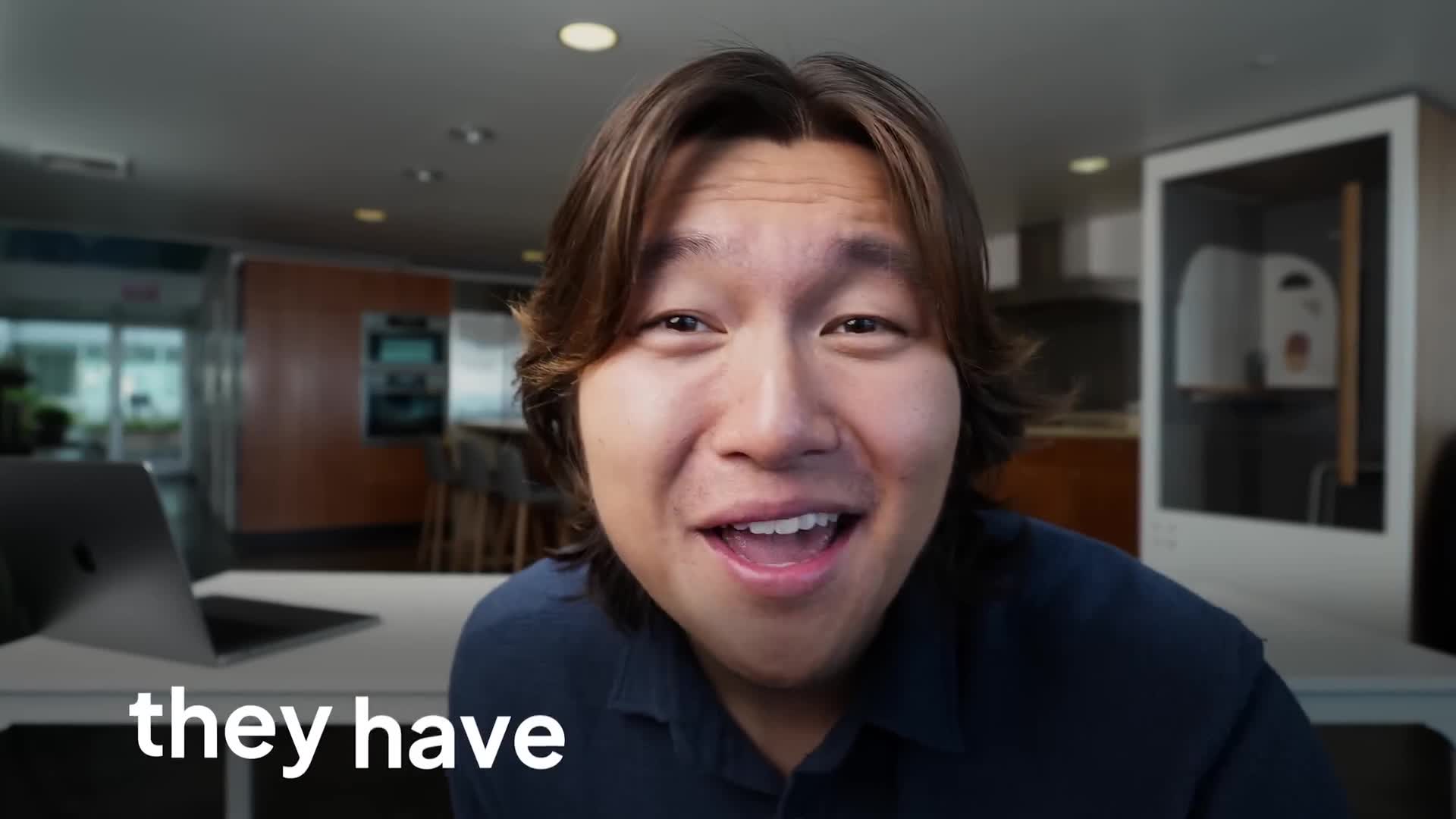
Every top entrepreneur shares one thing in common, and that's that they have a go-to playbook that helps them make smarter, faster and more profitable decisions than anyone else, which is what people call a mental model.
So I'm gonna share with you the five mental models I've used to build my startup from zero to 30 million in revenue in just three years, so that you can crush it too.
So we're gonna start with a first mental model that's gonna help you envision your multi-billion dollar company, before going into later mental models that are gonna help you turn that idea into a reality.
And then lastly, end off on a mental model that I believe is gonna help you become a master of the universe.
So our first mental model was coined by none other than Brian Chesky, the founder of Airbnb.
And that mental model is called the 10 star review where, in the early days of Airbnb, Brian started dreaming up what a 10 star experience on Airbnb might look like.
Where a five-star experience on Airbnb is just a baseline right.
You show up to an Airbnb and it looks just like the photos.
It was a really good price.
It's in the center of the town, the host was really communicative, the wifi worked really really well and you slept like a baby.
But the real value in this thought experiment is for you to think about how do you build a 10X better product than the rest of your competition through the lens of a 10-star review.
Where Brian started thinking about what does a six-star experience look like, where maybe you show up to the Airbnb and you show up and there's a bottle of wine there?
And then the host stops by and says Hey, you know, I've got a couple of extra steaks from the grocery store.
Why don't I go ahead and grill you up a steak and actually serve you dinner on your first night.
And you keep building off of that where maybe the seven star experiences, the host does that.
And then on top of that, they just surprise got you into the most coveted local restaurant.
That's a Michelin star restaurant, and also planned an entire secret private tour for you to explore this wonderful city that no one else gets to experience.
And you keep building off of that and dreaming even bigger, where basically you get to the 10 star experience and you're like what could this possibly look like?
Where the host actually flies you in on a private jet.
You show up to the place and Taylor Swift and Drake are doing a private concert for you before you get picked up by a limousine to go party with the coolest people ever.
And then you have a wonderful, wholesome experience back at home.
And what happens when you do a thought experiment like this is you'll find it'll push your boundaries on what you believe you could do to exceed your customer's expectations.
Like it literally allows you to dream bigger.
And in such a competitive market like today's market, in order to cut above the noise, you have to over-deliver in those ways to satisfy any of our dopamine receptors.
And so I want you to start thinking about, in whatever you do, what is your 10 star customer experience?
Like how could you absolutely blow your customer's socks off?
Because if you do that, that then sets you up really well for this next mental model that's gonna help you turn that idea and that vision into a reality.
And this mental model is the one that Elon and Bezos have used to do almost impossible, insane things like building rockets, going to space and building trillion dollar companies.
Like there's a point in entrepreneurship where, once you get through enough hard things, you realize that actually anything is possible, as absurd as your goal might be.
As long as you have enough time and resources, if you use this mental model of working backwards.
Basically, the idea is to start with your end goal vision, and then work backwards and reverse engineer every single step you need to do to actually get to that goal.
And this idea is so powerful that Amazon has submitted it as one of its core operating principles, and some of the early employees at Amazon have even written a book on it.
And so to help you really grasp the power of this idea and how to actually use it and apply it in your own working life.
I'll give you an example of how we've done this here at Stan to an immense degree of success.
So for every big initiative here at Stan, we always start with a strategy document where, in this case, we want to throw event for all of our top creators, because we know that that's one of the best go-to-market mechanics for our specific industry, right.
Creators want to be amongst other creators, especially other really successful creators.
But in order to throw an event of that magnitude that impresses the sheer talent level of the people that showed up at that event, or who we wanted to show up at that event, that budget would cost us hundreds of thousands of dollars which, for a startup at our size, is a really meaningful and scary bet where the stakes are super high.
And so we have to really think through like what makes spending all this cash actually worth it?
Like what would actually make this a massive home run of an event?
And so this then starts with the first step of working backwards, which is for you to define what success looks like.
Where for this specific event.
As I went through the envisioning exercise of what could make spending all this budget time and energy worth it, ideal scenario that I came up with was that we submitted Stan's Collab Fest as the event for all of the top creator entrepreneurs.
Where there's a huge buzz out there, where every creator, entrepreneur is seeing all the content from this specific event and saying, holy shit, next year I want to do everything possible to actually get invited to this event.
And so the next step here is to take these pie in the sky output dream-like goals and tie them to clear, measurable inputs which, in this case, is something like making sure that 10 of the top creator entrepreneurs attend this event.
So, for example, I had Tim Chusiano, one of my favorite creators, actually give a keynote for this event, all the way to providing 20 different content ideas that every creator might find interesting at our event.
Like for example, having a rage room that raged against the nine to five.
And so what you'll find through this process is that your inputs match your outputs, and you and your team now have a shared set of metrics or a shared language to align on to say oh, this is how we're tracking against our eventual output goal.
And this is really powerful because we started with a very micro example here But you realize that you could actually apply this line of reasoning to something as extreme and as surreal as actually getting to the moon.
Especially because, now that you set up clear metrics to track how you're performing, you can use this next model to unblock any roadblock that comes your way.
And that mental model is the theory of constraints or removing bottlenecks.
Where I want you to realize that, no matter what job you're in, even if you're just sitting at a desk in a knowledge economy job, your job is actually like a manufacturing line.
Where the first step is lead generation, right?
We have to find lots of people that might potentially buy our product before we then go into outreach, which is a measure of the throughput, of how many people we can actually reach out to in a qualified way before even getting our foot in the door of pitching our product and closing the deal and finally implementing those people into success on our platform.
And the way to increase the output of any system, which is our job as entrepreneurs, right?
Is to grow our businesses.
It's to find the biggest bottleneck in your assembly line and fix it.
It's kind of like a funnel where if your marketing sucks, no amount of sales effort is going to fix it.
So as you think about the current state of your business right now, I want you to think about where is everything getting stuck that I can just untangle and unleash a little bit more to grow my business even faster?
And so if you think about my story starting Stan, every problem was a bottleneck problem.
No one knew we existed or what we could actually do for them.
Where, once I figured out how to get people to know about us through me making content, I then had to ask myself how do I 10 X that result and build an organization that repeatedly acquires new customers without me having to be in the picture, which then creates a new bottleneck of how do you hire, manage and train awesome people to actually build that organization with you?
Applying this mental model is going to help you unblock anything in a short term and tax, which pairs super, super well with this next mental model which is gonna help you unlock things at a systems level.
And the best way to describe this next mental model is through a quote from Charlie Munger that I think about all the time.
And that quote is, show me the incentive and I'll show you the outcome.
Basically, when you don't understand this concept of incentive alignment, life feels like you're rolling a boulder uphill.
Which to be clear, when you first start a company, everything feels like rolling a boulder uphill.
But once you master this, things start to really fly well, in a way where you start to feel like you're a lot lighter and you get a lot more leverage on your time.
Where for Stan, we realized really early on that your customers are your best salespeople.
Where, if we just maniacally focus on providing people the very best product and the most delightful experience possible, they actually started referring their friends through organic word of mouth.
But to hit that threshold where someone will actually go out of their way to canvas their friends and evangelize your product for you is extremely, extremely high and it's not gonna be every customer out there.
And so your job is to think through how do I increase the likelihood of breaking through that threshold, which is where incentive alignment comes in where, if you're always thinking through the incentives of your counterparty aka what do they actually care about you're much more likely to get a successful deal done.
And in our case, what that meant is just providing all of our customers a 20 lifetime affiliate share if they actually shared Stan with their friends.
AKA.
If someone signs up through your referral link, you actually get 20 of their subscription, month after month, for the entire life that they're subscribed at Stan.
And so what you saw in our revenue charts is that we took this core organic flywheel and we absolutely juiced it.
And what I love about this mental model of incentive alignment is it alludes to our final mental model, which I believe is the most powerful of them all, which is just the concept of deeply understanding human nature.
And I'll put this concept into really stark business terms.
Where Sequoia Capital, arguably the most successful venture capital firm of all time, has a specific investing thesis called the Seven Deadly Sins thesis where, if you think about all the most successful companies of all time, they all play into one of these seven deadly sins right.
So Lust is Tinder, Vanity is Facebook and Instagram, Gluttony is DoorDash and Sloth is Uber.
Basically, we as humans as meat boxes are just wired in a certain way.
And so people often ask me John, why did you start Stan, specifically a monetization idea, out of all the possible ideas you could have started?
And I'll answer you by actually reading one of my favorite quotes from Jeff Bezos, which is I very frequently get the question what's going to change in the next 10 years?
But I almost never get the question, what's not going to change in the next 10 years?
Which I believe is actually the more interesting question, because you can build a business strategy around the things that are stable in time.
For example, I know that a consumer is never going to say Jeff, I wish prices at Amazon were higher or Jeff, I wish the delivery was even slower.
And so we know that the effort we put into these things will still be paying off dividends for our customers 10 years from now.
And so, as I was exploring what idea to actually build in the creator economy, I knew that, no matter where this industry went, there was one thing that people would always want more of, which is to make more money and be more successful.
Right, as humans, we'll probably always take the optionality of being hotter, smarter, or richer.
And so our goal as entrepreneurs is to align these single parts of our human nature and incentivize them with things that actually make the world better.
Like building a car that not only makes you look cooler aka place for vanity, but also ideally, saves you more money and also saves the planet.
So, as you think about building success in your own life, I hope you can take these five mental models and use them to turn your visions into a reality.
Because I can promise y'all that these mental models are tried and true.
Like I would not be where I'm at without these.
But the challenge now is in order to get from 30 million to 100 million plus, I need to take on and learn new mental models and new skill sets.
So make sure to subscribe because I promise you I will share all of my learnings along the way.