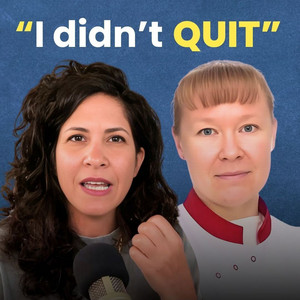
Hi everyone, it's Adar.
Thank you so much for joining me.
Today, I'm going to share with you an interview I had with one of my students, and her name is Katia.
Seven years ago, Katia started learning English from scratch online, and today you are going to listen to her and see the remarkable transformation she had, and she will share with you more about her English experience, all the wins, all the challenges and what was possible for her and what is possible for her thanks to English.
This has probably been one of my favorite interviews to record and I think you are going to find it so encouraging and so inspiring.
So, let's not wait any longer and let's listen.
Hi, Katya. How are you doing?
I'm so, so happy that you're here.
So honored to have you finally here for an interview.
How are you doing? Hi Hadar, I'm excited to be here.
Thank you so much for inviting me.
I know that we wanted to do it for a long time and I'm so happy that finally it's happening.
Thank you. I know, me too.
Now, I think all my students know you, but for those who are watching and are not my students, would you quickly introduce yourself and tell us who you are, Katya?
Okay. So, as you can see, my name is Katia, and I'm a member of BEYOND Community.
I am a former student of New Sound Course, and I'd say that I'm a passionate or even obsessed English learner.
So, this is what I wanted people to know about me.
Good obsessed. Good obsessed.
Yeah. Yeah. Tell me a little bit about your journey, starting to learn English on your own in a non English speaking country before you even started with any one of my courses when we got to know you.
Tell me a little bit about that experience.
Okay. So it's been already seven years, if I don't count those years that I spent in school, because I think they were totally really unuseful for me.
So, and yeah, it's been seven years.
And when I started, it was very, very conventional.
And there was a reason for that because I was set at my work that maybe one day at my work, we would teach in English because I work as a professor at medical university.
And so I was set that, okay, maybe one day.
And those of you who will be able to to teach an English, we'll get better salary.
And I thought, okay, I want to get better salary, who doesn't want?
And I decided to enroll myself in an English speaking course here in my city.
And it was a conventional English learning, nothing interesting.
I was attending classes, we had a textbook, we had a teacher, we were listening, reading, writing, and we barely spoke.
spoke what would you say your your level was back then or your experience were you able to have conversations in English when you just started school seven years ago I started from scratch because when I changed the school and I was tested I had just a one level a one okay so seven years ago you were a one okay yeah amazing and you've never lived in an English -speaking country just to kind of like, or I've never...
No, I've never lived, and I've never even been to...
Never been to an English -speaking country.
So seven years ago, you had zero level of English A1.
And then here you are now, what we call an influencer in our community.
So okay, so you started with a basic traditional conventional course, and then what?
and then I got stuck three years later I found myself in a very bad place when I had been stuck I think for a year I didn't know what to do because I felt like I was doing a lot but nothing worked in a way how I wanted because I wanted to speak and each time when I tried to speak in a a class, I could say just a couple of sentences.
And I was so unsatisfied with those couple of sentences.
And I was angry at myself.
And I tried everything that I could find on the internet.
And I was so convinced that if I watch more YouTube videos, if I read more, if I write more, if I do more grammar exercises next time when I when I'm in a class I'd be better and it wasn't working like this but somehow I couldn't even comprehend why it doesn't work like this maybe I was avoiding because you know when you when you need to work on your speaking you have to get out of your comfort zone you have to to find places and you have to face your fears.
And I was hiding. But I think three years after when I worked a lot and I didn't see the results, I needed to face the reality and I did it.
And I told myself, okay, this is the time to change something.
This is a time to get out of your shell and do something different.
And I thought that new sound course was that something different that I needed, especially because I got at that time very passionate about pronunciation and prosody work.
I was just mesmerized by the melody of American English and I just wanted to speak in this way so hard, but I didn't know how.
I didn't have any tools.
I didn't have anyone who could explain me how I could do that.
But then I found you on the internet and I was just drawn to your videos and to you to the personality that you have and you were so passionate talking about pronunciation and prosody work and i thought okay this is the person that can help me and i was right so that's how i joined new sound lucky me like lucky me that the algorithm has brought you into my world and i got into yours so i'm i'm so happy about it and i want to ask another question about pronunciation, because that was the thing that got you to do things differently, okay?
Why do you think that is?
So you said you got passionate about it, but if we try to break it down for someone who is drawn to pronunciation and prosody, what do you think about this work that makes it, that gets people to be passionate about it?
Because most of the people that I know, my students and myself included, There is something really engaging and fun and exciting about pronunciation work that is beyond the aspect of being fully understood, right?
So, I'm wondering what it was like for you.
I don't have a clear explanation because I thought about it a lot.
I think there is something that's captivating for me exactly in sounds of American English because I started with British.
because the school that I was attending was teaching British English.
But then I was exposing myself more and more to the Internet, and I was mainly consuming the content was in American English.
And then I felt like I like it.
You know, I'm not a person who listens to music a lot.
You know, I don't have a favorite singer.
I don't have a favorite song.
But I feel that American English is my music.
So because I have favorite podcasters, I have favorite episodes and I just enjoy listening to it.
And I wanted to speak like this.
There was something really beautiful in it and it's still beautiful for me.
And sometimes I think maybe in my previous life I spoke this language because I have no idea what's the nature of it because it's so hard, you know, such a hard feeling that I want to speak and I like it so much. But I think the other aspect of it, that it's fun.
If I compare me sitting down with grammar exercises and drilling them on the internet and me shadowing and trying to put another face on myself, that's so much more interesting.
I try to be another person.
I try to act. I need to act if I want to get closer to that speaker.
speaker, and I like this because it's so engaging and enjoyable and it's a totally different experience.
And if we compare it to what you shared about your experience where you felt stuck, right?
Like when you had learned English before started...
before you started working on your pronunciation.
So we can really talk about the aspect of active learning versus passive learning, right?
Would you say that?
That previously you had, you know, you've done the exercises, listening, a lot of grammar lessons, watching videos, but you hadn't put it into practice.
And then all of a sudden you start learning pronunciation and you started using it because you don't live in an English speaking country.
So you don't, you don't work in an English environment.
So it's not like you need to speak English daily and pronunciation gets you to use the language regularly as part of the practice.
And I think this is where you're like, oh, I'm actually using the language.
And that's when it becomes more effective because only when you say it, only when you use it, when you produce language, whether it's pronunciation drills or speaking, that's when you start improving.
Right? Yeah, exactly.
So this is what I felt.
So finally, I started opening my mouth.
Yeah. Before, I didn't do it.
So I would do exercises.
I would read. I like reading in English.
But I didn't need to open my mouth.
I didn't need to, you know, emit any sound.
So, yeah, I love it.
So it's both passion and the love for the music, right?
Like, and I loved your comparison to, like, you have a favorite singer or favorite music.
This is my music. And so all of these things together brought you to have this massive, incredible transformation that you've had.
So just, again, as a reminder, four years ago, when she joined New Sound, she knew English, but she felt stuck, right, Katya?
at you i'm talking about you in third person but you you felt stuck and and that's where things started opening up for you so let's talk about your experience i vividly remember you it was the first round of new sound and um and you stood out because you have made a commitment to make a video every single day and to improve this way and this is and i think that it wasn't only inspiring to to see your progress, because we could actually see your progress from day one until day 90 at the end of the program, we also got to know you and fall in love with you, with the person you were.
So that was your first round doing this kind of work.
And then after that, I invited you to be an ambassador inside of New Sound, so you actually started helping New Sounders, new New Sounders, to get through the program.
Tell me a little bit about that.
And then we'll talk about your contribution in Beyond.
And why was it important for you?
to start helping other learners do this kind of work.
For me, honestly, it was so unexpectedly when I was invited to be an ambassador.
And when I got that message, honestly, I didn't even know what the word ambassador means.
So I needed to look it up and see what it means.
But then I was so deeply in love with the program.
And I really got through such a big transformation myself.
And I just wanted to be a part of this journey for other people.
So that's why I agreed to be an ambassador in New Sound Course.
And yeah, I've been in New Sound Course since then.
So it's been four years and it's ninth round right now.
And it's so great to see how people go through the same transformation.
information. And I'm so happy that having this experience myself, I can guide these people through the experience because I know that, you know, there are periods during the program when people get frustrated or when they feel that.
You know it, you know it in your body, right?
You have experienced it as well.
Yeah, I know how it feels.
I know what they think.
I know what they struggle with.
And I'm so happy, you know, to help them during those hard moments.
I'm happy to be there with them and tell them, okay, I know what you feel.
And it's, it's okay to feel these feelings.
And I know how to help you.
Like I felt the same and I was able to overcome it.
So I think seeing the progress of those people, how they were at the beginning and how they are at the end.
So this is the best reward that I can get being an ambassador.
And so thank you so much for allowing me to be an ambassador of the New Sound.
Thank you for making such an impact in our community.
How has that changed your experience and your growth in English?
Well, I think my whole experience, you know, being in your communities really transformed me as a person because English, you know, it went so much beyond just English because my whole life that I treasure now is in English.
So all this experience made me a completely different person and I got to know incredible people from all over the world and each conversation that I had with them taught me something, even though sometimes it was for 5 minutes, for 10 minutes.
I have speaking partners, and my longest speaking partner that I got from the New Sound has been with me for three years.
Wow. And I could see how she was growing and how I grew all this time.
And I think the most important thing that I learned from all this experience is that I learned how to validate people, you know, how to respect them, how to acknowledge them, how to accept them, their identities, their journeys, their emotions, without any judgment or without feeling that I want to correct them or undervaluing them.
So I never was xenophobic, but maybe I wasn't that tolerant to people.
And this is what I learned.
I learned that, you know, there isn't right and wrong in this world.
What's right for me maybe is wrong for for you, but it doesn't mean that you're right and I'm wrong.
And I'm willing to see the differences.
And I think that the beauty of this world and these differences, and I feel that I'm so much of a better person because of all these experiences and all these conversations that I had with people.
I think this is the best thing, the biggest thing that I got in this journey.
me. Wow. I have complete goosebumps and it got me emotional to think about it because I know this experience, but you really articulated it so nicely.
And I have to say that what you said is really like the reflection that I see in the community, how loved you are and how appreciated you are in the community.
And I think that being seen and having someone else hold hold space for you, even if it's for just five minutes, but be fully present with you, which is what you do in the community as part of your own personal growth journey, not even English journey, right?
Like growth journey.
What you shared now is something that I wish for everyone in this world to be able to experience, to really see people for who they are and to welcome everyone and to understand that people are different and everyone belongs and everyone has space, which sadly we We don't have a lot of that these days.
And I think that because you are very dominant in our community.
In a second, I would love it if you could talk about your experience in BEYOND, which is our other program.
I think this is why people feel so confident and comfortable and when they feel that they allow themselves to speak, right?
Like they allow themselves to show up, which is the biggest challenge for non -native speakers.
Because if you don't feel like you have space or you belong or that people will listen or that people have patience for you, you tend to, even in your first language, you tend to mute yourself, to quiet yourself, to keep it down, to not stick out.
Let alone in a second language where you anyway feel like a half version of yourself, right?
Right. So when people are, not only when they have that space, which is what you and us, and this is like a part of our community, is like this, these are the values of our community to hold space for everyone.
But when people have that safe space, they are willing to open up and then eventually they speak.
And when they speak, they improve.
And this is why we see the transformations, not just because it's, oh, let's just practice speaking, but it's let's practice speaking in an environment that you are a part of creating and that you, like, and that you so nicely, uh, illustrated it.
I love it. Um, talk to me about beyond what, what it is for you and what do you do there as a host and, and what you've done with your mentorship program that you came up with?
Okay. So I think beyond is the favorite place in the world for me uh so for those who don't know uh beyond is a membership of hadar and so this is the place where you can come and you can speak english without being afraid of making mistakes or being judged or uh you know for what you say how you say or what you talk about and i think like you said this is the best part uh because we don't have sometimes so many places places where we can be who we are.
Sometimes we are afraid, okay, we need to fit in and we need to behave in a certain way.
But this is the place for us to be seen, to be heard, to be creative because I saw so many people got so creative and beyond and they allowed to shine some sides of their character that they stifled sometimes maybe for years.
But then finally they can sing, they can act and they can do so many crazy things.
I think this is the beauty of BEYOND, the freedom that we have in BEYOND.
One of the best parts of BEYOND for me personally is conversation groups because I don't live in an English -speaking country.
I don't work in English.
For me personally, it's very important to have a place where I can go and where I can practice my speaking skills.
scales yeah and I'm very strict with myself when it comes to English in general and speaking part so I have to speak every single day maybe it's just for 40 minutes or one hour but it has to be every single day and I could see incredible results from this uh regimen and okay in beyond I can create a schedule for myself where I actually can speak every single day so I have speaking partners for some days during the week, and on those days when I don't have anyone to speak one -on -one with, I can go in a conversation group that's hosted by someone else, or I can schedule my own, and that's how I
make sure that I have the speaking space for myself every single day.
But when it comes to conversation groups, it's not only about me having the space, because Because me opening the space for myself is also making the space for someone else.
You know, it's not only me having the benefit of these conversations, but also so many people who are joining.
And sometimes I have 10 people.
Sometimes I have 40 people.
And that's incredible.
And we speak about different topics.
What I like about BEYOND is that we, you know, sometimes in our everyday life, we don't speak about serious things.
We speak, you know, about house chores, what to cook for dinner, you know, some things that your work, but you don't sit down and think about, you know, really deep, sometimes controversial, interesting topics.
And this is what we have in Beyond.
And what's important for me is that in Beyond, I have this space because I tried to speak about these topics, you know, with people around me, and I didn't have the rapport, where I didn't feel that these people are interested in talking with me about them.
But in Beyond, this is the place where I can speak.
And usually these topics are coming out of my experience.
Maybe I read something, I saw something, I talked with someone, and then I have this idea that I want to share it with someone else.
And I think this is something that people like maybe, or this is what draws people maybe to me or to other hosts.
posts uh you feel that this person is passionate about the topic and so excited to share and then you you you get ignited as well and then you want to speak too so i think yeah why do you think it's important to to have profound conversations or controversial or deeper conversations versus like the casual small talk or role play or day -to -day scenarios that you know we also do and beyond but But why do you think it's important for the learning experience for people who are like listening is like, I don't need that.
Like that's too demanding.
That's too much. I don't even want to talk to other people.
I can speak to A .I.
I can speak on on my own.
Why do you think it's important?
I think probably there are several reasons here.
So if we think about English, you know, English is not only about small talk.
Yes, you can practice small talk by yourself.
but, you know, sometimes you meet someone and then there is this deep conversation about something.
And if you don't have the experience with that, so maybe it's going to be hard for you.
So if you have safe place where you can practice it in advance and you have great people to discuss great topics with, so this is what can be helpful in order for you to get prepared for the future experiences.
Amazing. So you're preparing yourself for real life experience so that it's not going going to be new and then you'll feel stuck you'll be prepared you'll be equipped with managing such conversations and not just small talk which we all want to engage because that creates connection right yeah yeah this is what i wanted to mention as a second point so it's about connections because small talk is not about connecting you know it's like propping maybe a little bit who this person is maybe it's just to spend time maybe it's out of the necessity but you can really connect with a person when we have a deep
and meaningful conversation when we get to know people on a deeper level so that's when this connection create it gets created and another thing is that you know it makes you a better better person so when you really think about meaningful topics deeply and you have this discussion and you have a different point of view that's different from yours you learn something from that conversation and you become better you know sometimes i think that okay i came up with this topic i know everything about it and then i go in a breakout room and i speak with someone and that person says something and i've
never even i've never even thought about it and then i think oh my gosh, this is so great.
That's such a great thought.
I am, you know, I never even thought about it.
And that's so amazing because I learned in a process about something with that person.
Yeah. Yeah. So that's why I think it's so important.
And you know, our life is more beautiful when we have conversations like this.
Yeah, absolutely. Like when we are intellectually challenged to think and to get inspired and to go beyond what we know.
And I love, Katya, how deeply connected your personal growth is with your English growth.
Like they're both are aligned.
And later we're going to talk about the challenges because there are and there were.
so that people see that it's all, not all nice and sparkly and perfect.
But I love how you constantly bring it back to this place where the more you advance in your English, the more you grow as a person and the more is possible for you as a person.
So I absolutely love that.
And the second thing that I love that you said is it's about connections.
And here's the thing that people don't understand.
when you make these conversations about the connections and about being genuinely interested in the other person and them being interested in you, English becomes the means, not the goal.
And when it becomes the means, progress is a lot faster because you're not just focused on being perfect and getting it right.
It happens and you'll learn from it, of course, because it's still like an English learning space.
But it's really about using English for what it is a tool to communicate and not the end goal.
So our goal is not just to be fluent, and that's it.
Our goal is to have English, you know, as, as a resource to create the better life or the life that we want to live.
Right? Yeah. Yeah. So just a little recap, again, so up until you started learning seven years ago, So after three years of learning, right?
That's when you started feeling stuck and you're like, I need something else.
Where a lot of people would settle and be like, it is what it is.
I'm just not talented, right?
Or I'm just not good with languages.
And they would just settle for compromised English, thinking that this is what it is because that's conventional learning and that's passive learning.
And that's how it is when you learn online, like you just passively get everything.
And then you had a breakthrough in the first round of New Sound and then engaged yourself in the community where you use English daily.
And this is where you are today.
Not because you use English at work every day.
Not because you live in an English speaking country because you don't.
This is solely from creating a very specific schedule for yourself.
Being very committed and diligent, right, about your studies.
You're very, very committed and you have strong habits.
Right. And you were able to get to where you are today.
People can hear it.
So we don't need, I want you to share a few wins, but I think the biggest win is just listening to you and being like, okay, this was all possible over the course of four years with committed practice schedule and journey and space, of course.
So talk to me a little bit about what is now possible for you and some of your biggest wins and achievements over the past four years?
Okay, even me being here is already my win.
And it's been possible because I made that decision four years ago.
I didn't want to quit.
Well, I think one of the biggest ones happened to me last year when I had the opportunity to travel abroad completely by myself.
uh i i'd never been abroad actually before that time you know i only traveled around my country and you know sometimes i did it alone sometimes with someone but you know i'm not so i'm not a fearless person when it comes to traveling alone and so it was my first experience i traveled alone abroad uh to countries where i didn't have the opportunity to use my native language and I could only rely on my English.
And it was the best experience ever.
So first I could overcome that fear, you know, of traveling alone because I, even though I spoke good English at that time, I still had doubts.
Okay, is it possible for me to travel and get by having my level of English?
So I got a proof that I could do it.
And one of the wins, you know, I feel that I am more, uh, fearless when it comes to communicating with people in English because I have to do it.
So if I want to get better.
Outside of the community.
Yeah. Yeah. In real life.
So if I don't like to do something in English, if I need to approach a person who I don't know, if it's a stranger for me, if it's on the street, if it's, uh, I don't know, in a shop and I need someone's help in my native language, I'm not going to do it.
I'm gonna hide I'm gonna avoid uh only if I have to do it I'm gonna do it but I'm not gonna do it deliberately but it's different in English because in English I feel that I need to create these opportunities for myself and I want to see what's possible for me and so when I was traveling um you know I was deliberately approaching people let's say I was in a tour I was in a tour around the city.
And I could hear that some of the people on that tour were native speakers, because I overheard that they said, okay, I'm from New York.
And I really wanted to talk with that person.
And I was just getting closer and closer and closer.
And we started a conversation.
And then during that tour, we had a great talk with each other.
We didn't pay attention to what's been been happening around us and we were on the street and it was the huge win for me because before i had the experience talking only online on zoom on the screen and i'm at my home it's quiet i don't i don't have any distractions and here i i was talking with a native speaker i was on the streets there were so many people passing by there was this transport all these sounds and i could get everything that he was saying and he understood everything that I said and he even complimented my English at the end and I was so happy about that experience and yeah so I
think up until now probably this is the biggest win for me.
It's a huge win when you think about it because it's both your English, it's also your personality and let's talk about that in a bit bit about the difference between how you are in English and how you are in your native language, because I think a lot of people could relate to it.
But I think it's a huge win.
I love what you said about like being able to do it through distractions and through like the, even the mental distractions of what are they going to think about me?
Am I being clear? Blah, blah, blah, that we usually have when we speak, especially when speaking to native speakers.
So I think that's a huge win.
And of course, everything that you've done in our community, Anything else that you think about that is now possible for you in English that you feel like sharing?
I mean, maybe some small things.
But I don't know how small they are.
Maybe they're big. So, for example, now I can watch movies without subtitles.
Huge. Maybe this is the thing that happened because of pronunciation work.
Because this is what maybe sometimes people don't think about.
But if you drill sounds, if you work on connected speech, if you work on reductions, if you try to make content words bigger and function words smaller, your listening gets better as well.
And then it's easier and easier for you to hear what native speakers say in those movies with all those extra sounds that sometimes we have there.
So this is what I have now.
now. I think it's been maybe a year or maybe a year and a half when I didn't need to turn on subtitles.
And I'm so happy about it, you know, because I'm independent now, because now there's this point of dependency, like I needed this crashes, but now I don't need it.
I love it. Yeah. Listen, like sometimes people who are native speakers need subtitles.
And there you are, because you've done deliberate pronunciation work.
And that's why I love pronunciation work so much because it's not just about sounding like an American, it's really about changing the way your brain thinks about the language, changing the understanding of phonology, of how you, what to look for, how people speak, the nuances, the tone of voice, right?
Like all these different things that you now hear and see.
It's almost like being able to see black and white, which is before pronunciation work, And then you see in color where you see all those different colors and it's like, oh, yeah, it's the same picture, but I see so much better and I hear so much and hear so much better.
So I think that's a huge win.
And thank you for, for saying it.
So let's go back a little bit to that idea that you said about I'm a different person, maybe more gutsy, more confident, more communicative, talkative than in your native language.
And let's talk about the different personalities, because I feel a lot of times that my My personality is slightly different in English because of how English is, because my experience using English versus my native language.
So I do feel like I'm sometimes like I have slightly different humor.
I have a slightly different way of carrying myself.
Talk to me about that and is it okay?
Because if people feel that, is it okay or is there something wrong with them that they feel different in two different languages?
mmm I'm happy that we have the same experience because I feel the same like I am slightly different when it comes to both languages and you know one thing is that sometimes I hear that people think that it's wrong like they feel that oh I'm not the same I feel them I feel that I'm pretending I need to put a mask or something or they can't express themselves and you know to the same extent like they can do in their native languages but I actually see a beauty in it because it's okay to be different in both languages so and I think many things depend on the language and the culture that you grew
up in so when it comes to my language in my culture it's a little bit I would say restrictive and limiting maybe in a way because when I was growing up I constantly heard from my parents like you have to be quiet you shouldn't be loud like keep your emotions to yourself whether these are positive or negative emotions you shouldn't be very emotional when you're in public and it's about everything it's like how you present yourself it's how you speak your voice um you know pitch that you use while you speak and I felt like you know when uh I was was kind of like limited in a way when I spoke only
my native language and so when I needed to change something in English so when I started shadowing and I needed to change something in a way that I spoke I felt like it was kind of like a freedom for me because yes we we are different in both languages but it doesn't mean that we're fake in a different language how I see it I see that we allow other facets of our personality to shine up in a different language.
I love that. But we're still the same.
Like you're the same in your...
You are as you are in your native language, but you allow other facets of your personality to shine and some others you need to suppress just to fit in because this is how everything works here.
But then you start speaking another language and then you don't have this burden of the the culture and, you know, all of those things that you heard growing up and you can construct yourself from the beginning.
You have to, you have the freedom to decide what you want to be and how you want to express yourself.
Yeah. And so what you're really offering here is that English is really a tool to expand who you are and not restrict who you are, which usually what people see is that English is just limiting or I don't feel authentic, which there is a space for that.
And I definitely agree that sometimes because of the way we like we overthink and we edit ourselves and we judge ourselves and we're afraid of other people's judgment, we are actually not bringing ourselves fully to the conversation.
And then we may feel inauthentic.
And I acknowledge that.
And what you're saying is that not only that we need to free ourselves from that judgment and bring who we are fully to any conversation, but also really explore what is possible for you in English in terms of how you show up, how you use your voice, right?
How you use your emotions, especially if you grew up in a culture that kind of like expected you to be quiet.
And we see that a lot in English as a very kind of like more vocal language culture where people express their opinions, very passionate, right?
And I think that you can take whatever is right for you, but here's an opportunity to use that as a tool to expand and not to restrict yourself.
And I think that was possible for you.
I think that was possible for me.
I think I'm more polite in English, by the way, and I think it's also the culture, but that's what's beautiful because now I have these two things and I can interact.
with my both, with both of my so -called personalities in the two languages that I speak.
So I love that. And I loved, loved, loved how you articulated it.
So here you are, right?
Like, and you've had all these massive wins and transformations and impact on community members.
And here you are speaking so eloquently and sharing your story.
Has it always been easy?
No. Talk to me about that.
It's not that easy even now.
okay but now I kind of maybe found a way to work on it sometimes not all the time but definitely it wasn't easy all the time I think definitely those three years when I was alone uh what were hard for me and the first year when I started working on my pronunciation was hard for me as well so first of all I have to say that I'm a perfectionist I'm a huge perfectionist a little A bit of a perfectionist, I would say.
Yeah, just a bit. Massive, massive perfectionist. In recovery now, right?
Like, you're working on it.
Yeah, in a period of recovery.
Okay. Yeah, so I'm a huge perfectionist. And, you know, another thing is that nobody really tells you, and nobody even knows how long it's going to take you.
So when I started working on Prenacy, I had no idea how long it takes in reality.
And I had a lot of unrealistic expectations of myself.
I wanted to speak like a native, you know, okay, I told myself, maybe not at the end of New Sound, but okay, I'm going to give myself three months.
And it was so stupid.
And then, you know, now when I think back, you know, I know how stupid it was, but I really thought like this and it harmed me a lot.
Because when I didn't reach it in three months, a lot of negative self -talk started.
I started telling myself that it was my fault.
I'm not sounding in a way how I wanted, because I'm stupid, because I don't have a talent, because it's not something that's for me, because I'm already an adult.
And if you start working on your pronunciation when you're an adult, it's not going to be be possible for you to change anything I think that at the end I even started thinking that there was something wrong with me physically like my tongue is too short or maybe it's too long maybe there is something wrong with my jaw or with my lips I had no idea and I put myself in a very bad place I think yeah I hit the rock I hit the rock bottom at that time and I think I remember Remember like a point where you started feeling pain in your jaw or your tongue, right?
Like if I, if I'm trying to think back, going back.
Yeah. Because I, I had the idea.
If I practice more.
Yeah. I'm going to get harder.
Yeah. Yeah. If I work harder, if I practice more, that's when I'm going to get what I wanted to get quicker.
But instead of getting what I wanted, I just hurt myself.
I hurt my tongue. I hurt even because of that.
Yeah. Yeah, I regressed because when you feel a lot of pain in your mouth, you just can't say even those sounds that you could say before.
So it was a very hard place for me.
And I didn't know what to do.
I didn't know how to continue with that.
And I think at that time, first thing that helped me was the community.
community. So that's why I really want to emphasize the power of the community.
I just couldn't quit having all those people looking up to me.
I think that's the thing.
The fact that you didn't quit, you had to figure it out, right?
Because you were held accountable and also because of your true commitment to the goal, right?
Like you did not quit.
So I think this this is a big thing to remember that even when it's hard, it doesn't mean that you should stop if there is a lesson to take from here.
Because what you're describing sounds really painful.
I'm sure a lot of people could feel it in their body, what you're sharing right now.
And maybe some people have quit, but you haven't.
So yeah. So what got you?
So you said the the community.
What else? Okay. It's my nature.
I'm a very stubborn person.
My mom always tells me that I'm stubborn like a mule.
She says it all the time.
And, you know, sometimes it serves me good and sometimes bad because, okay, in this case, I still continued pursuing my goal because I really wanted to get that thing.
And even though, you know, sometimes people would tell me that you're already in a good place you don't need to continue working on it your English is already great but it's it wasn't great for me okay I still wanted to continue and I continued no matter what all those people were telling me but sometimes it serves me in a negative way because sometimes I'm not willing to listen to other people even when sometimes they tell me something that could help me you know all that mindset talk that sometimes we had in beyond a new sound sometimes i have felt resistant um like i needed to live through
some experiences to get some of those lessons tell tell me more about this give me an example um okay okay, a simple example.
When people say the journey is more important than destination, this is such a used quote.
Everyone talks about it.
And for me, I kind of knew what it means, but still I was so focused on the end goal that I disregarded all those beautiful things, all of those gifts that I was getting on my way because I was not willing, you know, to live through this experience, what this quote means, like the journey is more important than the destination.
So you're so focused on the destination because you're stubborn like me.
I totally relate to that.
Like when I want, when I want to achieve something, I'm, you know, I'm fully focused.
So I know what you mean, but you're saying that you, it was harder for you to know this, notice those things that you now notice, and you weren't ready to embrace that mindset, right?
Of like, really pay attention to what's happening because the journey is important.
And I love that. And it's a good reminder for everyone to remember that the failures and the struggles and the pain is a part of the journey, is the journey, right?
Like, it's not like you can't eliminate it.
You can't be like, oh, it sucks because I feel this or I feel that, or I feel judged or I feel, you know, limited.
That is the journey, right?
Like that is what you have to go through and to overcome again and again and again, to be able to reach a place where you feel confident when you feel the growth and that you're able to use English just like it is.
And it's not even just about English.
It's how you use your voice in general, right?
Because we have that in our first language as well.
So I love that. And I think that it's a, it's a really important reminder that when it doesn't go the way you expect it to go, and when you feel like you've failed, it doesn't mean that you should stop.
It doesn't mean that you're doing something wrong.
It means exactly that you're exactly doing what it takes to reach your goal.
Because Katya can share in hindsight, right?
Like that this has been the experience for her, right?
Right. Yeah. And I think if it were easy, everyone could succeed.
Right. So it must be hard, you know, and if you don't know the price, if you didn't feel the price, you can't appreciate the end goal.
Love it. And your wins and your accomplishments, like the fact that you can say, yes, I'm able to do that.
I don't take it for granted.
I worked freaking hard to be able to watch a movie without subtitles or to speak now in an interview that is going to go on online right like I think that is like it's so important to also recognize those things and be like you know yes I went yes I failed a job interview but I had a job interview in English the fact that I had it means that I'm so much far along than where I was years ago where that was not even a a possibility.
So I think it's real, really important to acknowledge those wins along the struggles.
What other mindset shifts helped you during this journey?
I think the biggest one was exactly about seeing all these byproducts that are coming with the journey.
And so this is what what makes this journey so beautiful?
Because if we think about the end goal, okay, you know, I, I didn't know, I know that you're not a fan of it.
So, but I want to sound like.
We'll talk about it in a minute.
Yes. So the end goal, whatever that means to you, for you is to sound like a native speaker.
Yes. And I know that you're not a fan of it.
And I, I, I totally get it.
We'll talk about it.
Okay. uh but I think the mindset shift from the destination to the journey that was maybe the biggest thing that I needed to see because now I have so many beautiful things that are possible for me only because I made this decision not to quit several times in my past like Like, the whole world is open for me now.
So, for example, if I want to read a book that just came out, I have the immediate access to it because I can read in English.
And before, I needed to wait when this book would be translated.
Or maybe I wouldn't get the access to this book at all because it had never been translated.
And then, what else?
All these great speakers in the world, like Mel Robbins, Brooke Castillo, Marie Forleo, and many, many others.
All of them are speaking English and I can listen to them.
Access, access to knowledge, to content, to the world.
Right. Yeah. So this is the gift that English gives you.
And all these incredible people that I have the opportunity to talk with, I get to know them.
I get to know their cultures, what they think, what they live, what their customs and food and all of these beautiful things that are possible for me only because of English now.
And I think this is the best part.
And so this is what I put my focus on right now.
Okay. I still have this goal.
But maybe like I told myself that, you know, there is, um, I was listening to a podcast and it was about goals.
And there was a question there, like when you start doubting your goals and you make a decision whether you want to quit or you want to continue, there is a question that you need to ask yourself.
Are you willing to continue pursuing your goal, even if someone would told you that it's never going to be possible for you?
And I asked myself this question and my answer is yes i am willing to continue pursuing this goal because i get so much more trying to achieve this goal yeah and i know i i know that okay if i achieve this goal i'm gonna be happy for a couple of seconds and then i'll set up another goal for myself exactly you're happy for a little bit so that's why it's so important to enjoy while you're trying to get to that goal.
Yes. Now that you say it this way, I absolutely love your goal.
And I think that sounding like a native speaker, listen, like this was my goal 20 years ago, but this was my goal.
And I definitely see the benefits.
Obviously, it has created a life for me that I absolutely love and impact and which it has for you as well.
So I don't dismiss it it for a second.
I think it depends on who you are and what is your goal.
And now that you set it as a goal to always, as a bar, to always be better than where you are now, I think there are two things about this.
One, amazing, because you're a high achiever and you're stubborn, which means that you're always pushing yourself to do better.
And that is what I wish for myself.
That is what I wish for the people around me, because I think it's great to want something and to be focused about getting it and how to get it.
At the same time, it has to come with compassion and love for where you are today and what you have achieved, which you are working on it.
But I think that sometimes it's hard because the frustration about where I am and where where I want to be is so noticeable that sometimes we tend to focus on the gap and not on where we are and where the achievements are.
And I think that as long as you compensate it with being able to celebrate where you are now and appreciating the journey and recognizing that the gap is there just to help you become better, then I think whatever goal you put for yourself is fantastic.
As long as it doesn't suggest that there is anything inherently wrong with who you are and how you sound because you have an accent, because you're not you don't have a general American or received pronunciation accent.
Right. So I think that's when we are both fully aligned with with the goal.
Right. Right. Yeah.
So what else I wanted to say, you know, Brooke Castillo, I know that you, you're a certified, uh, life coach. Yes.
And I like what she says about goals.
She says she likes setting up for herself, big, ambitious goals.
Yes. Because if you set up the usual goals and there is nothing wrong with setting up for yourself, usual goals, you change yourself you have to change yourself in order to get to those goals you need to tweak a little bit you need to adjust something but you just change yourself but when you have a big ambitious goal you need to transform yourself you need to deconstruct and reconstruct yourself like reinvent who you are right and this is what i like about this goal because i think this is what i've I've been doing all this time.
Like I needed to know who I was and what was wrong.
And I needed to have all that experience, like negative experience that I had when I was not mentally in a good place.
And I needed to live through those experiences.
And then I needed to find a way and to, I needed to build myself in a different way.
And I was able to do that because I had this kind of goal.
Yeah. And I'm so happy with that transformation that happened to me because I'm definitely a better person than I used to be.
And that's so amazing.
And that's what I love.
This is what I love the most about this journey.
I love hearing you say that because it's also important for me as your coach and as as your mentor, you know, and as you being in one of my programs, because, you know, our meeting points were a lot about the frustration.
And as someone who wants to soothe, and I'm also like very motherly with my students, I was like, I just don't want it to be so painful.
And I know that whenever you raised a struggle, right, like it was important for me to help you be happy with what you have achieved.
But I also now understand as you're sharing your journey, like I also now understand that that was important for you because of what you just shared.
And because of the fact that it's not that you don't appreciate and you're not happy with where you are now, not that I ever thought that you weren't, right?
Like I saw your contribution, but it's really beautiful perception.
It's a really beautiful perception to consider it as like, this is where I'm going and I I need to really change who I am, change how I think, change the foundation.
And that sometimes is painful.
And I'm happy with that pain because it's growth, right?
Like because I'm building myself and I know that I'm getting somewhere.
And I absolutely love that.
And I also encourage students, and we do that in, you know, like in New Sound and in Beyond, what is your impossible goal?
Like what is the one thing that you think is absolutely not possible for you?
So for you, it's not that I don't think it's possible, but like sounding like a native and being an influencing and using English regularly for other people, it would be just working in English, right?
Whatever that looks like for every person, it's different.
But I think it's so important to have that as your guide.
So you know where you're going, but also to celebrate your wins.
We do a little exercise inside our communities and our programs for people who feel stuck.
And it's what you said.
It's about share what is possible.
Write a gratitude journal or gratitude list every day and share what is possible for you.
The small things that is possible for you, things to English, right?
If you weren't able to speak English, these things would not be, would not have been possible for you.
So, for example, you know, having this nice conversation with someone or being able to travel abroad and using English or being able to watch movies, right?
Like those small things that we take for granted to actually be grateful for them.
And that balances all the other parts that are the, you know, like the drivers and the struggles and the disappointment sometime.
time. And I think it's so important to look at these things in a holistic way, like you do, and like you shared with us, which gives us all permission to do the same thing.
Katya, I absolutely loved, loved, loved our conversation.
I think it's probably one of my favorite interviews ever.
And I think our audience will think the same.
What is something that you would like for someone watching this who is where you were let's say five years ago what would you like to tell them i wish everyone could find this joy in this journey because sometimes people think that oh it's hard pronunciation is hard english is hard grammar is hard everything is hard everything is boring everything is impossible and they see it like sometimes a necessity sometimes they're forced in a way you know to to work on their English and they don't enjoy it and it's not possible to do something for a long period of time and achieve something if you don't
like it it's not you're just torturing yourself you're not Yeah.
And you're not going to see the progress because you don't enjoy, you know, it's so hard to be mentally present when you try to do something when you don't really want to be there right now.
out. So you need to find a way how to turn this English journey for you and something that's enjoyable, something that excites you, something that's becoming the best part of your day.
Because this is the best part of my day.
When I come home and I sit down and I start drilling sounds or I speak with someone, this is the best part of my day.
This is what I'm looking forward to during during the whole day.
And that's why I think I've been able to stuck with that, with us for such a long period of time because I'm happy with that.
So when I sit down and I do this work, I forget about the problems that surround me in my everyday life.
And I, I I'm in pure happiness during this hour or two hours.
And it hasn't always been this way, right?
Like you've built it, you've you've deliberately built it so that you feel that.
I don't know. I think I always enjoyed, so even when it was hard, even when it was hard, I still loved it.
Love it. I can't really explain how it works, you know.
Sometimes you love the most something that's hard for you, and maybe you love it because of it.
Yeah, and you are describing something that is just like, Like, it's just something of, that is a part of who you are.
That's, and this is what, why we talk a lot about habits and being consistent because when it's hard to get into it, because maybe not everyone is going to feel like you've, how you feel like totally in love with, with the work.
Maybe some people will need a little bit of a push to get into it and to fall in love with it.
But when you do it regularly, like working out or eating healthy or any other thing that you know is good for you, and at the beginning it's a little hard, when you get into the habit and the routine of doing it, and you have the right environment and resources and the approach that you feel joyful and excited and entertained and engaged and challenged intellectually, I think that's when you create the same experience that Katya describes.
It's not far -fetched.
It's not a pipe dream.
It's not something that ordinary people can't achieve.
It was done deliberately and you've created that, that lifestyle for yourself with a lot of, like you've curated it almost, right?
Like these are the things that I love.
These are the things that I don't love.
These are the things that work for you, me.
These are the things that don't work for you, for me.
And this was possible because you had a very clear goal and you are committed to it.
And I think that's what's so beautiful about your journey.
yeah and I think I found what I like the most about English like this melody these sounds and this intonation and prosody so that's why I so enjoy it I didn't enjoy when I was working on grammar I didn't enjoy when I was writing I enjoyed while I was reading not because of English but because of the book but when I work on pronunciation this is what I like and so maybe maybe when you don't like it right now, maybe you need to explore a little bit what else you can do in English and you need to find something that's going to excite you.
Because it's not the same for everyone.
Like I like pronunciation, maybe someone doesn't like it.
Maybe someone likes vocabulary, storytelling, writing and creating something in English.
So maybe this This is your way, how you can work on it and how you can get better at it.
And another important thing, if you work on one aspect, other aspects are getting better as well.
So true. I work on pronunciation, but my grammar is getting better too.
And my vocabulary is getting better in my listening skills, but I don't work on them deliberately.
I don't sit down and I don't work on my grammar anymore.
more. But it's getting better.
As long as you're active and you use English, there's going to be an impact.
And I also wanted to mention the power of the community because you can't do it alone.
I mean, you can, but maybe it's going to be very lonely.
You need to find a place where you have like -minded people, open -minded people who have the same goals, the same struggles, the same problems and then you see how those people push through all these hard things for them and how they progress that's what's going to inspire you to progress as well like this is what motivates you to continue even though it's hard but if you see someone who's working through the hard that's when you can continue this work too because you see that it's possible for some people yeah community is really important I got so much of support from the community and from all
the people in beyond and in newsound and this is another gift that I got in my journey all these people and you and you are our gift and as we wrap up I just want to say how grateful I am for you and to you for all that you've done and for allowing us to be a part of your journey.
You are a true inspiration for anyone wanting to learn English, but also for anyone wanting to grow personally and professionally.
So thank you so much for being so open and for sharing your experience now here with us and definitely inside of our community.
And congratulations on on your incredible achievement with pronunciation work, with prosody work.
Really, you are such a shining star.
I absolutely love you and thank you for everything.
And thank you for this beautiful conversation.
I enjoyed it so much. Thank you so much, Hadar.
And thank you so much, everyone, for listening to us.
And I hope that this is something that's going to help you to find your way.
Yeah, I'm sure it will.
Thank you, Katia. Thank you.
All right, everyone.
Thank you so much for listening to this conversation.
If you enjoyed it and if you have any questions, please write them in the comments below.
If you want to learn more about the programs that Katia mentioned, you can check it out in the description below.
You can get on the waitlist for Newsound or learn more about how you can become a part of our Beyond community.
So, all the information is in the description or the show notes if you're listening to the podcast. Thank you so much, Katia.
And thank you everyone for watching this.
Have a beautiful, beautiful rest of the day and I'll see you next week in the next video.
Bye.