Hello, hello, hello, and welcome to English Learning for Curious Mines by Leonardo English,
the show where you can listen to fascinating stories and learn weird and wonderful things
about the world at the same time as improving your English.
I'm Alistair Bunch and today we are going to be talking about a young British lady,
more to be precise, a young lady who used to be British, but had her British citizenship
revoked, taken away after leaving the country to join the Islamic State.
It's a fascinating story that gets you thinking about the age of responsibility, the nature
of citizenship and more, so I hope it'll be an interesting one.
But before we get right into today's episode, I want to remind you that you can become
a member of Leonardo English and follow along with the interactive transcript and subtitles
over on the website, which is Leonardo English.com.
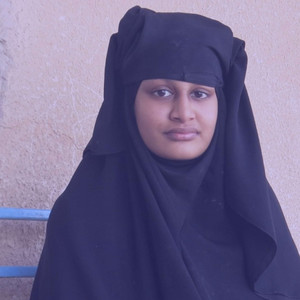
Ok then, Shamima Begum, ISIS teenage bride.
Let me start this episode by asking you to do something for me.
Think for a minute about the biggest mistake you ever made as a teenager.
Was there something you did that when you think about it today, it fills you with pain
and regret.
Then you think about it and think, ah, I can't believe I was so stupid to have done that.
Perhaps it was something truly terrible, a decision that you made that irrevocably changed
your life and took you in a completely different direction.
Don't worry, I won't ask you to tell me what it was.
Just think for a moment about what it might have been.
Whatever it was, let me tell you about one teenage decision that I am certain was worse,
or at least had more lasting and most certainly irreversible consequences.
In February of 2015, a British born teenage girl called Shamima Begum decided to bunk
off school with a pair of her friends.
To be precise, she didn't just bunk off school, skip school for the day.
She ran away from her hometown of London, got on a plane first to Turkey and was then
smuggled over the border to Syria, where she joined the Islamic State.
She was only 15 years old at the time.
In the weeks and months that followed, British politicians spoke publicly about their hope
for a safe return for the girls, saying that they hoped that the so-called ISIS trio
would come to their senses and return home to Britain.
They were too young, they said, they didn't know what they were doing, they were just kids.
But there was no sign of them.
In fact, the girls had no intention of returning, and their families wouldn't hear from them
for several years.
It would later transpire that within ten days of arriving, Shamima Begum was married off
to a Dutchman who had become radicalized and joined ISIS.
Despite her young age, Shamima reportedly developed a reputation as something of an
enforcer, making sure that other ISIS wives adhered to the strictest religious standards,
and even trying to recruit more young women from back home in Britain to come to Syria
to join the Islamic State.
Now, you probably need little reminder about the barbarism of the Islamic State, but let
me give you a very brief one.
It was a fundamentalist Islamic group of varied origins that gained global recognition after
its militants gained control over large amounts of northwestern Iraq and eastern Syria in 2014.
ISIS flopped to join the so-called caliphate from all over the world, including several
thousand radicalized individuals from Europe.
And as I'm sure you'll remember, ISIS was known for its brutality and oppression, horrific
punishments, mass executions and beheadings, destruction of culturally important monuments,
extreme violence and suicide attacks.
It purported to be some kind of paradise based on pure Islamic beliefs, but the reality
was clearly very different.
Shamima Begum, by all accounts, felt immediately at home, at least for a few years.
She was happy, she said.
It was like everything she'd hoped for and seen in the ISIS propaganda videos.
Then, in February of 2019, four years after arriving, something changed.
She turned up in a refugee camp in northern Syria, discovered by a British war correspondent.
Begum, so it would seem, had changed her mind.
She wanted to come home to Britain.
She gave an interview with the BBC in which she revealed that she had had two children,
both of whom had died in their infancy.
And she was nine months pregnant with a third.
She wanted to return to Britain for the sake of her unborn child.
A refugee camp was no place for a baby, nor was the crumbling Islamic state.
And after already losing two children, she was prepared to do anything to save the life
of the third.
She had changed her mind, she said, and she wanted to come home.
Well, she did want to come home, but she hadn't completely changed her mind about ISIS and
her beliefs.
In the interview, she didn't accept any responsibility for her actions, and was still expressing sympathy
for the Islamic state.
When the news broke, it was all over the front pages.
The Times website, which broke the story, crashed after publishing a story with the headline,
bring me home.
And then something very strange happened.
The day after the news of her discovery was published, the British Home Secretary, a
top member of the government, revoked her citizenship.
He said that she was no longer a British citizen, and therefore she had no right to come
to Britain.
Suddenly, this 19 year old woman was stateless.
She had no passport, no country to call her own.
Now, for the absence of doubt, and putting aside whatever you might think about her beliefs
and actions, Shamima Begum was legally British.
She was born in London.
Her father was from Bangladesh, but he had something called indefinitely to remain.
This meant that Begum was legally a British citizen, just like any other, but she found
her citizenship stripped from her.
And again, on a legal basis, the British state does have the right to remove someone's
citizenship.
In this case, the Home Secretary did it on the grounds of national security.
He said that she had done something so terrible she had pledged her allegiance to a regime
that was so abhorrent with beliefs so contrary to British beliefs that she had forfeited
her right to British citizenship.
She was not welcome in Britain, the Home Secretary said.
It was no longer her home, and he would not let her return here.
This was in February of 2019, and to this day, as of the time of recording this episode,
the situation has not changed.
She is still in a Syrian refugee camp without a state to call her own.
To sum, this is fair and just.
Nationhood and citizenship are things that a country can give out and take away.
And in the case of Shemima Begum, she made her chumps, she knew what she was doing,
and she pledged loyalty to a state so horrific that it is perfectly justified that she
forfeited her right to call herself British.
To others, it is a deeply unfair decision against a young woman who didn't fully understand
what she was doing, who made a teenage mistake and has already suffered greatly.
Removing her citizenship is not only unnecessary and overly punitive, it is also illegal.
So to begin with, let's explore the first position, the position of the British government
that Shemima Begum has forfeited her right to British citizenship.
As you heard, the day after her first interview with the BBC, the Home Secretary publicly
declared that her passport had been revoked.
The British government's position hinges on a few key points.
Firstly, there is the argument of national security.
The Home Secretary, in revoking Shemima Begum's citizenship, implied that her return could
pose a threat to the security of the country.
She'd been in ISIS for four years, with reports about her being actively involved in the
day-to-day operations.
She would later deny that she was anything more than a housewife, but not everyone was
buying this, not everyone believed her.
What's more, she only left the caliphate after the Islamic State started to fall, and
her first interviews seemed to show that she still believed in ISIS and showed no remorse
for its actions, or her actions by joining it.
If she were to return to the UK, so the argument goes, it's highly probable that she would
radicalise others, help terrorist networks in the country, or at least be held up as
a poster girl for Islamic terrorism.
Secondly, there's the legal aspect.
You might think that it is illegal for a country to simply decide that one of its citizens
is no longer a citizen, and it is in most cases, but there are some exceptions.
One of these is if the person concerned won't be stateless, so if they have another nationality.
In Begum's case, it was initially argued that she could claim citizenship in Bangladesh
through her parents, who were both Bangladeshi by birth.
But, Bangladesh has rejected her outright, saying that she has no right to Bangladeshi
citizenship, and if she attempted to enter the country, she would face the death penalty,
due to the country's zero tolerance policy towards terrorism.
Bangladesh says it has nothing to do with her.
She was born in Britain, it's where she lived her entire life before going to Syria.
She had British citizenship, it has no interest in her, and she is Britain's problem.
In fact, she had even claimed that she was looking into obtaining Dutch citizenship
through her husband, an ISIS fighter, but technically a Dutch citizen.
But the Dutch government has basically said no way.
Clearly, for Shamima Begum, she is in this strange diplomatic vacuum, rejected by her
country of birth, rejected by both countries that she could have some claim to be a citizen
of birth, and stuck in a Syrian refugee camp.
And to take the other side of the argument for a moment, this is deeply unfair.
Citizenship is a fundamental human right, not a privilege to be withdrawn, and Britain
needs to take responsibility for her.
She was British, she was radicalised in Britain.
Knowing her to rot in a Syrian refugee camp is deeply unfair and sets a dangerous precedent
allowing the government to revoke citizenship based on certain criteria.
What's more, she was 15 when she left.
Legally, she was still a child.
We all make mistakes when we're 15.
Sure, we don't all join the Islamic State, but she was a child and this should be taken
into consideration.
As a child, should the fault be put squarely on her, or on those who groomed or radicalised
her?
Yes, she made a mistake and yes it was a really bad mistake.
But once she'd made the decision to get on that plane to Turkey and then get smuggled
over the border, there was nothing more that she could have done to get out.
She couldn't really have run away, as that would have meant risking her life.
As she'd been caught, she would undoubtedly have been put in prison, tortured and perhaps
executed.
Yes, she was there for four years, but she barely left the home.
She wasn't fighting on the front lines, or at least she says she wasn't.
And what's more, she suffered terribly.
She fell pregnant five times, lost two babies during the pregnancies, and all three of
her surviving children died.
She was abused by her husband, so she says.
She saw her friends killed.
She has already experienced more than enough heartbreak and anguish, and she's still
only in her early twenties.
Bring her back to Britain to face justice here, some people say.
Of course, she should pay for her actions, but it is much better to bring her back to
her home country to face trial, rather than leave her in a refugee camp with hundreds
of other former ISIS members, where she will remain as radical as ever, and might easily
escape.
In other words, perhaps counterintuitively, she poses a greater threat to Britain in an
insecure refugee camp in Syria than she would safely behind bars in a British prison,
or under the careful watch of the police back in London.
Whatever side you are more inclined to take, it's undeniable that Shemima Bacon doesn't
seem to be doing herself any favors through the TV interviews that she's given.
Especially during the early interviews from 2019, she showed no remorse whatsoever, and
continued to show sympathy for ISIS's values and beliefs.
She even sort of boasted that she'd seen beheaded heads in the bin, the severed heads
of enemy fighters.
And when the journalist asked her what that felt like, she said that it didn't phase
her at all, she wasn't bothered by it.
Perhaps this just shows naivety that she grossly misunderstood what might happen, and
simply assumed that she could click her fingers and come home to Britain.
And she got a nasty shock when she discovered that it was not going to be easy at all.
Now, we've been speaking only about Shemima Bacon today, but clearly she is just one
example.
Thousands of people left their European homes to join the Islamic State, and many are now
hold up in refugee camps.
What should happen to them?
Of course, nobody is suggesting that they receive some kind of heroes welcome.
What should they be deprived of their citizenship and left in permanent exile, or should they
be returned to their country of origin?
And if they are returned, what happens next?
How can you go from living under ISIS rule to living in a Western democracy?
If the answer is, you can't, then what is the answer?
As the story of Shemima Bacon shows, there are no easy answers.
And while the Islamic State itself might now be toppled, the problem of what to do with
its former citizens is far from solved.
Okay, then that is it for today's episode on Shemima Bacon.
I hope it's been an interesting one, and that you've learnt something new.
As always, I would love to know what you thought about this episode.
Are there stories of similar young girls from your country who ran away to join ISIS?
What is happening to them now?
And what is the policy of your government towards former ISIS fighters?
Do you think it's ever right and reasonable for someone to be stripped of their citizenship?
I would love to know, so let's get this discussion started.
For the members among you, you can head right into our community forum, which is at community.linarloenglish.com
and get chatting away to other curious minds.
And as a final reminder, if you enjoyed this episode and you're wondering where to get
all of our bonus episodes, plus the interactive transcripts, subtitles and keyword cabbary,
then the place to go for that islinarloenglish.com.
And if you aren't yet ready to become a member, but you would like to do something to support
the show, then I would love for you to think about leaving a review or a star rating on
your favourite podcast app.
It takes less than 30 seconds to do, but they are super helpful.
And each one brings a smile to my face.
You've been listening to English Learning for Furious Mines by Lionardo English.
I'm Alistair Bunch, you stay safe, and I'll catch you in the next episode.