Hello, hello, hello, and welcome to English Learning for Curious Minds by Leonardo English,
the show where you can listen to fascinating stories and learn weird and wonderful things
about the world at the same time as improving your English.
I'm Alastair Budge and today we are going to be talking about scientific research.
Millions of people around the world spend their lives researching and studying the world
around us, searching for cures for diseases, furthering our understanding of the human
body and delivering wonderful breakthroughs in the process.
But sometimes they get it wrong.
So in this episode we are going to look at three different times when scientific breakthroughs
and discoveries have been announced, only for it later to be revealed that it was all
one big mistake.
But before we get right into today's episode, I want to remind you that you can become
a member of Leonardo English and follow along with the interactive transcript and subtitles
over on the website, which is LeonardoEnglish.com.
Membership of Leonardo English gives you access to all of our learning materials, including
instant translations in 12 languages, study packs, all of our bonus episodes and much,
much more.
So if you are ready to take the next step on your English learning journey, the place to
go is LeonardoEnglish.com.
OK, then let's not waste a minute and talk about bad science.
You may know that the most popular British newspaper by practically every metric is the
Daily Mail.
It boasts a couple of million daily readers of its physical newspapers, swelling to 3
million on the weekend.
And the Daily Mail website is incredibly popular, with almost 30 million monthly readers
in Britain and hundreds of millions more worldwide.
In fact, it is the 125th most popular website in the world.
People read the Daily Mail for all sorts of reasons, but it is particularly happy to publish
articles revealing medical discoveries.
A glass of wine a day is not good for your health.
It revealed in October of 2018.
Then drinking a small glass of red wine a day could help avoid age-related health problems
like diabetes, Alzheimer's and heart disease.
Study finds.
Published in April of 2020.
Drinking two glasses of wine per day may lower chance of developing dementia in February
of 2023.
If you were to add up everything that the Daily Mail said studies proved would cause cancer,
you'd have at least 116 different items.
And you could probably find just as many articles published in the same newspaper about the
same items saying that they were good for your health.
This has become a bit of a joke in British culture, but it does raise an interesting question
about the basis of scientific studies and how the results are published and presented
to the public.
Now, for the absence of doubt, this episode is not intended to suggest that any scientist
is intentionally deceiving members of the public with a result of their study.
Scientists and researchers do wonderful work, tirelessly furthering human understanding
of everything from medicine to nutrition to the origins of the universe.
What's more, the peer review process is an effective safeguard for low quality research.
To publish an article in the journal, you present your research methodology and results
in detail.
Then other well-respected scientists have the chance to question and interrogate the process.
This typically means that any scientific study that has large holes in it that has not
been conducted in a thorough and correct manner will not see the light of day.
It will not be published in a reputable journal.
Typically, but not always.
So in this episode, we're going to look at three occasions when this was not the case.
These are going to be, I hope, more on the lighthearted side.
In our last episode, one of our member only ones, we covered the 1998 scandalous paper
that drew a link between the MMR vaccine and autism, which was an example of very bad
science.
And I should underline has been completely debunked and disproved.
But don't worry, in this episode, we're going to talk about some slightly lighter material.
So with that disclaimer out of the way, let's move forward with our first example, which
comes with a scientific headline from 2012 that you might never have thought you would
hear.
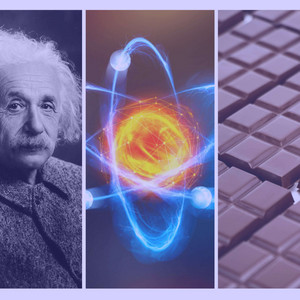
Einstein was a role.
Albert Einstein was one of the most influential scientists in history, and he would no doubt
have been open to someone debating his theories.
To say he was wrong, though, especially about some of his most famous theories, would
have completely upended our understanding of space, time, and gravity.
But this was exactly what happened.
In 2012, the European Council for Nuclear Research, which you might know as SERN, held a press
conference to announce this groundbreaking news.
Researchers had found some neutrinos, which had exceeded the speed of light.
Because you might know, the fact that nothing can go faster than light is a core part of
Einstein's theories of relativity.
And this isn't like saying, a cheetah is the fastest land animal in the world, and there's
nothing faster than a cheetah.
If an animal was discovered tomorrow that could run faster than a cheetah, nothing would
happen, apart from there would probably be some great new nature documentaries.
If it was suddenly discovered that something could travel faster than light, it would
completely change everything we believed about the universe.
It would be a huge deal.
So what happened?
Well, the researchers said that they had fired beams of subatomic particles, called neutrinos,
through the ground, from SERN to a lab in Gran Sassal in Italy, 720 kilometres away.
The speed of light is, as you may know, 299,792,458 meters per second.
But these neutrinos got to the Gran Sassal lab faster than light would have.
To be precise, they got their 60 nanoseconds.
That's 60 billionths of a second earlier than they would have if they were travelling
at the speed of light in a vacuum.
60 billionths of a second might not sound like very much, but the important thing is that
they were faster even by 1 billionth of a second.
They seemed like all laws of physics were breaking down.
And to state the obvious, this was SERN.
Some of the smartest physicists in the world.
This wasn't a backyard experiment with a random armchair scientist declaring Einstein
was wrong.
Of course, it caused quite the reaction.
It was all over the news, with some scientists even claiming that this proved time travel
was possible.
So what happened?
You're probably wondering.
Initially, it looked like there was nothing wrong with the experiments.
But it was later discovered that similar to the reason you might have had problems with
your Wi-Fi or your TV, there was a problem with the fiber optic cable.
All was not lost.
Einstein was not wrong.
Time travel is still not possible.
There is no need to rethink our understanding of space, time and gravity.
It all came down to a fault in the cable.
But this wouldn't be the first time that scientists have claimed that they were on the cusp
of a ground-breaking discovery and one that would fundamentally change the world.
In 1989, two electrochemists at the University of Utah announced that they had managed
to achieve cold fusion, a type of nuclear reaction that took place at room temperature.
This was ground-breaking because nuclear reactions, as you may know, were only believed to be
possible at incredibly high temperatures, in the tens of millions of degrees.
Yes, they give off huge amounts of energy when they happen, but it is expensive and dangerous
to create a nuclear reaction.
But these two scientists, Martin Fleshman and Stanley Ponds, claimed that they had managed
to achieve this at room temperature, basically on a kitchen table.
As they prepared to share their discovery with the world, they anticipated the changes
that it would bring.
No longer would countries be dependent on oil from the Middle East, or worried about pollution
from power stations or global warming.
These men had created a way for the universe's most powerful source of energy to be harnessed
at room temperature, from the comfort of one's own home.
It was going to be revolutionary, and the even better news was that the process was relatively
simple.
I'll give you the simplified version here, but it essentially just involved passing electricity
through heavy water, which is just modified water with a heavier form of hydrogen.
You could do it on your kitchen table, and it would generate a nuclear reaction and give
off huge amounts of energy.
Crazy, right?
And again, these weren't to random scientists.
They were reputable electrochemists, university researchers.
They knew what they were doing, and they said that they had managed to achieve what had
until then been thought unachievable.
They decided to skip the typical peer review process, where a research paper is shared
with academic colleagues for comment and feedback.
Instead, they went straight to a press conference.
Such was the gravity of what they claimed that they had discovered.
Immediately, scientists at other prestigious universities, such as Caltech and MIT, rushed
to recreate the experiments.
After all, it was quick and easy, and could be done with materials that any chemistry
laboratory would have on hand.
Verifying it should be a breeze.
The problem was, try as they might.
They could not recreate this cold fusion that fleshmen and ponds had supposedly proved.
They tried, but they got very different results, and they tried again, and the result was
the same.
And the same.
Soon enough, it became clear that fleshmen and ponds had made some kind of large mistake
with their experiments, and their names became by words for failed science.
Now, just in case this episode ages terribly, I should add that there are still some people
who believe that fleshmen and ponds were not mistaken, and that cold fusion is possible,
and one day will in fact change the world.
But to date, nobody has come anywhere near achieving it.
Right, for our third and final example of bad science, we're going to turn to everyone's
favourite subject.
Chocolate.
Well, perhaps not everyone's favourite subjects, but one that newspapers love to write stories
about, especially when it comes to the links between chocolate and health.
Chocolate gives you cancer.
Chocolate prevents cancer.
Chocolate causes obesity.
Chocolate helps prevent obesity.
And so on.
In 2015, there was a groundbreaking discovery on the cover of the German Build magazine.
The story was about a group of German researchers who had discovered that people on a low carbohydrate
diet would lose weight 10% faster if they ate a bar of chocolate every day.
Amazing, right?
You don't necessarily associate eating a chocolate bar every day with a losing weight, but this
research definitively proved, or at least strongly suggested, that there was a positive correlation
between eating chocolate and losing weight.
Obviously, it was perfect news fodder, and the story was picked up by news outlets in
20 different countries across the world, in half a dozen languages.
And the story quoted the study's lead author, Johannes Bahanan, PhD, research director of
the Institute of Diet and Health, who said, the best part is that you can buy chocolate
everywhere.
The problem was, Johannes Bahanan was not a German PhD.
He was an American science journalist.
And the Institute of Diet and Health, well, if it sounds made up, it is made up.
It was invented by the journalist whose real name was John Bahanan.
His intention with this story was to shine a light on quite how easy it is for anyone
to make outrageous claims and for serious newspapers and media companies to run with them,
without really interrogating the results for the methodology.
In the case of this study on the link between chocolate and dieting, Johannes Bahanan,
PhD, or rather John Bahanan, he did conduct a study.
But if you look at what it actually involved, I'm sure you'll see that it wasn't done
to the most exacting of scientific standards.
First, they chose a group of 15 people who were prepared to go on a diet for three weeks.
Then they divided the group into three, so five people in each group.
One group followed a low carbohydrate diet.
The other followed the same low carbohydrate diet, but also got a 42 gram bar of chocolate
every day.
And the final group were asked to make no changes to their normal diet.
They did nothing different, essentially.
Throughout the entire three weeks, the researchers measured the participants extensively, their
sleep quality, weight, blood pressure, cholesterol, sodium, blood protein.
They took all manner of measurements.
Bahanan wasn't sure exactly what would happen during the three weeks, but because they
were only five people in each group, a tiny number, there was bound to be something that
seemed different from one group to the next.
Maybe it would be lower or higher cholesterol, maybe sleep quality.
Who knows?
The point wasn't to try to prove that chocolate helps you lose weight.
The point was to try to show how even a poorly designed experiment can become news.
And it did.
Bahanan found a medical journal that astonishingly had no peer review, so it was simply a case
of submitting the piece and waiting for an editor to accept it.
This only took 24 hours, but then the article was up, published.
That was only the first step though.
Next, Bahanan wrote a press release that he knew would be picked up by journalists, and
included all of the facts and figures that a new journalist would want.
And the result was exactly as he had hoped and feared.
Publications around the world, from Bill to Cosmopolitan to the Huffington Post, ran with
it, not doing any due diligence whatsoever.
So, there we have it, three pieces of bad science.
Einstein wasn't wrong.
Cold fusion is still not possible.
And if you had remembered reading somewhere that a bar of chocolate a day can help you
lose weight, well, I'm sorry to break it to you, but you can't trust everything you
read in the newspaper, especially if it's about chocolate.
Okay, then, that is it for today's episode on bad science.
I hope it's been an interesting one, and that you've learned something new.
As always, I would love to know what you thought about this episode.
Some other stories are there about times when scientists got it wrong.
Do you have papers like the Daily Mail in your country that seem to be constantly telling
you that red wine or chocolate or sex are good or bad for you?
I would love to know, so let's get this discussion started.
For the members among you, you can head right into our community forum, which is at
community.linandoenglish.com and get chatting away to other curious minds.
And as a final reminder, if you enjoyed this episode and you're wondering where to get
all of our bonus episodes, plus the interactive transcripts, subtitles and key vocabulary,
then the place to go for that islinandoenglish.com.
And if you aren't yet ready to become a member, but you would like to do something to support
the show, then I would love for you to think about leaving a review for a star rating on
your favourite podcast app.
It takes less than 30 seconds to do, but they are super helpful and each one brings a smile
to my face.
You've been listening to English Learning for Curious Mines bylinandoenglish.
I'm Alistair Budge, you stay safe, and I'll catch you in the next episode.