
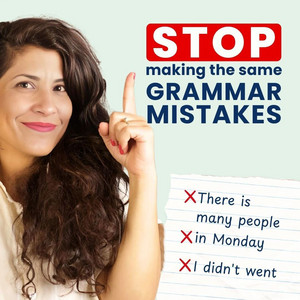
[Bridging the Gap: Why Speaking Is Harder Than Writing and How to Master It]-[434. Why you still make grammar mistakes in English even when you know the rule]
📋 Summary
Bridging the Gap: Why Speaking Is Harder Than Writing and How to Master It
Many language learners face a frustrating paradox: they can write with near-perfect grammatical accuracy, yet they consistently stumble over the same errors when speaking. In this episode of the Influency podcast, Hadar Shemesh addresses this common struggle, explaining the psychological and neurological reasons behind this discrepancy and providing a practical roadmap to bridge the gap.
The Psychology of Writing vs. Speaking
Hadar explains that the reason writing feels easier is that "there’s a lot less at stake" when we compose text. Writing allows us the luxury of time to "edit yourself in your head or on the page." When writing, your brain is primarily focused on the message and structure. In contrast, speaking is a high-pressure environment. You are juggling multiple cognitive loads simultaneously: what to say next, how to use your voice, pronunciation, and the social pressure of "what people are going to think."
Because speaking requires real-time processing, your brain often defaults to what Hadar calls "the most comfortable speech." This is the grammar and linguistic foundation you developed years ago, which may contain ingrained errors. When under pressure, your brain reverts to these established habits rather than the new, correct rules you have recently learned.
Moving from Theory to Automaticity
Knowing the "theory behind" a grammar rule is insufficient for fluency. As Hadar points out, "it’s not enough to know the rule" because speaking doesn't allow for the "luxury of thinking about it." To use new vocabulary, idioms, or grammar structures spontaneously, you must transition them from conscious knowledge into "automatic" habits.
To break the cycle of repeating old mistakes, Hadar emphasizes that you must first identify the specific grammar rule or structure that is "harder for you to integrate into your speech." Once identified, the goal is to stop relying on conscious thought and start relying on muscle memory through intentional repetition.
The Power of Repetitive Drills
Hadar advocates for a technique she calls "faking your way to success." This involves creating personalized sentences and practicing them out loud repeatedly. She notes that this "type of repetition is a shortcut to help you build those new structures and new habits."
By practicing a specific phrase or structure "again and again and again," you are effectively retraining your brain to treat the correct version as the new "comfortable speech." She provides an example of this drill-based approach: "If he calls, you’ll pick up the phone." By repeating this specific structure multiple times, you move away from your old, unstable foundation and build a new, accurate one that can be accessed spontaneously during conversation.
Embracing the Journey
Despite the desire for "quick results," Hadar reminds learners that mistakes are a natural part of the process. She encourages listeners to "give yourself some grace," emphasizing that "mistakes are not the end of the world." Being a non-native speaker means that making errors is an inevitable and necessary part of learning. The key is to keep the practice "active," "light," and "fun."
Ultimately, the transition from accurate writing to accurate speaking is not about studying more theory; it is about physicalizing the language through intentional, high-frequency repetition. By turning grammar into a habit, you can eventually speak with the same confidence and freedom that you currently enjoy in your writing.
Deep Learning with ListenLeap


