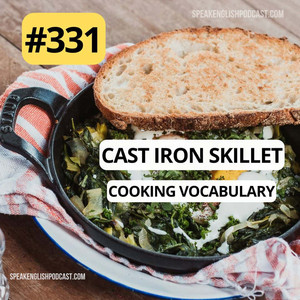
Today, I want to talk about something I use every day in my kitchen.
My cast iron skillet.
Hi, I'm Georgiana, and I'm back with a new episode.
I'm here to help you speak English fluently.
And what do you need to speak fluently?
You need to listen, listen, and listen.
If you want to help me, share the podcast with your friends and family.
That would mean a lot.
Thanks.
On my website, you can get the 5 secrets to speak English fluently and also my premium courses.
Before we start, get the transcript at speakenglishpodcast.com.
Okay, let's start.
A long time ago, I used different pans for cooking.
Some were good, but they didn't last long.
Some had a non-stick surface, but after some time it was gone and some just didn't cook food the way I liked.
Then I found cast-iron skillets.
At first, I didn't know much about them.
They were heavy.
They needed oil.
And people said, don't wash them with soap.
It sounded complicated.
But when I tried one, I understood why people loved them.
Now I have many cast iron skillets in different sizes.
And guess what?
I use them every single day.
For breakfast, I cook scrambled or fried eggs and even omelets.
The eggs don't stick if the pan is hot and well-oiled.
They come out perfect.
For lunch or dinner, I cook steak.
The pan gets very hot, so the outside of the meat is crispy and the inside stays juicy.
I also love cooking mushrooms in my skillet.
They turn golden brown and taste amazing.
A cast iron skillet makes everything taste better.
It holds the heat for a long time and cooks food evenly.
You can use it on the stove, in the oven, or even on a fire.
How to take care of a cast iron skillet.
At first, I was scared to clean my skillet.
People said no soap, no dishwasher.
But now it's easy for me.
After cooking, I let it cool a bit.
Then I rinse it with warm water and scrub gently.
I dry it immediately with a towel.
Then I put it back on the stove and heat it to evaporate any remaining water completely.
Then I rub a little oil on it to keep it nice and smooth.
And that's it.
If you take care of your skillet, it will last forever.
Some people still use skillets from their grandparents.
If you don't have a cast iron skillet, I really recommend it.
Start with simple food, maybe fried eggs or mushrooms.
Then try meat or even bread.
Do you have a cast iron skillet?
What do you cook in it?
Let me know.
Great!
Let's continue with a point-of-view lesson.
I will tell you the same story twice, so make sure to focus on the changes.
You can find these techniques fully implemented in my premium courses.
Visit speakenglishpodcast.com slash courses.
Okay, let's start.
Anna loved cooking.
Well, she wanted to love cooking, but her frying pan had other ideas.
Every morning, she tried to make a simple fried egg.
And every morning, it was a disaster.
The egg stuck to the pan like glue.
She tried to flip it.
Splat!
Half the egg was on the pan, the other half was on the floor.
Why does this always happen? she cried.
One evening, her friend Lisa came over for dinner.
Anna was fighting with her pan again.
Lisa watched for a moment, then said, Okay, you need help.
I need a new pan, Anna sighed.
Lisa shook her head.
No, you need a cast iron skillet.
Anna frowned.
A what?
Lisa showed her big black heavy pan.
This is the best pan ever.
It lasts forever, and food never sticks.
Anna picked it up.
Forever?
Are you sure?
It feels like a weapon.
Lisa laughed.
Well, yeah, you could fight a bear with it.
But it's better for cooking.
The next morning, Anna gave it a try.
She heated the skillet, added oil, and cracked an egg.
The egg cooked perfectly.
She held her breath and flipped it.
It didn't break.
It didn't stick.
It was beautiful.
Anna gasped.
It's a miracle.
She started cooking everything.
Mushrooms, delicious.
Steak, crispy outside, juicy inside.
Omelets, fluffy perfection.
Now, Anna uses her cast iron skillet every day.
She has many in different sizes.
And when her friends complain about their pants, she just smiles and says, Get a cast iron skillet.
It's magic.
Great!
Let's listen to the story one more time in the plural.
Anna and Lisa loved cooking.
Well, they wanted to love cooking, but their frying pans had other ideas.
Every morning they tried to make simple fried eggs, and every morning it was a disaster.
The eggs stuck to the pans like glue.
They tried to flip them.
Splat!
Half the eggs were on the pans, and other halves were on the floor.
Why does this always happen? they cried.
One evening, their friend Maya came over for dinner.
Anna and Lisa were fighting with their pans again.
Mia watched them for a moment, then said, Okay, you two need help.
We need new pants, they sighed.
Mia shook her head.
No, you need cast iron skillets.
Anna and Lisa frowned.
A what?
Mia showed them big black heavy pans.
These are the best pans ever.
They last forever, and food never sticks.
Anna and Lisa picked them up.
Forever?
Are you sure?
They feel like weapons.
Mia laughed.
Well, yeah, you could fight a bear with them, but they're better for cooking.
The next morning, Anna and Lisa gave them a try.
They heated the skillets, added oil, and cracked some eggs.
The eggs cooked perfectly.
The girls held their breath and flipped them.
They didn't break.
They didn't stick.
They were beautiful.
And guessed in unison, it's a miracle.
They started cooking everything.
Mushrooms, delicious.
Steak, delicious.
Crispy outside, juicy inside.
Omelets, fluffy perfection.
Now, Anna and Lisa use their cast iron skillets every day.
They have many, in different sizes.
And when their friends complain about their pants, they just smile and say, Get a cast iron skillet.
It's magic!
Great!
I like these kinds of stories because they're easy to remember and help a lot with learning English.
Humor also makes learning more enjoyable.
You can find this method in my premium courses.
Visit speakenglishpodcast.com slash courses.
If you want to help me, share the podcast with your friends and family.
That would mean a lot.
Thanks.
See you soon.
Bye-bye.