
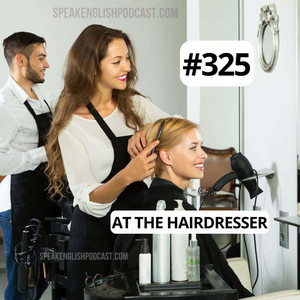
[Mastering English Vocabulary for Your Hairdresser Appointment]-[#325 At the Hairdresser]
📋 Summary
Mastering Your Hairdresser Appointment: A Comprehensive Guide
Visiting a hair salon in a foreign language can often feel like an "overwhelming" experience. However, with the right vocabulary, you can communicate your needs clearly and ensure you leave the chair feeling satisfied. This guide breaks down the essential terminology for a successful salon visit.
1. Booking Your Appointment
Before you arrive, you must secure your spot. Most salons operate on a schedule, so it is best to "book ahead." When calling or messaging, you can use phrases such as:
- "I'd like to book an appointment for a haircut."
- "What time slots are available?"
- "Do you have any openings this week?"
2. Essential Hair Services and Techniques
Understanding the specific terminology allows you to guide your stylist effectively.
- Cut vs. Trim: A "cut" implies shortening your hair, and it is helpful to provide specific instructions like "cut it to shoulder length." Conversely, a "trim" is intended to remove just a "tiny bit" of hair, usually to address "split ends."
- Wash and Blow Dry: This service involves cleaning the hair and using a "blow dryer" to finish it. You can request specific results such as "straight" hair or ask for "volume."
- Styling and Layers: "Styling" is the process of arranging hair into a specific look, often referenced by showing a picture. If you want to add "texture or volume," you can ask the stylist to "add some layers."
- Bangs and Parts: The "bangs" or "fringe" refer to the front hair covering the forehead. Your "part" is the division of your hair, which can be styled in the "middle" or to one "side."
3. Coloring and Maintenance
When changing your look, clarity is key.
- Highlights: These are "lighter streaks of color." You should specify if you prefer a "subtle natural" look or something "bold and vibrant."
- Color and Dye: Whether you want to "dye" your hair a completely new shade or just perform a "root touch-up" for new growth, being clear about whether you want "full coverage" or a partial change will prevent misunderstandings.
4. The Power of Practice: The Question-and-Answer Technique
The podcast highlights an effective method for fluency: the "mini-story" technique. By engaging in a narrative—such as the story of Vivian, who visits her stylist to prepare for an "important event"—you can practice speaking by answering simple, factual questions.
In the story, Vivian asks for a "trim" of "half an inch" and requests "layers." The process concludes with a "wash and blow dry," followed by the stylist showing her the result in a "mirror." Vivian’s reaction of being "thrilled" with the outcome illustrates the importance of clear communication. This interactive method of answering questions mimics real-life conversations, proving that active participation is the most effective way to improve your English fluency and confidence when navigating everyday social situations.
Deep Learning with ListenLeap


