Chat with Traders is brought to you by Trade the Pool.
Did you know that every decade the market reinvents itself?
Online brokers open the doors.
Mobile apps made trading seamless and commission-free trading erased barriers.
Now a new era has begun.
Meet Trade the Pool Limited Risk Trading.
And now you also have unlimited time to reach the profit target.
From now on, your trading risk is capped. and your trading opportunities are limitless.
Trade the Pool funds home-based stock traders with up to $200,000 in buying power.
That means you can trade larger positions and scale your strategies without risking your own savings.
It's time to trade with more capital, making it truly worth your time and effort.
Ready to trade the pool?
Click the link in the description and join the stock trading revolution today.
This episode is brought to you by State Farm.
Like a good neighbor, State Farm is there.
Prices are based on rating plans that vary by state.
Coverage options are selected by the customer.
Availability, amount of discounts and savings, and eligibility vary by state.
Trading in the financial markets involves a risk of loss.
Podcast episodes and other content produced by Chat with Traders are for informational or educational purposes only and do not constitute trading or investment recommendations or advice.
Markets, speculation and risk.
This is the Chat with Traders podcast.
Hey there, how's it going?
This is Tessa, your co-host, and you're tuning into Chat with Traders, episode 313.
And wow, we're already at the end of another year.
What a blessing though to be able to say that.
I hope 2025 has either been great or full of great lessons and growth for you.
Well, let's get straight to our guest today.
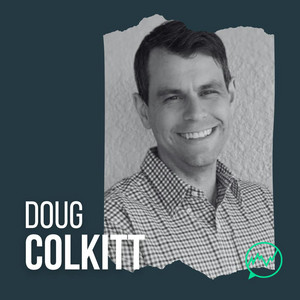
My co-host Ian's conversation is with Doug Colquitt, a quantitative trader who works deep inside crypto and DeFi market structure.
This is actually a more technical conversation than most, but it's technical for a reason.
We spend time on how crypto markets actually behave.
When leverage builds up, liquidity vanishes, and liquidation cascades begin.
The mechanics that quietly determine who survives volatility and who doesn't.
Doug has traded and built systems across both traditional and crypto markets.
He worked in high-frequency trading at Citadel during the 2008 financial crisis, later traded futures and volatility products, ran a large market-making operation in international equities.
Transcription by CastingWords.
Doug also shares what he's building now in the PerpDeck space, including ideas around insurance mechanisms, clearing and market design, and what recent market failures revealed about where crypto infrastructure still falls short.
You don't need to trade crypto or understand every technical detail to get value from this episode.
The goal is to give you a clearer mental model of how modern markets break.
So when volatility shows up, you're reacting with insight instead of surprise.
We really hope you find value in this episode and thank you for listening.
Ladies and gentlemen, we're so pleased to introduce Doug Colquitt.
Well, tell us a little bit about yourself, Doug.
I'd like to first welcome you to Chat with Traders and find out who you are and what got you interested in the financial markets.
Yeah, I spent most of my career as a quant in HFT in the traditional market.
So started out at Citadel in 2008, kind of right when the markets were going crazy.
So it was kind of a pretty interesting time to start in finance.
Around that time, like everything was kind of collapsing.
Besides high frequency trading, especially at Citadel, the group was doing well.
It was pretty new then.
So I decided to kind of get into that vertical because it seemed like the one thing that was pretty stable in 2008.
Did that for a few years, mainly focused on the Asia-Pacific markets there, the equity markets.
That was an interesting time, especially like seeing the space grow and kind of develop more.
Then I left Citadel and decided I wanted to see stuff more from the ground up.
At a big firm like that, you're always one piece in a larger puzzle, which is great because the whole machine runs really great so you can see what what the end state looks like.
But kind of wanted to build something up, uh myself and see all all the moving pieces um, and that was uh a lot more challenging than than you would think.
It is first kind of what attracted you uh, to citadel and the financial markets in general.
I mean, did you study this in school or did you have friends in the industry?
Yeah, I was a computer science student by background.
So I was always kind of more interested in the software side of things.
And so this was like kind of as I was like first looking into the industry, like being in school.
This was, like you know 2006, 2007.
So obviously big time in the industry, the financial markets, a lot of interesting stuff going on and like quants were kind of getting big.
I guess quants were big in the you know i had, but but we're getting like kind of really big, especially like derivatives and so so actually technically, my first job on wall street uh, was for city group and so i got to and that was on the cdo desk um, so i was just there very briefly so um, You get to see a lot of interesting things there.
I saw the whole mortgage securitization stuff happen up close and then saw the beginning of stuff unwinding there.
From my perspective, I was always interested from the algorithmic quant side.
Being a software person, it was interesting to take software and apply it to markets.
Now, did you trade yourself during that time, before your job or while you had that job, or were you allowed to trade?
It was pretty, pretty restricted.
So very like you could trade some stuff.
But you know there's always sometimes you'd be, you'd get into a position and then it could put on the restricted list and then you'd have to, you know, get get a 30 day approval to get out of a position.
So never really, never really put on too much size like trading trading for myself, at least when I had that job.
What made you decide to move on from Citadel?
Kind of like what was the catalyst to want you to go on your own?
Yeah, I think I learned a lot.
Like I said, when you're there you're kind of you know it's a very efficient machine, but you're just one kind of piece in a larger machine.
So you don't really even appreciate stuff like okay, like just you got to get the market data right.
Like you got to, data has to be accurate.
And you have a whole team of people who do stuff like clean it and source it and obviously make sure for everything which is trading, then it gets to you really fast.
You kind of take that for granted.
So yeah.
I wanted to build out something from scratch, from the ground up, which was easier said than done.
I learned a lot doing it from that perspective.
After Citadel, I just started trading individually, built out a high-frequency system mostly focused on the CME and trading index futures and bond futures.
What year was that when you?
I left.
So this would be after I had a pretty long non-competes in the industry, pretty standard.
So I started trading for myself in early, early 2012.
And what, tell us more about that.
Well, you, you were trading.
Yeah.
So that was a pretty interesting time.
So I'd say uh, you know, I I'd also kind of so mostly focused, like I said, mostly focused on index futures at the CME um, and kind of a bit of hubris there, because you feel like those are the, if not the most competitive market, one of the most competitive markets, very liquid obviously um, very active, very competitive.
Every every major trading firm uh uh, you know, is trading ES, or you know one wants to trade.
Yes.
If, if they don't, uh, nobody's, nobody's overlooking that one.
So I think, uh, right.
Like what you learn is like as a smaller uh you know, a smaller operation with a lot of big fish.
Is like you try to find uh niches, you try to find things that are overlooked.
And uh, around that time i would say kind of like the bread and butter where uh, you know could, could make money, was identifying uh, i think things a little bit more complex on uh, you know, which is like an hft world would be called like alpha, which just meaning like signals, and there's kind of this, this inherent trade-off in hft between um, you want to either be very fast, and when you're very fast you can't do that much uh, you can't.
You can't do uh, you can't do that much computation right, computers only only go so fast.
So if you want to be the fastest person, your signals have to be very simple.
Now there's some nuance around there.
You can pre-compute things and like all, but like in general there's this trade-off between very simple and fast and kind of more complex signals.
But you're slower and so uh, somebody is faster than you, they get all the easy opportunities.
So then you're, you're kind of on the edge and in some sense you get uh, you know, kind of adverse selection uh, from that end.
So i i'd say uh, you know, i kind of biased more towards the latter part of that spectrum, a little bit more complex.
And the interesting thing there is, as as you get more complex you also kind of get uh, different players have different ways that they approach that complexity.
So you can find kind of a niche and like something you know, certain signals that people maybe they're doing a similar signal but like nobody's quite kind of constructing it the way you are like, and then hopefully, you know you're, when you're, when you're trading, you're kind of trading when things are overlooked, because if you're trading exactly the same time as citadel, you're not going to be as fast as them, um and uh, most of the time you're probably not going to be as smart as them.
So you have to figure out a few things you can be smarter than them about and and really lean, lean on those.
Are you familiar with the famous book by Michael Lewis called Flash Boys, which painted high-frequency trading as front-running institutions and microseconds?
And then the institutions would get these horrible fills.
So how accurate was this book, do you feel, from your vantage point?
From my vantage point, I feel like the book.
You know I'm not going to say like I, frequency trading is all, all angels, or all beneficial, or even right.
Like it's a lot of people just making money.
But I think the book definitely exaggerated a number, a number of things.
I think uh, you know, there are pretty, pretty strong uh, at least in the us markets pretty strong protections against like outright front running.
Some of the stuff the book like talked about was um, how you know, you would see a trade at you know say say, one equity.
So equity markets.
I i also had a caveat like i traded futures markets.
The interesting thing about futures markets compared to equity markets um, from a microstructure standpoint, is all the futures trade at one venue.
When you trade at ES, they all trade at the CME.
When Microsoft trades MSFT stock, it trades at NASDAQ, it trades at NYSE, it trades at a bunch of other venues.
I think one thing the book identified that's probably the most accurate is like okay, if you have a big trade, come in and someone hits NYSE and they can see that there you can kind of do a certain type of front running where okay, someone goes to NASDAQ, you know, see the trade at NYSE and they know okay, there's probably more trade coming to NASDAQ and someone who has a faster connection can kind of hit liquidity there.
But that definitely doesn't apply to the guy sitting at home trading on his Robinhood account.
You know, those are kind of institutions versus institutions.
So I do feel like the book was a little bit exaggerated in terms of some of the stuff.
I see.
So do HFTs actually help the smaller trader?
Because they're competing with each other to cut in front of each other.
To give the smaller trader a better fill.
That's a great question.
I guess I'd say the answer is it really depends.
I think like the base case, they do, right?
Like they do compete, right?
Like, so, you know, when markets are based on price time priorities.
So you know, if you're a market maker and I'm a market maker and you know I want to get fills, you know I better quote a better price.
I better put a better price than what you're providing.
That is the base case.
There should be competition.
The more market makers are in there, they should compete on price.
Does that happen all the time?
Not completely because there are a lot of nuances here.
First thing is tick size, right?
You can only quote so tight in a lot of markets and a lot of markets are just that tight all the time.
So if it's like that, I can't improve on your price.
All I can do is... try to be you go to the second part of that price time priority i can just be faster than you so you know a lot of times hft then is why like a big reason latency is important is we both want to be the first people at a new price because you know it's just a lot better to be first um your fills are your fills are better as a market maker um you have less toxicity so does that really add anything not not really doesn't really hurt people but like it's just kind of a kind of we're competing for the same rent and if you know one of us disappeared tomorrow it's not like consumers would be a lot worse off so that and then like you know hfts do you know they're not all market makers a lot of hft is actually taking liquidity right i'm trying to hit quotes um When the price moves, to be honest, when I was in HFT as an individual, at least that phase of my career, most of what I was doing would be liquidity taking rather than market making.
You're basically trying to see liquidity and be the price is stale or you think the price is about to move.
Be the last person to hit a price before it goes up.
I don't know how much that might actually be harmful for consumers because it makes more...
Makes the job of market makers tougher.
Market makers widen out their spreads.
Everything's more expensive.
So, you know, like a lot of things, it depends.
It depends the answer.
More complex than this.
Right, right.
So a decade later after the book, has HFTs evolved to the point?
Are they a little more benign now or –
Yeah, I'd say it's definitely the biggest thing that's happened since that book is things have moved off.
Lit exchanges to.
You know internalizers, dark pools.
I mean that was definitely happening during the book and actually spent some time at Citadel doing that on the kind of very early when Citadel was buying order flow and internalizing that.
But yeah.
Even today.
I think it's more to a certain like.
Even more extensive is that most stock trades don't even happen on a stock exchange right.
They just get routed to an internalizer or a dark pool and somebody fills it, right?
Because most, the average, we'll call it segmenting order flow, like that's very profitable.
For market makers.
If I know who's sending me the order flow, I can provide a lot better price to the average Robinhood trader than I can provide to somebody who's very sharp flow or very sophisticated.
If you go upstream and you can see where the order flow is coming from, you can be more aggressive on your pricing.
You don't want.
I think the equilibrium is like most order flow doesn't hit the stock market because the stock market is anonymized by its nature.
I'd say it's almost like it's become less of an HFT market.
It's just more, it's much more, that's much more of a deal market, right?
Like you're a big trader, you got to go to the brokers, you got to make deals.
So it's kind of more institutionalized from that perspective.
It's definitely harder for somebody who's coming in as an individual or like a small team to make it.
Definitely a lot of consolidation into a few big firms.
So let's transition.
Tell us a little bit about trading VIX Futures.
Yeah.
So like I said, ES was a very competitive market.
And at some point, it got too competitive for just a single guy to make money there.
And so this was right around when the VIX complex ETFs were getting off.
Well, I guess they've been there for a while.
But VXX, XIV, those were really popular 2015, 2016 ETFs.
And there were kind of a lot of inefficiencies in VX futures.
There were a lot of inefficiencies in that whole complex.
So it kind of transitioned more towards what I'd call like a medium frequency trader in those markets.
So that was pretty interesting.
I think there was just a massive amount of retail interest in those markets for a while.
It was like everyone had like some theory about how to how to trade vix and i think a lot of people got bit by it.
But yeah, i mean it was really interesting, especially around like brexit and stuff and then uh, and then when some of the etfs blew up and so a lot Yeah, those are definitely.
I think a lot of people got bit one way or another.
Luckily, I never got really hit hard, and it was a pretty good trade for a while.
There were a lot of very obvious inefficiencies.
A lot of those ETFs were just massive amounts to the market.
I think it would be something like 80 90 of the open interest in the VX futures.
And then they had to mechanically rebalance at certain times of the day.
So through XIV, you have to stay 1X short if your UVXY was like 2X.
So it had to mechanic.
So you'd have these huge trades, and they'd happen at the same time every single day.
And everyone would know them ahead of time.
So it's very easy to, For a certain period, very easy to see okay, this is the X.
Futures are going to move up or down at a certain point.
When you get a market like that, you should definitely, it's not going to be like that forever.
My advice for any trader who finds himself in a market like that is definitely size up and take advantage of it while it's there, because you don't know how long these alphas are going to last.
So I understand that you got into trading Turkish equities.
What attracted you to that market and what were the unique challenges there.
Yeah, so i i wanted to go back, so did, did the kind of vix thing for medium frequency trading for for a while.
Um, i wanted to go back to something more classical like high frequency.
Kind of kind of missed, missed the excitement of uh kind of trading, micro second level trading um, also kind of going back like it was a always been like a computer science software guy and uh, you know high frequency trading has a lot of just interesting things trying to push the edge of performance.
So wanted to go back into that world.
Um, at the time like i'm still now right like the major us markets were very, very competitive, so hard for uh someone, an individual or small team, to compete.
So I was looking for kind of markets that were large enough that would still make sense to trade.
If the markets are small, you might be the best person, but maybe make $10 a day.
So it's not worth it, you know, or at least without like, I'm not high frequency profile.
If the market's very large, it's going to be competitive and the biggest players are going to be there.
So it's kind of just looking, you know, kind of thought.
Actually, at the time I was looking at both that crypto was getting larger and looking at different emerging markets.
In retrospect I probably should have done crypto because it would have kept getting larger, but that would be later.
I was looking at a bunch of different emerging markets.
Turkey had made a lot of sense because it just had recently transitioned to a fully electronic stack.
That's something you can do as an electronic trader.
And kind of met some local partners there who kind of knew the layout, had connections with local brokers kind of all that other stuff kind of handled the business regulatory side of it.
So yeah, we started out a market-making operation.
So that was also...
Somewhat of a different move.
Like I said before, it was mostly on the taker side of liquidity back when I was training with CME.
This was as a market maker, we're actually a pretty large percent of the market.
At one point we were, if not the largest, close to the largest market maker in Turkish equities.
Yeah, we did that, did that for a while.
Uh, the funny part is is like, as an hft trader, you really know nothing about the stocks that you're trading.
So you know, either still there are still pickers that i remember vividly because for either you know up or down days, but uh, to be honest, i don't even know like, what the companies did.
Um, so when you're an hft tree, you just look at like order book and charts and flows and and kind of all the other stuff and uh, so you know whether you're trading turkish equities or uh, cryptocurrencies or es, futures or bonds.
It's all kind of this, it's all kind of the same thing, which is the nice part about like hft it's all kind of the the same thing, regardless of what you're trading.
So So tell us about what attracted you to get into cryptocurrencies.
I mean, I hear the skeptics say that they have no value.
So what attracted you to cryptos?
Yeah, that's a good question.
Well, whether they have value or not, people were trading them quite a bit.
So as a trader at least as not a short-term trader you really don't care that much about whether something is going to hold its value.
You just care, does it have activity?
Does it have liquidity?
Are there counterparties?
Can you make money off of it?
So This was around 2020.
I think everybody remember kind of that COVID year when everyone was locked up inside.
So couldn't go out, couldn't do anything.
So I was looking for kind of a hobby originally.
Decided to get into the DeFi side of things.
So I kind of skipped over all the centralized exchanges, started trading stuff on the on-chain exchanges, the DEXs and everything the decentralized exchanges there.
I did what people call MEV-type trading, which is basically the high-frequency equivalent for decentralized trading.
I started doing that just as a hobby.
I just wanted to learn more about the technology.
The similar theme here is it was an early market.
It was very inefficient and it was easy to be profitable.
It made sense to say I should just devote myself full-time to trading this market.
Similar there, especially early on.
I wasn't as deep in the community, so I was trading a bunch of coins in it.
To be honest, I still don't know what some of those points did, but they go up, they go down, you can trade them, you can make money.
So give us an example, kind of a dive into particular coins or types of trades.
How long you held onto them.
What did you look for when you entered a trade?
Have you ever watched a stock explode and thought if only I had the capital.
Or sat on the sidelines because your account balance felt too small to matter?
Good news with Trade, the Pool's limited risk platform, you don't need millions or even thousands to start trading the US stock market.
Bypass the PDT and tap into over 12000 US listed equities, from penny stocks to big caps ETFs, even the newest IPOs and short anything you like with zero locate or hard to borrow fees.
Start your evaluation.
Get funded with up to 200000 in buying power so you can go big without risking your own savings.
And now you can also have unlimited time to reach the profit target.
It's a game changer.
Not ready to trade yet?
Trade the Pool offers a free demo and educational resources.
Practice on live data.
Master the platform and build confidence risk-free, before you even pay a cent.
Click the link in the show notes to start trading with Trade the Pool's capital.
Ford Blue Cruise.
Hands-free highway driving takes the work out of being behind the wheel, allowing you to relax and reconnect while also staying in control.
Enjoy the drive in Blue Cruise-enabled vehicles like the F-150, Explorer, and Mustang Mach-E.
Available feature on equipped vehicles.
Terms apply.
Does not replace safe driving.
See Ford.com slash Blue Cruise for more details.
Terms and conditions apply.
Yeah, that's a great question.
I mean, basically, so I was – this is really interesting.
A lot of trades you technically hold for zero seconds in the sense that – so even higher than high-frequency trading.
But what you're looking for are – what you're looking for are basically mispricings say, one coin trades on different venues.
And the interesting thing is, all the venues are on the same, or a lot of times they'll be on the same blockchain.
So you can do it different venues across different chains, but you have one decentralized exchange on the same blockchain as another decentralized exchange.
Technically you can and the prices are out of whack.
Technically you can arbitrage that exchange in a single transaction.
So you don't actually technically need and it isn't even different than HFT, because you can do something similar, where I buy Microsoft at NYSE and I sell it in NASDAQ because it's a mispriced.
But you still technically have to hold it and you have risk and the price could move, or you can sell it.
The really interesting thing about this is you can do it in a single transaction and you can arbitrage between prices and technically truly take no risk.
So maybe transaction costs, but those are small.
And if the price happens to go back in line before you get there?
Someone gets there before you, you just don't execute it.
And the really interesting thing is you actually don't For a lot of these trades, you actually don't even need the capital to do them because in blockchain, there's this concept of flash loans.
If you do something in a single transaction, you'll borrow money.
Oftentimes for no interest or very low interest.
You can borrow capital from some on-chain protocol.
You can take that capital and you can do some operation with it.
As long as you return the capital by the end of the transaction, that's the security.
You don't need to post collateral or anything like that.
It was a very interesting world, a whole bunch of new things, which is why I found it so fascinating.
So you're noticing, for example, XYZ token on one decentralized exchange is higher priced than that same token on a different decentralized exchange.
And so what you manually go through and you're able to get this flash loan and somehow combine all this in one transaction.
Yeah, exactly.
But you're on different DEXs, though.
You're on different DEXs but within the same transaction you're able to, Because these are all just smart contracts, so you're able to actually interact with multiple smart.
Well, first of all, I should say you're definitely not doing it manual.
The margins weren't that inefficient, but yeah, so still have a bot.
A bot would do it, but...
Exactly.
You would write a bot, a program, and you would usually run your own smart contract on the chain.
You'd scan constantly for these imbalances and try to be the first person to close them.
You could look at One DEX or another DEX, get a flash loan from somewhere else if you needed to.
If there's higher.
You buy on venue A, you sell on venue B.
Sometimes also it would be like a triangle trade or longer.
It might be usually liquidity pools are paired with the two tokens.
You might go from Trade token A to token B, and then token B to token C, and then token C back to token A, and you hope that you have more token A than you started with at the beginning.
So it's the same kind of concept of arbitrage in financial markets, just kind of done a different way.
I see.
So was this operating while you were asleep?
I mean, you had these bots running 24-7.
That's the other challenging part of the crypto market is it's 24-7.
So when you're in regular traditional markets, at least, like you said, you can sleep.
The markets open, they close.
When I was trading Turkey, that was like usually 2 a.m. to 10 a.m.
So I did get used to, you know, needing alerts.
And you know, sometimes you wake up in the middle of the night because the PL is bad and you get kind of the alert on your phone.
But I did get used to automating stuff, at least to do stuff while I was asleep.
But man, when it's 24-7, it's never a break, right?
Like there's no Saturday afternoon to chill out.
It's always P&L is running, so.
I think that's kind of the maybe one negative of the crypto space, for people don't appreciate until they're in it.
And did you have to make frequent adjustments to your bots over time?
Oh, no.
I mean, that's a great question.
Yeah, it was when I started in and this was like summer 2020.
This was like right when like DeFi was like kind of taking off.
So it was like very new.
I think everyone was trying to figure out what was going on.
And that was very different.
And then obviously things got rapidly more competitive.
More people came in.
You would make adjustments.
Yeah, you'd have to make adjustments to your bots.
You'd have to look at different and even like the different DEXs that were active, we're changing over time.
Um, you know, like this was ever at that point.
Anyone could launch like a decks and you know some, some food token to it and you get a bunch of liquidity there, uh and and kind of do do all kinds of crazy stuff.
So yeah, you'd constantly kind of have to have to keep up with the market.
The net, The nice thing about like a good and bad thing about crypto is it moves very fast.
It's very easy to set up like new exchanges, right?
Like setting up a new exchange in traditional world is very difficult.
Like the regulators, there are, you know, people have to trust you and DeFi, right?
Setting up a new exchange is just hit a button and you got a new one.
So yeah, you're constantly, you're constantly like have to kind of keep, keep on top of things.
So I imagine you've traded on a range of DEXs.
What is your selection criteria for trusting a particular DEX?
Yeah, that's a good question.
It depends what you're doing on them.
If you're swapping, the nice part of your swapping is you really don't have to deposit any money on a decentralized exchange.
You send your token in, you get your token out.
There may be...
Maybe, right?
I guess there could be malicious things in terms of like, if it was really malicious, it could send you a fake swap or take one side of the swap and not send it out.
But that'd be pretty rare.
So no North Korean DEXs would be criteria one.
If you're actually putting money into it.
You're kind of trusting DEXs, trusting them over the longer term.
If you're providing liquidity because that's the other side of the equation is there are swappers and then there are people who actually deposit liquidity in one form or another.
If these are automated market makers, usually you're in a pool and the whole pool provides liquidity. um that's yeah that's that's a harder criteria and a lot of times like people are providing liquidity and in d5 it's very common like call like liquidity mining which means right like there are usually the tokens of the decks uh are are going so so it almost be like if you were quoting at the cme and the cme was giving you stock in the cme for every day you were active uh there.
So you know a big criteria.
There is like how much?
How much do I believe?
Uh in in uh, the DEX itself is going to be around.
Like, is this token going to be worth something?
Um, is it, is it worth being there?
Um, yeah, I think those, those are like the major criteria.
Now, now things have like moved on to like, well, I, I guess per DEXs are, are bigger.
Um, those are, those have right, like now you're dealing with leverage and those have kind of their whole uh that's, that's a whole, whole other can of worms in terms of uh, like what you're looking for.
Right.
I remember back in that time, when I first got into it, the crazily high yields that I could get as a liquidity provider on Uniswap and some of the other ones.
Were you ever tempted to be a liquidity provider, get those yields or take positions, short-term or long-term, in any crypto.
Yeah, yeah.
No, definitely.
Definitely.
I mean, definitely took positions.
Yeah.
Well, all three, yes.
So the thing about crypto is you get into one thing and then you get into everything else.
So yeah, definitely for the first point, being a liquidity provider, I think there's definitely an art to it because, like you said, you get the yields, but what a lot of people don't realize is on the other side, you kind of have this position that isn't fixed right.
So especially if it's a pool with like, Because usually the pools pair two tokens.
So let's say they pair USD and Ethereum and the values of those fluctuate.
So as a liquidity provider, your positions are fluctuating with those.
And they're usually fluctuating in the wrong direction.
Because if ETH goes down, what are people going to do?
They're going to sell ETH into the pool and USD is going to be going out of the pool.
So as a liquidity provider, you're getting more ETH as it's going down and vice versa.
When ETH is going up, you're losing, right?
You're getting uh you're, you're selling me.
So um, i think a lot of times, like those yields were uh, somewhat misleading in the sense that, like people oh, like i got you know whatever, uh 300 apr, but like i'm not seeing the other side of this, which is, you know, meeting a lot of volatility um, on the wrong side.
But I think, like for a while, if you were intelligent about kind of actually measuring those things, I think very like not a ton of people were at the time or even not like then with the token emissions.
Sometimes things were just, you know during during, like those DeFi summer game days, like the tokens were.
Some of the tokens had a lot of value that you're like, why does this thing have any value?
But it powered the ecosystem.
And then to your point of short-term or long-term positions, yeah, definitely well around in crypto.
I think from a fundamental perspective, especially when you're in it, you kind of know the teams.
And I feel like the biggest thing you bet on in crypto is if you're taking a longer-term position, if you're not doing like arbitrage or liquidity providing or short-term trading.
The biggest thing is just the team behind it.
I guess some is the category, what you think is going to be big or not big, but usually if teams execute well, the tokens tend to be good bets.
When you're in crypto bots you get familiar with.
There's not really a ton of people in the industry.
You know, okay, these guys running this are pretty legit, so token's probably a good bet.
You mentioned the word perpetual.
What are perpetuals or perps, and what do they offer the typical trader?
Perps are a crypto-specific innovation and it goes back to – I guess technically somebody came up with the idea like way back in the 90s or 80s, but they never really got like – that day.
I think there was a number of implementation problems.
The idea with perpetual is it's a future that never expires.
Typically, we all know and love futures and trading futures.
Those have obviously, especially financial futures have been a big part of the traditional financial markets, is where we all trade ES or NQ or the index futures instead of We still trade the underlying stocks.
But it's a lot easier to trade the futures, especially if you want to do short-term swing trades or leverage or all that stuff.
Perpetual is basically a future that never expires.
Originally, it was BitMEX.
I think it was introduced in 2016.
It was basically BitMEX wanted to run an exchange.
They wanted to run a crypto exchange.
They didn't actually want to deal with dollars going in or out.
Um right, because like then you have to have banking relationships and all that stuff and that's, you know, fraught with all kinds of stuff.
Um, so there's just a bitcoin only exchange.
Um, you can only deposit bitcoin, but you could take lever bets on bitcoin.
Uh right, so that was like kind of, their book is like okay, this is the first time you could really i mean, you could kind of lever up at some of the other, but it was like So you take levered bets on Bitcoin.
And their big thing was you put Bitcoin as margin and you could go long, lever short.
And so it was huge.
And so Perpetual is basically, yeah, it was basically, and that was what they offered.
It was just an instrument where it never expires.
So it's like a future.
It trades linear.
So Bitcoin goes up, Bitcoin goes down.
There's a marked price to it.
It aims to just give linear exposure.
So if you're 50x levered on a perpetual, and Bitcoin goes up 1%, you should be up 50%.
That's the goal, similar to future um, the difference being right.
Futures have fixed expiries um, perpetuals don't, because dealing with expiries are hard, people have to roll their positions.
How do you, once you do settlement, you know, pay?
You have to like, deliver stuff, mark stuff.
So a perp just works by every hour, eight hours, 24 hours.
It depends like, the specific exchange and their rules, but every, you know we'll call it every hour to every day about, there's a, there's a funding rate mechanism and that basically works where uh, the exchange will look at the price of the perp or, you know, maybe i'll use some volume, you know time weighted thing and look at the price of the underlying, we'll see the difference.
And if the perp is more expensive than the underline, then uh, longs have to pay shorts.
Uh, so right like, like any, any derivative, there's equal amount longs and shorts.
So uh right, it's perfectly balanced.
So, you know, a million dollars is open interest, there's a million dollars on a million dollars short um, it looks at the difference and it determines a funding rate and it says uh, you know, if the, if the, if the difference between the two is is positive, we want to push the price down.
Right because like, the goal is the perp should match, you know, be as close to the spot price as possible.
Uh, we want to push the price down.
So therefore uh, longs are going to pay shorts um right, so it's more costly to be a long, the more dislocated it is going up and more attractive it is to be a short, and vice versa.
If the price of the PERP is below the price of the spot, then shorts pay long because you want to incentivize people to take the direction that pushes it back.
This has actually been very nice.
The simple system has been very, very successful.
You put these funding things in, and PERPs do tend to track their underlying pretty closely most of the time, know within.
As for the majors like bitcoin uh, if you know, within a few basis points.
So um, you know, there's been a very successful system and it's kind of allows a very simple way for traders to get leverage um, on a very wide variety of coins, and simple implementing.
You don't have to worry about like expiries and stuff.
So i i arguably uh, you know, the biggest innovation that's actually come out of uh, crypto in general.
Oh wow, Interesting.
So let's talk about the October 10th 2025 crypto massacre, where it was the largest liquidation event ever in crypto history, with supposedly close to 20 billion liquidated in a single day.
What on earth caused this?
I mean, how could this happen?
Yeah, I think a lot of people, nobody really knows for sure, to be honest.
There's been a lot of speculating about what the underlying thing is.
What broke a lot of conspiracy theories?
But what we do know is, like you said, it was a massive amount of liquidations, largest ever.
I mean to be fair.
Crypto is a lot more expensive than A lot higher market cap than it was four years ago.
So there were large liquidations then, but on a smaller market cap.
But pretty large.
People weren't expecting it.
It wasn't on a ton of news.
It was on some rare earth tariff type thing.
But the market just kind of broke down.
And I think what happened is a lot of leverage had built up in the system from perps.
So we're kind of going through a period where there's a lot of new...
DEXs specifically focused on perps.
So like perp DEXs.
So for a while it was spot DEXs and kind of Uniswap and what we talked about earlier.
Now kind of the technology is getting there where DEXs can do perps.
And then like a lot of DEXs.
If you're trading there, people are getting tokens, tokens from the DEX token, or expecting to get the token, or farming the airdrop.
There's a lot of synthetic leverage built up into the system where people would, who don't naturally have a view on something would.
Just we're taking positions on perps, sometimes very levered.
Just take a position because I said I'm hopefully going to get a token for this.
I don't know.
I don't really know if Bitcoin is going to go up or down, but you know what?
I'm going to open a 5x long on it and on this exchange.
There They're probably going to have a token soon, and I'll get some tokens.
A lot of people were doing oh, I'll open a 5x here and I'll short 5x here and I'm a hedge and I'm on different exchanges and I'm naturally balanced.
I'm learning tokens on both.
The problem is, yes, you are hedged, but your margin's on two different clearinghouses.
In a situation where things move very fast- just because you have a profit over here doesn't mean you're not going to liquidate it over over here so uh a lot of a lot of leverage had built up into the system and i think when things started going and this was also true with uncentralized exchanges as well as things like finance had a huge amount of liquidations um When it started unwinding, you get this feedback loop where a lot of people were selling into a thinner and thinner book.
A lot of order books just had no liquidity on one side.
Then, when that happens, there's technically something called auto ADL or auto deleveraging, which was really what shocked a lot of people, because this happens rare enough.
It happens every couple of years.
It's one of those things that's rare enough.
People totally forget about it.
Um, it happens.
People totally forget about it.
It happens.
And then it takes a while and then people totally forget about it again.
And then, and then it happens and you always have to relearn it.
Just, it just never, uh, people never remember it.
So basically, the ideas on on these perp decks is one way they can support so much leverage.
Um is because if the they have these liquidation mechanisms where uh, you know if uh, if there's ever too many people getting liquidated on one side, there's just not enough liquidity in the market to absorb it uh, what will happen is because remember this derivative that's always balanced, so there are, if the longs are getting liquidated, there are shorts on the other side, and so if there's no liquidity naturally, in the market, What happens is they start force-closing winners.
A lot of people were kind of shocked because they thought they were really in profit.
Their positions got force-closed, sometimes at prices that they didn't expect.
They thought, OK, Bitcoin, I'm short Bitcoin.
It's at 102.
Wait, what the hell?
The system closed me out at 109.
Where's all my money?
And then also going back to the people who are doing kind of those delta neutral trades.
Um, if you're getting forced closed out on one side on one exchange and you have a, you know you're short on one exchange, you're closed down and you're long on another, you're getting you're not hedged anymore.
Um, so now now you have like losses.
So i think all what the biggest takeaway from october 10th was a lot of people who thought they were safe from the perspective of uh, maybe they're in these all coins and they were comfortable with the leverage or they were hedged between venues and they thought they could manage that uh ended up getting kind of burned.
And and you know, typically in in a lot of like financial stuff, it's not so much the amount of losses is when people feel like they're safe and they get, you know burned, then they tend to be.
Uh, you know, those tend to be worse for, like financial markets, people get a lot more skittish.
But the thing is, is that weren't the perps?
I mean, the perps were influenced by what happens in the spot market, right?
Like at the big centralized exchanges.
And I noticed that some of these well-known coins would go down 60%, 70%, 80% in minutes.
Oh, yeah.
So what happened there?
Did the market makers on the centralized exchanges just pull back suddenly?
I mean, I don't understand why – how could they drop so much in such a short period of time?
Do the perps wag the dog or –
Yeah, yeah.
So it seems like, yeah, there's two things there.
And one you touched on is, one, there are, you know, most coins have market makers.
And that's very typical.
You know, you have formal market making agreements.
So you know, if you're an altcoin and you're listing on Binance or whatever you know, you'll typically retain a market maker.
And, you know, the model there is typically like what's called the call loan model.
So the project will loan 1 2, whatever some small percent of the token supply to the market maker and the market maker comes in and uses that to make sure there's always liquidity in the order book.
They kind of have requirements.
They have to have, you know, 99 uptime or you know within 99 of the time.
They have to have so much depth in the order book.
But, you know, they have that 1% wiggle room.
So you know they tend to use that 1 wiggle room during the periods, kind of, when you need the most.
So I think what happened is, you know, a lot of market makers just Even though they had obligations, they turned off.
Who knows?
People speculate.
You might just say, hey, this coin is way too much volatility.
It's not worth for me to quote.
You'll meet my quoting obligations right now.
I'm just going to go offline.
I've got other problems.
Great, because usually, they're big trading firms.
They trade other things.
I got enough other problems.
I'm just going to turn off this system for an hour or whatever, as long as I quote.
100 hours for the rest of the week, I'll be fine.
I'll meet my obligations.
That was one.
Like you said, the other thing is on Binance and a lot of the centralized exchanges.
You can use your spot holding as collateral for the perps.
Like you said, the tail can the uh, the tail can wag the dog there because you know normally it should be the spot markets kind of determine the pricing on the perps.
But you know what can happen is if somebody is putting you know and you somebody's on binance has spot holdings and then using that as collateral on their perps and their perps are underwater because they're leveraged on that finance is going to come in and say okay, i'm liquidating your coins and a lot of times I'm going to liquidate most of liquid coins first because I want to get that out of my system.
I don't want that collateral.
I want to push that collateral out of the door first.
I think that's what happened on a lot of coins is that if a big whale got liquidated and happened to be holding that coin, you get slammed into the order book.
Plus, no liquidity because the market makers are gone.
Recipe for disaster there.
So I noticed that on the hyperliquid DEX, one of the largest DEXs out there on this day, their liquidity vault one can invest in had its largest single jump on that day when everyone gets liquidated.
How can their vault, what is that exactly?
And how can it go up so much on a day where everyone gets cleaned out?
Yeah, that's a good, that's a good question.
Um well, i guess the first thing to keep in mind is that uh, you know, these are zero-sum markets, so anytime uh somebody's making losing money, there's always somebody sitting on the other side, right like if there's btc perks uh, for every long there's a short uh, there's no actual btc underneath it.
So somebody's getting cleaned out somebody's, somebody's making money.
It doesn't necessarily mean it's the vault, but uh, it doesn't mean like Uh, usually when, when people are losing, there's there's somebody winning um on the other side uh, or always, and it just says who, who that is.
So, so the vault and hyperliquids pretty interesting.
Um, it does two things.
One, one, it's a market maker.
So uh, it originally started um because, right like coins, need liquidity when when markets get bootstrapped um, and so it was kind of the the standard market maker.
And it was kind of interesting because it was the first time like you could really deposit into a market making strategy as like a retail user um, you know market makers tend to can have very good returns, at least like in terms of risk adjusted uh returns.
So it's pretty attractive um, over time it's kind of stepped back from that role because other market makers have come in to the into hyperliquid.
It's obviously been very successful.
Um, other market makers have come in, have gotten comfortable with the system uh, and they can kind of do a better job than like this relatively simple uh system that the vault was using.
So they don't make a ton of markets anymore, but what they do do is they provide a backstop for liquidation.
So, kind of going back to what we're talking about before uh, you know there is kind of this liquidation cascade when uh positions are liquidated on hyperliquid specifically, and then a lot of, a lot of both centralized exchanges, indexes work basically this way.
At first they'll they'll take the liquidated position, they will try to you know, you obviously got to close it out so they'll try to sell it through the order book um, If there's not enough liquidity in the order book, the next step is there's a backstop.
In this case, it's the vault.
In some other exchanges, it might be an insurance fund.
FTX actually had an interesting model here.
They did other things wrong obviously, but they had an interesting model here where they had special backstop providers.
But they all have some sort of backstop provider, because sometimes things just won't be enough in the order book.
That will step in and absorb the liquidation at a pretty disadvantageous price.
It tends to be very profitable because you are absorbing these liquidations that obviously they're not informed.
They're not informed traders.
They're not telling you anything.
You're sitting on the other side of liquidations.
You're getting pretty good fills.
The hyperliquid vault does do that.
It's the only system that does that.
The problem is that the vault basically fills up or takes too many losses or can't absorb it with its own collateral because it is just another trader in the system can't absorb in its own collateral.
Then you go over to the ADL mechanism.
I think what was interesting about the hyperliquid vault and I think the vault itself got liquidated a couple of times that night, so it's pl was up and down and like it, definitely it was taking risk right, like it wasn't like just kind of printing money, it was the vault itself was taking risk um, but what it did do, i think, is it got to absorb a lot of liquidations um, Both as they were coming, like on coins that before they kind of got totally wiped out.
So basically bought the bottom for a bunch of coins because it was kind of there.
And then like when it kept going down, it got ADL'd out.
And then as coins went back up, it also got some liquidations on the other side.
So yeah, it's kind of when a lot of people are getting liquidated, you would expect like these systems to mostly do okay.
You know, it depends a lot of chaos in the system, but.
But yeah.
So have you found any DEXs which have – I imagine each DEX has its own ADL parameters, right?
And do you know of ones that are better than the others or that are quote more fair or have a better mechanism for doing this?
I mean.
The reality is that all DEXs have to socialize, or I'll say socialize loss or force loss, at one point.
So like the ultimate would be like this just didn't exist at all.
But like unfortunately, just the mechanics.
If you're going to have leverage in the system, You're going to have people who are insufficient.
There are some moves that are so big that they're going to have insufficient capital to cover those moves.
You do have to have some mechanism.
The worst thing would be if you don't have it at all, and then the system could actually be insolvent.
Even though, like, we'd all love it if that could never happen.
Like, you do need it to exist.
I mean, we... I'm building... We're building a Perkdex in our project.
So, like, I am opinionated here about, like, I think our approaches, right?
But, like, we do think, like... the insurance fund model kind of makes sense.
And that is one problem with like Hyperliquid doesn't have an insurance fund.
It has a vault, but the vault itself doesn't take loss.
The vault will never take a fill that's a lot.
It can take a loss if it fills and the price goes against it.
But the vault itself will never actually take a loss into liquidation.
So if liquidation happens, it's just too bad.
The vault will pass it on and can just not not fill it.
And I think that's fine.
But?
But The insurance fund model makes sense, where you're building up reserves and capital based on fees.
The other thing is when there's a lot of volatility, there's a lot of fees.
As those fees build up, some should go to the exchange, but those are natural buffers to prevent these things.
If you can add a little bit more buffer room, I think that makes a lot of sense.
Binance does have an insurance fund.
There's a lot of centralized exchanges.
Perpdexes don't as much.
But the problem with centralized exchanges, you really don't know what's happening.
The rules aren't clear.
And at least the nice part about Perpdexes are you can see what's happening, even if you disagree.
You can see what's happening.
The centralized exchange, there were a lot of undocumented things at Binance as well.
Certain people had special ADL exemptions, and that didn't come out until that night.
So it's kind of pick your poison, I guess.
So what are you working on?
You mentioned that you're working on something.
Mm-hmm.
Yeah, so we have a project, Ambient Finance, which was still due around spot DEXs on Ethereum-based things.
But now we're building a PERP DEX, a new chain FOGO, which is kind of optimized to be a trader-specific chain.
So much shorter block times, much higher scalability.
The PERP DEX itself.
I think We have an interesting model where we separate the clearinghouse from the exchange part.
That often hasn't been done in crypto.
The exchange and the clearinghouse tend to be unified into a single system, which has some advantages but also some disadvantages, especially in this type of system.
There's not clear delineation on credit and insurance and things like that.
Just general working around minimizing some of the toxic HFT behavior as well.
So you hope to accomplish um kind of what are the main things?
You mentioned insurance fund and so tell us a little bit about that.
I mean oh yeah, yeah.
So yeah, i'd say like we're we're focusing on a couple things.
So one is uh, we're trying to separate out the exchange from the clearinghouse.
So um, you know, traditionally in crypto, the the model of crypto has always been clearing settlement, exchange all happen at the same place and, as we all know from, like traditional finance, those roles tend to be separated out more, which is kind of.
In addition, one thing is you can have clear lines of responsibility.
Okay, where does stuff like insurance fund or how do the rules work around that?
They're pretty clear layouts.
You can build a very without being tied to the exchange.
You can build a much more security into the clearinghouse side.
The other interesting thing is other people, once you have a clearinghouse, one problem that's held back for DEXs is unlike spot DEXs, they can't interoperate in the way, what we were talking about before with the arbitrage between exchanges, that's a lot harder.
Herbed access because you actually have to move the collateral over.
Things don't seamlessly interoperate.
One interesting thing is if we have a clearinghouse, that's this base layer.
Even if we have an exchange vertical, other people can hook their exchanges into our clearinghouse.
Ultimately, the nice thing is people can experiment with different exchange models without having to build everything from scratch and can innovate on that side, and we can plug and play.
Then the other thing we're trying to accomplish on the exchange side is being kind of avoiding some of the the toxic uh hft behavior that we talked about earlier in the interview.
Um, we're experimenting with uh kind of this.
We've kind of been working on it with uh, with jump trading, which obviously our big uh big hft firm is like huge in both crypto and traditional markets, but it's called what we call dual flow batch auction, similar to club.
It's pretty similar to traditional order book, but it tries to uh use these kind of micro batch options to where takers compete more on price rather than speed.
So i think, especially in a blockchain context, that makes sense, because blocks can't be faster than a certain speed.
Um, and we think like basically, that takes a lot of the predatory Trading out on the market, makes things a lot easier for ordinary traders to, if not make money, makes it harder for them to lose money, at the very least.
So yeah, I think we're just trying to reinvent a lot of the things in PerpTech space.
Did you have any takeaways from the October 10th massacre and what happened on say, Hyperliquid and others kind of new lessons that you can incorporate into your system?
And if so, was there kind of any takeaways that you got?
Excuse the last interruption here.
This is Tessa.
We hope you're enjoying this episode so far.
If you love the podcast, please give chat with traders the best review you can on whatever platform you're listening from.
This will help us to keep the episodes coming.
Also, if you haven't subscribed to our email list, please hop on to chatwithtraderscom and click on subscribe, so we can keep you posted of information that may be of importance.
Thank you.
Now back to the chat with our guests.
I think the biggest takeaway is number one, transparency about stuff ahead of time.
Whatever the rules are, if they're not clear ahead of time, then people are going to be unhappy.
I think even even some of the perp decks has had unexpected behavior and the documentation around them wasn't fantastic.
Um maybe, maybe if they were documented.
And the other thing about like a lot of these perp decks are they're closed source.
So you know, that's something we're also trying to avoid.
So i don't know like, how decentralized you can be um, if you're, if you're not open source um right, because ultimately, if you're open source, everyone can check the code to see see what happens.
But uh, you know, Whether it was centralized exchanges or decentralized exchanges, I definitely think the biggest takeaway is just when things weren't transparent or ambiguous or behavior didn't quite match up with what people said they did.
That hurts trust in the system and that hurts your brand long term.
At least one perpdex I found allows investors to actually invest in an insurance fund and to take the other side of that kind of trade and earn yield from that.
Do you anticipate offering any type of ability for people to invest in an insurance fund and take the more opposite side of the trade?
Yeah, we actually think that that's a pretty interesting model.
And we also think you know one thing that we're doing a lot of perp decks basically live on like siloed systems.
So they're not technically on a blockchain.
They settled to a blockchain, but a lot of times the...
The system runs off-chain on a server.
So we were trying to put all of our systems very, very on-chain.
So even something like an insurance spot, we would be able to offer that.
We could even take it a step further and say, okay, you can tokenize shares in the insurance spot and potentially use that as collateral for other things in the DeFi ecosystem, potentially tranche it out.
So somebody says, you know what, I'm very – I want –
Could be.
You know I want to be.
You know once, the safer part if someone else takes the first 10 of losses on the insurance bond, I'll do the 90 and get lower yields.
So you can kind of turn those into the DeFi Legos that we all know and love.
Oh, great.
And when do you anticipate being able to launch your new platform for traders to trade?
Yeah, we should be out end of this year, if not very early next year.
Okay, great.
And just a couple other questions before we wrap up.
What are your thoughts on real world assets and the tokenization?
Is it a lot of hype or is this the future of finance?
And then the last part would be convertibility of crypto in the crypto sphere to be able to use it in day-to-day life.
Like how can I use it with a debit card?
Can I know of any way that we can practically and easily use it on a day-to-day basis?
Pay my mortgage with it.
Yeah.
Yeah, I guess I'll answer the second question.
I'll go backwards.
Yeah, I think the biggest thing is getting integration into the banking system.
There's a lot of interesting things now with crypto cards and a lot of the rails and obviously the regulatory climate has changed.
At least in the US, right?
I think other places.
So banks are, I can't tell you like two years ago, you know, even just being a developer, right?
Like we're, like our banks.
Banks would ask you for all.
Just having a checking account for your company was risky.
But you know, now I think the financial system kind of wants to interoperate with crypto and figuring out how to do that.
And obviously...
Things in traditional finance don't move quick.
There are lots of compliance things, but once you get moving, the ship is large.
You just got to get it moving in the right direction.
I think we're moving there. there now um that time i guess kind of ties in with real world assets as well i think for a while um those weren't on the blockchain because uh you know it's just way too much regulatory risk that the kind of regulators who are actually responsible for those real world assets would say like no way um to any type of tokenization i i think it's i think it's really useful like crypto rails are fantastic for is why stable coins are so big because they're just easy to send Easy to store, easy to move around.
If you bring that same type of convenience and mobility and low friction to stocks or bonds or other types of assets, I don't see why those aren't strictly better.
How much of a pain right now is it to move stocks between brokerages versus just opening your wallet, send it here to there.
So yeah, I think, once it gets off the ground, it should, I think, take a lot of market share quickly.
Great.
Well, Doug, I'd like to thank you for coming on Chat with Traders.
Thanks, Ian.
It was great.
Yeah.
So, uh, how can our listeners reach you and, and what's your, um, uh, website for your new platform?
Yeah.
So, uh, they can reach us.
Uh, the biggest, I guess the easiest way is follow us on Twitter.
So we're at ambient, uh, finance at ambient underscore finance.
And, uh, our, our website is ambient.finance.
And, uh, that's where our platform will be.
Great.
Thanks for coming.
Thanks Ian.
We'll catch you next time on Chat with Traders.
Two kinds of fishing out here.
One for fish, one for your data.
Hackers try to hook you, but Cisco Duo keeps every user and device protected.
Cisco Duo.
Fishing season is over.