Chat with traders is sponsored by Plus500.
Ever thought about dipping your toes into futures trading, but felt lost in all the jargon?
I get it, trading can seem overwhelming at first, but here's the thing, with Plus500's futures platform, you don't need to be a financial expert to get started.
With Plus500, you can access a wide range of markets, S &P 500, NASDAQ, Bitcoin, Natural Gas, Forex, metals, crypto, and more.
It's like having the entire financial market in your pocket since you can also trade right from your phone.
Open your account with Plus500 and start trading with as little as $100.
That's right, Ian. And if you don't want to risk even a penny, Plus500 offers an unlimited risk -free demo account packed with real charts and tools to help you practice and build confidence before jumping in with real money.
With over 20 years of experience and over 30 million global customers, Plus500 is your Trusted Gateway to the Futures market.
Visit US .plus500 .com to learn more.
Chat with traders is brought to you by Trade the Pool.
Becoming a funded trader means trading with a firm's money instead of your own.
At Trade the Pool you first complete an evaluation by hitting profit targets while managing risk.
Once you pass, you get access to up to $260 ,000 of buying power.
You keep up to 80 % of your profits while the firm covers the risk.
It's the perfect way to trade big without risking your own funds.
Are you ready to become a funded trader?
Join Trade the Pool.
Trading in the financial markets involves a risk of loss Podcast episodes and other content produced by Chat with Traders are for informational or educational purposes only and do not constitute trading or investment recommendations or advice.
So, how often do you encounter traders who say, learn a lesson in a particular market regime, like a particular type of market and then time goes by and then they forget that or they they ignore the lessons that they learned in the past?
Like for example during the COVID time when we had the huge drop and the VIX goes up and they learn all about volatility and then some years later the things calm down?
And how frequent have you found where traders forget the lessons they've learned in the past or discount them and think well maybe this time it's different?
Really good question.
I think everyone is guilty.
Me, also. We can take lessons every single day from the market.
And we find something where we exactly know, oh stupid, why I'm doing this.
So I, I give you some example from, from my trading.
Markets speculation and risk.
This is the chat with traders podcast. And we meet again on chat traders episode 300, nice, big round number, we should not die as traitors.
Hey, what's that all about?
Well guess what, you'll find out.
This is Tessa, your co -host, and I'm really thrilled about introducing today's episode because this guest is special to us.
We first discovered him in our own online Chat with Traitors community about two years ago when it was open.
Two years after first appearing on Episode 260, If you missed it, you can listen to it.
This intuitive price action news based scalper trader who breathes in and out.
The market is back.
Yep, it's Patrick Peterson with that unmistakable voice and he's back to chat with my co -host Ian.
In a refreshingly blunt conversation we get to catch up with Patrick and see what he's up to these days.
Patrick shares in a very real way practical real -life trading topics and issues that traders are facing today including the psychological and practical challenges of trading, the role community and engagement plays into one's trading development, and you know coming out from isolation into collaboration in his own trading evolution he shares a lot about the importance of community and also his thoughts on current issues, like the sharp divide between traders risking their own capital and those cycling through prop firm challenges.
And he talks about also how there's no shortage of tools, but there are shortages, real shortages of real, honest guidance for traders, and so much more.
Also don't miss my little catch up with Patrick towards the end.
Alright, let's get straight to it.
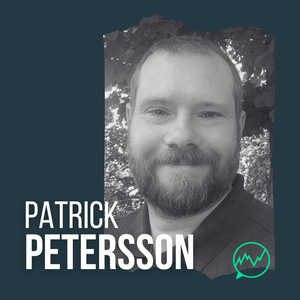
Ladies and gentlemen, we're so thrilled to welcome back Patrick Peterson, originally from Germany.
Hello everyone, this is your host Ian Cox here at Chat with Traders.
About two years ago, in Episode 260, I had the pleasure of interviewing Patrick Peterson, an intuitive news based market action trader, who took money given to him by his parents with the purpose of buying a car, but instead took that money and started secretly trading after opening his first trading account on his 18th birthday.
Patrick, welcome back to Chat With Traders.
You're welcome Ian.
It's an honor for me to be here and thank you for having me here.
Fantastic. Yeah. So when I last interviewed you in 2023, if we could go back to that time, and if you could give us kind of a historical update in what you've been doing and learning since then.
Wow. So, it may be two years, but it feels like 20 years.
So there's so much going on.
And everything is starting with the Chat for Traders community.
Everyone knows it. So, we were making the decision after one year that we close this, there were some good reasons for this.
Then the life after.
So, I found a new community, it's the MentorQ community and I'm now an MBM business partner from MentorQ.
And I'd be honoured to be in the community, to be the mentor, to develop also products for traders, to give all my experience there.
So that's basically what what was happened the last two years but behind the scenes, there's so much more going on.
Yeah, and so prior to being involved with the chat with traders community, did you have much experience interacting with other traders in other communities in the past or had you been kind of more, go it alone and just trade by yourself and not have it.
I'm only a lonely wolf.
So I'd be a lonely one, but since I was joining the Sheffield traders community, everything was changed.
As I told Tessa, I think everyone knows the story.
I can tell this again.
So, I was never speaking to some Asian people.
This was not normal for me to have friendship with, let's say black people.
So black people are now my best friends.
So this was this was something what was happening in the shadow status community.
So to be open for the worldwide so we having friends in Australia, we having friends in Africa, we having friends in Brazil, we having friends in Canada.
I was meet Steve, by the way, in the ShedwithTraders community, he was also on your broadcast. Big shout out to him.
And also this is something that was life changing for me.
And I can tell everyone who's listened to the podcast, go in some community, find something where you can find your second home.
Having good friends around you will support you as trader, who challenge you as trader, who becomes accountability to you, will help you to grow.
So be strong as a team.
And this was something when I was learningford traders community, I was never be a team player.
But since chat with trainers, I am.
What was it like being in a community and transitioning to a team player?
Like what, tell us what did you experience with either what you heard or read from the other team members?
And then what you suggested as well to them?
So, it's about the problems that traders have, I think.
Every trader has some problem.
There is no trader outside who's perfect.
Everyone has something who he struggles with, and basically...
Even you? Yeah. And, yeah.
And everyone, Ian, I can tell you, you struggling with the same stuff, what I'm struggling, but on a different way.
The cool stuff in the community is I become the experience from you and you become the experience from me.
I see your view of this problem and you get my view of this problem.
And that's the opportunity where we can grow together as a trader.
And this was something that was so helpful.
In the moment where I was understanding this, sharing my experience with the people, I get feedback from the people.
they say hey that's amazing what you're doing I'm struggling with this I'm struggling with this and then I was thinking like hey I'm struggling with the same but on a different way and again that's something what is so powerful in the community but to be really honest I'd be a little bit pissed off so I be a straight shooter as everyone knows in the episode 260.
I'm really pissed off.
If you're looking into the community world there are so many bullshit going on.
So many people posting only his porn P &Ls.
They're saying hey I was making 4000 uesters, I'm making 5000 uesters.
They are putting on some shards and all this stuff.
But this is not really helping the people.
So I can tell you, I have now a five -year son And I teach him to trading.
And he asking me every time, hey daddy, why?
Why are you going long?
Why are you doing this?
Why, why, why, why?
And for him, I must explain this to him that he understands this with his five -year mind, and this is something what I'm missing in the community of God and also from all experienced traders because there's so much bullshit going on.
I give you one example what was really triggered me the last few weeks.
When we getting the terrorist news, the wix goes really crazy to the upside.
As everyone knows, everyone was speaking about, hey, the wix is going crazy.
There's so much volatility around, but no one, but maybe there was some people.
Also, I'm guilty also, no one was there and teach the people, maybe the new ones or people who were not so experienced with this, Hey, what is this meaning?
What is this meaning for your trading?
What is this meaning for your risk management?
What is this meaning for your position signs?
What is this meaning for your take profits?
What is this meaning basically for your trading approach?
No one is talking about this.
Everyone is talking about the mathematical, the trading perspective, but no one is helping the traders outside.
I can tell you there are not so much people outside who are understanding the Wix how everything works and they don't need the mathematical.
The only thing that they need is hey if the Wix goes to this be careful then then you can do like this you can do like this.
Give them some really hand of like as I teach this my five -year son pay I told my son the The Wix is now basically on 50.
We were not trading our only setup as we're waiting that the Wix comes down because if the Wix comes down we can make so much profit and we will not be involved in the volatility and we waiting carefully.
Be patient. And then I teach them how to be risk management and what we should do.
We going only little tiny small size because this little tiny small size making us so much big profits.
And this is something I was missing outside, that people teaching other people what they should do, and a really simple approach. I don't know.
In the marketing world, there is something what people are saying always.
There is some approach, and they are saying, hey, basically, if you cannot sell this product in simple words to your grandma, then that's bullshit.
And it's the same in trading, if we cannot teach in five year son or on our grandma about the weeks what they should do, then it's bullshit.
And this is something where we should be all people thinking about to make trading a little bit easier to understand outside for the people.
And basically, now you're trying to give me And basically for our kids outside and for the young people they have so many young people who are getting distracted in the social world.
They have no really fun anymore.
They're playing, I don't know, computer games or they're doing bullshit basically.
But we have now the opportunity to go to the young people and teach them trading, teach them and how they can be become maybe in 10, 20, 30 years, financial free in a really simple approach and teach them thus like this, that say they really like this, that they enjoy this.
That's a feeling fun to trade.
That's a thinking like, hey man, that's exactly what I want.
This is what I can do and bring them from the streets, bring them from the hood.
Don't teach them how to sell any bullshit on the streets, Teach them how they can make money on a legal way in the market.
Teach them it's really simple.
And then we can save so many lives.
We can we can make so many people in the future financially independent.
And this is something what I was learning also through the community.
Because people liking the simple approach. So what is it about the VIX?
I mean, a high VIX means there's high volatility.
And don't traders thrive on high volatility opportunities?
I mean, isn't having a high VIX actually good for opportunities?
Okay. I would make this as simple as possible because I don't want to explain the VIX.
I'm not good in this.
I know that I'm not technology, but I'm not good in this, to be really honest. But the really good example is if if you was trading on the high wigs for a few weeks when we get the terrorists or the Trump, everything was going on, everyone know it.
If you was trading the ES basically you have the feeling you're trading the NQ, your P &L was running very crazy to the upside and to the downside.
That's basically high volatility.
If you are trading normally, like, for example, two EAS contracts, the P &L is not rising so fast to the upside or to the downside, but with high volatility, you can have huge moves to the upside and to the downside.
Looking to the downside, risk always first so you can lose so much money.
And if you don't know it, what you should do in doing high volatility, that's bad ass and you lose so much money and time.
And basically, if I was trading there in Q—I'm trading mostly there in Q—I was feeling like I'm trading that the Bitcoin.
Like the numbers going crazy to the upside and to the downside.
So what I should be doing, I should be now reducing my exposure, thinking about no more trading the futures, maybe trading now the ETFs because I save capital.
I save exposure. I'm not going so much in a drawdown or take back from the market and come back when the volatility comes down.
So basically this is something what happens in high volatility in simple terms. Because on my side, where I be, I know so many people taking so many losses, so many blow -ups during the last few weeks because there was no experience with this.
And this is something what I mean basically, this is why I'm also guilty.
Not teaching them, hey if you see something like this be very careful.
This is meaning you can make good money but you can lose very fast. And this is no more fun.
This is really like trading now not your what you're doing normally.
Take it a little bit step back.
Look, this is what I mean.
Teach them this basically.
What is this really meaning?
We can now, going in the mathematical stuff, what is the weeks and why everything is changing.
But this is not what the people helping.
I mean wouldn't many traders just come back and say oh, well, you know, whether it's low volatility or high volatility, as long as you have your stop losses in, Now, it should be the same, right?
I mean, why does it matter?
I'm protected with my stop loss order, right?
Stupid, it's not stupid.
For example, okay, so in high volatility, you have your normal stop loss.
Let's say, normally, if your stop loss will be hit if you'll be wrong in 10 minutes, 15 minutes, depend on your trading style, but on high volatility, it can be hit in one minute and there's the question, do you trading your normal style with your risk approach and you get hit in one minute very fast and and if you was hitting first time, then you will go again.
You will hit again, you will go in again and then the mind comes in the plane, what is the mind telling you?
You say no, that's impossible, what's going on and you're taking bigger size because you want taking your losers back and then boom!
It's happened. You blow up.
I see. So are you saying that during periods of high volatility when a trader gets stopped out easily and quickly that there can easily be the tendency for them to maybe want to revenge trade to get back to recoup their losses?
Yes. So I was observing on the NQ during the high volatility Then one candle has an average one minute or two minute time frame from 100 points.
That's crazy. So basically you're putting the trigger and you can imitate in very good profits or you're losing.
So that's something that's really bad.
So if you're trading your normal size, that's why it would be better to teach the new ones, hey, if you see the VIX is on level like this, take care of your risk management.
Don't trade your normal position size.
If you're trading normally the ES, let's say two contracts, go into MES or go into the ETFs, or take a step back and wait maybe one week before everything becomes calmer because the risk is too big.
You can battle on this, but there's a high chance that you're taking stupid losses.
Mm -hmm, but wouldn't some technicians, people just follow the charts, argue, well that's not a problem.
I mean whether it's high volatility or low volatility, you can read everything in the chart and I'll just, I'll get close to the bottom and buy there and go long what's there to worry about?
We could just follow your indicators right?
Yeah, so the only thing where you should be worried about is the average candle.
So let's say so the normal average true range if you're speaking about the ATR, let's talk about the AS on the five minute could be between 5 and 10.
So nothing is big Nothing is crazy.
Everything is fine, but now we have an average true range from 50 points or 60 points.
That's crazy. That's means your risk level is now 10 X.
It's possible that you can make 10 X more profits, but it's also possible that you can make 10 X faster, lose.
And if you not be aware of this, if you don't know it, because you was not experienced, something like this.
think about what was happening on corona, or when I'm getting the financial crisis, how fast everything was going.
It was really fast. If you was not acting fast enough, you wasn't troubled.
And that's something that we were seeing in the last few days.
Everything becomes non normal, but the few days it was really crazy, and so many people losing money, and so many people having now going back to work.
It was before maybe full -time traders.
They have now to go into work because they're losing so much money.
Yes. I was talking to some people.
They were really surprised about this.
could be your first step with plus 500s powerful platform you can access a wide range of markets snp 500, nazdak, bitcoin, natural gas, forex, metals, crypto and more all in one place.
The platform is simple intuitive and mobile friendly so you can trade from anywhere, anytime open your account with plus 500 and start trading with as little as 100 dollars.
You don't want to risk -free demo account packed with real charts and tools to help you practice and build confidence before jumping in with real money.
With over 20 years of experience and over 30 million global customers, Plus500 is your trusted gateway to the futures market.
Visit US .plus500 .com to learn more.
Trading in futures involves the risk of loss and is not suitable for everyone.
Not all applicants will qualify.
Hey, I got a great update from Trade the Pool.
now it's even easier to get funded.
As you know Trade the Pool built a unique program to evaluate stock traders like yourself and provide you with the company's funds to trade with.
It's real shares and you no longer need to worry about the PDT rule.
But that's not all!
Trade the Pool has introduced a new tier with $20 ,000 in buying power making it easier to pass the evaluation and speeding up the process of getting funded much faster.
You don't want to opportunity.
Because what the people are not doing is maybe they're not looking to the rigs.
So if you're trading the ES, you have not side by side your ES chart and the rigs chart and see what's going on on the rigs.
So you're not possible not be aware or you listen to something on X, or on YouTube, or on CNBC, whatever, and they're speaking about the rigs.
But they're speaking this in so complicated stuff that people what cares about?
Whoa, whoa, whoa, it's really important for you to know it.
Because if CNBC would say to the people, take care of, there must be a better risk management for you.
You can lose faster money.
They will not do this.
Why? There's some reasons why they don't do it.
And that's something where we all be guilty to not teach the people in simple stuff what is the meaning behind it.
What is the meaning when the risk goes crazy to 50 or 60 or 70?
What's the meaning?
And also, if you see people talking about trading strategies, they're making this so hard and complicated that you cannot follow this.
So, basically, when we're talking about some trading strategy and what people want to see, hey, when I should be go short, when I should be go long, when I should be getting out of the market.
They want this in a really simple approach, like a five -year -old son or an 18 -year -old grandma.
They want only know, hey, when I should be pulling my trigger, short, long, and when I should be getting out of the market.
That's what the people want.
Like telling them, hey, if you see A, then you can go long.
If you see B, then you can go short.
If you see C, be neutral and then have back test data where you can say, okay, this is based on back test data.
Most of the time, if A is coming up, it's a good opportunity to go long and I explain you why.
And this is something what I'm doing also.
So that's something what I miss.
And this is also what I'm teaching when I'd be live on YouTube for Mentor Q about options data and all the stuff.
I simplify everything that everyone can follow this.
For me, the options work.
I'm not understanding the options work, but I know how I can leverage based on the options data.
This doesn't mean that I must be understanding options, but I know exactly how you can use this as futures trade or as a stock trader, not as an options.
the options trading is completely different so that's something what I mean.
Give them really simple approach help the people outside and that's the big goal I think everyone should do.
Why do you think it is that uh the financial media when they talk about the Hivix, why don't they teach traders and their listeners on oh we make sure you do this and don't do that here's what the high vics means and and position sizing and all that i mean you would think it would be simple enough for them to explain this right why do you think they don't share that okay the other question so because i don't want to bring shit to the traders in travel then we can also speak about um the casino when we go to las vegas why the casino owners don't tell us if he was making some good profits Go away
and not play again.
Why they don't teaching us this?
Because, at the end, they will win.
They were making his money, no matter what.
And now, come back to CNBC.
Why they should do this?
So, who support CNBC?
Look into who is the owner from CNBC?
Who support CNBC? Did they have some interest in teaching you what you should do?
when they make them money.
So basically they have no interest. So the traders who say got hurt recently just within the last number of weeks with the high volatility, in your experience are the vast majority of these traders pretty new traders that weren't around during the Covid crash that also had high volatility.
It's mixed, so there are new traders, there are experienced traders, people we'll forget.
And most of the time, I think it's also lack of education.
So did the people doing Willy his homework, did they invest something into Bea become educated?
So did they read something?
We can make it really simple.
So every trader outside can make it so simple as possible.
If I'm not understanding something, what other people are saying, you can use ChatGPT.
You can say, you put in what they're talking about, give them only some topic, and then say to ChatGPT, hey, ChatGPT, please explain this to me in a simple and easy language hey, give me some example, who's maybe not trading, so that I can understand better." And then they give you some storytelling information.
And then you say, oh, now I'm understanding this, why is no one was teaching me like this?
So simple. Why there must be everything coded that no one is understanding.
And that's something what I'm thinking like education, it's the part of you.
But for us, we have maybe communities of who I say a little bit influencers or who have some products, product owners, or pro films. Think about why you're making your product not a little bit easier.
Why you're not explained a little bit more?
Why you're not simplify your trading approach and everyone can follow this.
And if I can say something, I can shut out something and this is SMB Capital.
SMB Capital and Bela, you know, Bela, he was many times here.
They make this also really simple for the people to understand trading strategies, what they're using on the trading desk.
And this is something when people...
When I talk to people, hey, where are you were learning trading?
Yeah, I was watching YouTube, and if you know, if they talking about SMB capital, everyone knows SMB capital.
And why? Because they explain it so easy that everyone can understand this.
And that's something what we all have to follow, I say.
And that's so crazy.
Why we don't do this?
Because people want to sell online processes, people want selling overpriced products.
People want selling mentorships.
And then you're buying the online course and you're thinking bullshit.
They're talking bullshit because they don't know something.
So basically, So go into that more, I mean, to give them a potential benefit of the doubt.
Couldn't we say, well, heck, I mean, how do we really know that what they're peddling is bullshit?
Like what? but what is it that they communicate is nonsense?
And how would a viewer know the difference between a channel that is communicating true facts and those who are total exaggerations?
Really simple, really simple.
So before buying some online calls, buying some mentorship, Ask the people for a verified trade record, where they trade his own money, not proper money where they have certificates or other accounts.
No. I want to see that they're trading his own capital, so, and then that they're doing this for minimum five years.
So because why I'm asking for five years?
Because then I see how they're reacting on bad times.
Everyone can post, hey, I have a Ferrari.
I have a, I don't know, whatever car, I have this, I have this, but this is something what I don't want to see, I want to see how you was reacting on bad times when you wasn't drawn on from 10%, 20%.
What you was doing, what was your approach?
And also I want to see that what you're teaching me that you're doing this on your own end.
Not like, hey, I'm teaching you this, but I give a shit about this.
I don't do this. So tell us, what's wrong with having a verified track record from a prop firm?
What is the difference, say, trading with a prop firm versus trading on your own?
This... so basically I will never bullshit any prop firm.
Never. But, what I really not like, if people ask me about mentorship, if people are asking about online courses, so you know it also Ian.
So you can buy a challenge for, I don't know, 50 US dollars, you get an account for 100k for futures and maybe you will lose the first challenge, correct?
So that's maybe possible for the first step, you lose, and then you take again the challenge, you lose.
So basically now you're losing, and then you're getting the funded account.
You lose your funded account, and then maybe you have to start the challenge again and again and again, and it takes you maybe I don't know, two months, three months, four months, five months to the first payout, And then they're showing you, hey, I have now a certificate.
I'll be a good trader.
No sham. If you would do this, what you're doing on the prop films, on your real account, you will be broke because you get maybe 10 ,000 U .S. dollars payout, but you were losing before 30 ,000 U .S. dollars because on all the accounts, what you're blowing up, so basically you're and like even trade are you losing to me and that's why that's why i want to see that's a trading his own capital because you will never doing some bullshit like this with your own capital so are you saying that by trading your own capital you will be more careful or you'll do something uh your habits will be different than you
will be with a prop firm oh yeah please Yeah, 100%.
I can give you an example.
Yes. Yeah. Some really good friend.
There's some really good friend of me and has known him also.
I will not name him.
It would be unfair.
Um, but let's talk about some, some person.
So this person was invest, um, or I don't know one year or the last year or the last two years, over 50 ,000 US dollars in challenges for prop films, activation fees, challenges.
And he was blowing up, I don't care.
Let's say minimum 50 times or 60 times.
He was losing an immense of money.
So on the prop films, so on the trading simulation he was losing big amount, but he gained experience.
I know he gained experience.
And after two years, he's profitable and he has regular payouts like 3 ,000, 5 ,000, 10 ,000.
Now he got it. Nothing is wrong with this.
But if you want doing this on your own private account and I want to see your track record from the last five years, and I would see that you're losing before maybe 1 million and don't get me wrong and now you're getting a payout from I don't know 20 ,000 30 ,000 yards dollars I will not take you seriously because you're that like for I don't know it's a big debt so you're not break even and this is something um what I don't like um but this doesn't mean that they're not experienced.
But for me, they don't qualify for mentorship or buy or selling courses.
So that's why I like for example, Bella from SMB Capital, or the other crews, so from SMB Capital.
So they dealing with real investor capital, with real money, they're doing this every single day.
And they have strong rules, they cannot do this.
So if they have a verified track record, yes they have a verified track record. And this is a big difference.
If you're trading with real money, on real market conditions, and that's really real money, or you're trading for a prop account, where 90 % of the time you're trading with, it's simulation.
It's not real money.
It's you're trading a trade simulator, and you will tell me you were making money on and trading simulator, but you have to go into the real market, put on real money, put on your money and tell me that you're making no money.
Or maybe if you have not money, maybe some family, like looking to my story, I was using family money.
I go all in. So basically I was not battling on some trading simulator.
I was directly going in the market no matter what.
And that's putting real money in the market.
And that's something what is completely different.
Well, you know, why does it matter?
I mean, as long as you're earning money, whether it's on your own account, or in the prop firm account, isn't it just, I mean, it's just another different way of making money, right?
I mean, if, if you have a chance to say, trade with a prop for money, and you get to use their money so you hey at least I'm not really risking much of my own money and I get this extra kind of leverage so to speak isn't that um kind of a positive thing and and wouldn't wouldn't the prop firms actually want you to do well and so if you fail say the first challenge or something they'd have all this education and and help you out um so that you can improve don't they want you to be successful?
Oh, that's a good question.
I think, I think we have to make really different between a real prop desk.
A real prop desk for me is like SMB Capital, for example, there are also other ones or, um, educational firms. So basically they are, they are not real prop desks.
They are only education companies.
and if you will be asked them, hey, you are real protest, they will say, no, we are educational.
So we helping you to grow experience without risking your money.
Go into the fine prints.
You will see it. And the question what you're asking me is let me request the question.
So if we have some problem on our heart, yeah.
So there's some doctor.
He was never making any operation.
He was only simulators on robot hours and everything like this for 10 years, and he's very successful with this, and then you have the other doctor who's maybe 10 years operation on real humans.
Who will trust more?
The guy who was making this robots on the humans?
I think the answer is the guy who were making the operation on humans, correct?
So, and it's the same with this.
It's exactly the same.
Is that because there's the quality of putting your own money on the line, does it make you learn faster?
Or is there, because psychology, I imagine psychology is a huge part of this, right?
So, we have also to think about this.
So, people on the prop firms, if they get funded, if they're getting the payouts, like say they're getting the payout from 10 ,000 U .S. dollars.
How often do they get the 10 ,000 consistently?
Did they get consistency, the 10 ,000 month by month by month?
No, mostly not, with the same account number.
Don't get me wrong.
So basically they get one payout, if they're lucky, they get the next.
If they're really super good, they're getting the next payout and then boom, they will blow up and they will lose that account.
And they will restart again, starting the challenge, going through the same process and again.
So you will not do this on your real account.
You will not be doing a risky approach. approach. You can't do risky approach if you're really experienced, if you have enough capital, if you have enough profits.
So losing your, using the profits, what you make and investors.
So this is something, I cannot take it seriously.
They are really experienced.
Don't get me wrong.
And they are really good traders.
But it makes a huge difference to be a real trader or a professional trader or an educational trader who came from the trading simulation.
And there were also some interviews.
What I was learning from someone else, he was saying, okay, if you're working on a real prop desk, so you become maybe a really professional trader in two years, if you're working full time with us because we teaching you all what you need.
We helping you. We have the education.
We have the mentors around you and you sitting right and left there, sit some experience straight around you and you're sitting on a real training floor.
That's completely different.
But if you're sitting home, you're getting maybe no education.
You're getting a little community.
And maybe there's some live stream where other traders talking about something, how you can be grow like some real trader in two years as professional there as impossible you need four or five years.
But what the most guys doing, they have two payouts, three payouts, then they're using the certificate and selling courses.
And new traders falling into the trap buying the courses and they develop bad habits.
That's stupid! We should, we should protect the people for this.
Don't get me wrong.
Sometimes, I'm also guilty on my end.
Sometimes, I'm not teaching really good.
I can't teach this much better.
I know it. But what I'm thinking, I'll make a really good job to simplify everything.
And that's something what I think is the key.
Simplify trading for everyone.
If you be a Proctroider, all right.
If you'll be coming from some educational firm and you're trading on SIM accounts, why not going into the communities and teach them how you become successful, what you're observing and looking for other people's feedback and grow as a trader and enjoy it.
And then maybe if you're having enough profits on the prop films, why you're not using your money and put this in a real money account and trade with the real money account for, I don't know, six months, one year And then you can say, hey, I'm the best. I don't need any more of this.
And people saying why I should get back from the prop films. Why not?
Because you haven't profit split.
You give back 10 % or 20 % from your profits.
Why you should do this?
If you be a so good trader with so good payouts, then you can fund your own account and you can trade without rules from other one.
You can write all any time and you have no profit share anymore.
But now if you're making every month 100k there's no reason anymore for this.
That's my opinion. Yeah.
In our first interview a couple of years ago, you described yourself as an intuitive style of trader and I'm just curious, how have you been able to teach the traders that you've interacted with, how do you teach them to trade, is your style of trading difficult to teach and have you, has your style been modified over the years as you've interacted with others?
You know, because some people are scalpers, some are day traders, some are, you know, swing traders.
how do you teach them?
Okay, then, that's a really good question.
So, most of the time my teaching is more like sharing my experience.
So, if people coming to me, and by the way i never taking any money from them if i doing mentorship i'm doing this for free that's something what i'm doing the only thing what I what i'm asking for is for a donation so basically if you say okay you want mentorship i will say okay, I give you my time but that I know that you take it seriously i want that you donate, I don't know 400 US dollars to some social project, boom.
And if you don't at this, then we can make a deal.
So I don't want this, I don't need it.
But I'm not doing this mentorship anymore, but this was something what I was doing in the past. But when I'm teaching them and my trading approach is, is not teachable for other people 100%.
But people coming...
Well, why is that? Why is it not teachable?
oh, because what I'm really instinctable.
So if I see something, boom, I take it.
And if people come in to me and they have struggled, then we talking about this.
I let the people explain, okay, why he was going into the trade, what was going on, what you were seeing on your chart, and what trading setup you like, and all this stuff.
I ask them a many, many questions.
And then I get the feeling about this, like the same word feeling about the market.
I get first a feeling about the person who trade because there's a big difference if someone is an engineer or someone is a sales guy because they have different mindset, they're thinking on a different way.
So that's something that I want, figuring out first. Who's the person, where they're coming from?
What is their business?
Because they have different mindset, they're thinking completely in a different way.
and then teaching them what I've seen based on my experience.
If I would you what I was doing, and why this makes maybe sense, based on my point of view with my experience.
Then let's connect the dots together.
Because I'm not a teacher, I'm not a coach, I'm not teaching you how to make the goals.
I guide you, that's the difference.
I will guide you. I will make may be visible what you're not seeing.
And that's the big difference.
I will not teach you how to trade.
I want that you let me know what you're doing at the moment.
What is good, what is bad?
And then with my experience, I will guide you.
I will show you maybe something what you was not seeing or what could be possible, the missing puzzle for you, that you can make the next step as a trader.
That's basically what I'm doing.
This is what I'm understanding about mentorship.
Don't teach them something.
Help them, guide them with your experience, and that's it.
Ah, can you share with us some examples of the challenges that the traders, different types of traders have shared with you and how you guided them?
Okay. Let's talk about really simple about two different people.
So one, people is they say, hey, I'm losing always in the morning.
And it's so hard to bring back my losers over the day.
Okay. So what was happened?
Why are you losing all the all the morning?
Let's talk about this.
So then maybe you have a nine to five job?
You'll be stressed.
So, and I don't know, something was happened on your side.
What was happened with you?
Why you're taking the losses?
What was triggering you?
What was triggering you to go into the market?
So that's something what we have to find out first. What was triggering you to go into the market?
Do you was seeing something on the chart?
Do you have a trading plan?
By the way, do we have a trading plan?
What's this your A plus?
and ask, was this something that was reasonable for you to go into the market, or was this, hey, I have to trade.
Now I'm coming back from my job.
I sit there, after five minutes, boom, and I will pull the trigger because I want financial free.
Stupid. So, that's now how it works.
So, then I can guide them and can say, hey, so first we have to to work on your time frame.
is the morning the right timeframe for you?
So, let's talk about it.
He's a European person, he has a nine to five job.
After the job, he came on to the market, it's American time, it's not European morning, different time zone.
So, and he comes back.
Is this the right timeframe for you to trade?
Because you're telling me every morning you're taking losses, so why we not should change maybe the timeframe for you?
Why not, after you're coming back from the job, going first into the gym, reading some book, taking some meditation, doing some other stuff, calm down.
And then with a clear mind, taking maybe 15 minutes, read the news, see what's going on on the chart, wait a little bit, define some really good trading strategy, risk management, what you must follow, and define what you want to see on the chart before you're triggering something, and then execute based on this.
So that's sometimes a really big mindset for the people because they're never thinking about, hey, it's the wrong timeframe.
Or I was triggered because of my job.
My boss stressed me out.
My wife stressed me out.
My kids stressed me out.
I am stressed because I have to make some money.
That's something where we are often dealing with, find out first the triggers, find out this is the real timeframe.
So do you're trading really your A plus setups, you follow your trading rules.
For people it's so hard to be disciplined and follow the rules.
And then, why? Why?
Why is that? It's really hard. Why is this?
So I think it's, it's because they have a lack of discipline, in real life.
And how you can be having discipline in the market, if you have no discipline, in, in your daily life.
So, and then now why some people taking drugs, why some people taking alcapod.
Why some people are not awake when at 6 am and they already...
why some people not taking cold showers because it's healthy?
Why people not eating healthy foods?
Why are they drinking coke, cola?
Why are they drinking, I don't know, whatever?
Why are people eating sugar?
People know everything why you should do this, why you should not do this.
They say they don't care about this, they give a shit about this.
And now you came with the mindset in the market.
And now ask me why do people are not disciplined?
I don't know. Well, so how often do you encounter traders who say learn a lesson in a particular market a regime, like a particular type of market.
And then time goes by and then they forget that or they ignore the lessons that they learned in the past. Like for example, during the COVID time when we had that huge drop and the VIX goes up and they learn all about volatility.
And then some years later, things calm down.
And how frequent have you found Where traders forget the lessons they'd learned in the past or discount them and think well, maybe this time it's different Really good question.
I think Everyone is routine.
Me also We can Really how so because we can take lessons every single day from the market and we find something where we exactly now are stupid, why I'm doing this.
So I give you some example from my trading.
So I was talking to my people, hey I'm not taking anymore and take profit, I have only the hard stop loss, but no more and take profit because why?
When I haven't take profit and I get a really good news candle based on Donald Trump, based on terrorist news, The market can go crazy and we can go crazy to the upside.
And I will not be the stupid one where I often take profit there and I'm getting out of the market and I missed a whole candle to the upside.
That's completely stupid.
And this is something why I have no more take profits there.
Because there's always opportunity every single day in the market that this could be happened.
And why I'm be guilty.
So yesterday, stupid enough, I was making and take profit.
I don't know why I was making and take profit.
And then we get in a news candle and boom, I missed the big profit because my big profit was hitting that.
So it was completely stupid.
It sounded like then you made money on the trade but not nearly as much as you could have because of your conservative nature.
only thing was, why I was not following my own rule.
So I know it exactly.
So, what you were saying, hey people maybe was learning the lessons through COVID and they know it, but they're not following this anymore.
And this is why I think people never request or they should do it.
And asking every trading session, what I was learning today, what was my biggest lesson for today, how I can become 1 % better next day.
Atomic habits, building habits that you can become a much better trader and we should asking us this any single day.
What was my biggest lesson, how I can improve for next day?
What is my goal for tomorrow?
What I want to see for myself tomorrow.
I, how I should be performed.
And if I was to make money, I don't care about this anymore.
But for me it's pissed me really off that I'm not following my rule because I know exactly what I wasn't following.
Uh -huh so is it uh then a good idea then to have daily reminders and daily review of our strategy, our discipline, because it is so easy to forget or let it slide.
Personally, I think review every single day.
Take out the big lesson, write this down, and for everything, rule what you was not following.
Take extreme ownership.
Ask yourself, hey, why was I not following this?
So, without bullshitting you, be objective, ok?
Because something like this happened, something like this happened, something like this happened.
Ok? And then, how can you improve the next time that this will not happen again?
Alright, so my kids are noisy in the background.
Ok, what do I have to do the next time?
Make sure that my kids having some fun and I can trade and they will not interrupt me.
So and then I make sure that this will be not happened again.
So taking extreme ownership for everything, what you're doing and trading.
And there's the book, Extreme Ownership, I can give this as really advice, friendly advice, reading the book Extreme Ownership, reading the book Atomic Habits, and do this every single day, and then you will grow automatically as a trader.
If you follow this, what is in the book, you will grow as a trader automatically.
And that saved you...
I don't know, five thousand, ten thousand for mentorship sessions.
Well what about for the traders who who say that, well, I was following my rule, but I discovered through the trading process during the day that my rule is actually not very good and I can learn on the fly and adjust it because I'm always looking to improve my rules and that's why I didn't follow my old rules because they didn't look good at the time and I'm creating a new rule that's even better, right?
Perfect, you can now ask yourself, okay, why is this better?
So not talking about always about the bad things, talking about the good stuff.
Hey, why I was doing this?
What I was seeing, because this is sharp in your focus for the next time if you'll be good to know exactly why you were seeing something.
And then if this happened again the next time, ah, yeah, I know, this was the last time, now I can maybe possible doing the same and I can change my strategy or something like this.
Also ask yourself, okay, what I was seeing what was triggered me that I was changing now my training strategy.
And it was good, by the way.
And how I can use this experience what I was growing now, for the next time.
And then you can develop also some some risk management strategy.
Okay, if I see something like this in the future and I know exactly that this what I was learning today should be now taking place.
I will do it. So you have a new rule, basically.
So you can develop something completely new for you.
You can grow as a trader.
That's what I mean become everyday 1 % better as a trader.
But do you follow this?
You really doing this become 1 % better?
People talk with me how I can become 1 % better as a trader.
On my P &L? On my money?
No. On your experience.
Because there's everyday, some lessons in the market, on the lessons on your trades.
Mind the lessons, looking and searching for the golden nuggets, write this down and prove about this.
That that's your experience, where you grow.
And if you don't build experience, how you can grow as a trader, I will share this with you.
There was one story what someone was telling to me.
He was going into, you know, let's give the cashier some little bullshit, okay.
So a woman he was 20 years and she's a cashier for a big supermarket, and the guy who was going into the supermarket is going now in the supermarket every single day to buy something there for 20 years and the woman is working also there and she's now 40.
And she's not doing something else as doing the cashier job.
Boom tick tick tick.
20 US dollars. Tick tick tick.
30 US dollars, tick tick tick.
She is dying because she's never improved on his business career.
She makes the same job all the day.
She's dying. And this is something what we as traders should not doing, we should not die.
We should be improved.
We should not making the mistake, like what the cashier is doing.
It's not about, sorry, I'm not bullshitting cashiers, but it's only an example, but they dying.
And this is something we as traders should not do.
We should not die. So if we are doing every single day all the same stuff, we're dying.
We need some new stuff to grow.
We need some new lessons to grow.
And we don't want to be the lesson, what is the biggest lesson for traders?
And they wake up and they say, Oh, what the f is going on?
Ian, tell me. When they're taking this big loss, they say, oh, what's going on?
Why I'm taking this huge loss?
And then they wake up and they grow as a trader because now they're looking into the trades, what was happened?
Why I'm taking the losses?
But why you're not doing this every single day?
Asking you what was happened today?
How I can take some lessons about this?
How can we become tomorrow better?
that's the single stuff, we should not die as traders, we should be becoming light for other traders to be teaching us our experience.
Hey, that you can say to other traders, hey, I was going through this volatility and I was learning something like this.
And here are my notes.
And then you can ask the other people, hey, what was, do you have the same experience?
who was getting the same experience like me, and if yes, what you was learning, what you was observing.
And then you talk together, and you think the crazy.
You have the same experience.
You have a different view on this.
I have a different view on this.
And now we can change our mind, and we can grow again.
That's when we're not dying.
Then we grow as a trader, and that's the part where people are missing.
Then we come back to the communities.
But in the communities, they are sometimes so big shit that people posting only the P &L, the charts, the trade what they take, but there's nothing interactive that said, hey, I was taking this experience today, I will share this with you.
That's my lessons for today.
If have someone else the same experience, and if, yes.
What they was learning, and maybe you will, you will share this with me.
Excuse the last interruption here.
This is Tessa. We hope you're enjoying this episode so far.
If you love the podcast, please give Chat with Traders the best review you can on whatever platform you're listening from.
This will help us to keep the episodes coming.
Also, if you haven't subscribed to our email list, please hop on to chatwithtraders .com and click on subscribe so we can keep you posted of information that may be of importance.
Thank you! Now back to the chat with our guests.
Would you be able to share a story, an example of someone that you mentored who became successful?
Yes, from the Shepthwaite Traders community, we have really good traders in the Shepthwaite Traders community, but also Tessa Knowles, and you're also in many traders giving up.
Why are they giving up?
Because it's a timeframe, because it's the wrong time, at the moment, they don't give so much time.
And then there are so other traders.
It's only a handful of traders.
And I have three traders who was going through all the stupid up and downs in the market, and they are now going to be successful.
The one guy who I told you was investing the 30 -50K in the PropFirm board and taking now every single day some some payouts from the PropFirm.
He was someone who I was making accountability sessions with.
We were starting and meeting us together in the Chat with Traders community.
He was meeting us every single Monday.
He was speaking what he was learning.
He was always talking about what he was learning this week, how you can become better and how we can improve, and how I can become accountability for next week.
What's your goals? He was talking about this every single week and after the shared with traders community, he was always in contact.
I was mentoring him, I was giving him everything what I'm seeing.
He was talking to me what he's seeing and this is one of the best examples.
He goes to so hard times.
I love him. It's so, it's crazy.
And now he taking every single day some payouts.
And there's also some other guy.
He was giving me feedback today in the life trading room.
He says, hey, I have the last few weeks, really bad days.
And he was showing his bank account statement.
And then he say, hey, now I have a few good weeks because of you guys because first we teach them patience.
Don't get triggered from the market.
Trade only when you see something.
This is your A plus.
So, we request them.
So in the live training session, of course, you can look over our shoulders, how we trade.
But I'm not the guy who is the clown who would teach you how I'm training.
No, this is something what I don't want.
You can go to YouTube.
There are so many live training sessions.
I want more giving you guidance and say, hey, I see this and let's talk about what you see.
You get an open mind and you can talk to me and you say, hey, I've seen this.
What do you think about that?
Oh, nice. Okay, I see this.
And then, hey, remind people, hey, be patient.
You have not to go into the market.
If you don't see it, it's good.
And if you're taking losses, take a walk to remind people because people need this, then they need to remind them.
They need sugar, and they need the pressure.
That's that's what I like.
A couple years ago, when I asked you about your future goals, what would you like to do and you mentioned back then that you would love to become a big hedge fund manager and move to the And as the time has evolved, tell us how have your desires and plans changed over the last number of years?
Okay, that's really good.
So by the way, I got my green card for America.
That's really great.
I'm really honored about this.
I was working so many years to get this.
Now I get this. Yeah, so that's basically my open door for investor capital.
Why I want the GreenCat?
Because to have access to much more capital, to get the next step in becoming a really good hedge fund, I need capital.
But you don't get this if you're not getting the U .S. citizenship or you don't live in the U .S. So there's no trust and people from Europe or otherwise so they they don't like it.
And also there are some rules in America so you have to follow the rules and also you get more access to some licenses.
Basically from the SEC or something like this you what you don't get if you're not an American citizen or you don't have to green card. But that's the next step.
But where I'm most proud of it, and this is something I was telling you when it was meeting us together.
It's like how the money is working for you.
So, the cash flow. They had something where I'm really proud of.
So, I have not to work anymore because I have my cash flow, money is working for me.
And that's something what I think traders are missing, because let's talk about this a little bit, maybe for two minutes or something like this.
So, if you be here, an experienced trader or maybe you've been here and you have a really good payouts.
Let's say from the problems that we was talking about, you get $10 ,000, $20 ,000.
Don't invest this in lifestyle.
Don't do this. Don't do this.
Don't buy new cars.
Don't buy this in commerce.
Let the money work for you.
What I mean, maybe think about buying some flats.
We have so many refugees all over the world, they need apartments.
And if you're an owner from an apartment and, for example, you're supporting some refugees, you don't get paid from the refugees, but you get paid from the government.
That's secure money.
So, basically, you get every single month money from the government because there is living some refugees.
So cashflow, you let them money work for you, buying an apartment, you rent this to the government, or you rent this to some other one.
And maybe you're starting with one apartment, but at the end you get 100 apartments.
And then you get every single month thousands of US dollars for each apartment.
Boom, boom, boom. And it's guaranteed for maybe 10 years.
Hm. Are you doing this yourself?
Oh okay. Okay. And where are you in?
Where is this located, these flats that?
I have some flats in Germany.
I have flats in Spain.
So and also, there's some other businesses.
So if you have apartments, some other businesses, like also apartments, maybe their rent is only for a few hours, I will not go deeper in this, but you can make good money.
So you're not involved in this business, but you can make good money.
So you're giving us something.
Or you're using this money to invest in some startup companies.
So, maybe there are some tech companies where you really like having a good trading idea.
Invest the money there, give them and then let the money work for you and you get paid back.
Of course, there are sometimes risks, everything is having some risk.
Nothing is risk free in life.
But this is something where you have also no more pressure to get in the market Because you get paid every single month like $10 ,000, $20 ,000, $30 ,000, $40 ,000, $50 ,000, $60 ,000 only from the cash flow that you get.
And then you get this every single month without trading.
And then you can say, okay, now I'm using the cash flow, what I was earned and fund a next trading account and we're trading now with the $60 ,000 what I earned today because I don't need it anymore.
And then let's have fun.
Mmhmm. So to wrap things up.
What are you - anything that you're kinda looking forward to?
Are you still mentoring currently?
I have the MentorQ community.
We have the pro community.
Where we live trade every single day together with the people.
I'm hosting this, that's at what I'm doing.
Mentorship. I will not be doing this anymore.
Because one reason, as you know, I have two kids.
So they become now more active.
My son is now five here, will be coming in summer six years.
He needs more time for me.
So and I will not missing the time to see my kids growing, because I mentor some people.
This is something I don't want.
Here's my family first, and then the other people.
And also the big mentorship, what I can give, is my son.
Or other people like professional soccer players, basketball players, like Kobe Bryant.
So the daddy from Kobe Bryant, what he was doing with his son, he was teaching him basketball, because he was a former NBA player.
And Kobe Bryant becomes also an NBA player.
And this is what I'm doing.
I'm teaching now my son how to make money in the market.
That's basically the mentorship, one -to -one mentorship what I give at the moment is to my son.
And this is why I was talking before, I get so pissed off because people don't make it so simple and explain it in a simple and easy way that other people understand this, and we have a big chance to make the world better.
If we make the trading lessons, what we learned and simplify this really, really in an easy way, that's amazing, then so many people can learn from this.
And I'm 100 % sure, as I said before, we have the opportunity, every single trader, to take out some people, young kids from the street, from all the shit that's going on on the hoods, and bring them into the market.
Fantastic, Patrick, thank you very much for coming on chat with traders.
I'm happy every time.
Thank you. How can our listeners reach you?
Oh, okay. So, as I said, you can find me on the MentorQ, and go to MentorQ .com, and there you will find me, and yeah, check it out.
Fantastic. Fantastic.
Thanks for coming on the show.
Hey, thanks for still sticking around.
Here's my little chat with Patrick.
Honestly, I really we Ian and I, but especially I really miss you.
I miss you and Steve and you were in the live trading room and you were a driving force in the Chat with Traders community and I hope someday that we can reopen that and have that back but it was so great because I learned, even though like I trade so differently from I, you know, I was rewatching some of the videos that you produced in the live trading room and I was like, oh my, I learned so much from the mindset point of view, and it really made a difference in, in my trading, in the past year, the performance may not show it yet, but the, um, the things that go behind it, the discipline and all
that, it takes time.
It just really takes time.
I really think that trading is a game of discipline more than anything else.
And that's where I'm at.
And I would say that you were my first like unofficial mentor just by, you know, being in the community.
So, thank you. Yeah.
Thank you also. Yeah.
So it was, it was mean my world.
Yeah. So the Angeles community.
And now you're in another community making another great impact.
And I followed you and so I followed you to where you are with mentor Q now.
So I'm part of that community too.
And I see the impact that you have there.
So that's so awesome.
And I also want to make a comment about you teaching your son to trade and he's only five years old.
That's just so amazing.
What a gift and I want you to promise me that we will be the first ones to interview your son.
It's more than 10 years, I think.
Yeah. But I teach him also the mindset.
So it's so important.
And so because now he came to school, I teach him, Hey, you know, don't listen to your teachers.
That's bullshit. Because if you listen to me, and you will become a really great trader, you can you can earn the school, you can pay the teachers.
And with this mindset, you should go to school.
Hey, you know, my daddy tells me I can buy the school, I can pay you.
So that's something also, the mindset from the young kids is so different.
And if we are looking to all the professional athletes, how they're teaching his kids, they are teaching the same.
They know exactly, hey, on one point, I will be like my dad.
I will become the next Lionel Messi.
I will become the next Michael Jordan.
And I know it. And that's something, what I'm doing.
You always give examples of the sports analogy with pro athletes and it's like, wow it is so true.
And remember, we have some olympian weightlifter woman.
We was interviewed her in the Shuttle Traders community and she was laughing because she said, what the hell, why are you interviewing me?
And then she was saying, yeah, that's completely right because at the end it's the same mindset.
mindset she goes also through something where all traders going through and i think you should not learn from traders about the mindset you should learn from the athletes because they teaching you a complete different view um and that's something what i'm doing i do remember you're talking about golfing as an example golf yeah yeah a great sport um wow and yes so i we will really love to interview your son he doesn't have to be all grown up It can be just in a few years, just for him to share a little bit from a little kid's point of view, it's just so awesome.
And then you also, you and Steve also inspired me to start trading futures.
So that's what I'm getting into.
I'm still doing options, don't get me wrong, that's my main bread and butter.
But I feel it's important to also find other markets to trade in.
And so I'm dabbling into futures and I am using a prop firm for that.
That's good. So don't get me wrong, what I was talking in the interview, there is nothing wrong.
So the only thing that I mean is completely wrong is if you be getting your first payout or the second payout and you're trying to teach people how to trade.
That's stupid. You should not do this because at the end, you're not a break -even trader.
I totally get what you were saying with Ian because you were talking more from an educator point of view.
Those that you see a lot that have been educating, they use the payouts site, they got a few payouts and they're like, okay, now I can teach now.
And that's what you're saying is the problem.
Yeah, go to the next step.
Use your payouts, fund your own capital and go in the market with your real account, get experience then, and then you will be able to teach something.
If you would have listened to Lance Brinestein, you would have seen 100 % What I'm talking about.
Right, right. And plus you can't rely on the prop firms forever because who knows they could be gone.
I mean how long is that going to last?
We don't know right, you can't rely on that as your forever business.
And so I just want to say thank you.
I'm so happy to see you, miss you, miss the members in our community at the time, Miss you and Steve.
Yeah, so it's great to have you back on the show.
Yeah, and I hope everyone could take out some golden nuggets from what I was talking about and maybe reflect on this.
Maybe you will not be angry with most of the part, but maybe it gives you something that you can think about.
You always have a different way of saying things and that's why I think it's going to be so interesting.
You always have a different way of expressing your views and it's always so interesting Patrick.
Yeah because the only thing I want is, people can hate me, people can love me, I give a that you get so hot pissed off, then I know exactly something in your mind would be changed.
And then I know I got you.
And maybe I save you for some bullshit in the future or you rethink because you get so pissed you rethink on the way to the world or if you're going to sleep, you think about man, just why are you talking about this?
That's pissed me off.
But you think about what I'm talking to you.
and then I'll be in your mind and that's something what I want yeah I I give a shit about if you like this or not but if I be on your mind and maybe I can change maybe some little tiny milli percent on your thinking about trading then I'm taking a really nice job I agree I agree oh by the way the title are you okay with us titling it something if you don't like it that's because I heard you say it.
Quote, you said, we should not die as traders.
Perfect. Brief the market in and out and we shouldn't die as a trader.
When you said that, I was like, oh my God, bingo.
That's our title. Yeah, and Ian was shocked.
His face was crazy.
Ooh, what's he talking about?
I know, I was like, I love it.
But it's really like this.
So go into the cashiers, go into the room and you will see the same cashier in five years, they will not grow as people die.
It's simple like this.
We could have another topic on this, but some people are okay with that.
Yeah, but that's nature.
If you're not growing, you're dying.
So maybe the woman on the cashier desk is now 60 in years, but I would tell she's maybe only 21 because after 21 she was not growing, she's dying.
I may be only 30 and not 42 because 10 years I was dying.
Patrick helped me not to die as a traitor.
Oh man, that's crazy.
Yeah, I think people will listen to this and it's like going...
Yeah. I love that title.
Well, thank you for approving that.
Well, have a great night, and we'll be in touch. Thank you for doing this.
See you soon. Bye bye.
You've reached the end of this episode of Chat with Traders.
But rest assured, there are more episodes loaded with real market insight and zero hype on the way soon.
So to stay updated with each great new release, subscribe to the podcast on iTunes, and we'd love it if you'd leave a rating and review.
We'll catch you next time on Chat With Traders.