Chat with Traders is sponsored by Plus500.
Ever thought about dipping your toes into futures trading but felt lost in all the jargon?
I get it. Trading can seem overwhelming at first, but here's the thing.
With Plus500's futures platform, you don't need to be a financial expert to get started.
With Plus500, you can access a wide range of markets.
S &P 500, NASDAQ, Bitcoin, Natural Gas, Forex, Metals, Crypto, and more.
It's like having the entire financial market in your pocket, since you can also trade right from your phone.
Open your account with plus 500, and start trading with as little as $100.
That's right, Ian, and if you don't want to risk even a penny, plus 500 offers an unlimited risk -free demo account packed with real charts and tools to help you practice and build confidence before jumping in with real money.
With over 20 years of experience and over 30 million global customers, Plus500 is your trusted gateway to the future's market.
Visit us .plus500 .com to learn more.
Chat with traders is brought to you by Trade the Pool.
Becoming a funded trader means trading with a firm's money instead of your own.
At Trade the Pool, you first complete an evaluation by hitting profit targets while managing risk.
Once you pass, you get access to up to $260 ,000 of buying power.
you keep up to 80 % of your profits while the firm covers the risk.
It's the perfect way to trade big without risking your own funds.
Are you ready to become a funded trader?
Join Trade the Pool.
Trading in the financial markets involves a risk of loss.
Podcast episodes and other content produced by Chat with Traders are for informational or educational purposes only and do not constitute trading or investment recommendations or advice.
Like even though I was starting to get financial abundance, I didn't trust it.
Cause I had never had it before.
All I knew was going to work, shaved my face, put on a tuxedo, wait tables.
So when I started making money I had trouble trusting it.
I was afraid that it was gonna go away.
And I knew that it would have been my fault.
Like I had enough self -awareness to know like, it's not gonna be a market correction that puts me out of business cause I don't have that type of risk on.
Right, we're carrying, you know, over the years I got much more aggressive in the mid 2000s but in the mid to late 90s I would go home with maybe 10 % margin to equity ratio which is kind of like where the CTAs kind of live.
When I got really really good and I had over 10 -15 years experience when China was buying everything in the mid -2000s, I'd have 70 % margin to equity.
Like I was levered up.
So mental errors were don't get horny, don't get full of yourself, this has nothing to do with intelligence.
Intelligence is important, but it's not how you make money.
Making money is about knowing good trading tactics.
Can you pull them off?
Do you have the will to do it?
And I was afraid. I was absolutely petrified because every time I put on a trade, I felt kind of like I do now on the witness stand and that you have to pass muster every day.
And you kind of do.
But it's not because you're smart or stupid or you're lacking something intellectually.
Trading is about adding risk with an appropriate dosage.
What is your risk unit?
Coming from a hedging being physically trained in commodities, you know what your needs are, so you hedge for your needs.
But when you're a speculator, you don't need anything.
So how the hell do you figure what the right position size is?
That I have to carve out a stone and figure out for myself.
And when I lost money or more money than I had wanted, it was very, very hard on myself.
And I said, okay, but trading is like sex in many ways or other things in life that is largely experiential.
Markets, speculation and risk.
This is the Chat with Traders podcast. Welcome to Chat with Traders, episode 299.
Hey, how you doing?
Today, my co -host, Ian, speaks with a special guest, a professional futures trader of over 30 years.
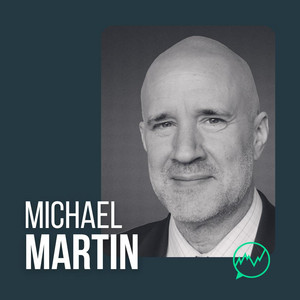
His name is Michael Martin.
I just love his New Yorker accent.
Look, I only wish I had the New York accent.
Growing up in Southern California, I kind of grew up with that Valley Girl beach accent for sure.
I think I totally got rid of it by now.
I'm Tessa, its co -host, and having a little fun with you.
And I'm just so excited about sharing this interview with you I promise it's not about cool accents it's about this awesome gentleman by the name of Michael Martin and what he has to share with all of us in fact several of our past guests on the show were actually referred by Michael raised in a hard -working blue -collar community Michael embraced that same work ethic hard -working resourceful an entrepreneur at heart he hustled from cutting grass when he was 12 to working all types of jobs including golf caddying and waitering at restaurants to starting businesses.
Determined to transition into the white -collar working world and being at the right place at the right time, he was exposed to the financial markets.
Michael's interest in trading commodities futures originated during his time as a student.
During an unexpected work -study program, he was introduced to developing seasonal models for heating oil and natural gas for a major hedging firm using spreadsheets and he was great at math.
He subsequently worked on Wall Street managing commodity accounts and despite the significant commissions he realized that he could potentially earn much more through an incentive fee.
So after three years at a brokerage firm he started his own CTA.
I sense that he has a very intuitive style about him in trading, business, and in life and I promise, this is not just going to be another interview.
It's engaging and there are lots of golden nuggets to take away with so you don't want to miss this.
Also we've added a bonus behind the scenes segment for this episode where I put Michael on the witness stand some more with some questions.
So you're welcome to tune into that segment at the end of the interview.
Also guess what, as a gift to you just because Michael's cool like that, we've included a link to Michael's audio version book, The Inner Voice of Trading, for free, and it is in the show notes of the episode of our website.
Get it while it's available.
Thanks, Michael. So, to get it, just visit our website, chatwithtraders .com, then navigate to this episode, Episode 299, and you'll find the link in the show notes.
Enjoy! Ladies and gentlemen, we are so pleased to introduce Mr. Michael Martin, originally from New York.
Well, Michael, I'd like to welcome you to chat with Traitors.
Thank you very much for having me.
It's a great show. Honored to be here.
And I don't say that lightly.
I know who you've had.
I've referred a few people to the show.
And it's good to finally connect.
Yeah, likewise. So where are you now and where did you grow up?
Right now I'm in the Los Angeles area…with my accent you can tell I'm not from Kentucky.
I was born and raised in New York, you know, grew up about an hour north of Manhattan.
Found my way to New York, went to college, went to work, kinda made my bones, cut my teeth back in the day before the internet when stocks traded in eighths and commissions were one to two percent every trade.
And it was very expensive to be an active trader back then.
So that was a good environment for me to learn how to trade, cut my teeth and only trade when I have an edge.
Just prior to getting into trading, what did you do and kind of like, how did you first get introduced to the markets by friends, family?
Yeah, a little bit of both.
I was the baby in my neighborhood.
Everyone was either two to five years older than me, which when I'm 11 and your friends are 16, there's a monster difference there in terms of human evolution and the things that are important to you.
When you get older, those kind of numbers don't mean much. So those kids had either become cops or firemen, several of them rented seats or bought seats on the exchanges, the Amex, New York Stock Exchange, or they became locals in the commodities markets.
So that was my first introduction because they were out working.
I was still in college.
And then just by being in the right place at the right time, where I went to school at the time, they were the third largest landlord in the city.
And so they were big users of natural gas and heating oil for electricity and for environment control in the winter respectively, and they didn't have a hedging plan.
And just by luck, I was in the right place at the right time with a work -study job where I helped them design, look at seasonal tendencies in energy markets to design a hedging strategy.
So what, I mean, so you were helping them design a hedging strategy.
Was this before you got into actually trading, or I assume this is involving commodities, so how did you learn about that?
So I went to the exchange and I actually got the data.
In those days, you had combination five and a quarter floppies within three and a half floppies.
Lotus one, two, three was the dominant spreadsheet of the day and you had about 3000 rows.
So you could get like nine or 10 years worth of data.
And what we would just look for is what are the seasonal tendencies when prices would appreciate and could cause problems because of all the schools under the university umbrella, there's probably 25 ,000 faculty and students who are basically on rent control.
And so worked into the price of the rents and the leases were energy costs.
And in New York, you definitely have very, very cold winters that you need to have heated apartments and rooms and dorms and this and that.
But also in the summer, it's hazy, hot and humid.
You can cut the humidity with a knife.
So people put their ACs on and if someone else is paying the bill, they're not turning the AC off when they go out.
They're going to come home to a nice cool apartment.
And so if there was a spike in prices, it was going to cause a big problem for the school.
And so I was really good with numbers and building models and stuff like that.
My foray into actual trading actually started with stocks.
I had built a landscaping business and sold it and put some money into the market.
I really didn't know what I was doing, but I was kind of cutting my teeth and learning the process.
The commodity thing was just, like I said, a good, I was in the right place at the right time.
And I understood it a lot better.
Because I grew up you know in New York you actually have a crop year.
So I understood seasonality just inherently and I could see that in prices and so it just clicked for me.
Were you ever tempted to open up a commodities account and in trade commodities?
Well, shortly after that work -study program I actually went to wall street and I did.
It was a little trickier back then because now it's like, man, anyone who could fog a mirror could basically open up a futures account and trade minis and micros, But the environment was very different back then.
There weren't online brokerages.
There were a couple of discount joints.
You know, Schwab was doing 30 bucks for stocks as a flat ticket price.
Kennedy Cabot was another one.
Waterhouse might've been around before it became TD Waterhouse, before it evolved into TD Ameritrade, so I'm kind of dating myself.
And you really had to prove financial wares.
Like you couldn't, it was a hard process to get an account opened.
You couldn't just walk in and say, Hey, I want to trade, you had to show that you had substantial net worth and liquid net worth and most futures margin accounts were not funded for anything less than a hundred thousand dollars, and you had to be there in person.
There wasn't any, you know there was no internet so there were no online applications.
You could scan your driver's license and send it in and within 24 hours you're up and running, wire the money in and you're trading.
This was a two to three week process and you actually had to pass muster and go through compliance and there were a lot of people who got rejected.
Now, I had very quickly gotten my Series 3 so they gave me the benefit of the doubt to let me do that.
So I would say probably within six months of landing in my Wall Street job, I had a futures margin account as well as a stock trading account.
It was all together.
Uh -huh, I see. And what year was that?
That was in the late 80s so 88, 89?
When I started, it was post -crash but still pre -E -mini.
The S &P was a $500 a point contract.
Margin was 40k. There was just very, very few trading opportunities.
There were sleepy little contracts, so I had to learn how to, as I say, make hay when the sun shines.
There weren't, with commodities, most markets aren't trending most of the time, so you really have to learn how to pick your spots and see what was moving.
you know, gold was 200, 300 dollars an ounce, to give you context, it was, you know, it was a very different time.
And so how did you go about finding the stocks to buy?
And, kind of what was your early strategies?
You know I'm embarrassed to tell you, like I really didn't have one.
It, you, I was in an office with 70 other, you know, financial advisors.
And, you know, a lot of it's like, well, what are you doing?
Well, what are they doing?
Well, you know, and this and that, So you don't, it was the modern day discord. You know, what's in the newspaper?
What's going, you know, what can your Peter Lynch style, like, what are the things that you see that you're using in your life?
You know, you're buying XYZ good a service, and then you kind of see, okay, where does it trade?
You go to McDonald's, you go to Wendy's, you go, you know, you're using Apple.
It was called Apple Computer at the time.
So all that technology was just coming online.
Most people didn't have computers, nevermind smartphones.
So all that stuff was new.
You couldn't really see it or touch it because it was also very first. My first cell phone, I think was $1 ,000.
Well, and then it was $1 a minute for talk time.
So it was, you know, fantastically expensive everything.
So I just kind of tried to observe a lot like what was going on in the world.
What were other people doing?
What were they watching?
And then because commissions I started with $5 ,000 grub stake in my trading account.
For commissions on stock, it was 50 bucks.
So that was 1 % of my account balance.
For commodity futures, for some reason, they had two different rates that would automatically apply.
One was like if it was a day trade versus an overnight, take -it -home, which is more my style.
And that ranged between $75 and $100.
So I was paying one and a half to 2 % of my account balance in commissions.
So again, I had to think like a sniper, not like a sniper -like entry but I had to sit and lay and wait for hours at a time, days upon time, waiting for trends to evolve and things to start to break out before I could put money to work because otherwise I was just really churning my account.
It was a very difficult time because I really was full of piss and vinegar and I wanted to learn but the market's really there to take your money more than anything else.
So So I had to really learn the importance, which applies to today's marketplace too.
It's like, if you can't express your edge you have to learn the importance of sitting on your hands, you know, and taking advantage of things that speculators really have a huge advantage of.
And that is, they have the right to not participate.
So with the commission rates, so high, were you incentivized to hold the positions for a good length of time to try to maximize, squeeze out the extra profit out of it, instead of doing short term trading.
Ian that's a hundred percent correct.
My goal at time was to grow my account to 50K.
And I knew that sounded ridiculous so much so that I couldn't even tell people cause they're like, listen, buddy, you don't know the backside from a hole in the ground.
You think you're going to do 10X in your first year trading commodities of all things at a time when the place was really a stock and bond joint.
So I was more like, look, I know.
I, because I could see, I could see the charting software was very, you know, you almost had to do it by hand, but I could do the math in my head and say like, okay, in the seventies, you know, soybeans moved five bucks.
You know, that's $25 ,000 a contract.
So I kept thinking like, man, if I could just catch that and put money to work and sit on it and live with the day -to -day fluctuations, then I could increase my wealth.
because I was clearly in the wealth acute.
I didn't have any room for error with 5K.
I mean, you don't have it now.
Back then you didn't either.
And there were much more like, think about AI and smartphones and technology and everything internet related and mobile technology.
All of that didn't exist. So almost all of the names except for like Apple and Microsoft really weren't even trading, right?
AOL was AOL and it traded over the counter.
And so you really had to pick your spots and be very judicious in your selection, security selection, and when you would put things on.
But I learned, and again, environment really shapes us.
I was grateful to grow up in that environment because it was so expensive to trade.
I almost had to think in buying and selling commodity futures, I had to think like an investor.
And that has brought more gains in wealth than I probably deserved.
You know, just learning to sit on my hands and not offset a winning trade.
Because I was so excited to have the winning trade in the first place let the winners run.
I said, I'm worth it.
I had to convince myself in my head, like okay, a lot of it comes from my background.
Like I catted golf bags at Wing Foot in Quaker Ridge.
I worked at mob -owned restaurants and I made a lot of money.
I would make 5 ,000...
Over the summer I was making 5K a month.
Back then, cash. And I'd always think like, okay, I made $1 ,000 in trading, that would be like a week of golf, trade, you know, working at the restaurant and this and that.
So I had to get out of that blue collar way of thinking and saying, it's just the start, you're up $1 ,000, you're up 20%.
I always wanted to think in terms of the big thing that helped there was converting things into percentages because the dollars were overwhelming for me because once I got to be 100 % up, I was like, okay, that's the whole summer.
And I kept thinking, and because that's why I could, that was my reference point.
But I said, okay, well, if you're gonna be up 200%, like the guys at Commodities Corporation, you have to have been up 100 % first. So you can't panic.
You know, this is your big moment.
You can't panic and do the small minded thing and always live in like a make it and take it kind of mindset.
You have to let your winners run, and that's what I learned to do.
Thank God. In your quest to 10x your account from 5 ,000 to 50 ,000, and how tempted were you to use leverage?
And did you? Well, your honor I'm guilty as charged.
My whole point in putting the 5K in and going to commodities was for the leverage.
I knew cause I was a math kid.
Like I could calculate numbers in my head so I could see stuff.
I could see I'm a visual learner and I could see patterns, not chart patterns, but I could see patterns in human behavior.
I can just see patterns.
It's something I was born with.
In the math, my dad was a math whiz and he taught me how to calculate numbers in my head, so I was a year ahead in math in school.
I had passed out of a lot of classes that I would have had to have taken in math, and when I got there, I was like, okay, commodities to me are even better than real estate.
In those days, if you bought a house, you'd have to put down 3K, or not 3K, but 10%, and then you could finance the rest. Well, commodities were even better Cause you'd be put down somewhere between two and 5%.
And you didn't even have to borrow anything because the leverage was implied, right?
It was the margin deposit is considered a good faith deposit on the full notion of value.
So, if you look at it with 5K under Regulation T, I could trade 10K of market value in equities for things that were marginable.
For futures, if $5 ,000 is the number and that's 5 % of what number?
That's 100K. So I could control 100 ,000 in notional value of commodities.
So there was almost like a 10X, when I thought about notional value, I, under RegT I can control 10K with futures margin, I can control 100K.
Okay, well, if those notional values went up 10%, what was the value or the impact on my, you know, $5 ,000 grub stake?
So I immediately gravitated to futures, commodities trading with a, I think it's a very strong understanding that with futures you have unlimited loss potential regardless of whether you're long and short.
So if you smell smoke, you have to assume it's a five alarm fire.
There is no like, well, I'm just going to wait and see how things go, ah -ah.
And that complicated things because like I said, it was a hundred dollar commission to get in and out of the trade.
So I had to always fight my emotions.
Like I don't want to get knocked out of a trade that I could otherwise sit with through a small near -term pullback if the trend kind of still resumes.
and that was, that was really the hazing process where I had to thicken my skin.
How did you apply risk management back during that time and kind of what did it consist of?
Jeez you have done a lot of preparation.
These are great questions.
So I developed what I later kind of come to understand as progressive exposure.
Now some people call that pyramiding.
It was more like how can I add to my winners and steal second base without taking my foot off first. So what I would do is I'd buy like a sleepy little corn contract or sugar is it even better, is a better example cause sugar is never in the newspaper.
Like you'll never see a headline on the Wall Street Journal or Barron's or on fine, you know Yahoo Finance where someone's talking about sugar.
And that was perfect for me cause I didn't want to get buried in what we called the fab five.
And the fab five is an expression I borrowed from Michigan basketball.
And that would be like the yen, the S &P 30 year bonds, gold and crude oil.
because those were the commodities that would get written about in the newspaper and would cause a lot of volatility.
Again, remember there's no internet.
There's the C -section of the Wall Street Journal.
There's a business section of the New York Times, which nowadays basically doesn't even exist. Then there was Barron's on the weekend, so those media plays could really impact the price of a commodity and I didn't want to wake up to heartache.
So I would trade these sleepy little contracts that no one ever talked about, cocoa, cotton, sugar, you know, this and that.
And so what I would do is, as the market would move in my favor, and I knew I was gonna be able to risk, say 250 to $500 of my account, because I really didn't have a choice, I was underfunded.
When the contract got up a few hundred dollars, I would immediately put my protective sell stop at breakeven.
Now I didn't wanna get knocked out, but I also didn't wanna lose money.
And so I honored that system really from day one.
I just put in protective stops and I've been doing it ever since.
So then what would happen is, It's like if I edit a second contract, I could see the volatility and say, okay, if it goes here, this is where I have to adjust my stop, so that even if I have several more contracts in the account, I'm still not risking any more than the original 250 to say 500 that I was risking on the original trade.
So I kind of built in like free call options.
It wasn't exactly free, and sometimes the market would come back and knock me out and that was frustrating, But it was a way that I could sleep at night and live with myself and build into larger positions so that when they did take off, that's kind of how I made several thousand dollars on a trade was not because I had one or two contracts risk on risk off.
It's cause I kind of unknowingly was pyramiding into things, but very strictly managing the risk not taking on more risk.
30, 40 % of the time the markets would continue to move in my favor.
And then I was making really asymmetric returns for the risk that I was taking, which was the whole point.
Because I knew the math.
I knew enough about playing poker and blackjack that this was a game of expected value, not about accuracy per se, or being right all the time.
And I could emotionally live with that.
I was good at it. I didn't have a problem taking chances.
Thanks for watching.
Trading futures might sound complicated, but here's the thing, everyone starts somewhere.
Plus 500 futures could be your first step.
With Plus 500's powerful platform you can access a wide range of markets, S &P 500, NASDAQ, Bitcoin, Natural Gas, Forex, Meadows, Crypto, and more all in one place.
The platform is simple, intuitive and mobile -friendly so you can trade from anywhere, anytime.
Open your account with plus500 and start trading with as little as a hundred dollars.
You don't want to risk even a penny?
I understand, plus500 offers an unlimited risk -free demo account packed with real charts and tools to help you practice and build confidence before jumping in with real money.
With over 20 years of experience and over 30 million global customers, plus500 is your trusted gateway to the futures market.
Visit us .plus500 .com to learn more.
Trading in futures involves the risk of loss and is not suitable for everyone, not all applicants will qualify.
Hey I got a great update from Trade the Pool, now it's even easier to get funded.
As you know Trade the Pool built a unique program to evaluate stock traders like yourself and provide you with the company's funds to trade with.
It's real shares and you no longer need to worry about the PDT rule.
But that's not all, Trade The Pool has introduced a new tier with $20 ,000 in buying power, making it easier to pass the evaluation and speeding up the process of getting funded much faster.
You don't wanna miss this opportunity.
So how did you decide on when to get out?
Did you have a system or a target to tell you when time to exit the position that has moved in my favor all this way?
You know the honest truth is, and I'm red -faced even though people can't see it.
Like, I didn't. I didn't have a strategy on how to exit winners.
It's probably the hardest trade, I think, even today for people alike is like, when do you know when the move is over?
And you really get to operationally define that yourself.
So what I did, because again, I'm self -taught, you know?
So again, this is, you're going to laugh.
But I didn't have anybody to show me like, the guys that I eventually met who mentored me when I became a pro, you know, obviously already very, very successful, but there wasn't someone to kind of say, Hey kid, when this happens, there was no 50 or 200 day moving average crossover kind of system.
Like there is in stocks.
There wasn't like a Dow theory, like Victor Sperandio uses, you know, for equity risk management.
So I had to do it by the seat of my pants.
And the answer, the simple answer, Ian was, I thought by putting, I got every day I would put the open, high, low, close in and then mark to the market where my equity was if I had say three or four contracts in the sugar or the corn and say, okay, at the open, I was up 30 ticks and this is what I would have been, because I wanted to calibrate my system to not have this hair trigger response to knock myself out of winning trades just because I was up big at the open.
So I went through these case studies of looking at other moves and commodities and saying, okay, if I had my proper risk management on risking, say, you know, depending on where my equity in my account was between 250 and $500 per trade, could I live with these types of drawdowns knowing that the trends would persist eventually because of forces that I might not have even fully understood.
So I just tried to stay with the winners for as long as I could because I knew I wanted my money to work for me.
Later in life, so I kind of did it by saying 250.
I have a $250 trailing stop on my equity at any given time.
That was how I did it in today's language.
I didn't know it at the time.
Like that's what you called it.
Like who knows what the hell trailing stop is but that's effectively what it was.
And if I was really making money, you know and I got to like six, seven, 8 ,000 I can remember giving it a little bit more room because now I wasn't losing my corpus.
I wasn't losing my original Grub Steak.
It wasn't house money but I was willing to go a little bit more aggressive because I was then risking money I had already earned from my trading activities, right?
So I always look at it at my money.
It's always my money.
It's not house money.
And I still do that today.
If like my equity is up, I tend to trade larger when I feel like not necessarily I'm in the zone, but if I have the PNL to prove it, then I can afford myself more risks.
I go back and I do this case study and say, okay, how much of this am I willing to risk in order to stay in the trade?
Because the odds change Ian, I mean, like once you're in the trade.
It's like that old Monty Hall thing.
Like if they show you what's behind door number one, this and that and there's a whole science around it.
When you're in a trade, you know, risk on risk off, you might have like a three to one payoff with 40 % accuracy.
So, you know your system has positive expected value, but what you learn over time and this took me a couple of years to learn and study in the data is that your odds might change.
So now you have to use conditional probabilities or Bayes Theorem to say like, okay, I'm up x percent in the trader.
It's moved this amount.
What's the probability of event B like the move continuing up x amount given the known probability of event number A that I have a 40 % accuracy and a three to one payoff.
So you can really apply that math to make better decisions.
It's not probably for beginners but it was math that I could understand because like I said, I was a math guy.
And then the light bulb kind of went off and said, see this proves my theory that I should stay with winners even if there is going to be a pullback because the math supports staying with the trade and then maybe even adding another contract or another 50 shares or something at that point because the probability might be like, okay, you have a five to one payoff with a 30 percent accuracy.
So the expected values change over time, it's not static.
So over time, as the technology develops and technical indicators are introduced and become easily accessible, did you zero in on a few technical indicators that could easily replace your mathematical thinking so that you wouldn't have to crunch those numbers?
You know, I did, and again, I'm red -faced about it because I failed at all of them.
They never really were worth all the money All the binary code that's used to write them.
In the book, I call them emotional band -aids.
And that's really what I looked at them for.
Like, can I increase my sense of accuracy by using indicators?
And they're not really indicators.
I use that term with you, but I think of them more as validators or confirming indicators because anything that you need to see about whether the trade's working out, you can see in the damn price of the instrument itself.
So ADX, well, great, you're never gonna see ADX like is one that I've studied and yes, you can see trends emerging or the strength of a trend emerging once it starts to come out of the 20 to 25 range and kind of trade up above 25 but you're never gonna find a strongly trending market that doesn't have a high ADX number already, right?
You could look at MACD.
So I just looked at all of those things and I said why am I doing this?
Like what is it intellectually that I want And what do I want out of it from an emotional and psychological standpoint?
And I realized after two or three years looking at all these newer prefab indicators, that I was really looking for some kind of emotional security and it doesn't exist. There is no external solution to the internal things that you're feeling.
And I don't want to layer up my charts with these things because it just doesn't work.
They can only kind of confirm things that you can already see on the chart or that you can see in the price.
Very few of them. Like, relative strength for stocks can matter.
You can use ATR to normalize risk in the commodity markets.
That came out in 1978.
So that had already existed.
I didn't know about it.
Again, because there wasn't an internet and I hadn't seen Wells Wilder's book.
So the answer is yes.
I tried to uncover every stone, but I found that the efficacy or the value that any of them would bring wasn't going to help my profitability.
It was more to calm my nerves, and that even still didn't really work.
During this time, did you say you were working on Wall Street?
The trading obviously became a passion of yours, the way you're describing it, but did you ever envision that trading by itself would eventually replace your actual jobs, or were you trying to get it to replace your jobs?
Yeah. Great stuff again.
Um, my, without getting into the whole history, which you know, I'm more than happy to get into, you know, I was a working class kid.
I was a day player.
I'd go to the golf course and I'd go home with a pocket full of cash.
I'd go work at Glen Island casino and I'd come home with a bunch of cash and I was used to being a day player.
And you know, my parents were depression era.
And so we had enormous amount of grit.
We were hardworking people like that was the culture that we grew up in.
A lot of Irish Catholic, Italian Catholic, people who left the city, wanted their own piece of property, and instilled in their kids, put your head down and make something of yourself.
So when I first got to Wall Street, it was really, I wanted to be several months ahead.
When I left I had a thousand dollars a month rent.
I had a thousand dollars a month go to student loans.
And that's before I had any food, dry cleaning for my suits and all that kind of stuff.
So my goal at Wall Street was to learn intellectual property.
I wanted white collar.
I wanted to stop exchanging my time for money.
Was very clear about that and what did I do?
I went to Wall Street and I was working 15 hour days.
Putting in blue collar hours on a white collar job, which is what you do because I didn't know anything else.
What's that? Did you like your job on Wall Street?
I did not. I didn't like it.
I wanted to get a trading job, but in those days, I actually hated the job.
The people were okay.
I met a couple of really good folks who I'm still in touch with, but they were financial advisors, and they made the mistake of thinking of themselves as Peter Lynch. Just cause you have a Series 7 or any other type of license, that just allows you to do marketing.
It doesn't really teach you anything about creating alpha.
but people start to think like, hey I got access to the, you know, because in those days again there's no internet.
So there was a club.
And if you didn't go to one of the five or six big bulge bracket firms, the brokerage firms, you were out of the market because there was no other way to get entry.
Now it's like you could do it on your phone.
You could trade for free.
That's a complete culture 180 from where I was raised.
So I was like, you know, I'm just as good as any of these people.
They all think they're smarter than, you know, everybody.
well I'm just gonna grow my capital so that I could replace, you know, I figured look, if I got, money markets are paying 5 % in around 1995.
And they, I remember them saying like five, and five, and 95.
And what they meant by that was the Dow was gonna hit 5K.
Interest rates were gonna be 5K, money markets, right.
And, and that was all in 95.
And my thought was like, I don't know how the hell I'm gonna do this, but I'm gonna put myself in the energy of having a million dollars at 5 % that's 50K or 4K a month.
And I could pay my bills and have money to enjoy my life.
Not a spend thrift, I didn't want a Ferrari, I didn't want any of these, I don't buy stuff.
I didn't wanna accumulate goods, especially things that are gonna depreciate.
So, I just thought, how could I grow my wealth so that my money can finally work for me, right?
You either work for your money or your money works for your money.
And I had no experience, I was complete virgin in that area.
So I had to teach myself, because it wasn't in my family, in my nuclear family.
There weren't really any investors.
There were some well -educated people, but they weren't really investors.
They were savers and workers, and they had pensions, and that's not what I wanted for myself.
So I knew I had to grow my capital.
My Clark Kent job, though, was being a financial advisor.
So you can imagine I was really living at, I was a double kid, like they said, in the department.
On one of the weekends, I would drop my R's doesn't sound like I'm from Dorchester in Charleston.
And then during the day, I'd be like, yes, let's talk about the confluence of religion in the Middle East and its effect on your eleemosynary concerns.
And I'd become a completely different guy.
So I didn't like that part of it.
I didn't like to have to fool anyone or do something that try to be somebody that I wasn't, but the branch managers were looking at, they didn't grade you on profitability.
They graded you on how many new accounts did you open, households, new accounts.
What were your net new assets that you brought in, that either existing clients gave you or that you brought into the account, you know, transferred in and how much did you generate in commissions and fees?
Nowhere in there was like if you made money for the client and I knew that I was going to be an Alpha generator and they were not concerned with Alpha generation unless it added up to the commissions because that's how they got paid.
we had the whole floor and I'm sure the rent was 100 ,000 a month back then.
So, you know, I didn't like that because I wanted more.
So, I, but it was the only way I could get in, you know, it was the, you know, if they don't let you through the front door, you go through the bathroom window kind of a deal.
Well, that was kind of how I did it because I figured from that perch, I might be able to move horizontally like at least I could learn how the business is run.
Before that it was, I was looking from the outside in.
I said, let me get into the business and then I can move around.
It was a lot harder.
than I thought it would be, because they kind of pigeonhole you.
And in those days they weren't, don't laugh.
They were hiring traders on the desks if they had MBAs.
And I was like, that's gotta be the stupidest thing that they ever did on Wall Street.
But that was how they cut the pile and culled the herd down to keep the interview process.
So I had no interest in getting an MBA.
I like knowledge for knowledge sake, but there was never any proof that having an MBA was gonna help you be a better sales trader, market maker, institutional salesperson or prop trader at like a Bear Stearns.
Did you ever meet any of these MBAs and get a chance to learn what the traders are doing in the firm, maybe get some ideas from them?
You know, I did and I didn't.
I got to know a few of them because I was trading enough size that I could call to the traders and the market makers and negotiate better prices.
Cause again, in those days, is the spreads weren't decimalized.
Decimalization had not come to pass, so everything was trading in eighths.
So if you could find, in those days there was something called 19C3 where you could take a New York Stock Exchange -listed stock and trade it like it was over the counter.
So I remember buying Wendy's quick service restaurant that was quoted 16 bit offered at a quarter.
But if I could buy like three, four, 5 ,000 shares for my own accountant, for my clients, I could call the market maker and negotiate them to get a better price.
So I'd fill the trade at an eighth and put an eighth commission.
So I'd be in for $16 .25.
My clients would love that kind of stuff.
So I learned how the game was played because they had a P &L, which was based on the spread.
I had a P &L, which was based on my commissions and fees, which was completely bass -ackwards on doing the right thing for the client.
But that was the game that we had to play.
And I did that for three years of finding things that had different spreads that they were moving and then using my institutional size to negotiate better prices.
They didn't really teach me how to make money, they taught me about how to ungame the system to benefit the client.
Because they were not really prop traders the way say like a Lehman Brothers or Bear Stearns were.
So I applied to all those places because after three years I had the track record. But they were still in the mindset that they wanted to hire you coming out of business school or sponsor you to get an MBA and I was too smart or too stupid to lie to them.
Like I didn't want to get an MBA that had nothing to do with trading.
To me it was like I have to put now 2 more years as a buffer between me and my goal?
Like that's not gonna happen.
The interesting thing was that to a name like most of those companies are out of business except for like David Shaw, long -term capital, you know, I'm sure I had caddied for John Merriweather at Wing Foot, sent, you know, sent the cover letter resume with my track record, with documented track record. And, you know, I don't think I got a callback.
Like, I was just completely shut out.
So I started my own company, and that's what I did.
Interesting. So you quit your job there on Wall Street and you started your own company doing what exactly?
day. I feel like Paul McCartney here, there's no short answer.
Just again, I was in the right place at the right time.
You have to remember in July, I had a lot of clients in Chinatown because they really liked the action and they like to see money being made, and I was getting really good at trading commodities.
Long story short, I was in the right place at the right time with the right people not mentioning any names who had a big impact on delivering the Chinatown vote to Mayor Giuliani for his first term as mayor.
And I helped those people because around July 1st of 1997 Hong Kong was gonna go back to being China controlled from the UK, right?
And so everybody, there was a lot of people from Kowloon and a lot of Hong Kong folks in Chinatown in New York City and they were all scared.
So they wanted to get their money out of Hong Kong because they thought that China would close the border.
So we called it political flight capital.
And because I had done a good job making relationships with these people and perhaps because I wasn't involved in like organized crime or a tongue and I was at a big kind of gumshoe, not a gumshoe, but a, you know, you know, I was a white boy, right?
I was a white boy and they were out, they was at a reputable firm that they could trust. So all that capital came to me.
Then I made those people money and commodities, so when I said, look, there's no vertical horizontal movement for me here as a trader where I could do an even better job for you, because we could cut commissions by 90 % on the institutional side.
I'm going to go start my own company and work under a two and 20 structure, and I realized like if I did that with the money that I had made my clients over the past few years, I would have done six times the gross commission that I did and that all would have been mine.
So I figured even so I left and I took 15 million worth of clients assets in a two and 20 structure, and I really haven't worked for anyone since.
Oh wow, so during this time, as start of the the .com boom, were you tempted to get into stocks as well?
Or were you strictly commodities?
You know, I was, I'd probably say three to one, commodities to stocks.
The reason being was, you have to pick your poison, And, you know, look, Paul Tudor Jones could probably trade any asset class on any timeframe, right?
I was developing that skill, but I was still a super sophomore.
You know, I knew what sometimes what the right things to do were, but I'd find my way doing the wrong thing anyway.
The saving grace was that I always kept my losses small.
I knew I did not want to go into protracted drawdowns that would crush me emotionally.
I didn't mind losing the money, but I didn't want to be in a 20 % drawdown needing it.
because then you put a lot of pressure on your money, right?
20 % drawdown, you need 25 % to come back.
That could take you two years.
Like I don't need that crap in my life.
And what I didn't want to do is I kind of understood the technology.
I understood things were trading.
I was just getting my first email account on SpryNet in mind valley or whatever mind, mind spring, excuse me.
And I didn't want to tie up my cash in stocks because of Reg T when I could do 10 times more or notional value, with futures margin.
So it was more an allocation decision to run a CTA.
I was probably running a concurrently in RIA as well for the stock side, but also the profitability.
Like if you have $10 million and you make 20 % and you're getting 20 % of that, right?
So now I'm getting 400K.
It was harder to do that with stocks without taking super gigantic positions.
and I didn't want to do that, because I knew if I was onto something good and I was finally living not the dream, but I was becoming the person that I had envisioned of becoming.
I was a white collar person, using my brain, managing risk, keeping losses small, and I knew that if I screwed that up, that I could be back at the golf course next week, and that was a big motivating factor to, not necessarily to have to eat croaks, I never had that kind of ego, But it would be just such a complete personal failure to have to have this thing blow it get so close to the promised land and then blow it up and then be relegated back to waiting tables, which look, you work hard you earn money.
There's nothing wrong with it.
I made a fortune waiting tables and caddie and golf bags, but then I want it to evolve.
Over the years. Did you calculate kind of what would, what was the minimum percentage annual return and you would need to have, when you were working for yourself, to meet all your expenses.
I did, I know, cause I kept, still to this day, I have every, I have this gigantic, Google spreadsheet that literally has every number mapped out.
Like, what do I spend on Calendly every month?
Like, what do I spend for premium Spotify?
Like, I know my numbers.
The good news is, is when I left, When I left the brokerage firm to set up my own CTA, I started with 12 and then another three came over time cause the people wanted to think about it and all this and that.
But eventually over the next six to 12 months, that money kind of came.
So I had a full 15 and for some of them I cut breaks, but I was earning between one and 2 % as a management fee.
So I really didn't have to sleep with one foot on the floor and worry about paying my bills.
Cause I'd have, you know, a couple hundred K come in, to handle my finances, which I had earned the right to do by doing a good job with those people.
And also, because I was clearing, I cleared E .D.
and F. Mann, they were charging me, it's a lot by today's standards, but I went from paying say $90 to $100 to $10 round turn.
It was like a 90 % discount.
And everyone loved that because they definitely were aware of the commissions they were paying me when I was an upstairs, you know, guy at the Wirehouse.
So I did think about it, but it wasn't a concern.
I did, my biggest concern was not getting into, or having, like my big thing is like I'll never be in a 10 % drawdown.
If I smell smoke, I'm going to puke it out and I'll even call the people and say, look, I'm going to take a month off because the markets are not amenable to my trading style, but I won't charge you the management fee.
Like I was very good at communicating with people.
If they had to hear bad news from the, before Cramer's a guy named Dan Dorfman, who was kind of like the carnival barker for the markets.
You just want man's opinion, you know, and I get it.
He's an entertainer, but both basically kind of useless.
And I figured like, man, cause Maria Bartiromo was just kind of coming online, you know, and CNBC was evolving and this and that, and I didn't want my clients to have to hear the bad news from the TV.
I had to be the person in control of the relationship.
So I spent a lot of time communicating with people saying, it looks like this could set up.
If it does, here's what I'm going to do with gold.
Here's what I'm going to do with crude.
Here's what I'm going to do with deutschmark.
Blah, blah, blah, blah, blah, and if it doesn't pan out, or you don't see the confirmation come through, it's because it turned out to be a suboptimal opportunity.
I don't want to throw good money after bad, because what we don't lose, we don't have to earn back.
There will always be another opportunity.
But if you put yourself in a bad spot drawdown wise, you lose your confidence, you lose your nerve.
And that's the last place you want to be as a trader.
I don't mind losing the money.
I don't want to lose my mental edge.
The mental edge is the whole thing.
I see. Go more into detail on that.
What are some of the common mistakes or common mental edge issues that you faced early on and how did you overcome them Or how did you minimize your impact later on?
You honestly are a great interviewer because you're not giving me any room to breathe, like every, yes, Your Honor.
Yes, Your Honor. No, Your Honor.
I am absolutely testifying here.
So again, I was in so much, Ian, I was in so much fear about money.
Like even though I was starting to get financial abundance, I didn't trust it because I had never had it before.
All I knew was going to work, shave my face, put on a tuxedo, wait tables, and this and that.
So when I started making money, I had trouble trusting it.
I was afraid that it was gonna go away.
And I knew that it would have been my fault.
Like I had enough self -awareness to know like, it's not gonna be a market correction that puts me out of business cause I don't have that type of risk on, right?
We're carrying, you know, over the years I got much more aggressive in the mid 2000s, but in the mid to late nineties, I would go home with maybe 10 % margin to equity ratio, Which is kind of like where the CTAs kind of live.
When I got really, really good, and I had over 10, 15 years' experience when China was buying everything in the mid -2000s I'd have 70 percent margin to equity.
Like I was levered up.
You know, I was taking gigantic, you know, big, five -figure numbers out of gold and copper and sugar.
I caught the sugar move from nine to 18.
So mental errors were don't get haughty, don't get full of yourself.
This has nothing to do with intelligence.
You know, when I went to Wall Street, I had had teachers who had Nobel prizes.
So I thought I was gonna go in and trade every asset class, every time frame and all I did was lose money and prove that that doesn't work.
Not at least at the beginning.
So I said like, I just have to stay in my lane.
I have one skill. I understand commodities.
I never would have guessed that that was and I was an utter failure at foreign exchange.
Plus I hated the fact that it was 24 -7 and you basically needed a Bloomberg and I couldn't afford a Bloomberg.
And still to this day, I wouldn't pay 2K a month for two years to have data, access to data.
It's like, it's not how I'm built.
Options were very clever, but there was so many moving parts with Vega, and charm, and theta, and implied volatility, historical volatility.
You know, it was too much for me given that I had my Clark Kent day job where I had to look and smell and feel like a financial advisor and kind of be a closeted Superman trader.
And so the hubris, Pride has said, it's been written, Pride's a big banana peel.
I couldn't fall in love with my P and L.
I would never sit and bask, like I've got a gigantic position open where you could have 250, $300 ,000 of unrealized gains.
For a blue collar kid, when you started Wall Street, that could have been like three, four, five years of total compensation pre -tax, right?
So I had to forget that thinking and just saying, okay, well, if you have $10 million, 12 million, $15 million and you have the $300 ,000 unrealized, you have to think percentages to give yourself context.
So that really helped, was they stopped thinking in terms of dollars and cents and like, okay, I lost 10K on a trade, big deal.
That was like, that would have been like a whole summer or six months of working in my blue collar jobs.
Then coming to understand that intelligence is important but it's not how you make money.
Making money is about knowing good trading tactics and can you pull them off?
Do you have the will to do it?
And I was afraid. I was absolutely petrified because every time I put on a trade, I felt like, kinda like I do now, I'm the witness stand and that you have to pass muster every day and you kind of do, but it's not because you're smart or stupid, or you're lacking something intellectually.
Trading is about adding risk with an appropriate dosage.
What is your risk unit?
Like coming from a hedging, being physically trained in commodities, you know what your needs are, so you hedge for your needs.
But when you're a speculative, you don't need anything.
So how the hell do you figure what the right position size is?
That I had to carve out a stone and figure out for myself.
And when I lost money or more money than I had wanted, it was very, very hard on myself.
And I said, okay, but trading is like sex in many ways or other things in life that is largely experiential.
You can read about it and study books and God knows I've read every trading book that's out there.
I still have them. I've got first editions of Edwards and Magee for stocks.
I have Chester Keltner's book on how to make money in commodities, which is the actual title, and those are all interesting.
And obviously market wizards had an enormous impact on me, but not because of how they made money, just because they were regular people and I could identify with them based on the feelings that they had to feel when they were learning to develop their craft and cut their teeth at this.
So could you go into a little bit about your strategy, kind of what, how did you trade, what did you specifically look for, presumably just in the charts, assuming you're not, are you, were you doing anything with fundamentals at all?
Looking at reports or you know, commitment of traders reports or anything like that or are we just looking at the charts?
Inside the Wirehouse, I had access to research reports, but what I learned was that the research reports, the way that they were written were really just compliance approved data points that I could use to speak with clients to get them to do trades to generate commissions.
It wasn't really about the accuracy of the report, because crop reports change like the wind.
Sometimes there'll be a seasonal dislocation or there'll be a blight or in some of the grains, especially physically settled commodities are seasonal and you can have those types of disruptions more than say currencies or cash settled commodities in my humble opinion.
So I did read everything I could get my hands on Two, one to learn the vocabulary and the vernacular of the space.
I did, like I say, have friends and so this has kind of never been disclosed before, but when I set up my CTA in New York and registered as a commodity trading advisor and became a member of the NFA, two or three times a week, I would go to the floor of the various exchanges to meet with the people who were actually dealing with the physical commodities because they're the ones who have all the information.
They're actually involved on the physical side.
Now, again, I was physically trained, but I would go to the floor, and I would stand by man's E, E D and F men, they had seats on every exchange.
And so I would stand by their post and learn like what was the crowd doing, when were they, where were my levels?
What were the inflection points?
Where were we at day, daily highs, weekly high, monthly highs, life of the contract highs.
where were we in the history of things, and see what, how did they behave at those inflection points.
What kind of volume?
What kind of open, how would they change open interest?
And then calibrate that and kind of market to the market to see if I could incorporate that into my decision making process.
You know, cause there is public, you know, for example, if you see, this doesn't work for equity people, but if you see like a commodity going up in price and volume steadily increasing, but open interest increasing, you can ascertain that it's probably new longs that are coming into the marketplace.
And being a smaller speculator compared to the bigger people of the day, I always wanted to be buying when there were other buyers because I knew that they had the money to punch out my lights and they would also come back into the market perhaps to even support their existing positions.
That would give me buoyancy for my smaller little positions, which they seemed big for me.
They were small in the context of the overall market.
But on any given day I'd be down at Coffee Sugar Coco and cotton, I'd be at Comex, I'd be at Nimex and I'd be trying to execute my orders kind of from the floor and just giving the orders to the clerk.
You know, right there, because they would bring me onto the floor as a guest, which you could do.
You'd have to wear a suit and tie, leather shoes and shave and look.
You couldn't come in looking like in cargo pants and flip flops.
So you'd have to dress, you'd have to And I would stand politely out of everybody's way and then watch and see like, where was the action?
And then if gold kind of closed down, I wouldn't go to ComEx, you know, or trade copper or silver.
I'd look and see, okay, is there any going on at Energys?
But rarely a week went by from 97 to I moved to LA in April of 98, that a week went by when I wasn't at one of the floors like learning that.
Not just how they behaved but also the culture.
Like it's really sad for me when I reminisce about that culture like there were some great little things and traditions that they did.
I remember being on the floor in natural gas and one of the guys who was a long time local died.
And you know when you're down there in the crowd you're fist fighting with people but there is a type of brotherhood, like they love each other, they really love each other.
Like they're in this together and they are competing but they still love each other and one guy who was a local he died.
And I remember, it was very emotional for me.
Even as I think about it, they shut the exchange.
Really? For a moment of silence.
And they held the guy's picture up.
You're never gonna see that anymore.
It was very remarkable to see.
Did that feel kinda like a second family to you?
Given - Absolutely. Because yes, they wanted my clearing business.
And I kind of had a reputation of becoming a younger Turk, but it was more like it's good for the business if the young guys make it and become the next wave, right?
We don't need the stories of Gibson greeting cards and Mattel Gagellschaft and these other guys taking on these big positions and getting crushed.
Like it's not good for, it's why Charlie Luciano, So Lucky Luciano put together the Mafia Commission.
It's when you kill people and they find dead bodies, the cops get involved and they start investigating.
We might as well decide to have peace among us and determine things behind the scenes so that we can all make money, right?
And not draw the attention of the cops or the FBI. And I'm not saying that you should go do this, but the clearing member community and the floor traders, they're not jealous.
They are competitive and they might take your success as an input to go out and succeed more.
But it's good for the business when the young people come in and succeed, right?
Because it's hard for some of these larger places they can't trade for example, smaller markets because they're too big, they're beached whales.
So if you look it's like the sofs, coffee sugar, coca cotton, there's certain points where these entities that run 50 to 100 billion dollars, they can't really trade those markets because even if they bought the exchange limit that you can buy, it wouldn't move the needle on their bottom line.
Plus it would still give them enormous amount of risks.
So young guys like me would come in and say, look I got 20, 25 million now and I could very regularly trade a methodology, short term, intermediate term trend following stuff where I could catch those moves and provide additional alpha to you.
So what would you say were the top lessons you've learned from your biggest trading mistakes and how have they shaped your approach?
Excuse the last interruption here.
This is Tessa. We hope you're enjoying this episode so far.
If you love the podcasts, please give Chat with Traders the best review you can on whatever platform you're listening from.
This will help us to keep the episodes coming.
Also, if you haven't subscribed to our email list, please hop on to chatwithtraders .com and click on subscribe so we can keep you posted of information that may be of importance.
Thank you. Now back to the chat with our guests.
The biggest mistakes came from ignorance and it wasn't not knowing like what type of, you know, soybeans are delivered against the contract at the Chicago Board of Trade.
That's all kind of interesting, but you can Google it and see for yourself.
It was more like conjugating my emotional intelligence and who I was as a person with the tactics that I knew how to pull off in the marketplace.
Those were the biggest evolutions for me.
And I knew that you can't really paper trade this stuff.
You really have to learn how to calibrate.
Because again, I'm coming from blue collar despair.
I grew up in a Raymond Carver short story.
I, and I loved it. It shaped who I was.
Like, I don't regret any of it.
But environment has an enormous impact on who we become as people.
So I spend a lot of time, you know, who do I spend my time with?
And what kind of things are we doing?
And I learned that, again, intelligence doesn't necessarily matter to the extent...
I'll give you an example.
There was a guy who I worked with at the Wirehouse who I really loved.
He was not a bright guy.
He was like, hey, how you doing?
He was from East New York, which is a very tough neighborhood in Brooklyn.
At least it was in the day.
And he had been a paper salesman.
He would walk around the streets in New York in the middle of the summer with reams of paper on his shoulders and sell it to businesses.
Because this is like, Now we just go to Staples or you go to Amazon, you order to come to your house the next day.
That didn't exist back then.
And he did regularly $100 ,000 a month.
and commissions and fees, but he couldn't put a sentence together.
Like he could barely put a sentence together.
So I learned humbly that in Wall Street we don't get paid to know stuff, we get paid to execute.
And I had, you know, because I had done well in school, I had let myself kind of get over my skis and be like, there's oftentimes when I'm out with friends or family where I'm the smartest guy at the table.
Well, guess what? No one cares.
It's the most wasted amount of energy that you can spend on yourself is to sit about thinking about your designations and your degrees.
Sure, you can be articulate and have a great vocabulary and explain complicated things, but there's no, it doesn't necessarily mean, you know again, if you're a PhD in finance and you're doing high -frequency trading, yes there's programming skills that you need to have this and that.
But for discretionary traders, you get paid to execute And that means can you keep your losses small?
The second thing is I can't manage risk based, I can't manage risk today, Ian, based on what I think or anticipate could happen next week.
Because the reality is ex ante, if my protective stop has hit, I'm getting knocked out.
I'm dealing with conditional probabilities of what could happen, woulds and coulds, for next week.
And that was, well, the experts are saying this, this is showing up in the newspaper that.
And there's supposed to be tightness in supply, so I'm just going to stay with the position and stay in a losing trade or something that's giving back too much longer because I think things are going to improve.
We live in a paradigm of personal responsibility.
That's number three.
If I make money, I get to take credit.
If I lose money, it's no one's fault but mine.
I cannot blame anybody.
I can't blame, you know, you've been around for a while, Abby Joseph Cohen, or Elaine Garza, or Mary frigging Meeker, or anybody from Jerome Powell or Dodge and Elon Musk, or if I add remove risk, that's my responsibility and nobody else's.
And if I lose money, or if I'm like, well, I'm down a little bit, but it's not quite where I'd feel uncomfortable.
I'm just gonna see how things go.
That's killed more traders than any other statement in the world.
So responsibility, it's yours.
if you don't have it or you don't want it, consider not trading because you're gonna lose more money than you could ever damn dream of with a lack of basically attitude or be like, I'm gonna just take credit for the winners but the losers are gonna be somebody else's fault, that dog don't hunt, you're gonna get killed, you're gonna get absolutely killed.
So I learned to be decisive.
Traders have to be decisive.
How often have you encountered traders, even including yourself, who are in a small losing position but then they start to, you know, look at the quote, the fundamentals or the news and they say, oh, well this is, this new news information, it's actually bullish and so I feel even more confident about holding on.
It'll bounce back, my position will bounce back because the news now seems to be better than it was when I entered the position.
So, so if I put in a stop loss or if I get out now, cut my losses short, I'm gonna be missing out on the big rebound.
So, you know, another really, really good question, what we're looking for there is convergence and divergence.
And I talked to Michael Marcus about this a lot, in that if really, really bullish news hits the tape and the price doesn't move, there's a couple of things to kind of reconcile.
Was it the hype? Was it people selling newspapers?
Was it something that the, like, because again, the physical people, the folks who actually have the commodities, they know everything because they're in the damn soybean or cotton business.
And so for them, it might not be news.
It might be a news story for the public and the small speculators.
But what you're looking for there is like, you can't, only the...
I think... You know, and I think he's been on the show.
My good buddy, Brian Shannon, would say only price pays.
separately from him, I kind of coined the phrase that I used with my clients from very early on and that on Wall Street, only price will tell you the truth.
Because everyone is selling something so there's kind of that part of it too.
But if bullish news hits the tape and the price doesn't move, I'm absolutely gonna probably adjust my stop higher or at least be mentally prepared that I'm probably gonna get knocked out of the trade.
And the converse is also true.
If really bearish stuff is supposed to hit the tape and the price is kind of still moving higher.
I have to trust the price, but all the while I'll have a protective stop.
Like you can't, I don't try to overthink things.
Ultimately, if the data that you mentioned is so important, it's going to be reflected in the price.
And if the price doesn't move, now we have a divergence.
And that's the point where you focus on price.
You can't fall in love with Nvidia or AI.
Trump got in office and in Bitcoin went from 107 to 77.
How's that feeling for you?
We're going to have a sovereign fund but we're not really going to put taxpayer money to work.
We're just going to kind of confiscate the stuff from Silk Road and keep it.
Well that's a whole different demand equation now.
Doesn't this point to the idea that we should not be paying attention to news because we can easily get swept up in it and it affects our decision -making ability and we say, oh, but this is the biggest bullish news I've ever seen.
I'm going to hold on rather than just simply let the charts and price action tell you what's going on.
I mean, God has spoken those words.
I agree with you a thousand percent.
You can't get tied up in the story.
Dude, she likes me.
She was texting all her friends.
Well, that's what she said, but she might be doing that for three of the guys.
She's swiped right quite a few times.
You know what I'm saying?
So, I can't fall in love with my P and L.
I don't fall in love with charts.
It's like, show me the money because it's price action and it either shows up or it doesn't.
And you have to be object.
Look, I'm the first guy to get very aggravated if I get knocked out of a winning trade and then have the thing revert but I'll just always buy back in at higher prices.
Like that doesn't bother me.
I don't look at like, well, I really want to fall in love with this trade.
you know, buy sugar at 17 and sell it at 75, well, I might get knocked out and be in and out of the trade a slew of times to catch chunks of the move.
I don't have to have it be, if you invested $10 ,000 in McDonald's in 1965, you have more money than Jesus.
Well, that's great, but $10 ,000 in 1965 was an enormous fortune.
Most people didn't have it.
So you learn to also have a discerning ear.
You can learn to hear money.
If you miss the 10, you know, best days of the stock market, here's what your returns would have looked like.
But what they don't tell you is that things like that happen in clusters and the 10 worst days were also close to the 10 best days.
So you'd have to have the worst damn luck of any human being who ever put money to work in the market to only miss the up days and not miss the down days that kinda went with it.
And if you look around September 11 or what happened when we all got 2020ed, When COVID hit the tape, you can see the best and worst days kind of happened in clusters, right?
So there's a long winded way of answering that question.
You have to stay out of the news and learn that your job as a speculator is in single sentences to play superior defense.
I don't believe the winners take care of themselves.
You have to show up and win and you have to know what your appetite for risk is.
But if you're going to try to do this in any asset class, the goal is to keep your losses small focus on playing defense you want to think about being Lawrence Taylor not Le 'Dany and Tomlinson the other LT or whoever the big running back is of the day.
Great, so to wrap things up uh is there anything on the horizon lately that uh excites you?
Yeah I mean I think you know certainly fundamentally the the the stories of the day with you know not fart coin and and that kind of gimmicky meme stuff but I do think there is probably some promise in and around some of the crypto things like Cardano, Ethereum, certainly Bitcoin, and having a national codified body of law like we had in the 34 Act in 1940, you know, the 33 Act, the 34 Act, the Investment Company Act of 1940, you had SIPC and you also had ERISA, you know, ERISA, all of those landmark types of laws that were codified, they give everybody a level playing field, right?
So I'm not Joe Crypto, but I liked the idea that for that space, the regulatory environment seems to be kind of coming of age, right?
So that's a good thing for the market.
It's good for people.
It's good for investors.
I like the idea of, you know, we're still very early in AI in that most people, if you talk to them on the street and I know that doesn't sound scientific, they can't tell you where AI shows up in their life.
They know if they are on a website and they're having trouble, they have an AI bot, and that's the extent of it.
So I'm excited to kind of see what that brings to the table.
But the stuff that I do with Victor Sperandio, you know, our strategy has a negative 66 correlation to the S &P, and it just brings into sharp relief that diversification is absolutely important for everybody, whether you're a trader or an investor.
And, you know, those are all things that you can determine before you even put money to risk is what are you gonna trade, how are you gonna trade it.
Know yourself, you know, put some time into knowing yourself about how do you feel about making and losing money, how do you feel about being right or being wrong.
Being right, making money, losing money, being wrong, Like it's not a reflection of your intelligence, it's a function of being, you know, having good luck and good timing versus bad luck and bad timing, you know?
So there's a lot that goes on there.
I'm excited, you know, for people to kind of focus on that and learn about themselves, because if you don't know who you are, I don't think it really matters too much what the hell you know.
Cause you can't, you're never gonna be able to turn that into money.
And as trading is experiential, you know, So the best trader coach is you're actually doing the trading.
And that's coming from a guy who's done some consulting and coaching on the side, right.
The best way to do it is to just say, do it, I'm gonna risk 100 bucks.
And that's how I'm gonna learn my craft because that'll calibrate who you are with what you know how to do for that period of time in your life and get you going towards the results that you think that you want.
Mm -hmm. Well, these are great wisdoms you've shared with us, And I would like to thank you for coming on Chat With Traders.
Yeah, I feel very grateful.
I know you've had some really great people over the years.
It's a legendary show.
Everyone should really make it, if you're looking to trade and learn your craft, spend a lot of time going through these interviews because it's really a who's who of trader excellence on this channel.
Mhm, fantastic. How can our listeners reach you?
So, at Trader Mindset, there's a, I can give you a link if you want.
I wrote a book in 2011 called The Inner Voice of Trading and I give away the audio book version for free just to kind of help people.
I can give you the link.
You can put it on the, it's basically tradermindset .com forward slash CWT for chat with traders.
It's free. You can just go get it and download it.
Fantastic, yeah, thanks for coming on the show.
Ian, great interview man.
And thank you very much for asking really interesting and very challenging questions.
Really good. All right.
Great. Hey Michael.
That was awesome. Lots of great golden nuggets.
I was, as you were talking, I had a few questions that I wanted to ask you.
Actually, I had three, but maybe we only have time for two.
I have all the time in the world for you, so just… All right.
If you had to start over in your trading career and if you can choose only one thing, what's that one thing you would have done differently right away?
I think I would have started my own company a lot sooner knowing what I know now.
And even borrowed money or got backers to grub stake either a trading account or to capitalize my firm to just go out on my own.
You know, I'm pretty much a lifelong entrepreneur.
And I had to learn somewhere, so I don't regret it, but I could have had more efficiency if I had gone out on my own sooner.
But it all happened for a reason, and everything was a learning experience, so I don't have, I'm not a person who has regrets.
Everything played a part in my evolution as a human being.
You know, there were certain people I didn't like at the firm, but you have to take the thick with the thin and just focus on what of it can you actually use and keep moving forward. And what drives what you do now?
Philanthropy. I've already gone through the wealth accumulation stage.
Obviously, I'm still making money, but now it's like I want to have a full karma bank.
So on the low end, yeah, I give away the audio book version of my book.
It's probably, it's well over a million dollars worth of audio books value if you charged, say, thirty bucks for a book, that's what they tend to go for.
It's not about trading commodities or whatever for all these fat cats who already have an enormous amount of money.
It's more like, how can you help nonprofits, foundations, endowments be around for like the next fifty to one hundred years?
Right. So that they can go execute their plan.
Right. So that's kind of the role that we play there.
And then with my own money, what can I do to give money away in philanthropic causes, you know, to help people put a little wind in their sails.
You're truly inspiring.
I'm so glad that I checked out your YouTube channel, as I told you last time, I'm an active trader and I was going through some mindset issues.
And so I was searching for like, you know, some content that would help me.
And so I found you and I found that, you know, you have this really real way of speaking and speaking from the heart that just really clicked with me and resonated with me.
I'm sure that many traders would feel the same way.
So I just want to say thank you for your philanthropy and for your contributions to the trading community.
You're welcome. I'm glad it helps.
I'm glad you found it and that it has meaning for you.
It's all in evolution, so as long as you're clear about where you want to go, I'm pretty sure you're going to get there.
It's just like, do you have the clarity?
That's really what it comes down to.
I always say like in the masterminds that I run or from time to time when I do one on ones, the first thing we talk about, they're like, what about sugar?
And should I be piled into cotton?
I'm like, we're not even gonna talk about that.
We're gonna talk about the clarity of what vision did you have for yourself because you have to see the point B.
And if you're at point A, you have to know what your point B is.
Even if you don't know how to get there, you have to have that vision.
So I think if you have that vision for yourself and you can see yourself being a certain type of a trader, that'll likely, your behavior is gonna kind of converge to where it needs to be so that you can get where you need to go.
That's how I've manifested almost everything in my life is the envision being somebody like a completely different person.
Yeah, it's almost having an identity crisis about it too, Like just being a completely different, like, you know, doing things out of character.
Like I had, when I was, you know, first going to Wall Street and starting to do well for myself, I had people from my hometown who I don't know that they had envy, but they were kind of like, look, you're a hometown kid from New York and your dad was in a labor union.
What are you going to an Ivy league school for?
What are you, they used to say something like, it's a very New York way of saying things.
They could go, check out Martin.
and he thinks who the hell he is, which is a way of saying Martin's full of himself.
Then they check out Martin.
He thinks who the hell he is and I'd be like, I don't think who the hell I am at all.
I'm just pushing myself to achieve higher levels of achievement based on my abilities.
There's no sense in slacking off or not using any of the gifts that God has given me, and if I fail I know I could come back and be you easy.
No, I didn't say that, that would be arrogant.
But that's where my mindset was.
It's like why would these people just want to coast through life and not push themselves?
Like every day, I'm not saying push it in the market or push risk, but, a person has to have goals every day and take steps.
Even if you don't know what step two is, take a step, hold one mini or one micro contract overnight just to see what it feels like, Or buy an option contract and hold it overnight and just kind of see what it feels like so that you could learn to manage your emotional intelligence around managing risk, right?
Or an investigate why do you take your winners too soon?
Like what would it mean if you had - Yeah.
Right, but a fear of what though?
Like say you had a trade it was up 200 bucks and then you got, it came back and it was flat.
Like what would that actually say about you?
Yeah. To me, nothing because markets move.
They go up and they go down and it's not necessarily a missed opportunity because a lot of times that's what happens with trades.
They go up, they go down and they continue their move higher.
But that's your journey.
Another thing that I really got out of the chat that you had with Ian is that I think is actionable is don't overthink things.
Like you said, don't overthink things and basically to trust my process and be good at executing.
Well, this is true for life too like there's so many overlapping tenants for trading that really apply to life and that's focused on you know, focus on your process and kind of stay out of the results even like because a lot of people do what's called resulting.
The thing with resulting is we have, you know, you could go on and put on a real reckless trade, make a ton of cash and then look at that and be like, man, this is easy.
Like that's how you do it because the result was favorable, right?
So you go back and validate the process which was really reckless behavior.
There's even other things that are a little more subtler.
Like you put a trade on but you don't have enough risk so it does make money but you made money and you're like, OK.
So now you're coaching yourself to kind of get used to being a small winner and that becomes a mindset.
So, so because you're validated about the accuracy, like this is a thing that really smart people, you know, if they went to good colleges or, you know, they were just very good students, they're really tied up in the accuracy thing because it validates who they are, it's what they're used to.
So it's very difficult to get out of the accuracy game and start to think in terms of expected values.
Like, what would happen if you had utter academic failure at, say, 40 percent accuracy, but your winners were five times the size of your losers?
Like, that's someone who's going to make millions of dollars.
So that's why I think, like begin with the end in mind, who do you want to become?
What do you want your money to do for you?
Is trading just a vehicle to validate your intelligence, or is it a vehicle to make ungodly sums of cash?
Because that's what I wanted it to do.
I didn't want to be broke.
I was tired of being like living, you know, I was two or three months ahead of my bills, but that was it.
Like I had enormous fear and I was in New York city where everything is 20 bucks.
You know what I mean, so.
Yeah, so you brought up the accuracy thing.
That's exactly kind of what I'm going through right now.
I'm probably 83 % win rate, but my reward to risk is much very low.
It's probably because I'm taking small wins, yeah.
And so that's that's a good point.
Are you taking risk home overnight at all?
No, I'm scalping. And so you asked, okay, Tessa, so I don't give unsolicited advice.
I've always thought unsolicited advice as a form of criticism, but I was in a spot in my life like this as well, because I wanted the validation, right?
I wanted to be able to call myself a trader, like, because trader presumes that you're profitable, but you can't say yeah, for five years, like I'm a trader.
And you've done nothing but create tax loss carry forwards for people, like you actually have to make money.
So there was the time when that validation really meant something to me as a human being.
As a guy because like every guy you know, I have a fragile male ego, right?
So I wanted to have that badge, if you will, that social proof that I was a profitable trader.
But profitability, too, has to be operationally defined.
So one of the things that I did was I looked at my P &L and I said, OK, I've made X amount money on this trade or I made the X amount of money this week divide that by minimum wage and that's how many hours I would have had to have worked to earn that money and so that's like a little trick that I used to use to coach people so that they didn't get excited.
You know if you could work at Chick -fil -A for 20 bucks an hour and you make 200 bucks trading like that's a 10 hour work week that's something that you could do in the physical world so the trading part isn't really exciting." Now, if you're pulling down 5K or 2 ,000 a week, then you divide that and you're like, okay, that's a hundred hour work week.
That's really not something that I could do and sustain.
So now I know I'm leveraging my time because I'm bringing out of the market, more money than I would have to work at a salary job somewhere, for example.
And I'm my own boss.
I could work from home.
I could talk with Michael Martin on the camera and not go on camera.
Is my hair look okay?
I just went to Drybar.
Yeah, good point there.
Lots of things to think about, but overall I feel like I'm progressing.
So, yeah, it's just, you know?
And that's huge. Like, you really have to love yourself in all of this because there's nobody to really do it for you.
I don't mean to cut you off, like...
Feel good about where you are.
You're doing a great job.
And it's all, as they say, progress not perfection.
Love yourself. You're doing very well.
If they didn't carry you out of the game yet in a body bag, you're doing better than most. 95 % of the people lose money.
That's 19 out of 20.
I don't want to be in that 95%.
I work every day to not be in that, like, seriously, I work every single day to not be in that 95%.
You just want to be aware of your behavior because the behavior is going to carry you or not to where you think you want to go.
And usually you'll come to a crossroads and say, man, I'm putting in a lot of work, but I'm not getting the results.
So something has to change.
And it's like when, like, managers would go to see an employee that wasn't producing whatever they had to produce this, there's a kind of play on words, they say, you know, you either have to change the man or you got to change the man, right?
Meaning like, okay, here's what's not happening.
Here's all the resources we can give you to help you.
Here's when it has to change by and here's what's gonna happen if it doesn't change.
Like we're gonna reallocate you to another department or you're gonna be out of your job.
And so I would have those conversations because I already like I, by the time I got to Wall Street, I was in my early 20s, I had worked since I'm 12.
So physically I was exhausted from working.
And that's not a complaint.
It's just the reality.
I had started working and cutting grass in my neighborhood and trimming hedges when I was 12.
And I had not in the middle of the school year, but there was really no time for me to not work.
I would do things and pick up a $10 job on a weekend by raking somebody's lawn.
Or I'd help somebody move furniture.
Like I was that kind of guy Friday who would help people in the neighborhood.
And then, you know, when I started to drive, I did that.
And then, I kind of said, okay, for all the work that I'm going to do, I want to make sure that I could make the most amount of money.
So I did things like I delivered flowers and they were like, okay, you're going to get a lot of tips and I didn't.
And so I was making minimum wage, but I wasn't making any tips.
So I was like, okay, I have to up my hourly rate.
Where can I make a lot of money?
So then I thought like, okay, waiters can make like 100 bucks a night.
So I said, oh, that's pretty cool.
So I just started applying to restaurants and working as a, as a waiter and, you know, I got in remarkably with no experience and then same thing with, with golf caddying.
And then, so then after that, when I made a lot of money, you know, doing those jobs, I was like, okay, now I have to figure out how to join, how the other half live.
I need to figure out a way to use my brain.
And I remember exactly where I was on the exact day of the week.
I was working at a restaurant in New York, in Westchester County.
The name will come to me in a second.
The place was called Travelers Rest. And it was a German cuisine place.
So they had Wiener Schnitzel and, and all that kind of really good German food if you like it.
Dumplings and this and that.
And Millwood, it was in Millwood, New York on Route 100, which is kind of right in the very Tony part of town Westchester County.
And we were also open on Monday nights.
Most restaurants in the fancy ones were dark that was like their day off.
And I remember it was a Sunday and I was setting up tables at you know, because we would open at one o 'clock for like an early lunch. and I was there probably 11, 11 30 setting up.
And on the music system, they had Yesterday, a song by the Beatles that Paul McCartney wrote.
And it was like the dentist music elevator music version.
It wasn't Paul and the Beatles, but it was a stylized version with violins and instrumental.
Yeah, exactly. And I remember thinking like, Man, Paul McCartney's getting paid for this now.
He wrote the song once in the sixties.
It's 20 years later and he's still getting paid.
Like I've got to figure out how to have, how do I get paid for not working, which sounds ridiculous to a working class person, but when you think like a business owner, it makes perfect sense.
So I had to approach trading in a way that, how can I trade while not being there?
How can I treat trading like a business that I own that I don't have to manage?
So I can put in my stops and walk away because the clearing members have every incentive to want to, you know, execute my trades for me.
You know what I'm saying?
You know what I noticed that you, like all along your journey, it sounds like you asked yourself all the right questions all along, like I think most people don't ask and think about.
You know, I always had an inner voice, like I always was very reflective and meditative and spiritual.
So I always kind of thought things and say you know, what's not right in the world.
What's not right with this situation I'm feeling energy from people and I always listen not just for what they were saying But how they were saying it like what did they want?
What were they trying to convey and then ask myself really good open -ended questions not these endless loop Like why does this stuff keep happening to me like that doesn't go anywhere?
You know, I had to stop doing that sometimes You've reached the end of this episode of Chat With Traders, but rest assured there are more episodes loaded with real market insight and zero hype on the way soon.
So to stay updated with each great new release, subscribe to the podcast in iTunes, and we'd love it if you'd leave a rating and review.
We'll catch you next time on Chat With Traders.
You