Chat with Traders is brought to you by Trade the Pool.
Becoming a funded trader means trading with a firm's money instead of your own.
At Trade the Pool, you first complete an evaluation by hitting profit targets while managing risk.
Once you pass, you get access to up to $260 ,000 of buying power.
You keep up to 80 % of your profits while the firm covers the risk.
It's the perfect way to trade big without risking your own funds.
Are you ready to become a funded trader?
Join Trade the Pool.
Chat with Traders is also brought to you by Tasty Trade.
Ditch those rookie trading apps.
Get Tasty Trade, the platform for serious traders.
Chart with 300 plus indicators, know your profit odds, and move fast.
Trade stocks, options, futures, and more, all in one account.
See why serious traders choose Tasty Trade.
Visit tastytrade .com.
Tasty Trade Inc. is a registered broker dealer and FINRA, NFA, and SIPC member.
Trading in the financial markets involves a risk of loss.
Podcast episodes and other content produced by Chat with Traders are for informational or educational purposes only, and do not constitute trading or investment recommendations or advice.
You and I play in chess.
I have no strategy, and I beat you, and you have a strategy, and you lose.
So do we conclude that I'm a better chess player?
I would say no, we need to play 10 times.
Maybe we need to play 50 times.
And then the reality is, in markets, that's what we have.
You don't have one trade, one investment, one idea.
You're gonna have lots, and what really separates people is not the one right now.
Too many people obsess about, was I right or wrong today, versus was my plan good?
And if I continue to enact plans like that over time, where am I gonna be?
Markets, speculation, and risk.
This is the Chat with Traders podcast.
Hey, traders, it's Tessa here, your co -hosts in Chat with Traders.
We're in episode 290.
How's it going? What have you been up to?
I hope things are going well for you these days in life and in your trading journey.
And at the very least, I hope you are continually learning no matter where you are in your journey.
I know I am constantly learning whether I intended to or not, especially in the markets when it felt like things weren't going well on certain days.
I know we traders all have those days, but I find that intentionally making it a point to actively learn, especially when you feel that you're at your worst and had a bad trading day is the most valuable thing to do.
And I know this sounds boring, but tracking my trades each day on the same day and reflecting on it takes extra work.
But that has been the only consistent way in my process to ask myself, what can I learn from this experience today?
And what will I do to improve no matter how small the improvement is?
And it's not a perfect process, but this has been helping me so much in my trading lately.
And I hope this message resonates with at least some of you.
Well, let's get to our interview today.
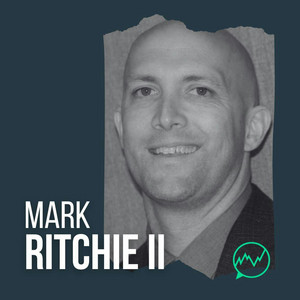
Our host, Ian Cox interviews Mark Ritchie II.
Now the name may sound familiar to some of you because Mark Ritchie's father, Mark Ritchie Sr.
was interviewed in one of the earlier Jack Shraggers Market Wizard series.
But Mark Ritchie II didn't simply inherit his place in the world of trading.
He worked hard learning from his father and trading mentors in his life one of them being Mark Minervini, who was another famous market wizard featured in an earlier Market Wizard book.
Mark Ritchie II has achieved his own great accomplishments in his trading career.
And we'll hear more about that soon.
We don't get as many swing traders on the show.
So it's always awesome to have a swing trader to chat with and learn more about the approach, Mark's approach and trading philosophy.
So ladies and gentlemen, we are so pleased to present Mark Ritchie II from Illinois.
Well, Mark, I'd like to welcome you to Chat with Traders.
Thanks for having me Ian.
Yeah, I appreciate the invite.
As I said prior, you guys have had a great guest list.
So honored to be here.
Fantastic. So where are you at now?
And where did you grow up?
Believe it or not, I am, yeah, coming to you live from Wakanda, Illinois.
And those who've seen the whole, yeah, Black Panther Avengers thing.
Wakanda was here long before those books and movies and whatnot, or excuse me, comic books and movies came out.
It's not spelled the same.
It's a suburb outside 45 miles northwest of downtown Chicago.
So I would often say Chicago, but I am not downtown, but that's the closest major city.
Okay, fantastic. So tell us a little bit about growing up in your early interests.
Classic Midwestern, I would say childhood, great parents, fairly conservative household.
Obviously my dad was a trader.
Some people may know that we can get into that, but I had no interest in those kinds of things.
I was your classic, liked the outdoors, played sports, games, regular Midwestern stuff.
How much were you influenced about the markets by your father, Mark Ritchie Sr., who was interviewed in the Market Wizards book 30 years ago?
Boy, and this is one of these, tell me how long you want to cover this stuff.
I would say in terms of actually being interested in markets probably zero at the time growing up.
I didn't really know what my dad did.
He was a pit trader.
For those who aren't familiar, just put a little bit of color to things.
He was a kind of a pit trader in the 70s and 80s, really kind of left that active side of the business right around 1990, worked off the floor for a number of years, and then was this sort of semi -retired.
So it was kind of out of trading by the time, like in a real active, everyday kind of way.
By the time I would've been old enough to be interested.
So a lot of people think I traded on the floor.
I've never traded a mint on the floor.
I visited a lot when I was a kid.
I just thought, you know, and when I was really little, you knew dad had a busy day.
If he came home and his voice was hoarse, or he wasn't talking much at dinner because he was yelling and screaming in the pits all day.
So, yeah, no concept of what markets were or anything like that.
As I've looked back, that I do think was really good for me was we just, we played a lot, we were at a family.
I was one of five siblings, played a lot of games.
A lot of games at chance, you know, those kinds of things were sort of that probabilistic thinking in real time.
I do think that was really helpful.
And I've noticed, you know, it's very hard to gauge, you know, what's a good background even.
And you talk to different traders, 10 different traders, you get 10 different stories and all, you know, that kind of stuff.
But I do think, you know, even gambling, I'm not a gambler, but I understand at least the people who are successful in gambling how they're not thinking about the teams.
They're thinking about odds and probabilities and numbers and that kind of stuff.
And so for me, yeah, games, that was one thing I did a lot.
First job, I was a volunteer camp counselor in my first, let's see, 1993 or four, I was 12, maybe ages 12 to 14.
And I got paid, I think I worked 40 or 50 hour weeks, four or five weeks a summer.
And at the end of each summer, the first summer I got paid 20 bucks.
I did the math on this at one point.
It came out to be like a nickel an hour or something like that, but it was one of these deals where if you were a counselor in training, then you could be a counselor.
And the short story is actually by the time I was 22, I was running in place.
So I did have a little, I wouldn't have said it at the time, but just that idea, I guess I was responsible enough and sort of climbed that ladder.
Yeah, so that was actually my first job and a number of successive jobs, summer work kind of thing throughout high school and college.
How did you first get into the markets or get really attracted to it?
And when did you set up your first account?
That was much later or several years later.
I knew about markets.
I hadn't done any actual trading.
I did for a short summer, I went to work for an old associate of my dad's who had worked for him sort of off the floor who was doing some trading.
And that was more of a just sort of like a glorified assistant, helping somebody out, checking numbers, doing that kind of thing, placed a few trades.
Did that for a few months.
That was my first exposure into kind of active markets.
And I enjoyed it, but it wasn't a real fascination.
And then it was more of, I can't remember who said it, but life is what happens when we're busy making plans.
I was at John Lennon, but that's kind of my story.
It was really more of, I had done nonprofit work working for this particular camp, wanted to run into place.
I was married and realized I had to sort of hit the peak of where I was going to go there.
It wasn't really about climbing ladders.
It's just, I think I got to do something else.
You can't work at a camp forever.
Real life is starting.
I got a kid on the way.
And so, yeah, I went to work for that same associate or person I'd known before they happened to call and it was a job.
It was not an interest.
It was just sort of one of those, I need anything.
Let's give this a try.
Sort of who do you know, not what you know.
And then, yeah, we can take it from there.
What year did you set up your trading account and actually start trading?
So yeah, just to fast forward then, I worked for that individual for about two and a half, three years.
So I started right at the beginning of 2007, full time, going to work for somebody else.
And again, it was sort of a similar type of deal, just kind of an assistant, placing watching trades for someone else and supposedly doing some different things.
I did that for till about the end of 2009.
And that ended about as badly as it possibly could.
I've told this story a few times, but that particular individual, I wound up having to report for fraud.
And it was sort of one of these deals where along that process though, then I kind of got the bug a little bit in terms of just interested in markets, interested in the puzzle.
What is going on here?
Why does this thing go up and that thing go down?
And trying to figure out like, is there a way to solve for X in this situation where X being some type of consistent profits?
And so it wasn't until after that, I just kind of decided I'd had some ideas and different things I wanted to try.
And thankfully I did have access to a little bit of sticky capital in my dad.
And so it was January, well, it was really late 2009, but I didn't start trading until January of 2010, borrowed a little bit of money from him.
And I don't want to say the rest is history, but that's when I started off on my own.
And I've basically been doing the same ever since.
Oh, wow, great. So tell us a little bit about your early mistakes in trading and how did your strategies evolve and what happened in the early years?
The good thing for me was I definitely knew, I'd read enough and I had enough conversations, say with someone like my dad or experienced, had enough, I don't even want to say knowledge really, but at least to know some basics about risk management.
So you hear a lot of stories about, well, I blew up an account or whatever, I never did that.
But the experience of working for someone else who kind of effectively did put enough of that fear in me, if you will.
I watched somebody else blow up in a different way and it was sort of had a front row seat for that.
And sometimes in real time, we don't realize what an impact those things have on us, but that definitely, to use the phrase, I put the fear of God in me.
At least in terms of, listen, if you don't manage risk, if you're doing non -disciplined things, you're just sort of an accident waiting to happen.
And that was the one thing my dad had definitely did instill in me.
It was more indirect than direct.
But the biggest thing to answer your question though, was when I started, I didn't understand, I just figured, hey, you got a plan.
You always know where you're getting out before you're getting in and everything will kind of take care of itself.
Sounds good, right?
And you read enough about, you read any interviews.
Nowadays, this is before the whole podcast thing took off.
There's so much more in terms of resources and materials for folks, even though when I started, and I'm not that old, there really is, the tricky part is that emotional management and self -sabotage and sticking with plans and the idea that everyone knows if you're going to be successful, at least, or they
should know, you've got to take losses, but they don't tell you how those losses are going to feel.
And so that's where I would say, you know, one of my, the story I would probably tell is, you know, I had some ideas, okay, I'm not going to risk more than, I think it was something like 1 % of capital or 50 basis points, half a percent.
And then I took a couple of successive losses like right in a row.
And I was like, man, this is horrible.
I mean, it just felt absolutely terrible.
And so, it was more of the idea of, okay, I've gotten in the ring and I got this, I got all these great ideas of how I'm going to fight this fight, and then I got hit a couple of times, realizing, wow, this feels way worse than I had previously anticipated when you're the one calling the shots.
I'd seen it, I'd seen it in other people.
And, you know, I can provide more color on that, but that's the thing that sticks out in my mind right away.
And why I always encourage people as well, don't paper trade.
I think paper trading is a huge mistake because it doesn't matter how, I'm not against the idea of research and those types of things, or of your back testing.
I mean, back testing is a really loaded topic as well, but it's more on the idea of you have to feel like, you have to know what it feels like to get in the ring, use the boxing analogy.
I've heard some people say, you know, it's like shadow boxing, you know, preparing for a big fight and then you get in there and the first time you get hit, it's like preparing for a full contact sport with no contact.
How in the world are you going to be able to play in real time without ever feeling any contact?
So even if it's, I don't care how much money you have, and that's what you have with Robin Hood, put 50 bucks in account, trade real money and work your way up that way.
So wouldn't one want to trade an amount that, where they feel they have skin in the game?
So for example, if somebody had a $100 ,000 count, if they only put on a $100, $200 trade, it may not, and they lose, they say, oh, who cares?
Do you need to have enough skin in the game to feel just enough pain to motivate you to learn from your mistakes and develop a process?
100%, couldn't say it any better.
And I think your point is really interesting though, even too about, look, start at a size to your point, maybe it feels meaningless, great.
That's a good place to start.
And then you work on your confidence.
The idea of even establishing an edge.
Well, I would much rather prefer someone do that with a small amount of money, figure out if they have an edge and then bump their size up.
And this is precisely, look, if there's one thing I believe in, in terms of whether it's teaching people or have lived myself, it's the best way to give yourself confidence is to start small and establish, well, wait a minute, if I've got a set of whether it's 10 trades, 100 trades, 1 ,000 trades, I
don't care what amount of money it's on.
Once you demonstrate you have an edge, you have to let, then you let that experience inform your behavior going forward.
And that will give you the confidence that you need to then put more on the line.
And so I laugh about it now, something like I lost, I don't know, a thousand or two dollars in those first couple of trades and I thought it was the end of the world.
Now I'll pay more than that in a commission on a big trade, but it's been a process of, and I can remember years later having some success and taking losses much larger than that and actually saying to myself, but wait a minute, are these normal in terms of a normal drawdown?
While the financial impact may feel terrible, have I seen this before?
Have I had a string of losses like this and realizing, yes, and so long as I'm doing this correctly, there's a bright future for me because I've got an edge and as long as I can continue to maintain that and turn it over, profitability is inevitable down the line.
I think that's how I thought about it and that's how I still think about it.
Even when I'm in periods where it's a tough, it's more difficult in the market.
Asking myself, well, is this normal?
What are the numbers say in terms of my edge?
And we can talk about shrinking size and tougher periods and that kind of thing, but the idea being it lessens again to my point from where I started about that emotional impact.
And once your emotions are running on overdrive to think you're gonna be making really good decisions or sticking to discipline and to sound trading tactics and rules, you've got another thing coming.
Well, some people argue that paper trading is okay for practicing or figuring out if a method or strategy works, but it sounds like you're also saying that the emotional component is critical in that process and that if we don't go through that, then all the paper trading can lead us down a path that is not fully
fleshed out. You made a sort of, I think it was like a subtle little point there.
The idea that, okay, the paper trading may let you test out some things, but you're missing a key component in terms of how you're feeling as you're doing the trading.
Wherever we, it's like, I often say this in everything in life, like wherever you go, you're still there or they had that idea of like, I can't remember who said it, like we've seen the enemy and he's us.
There's no profession like markets and trading where that's more true in my opinion.
So you can't remove half of you from the equation and I'm saying that that paper trading pulls that emotional element out and this is true.
I've known people, I had a friend do the same thing and I told him this for a long time and then finally he put, it was like 20 bucks or something on the trade and he's like, I couldn't believe how much my blood pressure rose once I hit the buy after paper trading.
I was like, that's okay, welcome to the business.
The rest of that stuff is all pretend until there's real skin in the game.
What number that is, it can be different for different people but even the idea, I just encourage someone, fine.
Paper trade with, are not a real trade then, even with an amount that is very, very small, you're gonna be much better served.
So let's talk about your process, how you've developed one over the years, have you modified it much over time and kind of what have you learned through this whole journey.
Chat with Traders is brought to you by Tasty Trade.
Tired of trading on rookie apps?
Then get the platform for serious trading.
Tasty Trade, Tasty Trade gives you the tools to trade your way.
Chart your heart out with over 300 indicators.
Know your odds with probability of profit and move fast with quick roll.
Trade what you want and trade it your way.
Stocks, options, futures and more.
All in one account on one platform.
No wonder why serious traders choose Tasty Trade.
Visit TastyTrade .com and see for yourself.
Tasty Trade Inc. is a registered broker dealer and member of FINRA, NFA and SIPC.
Hey, I got a great update from Trade The Pool.
Now it's even easier to get funded.
As you know, Trade The Pool built a unique program to evaluate stock traders like yourself and provide you with the company's funds to trade with.
It's real shares and you no longer need to worry about the PDT rule but that's not all.
Trade The Pool has introduced a new tier with $20 ,000 in buying power, making it easier to pass the evaluation and speeding up the process of getting funded much faster.
You don't wanna miss this opportunity.
Sure and here's where we've been blessed to have some really good mentors.
And yes, our general process is we screen, I say we because I've got a co -portfolio manager that I've been working together with.
We both, for lack of a better word, have kind of come up through the school of hard knocks where trying to figure out what really works.
And so one of the things, we are bread and butter is just swing trading equities and primarily from the long side because I can get into why I think there's just a better risk reward there for a variety of reasons, but to answer your question, we manually screen through somewhere between 600 to 1 ,000
names a day, every single day and then just call that down to watch lists where and from there it sounds boring but when you go through that process enough times and get really good, your eye gets keenly trained to sort of spotting and all of this is based on, I mean, 90 % of it was taught to me by Mark
Minervini but it's in the tradition of timeless principles based on the biggest winning stocks in history going all the way back to 1900.
So guys like it's not, Mark Minervini took it, took somebody like William O 'Neill's work to a more surgical level.
And William O 'Neill took guys like Nicholas Darvus's work and Richard Love's and going all the way back to Gerald Loeb and people like Jesse Livermore.
You read his book, How to Trade in Stocks, which was written in 1940, but it was describing principles he was using in the early 1900s, sort of timeless principles and what drives stock prices and where the biggest winners come from.
So that's really what we're looking for, studying these past precedents.
And then just assembling, again, we're taking a wide sample, calling it down.
And so yeah, you learn how to spot certain characteristics but then also you tend to get a decent feel for overall market health.
I often tell, most people don't believe me when I go look at aggressive long side trader at times but have not been caught in any of these major bear markets and declines we've had over the last 15, 16 years.
It's because the stocks give you a lead on all that stuff.
When you learn to do that process well, and that's even something I try and educate people in now because the little guy has a tremendous advantage over the major fund or institution that has to move tens of millions of shares or hundreds of millions of dollars where the minute there's certain signs
that sort of show up, you can raise cash and get out of the way if you will.
Yeah, the general process though is that screening process first.
Then we take any ideas we think are closely buyable, put them on separate watch lists.
And it then becomes just a matter of then gauging the price action in real time in terms of our read comes from an any good market call I've ever made and that kind of thing is not cause we're looking at magic indicators or anything, we don't even have any of those.
I don't think they exist personally, but it just comes from running that process over and over and over and over again.
So you said you don't look at indicators.
Do you look at fundamentals at all?
And as far as technicals, kind of what do you look at if you are not looking at any indicators?
So any of my indicators is I mean, I don't classic sort of technical indicators, stochastics or RSIs and MACDs.
I couldn't even tell you what most of those things are.
Again, I want to be clear.
I'm not trying to be disparaging to people who use them.
I just haven't found to be helpful in terms of what we do.
If you just gave me price and volume, that's really all I need.
As far as the technicals, now to answer your question on fundamentals, yes, we do look at earnings and sales in the most recent quarters and margins.
And then we'll look at the industry group of course.
And this is where you just see themes where you can often, and one of the screens we like to run and our screens are not, there's no secret sauce, even in terms of, I'm intervening private access where we do some consulting.
I'll tell you every screen we run, we even give people screens.
The goal is in running them and kind of living through that process, where you start to be informed by that discipline of doing things all the time.
The fundamentals though, definitely play a role in terms of the biggest winners in history often have earnings or sales or ideally both on the table prior to making some of their big moves.
And again, anybody that you can read How to Make Money in Stocks by William O 'Neill or either of the two books, Trade Like a Stock Market Wizard or Think and Trade Like a Champion by Martin Nervini are good resources there.
Those are kind of, I don't want to say the A to Z what this stuff is based upon, but so those are the fundamentals we look at.
And then there's certain areas within the market itself.
So in terms of fundamentals, I like the classic growth groups where the biggest winners come from is another area.
So if those areas are acting well, say versus other areas in the market that maybe aren't as sexy or safe haven trades.
Things like tobacco and insurance or classic food sections.
When those are setting up or acting well, that usually tells me that there's not a big risk appetite out there because why institutions are going there to hide, they're not versus other areas of the market.
So, but again, a lot of that comes from when you run through that process enough, you get a really good feel for where the money's going.
And this is where we tend to be agnostic.
People are like, what stock do you like?
It's like, I want the stock to pick me, I don't want to pick it.
And I'm gonna do that based upon, if it's coming across my desk in terms of the routine regularly, and it has a bunch of these criteria in terms of how it's acting, that's how it picks me.
I don't go the other way around where I drop a thesis and or look at valuation and then decide, I need to buy this stock.
It's completely the opposite.
So do you look at market flows into different sectors, like you mentioned, tobacco or say certain conservative sectors to see whether it's a market regime change going on?
So I don't track that in terms of like where I have an indicator.
This is where, so one of the screens we like a lot is just we look at the top relative strength names just on that basis.
And relative strength meaning relative to other names in the market, not relative strength index, a 52 week relative strength, say, how is this stock holding up versus everything else in the tradable universe?
Well, that will tell me then, if I see certain groups in there, why are these holding up relative to other areas?
But I'm not necessarily looking for where's the money flowing right now.
I'm saying, hey, well, the relative strength will eventually tell me that.
It's almost like casting a wide enough net where I'll catch that stuff and then I can kind of cull through it as we go.
Does that make sense?
Yes, yes. Tell us about the necessity of building a plan.
Because in one of your other interviews, you're quoted as saying, a bad plan is better than none.
So what is an example of a bad plan and perhaps even a good one?
Oh, yeah, really good, great question.
And yes, that is something I think I've said is a bad plan is better than no plan.
And a bad plan you follow is better than a good one you won't.
I think it's kind of how I've said it.
And the way I just think about this, look, Ian, think about it in terms of a different endeavor.
If you and I are sitting down to play chess and I know nothing about the game and I'm just moving pieces around and you know very little, but maybe it's not even a good chess strategy, but you just stick to it, odds will be you may not beat me every time, but you'll probably beat me over the long run
if we play 10 games, you know what I'm saying?
And most people don't think about that too in terms, the reason I bring up that even the game analogy, you and I play in chess, I have no strategy and I beat you and you have a strategy and you lose.
So do we conclude that I'm a better chess player?
I would say no, we need to play 10 times.
Maybe we need to play 50 times.
And then the reality is in markets, that's what we have.
You don't have one trade, one investment, one idea, you're gonna have lots.
And what really separates people is not the one right now.
And too many people obsess about, was I right or wrong today versus was my plan good.
And if I continue to enact plans like that over time, where am I gonna be?
And again, all forms of speculation are probabilistic anything.
You know, if you and I flip a coin and I say, look, heads, I pay you $1 .05 and tails, you lose $1.
If we flip that coin enough, the edge is tiny, but if you flip it enough, you're gonna wind up ahead.
You follow me on this, right?
But I think this is really subtle, especially then you add emotions and other things on top of it.
I mean, sometimes you hear somebody saying, well, that strategy didn't work.
And they tried it, I don't know.
Or they listened to somebody like me and I give them, you know, I like this idea and they get stopped up, oh, that guy doesn't know what he's talking about.
It's like, do it a thousand times and tell me, I don't know what I'm talking about or whatever it is.
So your question was, what's a bad plan or was it what's no money?
Yeah, I mean, how do we know if a plan is a bad plan and what indicators are a plan is a good plan?
Cause wouldn't it vary depending on the market regime that we're in?
Certainly. And obviously we're getting more nuanced from, and keep in mind, my initial comment is because what do a lot of people do?
They just open up an account and start buying stuff or short and stuff.
I mean, they don't have any plan, right?
So and even the idea of seeing your process where there are certain firm guardrails that you are not gonna deviate from, risk management has to be the bedrock in terms of, okay, so for starters, not knowing what you're gonna risk in anything is by definition a terrible plan.
So somebody will ask me, I bought this stock, what should I do with it?
Well, how in the world should I know?
You should have known that ahead of time.
I mean, you and I could probably come up, I've never come up with like a list of 10 commandments for a bad plan, but no risk management would be one, no context for sizing.
If you have no risk plan, then you're gonna have no sizing plan either.
How would you know how to size the trade?
No exit plan on for profits is another one.
I mean, there's a couple of things I'm focusing on exits, but even the idea of is whatever you're doing repeatable by definition.
And why'd you buy this?
I saw it move and I grabbed it.
It's like, well, what was that?
Is that a plan or is that just, you're just decided, well, I chase the shiny object.
And people don't understand this either.
And it's important point.
You can trade everything from a phone in your pocket now, multiple markets all night long.
You're being bombarded by stuff.
So to be able to take that world and narrow it, is really that is the hard part I think for the modern trader where 40 years ago, you didn't have access to this many markets.
And if you call brokers and even then, it's like the executions were delayed.
And if you were, most traders traded one or a couple of markets or you had to go into a pit somewhere.
So it's finding how to make the world smaller, if you will.
And where you're able to ignore all that other, all these other things that are going in any one day.
Now, so the example of a bad plan, like I said, would be anything based upon emotion, anything based on non timeless principles or where there's no positive expectancy historically speaking, I would argue is a bad plan.
You're just gambling.
Most people don't like hearing that.
But the reality is, a lot of your modern retail traders, in my opinion, are no better or no worse depending on how you look at it, than someone walking in a casino.
They're buying and selling and trading for other reasons than really to make money.
That's a whole other road.
But so yeah, anything you're doing based on sort of non -discipline and then specifically non -historically, really good principles, I would argue is a bad plan.
And then specifically, like I said, nothing to do with risk or think, not thinking risk first would be an example.
Now, here's another example of at least a bad plan for me or something I don't do.
But let's just say hypothetically speaking, you've got a plan to buy something and then average down.
I don't believe in average down, averaging down.
I don't do that. However, I still think if your plan is, okay, I'm gonna buy something and I'm gonna buy a little bit more, if it stays in a range maybe I wouldn't just blindly and then stop out at a lower level.
Well, there's a plan I think is a bad plan, but at least you have a plan and you have a spot where you're gonna get out.
Maybe you're trading something in a range, you'll buy it as it comes down and then as it goes back up, you'll scale out or whatever.
I mean, there are people who make a living trading and doing it that way.
I don't. And so there's an example of a plan I would never use, but I think as long as you stick to it and follow it versus the guy who has got this massively intricate plan, so much so that he doesn't follow it.
I'm gonna buy this as it breaks out and then it gets up this high, I'm gonna sell a percentage of it and then it pulls back.
You get 25 steps to his plan and then once he's in the heat of battle, he doesn't really follow any of them.
So that would be my example of maybe a really good intricate plan, but someone can't actually stick to the discipline and execute it.
So when talking about entries, how do you define and quantify a low risk entry?
What does it look like?
Maybe even from fundamentals if you're using it and or how would that look like on the charts?
Yeah, it's pretty simple in terms of the charts.
And as far as the entries are concerned, so I may wanna get involved because of the fundamentals, but in terms of the actual timing and execution of trades, it's always gonna be because of the technicals or I'm looking for technical confirmation.
And there may even be situations where some, my technical work, someone goes, well, that doesn't look as low risk or whatever, but I still like, there's gonna be some non -negotiable technical criteria.
But the really short answer is, I want something in a long -term uptrend and then I'm looking at defining that based upon the weekly chart and sort of, or maybe something like the 200 day moving average and then meaning those are gonna be in uptrends.
So I'm not, I'm never bottom fishing.
I'm never picking things off 52 week lows.
I don't even see those names.
So when someone usually, what do you ask?
What do you like about XYZ stock?
If it's not in a long -term uptrend, I won't even see it.
That's one of the ways I'm calling the market down.
And then I'm looking for really, the best way again, in a very short form is a tight consolidation or pivot point where I can know in relatively short order if I'm right or wrong.
And for me, short order is days a week or two at most because I wanna get, I'm looking for efficiency on my capital.
I'm looking, I wanna know relative.
I don't have to sit around and wait to find out if something's really under accumulation or the story's really, however you like to think about the other things.
You know, I often like to say, if the story is so good and the fundamentals are so great, why isn't the price corroborating that?
I'm a big believer in that.
And especially for folks, this is a really highly underrated idea in my opinion, that efficiency of capital because it's a huge market.
There's lots of things, especially in this, it's a huge global market, but even the US, I'm speaking broadly the US equity market.
There's just so many ideas.
So I'd rather, I would rather get efficiency on my money and turn that edge over.
And it's just, I found a much better way, especially for smaller accounts to really outperform.
If you learn how to do that and do that well, it takes time, effort, skill and discipline, but it's something that can be learned.
What do you look for, like in the charts, if you get a buy signal on a stock and you go in long, how long will you hold that?
Say if it stalls out and you talk about efficiency of capital and say the move doesn't follow through the way you expected, but it's not drawing down to say your stop loss and it say it starts to go sideways.
Do you have a certain time period that you look to give it a chance before you just dump it just because it kind of stagnated and then move on to the next pick?
Yeah, so I would say, and it depends.
The short answer though is if I'm at a multiple of risk, and this is where I'm always thinking risk first.
So like you said, it stalls out.
Well, where are we?
You know, in terms of if I'm already at a multiple of my risk and the stock has run and now it starts to stall, well, that's usually where I'm thinking I can take partial profits, all profits turn the edge over.
And those are things where normally then we're looking at a number of different things.
How short term extended is the name?
Because nothing goes up forever.
And then of course, what type of trader am I?
And this is where, again, even within, even if you're a swing trader, or people use that terminology, there's a number of lanes on the highway.
There's shorter term swings.
They wanna sell right into that first move.
And then there's guys like myself who I usually wanna play something out for at least days to weeks, maybe even months.
But I wanna then again, to that point earlier, rather than trying to pick what stock I think is gonna act the best, I want the price action to tell me.
So the stronger the name is, the more likely I am to try and give it the benefit of the doubt because price is telling you something.
And to me, listen, there's always a caveat to certain rules and things, but as a general rule for discretionary breakout type traders or discretionary traders that are directionally trading with the market.
One of the best indicators I have found is that if you buy something and it puts you under very little pressure or just takes off, the market's sending you a signal that your timing's right or it's under accumulation.
And I found that the better I've gotten at this, that has been, and the temptation is often to do the opposite.
Well, I've got three names on and this one is up a lot.
I don't wanna sell it, right?
Cause I gotta, you know, and normally it's like, that's the one of the three you got on, you wanna give the benefit of the doubt to.
And the mistake most people make is they sell all of that one and hang on to the worst one or don't worst, don't take the loss on the worst one of the three they buy.
And it should be the opposite.
You should be selling the one that isn't following through and moving that capital somewhere else and then maybe only trimming the name that is the most extended at that point.
But honestly, it's more of how extended is it short -term and then understanding, again, based upon studying these things, what's normal, what's abnormal, and there are different things, you know, that we look for, and those are kind of little nuances.
If a stock has had the largest move in a short period of time that it's had, say over a certain period, that's a signal that maybe you're even getting parabolic or exhausted or a stock goes parabolic, then we're moving completely in this sort of profit protection mode.
You can set some type of a backstop or a trailing stop where, and there's a lot of different variations within that.
So when it comes to exits, how do you manage risk?
Do you base it off of, say, average to range or volatility to set your stops?
Or do you do it visually based on where you see the support and resistance on the chart?
Are we talking about exits for a loss or exits at a profit?
Well, I used to say both, yeah.
Well, yeah, so, and exits for a loss are usually based on one of two things or both.
The first is an acceptable risk point, to my point before where I kind of know in relatively short order, is this train coming in on schedule?
And that can be just a percentage.
And as a general rule, I don't take individual price stops or stop risk on a percentage basis of more than 8%, 8 to 10 being the max.
And usually I want to be mid single digits.
My long -term average is under 5%.
So I'm very tight on, in terms of those stop losses.
And then the gains just become a function of my average loss.
So as a rule, I don't wanna sell a stock that's acting well or less than my average gain if I can help it.
Because again, I'm managing an edge.
And the goal is, you know, is I'm thinking in probabilities, not in tickers and stories.
This is an edge probability game at the end of the day.
We're trading pieces of paper here.
I know some people may not like hearing that, but that's what a lot, that's what these stocks are.
So yeah, the gains then become a function of, how do I maintain an edge based upon how often I'm right and I have to make a certain amount to pay for losses?
Now, again, there are technical considerations and it doesn't mean I just, every time I get to two times my average loss, I take a profit.
But that's where I start looking then for how extended is the stock?
How well is it acting?
And there's different, there's a whole list of confirmations and violations that we watch and go over.
So - What would you say to traders who get stopped out on a trade and then they look for signals to get back in because they feel like, oh, I know this is gonna turn around and they feel glued to that stock?
Or what's your attitude on that?
Do you just flush that stock out and then move on to the next one in the list that makes the cut?
Do you have to run it back through your process again before you get back in?
Yeah, and well, the reality is, so I would much prefer to take a sort of a tight stop, if you will, and keep the name on their radar versus the other two alternatives, which is one, not take the stop and hold a loss or kick the stock off because it stopped them out emotionally and say, well, I'm not gonna trade
that name again. Remember, these stocks don't know who you are.
They don't know who I am.
They don't know your name.
They don't hate you.
When people say, ah, this stock never works for me.
Well, it may feel that way, but again, that's not reality.
So what, yeah, I would say is you get a plan or re -entry.
The key is that you don't just get enamored with a name and are constantly trading it back and forth just because you want to own it for if or when it goes.
And that's definitely a pit that people fall into.
So you just need, if you're gonna be a trader who trades with tight stops, you're gonna have to have, you're gonna get shaken out.
You have to account for that, which means you need some re -entry mechanisms to know, okay, what do I need to see?
As a general rule though, if I get stopped out today on a name, I'm probably not buying it back for at least a day or two.
I'm gonna wanna see, usually if that's happening, if volatility is widening a little bit, that's what's triggering my stop.
So I'm gonna wanna see it either come back into a range and settle again and then try and reassert itself.
We have different techniques we use for trying to get back on board situations like that.
How has your performance been over the years since you started in 2009 through the many different market regimes that we've experienced?
And have you found certain market regimes to fit your strength more or less?
What do you mean by regimes?
Oh, like regimes different, different types of markets and bear markets, yeah, you know, choppy markets.
Yeah, I would say for me, well, listen, our performance has been quite good, you know, in terms of long term, it's been a function of there are periods where there's a lot to do or very aggressive and there's periods where we do little to nothing.
I've had months and months where generally in bear markets and the bear markets are shorter and a lot of people say things like, oh, you know, there haven't been that many bear markets over the last 15 years, but we've had some vicious declines, things like the flash crash, we had the fiscal cliff decline
in 2011, we had a cyclical bear market in 15 and 16.
Obviously the COVID decline was a monster.
We had this bear market in 22.
So those usually, like I said before, the process helps us just kind of being in cash.
We're raising cash well ahead of the major decline.
And because the riskiest, you know, or growth momentum areas of the market usually start trading poor well ahead of time.
So the hardest periods are often, yeah, markets, like you said, that tend to be a little bit choppier or where we have ideas, but maybe volatility is a little too high or you're coming out of bear markets and where there's still a higher level of volatility where it's harder to get positioned with sort
of a tight stop and you get that sort of death by a thousand cuts, where, and the way we manage risk is, listen, if you were gonna knock me out, you are gonna have to jab me to death.
Meaning I am not gonna open myself up for that, you know, Mike Tyson haymaker that is gonna put me on the mat.
I'm gonna make you, you know, Nick me and Nick me and Nick, you know what I mean.
So we're always, and our bigger drawdowns have always come as a result of sort of getting nicked down, if you will.
Then the best periods, you know, really have been coming out of corrections and bear markets.
Bear markets are the authors of bull markets and every time fear and skepticism, pessimism and everybody thinks the world's coming to an end, on the other side of that, you know, the sun still rises and it's always a good period.
So we kind of look at the more volatile periods or even bear markets are, we're not looking to survive, we'll thrive on the other, or sorry, we're just looking to survive and go sideways, we'll thrive on the other side.
That's been precisely how it's been.
I mean, if you weren't at my best year, 2010 was a phenomenal year, 2011 was a great year, 2014, 2017, number of those years, you know, fortunate enough to do triple digit returns, 2020 was an incredible year, 21 was a great year.
I mean, there've been, and again, the other thing is most people don't understand, even really good returns, they're generally not linear.
They sort of come in bunches, you know, and you break out and have a meaningful, you know, advance, and then you kind of go sideways or mark time and then you go, you know, rather than, you know, let's say you do, you know, 40 % compounded over time, it's usually not just 2 % a month all the way up, you
know, it's like, you go in spurts and the key is obviously trying to make big advances and then wall off the risk and try not to give a lot back.
And, you know, that's sort of been our calling card.
Did you ever have pressures of performing like your dad, Mark Ritchie, senior?
Certainly, maybe early on, you know, I could tell a story there, you know, just real quick.
Cause I remember asking my dad, I said, well, what should my goal be or whatever?
And he said, you know, when your account's small, you should do somewhere between 200 to 1000 % a year until liquidity and volume becomes an issue.
That was sort of his metric in terms of the whole outfit.
Yeah. And, you know, this of course is a floor traders mentality also where there's very little, how shall I say, real time risk control where a guy can put on, cause he's standing in a pit way more size than any broker would ever allow you to do, you know, in a situation, but where in his mind, it's
like, well, if I know I have an edge here, so a little bit of a different mentality, you know, where I kind of knew early on, I was like, look, Pop, you know, the gunslinging days of the seventies are over, you know, it's not that you can't, not that you can't do very, very well.
So, and also he was a certainly for a majority of his career an individual operator.
So if you're managing even a little bit of, you know, somebody else's money or it's just a different mentality, you know, sort of being an individual trader than even having a, you know, we manage a small pool of assets that we've always managed.
So it's, you have to be a more cognizant of even your own volatility in a situation like that.
Excuse the last interruption here.
This is Tessa. We hope you're enjoying this episode so far.
If you love the podcast, please give chat with traders the best review you can on whatever platform you're listening from.
This will help us to keep the episodes coming.
Also, if you haven't subscribed to our email list, please hop onto chatwithtraders .com and click on subscribe so we can keep you posted of information that may be of importance.
Thank you. Now back to the chat with our guests.
Fantastic. So to wrap things up, are there any things you're looking forward to?
Well, listen, you know, to me, the market continues to be a place, you know, you hear a lot of people saying things like, oh, because of machines and all the different things, it's harder than ever.
I think all that's nonsense.
I mean, look, if you get really large, it becomes harder, but for the individual, I think there's still enormous opportunity.
And, you know, I wouldn't be doing what I'm doing if I didn't think that was the case.
So, and again, I think my, you know, at least our, my story and what we do kind of speaks to that end, you know.
I think as long as, as long as we're around, or as long as markets are around, again, the things that at least I'm looking at and the things that we talk about, I think are timeless.
These type of patterns situations are, they've been going on for as long as markets are here and they'll be happening long after we're dead and gone.
Well, Mark, thanks for coming on chat with traders.
Yeah. And can I just add too, you know, for those who are interested, we do do a seminar every year on this.
You can go to four stock traders where we sort of unpack this from A to Z.
That's a seminar I attended myself.
So I'm a guest instructor there with Mark Minervini, but for people who want to learn, listen, is there a process where I can identify some of these big winners beforehand and studying all these past precedents?
There's a 500 plus page workbook.
It's, I learn more every year, even though I'm teaching it.
And there's a really good community at Minervini Private Access.
We kind of look at the seminars like a flight school for people who are interested.
And it's a major commitment, but it's a worthwhile investment for people who are really interested.
So yeah, it's the number four stocktraders .com if you're interested.
And then like I said, we also have, you can go to minervini .com if you want to learn more or, you know, check out one of Mark's books.
Those are, you know, if somebody was to come to my office, that's what I'd hand them and that's what they'd see me doing.
So yeah, for anybody interested or you can, you can follow me on x -platform as well.
Underscore Mark Ritchie, Mark Ritchie underscore number two, Roman numeral two.
Okay. Fantastic. So great.
Multiple ways for our listeners to get in touch with you.
Great. Thanks again for coming on the show.
Thanks for having me.
It was a lot of fun.
You've reached the end of this episode of chat with traders, but rest assured, there are more episodes loaded with real market insight and zero hype on the way soon.
So to stay updated with each great new release, subscribe to the podcast and iTunes, and we'd love it if you'd leave a rating and review.
We'll catch you next time on chat with traders.
Thank you.