Chat with Traders is brought to you by Trade the Pool.
Becoming a funded trader means trading with a firm's money instead of your own.
At Trade the Pool, you first complete an evaluation by hitting profit targets while managing risk.
Once you pass, you get access to up to $260 ,000 of buying power.
You keep up to 80 % of your profits while the firm covers the risk.
It's the perfect way to trade big without risking your own funds.
Are you ready to become a funded trader?
Join Trade the Pool.
Chat with Traders is also brought to you by TastyTrade.
Ditch those rookie trading apps.
Get TastyTrade, the platform for serious traders.
Chart with 300 plus indicators.
Know your profit odds and move fast.
Trade stocks, options, futures, and more, all in one account.
See why serious traders choose TastyTrade.
Visit tastytrade .com.
TastyTrade Inc is a registered broker dealer and FINRA, NFA, and SIPC member.
Trading in the financial markets involves a risk of loss.
Podcast episodes and other content produced by Chat with Traders are for informational or educational purposes only, and do not constitute trading or investment recommendations or advice.
So if you're wondering who got the best lesson of chasing the fricking disco ball and leaving my job at Goldman Sachs where I probably had a really bright future and jumping into this market and chasing the tech boom at a time when the NASDAQ was about to collapse and like literally I was the sentiment
poster child. And in the wake of that, while I'm over here learning how to day trade, the book that I'm running at Goldman Sachs, the Bloomberg, the Goldman Sachs Commodities Index, which is now the Bloomberg Commodities Index, essentially, that thing starts taking off and it winds up going into a 10
year bull market and commodities.
Markets, speculation, and risk.
This is the Chat with Traders podcast.
Welcome to Chat with Traders, this is Tessa, and today my co -host Ian joins me live in introducing episode 282.
Hey, Ian, how's it going?
Oh, great Tessa, glad to join you here.
Yeah, it's always a treat when I get to chat with you for a little bit before we introduce our guest today.
How was your trading day today?
Yeah, I'm doing well.
Today was a kind of quiet day in the market for me but looking for the next opportunity.
How's your trading going?
It's going. I have recently started to get back into trading a lot more actively now and I started intraday trading more, something I never thought I would do because it wasn't my cup of tea.
As a swing trader, I normally like to not be at the screens all day but I've been intraday trading and at the screens more often but I try to get out after about three hours from the open but it's going well.
Fantastic, good to hear.
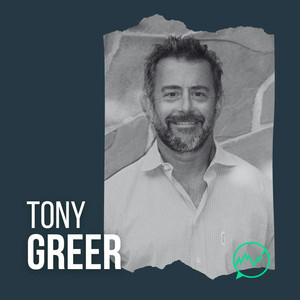
Well, you have a chance to chat with our guest today, Tony Greer, a seasoned trader of 25 plus years of experience in the financial markets.
Any key takeaways that stood out for you?
Yeah, well, chatting with Tony was like taking a deep dive back in time.
His stories of the dot com boom brought back so many memories for me of this exciting time.
The college students he talked about who would bike into the office, make a few trades and then go off to their classes and then come back to trade near the end of the close reminded me of my coworkers at the software company that I used to work for who were all infected by the trading excitement of that time
and hearing him describe what it was like being a trader for Sumimoto Bank and Goldman Sachs, the victories of some incredibly stressful times was gripping for me actually.
It was really fun material to make a movie out of actually.
Yeah, so what was it about the part where he talked about the college students that would bike into the office reminded you of your time.
Yeah, well, it reminded me of just anybody could make money in the markets that time.
It was people confused profits with brains.
And so during that time, it was kind of a gold rush, get rich quick mentality that of course eventually flipped around and very nasty bear market of 2001 and two but it was very kind of memorable like something you'd see in a docudrama.
Do you miss it? Yeah, I kind of miss those days.
I mean, those days were the early days of my trading and to see and feel the Uber excitement, you could say.
People, a lot of my coworkers, they were doing more trading than they were actually working.
So - Probably not so different than today.
I bet you a lot of people are trading more than they're working, especially those that are working from home.
Yeah, any quick things that you got from listening to Tony?
Some of the things that stood out for me and we don't wanna give away too much but I can tell that Tony really admired his dad and that his dad had a really big influence in his life with his trading and his professional financial career.
I thought that can really make an impact in someone's life when someone close to you is really supportive and has that kind of influence in your life.
Yeah, and one more thing that really stood out to me that he had a survival attitude in the market.
That stood out to me because the way that he talked about it, his survival skills, it was just so fascinating and really made me pay attention and see how it can apply to my own trading.
Yeah, yeah, he's a veteran with a lot of accumulated wisdoms.
So let's dive in. Ian, take it away.
So Tony, where are you now and where did you grow up?
So right now I am sitting at my home office in Atlantic Beach, which is probably about 10 miles from where I grew up in Merrick, Long Island and went to Chaminade High School, Cornell University after that, started working on Wall Street.
When did you actually first hear about the financial markets?
What was your first exposure?
Yeah, I was a toddler.
Okay. Quite honestly, my dad traded over -the -counter stocks for Dean Whitter for 30 years, sat in the same seat.
And he got that job when I was literally a toddler.
So I knew what bids and offers were like in junior high school.
I really loved the, you know, he was the, I had never heard other people either in my family or my friends' dads talk about their job like my father did.
And he had so much energy and passion for what he was doing.
And it sounded so exciting and so competitive.
And, you know, I was a mediocre athlete in high school and, you know, try to figure out what you want to do.
When you hear something as competitive as that, and that sounds like such both an individual challenge and a kind of a team sport when you're on a desk and all of those things appeal to me.
So I kind of knew going into college that like I wanted to trade somehow.
So he didn't project an atmosphere of like, oh, this is incredibly stressful.
And it was more fun for him?
His eyes used to light up when he made money.
And I knew kind of what that was all about.
You know, when you ran a book and over the counter book, you were kind of a position trader in 30 or 40 stocks on your pad, you know, and you can have whatever position you wanted on there.
You know, I kind of understood that.
And I guess understood the buy low, sell high, competitive nature of the trading game super early because of that.
And I knew that there was like an extra level of like, as I got older, certainly not as a young, young kid, but as into college and stuff like that, I knew that there was some kind of, I picked up on the fact that there was this very much a little bit of a casino feel to what was going on sometimes,
you know, because money was made and money was lost and there was a lot of money swishing around as that's all I knew.
And my dad was like really animated and excited when he talked about his job.
And I don't, it was definitely really infectious.
So that's where I kind of come from that position.
Did he introduce you to any books or any educational material early on?
No, man, my dad didn't go to college.
He was all street smarts and like PhD level street smarts, like nothing that I can even describe.
And so when he got this job at an official firm, literally he had a job like parking cars.
And because of his personality, a guy that worked at a big shop was like, I'm hiring you.
And the personality also applied to, you know, being open -minded and a free thinker about trading.
And like my dad was like, and one thing that I've been able to adopt as a trader is that my dad was not dogmatic about anything.
You know, it was like, oh, maybe this is going up today.
Maybe it's going down tomorrow.
And I gotta be long to make money one day.
I gotta be short to make money another day.
Like I am, anything is game.
So that's some of the things that he instilled about it.
I don't want to get too far away from the question.
Oh, so there were no books.
That was it, that was it.
Everything was straight smart.
And he didn't get his education from reading anything.
He got his education from watching the tape.
And so I learned at a young age that there was a tape that I should be paying attention to at some point when I could figure that out.
He was an old school tape reader street smart guy that had a really, really successful career on wall street because of that.
And I also love that.
I also love the fact that he was, you know, he didn't have a high level of education and was out there, you know, competing with guys from the Ivy league, you know, and for seats and positions like that.
And in the end, he wound up getting a couple of better positions.
And it was because he was better at what he did and had a better personality suited for that job.
And so I kind of learned that kind of at an early age and thought that that was a cool meritocracy to live a professional life under.
When it came time for you to go to school, I mean, did you get a college degree?
And if so, what did you get into?
I did, I went to Cornell University and I studied business management in the agriculture school.
The ag schools was a cool place to go at Cornell because you kind of learned about markets from a commodity perspective, from the position of a farmer, from the position of a producer, you know what I mean?
Like, you know, whether it be an egg producer, a milk producer, cattle producer, cattle farmer, you kind of learn that angle of the business in the ag school.
And I was really attracted to that.
Like I kind of felt for the first time in my life that I was getting a hand, my first handle on how the world worked.
You know, when I really got down to the nuts and bolts of seeing how, you know, food was grown out of the ground and sold and the ground is culled over and then prepared for the next year and done over again.
And, you know, the markets change.
And so that was a cool lesson to learn to get along this sort of college path.
So while you were in school, were you envisioning yourself wanting to get into the financial markets?
Cause you were learning how the commodities traded and maybe wouldn't that be cool to get involved in a job?
Yeah. Oh yeah. The Holy Grail was to get a job with one of either the sales and trading or the investment banking program, associate program for kids out of college.
And that was the Holy Grail.
And those firms would come to school and you would come up to school and you would go to their presentation.
You know, usually it would be done by somebody that graduated from Cornell that worked at now at Morgan Stanley or Smith Barney or Dean Witter.
And they were like, this is what the program is at our school.
And man, everybody wanted that job.
Everybody in the world wanted that job.
And it was kind of like if you didn't get into the investment banking program or the sales and trading program for trading, it was like you were gonna have a really rough time trying to find a job on wall street supposedly.
But I was pretty adamant about, I did not get one of those sales and trading jobs, associate programs for one of the big banks or getting near the banking program.
Like my grades weren't good enough and I wasn't nearly competitive enough for that.
So that sucked, but then I learned that the network is a lot more important.
And when my dad was able to put me in front of 10 or 15 guys, that all said, I don't have a seat for you, but I'll keep you in mind until somebody had a seat for me and kept me in mind.
And I started off at work, my first job was at Sumitomo Bank on the 104th floor of two world trade.
And that was really cool job on an FX trading desk there.
And I was really determined to get a job on a trading desk.
And that's kind of what I was waiting for.
I didn't wanna take any other position, like I didn't wanna work in the back office.
And my dad was pretty adamant about being behind me on that.
He was like, nah, I think you can start.
He was certainly like, if I started on a desk at a high school, you can sure as shit start on one at a Cornell.
So, that was kind of his attitude.
And so that worked out.
So that worked out.
And that was a great place to start at an international bank in the currency markets, in the up in the sky in the trade center.
And it was a really, really awesome place to get acquainted with moving markets and hearing broker boxes and figuring out where your liquidity is and things like that.
So was there a lot of training and education that you had to go through their internal school to before they would set you loose on the trading desk?
No, it was baptism by fire.
I had a crazy 34 year old Japanese guy named Dave Shindo that I worked for.
And he was an absolute madman that you couldn't outwork and you couldn't get to work before and you couldn't stay as late as.
And he was really intense and he would literally belittle you all day long about whatever it was about not knowing his position or not knowing the market or not being aware that news was coming out or whatever.
And that was like nom for me, coming out of college and having this slight but sturdy Japanese guy now running my life.
He's five foot four, 120 pounds and I'm six feet and 200 pounds.
And this guy is actively yelling at me and belittling me and calling me a dumb ass and everything like that.
And so I just managed to make some friends and the friends that I made there was like, just stick it out, if you can because you're going to get a good education here.
And I wound up improving my attitude and focusing on learning and things like that.
And it was really worth it.
It was really worth it.
And how long did you stay at Sumitomo Bank?
Sumitomo Bank, yeah, that was like one of the major, like five major Japanese banks at the time.
I was there for two years and then I went to UBS for two years and did kind of the same job where I was basically a spot or forward FX trader.
I traded the Dollar Swiss book back when there were all individual currencies in Europe and things like that in the Dollar Mark book.
And it was a really, really exciting time to be in FX trading.
Like there was volatile, there was like central bank action, hedge funds were just starting to play in that market in the early 90s and it was a lot of fun.
And I wound up being able to quote a really large client through a broker because we happen to have a really good credit line with that large client.
And I made really competitive prices to that large client through the broker.
And eventually that client wanted to take me out to dinner to say thank you for all that.
And so I met him through the broker and that was the trader that ran the desk at Goldman Sachs and he wound up hiring me.
Oh wow. So that was the kind of segue to work there.
I spent six years there and they were like the best years of my trading life.
Like that was like joining the Yankee team of traders.
And the analog, it was a great analogy to the Yankees in the late 90s when I worked there because I don't know if you remember but they used to win 100 games a season.
And I used to feel like I was on that team as a trading team, like the trading team at J.
Aaron which was the commodity trading arm of Goldman Sachs.
Like you were known as the best in the business and I got to learn from those guys.
And that was, I mean, those guys are still my network today and I learned pretty much everything I know about trading there at that shop.
And everything that I learned there is plays right out on the screens in front of me today.
And like I said, as part of my intimate network.
So that was a good stop on the street.
What were just a few things that they taught you that you hadn't yet learned at working at that Japanese bank?
I would say that there was a new level of rigor about trading.
There was a new level of intensity and preparedness about trading.
There was something that we used to do where we used to make sure we knew all the known knowns about the market that we could know and whatever it was, right?
We used to just basically diagram it out.
Like how big is the gold market?
How many clients do we have?
How many trading counterparts do we have?
What's our liquidity?
What's our liquidity if we need a lot of liquidity?
What are our P and L swings?
And when you really get scientific about running books like that and figuring out where you have leverage or you have a bit of a view or an edge in whether it's an interest rate market or a currency or commodity market or something like that and learning how to exploit that edge in your trading book,
that was the next step to learning how to become a prop trader and really get paid for making money as a trader.
That was the cool part about Goldman Sachs was that no matter what book you ran and I ran the gold book, I ran the Platinum Group Metals book, I ran the gold options book, I ran the GSCI book all while I was there.
If you were able to outperform your budget, you would get paid for that.
And the idea there was to figure out where you could exploit edges in your book and make more money than the book was entitled to.
Like what was your alpha on the franchise?
The franchise had a certain value to it and they had a certain target for what your P and L should be on the year in that book.
And if you were able to double that certainly, you were gonna get an unbelievable bonus, like things like that.
So that's literally what people were looking to do there and everybody in there was so focused on making money that it was unbelievably intense.
And you had a set of salespeople that knew what calls to make at the right time and you had traders that would anticipate moves and be ahead of things.
And it was just really understanding the way to do it at the absolute highest level.
It sounded like you traded a whole bunch of markets at Goldman or did you focus on - Yeah, yeah.
Yeah, well it was all in the commodity desk within the commodity arena.
The heads of commodities at the time were Gary Cohn and Lloyd Blankfein who went on to run the firm for several years.
Those were the guys that I reported to.
And I was on the precious metals desk and the GSCI desk for my six year term there, right?
Like you kind of intermittently a little bit back and forth.
The desks were back to back.
And so if, you know, something changed where personnel change, you can turn around and sit and trade that book if you needed to, or you could trade the gold book for a year and a half like I did, which was a pretty unbelievable experience.
It's like driving the Millennium Falcon and trading the gold book at Goldman Sachs in the 90s.
No, it really was because you were quoting everybody from the South African Reserve Bank to the Bank of Japan to Newmont Mining.
And when they're asking for prices in gold, it's a big deal and you have to make a competitive price and you want them to do the business through you.
And, you know, your sales person is competitive and you're the trader and you wanna be competitive and win the trade.
So you see the flow and get paid the commission and, you know, eat the whole piece of pie.
We were really good at that.
And so we got to do it a lot and we got some pretty big jobs.
I got to witness, you know, when our base metals desk had, you know, the job of squaring up the Sumitomo debacle bank on their desk and, you know, seeing what that was all about and how intense that was.
And that's where the trader Yasuo Hamanaka got caught at Sumitomo basically hiding trades and risking the drawer.
And they offloaded the dismantling of that extremely, extremely expensive book of metals that he had.
And so seeing that unwind and things like that were literally like one of the most unbelievable experiences of my life.
And trading the goal book and things like that.
So there was really, really, that was where you learned the next level of rigor, the next level of anticipation, the fact that, you know, just because it's your job doesn't mean you're not doing your homework.
You know, and just cause it's, you know, we used to say that our job was from bell to bell and our career was after the bell, you know, and that meant going out with guys in the markets, going out with guys at the firm, you know, learning more about the firm, learning more about your risk boundaries
and what other things you could do to contribute, whether it was on the desk or somewhere else at the firm, the place was really efficient like that.
And so that was like the education of a lifetime and it overlapped with the internet boom and bubble kind of thing.
So that was an integral part in my career as well.
Chat with Traders is brought to you by Tasty Trade.
Tired of trading on rookie apps?
Then get the platform for serious trading.
Tasty Trade, Tasty Trade gives you the tools to trade your way.
Chart your heart out with over 300 indicators.
Know your odds with probability of profit and move fast with quick roll.
Trade what you want and trade it your way, stocks, options, futures and more.
All in one account on one platform.
No wonder why serious traders choose Tasty Trade.
Visit tastytrade .com and see for yourself.
Tasty Trade Inc is a registered broker dealer and member of FINRA, NFA and SIPC.
Hey, I got a great update from Trade the Pool.
Now it's even easier to get funded.
As you know, Trade the Pool built a unique program to evaluate stock traders like yourself and provide you with the company's funds to trade with.
It's real shares and you no longer need to worry about the PDT rule.
But that's not all.
Trade the Pool has introduced a new tier with $20 ,000 in buying power, making it easier to pass the evaluation and speeding up the process of getting funded much faster.
You don't want to miss this opportunity.
So, well, speaking of the internet boom, did you or your colleagues get swept up in the .com boom and possibly buying into the mantra of the day, which was this time it's different?
Yeah, I have the best story in the world for you on that, by the way.
I bought into the tech boom hook line and sinker because I was music guy from the start and I was sitting at Goldman Sachs.
I probably started there.
I was there from I guess late 93 to 2000, first quarter of 2000 or so.
And so that was literally the time when Amazon was born and the time that you were transferring your music files onto a device and listening to them on the device rather than carrying around a portable disc player.
And I was able to catch on to that really fast.
And I was like, okay, I just ordered my favorite 10 albums that I haven't been able to find in a store from Amazon so that I can now get those home, record them and have those to listen to.
And I'm asking around my, are you guys doing this?
Are you guys buying this stuff on Amazon or this is really convenient.
This stuff lands at your door.
And they're like, no, not at all.
What is that? And I was like, okay, I think I get it.
I don't think anybody has any clue what's going on now.
And so I was able to invest in a lot of those different companies like the equipment makers, the chip makers, whatever it was.
And I did rather well, because it was timed well.
It was timed with a time when I had some expendable income that I could invest in and timed with the bull markets and the music thing happening and that really working for me and understanding it.
So I was hook, line and sinker into the tech boom.
I was buying those stocks at Goldman Sachs worried that I had a 30 day holding period and being like, oh man, who knows what could happen in 30 days?
Like, I don't know if I'm comfortable.
And then the 30 days would be up, the stock would be up 30 % and I wanted to buy more.
Well, so the 30 day holding period was that a regulatory requirement because you worked at Goldman Sachs, right?
Yep, yep. So, it was also something to kind of keep you from day trading essentially, right?
And that kind of third rail to kind of slow people down from just being on the phone with their personal account all day.
But where I was like, oh, so that was, you know, for me it was something that I was profiting in my PA and the desk was doing great and it was really bountiful time for me as an earner and I was about to get married and I always wanted to work for myself and I got the opportunity, somebody offered to
partner up with me and somebody else and start our own trading firm and dig into this tech boom that was going on.
And the timing was such that the firm went public in 1999.
So we basically, you know, we were able to get an IPO award for working there and, you know, I kind of got set up well financially and I looked at it like at my wife or my fiance at the time and I was like, this is my bubble, this is my sort of like my sleep at night money.
You know what I mean?
Like, this is really good platform for us and now I can go try and start this business on my own.
And so to make a long story short, I sat down in March of 2000 after leaving Goldman Sachs' commodities desk to trade the bull market in the NASDAQ which had literally peaked as my ass hit the chair and was about to get halved.
So if you're wondering who got the best lesson of chasing the freaking disco ball and leaving my job at Goldman Sachs where I probably had a really bright future and joining the jumping into this market and chasing the tech boom at a time when the NASDAQ was about to collapse and like literally I was the sentiment
poster child. And in the wake of that, while I'm over here learning how to day trade the book that I'm running at Goldman Sachs, the Bloomberg, the Goldman Sachs commodities index which is now the Bloomberg commodities index essentially that thing starts taking off and it winds up going into a 10 year
bull market in commodities.
That was back when gold was what, less than $300 an ounce, right?
Yes sir. Yeah, gold was probably 250 bid at 350 in price.
Silver was five bucks an ounce.
Gold, oil was 10 bucks a barrel.
10 bucks bid at 12 bucks, nobody cares.
That's what the oil market was.
10 bid at 12, nobody gives a rat's ass.
So just curious, your colleagues at Goldman trading the precious metals.
I mean, often precious metals, advocates are often known for being rather conservative.
They kind of more value investors.
They don't believe this tech bubble hype.
Did your colleagues, did they buy into the dot -com bubble?
Well, my colleagues were in the commodities markets then, I would kind of beg to differ that it was the sort of buttoned up slow moving investor.
I mean, that may be the investor, but the trader at the bank that's running the book is trading in the literal wild West because compared to the equity markets, there were no rules in the commodity markets essentially.
I mean, there are people in jail today for breaking Fugazi rules that I think that they wrote after we all traded in the market something called spoofing.
Oh, yeah. You know, and so like, you know, that's something that went on, like you were getting spoof left there, it was just part of the deal.
You know, it was just like, oh, I thought this guy was buyer cause they're selling buying came into the exchange, turns out he's a seller, we got clobbered, you know, things like that.
So, you know, we see buying come into the exchange, you show a better bid because you figure maybe this is the way this guy is going.
All of a sudden he's a seller, he hits your bed and guess who the buyer was on the exchange?
The guy that was selling you the gold, right?
So it's kind of that, it was that kind of thing where, you know, you had no idea what was going on, right?
When a client called and needed a quote or whatever, and you hear the floor trade, and we were like, I don't know what, you know, what that was attached to necessarily.
But my point being was that, I guess to answer the question, you know, the traders had were able to live in the wild west.
So not all of them were as, I guess, taken by the tech bubble as I was really, you know, and I did spend an inordinate amount of time, like, you know, kind of following those stocks when I probably could have been spending that time following commodities and, you know, trading my book more.
But when you're sitting in front of a Bloomberg, you know, you're just doing research on everything that moves, right?
And you're trading and et cetera, et cetera.
It's just part of your day to day.
But they weren't looking, none of them were like jumping ship to go trade in this market, like I did, and probably wound up being thousands of times more successful than me for, you know, some of them stayed and became partner and things like that.
And so that was the lesson for me was like, the life lesson was like, wow, you know, like I just left this pretty cushy job at Goldman Sachs, you know, making a ridiculous amount of money for a guy my age.
And I wanted that money allowed me to do something on my own because I really didn't love reporting to a hierarchy of type A dudes my whole life.
And the lesson was though that, you know, you left that valuable seed and you went on and tried something on your own in a market that you literally painted the top tick in and collapsed.
Right. And then a bull market started on my desk that I was just essentially in charge of the book of.
So God knows how much money I could have made in a 10 year bull market as a bull market trader in that book, you know, and so that was like, I mean, it took me half a decade to get over that decision.
Wow. So you had, you had regrets for years.
Fuck yeah. I thought, I mean, I thought I, you know, blew my life up.
I literally, I was like, you know, and there, and you know, there were people at the firm that were like, nah, you know, you should stay here, man.
And I was like, what?
Like, like this market, this is this bull market.
Like all I gotta do is invest in these stocks for another five years and I'm done working, you know.
So I'm gonna go pay closer attention to it and make money on the way and be done working at like 35, like you guys don't understand, like this market is going NASDAQ 10K at 5K and it went halved from there.
So I had a little bit of an upside down view.
And you know, so you can imagine what an expensive lesson that was, I mean, that, that, that whole lesson and that the imprint that it left on my life that plays into every decision I make today in trading in my professional career, in my business, in my day trading.
Like, you know, that, that, that was a valuable lesson and you don't learn from that unless you go through it.
Like I can tell you guys and you can play it for your audience and they'll be like, wow, that's kind of interesting or not.
But it was really valuable for me having lived through that and the day to day of that and the actual thing, you know, from this big giant paycheck at Goldman Sachs to no paycheck at this trading firm for the first year until I figured it out and then we made some money and then it was like, ah, this is not gonna be
the way forward. Yeah, so let's dive into that.
So from 2000 to 2005, I think you said, you were at this firm and what were you doing?
No, this was about it.
This was a two year venture from 2000 to, yeah.
Where we, it was basically a two year break even operation where we tried to set up a desk of four or five traders, you know, leveraging five million bucks a capital, you know, to the hilt and learning how to trade in this market just like we saw at the time, you know, you gotta understand day trading
was like a business and there were people setting up shops for day traders to come in and sit down and trade the markets and they provide the seat and the platform for you and you pay them commission for the trades that you're putting through their electronic system and they're making a fortune and a lot
of the times the traders were making a fortune and I knew that I had walked into some kind of a bubble when I learned, I sat down, we started, we put our office basically on the same floor as this day trading firm and that was partially because we struck a deal with them where we could use their pipes
for trading for a super low discount and didn't have to pay the same prices as the other guys for a couple of different reasons and so we start learning who's who in their trading room and you know, when I learned that two of the five most profitable traders in the room were college students, active
NYU students that rode their bicycles down to the trading room to trade the open and then rode their bikes up to NYU to go to class and then rode their bikes back down to trade the clothes and when I saw those guys making like $30 ,000, $40 ,000 in a day, I was like, oh man, like no exaggeration, there
were college kids making $30 ,000, $40 ,000 in a day.
So did you know what they traded and could you read it?
Yeah, STLI and Netscape and Worldcom and all of the big tech bubble names at the time is what they were trading and they treated the trading montage like a video game and they got really good at the video game and they had balls of steel, these two kids and I think it's because they were at an age where they
were like, yeah, we're like really good at asteroids and Pac -Man and this game and so when we're really good at this game, it pays us, so we just keep playing this game and we keep playing it aggressively because we know what's going to happen and like there was a period of time when that was actually
the truth where like you could look at the trading montage and you would see Morgan Stanley as the high bid in this tech stock all day long, right?
And they would bob around but you could see the trader, Morgan Stanley representing himself as the high bid buying stock all day long and sometimes it was all week long and sometimes all month long and it doesn't take even a college graduate to figure that out on the screen, right?
Oh, there's Morgan Stanley again, the big buyer and this name is back, guess what I'm gonna do, right?
I'm gonna be long in front of him and we're gonna watch this thing go up, right?
And so that was like, what was that?
Oh yeah, so were the rest of you there tempted to just simply copy what these college students were doing and were they going both long and short?
No, everybody was a bull market trader there, right?
I mean, this was low hanging fruit, you know?
Like you don't remember the sensation if you weren't sitting there but it used to be the bell rings at 9 30 and they're off, you know, and this one's running this, this one's up 5%, this one's up 3%, this one's up 2 % and that went on for five years.
And so like if you caught on after the first year or if you were slow and caught on after the second year, you were like, I think I get it, right?
Like I think this is a bull market, you know?
And like you were able to identify that and then if you participated heavily along the way in, you know, from call it 96 through 99 with the right view that this shit is going up, that's, this is what makes people confuse money and profits with brains, right?
Because they go in, they buy a stock, it goes up and guess what they are?
A genius, right? Not just, you know, XYZ thousand dollars richer, they become a genius.
And so that's very, that in itself is the hubris that is the bubble, you know?
And so that that's kind of one of the signals that I understood about sentiment that when I got to the shop to set up my business, this was, I was gung ho everything until I saw this kid double park his 10 speeder in the office and sit down and take off his backpack and start trading and be the best
trader in the room.
I was like, oh boy, I was like, this is a sign of something and I don't know what, but it ain't good.
So how long did these college students come in and make this money and before things started to fall apart?
Yeah, literally like nine months later, the market was knifing lower and they were not coming back.
And then it's because they were like, you know, like at that point, you know, in the, at the trading shops, you know, the word was out that out of the market shit that we don't, you know, this is not, this ain't working anymore.
You know, there's no, no reason to go in every day.
Maybe we'll go in for the Friday trading, or, you know, it's just too choppy, it's too hectic.
And that's when our business was like, you know, struggling to make money, or if we were making money, we were barely covering our commissions and, you know, it was good because it was volatile on the way down, but it's just infinitely harder to make money in a bear market, right?
A bear market takes everyone's money.
And that's the hard part about it, even the bears.
So it's like, you know, it's, that was like, we got to a point where it was like, okay, let's just stop breaking even and let's move on to something.
And so that's when I segued into the sales side of the business.
So what were the key things that you learned during those tough years there that has made such an impact on you even to today?
I bine -tuned my survival skills in the markets, right?
I learned and knew and demanded of myself that, you know, I was no longer trading Goldman Sachs.
I was no longer trading Lloyd's money.
It was what we used to call it.
So it was now my money.
And so it needed another level of rigor of that Goldman Sachs bulletproof.
I'm a step ahead of everybody rigor.
And so I became a Navy SEAL survivor of a trading day, of a trading month of a trip.
Like I was always like, there were guys on my desk whose P and L was like C4 explosive, right?
They'd be up 35%, they'd be down 50%.
And I'd look at them and be like, I don't know how you live like that.
Because now you're eating the money that you're, this is eat what you kill.
And so if you're not making money, you're not paying the bills and stuff like that.
So it's like, it's really challenging.
And I guess that survival live to trade another day was, I had it printed on a piece of paper that was on top of my computer.
That was like the mantra.
And that's, you know, it should still be the mantra, but I think that that training is why I'm still in the markets today with, you know, a successful trading business and a great trading book.
And that's my life now.
So before you were more of a kind of a buy and hold just ride the wave, the bull wave up.
And then during the bear market during those tough years, did you turn more into a day trader?
No, actually like less, you know, like I was like, I invested in a lot of stocks during that time.
And like anything else, I always had a level that I would be out, right?
And like, you know, and it was, oh, I was lucky during the dot com bubble that, you know, my trailing stop loss was still a great profit that I would be totally happy with, you know?
And when you see the trajectory of the things that were going up like they were, you were like, okay, I get it.
This thing can go back down just as fast.
And I don't want to get left holding the bag.
You know, I made this nice money over my life in my late twenties and like, this is, this is, you know, or by, excuse me, in my early thirties.
And I was like, this is what I should be doing.
And I was able to sort of, you know, sell the invested stocks money on the way down and be like, okay, that one, that when we clicked the stop loss area, we're gone.
That's it, you know, we made some nice money.
We gave back a shit ton from the highs, but we're out.
And whoa, that turned out to be a good idea.
You know, so I preserved, I managed to preserve that.
And then that was in the time that, you know, it was got really focused on, on trying to day trade and trying to trade from the short side and, you know, figure out how to stay alive there.
And sometimes it was like buying Friday morning Friday, Friday expiration put options on Monday morning and just staying out of the fray and just seeing if like that 5 ,000 or $10 ,000 investment paid off in spades or if it disintegrated to zero and you tried something the next week, but it was better
than getting chopped up 2 ,500 bucks a day and not having a shot, you know?
So we kind of changed our modes and we survived a little better.
And so those lessons I really took with me in trading and I kind of still employ those in my day trading today.
Like I'm good at making donuts.
Like I, a lot of times I can have no position, no view, see a stock, see a story, see a dislocation, understand which way it's going from there, trade it and make money at four o 'clock.
Uh -huh. So what are you looking for?
Like what are the kind of the key setups, both from a technical indicator point of view and fundamentals that trigger that realization?
Okay, now's the time to get in.
A lot of the setups are pure pattern recognition.
Pure pattern recognition, right?
Like my favorite pattern that I've seen, you know, if you bunch them all together, it would be a big stack of them, but it's probably like happens like once a quarter or once a month or every two months.
But, you know, you'll see a stock that's in a bull market trend and it'll pull back to a reasonable, maybe a 50 % pullback and consolidate and consolidate and consolidate and kind of lull people to sleep.
And then something will, a headline will come out or maybe not a headline, but there will be a series of large magnitude moves that I'm very good at monitoring with my proprietary screen setup.
And that causes me to sit up in my chair, right?
That's to me saying they're ringing the bell on this bull trend continuing.
And nobody really knows has the answer why there's this large magnitude move, but it just broke the range.
And that's a trade that I can go with.
And like, that's something that I have seen a thousand times if I've seen it once.
And, you know, or otherwise, you know, my other favorite that I always set up, I look for is, you know, be a bull market trader and buy things that are rallying from the bottom left to the top hand right corner of your screen, right?
Figure out a spot in there that you can buy it when they're selling it and then have the trend resume and you make money, right?
Like, and so literally I've made a living watching things pull back into trend line support that I can draw or moving average support that gets drawn for me 50 day moving average, 100 day moving average, 200 day moving averages.
God forbid a bull market security pulls back into where bull moving averages are crossing.
You know, that usually forms an unbelievable like cradle of support.
And sometimes it's a self -fulfilling prophecy, but it works a lot.
And at least it gives you great risk reward, right?
Like the, you know, the odds gets stacked more your favor if you can line that trend up with the moving averages and put your stop on the other side of it where the trend is no longer the same intensity.
And there's your trade.
What kind of timeframe are we talking about?
Are you looking to take positions over a period of many months possibly and just kind of ride the wave up?
So that's when it goes perfectly quite honestly, right?
I run a view matrix in my newsletter and the view matrix is a set of positions that I timestamp myself to the close.
And I say, I'm bullish the S &P, I'm bullish for these reasons, and I'm gonna be long the S &P basis today's closing price.
And it goes right into the spreadsheet, boom, we bought the spy closing price of this day, this price, et cetera, et cetera.
And I manage the P &L from there, right?
And I do that many times with many trades during the course of the year.
And I don't manage a portfolio, I capture percentage points in trades, right?
So if I buy something and it goes up 10 % and I sell it, I made 10 percentage points, right?
I take the portfolio management out of it because I don't wanna know how much money you have or what you're trading or what your risk profile is.
I don't wanna know anything, I'm just gonna show you where the money is, right?
I'm not sizing your positions for you, I'm not your risk manager, I'm not your wealth manager, I'm gonna point you to where the money is.
So in the view matrix, I go into those with the idea that I'm gonna buy it here.
I've got a three to one risk reward ratio, I'm gonna stop out at this level, and here's my target.
And so if I get it right, I move my stop loss level up to break even as quickly as I can, I kind of manage that.
And sometimes you can keep moving your stop level up and the thing keeps trending higher, right?
So that's where like sometimes I'm in a position for two days and I get stopped out, sometimes I'm in it for two years because I just never got stopped out, right?
My stop loss was below the 200 day moving average and we never saw the moving average for two years.
Frickin' thing did nothing but rally, right?
So now my stop loss is going higher and higher and higher with the markets and we're locking in profits at that point.
And that's kind of how I'm hunting in the markets.
So share with us if you can, what were your most memorable losses and gains?
Man, that's a tough one because I've had a lot of those across trading books is something else.
When you have a big win or a big loss on a trading desk, when you're running a book for a big bank, the magnitude, the sheer magnitude can be like enough to make you sweat, literally.
So I can think of one day where on the desk we were running, it wasn't necessarily my pad, but it was my partner's pad and I was responsible to, essentially to make a long story short, we were quoting clients in silver before Good Friday's close on the Thursday.
Silver was rallying up through $5 and we kind of decided that there was a resistance level and we could go home short.
And a client called us after the bell and asked us for a price and a huge amount of silver.
And we kind of read him as a buyer, meaning we showed a high bid and a high offer so that we wouldn't get shorter.
If you know what I mean, like our position wouldn't get much shorter and he paid us anyway.
So meaning he bought silver from us anyway and we were way shorter.
And then after the exchange closed, Fibro exercised like five and a quarter out of the money calls before the Good Friday holiday.
So we got caught short like a couple of million ounces of silver through a long weekend close.
And the first thing that we did when we figured out how big our position was and how long we had to wait until the market opened again was we went to the bar and we did a shot of Jack Daniels just to sort of calm down a little bit because it was harrowing, right?
You've got career risk at a certain level.
I think opens up at 550, you lose X, Y, Z million dollars and you are out the door, man.
So that stuff, we traded out of it.
We traded through the whole thing, starting off with a horrible P &L the next day in Tokyo and kind of chipping away and making some money back and the market came back in and we covered a huge part of it with like a much smaller loss than we would have had.
And we didn't get piggy with that because we knew that we were buried if we had to take a really bad loss and came out of it as that was just another thing that could happen to you in the wild, wild West.
But that was harrowing and that was millions of dollars at risk.
Every penny silver traded over a weekend and into the next day.
And it was a lot on my heart.
If I die five years earlier, I'm gonna blame that trade.
Yeah. And then some of the best trades were like, during the dot com bubble, if you were early and hungry and you kind of realize, all right, that's gonna go up because it was an offshoot of another tech company or they were making a component that was going to this company that you thought was really big
and you kind of buy a couple of thousand shares of these companies at single digits, just because you're like, I think this is gonna go up.
That was literally the reason you're like, they're serving Dish Network.
Dish Network is getting huge with all the networking, et cetera, that's going on and this company is gonna be big.
And next thing you know, I had a couple of stocks that I had in the single digits that I sold over a hundred bucks.
Wow. Yeah. And so that's really like empowering.
And if you wanna talk about something that makes you feel smart, that's it.
And you kind of just take it as it comes but you do feel like a little bit of a genius and especially if you just take your money and run when something goes from, so you buy a single digits goes to triple digits, I don't care where it's going from there.
You know what I mean?
I got lucky enough and stayed in it.
And so you're able to make huge returns on money and you start thinking that that's what the market is and that's what it's always gonna be.
You know, and then over time you get the lesson that that's not the case and it's, you know, markets go through regimes and periods and sometimes they're great and sometimes they suck and sometimes they're bulls and sometimes they're bears and all of that goes on for way longer than anybody can expect.
So that's kind of the nature of it and being on this side of the business now is kind of my favorite seat of all time.
So that's been a great transition.
Uh -huh. So would you say that extended bull markets can develop some really bad habits and traders?
Well, I think that it's up to the trader, right?
It's on the person to understand what that market is, right?
And then any young person will think like I did that that's what the market is.
And for example, somebody with a lot of experience like me can recognize that the first time Bitcoin got up to 70K and everybody on Twitter had laser eyes and everybody that I knew was leaving their job and going into the Bitcoin market and a wrestler from high school that I knew that made a million dollars
trading Bitcoin walked into a store in New York city and bought a Rolex and Instagrammed it and put it on his Instagram story because he bought a Rolex with cryptocurrency.
I knew that we were around the highs when that was going on, you know what I mean?
And so, but these kids that are in the market are like, dude, are you kidding me?
This thing just went from 10K where I bought it to 70K.
It's going to a million dollars.
You don't understand.
Like you do not understand.
And I would go, okay, cool.
You know, and just say, okay, fine, but it looks like I've seen something like this five times before and I'm gonna bet you that it ain't going to a million next.
So, and then, you know, and then see the crash and you know, put it this way.
I'm not claiming to have made a nickel on that call because I was not sure at Bitcoin.
It was just an example of me being a, you know, an outside observer going, that's fucked up, that's fucked up, that's completely insane and markets don't do this.
And so this is not going to last, you know, and that's the difference between the experienced guy and you know, that's in the ring and the, you know, the novice guys in the ring and they both have their moments.
In one of your earlier interviews, I heard you say, consistency is a moving target.
Why is this and how do we become more consistent?
Well, consistency is a moving target because in the same way that markets trade in regimes, right, and markets have, you know, have their moments in the sun and had their moments where they're asleep.
So the same thing is with consistency is a moving target.
If you're making money in a certain way one day, that's probably not going to be the way that you're making money again in a year from now or in these names or in these sectors or using this methodology or using this technique or trading on this system, whatever it is, like markets are like forever
dynamic and extremely dynamic.
So to say that consistency is a moving target is to understand that you are in a constant state of adaptation and growth and studying and analyzing and changing.
And if you're not, you're going to get run over because consistency is moving, right?
You want to be consistently good, you better be changing what you're doing because the minute you stop changing and keep doing things the same way, the market changes and you're trading the wrong market.
You know what I mean?
Like I lived through that.
Like I lived through that where I was going into this bull market and something was changing, right?
And I walked into the frying pan of that bull market was over, right?
Because I didn't see the signals around and another bull market started and I could have seen those signals too, but I guess all of that comes a little bit with hindsight, a little bit with experience, but understanding that you've always got to be growing and changing as a trader and as the world changes,
that's really important.
Another quote from you.
You said in the past, learn the reverse harnessing of emotion.
What is that? Yeah, so that is the easiest way that I could describe that is sort of if you're ever in a position with somebody, like I have a Slack channel where we talk about trading all the time and sometimes we'll get long something and it goes our way.
And everybody in the Slack channel will be like, nice job guys, like we nailed this one or whatever, right?
And my point is always, if you're high fiving over a position with one hand, you better be making sail with the other hand because it has happened to me time and time and time again where as soon as I acknowledge something with somebody in the markets that I have a same view at, we're both bullish gold,
gold's trading at the highs of the day, you look at somebody and go, look how smart we are, that's the high of the day and it's going to cost you 5 % from there just for saying that, right?
I'm the most superstitious human being on earth, okay, Ian?
Like, you know what I mean?
I'll wear the same shoes if I made money yesterday, that kind of thing.
But I guess that's where, the other way to express that is I used to be stopping out of long positions in the stock market when the VIX went to 25, 30 and there was a huge breakdown of technicals, et cetera, et cetera, and everybody was panicking and the markets went from greed to fear and that's when I
was always like, oh shit, I gotta get out of this and get out of that.
And then I learned that that's when you should be buying.
And was able to change my trading world around to be positioned because I learned that whenever I was selling with the VIX at 30 and the fear and greed index at fear, that was always a bottom.
And so I had to figure out how to be more sentiment conscious and sort of flexible with that.
And so it's like knowing when we're gonna be in a position when that's going to happen, I have to be flat and ready to buy everything.
Like when you see the VIX tick above 30, you'll know that I'm over here wailing into the stock market with both hands and feet, right?
Just because that's how I've always made money.
And since I've learned this sort of method, which is mostly since I've started my business, I got really conscious of that where no matter what, you try to be flat for the event.
But even if you're a little long, but definitely if you're short, when volatility is picking up and fear is pervasive, that's generally when you wanna spend a lot of time buying.
And sometimes it won't be the dead ball bottom in price, but it will in time.
And the next thing you know, you'll be in the money on those purchases anyway.
So that's sort of, for me, flipping a motion, where I used to be like throwing in the towel alongside everybody else saying, oh, this is when you throw in the towel and realizing that that's all the selling that you wanna be scooping up because once it's done, there is no more, and the stock market
goes back to resuming trend.
So that's kind of what I mean when I talk about, like I guess being, I don't know how you quoted it, but being flexible like that way.
I see. So do you keep a decent cash reserves as standby ready to bounce?
Yes, in my trading account, I always keep a certain amount of cash there in case there's an absurd spike in volatility.
Even if I get called long, the other stuff, I know that I have something for the VIX30 fund that's just sitting there.
Whether I buy a spy call or whatever, but I do with it, I decide kind of on the spot or just buy a spy or buy the NASDAQ or buy a stock or whatever I think I wanna do, that there's always something sitting there for that.
Excuse the last interruption here.
This is Tessa. We hope you're enjoying this episode so far.
If you love the podcast, please give Chat with Traders the best review you can on whatever platform you're listening from.
This will help us to keep the episodes coming.
Also, if you haven't subscribed to our email list, please hop on to chatwithtraders .com and click on subscribe so we can keep you posted of information that may be of importance.
Thank you. Now back to the chat with our guests.
You also in the past have mentioned in this quote the path to financial literacy is a constant process.
And you made references to a book called No Worries by Jared Dillion.
How is this book influenced you?
Well, let's talk about those two things a little bit separately, if that's okay.
The book is great. I got to read an advance copy of that.
I got to read an advance copy of that when Jared wrote it and before he published it.
And when I read it, I was like, the first takeaway was like, man, I wish I read this when I was 18 and again at 25 and again at 30 and probably again at 40.
And in there is just a boatload of wisdom about everything from everyday decisions to the big decisions that you're gonna make in your life.
And Jared really boils it down to if you get your college education, your house and your car right sized for the life that you want, you can probably live a pretty stress -free financial life.
And I believe that's totally, totally true.
People put themselves in as much financial agony as they want, is essentially the answer.
The book was really, really impactful and it's just timely because I have kids graduating from college and from high school right now and it's a good time to enlighten them on how to approach their finances as they kind of take them on their own.
So there's just tremendous value and I'm not just shamelessly plugging the book because Jared's one of my best friends.
It's really valuable.
There's valuable stuff in there for young people and old people alike.
I read that and there were adjustments that I made in my finances at 55 years old.
Oh, wow. And I was like, yeah, I could do this better.
Let's fix that. And so that's really, really valuable information for me.
Yeah, what struck me from the book was kind of the idea to structure your investments to fit your stress level.
Exactly, exactly. The one thing that Jared taught me that is totally true that I never really would have believed until I kind of started paying attention to his view of it is that people are as rich as they wanna be and that is the absolute fricking truth.
The people that are wired to whatever, not go full throttle all the time are gonna probably have the desire to earn a little bit less and the people that are wired to be like, no, no, no.
I can take it on. I wanna go for the gusto.
Those people wind up getting rich and the people that are chance takers wind up getting rich first.
And it's not shocking to see in the end when you look back on it.
And I do believe that you can be, you have hours in the day that you can put them towards whatever you want and people that wanna be rich put a lot of the hours towards making money no matter what it is.
They figure out how to ring the bell and have the money land in the account and they just keep ringing the bell 24 seven.
So in kind of summary, is there any particular piece of advice you would recommend traders to kind of concentrate their focus, their attention on?
Yeah, there's so many lessons in trading, like life.
The number one is the survival skill.
I still have to say, and I guess because I'm fortunate enough to, I maybe stared at the abyss of not having a Wall Street career anymore or maybe thinking that I didn't want one and being able to reinvent myself to a spot where I've still got one and I can still earn a good paycheck.
And a lot of that comes from survival skills and mental flexibility and understanding that if you're gonna survive that the market's gonna be changing and the roles are gonna change.
And the one cool thing to keep in mind is to let things play out even when you think that you might be losing.
Because there's always another piece of information and that's important in life and in trading.
And it's like there's always something that can come around and help you where things go better in the 11th hour and sort of maybe the end result isn't as bad as you thought it was going to be because time went on and sort of something happened and this went better than you thought.
I don't know, that's kind of a lesson that I take away from.
I guess it has something to do with sort of, the outcomes are never as bad as your worst fears or as great as your wildest dreams.
They're always somewhere inside that.
So I guess that applies to trading too.
Yeah, definitely in life.
So kind of to wrap things up, what do you struggle with most as a trader?
Hmm, I would say, I guess the acts that I still grind is staying selective.
I guess at my pace and sort of level of risk appetite, I probably think things are gonna work out more often than they do.
And so I guess maybe that prepares me to take losses.
I'm really open -minded to taking a loss.
Like when I put something on a trade on I take all the emotion out and I say, when it goes here, I sell it.
And when it goes here, I sell it.
And so that's like, I don't really buy and sell things and get overly emotional about them.
So that's been really helpful to my process.
But the hardest thing is to sort of stay under control and a lot of times, here's a good example and where I'll be in a stock and make some money on it and have the right view.
And the next day get distracted by something else.
And the next day get distracted by something else and look back at that thing that I was in on the first day.
And like, man, that idea is still working.
You know, like this is still playing out.
And just because it was kind of a short -term trade, I kind of ditched it and because I thought it was over and this thing is still working.
So and that has to do with sort of staying selective too.
It's like, I'll get in and out of something.
And then I like, there's something about me that wants to just close that chapter and move on to a different topic.
And a lot of times if you sort of stay on the same topic and be like, no, no, no, there's more here, there's more to do here.
Like just because you got in here and out here doesn't mean that this move higher is over.
Like have some faith in your call.
This is what you jumped into.
Like why just make 7 % and leave?
Because you think you might be able to make 10 % in this thing today, or this week or whatever it is.
So that's something where like, I get fickle and I wish I hadn't and I wish I kind of, man, sometimes if I put that position on and just left it on with my usual tactic thing, but I kind of just decided to take it off because it made money and it's a little bit second guessing, but staying confined
in, because I really like to limit the number of securities that I both trade and invest in.
Is that because you like to do the research on it and find the compelling reason to go long or short and concentrate your attention on knowing a lot about a few securities?
It's very much like that and you'd have to throw in where I'm also a price action junkie.
Like my favorite book is Reminiscence of a Stock Operator.
I probably read it five times, but that's like my strength where over time, if I limit myself to understanding and knowing the price action and becoming familiar with the prices of these things that I'm trading, then I could be at the mall or I could be at the fish store or I could be having lunch and I
could have a position on my pad and know about, you know what, I gotta sell some here.
This is a good price for this thing.
They just rallied this thing, it's been sitting here and all, you know what, let me, or I gotta get out of this thing.
And I think just having a fewer number of securities being intimately familiar with their sort of volatility capabilities, you know, what they can do in a day to hurt you or not or an understanding kind of levels in certain securities and just knowing them like the back of your hand, to me, that's for me
the way to be the most comfortable in a trade.
So that's kind of how I direct my resources and my time.
I see, and then that helps create comfort for you to hold onto them for a longer period of time.
Yeah, you know, like kind of along that note, a lot of like my view matrix is my view of positions that are kind of more suited for kind of longer -term trading and not longer -term trading, but not day trading, like, you know, multiple weeks or months are usually the length of time that I wind up having
these positions on the pad.
And when I do, and those are kind of in my long -term views, I'm also probably in those names trying to trade those from the long side as a day trade opportunity, like as a short -term trade opportunity, right?
To kind of lever up that idea that may be working and, you know, maybe this day you can be long a lot of it because it's the right setup, or into the weekend, that was a great Friday close, it broke up above this level, like, let's double up on this thing that we're right and we're bullish and it's
going up and we've got, you know, we're comfortable, and so that's where there's a lot of value, right?
Like that's where, you know, you get your alpha essentially on your own portfolio.
Quite often I hear other investors throw out this term called the super cycle and say, oh no, you got to buy into this commodity or this crypto or whatever, this stock, because it's part of this new super cycle.
Do you ever look at super cycles and how would we know when it's a start of a super cycle?
Are there any key indicators?
I mean, a super cycle is everything going up at once and just going up because there's a buyer.
Like when I left the commodity desk at Goldman Sachs, we went to a 10 -year commodity super cycle.
And what was that? That was call it from 2000 to 2010 when China was literally acquiring the lead, tin, steel, copper, iron ore, and aluminum that went into the army that they have floating around in the Pacific and driving around in tanks, wherever they have them.
And so that was a super cycle.
That was one country saying we are inherently short natural resources and we are about to change that.
So I feel like there's super cycles in that.
There are super cycles in things like, you know, the tech bull market.
I feel like we may be in like an AI super cycle now that can go on for years, but they're really hard to identify until the late stages.
Like, you know, you're always like, ah, this is just a trending thing.
And it's, you know, just gonna go back and forth.
And you're like, wow, it's still trending.
It's still trending.
So it's hard to really like identify that while you're in it.
It's kind of just something that's kind of shocking you, you know, and you don't really know until you look back and you're like, this is going on for years now.
So it's not something that I go hunting just maybe rather to identify kind of thing.
You know? Uh -huh. Well, Tony, I want to thank you very much for coming on chat with Traitors.
Yeah. And I'm honored to be on here.
I really am. Thanks for thinking of me.
And I hope the audience likes this conversation.
Yeah. And how can our audience reach you?
Yeah, you can. My website is tgmacro .com.
There are some samples of my newsletter on there.
You can email me directly.
Your audience is welcome to email me at tgmacro .com.
And I'm on Twitter at tgmacro.
Fantastic. All right, thanks again.
Awesome, Ian. Thank you very much.
You've reached the end of this episode of Chat with Traitors, but rest assured, there are more episodes floated with real market insight and zero hype on the way soon.
So to stay updated with each great new release, subscribe to the podcast and iTunes, and we'd love it if you'd leave a rating and review.
We'll catch you next time on Chat with Traitors.
Soldier! decipher. Start at blog.
Start at the explorer.
Start on your website.