Chat with Traders is brought to you by Trade the Pool.
Becoming a funded trader means trading with a firm's money instead of your own.
At Trade the Pool, you first complete an evaluation by hitting profit targets while managing risk.
Once you pass, you get access to up to $260 ,000 of buying power.
You keep up to 80 % of your profits while the firm covers the risk.
It's the perfect way to trade big without risking your own funds.
Are you ready to become a funded trader?
Join Trade the Pool.
Chat with Traders is also brought to you by Tasty Trade.
Ditch those rookie trading apps.
Get Tasty Trade, the platform for serious traders.
Chart with 300 plus indicators, know your profit odds and move fast.
Trade stocks, options, futures and more, all in one account.
See why serious traders choose Tasty Trade.
Visit TastyTrade .com.
Tasty Trade Inc. is a registered broker dealer and FINRA, NFA and SIPC member.
Trading in the financial markets involves a risk of loss.
Podcast episodes and other content produced by Chat with Traders are for informational or educational purposes only, and do not constitute trading or investment recommendations or advice.
It's showing that if they gagged up on the market, even on big indexes, that they can do things.
Who are these guys?
These guys are, most of them, a lot of them, many of them, people who work in tech, mostly in California.
Actually, my nickname for them is Cali Boys.
California Boys. They have huge compensation over there, and they have more money than they know what to do with, and they are big gamblers.
That's something that perhaps even they didn't know about themselves, and they love doing this stuff.
I'm really always trying to understand and study and try to find a way to, as I said, not even follow them.
I just want to avoid them.
I just don't want to be in the way.
I don't want to be a victim.
If you remember doing the GM game stock saga, a lot of hedge funds were victims of this guy.
market speculation and risk.
This is the Chat with Traders podcast.
Hey Traders, how's it going?
I hope you're doing well.
Tessa here, co -host at Chat with Traders.
And this is episode 279.
Do you ever think deeply about who you've been playing with or against in the markets, and do you know who those market participants are?
How they tend to behave and make their decisions and why?
If trading is a game that we want to stay in, should we be thinking about this in the same way as elite athletes do?
Where understanding their opponents strengths and weaknesses can help them to strategize and sharpen their own edges and come to the game prepared, or is it different with trading?
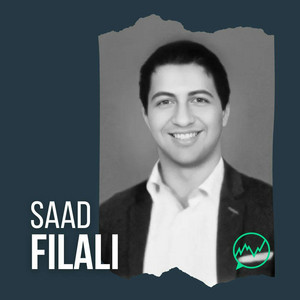
Today, Ian speaks with Saad Filali, who for a time worked for Goldman Sachs, specializing in mergers and acquisitions, then he left and became a trader.
Understanding the thinking and trading styles of the many different market players is key to his trading, including those of institutions, sell side brokers, CTAs, retail and meme stock traders.
Yes, meme stock traders.
Studying how they trade the volatility in news releases helps Saad to predict market movements and calculate suitable entry and exit points in his trades.
Saad now manages his own macro fund and relies heavily on news flow and research.
He looks for discrepancies between market pricing and fundamental valuations and consider the impact of different market participants.
I bet that there are great takeaways that can be gained from a very interesting perspective.
Listen and enjoy. Ladies and gentlemen, please welcome Saad Filali currently in France.
Saad, welcome to Chat with Traders.
Thank you, thank you for having me today.
Yeah, where are you at now?
And where did you grow up?
I grew up in North Africa in Morocco.
I was born in Casablanca.
And when I was 18, I had an opportunity to come study mathematics in France.
That's what I did. I have a master's in that.
Then I've worked a little bit in finance and mergers and acquisitions in M &A, in London, in Holland too and in France.
That's basically how I got into finance.
Tell us a little bit about what you did in M &A, mergers and acquisitions, right?
Well, mergers and acquisitions, you have to see that as a sort of brokers type of job, except you're not actually selling apartments, you're actually trying to sell businesses.
There's a tiny little bit more work involved.
But outside of that, it's not really an intellectual job.
It's a job that in which a salesman will be better.
So I realized I was no salesman, unfortunately for me.
But I was good with numbers, with thinking with logic, with reading.
And somebody just suggested that I look into trading as a possible alternative, I did.
And then I gave up on the M &A route and I joined Goldman Sachs to work as a liquidity sales trader for a bit of time in Paris for like a year.
I did that for a year.
And the idea was that they would give me a book for trading.
It didn't happen because there are some regulations in Europe, namely Miphe 2, which makes allowing people to trade within the banks today like really, really complicated.
So when I realized that it was probably never going to happen or I would have to wait a long time, I decided that if I was any good at this, I should be able to succeed alone.
So I went out of the bank and I got some money from a couple of friends and started trading to build a little bit of track record.
This was back in 2020.
Couple of years later now, I do have a track record and I'm managing 13 million US dollars.
It's not a lot for a fund, but given the structure that I chose, it works for me.
And what did you learn at Goldman Sachs?
You were there for just a year, did you say?
I was there for a year.
Let me be frank. There is very little you can actually learn in there that's gonna be useful actually trading.
The only good thing is the access that I had to the research department.
So you can talk with these guys in the research department, but that's something that you can have access to today.
You can get access to the self -signed papers if you just buy a description from this provider or that provider, you can get these papers and you can read them alone and that works very well.
There's no problem with that.
But in terms of actually learning anything, like basically your question should be, I think, are the market makers or are the traders or what's left of them within a place like Goldman Sachs any good today?
Well, no, they're not.
And there's a very simple reason for that.
That's not what they are asked to.
Most people who call themselves traders within these banks are not actually traders, they're just brokers.
They're just here to facilitate the trading of the actual clients, while the hedge funds and the very big retail clients and so on.
They don't do that much trading.
They don't really take directional positions.
They don't really bet on the market doing anything.
What they have to do is simply manage their own, the portfolio that they get, which is just a direct result of what trading is happening where it's being done by the clients.
So client calls, this client wants this.
That means that you are short that and you have to manage that exposure, you have to load the delta.
If you are on the option side or even on the linear side, meaning if you're doing futures, even though that doesn't really happen today in big banks like that.
And because they added a regulation that says that at the end of the day, they have to be delta neutral at the end of every day, you can imagine that the margin of maneuver for these traders is very, very, very limited.
So it's a very different job.
Like when people think about traders in like Goldman Sachs, you're actually thinking about the people who were in commodities corporation before it was bought by Goldman Sachs.
So you're talking about stuff that was happening in the 80s and late 90s, or even up to the 2007s, if you are lucky.
But after all eight and today, and especially in Europe, I can assure you there's not much directional trading happening at these places.
Is that because they got burned many times in the past or is this just a, they become very risk adverse for some reason?
It's because of some regulations that appeared in the US after all eight.
And then the second, most importantly, perhaps, the shareholder base of these banks are telling them today that the reason that they invest in a bank isn't really to get any much equity upside or anything like that.
What they want is for the investment banking business to be as stable as possible.
So they are strongly, strongly told not to do anything that could create volatility.
So it's just a shared desire by the shareholder base of these banks.
It's also the direction that the regulator is going to as far as the SEC in the US and in Europe, they just copy them.
In fact, a lot of times go above them.
It's just the way the world has turned after all eight.
They want the less risk at these places.
And that's what's happening.
I see. So while you're at Goldman, were you doing any trading on your own account or did you have Goldman manage any assets for you?
No, I didn't do that.
What I was doing specifically was doing it for clients.
And then I was also suggesting a lot of trades to clients.
So I was a sort of macro strategist at the same time.
That's sort of how I got my reputation in there.
I was writing these articles and my boss at the time, he did promise that he would try and find a way for me to try and do the ideas myself, but it just never happened.
That was really the main motivation for why I left.
Can you give us a couple of examples of maybe say a typical recommendation that you might make to clients to go long or short, what kind of products?
Well, it was European equities mostly, but I also dealt in US equities in futures.
My ideas were very simple.
They were something like, I think you should buy Netflix today.
Or I think you should sell bonds today because of this, this, this, this and that.
They were predictive in nature, meaning that I was taking a bet on a certain number of things happening in the future over a reasonable time.
And then the second thing that's embedded in these kind of bets, that the price action would correspond to what I'm predicting at the same time.
Because you can predict the events, but sometimes the price action doesn't correlate.
That's something that's just happened to me.
For example, in gold recently, I've taken quite a hit because I imagined that the Fed wouldn't have to become more hawkish.
And that's what happened recently.
We've even had Powell say something along the lines of, yeah, inflation exceeded our expectation during the first quarter.
And we won't necessarily cut this year, but gold didn't fall.
So sometimes you can get the prediction right, but it doesn't mean that you will get the price action right.
This is like the nature of everything that I do.
It's a bet always ahead of an event or ahead of something happening or ahead of a data release or ahead of a, of an early, then it's also a bet on the price action responding.
Your bet on what is gonna happen and the price action and so forth.
What kind of timeframe are you looking at in these recommendations, like, okay, in the next month, week, are you very short term?
No, no, no, no, it goes from seconds, really seconds, to a couple of days or no more than two weeks.
I operate on relatively short timeframes.
I see. So when you were making these recommendations to the clients, I gather they had to be very quick to get your recommendation and also to be able to exit the position because we're talking about very, very short timeframes, correct?
For example, there's a non -farm payroll number.
That's basically the jobs number in the United States.
That's coming. I think this particular number will be important.
And I also predict that this particular number will either miss or exceed expectations based on what the consensus is.
And I also predict that this asset class will respond in this way.
So I will contact the clients ahead, maybe one day ahead or two days before, and explain all of this to them.
And if they agree, they will tell the trailer or tell me to put a position for them.
I see. And then do they allow you at your own discretion to exit the position when you feel it's the right time or do they have to?
No, no, no, no, that never happened.
But usually what would happen is they would usually talk with me about the exit before the end.
Also sometimes after the event has happened to discuss whether it's something that they should keep for a longer timeframe, or if they should just be happy with what they've got and exit.
So you felt, my understanding is you started your fund and started trading for yourself in May of 2020.
Is that accurate? May 2020 is when I started the fund, yeah.
And so did you feel that your one year at Goldman prepared you enough to be ready to take on this new adventure?
What really prepared me was reading a lot of self -centered research from Goldman and from others.
It's really the research aspect, the research papers that really helped me.
And something else that really helped me is that by that time I had been a listener of Bloomberg Radio for more than three or four years.
And I think that's also something that really helped me because like you get to hear everything that's happening live, the commentary is the analysts, the people who are invited from the sell side banks to answer questions, they usually ask really good questions.
So I think these are like my two schools for this.
Now of course I do happen to have a theoretical background in finance and all that, but I don't really think that's necessary or even that helpful.
In fact, I would say that you could easily be too smart for trading the markets because let's not forget the price is the reflection a sort of average of everyone who's involved in the market.
We're not talking about just automatic Olympians who are trading.
It's really everyone.
So sometimes you have to give up very rigorous logic and just if not right with the trend just accept the trend.
An example for this in my case would be Bitcoin.
I understand what Bitcoin is.
I could even replicate it.
I can even recreate it if I wanted.
In fact, I even did just for fun, but I don't see why the price should appreciate.
To me, the reason why Bitcoin appreciates is the same reason why sneakers prices appreciate it.
It's because there are a couple of people who really love it, religiously so.
So for me, buying that and keeping it for a long time, hoping for price appreciating is just contrary to what I do.
Usually the kind of thing that I do requires a direct mechanical cause.
If I'm selling bonds, it's because I believe the Fed will come behind me or after me and raise rain.
So there's a direct mechanism for why that will happen.
So I don't believe in Bitcoin, but that doesn't mean I will short it.
So this is when you have to like give up and send back a little and say, okay, I don't want to play this game with them.
So at least I will have the insight to set out and just not participate instead of getting hurt if I started shorting it.
I think that also happened to a lot of people in Tesla, for example.
Today Tesla is falling very hard.
A lot of people feel vindicated.
I see these analysts on TV, they come, oh, I've always told you, Tesla is such a shitty stock.
It was overpriced, overvalued.
Yes, okay, but for 10 years, the thing has multiplied by 10.
So you've lost money on it.
Even if Tesla goes to zero, you will make all of your money on it.
You will not even break it.
So how is that exactly a win for you?
I wouldn't say that.
The win will have me to just acknowledge that indeed, more than a stock, this is a sort of religion.
There are some cultish elements behind it.
Yes, someday, sometimes the truth may come.
But I have the insight to set out, not participate.
And instead focus on stuff that I actually have some mastery in, where there are direct effects and causes.
Like usually in all of the stuff that I trade, which are basically all the big macro instruments, I might not always be able to predict the right price action, but I can more or less 99 % of the time explain why something happened.
My understanding is that the fund that you're running and have been running since May of 2020, you describe that as a macro fund, is that correct?
It is a macro fund.
Yeah, it's a very high school.
So describe for us, for our listeners, exactly what is a macro fund?
What type of fundamentals do you look at?
Typically, in the 80s, when people said, said, I have a macro fund, what they really meant is that they were trading futures, or that they were CTAs and they had managed accounts.
But today the definition is somewhat different.
When people say they have a macro fund, it means that they are engaging in predictions about the future of things that are relevant to the instruments that they trade.
This for me is the basis of it, is that I am predicting, I'm not reading technicals.
For example, in my case, I don't use technicals at all.
In fact, I could even not use charts at all.
I do have a couple of them, but I don't really need them.
I just need the prices.
I have zero technical inputs.
And however, my biggest input, you can really see my screens here, but the 70 % of the real estate that I have in screens is dedicated to the news flow.
So the news from Reuters, the news from Bloomberg, the news from the SCORC that you heard talking in the beginning of the interview.
Then I have several other subscribers and analysts that I like to read because I feel that they are useful.
And then there's my channel on this where I talk with the people who work for me or my clients with me, like to exchange ideas.
That's my main input.
It's really the news.
And that is the driver of trades for me.
That's what generates trades.
When we have a data release or something just happened and I see that I identified one or many of my instruments might be impacted by it.
And then I will try and do the trade.
And so are you doing this discretionary or do you have an ALGO?
I mean, do you use ALGOs to execute your trades?
It's entirely discretionary.
Entirely discretionary.
I see. And so how do you know when you're looking at a particular market?
No, you're looking at the news flow here.
How do you know if a market has already factored in the prices, the expectations, or is underpriced?
And what determining factors do you use to go long or short?
See, there are various situations, but let's take the, let's start with the easiest one.
If the news is in question, it's something that has never happened before that wasn't really on the table or anyone's radar before.
For example, Iran or Israel rather attacking an embassy in Damascus, that's something new.
That really wasn't anyone's radar.
And that potentially will impact oil and gold, both people, both of them.
So that's something that's very easy because the only thing that needs to happen is you need to be in front of the screen and awake when it happens.
And then you need to click as fast as possible.
Even if you do the trade, and let's say you do it and it doesn't work for some reason.
Maybe you're misjudged, maybe other people don't care about it.
Maybe people don't think it's that important.
Then in that case, what happens?
Okay, you paid the spread.
Maybe the price even goes against you a little bit, but it's still an opportunity that has a very high risk return.
Because if they do care, if it does work, it will go up sensibly, materially, let's say maybe 1 % for each of them in the case of oil even more so.
And if it does go against you, yeah, it will have paid the spread and it will go against you.
But provided that there's nothing else happening at the same time, you won't lose that much.
So it's still an opportunity that you have to try.
Chat with Traders is brought to you by Tasty Trade.
Tired of trading on rookie apps?
Then get the platform for serious trading.
Tasty Trade. Tasty Trade gives you the tools to trade your way.
Chart your heart out with over 300 indicators.
Know your odds with probability of profit and move fast with quick roll.
Trade what you want and trade it your way.
Trade stocks, options, futures, and more.
All in one account on one platform.
No wonder why serious traders choose Tasty Trade.
Visit tastytrade .com and see for yourself.
Tasty Trade Inc is a registered broker dealer and member of FINRA, NFA, and SIPC.
Hey, I got a great update from Trade the Pool.
Now it's even easier to get funded.
As you know, Trade the Pool built a unique program to evaluate stock traders like yourself and provide you with the company's funds to trade with.
It's real shares and you no longer need to worry about the PDT rule, but that's not all.
Trade the Pool has introduced a new tier with $20 ,000 in buying power, making it easier to pass the evaluation and speeding up the process of getting funded much faster.
You don't want to miss this opportunity.
On your website, I have a quote here that says, identify situations where market pricing diverges from the fundamental valuation for a period of time, which can range from seconds to weeks.
So what would be, give us an example of a fundamental valuation.
You mentioned the gold market or the oil market.
What are you looking at for fundamental valuations?
This sentence applies more to Forex and equities than gold.
Gold is a bit more complicated because people who buy gold, okay, let's start with Forex and then go back to gold.
What is Forex? The biggest players in Forex do it for two reasons.
Either for corporate purposes because they need to invest or to buy things in a specific currency.
And as far as investing goes, it's the carry trade.
The carry trade can be used to give you a valuation, a value for Forex.
If you know the two interest rates for both of the peers and you have an idea of where they should go, then you have an idea, then you can induce an idea of how much they should move provided you are right about the move regarding the interest rates.
In equities, it's the discounted cash flow method.
If you have a very, especially if you have the benefit of a very precise understanding of what valuation is and what drives it.
And by the way, I've written an article about this that goes into great detail that you can find on SeekingAlpha if you type my name.
I think it's still in there where I describe mathematically how you get to these drivers and how important each one of them is.
In the case of equities, it's re -rates and then the projected growth.
Once you've identified the driver, if something happens in the news flow that you think will affect one of these drivers, then first, at least you have an idea of the direction.
So you can do the trade.
And once you do the trade, you can start thinking about, okay, I'm in the trade.
How much is this supposed to impact my instrument exactly?
You can never really tell, but you do have an idea.
For example, I've done my statistics.
So I know that each time the projected growth of the EPS of the S &P 500 goes up by 1 % as measured by the consensus from the set side, which you can find on Reuters.
The S &P itself goes up by three, 4%.
So once you do this, you have all of the thumbs that you can apply to all of the instruments.
Are you figuring that the market is efficient and that it has priced in everything up until that point?
Because you say you don't look at charts.
So are you assuming the market is correct and is not overbought or oversold?
If you are going to trade something, especially over very short terms, you have to assume that the market is efficient up to that point.
However, if you are wrong about that, then what will simply happen is the situation that I've described on the oil trade.
You will get in and it will not move the way you want it to move.
Maybe it will move against you a little bit.
And that's when you have to understand to decide whether to give up or to pursue it a little bit.
Usually giving up is the right answer.
Because that just means that either somebody has already, somebody, enough people have already paid attention to this, or it means that the other participants of the market do not share your judgment with regards to the event that just happened.
They might end up being wrong later, which happened, for example, with the Fed right now for me.
But at least for the short term, it's best for you to give up and come back later.
For example, when another guy from the Fed will come and do a speech that goes along the same direction, you can try again until it sticks.
What indicators are you looking at to see if it sticks?
You say you use mathematics, right?
So I mean, do you calculate, like on paper, a calculator on what the price should be based on all your inputs?
And that's the target price that you're going to use to maybe get out of your position?
No, for the target price, as I mentioned before, I've done the statistics, so I have all of these rules of thumbs for all the drivers, for all the instruments that I tried.
For example, I know that if the Fed funds rate goes down by 25 bibs, that means the dollar yen needs to go down by 1%.
This one is, as always the case, this one is extremely reliable, so I gave you the most reliable example.
So what is 25 bibs?
25 bibs is exactly one rate cut.
So I know that if tomorrow something was said that would allow us to price another rate cut, I would know the dollar needs to go down by 1%.
You have another quote here on your website.
You say, we observe that the market efficiently prices new information relating to macro fundamentals over time, but not instantly.
So are there markets that are more efficient or less efficient at pricing these in?
And what kind of timeframe are we looking at to price this in?
There are definitely differences in efficiencies between markets.
I would say the least efficient market is probably the equities index.
Equity is first, and then the index is second, yes.
And I would say the most efficient market is the Forex one by far.
The Forex one, especially on well telegraphed events, for example, planet events like central bank meetings, when the change happens, even if it's a surprise, it will get priced within second.
That's frankly not something that you can profit from or it will be extremely difficult because the problem with this sort of events is that even if you're fast, you still have to deal with the slippage that comes with the brokers and all.
So these are opportunities that don't really exist.
However, in equities, there's a lot of times where the market is extremely slow at pricing, even stuff that should be done.
And there are reasons for that.
It's because the market structure in equities is very complex and very diverse.
In equities, you have a lot of volume that is options today, you have the futures, you have the equities themselves, then you have the ETFs.
So for all of these things to move the right way and to go to where they have to go, there's usually a lag, and that's why you can actually profit from it.
So can you give us an example of a fundamental event occurring in equities, say like an interest rate cut or an interest rate increase, and how do you make your plans to enter, to go long or go short equities?
In my case, I will actually predict it.
So I will come before it happens, and I will decide beforehand if they are going to surprise and be more dovish than expected.
So if I do think that that's the case, and if I, after looking at how the market has moved and what the sell side is saying, that's also one way of appreciating whether a market has priced something or not, it's simply to look at what the sell side is saying.
If all of the banks on sell side are saying that the market is already expecting a rate cut, then there's probably not much for you to do because it's already been either front run or it's already done.
Absolutely have to come before this stuff happens, not only before it happens, but before it becomes consensus.
Because sometimes, especially with the Fed that we have today, unlike the Fed that they had in like the nineties, this Fed likes to telegraph everything.
So if they intend to cut, they will come several months before, and they will start sending these guys to do speeches where they will guide you slowly towards the outcome that they want.
They will tell you, ah, we see that inflation has, we are happy about the path of inflation so far, so we can consider a cut.
Then another guy will come and say, so you can't just wait for it.
You have to come beforehand, you have to understand what they care about in terms of inflation, and then you have to understand the path of inflation and you have to decide whether you want to do the trade or not.
So with stocks, since the Fed telegraphs pretty early on where they're gonna go, does that run into conflict with your holding periods being so short?
Cause if you want to take a position, presumably you have to do it quite some time before everybody gets on board with a consensus, right?
Exactly. But yeah, sometimes for people to get on board with a certain consensus, it takes like a week or more.
Let's take the most recent Fed speeches as example.
This quarter, we had three successive inflation prints that were hot than expected.
However, the Fed had misjudged, but had telegraphed already in December that they would cut before seeing the prints that we had.
So we got the first print in January and it was hot.
We got the second one in February and it was also hot.
And we got a third one and it was also hot.
But the problem is that by the time we got the third one in April, the Fed had still not changed its communication at all.
And that's why the market didn't fall until didn't start falling until very recently.
So they should have started doing this, but they didn't.
And the sell side also didn't because one thing that people have to understand about the sell side is these guys are not incentivised to take risks in their opinion.
Now, of course you have a couple of what I like to call lunatics that are always on the bearish side or the boorish side.
I know if you remember the Morgan Stanley guy, Mike Wilson, I think he was the go recently.
But this guy's gimmick was to be always bearish for his whole career, essentially, I think.
So these are exceptions.
But most of the regular guys, they will always try to stick to the consensus.
They will never take risks.
So because the Fed itself was saying in December that we would cut, even though the data was clear to everybody else involved, that they should change that stance and move to something if not more hawkish, at least more neutral.
Nobody had the guts to do that.
And this was an opportunity for a patient trader, especially after the third print, if you just came and shorted.
I did that, and that worked very fine for me.
The NASDAQ finally started falling for once.
What didn't work for me was gold.
I'm trying to understand why not.
But these are how these opportunities form.
You really have to be on board, always following what's happening, and always aware of what others are thinking.
And I really think, just to answer a question that you asked me before, just to repeat it, one of the best ways of understanding where others are is simply to look at the sell side.
Don't try to, I don't know, look at the price or look at volume or try to conjecture something.
Just look at what the Fed is saying.
Because what you have to understand is that the sell side, every morning, when they release a paper, they are calling all of their clients who are big money managers to tell them, hey, these are our ideas, would you like to follow them?
And every hedge fund manager has his favorite sell side guy, who he copies more or less, or who he takes a lot of input from.
So they are indeed quite representative.
And I would even add a little trick of mine.
For every market, there are like two, three sell side banks that you have to follow.
You don't have to follow all of them.
For example, if it's in equities, I would say you are fine if you just follow Goldman Sachs and Morgan Stanley.
These are the only ones that you have to follow.
If you are trading gold, you have to follow UBS.
If you are trading oil, you have to follow Citi.
So because they are most widely followed analysts in their respective asset class, and they have the biggest clients in that specific asset class.
That's why you have to listen to them because usually the clients will be in line, the thinking of their clients will be in line with what these guys are saying.
It sounds like then you look for discrepancies between what the data is showing you that what should happen, and then what the sell side is saying what their view is.
And when you see a great discrepancy when something doesn't line up like you did recently with the interest rate increases, then you're more emboldened to be a little bit of a contrarian.
Definitely, that's the case.
Especially if you're, I mean, being a contrarian is especially hard these days is post COVID because the CTAs are so big today.
They have a huge market impact.
And these guys, they don't really read the news.
I'm not even sure they know how to read.
I mean, it's just robots doing statistics based trading, momentum based trading, which is just some form of statistics.
I know they like to put a lot of words behind it, like machine learning and all that, but it's just linear regressions more or less.
The problem with these guys is they don't read the news.
They don't care about the price.
They don't care about valuation.
The only thing that they care about is their own P &L and sometimes volatility.
So these guys make being a contrarian very, very hard.
You still have to time it really well.
For example, we were talking about the recent interest rate increases.
In bonds, these interest rate increases materialized as soon as January, January, February, interest rates were already rising.
However, the NASDAQ was still going up every day.
And so was gold, and why?
A comp. Well, it's because of the CTA's.
The CTA's, they found a momentum trade in the NASDAQ.
So they pile up on it every day.
And the only way you're gonna get them off that is if you hit their P &L a little bit.
But for you to hit their P &L, you have to be really patient and wait for an event.
And in this case, it was the speech by Powell himself and no one else.
That was the only thing that was powerful enough to move the market or to motivate and incentivize the people in the market who do care about fundamentals.
So that will be the other macro funds to come and start selling the NASDAQ a little bit.
Enough to do enough damage on the NASDAQ so that the CTA's themselves need to start selling.
That's what happened recently.
And that's why we have this 5 % drawdown in SPX, which to some old timers might not seem like a lot as far as drawdowns go.
But actually, even the market structure today, it's actually quite something.
One of the, you mentioned that you read Market Wizards book and one of the people in the Market Wizards that you followed was Colm O 'Shea, a macro trader.
And he has a quote, he says, trades only matter when people care.
So in this case, are we talking about the CTAs who are driving the price up irrespective of interest rates?
They suddenly care because their portfolio dropped somewhat even though they're not paying attention to the news and that could be a catalyst then to get the ball rolling to the downside?
I would modify his quote a little bit just to make it work for today.
It's not when people care, when the right people care.
When the right people care.
In this case, the right people, the only thing about the fundamentals are the huge portfolio managers.
For example, the people at Blackhawk or the people who handle the funds for the teachers, Calpers in California and then the other macro hedge funds.
What I had to understand and accept about these guys is that they are not over traders.
They hate trading, in fact.
The less operations they have to do, the better it is for them because they always see through the prism of fees before performance.
Since they move such a huge portfolio, fees matter to them a lot.
So in order to motivate these guys to do something, you really have to give them something big, a big scoop.
So once these guys moved, the NASDAQ fell, fell enough so that even the CTAs who don't care about what's happening in the world saw that their trade wasn't working anymore, that they were losing money every day.
And then they said, oh, okay, maybe I should take some off.
And that's how you get the ball rolling.
Part of what I do really is to be more and more, and I'm always trying to get better at it.
It's to be really aware that there are different market participants that have different market impact.
And this market impact, unfortunately, is not correlated to their size.
For example, the retail people, the Wall Street Bets guys, these guys don't have a lot of money.
But because of the way they trade, since they always hit market trades in options, where you're not actually really supposed to do that, their market impact is huge, given the embedded leverage in the options, and just given the way they do it.
However, if you think about something like, someone like CalPERS or BlackRock, they are huge.
But the way they trade, they don't open their IBKR and say, okay, buy, buy, buy, market rate.
No, they will ask a bank to buy for them one billion of sprues.
And this one billion will be bought over two or three days, and it will be done slowly along the VWAP.
And the banker will make sure that the average price that they will get will be below the VWAP, if they are buying, just to justify, hey, okay, you told me to buy one billion, I did it in the best possible market conditions.
And as you can see, I am below the VWAP.
So I got you on average, a better price than what other people who have been buying during the same period have had.
And so as a result of that, your fees will be low.
Okay, will be lower.
And your market's execution fees will be lower.
This is like the sophisticated way of trading, which is based around minimizing market impact.
They wanna buy with moving the market.
The Wall Street Bets guy, the retailers, they don't care, they just buy at market rate.
Actually it works for them.
Because when they buy in this savage manner, that's basically how we even qualify it, what they are doing is they pump the price and it becomes a signal for other like -minded people to come and take more options and do even more.
So that's, sometimes you have to also think about this, like, what signal do you want to give?
I see, and what are you seeing right now in the market?
We just had a drop here a number of days ago on Monday, April 15th, due to war jitters in the Middle East.
Do these speculators that you're referring to, does it work to the downside too?
I mean, are you seeing them take off their positions and now go net short?
No, as per what I've seen from the satisfied papers from Goldman and the GPM, it's clear that the latest bout of downside that you saw was the CTAs taking some profits in colonial day for once.
They've been long the NASDAQ for a very long while, more than six months for the, what a happy bunch, but now they've taken a couple of hits.
So as a result, they had to dig Ross.
That means reduce their exposure.
That's basically, that's also why if you look at what's actually underperforming in the market, you will see that the NASDAQ is falling more in the SPX and even more than the Russell, even though the Russell is usually more volatile than the NASDAQ.
Well, why is that? It's because the CTAs, they weren't long.
The Russell was flat year to date.
I think now it's even a negative year to date.
What was winning, what was working, where the momentum was, was in the NASDAQ.
So that's why you see the NASDAQ falling more than the other things and I think it was entirely due to CTAs.
Now the question is, are they done?
Can we get in? Probably, probably.
I think if you take a look at what's coming later, the events that are coming later.
Next Friday, we have the core PCE, which is the inflation measure that the Fed cares about.
Personally, if I was someone involved in government, I wouldn't care about this measure at all, but that's the one they care about.
It's also, to be honest, the one that gives them the best look in terms of what they are doing for the public.
So that's the one they care about.
That's what they've decided.
And we have to follow that.
Well, I predict that this measure will probably show something close to 0 .2 % month on month increase.
And if that's the case, anyone who I think buys the NASDAQ or spools at these levels, by Friday, we'll probably be happy.
I'm gonna be trying that myself.
I see, so from what you're seeing in the data, you're seeing that a potential oversold condition based on potential data coming out and it looks slightly more bullish to the upside for you.
It looks bullish to the upside, be it for equities or for interest rates, which have been for bonds, which have been sold quite a bit.
The justification for why they've been sold is actually valid.
It's just that it shouldn't happen before.
But now I think things are turning and it seems that inflation will indeed go down or at least go back to a path that is acceptable for this Fed.
And that's why I think that anyone who is still short bonds, by Friday, will be regretting it if he doesn't take his profits.
And that's why, personally, I'm a buyer of spools, bonds, and I would even be a seller of the dollar against certain bears.
Dollar yen comes to mind.
But I think out of these three trades, spools and bonds, NASDAQ and bonds will probably be the best ones to try.
If you had to try any of them again for this crew, I will be doing that.
Another quote by Colm O 'Shea in the Market Wizards book.
He says, bull markets are more psychological than fundamental.
So have you found good sources to measure sentiment levels, psychological levels of the market?
To be honest, I have not.
And that's why I have trouble with finding the tops in the markets and I always exit too early.
I think it's very hard, especially for someone who is a Cartesian or logic as me, because I can derive a medical value or range for where the market should be.
But because of the CTAs, a lot of things that Colm O 'Shea was talking about, I don't think they apply today.
This one is probably one of them.
Because the CTAs, they are not really psychological.
It's just what they do.
They find something that goes up and they buy it hoping they will keep going up.
They don't get out of it until it starts going down a little bit against them.
Or they have a preset stop loss if the trade never works.
I think it's a very silly strategy, but from 2021, 2022 and 23, it has worked really well.
They've been lying.
Like it was a strategy that had severely under performed up until COVID.
But suddenly, it's been working for like one, two, three years.
And what happens when you have a strategy that works for one, two, three years?
Well, every other fund wants to do this strategy.
They say, ah, that's what we have to do.
The recency bias is very strong in the industry, unfortunately, even though every advertisement in the industry has the disclaimer below that says that past performances are not indicative of future performances.
Apparently, they don't really believe that.
So because the CTAs have worked so well, there's so many of them, I for one would welcome the day when they die again.
I don't know what it's going to take to do that because I really think they hurt price discovery a lot.
And I think they even hurt some aspects of the real physical economy for people.
Let me give you an example.
CoCoa prices, 11 ,000 up many, many percentage.
Does that have anything to do with the supply situation in Cote d 'Ivoire?
No, it doesn't. No, yes, we have a drought.
We've been having droughts everywhere in Africa.
That's never given us this kind of price for CoCoa.
We've had way more droughts that were way more severe.
That never did anything like this.
What's happening is that all of these CTAs are saying this thing, they don't even care what it's called.
It could be called CoCoa, it could be called X.
They don't care. They just see it goes up, okay, if it goes up, I'm gonna get in.
And because CoCoa is such an illiquid market, that's not really supposed to be the host of this kind of big volume trading from the CTAs.
It moves us. And that's how we end up with something like this.
Same happens in Azdak.
Same happens in gold recently.
That's why gold is up 17 % this year.
Even though on the geopolitical front, it stalled, like it's, whatever was supposed to happen is there.
Because Israel has more or less given assurances to the United States of America that they are not going to retaliate in a way that will cause anything severe as far as reactions from Iran go.
As proof of that, you can check oil.
Oil has already gone down.
So the geopolitical risk premium is clearly out of the way, or at least is in the process of being taken out of the way.
Yet gold is at the highs of the year.
At the same time, interest rates are at the highs of the year.
So why is gold here?
Gold is here because of the CTAs.
Let's get into your fund's performance.
I noticed on your website that in the first month of trading in May 2020, you came right out of the gate with a fantastic 41 % return.
And by August of 2020, you already had a 152 % total return.
What factors went into these incredible returns?
Well, that's very simple.
My specialty happens to be US politics.
And I just understood before everyone that Biden was going, and I just put on the implications of that, which was basically to buy the Russell instead of anything else, that's worked tremendously well for me.
Sometimes when there is something that important, and there is a big prediction like this that's going to give you a lot of change, you can make a lot if you guess it correctly.
So when you see an unusual event unfolding, that is not, it's not typical.
Do you change your weighting of your position sizing?
If it's something that's really strong, that would definitely incentivize me to put more size on for sure.
Now one of the reasons why my returns have scaled a little bit lower over the time, it's also because as a request from clients, I've been told to lower volatility.
It's just something that I've been requested to do.
So I've been using less size than before.
And what happens is that among my clients, those who still want the bigger returns, they can just decide to copy my fund, but to leverage multiple apply to it.
So I have some people who have three times the return of my fund, or two times the return of my fund, provided they can manage the volatility and accept it.
So that's basically how we work it.
But yeah, if it's something new, and you understand that it should be important, that it should have an impact, yeah, you have to put on size, you have to be brave.
I'm not the bravest trader there is, far from it actually.
But on such, I've had the insight and intelligence to raise to the occasions, for the couple of occasions that I've had.
How much of your trading is, if any, is done on personal kind of feeling gut instincts versus just pure quantitative data analysis.
Very little is on gut instincts.
It's really, all of it is news flow.
People wouldn't be able to, for people who follow me on Twitter, they can easily see that each one of my trades corresponds to a news item that I usually post about.
And sometimes with little analysis following it.
So it's really news flow driven.
Now, once I have the news flow, I have to be quick.
So sometimes it's not perfect and I get it wrong.
But if I do get it wrong, I just take the loss and wait for the next opportunity.
The main thing for me, especially today, that I already have a bit of AUM, is really to stay aligned, increase AUM and try to keep returns that make all of my clients happy, which is something along the lines of an average of three to 5 % per month.
On average, as long as I can keep doing that, I think everybody should be happy and I can stay alive and maybe increase AUM at some point.
That's basically what I got to.
My trading has gone a lot less riskier than it was in the beginning, for sure.
I see, if it sounds like you're somewhat constrained by investors' requests to lower risk.
So does that hamper your strategy in any way for the big games?
I definitely am, yeah.
Today, I wouldn't engage in anything like that.
I know as soon as I do that, I'm gonna have 26 messages from people who are either angry or scared or both, especially if it's not working.
I have demonstrated that I can get myself out of very heavy drawdowns.
I've had drawdowns of 15%, 20%, and I've always gone out of them and gone back to new all -time highs.
So I'm personally not that worried about it.
The clients don't like it, and these days, I don't think I've had more than a 6, 6 .5 % drawdown in a very long time, in a very, very long time.
I think I have, and I intend to get it that way.
Have you ever thought about automating your system, or is it possible, realistically, to automate what you do?
It's not, it's really not.
It's really not, because the kind of inputs that go in are not entirely quantitative.
And even if you were to use something like generative AI, like if you link it to a chat GPD, it probably still gives some very funky results.
So no, I think discretionary trading, unlike all the forms of trading, will stay in the realm of humans, and it's not something that you can replicate automatically at all.
I saw your performance graph from November 2023 till today, showing that you average about 17 trades per day.
However, on this last Monday, April 15th, with the sharp market decline in response to war jitters in the Middle East, you had 57 trades.
What were the catalysts to trigger all these trades?
Yeah, no, what's happening here is simply that I sometimes send trades over multiple trades.
For example, if I'm gonna buy the NASDAQ, I'm gonna do it in four times instead of one time.
That's just something that I've had to do as a client size group, because some clients have really big accounts, accounts upward of 1 million, and the broker won't let me buy the required amount in one strike, so I just do it in four strikes.
So what you identify as 57 trades is probably, you have to divide that by four to get the real number of it.
Oh, okay, okay, great.
Do you have any goals in the next couple years for your fund or for this learning process?
I'm always hoping, you know, there are a lot of questions that I still can answer.
For example, I would really love to have a better mastery of certain market participants.
To me today, the two market participants that really make huge issues for me are number one, CTAs and number two, retail.
If they could ban them from trading, I would be very happy with that, but we can do it.
Especially since the CBOA is very, very happy with the zero DTE trading that they've introduced.
It's given them so much volume, so much revenue that they didn't have otherwise, so I assume they are here to stay.
So I am definitely trying always to understand or have some sort of framework or trying to build some kind of framework, which would help me understand that.
And as far as doing that, I am definitely closer to achieving that with the CTAs, who at least have rules that you can more or less guess or replicate or approximate than the retail crowd.
The retail crowd is really trading out of gut trading.
It's entirely psychology.
It's group think, I fail at these things.
I'm not even hoping to follow them.
I'm just hoping to avoid them.
That's basically my, I just don't want to be involved in a situation where they wouldn't be against me.
Because now I stand no chance, given how savage they hit something when they want to hit it.
They don't care about price.
They don't even care about the price of the volatility or the calls that they are buying.
As long as it works, they buy.
And that's all. Yeah, that's what makes them so potent.
Did you follow the meme stock craze?
I did, I did. That's exactly what I'm talking about.
And it might have started with GME, but what it showed them with GME is it showed them what they were capable of.
It showed them that if they gagged up on the market, even on big indexes, that they can do things.
I remember a day during the GME saga when they decided that silver had to go up and they managed to send silver up 7 % in a matter of one hour.
Why? Because silver is in the leading markets and we're just buying it in North Carolina.
These guys actually have money.
That's something that people don't really understand.
Who are these guys?
These guys are, most of them, many of them, they are people who work in tech, mostly in California.
Actually, my nickname for them is Cali Boys, California Boys.
Because these guys work in tech, they have huge compensation over there and they have more money than they know what to do with.
And they are big gamblers.
That's something that perhaps even they didn't know about themselves, but they happen to be huge gamblers.
And they love doing this stuff.
So they have money.
It's easy for them to put 10, 20, 30, 50 grand on a call.
But what you have to understand is that 50 grand on a call is something a hedge fund could do too.
It's not that far away.
You could have a hedge fund, call Goldman, call Goldman or a smaller band and ask them to put 50 grand on a call for something.
That can happen. So this is like real money.
And it's done in a way that impacts the market as much as possible.
It creates a reflexive effect.
I'm really always trying to understand and study and try to find a way to, as I said, not even follow them, I just want to avoid them.
I just don't want to be in the way.
I don't want to be a victim.
If you remember during the GBA game stock saga, a lot of hedge funds were victims on these guys.
I think there was one very big problem in front of someone with the huge credentials from Citadel and so on.
And he got trapped and he had to close his fund because he has like seven billion trying to short game stock.
Was he right in shorting games?
Yes, of course he was.
What does that mean?
A 50 billion retail store that sells video games today.
That doesn't exist.
But they're still out and they are in.
And in fact, many of them made a point on that.
So that's a phenomenon that I am more and more interested in.
And you know, one of the biggest mysteries for me in this whole zero -digit retail saga is how exactly are they being hedged in the market?
Like who is on the other side of their trades?
Normally it would be Virtua or Citadel.
It's plus Jane Street.
These are the three high frequency firms that can actually do that.
But how are they doing it?
What are they doing with that stuff?
Because we know that Citadel has a hedge fund and is a market maker at the same time.
They will tell you that they have a Chinese wall between them and whatever, but that's what they say.
What are they doing with this data?
How much money is Citadel making these days?
Turns out Citadel is the best hedge fund these days.
I think last year they made 16 billions in profits, which is huge for them.
So it's a real mystery and I'm still trying to understand how to get around it.
And same goes for the CGA's.
Now the CGA's, I know it's a cyclical thing, it's just because they've had a good run and it's probably not gonna last, especially if we have Trump as president, but it's still important for me.
So these are the two aspects that I'm trying to enhance with me.
It's not really the macro analysis or predicting or that I think I've mastered that as much as possible.
Today for me, it's really about understanding other market participants who don't care about the stuff that I care.
Excuse the last interruption here.
This is Tessa. We hope you're enjoying this episode so far.
If you love the podcast, please give Chat with Traders the best review you can on whatever platform you're listening from.
This will help us to keep the episodes coming.
Also, if you haven't subscribed to our email list, please hop on to chatwithtraders .com and click on subscribe so we can keep you posted of information that may be of importance.
Thank you. Now back to the chat with our guest.
So these market participants sounds like they're distorting the natural fundamental news that would give clearer signals without their participation.
Oh, definitely, definitely.
They are a problem, but at the same time, given how the legislation works in the US, given how much someone like Ken Griffith from Citadel has with so much sway over the US legislators is basically a huge campaign donator on both sides.
I don't think it's ever going to get fixed, which is funny because in the US, they didn't even allow sports gambling for such a long time.
And now that it's something important, they don't care about it.
Why? Because the people in charge will not go against the hands that feed them.
So they are here to stay.
They are here to stay.
Actually, if they weren't here to stay, they would never exist.
Because in Europe, I might be wrong, but I don't think so.
95 % I'm right. There is no zero DTE in all of Europe.
There's no such thing as a zero DTE option for Europe.
Or if you had to do it, it would be OTC.
It wouldn't be like exchange listed like in the US.
So it would be something that your bank would make for you as a fainter or as a product that they sell.
And that tells you something.
It's because here the regulators are a bit more free and they see that something like that is gonna be, as you said, a problem to the primary or societal function of the market, which is to give us real signals among the price.
Zero DTE and CDS are how you end up with the situation in CoCoA and on a few other iterations, such as the NASDAQ going up every day and the GameStop and a lot of names silver at some point.
And if I was personally a legislator, I would get rid of it, but that's not how the world works.
The world doesn't resolve around me.
I have to adapt to it.
And that's what I'm trying to do.
So what do you think about going into business as a CoCoA grower?
We can capitalize on this big run -up in prices.
You can definitely do that.
It just so happens that CoCoA doesn't really, actually I just read that some Swiss chocolate makers will do just that.
They are getting in growing their whole CoCoA because we are assuming the prices stay, which I don't think they will because it makes no sense.
They can't do it, but actually there's a very limited area in the world where you can grow CoCoA.
And I think what will really happen to the prices is in at most a year or six months, because right now I don't know if you've noticed, but the price for chocolate hasn't really moved that much.
If you go and try and buy a chocolate bar, the price is having movies because they still have inventory.
At least that's what some senior management in at Nestle said, and I believe him.
But what will happen when they have to send you a chocolate bar with these new prices?
I think what will happen is very simple.
People will just not buy it.
No chocolate for you, my son.
How about some fruit?
That's basically what we have and that's how prices will go down.
Well, I think it price will have to go up a lot for me to stop eating chocolate.
I'm pretty addicted.
Okay. Yeah. So wrapping up, what do you struggle with most as a trader?
Man, I struggle with a lot of stuff.
It's a daily struggle.
I struggle with a lot of stuff every day.
It really is just trying to remain consistent and to perform as well every week, week in, week out.
That's what I'm trying to achieve.
I'm not there yet. I mean, yes, I have a fund that has returned more than 1000 % since 2020, but I don't believe I'm there yet.
I'm still trying to improve that.
And one way I'm doing that is I'm working on my environment.
I'm working on commodities, on amenities, on having a healthy lifestyle.
That's also something I'm working on.
Might seem simple, but try to have a healthy lifestyle with the hours that I'm putting in.
Sometimes you have to sort of put boundaries between work and the clients.
In my case, because I have clients, I'm not just managing my own money.
That's basically a struggle.
I'm still trying to figure out everything.
And I promise when I do become something close to what I consider perfect, I will come back and tell you how I did it.
Well, great. Saad, thank you for coming on Chat with Traders.
Thank you. I hope people will enjoy what I said and will learn from it.
Fantastic. Great. Saad, how can our listeners get in touch with you?
Oh, they can get in touch via my website, via email, via Twitter.
That's basically it.
Thank you.