
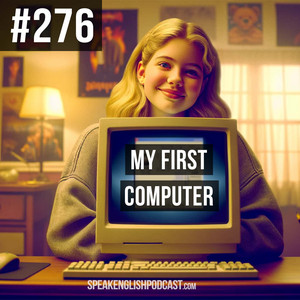
[The Evolution of Computing: From Vintage Machines to Modern Tech]-[#276 My first computer and modern tech]
📋 Summary
The Evolution of Computing: A Personal Reflection
In this episode, Georgiana takes us on a nostalgic journey comparing the technology of the past with the sleek, efficient devices we use today. By exploring the fundamental components of early computing, we can better appreciate the rapid advancements that have defined the digital age.
The Mouse: From Mechanical Balls to Touch Sensitivity
Georgiana recalls her first mouse as a "small device" that functioned like a "digital pet." Unlike the seamless optical mice of today, her early model featured a "ball underneath" and a "cord that often got tangled." The transition from these physical, mechanical mice to modern alternatives marks a significant shift in user interface design. Today, we rely on the "touchpad"—a "tiny built-in mouse" located below the keyboard—or even more intuitive methods like the "touch screen," which allows users to "tap or swipe" directly on the display, effectively removing the need for a separate pointing device.
Visual Clarity: The Shift to Thin-Profile Displays
One of the most dramatic changes noted is the evolution of the computer screen. The old-school monitors were described as "big heavy boxes" that occupied significant desk space. The visual quality was vastly different; images and text were "a bit fuzzy" rather than the crisp, high-definition standards we expect today. Modern screens are significantly "thinner and lighter," offering a level of clarity that makes digital interaction far more comfortable and visually appealing.
The Keyboard: Tactile Feedback and Design
While the keyboard has remained the most consistent input method, its physical nature has evolved. Georgiana notes that while the layout of her old keyboard was similar to current ones, the buttons were "farther apart" and produced a distinct "clicky sound." Modern keyboards are noticeably quieter, reflecting a shift toward ergonomic and noise-conscious design, yet they serve the same fundamental purpose: allowing users to "type the words" and control the computer's operations.
Learning Through Storytelling: The Case of Georgie
Beyond hardware, the episode highlights the importance of active learning. Georgiana utilizes a "mini story" technique, a method she employs in her premium courses, to reinforce vocabulary through simple questions and answers. The story of "Georgie," who received her first computer running "Windows 95" for her 12th birthday, serves as a bridge to the past. Key artifacts of that era, such as saving schoolwork on "floppy disks" rather than modern USB drives or cloud storage, illustrate how quickly "technology advanced."
Conclusion
Despite the massive leaps in hardware capability—from bulky monitors to tablets and high-performance laptops—there is an enduring value in acknowledging the roots of our digital lives. As Georgiana emphasizes, even as technology continues to evolve, the memories associated with our first experiences with computers remain significant. This episode not only provides a lesson in English computer-related vocabulary but also invites listeners to reflect on their own technological journey, encouraging them to continue improving their language skills through consistent, interactive practice.
Deep Learning with ListenLeap


