Chat with Traders is brought to you by Trade the Pool.
Becoming a funded trader means trading with a firm's money instead of your own.
At Trade the Pool, you first complete an evaluation by hitting profit targets while managing risk.
Once you pass, you get access to up to $260 ,000 of buying power.
You keep up to 80 % of your profits while the firm covers the risk.
It's the perfect way to trade big without risking your own funds.
Are you ready to become a funded trader?
Join Trade the Pool.
Chat with Traders is also brought to you by Tasty Trade.
Ditch those rookie trading apps.
Get Tasty Trade, the platform for serious traders.
Chart with 300 -plus indicators, know your profit odds, and move fast.
Trade stocks, options, futures, and more all in one account.
See why serious traders choose Tasty Trade.
Visit www .tastytrade .com.
Tasty Trade Inc. is a registered broker -dealer and FINRA, NFA, and SIPC member.
Trading in the financial markets involves a risk of loss.
Podcast episodes and other content produced by Chat with Traders are for informational or educational purposes only, and do not constitute trading or investment recommendations or advice.
When you're doing something where you take one or two trades a day and everything is banking on the next trade, you're a lot more likely to have that devil on the shoulder kind of tell you, just let this one ride.
You know it's the right thing to do.
But really, if you're trading at a higher frequency rate where you're taking 20, 50, 100 trades or more in a day, you just know statistically it works out over time.
Just take the loss on this one.
Get out. Markets, speculation, and risk.
This is the Chat with Traders Podcast.
We're on episode 263.
Hey, I'm Tessa Dow, co -host of Chat with Traders.
It's been one year since I've taken over as co -host and producer of the show, and amazingly, you're still here.
No, seriously, thank you so much for your listenership, for your encouragement and support to help keep the podcast going, because guess what?
As long as there's trading, there will always be great guests to have on the show.
Why? Because we believe in you.
That there will be more talented traders on the rise.
Come on, you are one of them, or at least on your way to being one of them.
Why not? Today, our host Ian Cox interviews a new guest.
He's a Californian who has been living in South Korea for about 15 years now.
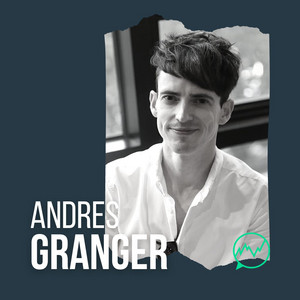
Seeking financial opportunities overseas just before the great financial crisis, Andres Granger was motivated to learn how to trade after falling victim to a Ponzi -like trading scheme.
He worked hard and diligently studied order flow and scalping while trading futures and different markets.
Later, he was introduced to crypto through a prop firm.
Actually, he kind of got forced into trading crypto, and you'll understand more about that later.
He began honing his skills and eventually got into exploiting large market inefficiencies through market neutral trading.
Emboldened by these incredible opportunities, Andres then went on to create a crypto strategy fund.
He's now the co -founder and head of trade and strategy development at Active Digital Funds, one of the very few crypto funds that runs all of their strategies fully automated, and one of only a handful of audited crypto funds to make a positive return for clients in 2022.
Recently, they won the award for Best Market Neutral Fund Under $25 million from Hedge Week European Digital Assets Awards.
Also, towards the end of the interview, please stay tuned for a quick update that we did with Andres on June 13 since there have been so many developments in the crypto space.
Now without further ado, ladies and gentlemen, we're so pleased to present Andres Granger, all the way from South Korea.
Well, Andres, welcome to Chat with Traders.
Hi, thanks so much for chatting with me today.
Great. Tell us a little bit about your early background, where you grew up and where do you live now?
Originally living out in California, kind of growing up there right after college, basically.
I moved out here to Korea though.
So South Korea, it was kind of a by chance situation where I had a little work in China, and then I was able to come over for a visit.
And I had always loved, you know, old Korean movies and some Korean food.
They didn't have much back then.
But some Korean food that I can find in California and had an interest to see it, came over, checked it out, and it was not what I expected at all.
And I think for the fact that it was just it was hard here and I didn't understand, you know, the cultural things and a lot of stuff didn't make sense.
And yet China and Japan felt, you know, oh, OK, it's different, but it's cool.
It's interesting, but Korea was kind of a conundrum in a way.
So I decided to stay a little longer and just see what is, you know, what's going on here, really?
Is it is it a me thing or is it just don't understand culture out here?
But it definitely helped learning the language and then, yeah, working in in the different industries in here.
And, yeah, it's been now, jeez, 15 years, 15 years, but definitely call it home.
So, yeah, so what did you major in some finance or investment related subject in college or?
I went to school. I had to fund myself for that.
I had to work three different part time jobs to be able to go to college.
And during that time, you know, working these three different jobs, I had to schedule out my courses just so that they would line up with the jobs that I had to go to during the day.
And because of that, it was like, OK, if I do this and study this or that major, they have this many required classes to take.
And it's going to, you know, spread me so thin I'm going to get done in five, six years.
And I found communications was the one major where I could take enough classes, get a degree and not have to spend so much on the college education.
So I was like, how do I really want to do communications of all things?
Took a few classes and I actually liked it.
So kept with it. I think that's that's a funny one, too.
I'll tell people now, like, oh, would you study communications?
Oh, you're so bad at communicating, though.
It was it was a great experience and it was really that that actually got me jobs later.
And while going and working for I .N .G., I just realized like, wow, all these different industries really need marketing and really need someone to talk to their clients and do some sort of client, you know, client relations.
And that was really important.
Definitely in the 2008 era where people just, you know, businesses wanted money, needed more.
Clients funds coming in and it actually opened up some doors for me.
So if I had done some other things, it would have been a definitely a lot more competition and definitely helped me out here when I was getting started and the beginnings of my career.
So. So when did you first get exposed to financial markets from an investing or trading standpoint?
And what types of investments or trades did you get exposed to while you're at Hyundai?
My very first introduction in any way was my first year of high school where one of the teachers sat the class down and that day's lesson, it was it was a math class, this statistics class, sat the class down and told us, you know, you can work your whole life and just grind and grind away and save
money, which is what we're all told to do.
And that's great. But no one ever really builds any wealth that way.
At some point, you have to invest.
Anyone who really gets anywhere gets into some sort of investing at some point in their life.
And the earlier that you can do that, the better off you are.
So I heard that and it always stuck with me.
And I OK, I should try that one day.
You know, maybe I get a little older, get towards retirement, then I can start seeing what investing is about.
And I knew like that's going to be too long, too long.
So at some point and then funny enough, it was working at Hyundai at the time, the HMC company, another bit of exposure there, but then seeing how they did things, which was, you know, at the time, a lot of long only kind of stuff, which is kind of funny.
That's that's how crypto really started out with just a bunch of long only funds.
And then it's really developed from there, but their style of trading and the way that they did things.
Still, I didn't get a huge introduction of what the strategies were at the time.
But what I did find that was very interesting was and in my closest friend, who was the head trader there at the time, he came from a background of being an exercise instructor.
What is the word for it?
There's there's a word for it in Korean that that you can study basically.
Undong, that's to kind of like teach people as a professional, like how to exercise and how to work out.
And he did that as his major and then really couldn't find any decent work and ended up as a trader.
And they took him on because, one, he went to a decent school and got decent grades.
But, two, they didn't care.
They didn't care about your background.
And they had said anyone can learn this as long as you put in the work and you try and learn from us and we teach, then people can do this.
So we don't look at any background and say, oh, this or that person can.
I think things have changed quite a bit now.
And, you know, they're really looking for the quant world and a lot of math heads.
So, but at that time, you know, when it was just like manual execution for everything, it was it was all about as long as you can keep a straight head and put in the work, then it could happen.
But it was actually after that that I finally got into trading myself.
Yes, it's a bit of a wild story where I did different work.
I worked kind of as a consultant through other companies.
I found that was the best way to maximize payment for my time while in Korea.
I had met a friend through work and the guy introduced me to a very interesting investment out in Hong Kong, where a team of traders, kind of like a prop room situation, were trading for you and you could invest with them.
And I didn't know much about it at the time.
Sounded interesting.
But I'm not that keen on having someone else trade for me.
But if they're good and they're consistent, then might as well.
Worst decision, maybe, of that time of my life.
But, you know, got me to where I am now because of what happened.
But I hand over a bit of money and after that things are going well.
So I hand over a little bit more and things are going well again.
So over over a year's time, I basically hand over, you know, these guys are just killing it.
It's kind of a probably a made off Ponzi scheme.
But as you could expect, it went bust.
Don't even really know how.
I guess the Hong Kong police were investigating it for the next two years.
And then I hear reports back once in a while.
But none of the money was ever recovered.
Everything lost at that time.
And although it was devastating, it was like I knew this from the start.
If I wanted to do this for myself, I needed to do it on my own.
I needed to trade for myself.
I needed to learn about markets in general and put in the effort and not go down this kind of route.
And even though I looked into it and everything looked above board, who knows?
Who knows? They had either blown everything on some crazy wild options trades, or it was, you know, never trading in the beginning.
Anyway, that actually finally got me to get into trading myself.
Then kind of one day at a time.
And I learned the biggest lesson ball, diversification, really not all eggs in one basket, I guess you'd say.
And what kind of markets did you trade for your own account?
And when did you set up your first trading account?
Once I was out of college, I did, I guess my very first investment ever of working all these jobs.
And then I saved up a tiny bit of money.
So I just put it in the markets and didn't take a look at it.
And I did some mutual funds, just joined some mutual funds.
And then six years go by and I open up the Fidelity account and see, wow, that was almost perfect timing for the market.
Well, obviously in 2008, I was somewhat lucky there.
But then again, that money was all cleaned out in Hong Kong later.
After that, when I finally got into actually trading, and then later day trading, I went into the futures markets.
So I took a look at different things.
But one thing that was key, I heard about, but I heard about order books and order flow.
And I started getting a big interest into that.
And the one good thing about reading an order book, it's not something like a chart where you're basing off of patterns that you think may have some sort of statistical edge, which many of your listeners may know that often they don't.
So I started looking into how to trade off an order book, everything from reading the order flow to then getting into scalping.
And I definitely had a hard time with it.
It was a good four years of a grind of just constantly working at it day after day.
The type of work I was doing again was the consulting.
So I was able to do that for part time, but make enough money there where I can fund myself to have a free lifestyle.
But as a trader, we all know, you're never really free.
You're locked into the markets all the time and always thinking about them.
So it becomes a prison, but it's a passion at the same time.
I get into basically scalping futures and learning how to do that.
I worked across so many different markets.
I mean, everything from the obvious contracts like the ES and Q and the YM.
When I found things hard, I'd try out different things such as different UREX products going completely outside of that, going over to the Japanese Nikke, trying out even spreads, things in like...
One of my favorites was the classic Arbob and Heating Oil, just gaining a lot of experience that way, which I would say it absolutely slowed me down at the time, but now is so useful for what I do because I'm having to trade in different types of markets, markets that can trade like it's basically US
bonds, like the bond market, or something like the DAX, where I really found my home basically, and something like that, well known as a very thin, very fast market.
Yeah, these days I can trade all kinds of different types of order books, and it was really that experience of trying different things that helped me to be able to do this now for sure.
How did your early trading go for you, and was there anything in particular that helped you improve your performance?
It took me a good four years, a good four years, even a little over that, to find consistency, become consistently profitable, and make enough money where I didn't really have to do my consulting work anymore, and I could focus fully on trading, and not have it be such a stress where, oh, am I going
to be making any money this month?
Am I going to turn a profit to being able to trade comfortably and say, okay, today there's really great conditions that are available in the contract that I'm trading, or it's a type of condition that I really want to stay out of, so I'm going to sit out and wait for the better days.
That change from basically, well, turning the corner, really came from a ton of effort in recording each day I traded, and then reviewing those trades, and journaling that day after day.
If you're going to be a trader, then absolutely, you have to start out doing that.
Even to this point, I don't really have to journal every single day, but I'll definitely write things down.
If there's anything interesting that I see or something new that I experienced, I'll take screenshots, pop the recorder open, record for however long I see some kind of new situation going on in the market.
There may be some new kind of bot that's trading in a very different style, so I'll watch that.
In some ways, I've been able to gain, in a way, a little bit more of an edge or figure out some different styles of trading that are just slightly different from mine, but creates new ideas by doing that.
I would say this is the biggest thing though.
In the beginning, I would watch the entire trade session that I did, so it may be an hour, two -hour session, and go back and rewatch that, and then go out to work for the rest of the day.
That was a big nightmare.
Someone who's reviewing really doesn't need to do that.
Ideally, you just go back and you watch the trades that you took.
All kinds of different things can be happening in the market, and you don't have time to micromanage every single order that goes through, but you should look back at the trades that you did, watch them again.
Sometimes you need to slow them down or watch them multiple times because it's something unique.
Then you can really verify, okay, was this a market situation?
The market did something here?
Did I make a mistake here?
Or is this a type of situation that's just completely out of my control and I can just move on?
Yeah, so you mentioned cryptos earlier.
Did you get into cryptos?
If so, why? What would attract you to cryptos?
Yeah, I actually got into the crypto market a bit later.
After trading futures for several years, getting consistently profitable, I went and tried out for a prop firm, but this was an online one.
I think they had quite a bit of those two years back, and there's some negative things out there in the prop world where there's some good ones and some bad ones.
I think we can get into that in a minute, but I went to work for one.
I noticed something was wrong with it.
Something's up here.
I left that. I moved over, found another one where it was actually in -house here in Korea.
I went and worked with them, but what was interesting there was I come in, I say, okay, I have this track record.
You can check my stats.
You can watch me trade.
Am I going to be able to skip the send and just go right to live trading?
How about that? They said, no, no, we'll start you off live, but you won't start off in futures.
You start off in crypto.
Never traded crypto before.
I don't have any interest to, don't want to, but why is that?
They said, we see that all the people that come through our doors, the number one market that they get profitable in, the quickest is crypto.
Why do you think that is?
They had a couple of reasons for it.
One, you get to start off trading live.
You're not trading sin and some issues with sin, depends on the simulator, but some of them, a price can trade and it says, oh, you're filled.
You got your full fill here right away.
Okay. You're in the trade.
Another issue can be, you can put an order in the, say there's a bid at 12 and an offer at 16 and you put your order at 15, they sell and suddenly you're filled at 12.
So you're filled at the bottom of the market.
Wow. You're in a great trade now.
And I saw different people even in these like leaderboards that would trade sin.
Some of them just had insane results day after day after day.
And if you're able to use those little things to your advantage, yet it may look good on paper, but then when you go to actually trade live, it's night and day difference at live orders are key.
And the big thing there is you can trade with such small money from the beginning in crypto that you can't on definitely in futures without a doubt.
The other thing too, for programmers, they were able to try out different algorithms without having to put up such large amounts of money or take such huge drawdown over a short period of time, just to see if something works or not.
They can put up a $50 small account and let it grind overnight and come back with a few thousand results.
It's just so much better in that regard, in that regard.
But in the end, is it really easier or not?
The thing was when I got into it and I went and worked for that, that prop firm, I would say it was an easier market at that time.
It was definitely an easier market.
Things were just starting to go up, just up and up and up right after the real huge dump that basically Bitcoin saw in 2017 -18, what was it after December, January, the market just plummeted, then just ground back and forth for quite a while.
And then from there, just slowly took off into the Corona pandemic, where it just went parabolic.
By doing that, by working there, working with them, finding out, oh, these markets are easier, it got me, a little light bulb moment went off and, well, okay, I've never even checked these out, so why not open these order books and see what this is about?
And it was basically a dream come true of, wow, this is the kind of action that I'm constantly waiting for.
Day after day, I'm saying, oh, this is the kind of thing that if I can have this in this kind of situation, if this happens, then great.
These are trades that I want.
And I was seeing that in the crypto order books.
The issue there was, if you trade even a one lot, in something like the ES and you get a point, so what's that?
That's going to be about $50 of profit, even just with a one lot.
But in crypto, it can be very different.
You're not going to trade a clip of 10 BTC in a matter of a couple of seconds in and out on the best bid, best offer, and capture a nice little profit on any market.
You have to trade in smaller size, so you have to take just a multitude of more trades to really make any kind of a profit there.
So it's quite different that way.
Chat with Traders is brought to you by Tasty Trade.
Tired of trading on rookie apps?
Then get the platform for serious trading.
Tasty Trade. Tasty Trade gives you the tools to trade your way.
Chart your heart out with over 300 indicators.
Know your odds with probability of profit and move fast with quick roll.
Trade what you want and trade it your way.
Stocks, options, futures, and more.
All in one account on one platform.
No wonder why serious traders choose Tasty Trade.
Visit tastytrade .com and see for yourself.
Tasty Trade Inc. is a registered broker dealer and member of FINRA, NFA, and SIPC.
Hey, I got a great update from Trade the Pool.
Now it's even easier to get funded.
As you know, Trade the Pool built a unique program to evaluate stock traders like yourself and provide you with the company's funds to trade with.
It's real shares, and you no longer need to worry about the PDT rule.
But that's not all.
Trade the Pool has introduced a new tier with $20 ,000 in buying power, making it easier to pass the evaluation and speeding up the process of getting funded much faster.
You don't want to miss this opportunity.
What you are doing is acting as a market maker, buying at the bid, selling at the or splitting the bid ask.
Is that accurate? Or did you have other type of strategies that you implemented for the firm?
Or did you trade your own account?
So originally, I got started there, learned what they wanted me to do.
They didn't have any kind of an education, but my background, yes, was in more of a market making style and a very quick in and out kind of short term trading.
The other traders that had worked there, which was funny enough, they were doing really well.
And especially at that time, a couple of guys in there had made a couple million dollars, starting from a 50k account over a period of about nine months.
The last nine months they had worked there, and they were new guys just right out of college.
And so, okay, I want to trade here, but I just don't trade that style.
And seeing what they were doing, it's like, I don't come from that kind of background of taking 20x leverage, and then holding for a two day to three day period, dealing with a 30 % drawdown on the trade and then having it work in your favor.
It was a little wild for me, but again, this was one of the issues of working at specifically that type of prop firm at that time.
A lot of these prop firms will offer you a great reward, 60 % or even more, if you trade for them, but they're making money in a different way.
They're really looking to make money off of the trades that you're doing.
They're getting rebates from the market or from the exchange direct.
So something like finance, they'll get a small rebate for all the trades that you do and the size that you put on.
But on your end, you're having to pay a fee each time you trade.
And the general finance fee for spot trading is 0 .1%, which is pretty low, somewhat low industry standard.
And even if you trade at higher volume, they wouldn't bump you up and they wouldn't lower your fees.
So for my style of trading, that made it just impossible for what I'm doing.
And just for some context there, again, we'll take the ES.
If the ES is trading at something like $4 ,200 right now, if you just trade a one lot on that amount of leverage and you're paying the 0 .1 % on your entry and exit, the leverage that you're being offered in the ES is so big, your actual fee on that 0 .1 % on the in and out of that would be about $420.
So for one contract, $420, it's just insane.
So it made the types of strategies that I was doing impossible.
But I also had had a good deal of experience in spreads.
And what I found and the thing that I was into was trading the basis funding spreads.
So when you trade either the spot over the perpetual, I think a lot of the people that you've had on have talked about this in the past before, but it's just a classic trade that is available in crypto markets that is not available in Treadfi.
Describe what is perpetuals and why is it important to crypto?
So it's a unique thing to crypto.
It's a different type of futures contract.
In the traditional finance markets, we have the quarterlies, so they expire.
So something like oil will expire monthly, something like the NQ or ES, something like the NQ or ES will expire quarterly.
Now, crypto does have these quarterly markets as well, but really, no one uses them.
They started off offering something that basically retail traders could understand a little bit better, and they called them perpetuals.
And the idea with a futures contract is basically you have a cash price or spot price, and it trades at a different price.
So it may be below, so maybe in backwardation, or it may be above, it may be in contango.
You're basically paying a premium to trade there.
So if it's in contango and it's above the spot price, you're buying it a little bit higher of a price.
Do you really want to be doing that?
Well, if you're given extra leverage to trade with, a lot of people may be willing to do that.
The crypto markets having something like a perpetual, that difference of it basically expiring every day gives you a bit tighter of a price, but you're having to pay either an hourly or an eight -hour funding rate.
What really happens there is you're either paying or you're getting paid.
So if, again, we'll go back with the contango example.
If you're buying and it's above what the spot price is, you should be paying the people who are short on that side.
If it's the opposite way and you're actually selling and it's above the spot price, then the long traders should be paying you.
And it stays that way due to open interest and volumes that are going through.
There's a few factors that really go into it, but it creates a very different type of a trade where you can be in a spread and you can be paid daily for just holding the trade as long as it stays in your favor.
How has this perpetual percentage spread varied over the years and how much does liquidity impact that?
Has the spread increased or decreased over the years and what are you seeing in that?
Good question. It has definitely changed over the years.
And I would say this, it is really flattened out.
So if it's negative or if it's positive, it's a great deal lower than what it was before.
Well, a great deal being something that may have paid the short side upwards of at times, I had seen 1 % per day, even something really big like Dogecoin or something like that, one of the more well -known bigger coins.
But these days, yeah, it's very, very small.
You're basically being paid about three basis points per day.
And although that may be small, at times you can use leverage and that can go a little bit higher depending on the borrow that you're paying for borrowing the other side of that.
But yeah, a lot of market makers have come in over time.
In the last few months, the markets have become a little bit more illiquid.
Even though they are illiquid, those people that are right there on the front lines, the market makers, pushing these spreads back together, have really kept things in good alignment, basically.
So they are not as profitable as they were before.
And a lot of people are finding it very hard to execute into these trades and out of them profitably and get around the fees, basically.
But they're out there.
For people who can execute well, they're still good.
I see. So I've heard of this thing called the Kim Chi premium.
What is it? How did it get started?
And does it still exist?
Very interesting one.
I think it will exist and forever be part of the way things trade out here just because of the fundamentals of how Korea works in its markets.
So one thing that's very key is there's no shorting allowed in the market.
So there can't be any short selling.
Why is that? They just don't allow retail traders to do that.
So you have to be of a certain professional level.
You have to either be working for a fund and have taken a license and obtained a license to be able to trade that way.
And as well, people cannot or retail traders here cannot trade any kind of leverage.
So leverage is illegal, and shorting is illegal.
And because they have their own exchanges and it's based off of Korean won and not kind of stable coins and things like that, people that trade on those exchanges, a great deal of the retail traders don't actually trade on exchanges outside.
Now, that amount of retail that's trading outside of Korea is definitely growing a great deal year over year.
But still, these markets here without having kind of the short side selling, it creates a situation where in huge market euphoria, when basically Bitcoin sees a 30 % up week, people already owning a coin kind of look at the situation and say, do I really want to sell here?
And they'll kind of pull their orders.
People on the buy side may say, I don't really want to buy here just yet, but let me put in some orders a little bit lower.
So you have a very, very big indifference where the bids are nice and thick, the offers are super thin, and it's just a game of who's willing to wait longer until they kind of ape into things and basically catch FOMO and just want to buy.
So is this short selling prohibition just for the crypto markets or does it also exist in the equity markets in Korea?
And what's a rationale for that?
Were there small investors that got burned from this?
And is that why they implemented this regulation?
Yeah, it actually exists in the normal markets.
I mean, just everything out here.
There is not short selling maybe in the FX markets, but then again, no one really does FX out here.
It kind of goes back to the history here in Korea of what happened in the 1998 situation where markets just tanked and so many people lost so much money.
There was just over leveraging too many loans going out and just not being paid back.
And after that situation, so many people losing such large amounts of money, I think it was at that time the government said, we're going to put a stop to this and not offer any kind of short selling.
We're going to get rid of short selling so that these situations don't get even worse where people look at a situation that's already bad and say, I'm going to make money from this.
We're just not going to allow that.
But then again, at the same time, it just makes markets unhealthy.
We need both sides, really.
There's a lot of different types of traders out there and we kind of need all of them doing their own thing, participating together.
And then we have a little bit more of a liquid market and a little bit more of a structured market.
So yeah, some of the other markets can also get a little bit wild like that.
We can see some real big spikes and some small stocks.
Right. And how does this impact you and the strategies that you're doing?
So one thing is even still being a foreigner out here, again, I'm not allowed to trade on these Korean exchanges for cryptos.
Well, how can I say this?
You are allowed as a foreigner, but you can't take your money back off basically.
So you can send coins into the exchange.
You can trade those coins back and forth, but when you go to get out, they won't let you take the money back.
So, I mean, it's a classic situation where SPF, you know, Sandbank McPherson heard about the Kim Chi premium and decided, you know, I want to capture this and found the regulation and basically the situation out here was so anti -foreigner that he wasn't able to do that Kim Chi premium here.
And he moved over to Japan and traded for a 10 % premium.
Whereas at the time that was between 30 to 50 here in Korea, still a 10 % is a great premium to capture if it's available.
But yeah, it's just really hard for any foreigners to do any kinds of trades out here.
I've known of other friends that have had to go through other Korean friends to do trades.
And then again, the exchanges will often just stop you from pulling your money off the exchange and hold your funds for quite a while.
Well, how I like to transition to regulations and I'm curious, how has the Korean government's attitude toward crypto varied over the years?
And have they created clear regulations which attract crypto investment and development in the country?
Well, it was definitely just an open free for all for many years in the beginnings of crypto.
And then at one point, they really started to clamp down.
I think the biggest change was there was just so many different crypto exchanges that were being offered to basically the retail environment out here.
They were listing all kinds of different coins.
And I think several people got burned here or there on trading in these kind of wild crypto liquid markets.
And the government finally stepped in and said, we're banning this and that exchange and we're getting rid of things as of today.
And a bunch of them went under and only a handful of them survived.
And the handful of them that survived have completely thrived.
They're doing really well now, things like Upbit or Bitthumb, you can look at their daily volumes and they're on par with some of the biggest exchanges around the world.
And again, they're really only trading or they're only offering their services to Korean investors.
But since then, since that original clamp down, they've been really open and really happy about having crypto as a part of the offerings to the general public out here.
It's looked at in a more positive light, I would say, than it is in other parts of the world.
I see. What kind of future for crypto do you see in the US and other countries other than Korea with the endless attacks by prominent politicians, bank CEOs, and the SEC?
That is an ongoing battle.
One that I actually hope will work itself out in a positive way for everyone.
I would say to a great extent, we really do need some regulation.
We definitely saw that over the last year of what happened with several different things such as the FTX situation, the Luna situation, Celsius.
So hopefully things will work themselves out.
But then again, for what's happening right now, I kind of expect it to get a little bit worse before it gets better.
There are a great deal of clamp downs going on, especially in the US.
Even for us right now in our fund, we are not able to easily onboard US clients.
There's a whole process to go through for that.
And we're putting things together so that we can make that a bit easier.
But they have really made it much harder.
So even for US citizens, the current situation, they're not able to trade, leverage, or futures.
So it really has changed things just in the last year.
But hopefully, yeah, it will improve.
So tell us what happened during the Terra Luna algorithmic stablecoin collapse a year ago.
And how did your fund navigate that blowup?
That was actually such an interesting one.
I mean, I had never been through a stablecoin depag of my own for the first time.
So what happened in a nutshell was that there was basically a stablecoin that was created that was an algorithmic stablecoin.
And I think long term we've heard that there hasn't been any success in algorithmic stablecoins that have been created.
They've all had their own issues.
But this one was basically based off of the other Luna token, the sister token, that if the stablecoin was to depag, you could buy up Luna and basically capture an arbitrage between the two.
So you'd buy one dollars worth of Luna, but then you'd be paid back in the stablecoin.
So you'd actually make a little profit.
That kind of all fell apart.
Fell apart, basically, because as everyone thought, there was enough funds being held to hold this structure together.
They weren't put out quickly enough.
They weren't put out 100 percent.
And so it really saw a deeper and deeper depag from its peg, from its original intended value.
At that time, we were spread across several different stablecoins as well.
I mean, USDT and USDC, a little bit in DAI as well.
And we also hold fiat, keep that as a collateral on some exchanges.
But we were holding some of the USDT, took a nice little hit that month.
But the good thing was it offered so many other opportunities to trade different types of arbitrage between cross exchange and funding arbitrage that was just paying great amounts of funding rates at that time.
And so that month, we were able to turn a nice profit even after coming away with that initial small loss.
It was definitely one of the most interesting situations I've ever experienced.
I also traded a crude oil the day that went negative.
And I have to put that up there on my top three days of wild trade that I've ever seen.
But in the end, yeah, hopefully we can not have a situation like that happen again in crypto.
Because once that Luna and USDT coin just plummeted, the entire market just, it was dominoes falling one after another.
After that, we had Celsius and then FTX.
So again, yeah, it really is a situation that hopefully doesn't happen again.
In your fund prospectus, you said that, quote, we exploit market inefficiencies and market structure that only exist in crypto.
How do you exploit market inefficiencies, especially these days?
Yeah, that is not as prevalent as it was years back when crypto first started.
They were just such good percentages to be made.
But there still are a great deal of inefficiencies due to the fact that there are so many different types of coins, just the constant making of new coins and being listed on different exchanges.
And the fact that, yeah, there are so many different exchanges to be traded on creates just all kinds of arbitrage situations where one specific coin may be trading at a completely different price from something else.
So similar to this kimchi premium, it may be that kind of a situation, not as great, not as much as a 30 % difference, but it still creates a nice arbitrage opportunity.
Even things like Bitcoin will be off price.
Beyond that, we have the futures, perpetuals, along with the quarterlies.
Those are really great for just adding another element to the mix where you can trade against the spot market, the futures, and then just go cross exchange.
So it really opens things up a great deal.
And I'd say that one of the biggest things in the traditional markets, we have indexes.
So the NQ is an index of many different stocks.
But in crypto, there really aren't indexes.
It's just you're either trading Bitcoin or ETH or XRP or something like that.
And you're trading that as a future in itself.
So you can trade these different things as a statistical arbitrage as well.
That's one of our other trades that we do.
So by putting these two things together as pairs, it creates in itself a whole other kind of a trade.
So describe, are you able to do these arbitrages just through the centralized exchanges, or do you also involve DeFi?
And what types of common coin pairs do you look at when you arbitrage?
Give us a breakdown of what typically frequently happens.
Yeah. So we specifically stay out of DeFi.
Now, there are a lot of opportunities there.
There's a site, DYDX.
It's great for using futures contracts.
They do not offer spot, but I think they're going to in the near future.
But again, we stay away from DeFi because what we offer to our clients is basically just centralized exchange trade to keep a little bit safer, to reduce risk of just basically contract hacks.
And beyond that, we try to trade correlated, highly correlated futures contracts if we do something like two futures contracts over each other, instead of something like a spot contract versus a futures.
One pair might be the obvious BTC ETH.
Another would be the BTC Litecoin pair.
It's also good, has a good amount of daily volume to go through.
And it's really key in getting in and out of trades correctly in doing these spreads, because it moves just a tiny bit away from you.
And if you have one leg on and the other still off, the trade's gone and now you're lost.
So basically, these high volume markets are really key for us.
That's one of the biggest factors we really look for when we try to create these different pairs.
How long are you typically in each type of trade?
Does it typically last seconds, minutes, hours?
And are you in and out frequently of the same pair, multiple times per day?
Or is it highly dependent on the liquidity flowing in and out of the market?
So low liquidity environments would be drastically different than a high liquidity market?
Yeah, one large factor there is not just the liquidity, but the two -way order flow that's coming in.
And for the fact that each trade that goes through the market is such small notional value, we look to take these trades at a little bit more of a mid -term.
So we may be looking for five -minute to 30 -minute trades, but below that, it's just so small that you're not able to really get on any decent size and make much out of it.
So at times, we're trying to really push larger size and make something out of the trades that we're getting on in these statistical arbitrage trades.
We may look towards trading for an hour up to a day or even in a little bit longer than that.
But ideally, we knock it down within less than a day.
How has the performance of your funds varied both in the bull markets and in the current bear market to sideways moving market?
Well, our track record goes back three years, and definitely in these large bull runs, we have had some really great returns.
I think most of the funds have all seen that.
But the fact that we run these two different strategies, the market neutral strategy and our long -short momentum strategy, we have also done decently well.
I'm not trying to brag, but we've done okay in the downturn of the market.
So we're able to pull a profit out and make a return for investors.
But I would say at the same time, it is much easier to make more money when things are basically just going up.
To the upside, things can be infinite.
But on the downside, at most, you're really just going to make 100 % of where you sold from the top if it goes completely to zero unless you're using leverage.
And for our long -short phone, we actually stay away from leverage, and we look to trade only using leverage on exchange and keep funds off the exchange.
So we look to diversify across several exchanges, say four exchanges, only put on about 5 % of funds into said exchange, and then use that with a little bit of leverage to basically have the full AUM be put to work into a trade.
But then again, on the market neutral side, we'll use a little bit more leverage there.
Again, we look to make small profits at times when things are a little bit shaky, and we feel like the market can really fall even farther from here or really just split apart like the Luna situation did.
And we may pull a lot of our funds off exchange.
That's because again, what we did in the FTX situation, most of the funds were completely off exchange and then trading trying to make what money we could using just a bit of leverage with the little amount that we had left on until that thing went belly up itself.
But definitely in the bullmarks, I think everybody sees a lot more of a run up in their P &L.
If you were not able to find these arbitrage opportunities in crypto, would you still be a trader of crypto or a buy hold investor in crypto?
Really, if the arbitrage opportunities were just suddenly gone tomorrow, basically, if they had traded like how regulators have the Korean markets trade out here, where you really can't short something and it's all basically on one single exchange, it would make it so much harder to where arbitrage
is basically out of the picture.
I don't think I would actually be a buy and hold kind of a trader still.
I would like to do a bit more of what our fund does, which is the long short, but then again, if I wasn't able to short, I'd just be on the long side, but it would be a lot more short term.
So I guess in another way of saying, do I have a view that crypto is going to moon from here and it's only going up.
I really hate being a directional trader myself.
I really stay away from directional trades as much as possible.
The few times I've taken them just take a punt here or there, it's never gone well for me.
And so I'm either very, very short term or just try to take trades that are basically arbitrage centric and keep me basically grinding away at small profits after the.
Excuse the last interruption here.
This is Tessa. We hope you're enjoying this episode so far.
If you love the podcast, please give chat with traders the best review you can on whatever platform you're listening from.
This will help us to keep the episodes coming.
Also, if you haven't subscribed to our email list, please hop on to chatwithtraders .com and click on subscribe so we can keep you posted of information that may be of importance.
Thank you. Now back to the chat with our guests.
Have you or can you use crypto for any kind of payments for goods or services in Korea?
There's a few. There's a few that do allow it, but it's a little bit more like kind of the PayPal system out here and how that works, which most retailers do not offer PayPal or most websites don't connect to it.
They have a different system that's there.
Kakao banking. And I think Kakao is getting more into offering crypto, but right now it's still in the beginning stages.
So basically, if you really want to use crypto for any kind of purchases, you sell off the current crypto that you have to buy more crypto on the exchange.
So I think the use case is a little bit lacking still, but it might be getting there sometime soon.
I'd like to transition to psychology.
You've mentioned in the past that psychology is wildly overused in trading.
Could you expand on that?
Yeah, I kind of getting into markets and studying and learning different strategies, constantly psychology comes up left and right.
And if you're trading this pattern and it's not working for you, it's worked for so many others, it must be your psychology.
I've really seen it more over where other educators have been teaching and training certain methods that really have no edge to them in any form at all.
And without having a real edge, say as something as simple as an arbitrage where you're just buying one thing at one price and being able to sell another thing that's equal at a higher price and just buying low selling high.
If you're able to trade an actual strategy that has edge and you can see it play out right in front of you and in the markets, then a lot of the psychology just goes to the wall.
It's unnecessary. As long as you can execute as best you can and you're able to do that and consistently and profitably, you can easily continue on.
But when a strategy is kind of up in the air and will it work today or will it not, then going back to, oh well, if it's not working, you cut the trade too early or you should have done this.
And why did you do that?
It's because you were nervous in that situation.
It's a lot easier to say, okay, I bought this token, let's say, at 12, I wanted to sell at 14 on the other exchange, but the price moved away from me.
So what did I do? I had to just sell back and I sold it at 10, too bad.
Okay. On to the next trade.
Was that my psychology there that helped me just take the loss or was it just the fact that statistically this loss will happen this often because you're not always able to make 100 % of your trades.
So you have to cut it.
So in your view, is it that the lack of a proper strategy leads us to psychological vulnerabilities?
Yes. And also believing that you have vulnerable trades towards overtrading or not taking losses because you're really just lacking a general strategy.
And I think a lot of the educators out there, again, they'll teach different strategies that it's just hard to say, does it actually work or does it not?
And then harp back on, oh, okay, if it's not working for you, here's a different reason, which is, it's your psychology, it's you inside.
And sometimes people can't cut trades.
And yes, that can be an issue.
But when you know you have a strategy that does work and you still find yourself messing about and screwing that up, you can easily point to, okay, yeah, I need to cut this out.
Well, the people who adhere to the psychology argument, many of them present the point of view that when you're creating your strategy, you're in a calm mood, right?
Everything is fine, right?
Because you're not risking anything at that point.
And then once you take on the trade, then your own inner demons that you didn't even know were there come to the forefront.
And therefore, psychology is the most important part of trading because it will likely overrule your strategy.
And then you'll be caught up in loops of rationalizing, you know, why you added to that position, why you're going to hold on and so forth, because often what we don't know that lurks inside of us can be our own worst enemy.
Have you been fortunate enough not to been too affected by psychological trading issues that so many other traders face?
That's a great point.
And I completely agree.
If you're in situations where you create the trade and you have the strategy in the way that you want to trade things, you have a plan, you go to execute, and then, oh, no, you're doing something completely out of what you had planned to in the first place, what's going on?
Why can't you just, you know, take the loss here?
Why did you move your stop, something like this?
Yeah, that definitely gets to people.
And I would say the biggest help for getting away from that kind of behavior is trading a higher frequency type of strategy.
When you're doing something where you take one or two trades a day and everything is banking on the next trade, you're a lot more likely to have that come into play and have that devil on the shoulder kind of tell you, just let this one ride.
You know it's the right thing to do.
But really, if you're trading at a higher frequency rate where you're taking 20, 50, 100 trades or more in a day, you just know statistically it works out over time.
Just take the loss on this one, get out.
And for my own psychology, yeah, I could see how I had issues at some points where I should cut this trade right now.
Let me just, it might come back a couple of ticks.
And those kinds of things are, I mean, I can remember one trade in the NQ where I let the trade go for 37 seconds, 37 seconds of a trade.
I should have been out in a second or two at most.
And I go back and I review it and I'm like, this is terrible.
And even right after that, I took the next week off and like, had to reevaluate my life over a 37 second trade.
But again, when you have higher frequency types of trades that you're taking, you just have so much more experience in a shorter amount of time and you don't let one single trade really get to you.
Good, good point. Right.
So exercise your psychology through frequent trades.
Yeah. What's your view on scalping?
I hear your viewpoint it's highly overused in trading.
Okay. The term scalping is highly overused, without a doubt.
Actual scalping by the bots that are out there is going on at constant rate.
But I would say, scalping really came from and originated from the floors and floor trading where you're basically just crossing the spread.
You're buying on the bid, selling on the offer, you're making a tick, you're pulling a tick out of the markets.
Now there's different videos online that you'd see in like, oh, I'm just in this trade for a quick 30 minute scalp today.
Look at, I bought here and oil went up half a buck.
Made a good amount of money.
And it's just a huge difference of what the original term really meant.
Again, I can say something where, all right, the best bid, best offer has a bit of a gap between it and you're buying basically on the bid and you're trying to sell near the offer.
It might be a scalp too, but again, scalping, even in that situation, it's just more of a time thing and you're really looking to trade a couple of seconds, a couple of seconds at most.
You're hoping to be turned out right away from that trade.
So what scalping would really mean to me is very, very fast, maybe high frequency and really just trying to collect the smallest amount of money between the spread that you can in the moment while it's there.
Good. So to wrap things up, what do you struggle with most in trading or running your fund?
Well, without a doubt, after the markets have really just plummeted, there has been less of an interest in crypto overall.
I think you may have heard of this new fad, maybe it's a fad, AI.
Everything is just like AI, AI centric.
A lot of people have been an idea for a strategy that we're creating and use a little bit of AI to see if it might be better, changing different factors, but we note those factors again.
What we really would struggle with these days is just building back a little bit more interest into the crypto markets.
I think it was just so easy to build a U .N.
for any fund during the big up run.
And in the last year, we won some awards, we've done okay.
But I think everyone overall is just finding it hard to really bring the interest back.
Hopefully, we'll have an opposite Luna, a reverse Luna, where things go up, not down.
Curious, do you view the expansion of the federal deficit and the endless money printing that will be coming soon as a positive catalyst for crypto?
Overall, fiat currencies around the world are debasing at a continuing rate.
Is that a positive for the long -term viewpoint of crypto?
I think a lot of people do have it as a longer -term basis for, I mean, look at Saylor, Bitcoin's going to a million because everything else is going to absolute zero.
The two things need each other without a doubt.
I mean, if we only have the base, everything off of in life, then it won't be good long -term.
But at the same time, if there's only crypto to really go around out there, again, that wouldn't be ideal.
Will it really make a big difference?
I think it will make a big difference slowly over time.
Again, you're calling me out on more of almost what I would say is a directional call in the markets where I just like to stay neutral.
But yeah, I would say probably it will have an effect.
Mm -hmm. So do you have any goals for yourself or for your fund?
Yeah. Just generally keep up with making returns and doing the daily grind.
We have some strategies that we're working on that we're really excited about.
So it's basically every day go back to the results and check the stats and see how we can improve things.
Again, trying to develop into other areas.
So we're based out of, I myself, Korea.
Our quant is out in the London area.
He's great. He's a superstar himself.
And our head is out of Australia.
So a lot of our client base is out of Australia.
We're looking to go into Dubai a little bit more.
They have a very crypto -friendly and positive outlook on things there.
So yeah, just kind of getting the word out and seeing how things go over the next year.
Fantastic. How can our listeners get in touch with you?
I know I'm not too, too active on social media, but I think Twitter would be number one.
A very, very small little Twitter account that I have just for messing around with.
Just looking at basically memes.
But that's Andres Trades.
And then my LinkedIn would be the next best.
And you could find me there under Andres Grader.
Oh, fantastic. Andres, thank you for coming on chat with traders.
Thank you so much. It's been a lot of fun.
Stay with us for a quick update.
Quite some dramatic events have been happening just in the last week.
And I feel it's necessary we have another update to what's been going on in the crypto sphere when we were interviewing you just a couple of weeks earlier.
The situation seems somewhat stable but sleepy.
Can you enlighten us?
What's been going on in the crypto sector with Coinbase, Binance and the SEC?
Yeah, well, things have stabilized a bit.
Just a bit in the last few days, but still a lot of fun out there in the market as they say.
Well, so the SEC sued Binance and Coinbase and really had some pretty damning evidence on Binance.
So they're kind of going through that process right now.
Basically, a lot happened because of that.
So there was some larger funds that decided to liquidate some of their holdings because of all of the listings that the SEC put out calling many of these tokens, these crypto coins, basically securities.
So there were some funds that decided to exit their positions, their long -term positions, one notably being a $2 billion position overall.
So that was pretty big in the news on Friday night, late Friday night.
When they were actually exiting this, they gave off some of the orders to be executed to other market makers.
And also, these markets currently having very little liquidity and kind of no bid side offer due to the news, things just kind of dropped and it was a real snowballing effect.
So is this part of the, you sent me a graphic earlier showing some firm had some cascading liquidations.
What are those and how can an investor avoid being caught up in cascading liquidations?
Well, mostly, if you're just watching news constantly, it's definitely a hard thing to avoid if you're holding positions longer term.
And I mean, this kind of situation coming across in the news over the weekend, a lot of people are just caught off guard.
So you're kind of automation trading for you, then it will kind of see this thing happening as it's happening.
And you'd be a little bit luckier, but I think for the general investor, it's kind of hard to avoid.
They do happen quite quickly.
And mostly, once it does, kind of you have to decide, are you really willing to hold this position and sit through what's going to happen or get rid of it.
And I think the bigger thing here was, people had heard about the SEC lawsuits coming in first to finance, then right after, just right after that point base.
And so we all kind of see this as a situation where prices are just going to go lower because of this situation happening.
And I mean, if they did.
So in your opinion, do you think the SEC will be able to mostly, if not entirely, cut off Americans from getting into or out of crypto, what's stopping them from suing all centralized exchanges all around the world?
I've heard that they even want to go after Binance worldwide.
Are there any safe places?
So the Binance company itself, they really are going after the CEO and the larger company as a whole.
A big part of it is the Binance US.
A lot of liquidity has been pulled from there.
But as for other exchanges, yeah, there's a lot of talk in the news about going after just about every other exchange that's out there.
And that just could be a possibility.
But then again, there's also some pushback from the market overall.
I know there was just news the other day about taking Gary Gensler out and firing in from the FCC.
So still a lot of this is speculation.
It's kind of the early days of this situation.
So we'll see how it plays out.
But number one is getting a little bit more liquidity back in the markets and having things trade in a little bit more of a proper fashion.
Do you see any changes on the Korean exchanges and or the other government's response to the SEC crackdown?
Are they closing up more?
Are they following in the SEC footsteps?
Or how are they responding to this?
From everything that I've seen out there, there's not a big response and others following in SEC footsteps.
They are looking at it like it's an overstep.
They didn't need to go this far.
Again, they're really going after Binance for the things that it's doing and telling US users to use a VPN that was actually in their US site so they could access the major Binance network and trade off of the real liquidity that's over there, not just the Binance US entity, but really calling these
other tokens, coins, assets.
The market didn't really like that.
Again, they're still happy to be using it.
Places like Hong Kong have just opened up, developed a really good crypto hub out there.
It's not all gone. How have these events affected liquidity and the Delta neutral arbitrage opportunities that you use?
Liquidity has really dipped down.
It was not that long ago that basically Jump Capital and Jane Street pulled out of the markets and took their liquidity almost everything off of Binance US for seeing this event coming.
From there, a lot of other market makers have really pulled out.
Across the board, everyone's just noting how thin markets are.
Yet volume has actually decreased a great deal, so you're not seeing massive moves or something that would have really moved the market if we had the kinds of volume we saw in the last year.
Things are just down across the board.
As for arbitrage opportunities, there's still those market makers on the front lines, running their bonds with even small size, but still just holding these thin little markets together.
Things have kept up.
As for arbitrage, it's not that big right now.
How can I really put this?
Yes, the weekend events really did create some interesting situations and especially, most notably, on the Binance US exchange.
Other than that, things have held up pretty well with this very, very illiquid volume that's in the markets right now.
So, your operations and what you do, you're still able to do them, but not as frequently or with as much profit potential as you had months ago?
As for the neutral side, we are not able to get off the size that we had in the last year as much, which isn't that bad of a thing.
Still, the opportunities are there and they're seemingly coming just every single week.
There's another arbitrage that's happening one way or another, whether it be funding or whether it be cross exchange.
But what actually did work out really well for us this last week, we decided to pull a lot of our trading from exchanges like many other funds did.
I think just about everyone in this industry has gotten to the point where as soon as you hear about these kinds of things, you pull the money, ask questions later.
So, we were very light in our involvement, but our other fund, the long short fund or the trend following, that performed really well.
I have a little graph of that and we post up on Twitter, so I'll send that over to you guys, maybe you want to include that in the show notes.
But it was really being positioned early before this to the downside and being able to ride out this kind of situation that came along from these lawsuits.
Andres, thank you for coming on chat with traders.
Thanks again, guys.
Thanks. Good talk with you.
You've reached the end of this episode of Chat with Traders, but rest assured, there are more episodes loaded with real market insight and zero hype on the way soon.
So to stay updated with each great new release, subscribe to the podcast and iTunes.
And we'd love it if you'd leave a rating and review.
We'll catch you next time on Chat with Traders.
Thank you.