Chat with Traders is brought to you by Trade the Pool.
Becoming a funded trader means trading with a firm's money instead of your own.
At Trade the Pool, you first complete an evaluation by hitting profit targets while managing risk.
Once you pass, you get access to up to $260 ,000 of buying power.
You keep up to 80 % of your profits while the firm covers the risk.
It's the perfect way to trade big without risking your own funds.
Are you ready to become a funded trader?
Join Trade the Pool.
Chat with Traders is also brought to you by Tasty Trade.
Ditch those rookie trading apps.
Get Tasty Trade, the platform for serious traders.
Chart with 300 plus indicators, know your profit odds and move fast.
Trade stocks, options, futures, and more.
All in one account.
See why serious traders choose Tasty Trade.
Visit tastytrade .com.
Tasty Trade Inc. is a registered broker dealer and FINRA, NFA, and SIPC member.
Trading in the financial markets involves a risk of loss.
Podcast episodes and other content produced by Chat with Traders are for informational or educational purposes only, and do not constitute trading or investment recommendations or advice.
It took three tries to find it.
And then I did like a surprise visit, you know, it's like unannounced.
And one of the execs came out and was really angry and yeah, documented it, filmed it.
I had a camera on my shirt.
Turned out to be like a Hollywood set, you know?
It's just exactly what I imagined.
It was a scam because I had to pose as an investor.
And NASDAQ companies, they're supposed to let you in as a tour or to check out the company.
They can't just be like, you know, they actually had guns and stuff, you know?
So like, I don't know if it was loaded, you know?
This is Columbia, you know what I mean?
Markets, speculation, and risk.
This is the Chat with Traders Podcast.
Hey there, traders, listeners.
Welcome to the Chat with Traders Podcast with Ian Cox as our host.
And I'm Tessa Dow, co -host and producer of the show.
I'm really happy to spend some time with you here.
And I hope you're doing well, mentally, physically, emotionally.
By the way, if you haven't listened to the last episode on brain and body health, make sure you tune into that episode 256.
There are really good reminders and food for thought to help contribute to peak performance for trading.
As always, thank you for tuning in.
And now let's focus on today's episode 257.
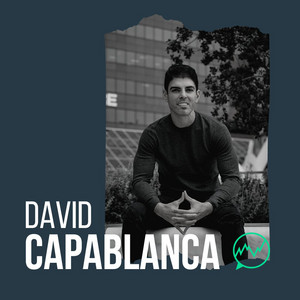
I'm thrilled to introduce David Capablanca.
You may know him as the host of the Friendly Bear Podcast.
Being deep in debt after finishing architecture school, David realized that he wanted an alternative career with independence, freedom, and potential for higher earnings.
From what I've learned about architects in general is that they are artistic, imaginative, but also logical and investigative in nature.
So it's no surprise that you'll hear elements of these traits come through in David's trading approach.
He's naturally drawn to a contrarian psychology and zeroed in on short selling as his trading of choice.
The challenges of uncovering scams through a deep dive into company fundamentals, the history of founders, and visiting company headquarters overseas on a quest to find clues were the kinds of things that energized David and brought his trading approach to a whole other level.
Although he's no longer in architecture, you can say he became the architect of his own trading destiny.
Let's allow David to take us on a short adventure with him today, shall we?
Ladies and gentlemen, we're so pleased to present David Capablanca from the City of Angels.
All right, I'd like to welcome David Capablanca, host of the Friendly Bear Podcast to chat with traders.
Welcome David. Yeah, Ian, how you doing?
A pleasure to be here.
Yeah, great. So curious, are bears unfairly characterized as being vicious creatures?
I think so. As we can tell, there's a new movie out.
And yeah, that's exactly what they're portraying in the movie.
However, you're much friendlier and you'd like to share with us a little bit about short selling today.
Absolutely, absolutely, yeah.
I am the friendly bear.
I like to have conversations with the other side and just be friendly in general, you know?
So yeah, absolutely.
Yeah, give us a little bit about your background before you got into trading.
Okay, a little background.
So I came into trading late in the game in my 30s.
And I have a background in architecture.
I spent all of my 20s in the architecture field in college for architecture, undergraduate and graduate.
And I was focused solely on becoming the best architect I can be, and I really enjoyed it.
I really enjoyed school, architecture school and just excelling in the creative, imaginative field of architecture and creating and design and everything about it and everything that came with it as far as travel and culture and everything.
So I was really good at that.
However, when I finished undergraduate and then graduate school, which is like altogether it's almost 10 years of school.
Six months after you graduate, you're hit with the bills, the student loan bills and all that.
So I was so enamored with architecture and just loved it so much.
I just didn't even consider like the financial implications because I was basically financially illiterate, you know?
Just like a lot of people, a lot of my colleagues were, you know, a lot are even now.
So I didn't, you know, both of my parents are immigrants.
They came here to United States.
I'm from Miami originally.
They are doing their best.
You know, they both have degrees.
They both have, my dad's a mechanical engineer.
My mom's a teacher and my mom has a master's.
So like the only way I knew was to just go to school, do the best you can in school.
And then that's everything else was gonna figure itself out.
But in the middle of all that, I was just financially illiterate.
So like I got myself caught up in all these student loans.
And then when I graduated, I was six months later, it hits you and I was like, okay, now you try to figure it out.
Like how much you're making, how much, you know, you owe and like how much time is it gonna take to pay it off?
I'm gonna be in my late fifties by the time I pay this off with the way architecture is.
And I won't be able to design what I want to design because I'm gonna be working for someone else doing what I don't like to pay the bills until I finish paying the bills.
So trading came along, you know?
So, you know, someone mentioned to me a long time ago, what I used to be caught up with like fantasy baseball.
I love fantasy baseball and someone told, I would do very well with fantasy baseball.
And there's a whole, we can go on another topic.
That's a whole nother podcast.
But one of my friends told me at the time, he told me, man, David, if you were to put this much energy and stuff into stocks, you'd be like a millionaire.
And that didn't, I didn't understand what he said, but then like later on in the future, after graduate school and architecture and all this, I, you know, I started to see these YouTube ads popping up about stocks and trading.
And then it occurred to me, a flashback happened.
I was like, okay, so my friend that told me about the stats and fantasy baseball and all of this, maybe I should give this a shot.
Maybe this is like something that you treated serious, just like I treated architecture serious and went to school for it and put countless hours to design everything I was designing and to learn the computer programs, to learn all the intricate details of art and history and design and all these tools
and algorithms. There's actually algorithms and architecture that come up with design forms, considering all the forces around that affect the building, like sunlight and wind and nature, et cetera, culture.
So I don't know. So everything made sense to me.
Okay. So if I can do this stock thing and just keep it treated seriously, you know, I can make something out of it.
And that's what was my approach.
I wasn't expecting to make money right away.
Did you study before making any significant trades or, or did you just jump in and learn on the fly?
No, no, no. I studied for three years.
I didn't make any money for three years.
So what kind of books did you read, if any or did you just watch videos?
I watched videos, about 10 ,000 hours of videos.
And I started with a $2 ,000 account.
And yeah, I didn't make any money off from 2016 to 2000, February, 2020.
So yeah, just studying all the videos, that course that I signed up for, I had about 10 ,000 hours of stuff.
And to me that was enough foundational material.
And it was, you know, here and there, there's some rabbit holes you can go to.
And the thing is, is that the whole thing, it was all short selling pump and dumps.
These are old pump and dump patterns from the early 2010s that I was studying, over and over OTC, over the counter stock, pump and dumps, paid pump and dumps, all this.
Then you go into the rabbit hole studying the history of pump and dumps, like the Wolf of Wall Street.
I remember the Wolf of Wall Street movie came out at the time.
But what attracted you specifically to short selling?
When you first got into the markets that was, you were studying it during the gentle bull markets of 2016, 17, 18 and so forth, is that correct?
Yes, exactly. And I wasn't, I didn't make a dime.
I was tutoring on the side.
I left architecture at this point, I was doing it very minimally.
I was tutoring architecture, just to make enough money to pay my rent.
And then just, I just studied nonstop everything.
So I decided early on, just focus on short selling.
So there was like two in the courses I was taking, there was two very successful short sellers that started with the amount of money I started with.
There's a couple thousand, and I just followed what they had to say.
As far as like their teachings and the way, their risk management, their patterns, I just followed it and to learn, I didn't make any money at all.
So like, and I just decided, you know, I'm just gonna stick with short selling.
Short selling is enough for me.
Uh -huh, why is that?
What was it specific about short selling that attracted you when so often we end up hearing about people making lots of money being long?
That's a good question because, you know, short selling, it takes more capital to even do it properly.
And I didn't have much money.
You know, a margin account is $2 ,000.
So I started shorting with a $2 ,000 account, just a couple of shares.
Just a big, I knew that's what I was gonna do.
And I was like, you know what?
Eventually I'm gonna find some, get some money together and do it the right way, but I need to learn.
So I learned by trading the smallest amount of shares and those two short sellers that I mentioned, they were primarily short.
And I realized I was like, why, you know, why do they even go long?
Just stick to shorting.
You know, so I decided that.
And also, I guess my personality, I have thick skin, you know, I'm just like, I always liked the characters.
Like even Batman's considered like the dark knight, right?
He's not just like the knight.
He's not the white knight, he's the dark knight.
Or like the characters, the villains even, I don't know, I'm not to say I'm a villain, but I felt, I always liked it.
I wasn't, it was intrigued.
You know, I wasn't, you know, I liked being on the other side of the contrarian.
I really embraced the contrarian view and to the point of being a short seller contrarian.
A lot of people think of shorting stocks because they're overvalued or the charts show them as being overbought.
Maybe they missed earnings estimates and some short because they wanna uncover outright frauds.
Did you short stocks on using those different methodologies or did you zero in on a particular type of short?
So at first, what attracted me right away was like the frauds.
I was like, well, I didn't remember.
I didn't know anything about finance or markets or stocks.
What made sense to me was when someone explained it to me, like an elevator pitch, it's like, hey, there's this character in here.
He wants, he's greedy.
He's doing drugs or whatever and just wants like a wolf of Wall Street and wants to pump this stock.
He has a ton of shares and he's gonna dump it.
And like he gets away with it.
You know, the SEC doesn't have enough people to monitor this stuff.
So we as short sellers gotta come in there and bring balance to the market in that way.
So that made sense to me and that's how I got started.
But then, you know, you study and you work on patterns and you have this, I have a competitive drive where like, I just want to improve all the time.
And I just loved it, just like I approached like with architecture.
At first, I decided to do architecture because I liked baseball state, you know, growing up.
And then like, after like six months or eight months of architecture, I decided after being, reading up on like artists and architects and materials and seeing buildings from around the world, like pictures of them and then you move away from that and you get obsessed with it in a good way.
That's what happened when we were short selling.
I was like, okay. So I just decided to just focus on short selling.
So after the pump and dumps, I decided, you know, there's all types of shorting I could do.
So I started with the OTCs.
The OTCs, I saw everything as a pump and dump.
Not only the ones that are specific pump and dump patterns that I learned to start with, but then I started looking into like, okay, other patterns that are similar to pump and dumps, that pump and dump over a smaller timeframe, that pump and dump because of a Twitter, someone on Twitter is pumping
it, like who are these Twitter guys?
So you mentioned the OTC market.
Did you exclusively focus in on that market or did you also short stocks on the New York Stock Exchange and NASDAQ and others?
Well, to start, I started with the OTCs because the OTCs is a slower market and the competition there is less.
So I saw myself early on, this was just clear to me that like I want to compete against people that are not sophisticated, let's just say.
And the OTC market is like that.
And I saw immediately after it clicked, it's like, okay, there's no algorithms trading here.
There's no big hedge funds trading here.
There's none of these sophisticated players in the OTCs.
There's just like Wolf of Wall Street kind of stuff going on.
So I started with that and then eventually you graduate from that.
So I saw that as like the minor leagues and then I graduated and then now the NASDAQs also and even New York Stock Exchange recently the past year or so, it's just rampant with all this like chaos.
And so there's pump and dumps everywhere, every single day.
So like it's just run amok because ever since all these newer traders came in post 2020, there's a lot of opportunity on the short side.
Did you research the stocks to see how much institutional ownership they had and would make a decision possibly not to short a stock if too many institutions were in the stock.
This is a recent thing that I've started doing.
Yeah, the past year and a half or so since I advanced my trading, now I have all this journaling and extensive data tracking that I see the stuff more clearly.
So you're constantly trading, my trading is improving.
And yeah, recently I started to consider that a lot.
Institutional ownership.
If there's institutional ownership present in a NASDAQ or New York Stock Exchange stock, they have algorithms and these algorithms, they're designed to buy around the VWAP for their clients at certain levels and stocks, they won't break down as easily.
So if I'm short something and it's not breaking down, that gets really annoying and frustrating and that can eventually squeeze because if I'm feeling a certain way, a lot of short sellers are feeling that way.
I like to think of like the crowd.
If you go to a sports event, when someone yells or is happy, everybody's happy.
So like 90 % of it is like that with short sellers.
So whenever I see a trade, I'm like, okay, this is like a baseball.
If I'm feeling a certain way, I imagine like a baseball stadium or basketball arena of people like me feeling a certain way.
So if I'm getting squeezed or feeling like I'm gonna get squeezed, that is amplified all the short sellers for the most part in general, feeling that way.
And that's an indicator for me to get out.
And I noticed like with high institutional ownership, it's designed for the short sellers to feel that way.
Early on, I mean, you did a lot of studying before you got into the market seriously.
What were some of your early weaknesses encountered with psychology strategies used and risk management?
That's an excellent question.
So early on, I guess patience for the right place, being selective.
I think we all as human beings work on that constantly until a certain level.
I think I started to get, you always gotta improve on discipline, no matter how disciplined you are because you have that human element inside you to make errors.
So yeah, just that and noticing that right away and noticing there's things in my life that I have to clean up.
I had to clean up my whole life outside of trading before I really started to take trading seriously because for example, I used to go out a lot, being from Miami, South Beach is always like all the kids, all the teenagers or what do you call it, 20 year olds, they all hit up South Beach.
I had to stop doing that right away.
So I noticed like to be successful at this, I'm gonna have to change my whole lifestyle.
I stopped partying.
I gave up alcohol. I haven't drank alcohol since 2020 since I started to get profitable and excel.
I had to give up a lot of toxic people in my life.
I had to change my friends, my surroundings.
I had to constantly just tweak my lifestyle.
So if it's for me to excel at trading, to reach my full potential at trading, that's what I realized early on and it was just a constant battle to fix things.
Like for example, here in the West Coast, I don't know where you guys are.
Are you guys in the West Coast?
Yeah, we're in Seattle.
Oh, Seattle. So yeah, in the West Coast the market opens at 6 .30 AM.
And in 2020, when I started, when I started trading like for real, the market, I saw a lot of pre -market opportunity of all these COVID stocks that would fly up in the pre -market and then fade all day long.
Pre -market in the West Coast is 1 AM.
So I, and then the regular hours is 6 .30 AM.
And I remember I had a car at the time and the car was getting me a problem because like I had to, I was street parking because street parking at 6 .30, you had to move it once Tuesday, Thursday and other days Wednesday, Friday.
And it was a disaster.
And on top of that, you got LA traffic, you have parking, not only parking spots, but parking everywhere and parking's an extra expense at where you live.
So I decided, okay, I had to really think about, so like, you know what, I gotta get rid of my car.
And if I get rid of my car, LA doesn't have good public transportation.
They don't have a sophisticated subway system like New York or something, but they do have a subway in downtown LA.
So I was like, you know what, I'm gonna have to, my lease is ending.
I'm gonna have to move to downtown LA.
I'm gonna have to change my whole lifestyle because I wanna make this trading thing.
I have to make this work.
This is my decision.
This is like, I decided like herding Cortez, burning the boats.
So you mentioned that you like to focus in on frauds.
Have you heard of short -selling groups like Hindenburg Research and perhaps had a chance to read any, these short reports?
Yeah, absolutely. You know, starting out when I was shorting the OTCs, there was this company called PRED, Predictive Technology.
It was a fraud that was, or, you know, I hate to use the word fraud, you know, you gotta be careful saying the word fraud, but you know, it was a pump and dump that would send out paid disclaimers and paid emails and paid text messages, campaigns that pumped the stock.
And it was pumping forever.
And Nate Hindenburg Research, he's like world famous now.
He was lesser known back then.
I don't wanna say starting out, but he would also be on the same message boards as me starting out.
And I would call, this is me brand new almost, like I was studying and putting at work, but I would go on the message boards talking about this company saying it's a scam.
And then Nate would come in there and say the same thing.
And we would talk on Twitter.
Now, you know, I was like, and then Nate, like he really came through with the crazy report on PRED, hired an investigator in Columbia, and they found the whole scam.
Or like it wasn't actually not Columbia, it was another place.
But he hired another investigator.
He had a whole process for that.
And I had a small relationship with Nate, but to see his growth, yeah.
So ever since then, he, that was one of his best reports, but ever since then he's grown tremendously.
And now it's him then bird research, everybody knows.
But that must've been 2019 where he was in a short amount of time.
So see like trading, if you do things right in a short amount of time, you can have a massive amount of success.
It's like really is like one of the frontiers, one of the American frontiers.
Chat with Traders is brought to you by Tasty Trade.
Tired of trading on rookie apps?
Then get the platform for serious trading.
Tasty Trade. Tasty Trade gives you the tools to trade your way.
Chart your heart out with over 300 indicators.
Know your odds with probability of profit and move fast with quick roll.
Trade what you want and trade it your way.
Stocks, options, futures, and more.
All in one account on one platform.
No wonder why serious traders choose Tasty Trade.
Visit tastytrade .com and see for yourself.
Tasty Trade Inc. is a registered broker dealer and member of FINRA, NFA, and SIPC.
Hey, I got a great update from TradeThePool.
Now it's even easier to get funded.
As you know, TradeThePool built a unique program to evaluate stock traders like yourself and provide you with the company's funds to trade with.
It's real shares and you no longer need to worry about the PDT rule.
But that's not all.
TradeThePool has introduced a new tier with $20 ,000 in buying power, making it easier to pass the evaluation and speeding up the process of getting funded much faster.
You don't want to miss this opportunity.
Mm -hmm. Tell us about your own investigation of a cannabis company called Flora Growth.
So Ian, I think you mentioned off the podcast you went to Buca Ramanga, Colombia.
They do like parasailing over there.
And yeah, so anyway, I did go to Buca Ramanga.
And Buca Ramanga is a city in Colombia in the middle of nowhere that's known for parasailing and some outdoor activities.
But I was there to investigate a marijuana cultivation facility that was supposed to be like world changing and this company Flora Growth is gonna export marijuana all over the world for six cents a gram and it's gonna change the whole marijuana industry.
This little tiny company in the middle of nowhere.
So the same thing with predictive technology, the one I mentioned with Nate and Hindenburg.
They sent out text message campaigns, email campaigns.
That's how I got on my radar.
And then I just looked into it.
One thing that graduate school and architecture taught me was how to do research.
So I have a really rigorous way to do research, that rigorous, I guess, skill to do a really good skill that graduate school taught me and like how to do research extensively.
So I did a lot of research on Flora Growth.
I found out everything about the company with the backers in it, the insiders, the track record, the history, I found like a photo of one of the insiders with taking a selfie photo with Jordan Belfort back in the day and swindling.
He was part of many pump and dumps.
So you're just going down these rabbit holes and you discover all this dirt.
And I was in a unique position where I was in Puerto Rico trading out of an office there.
And I met up with another short seller that does a short reports and he has a lot of resources.
So I told him everything about it and we both did a lot of research on it.
And then I volunteered.
I said, you know what, I speak Spanish and I love traveling.
So this is a really good excuse to travel.
So I went to Buca Ramanga on a flight from Puerto Rico, direct flight.
I landed in the Buca Ramanga Airport.
It's in the mountains.
I took a motor taxi to a hostel.
I wanted to stay. One thing I like to do is stay with the locals and see how it is.
I can ask a lot of questions.
So I stayed in a hostel and I asked everybody where this cultivation facility was.
And I had the coordinates pretty much.
So anyway, people were trying to convince me to do parasailing.
And I was like, you know what, I just want to find this.
I'll do that next time.
And the morning we went straight to the cultivation facility it was really hard to find.
The thing is with Buca Ramanga in the mountains, when the sun sets, there's no more light.
There's no street lamps, there's no electricity, there's no wifi, it's all dark.
So we had to really coordinate.
It took three tries to find it and then finally found it.
And I did a surprise visit, it's unannounced.
And one of the execs came out and was really angry and yeah, documented it, filmed it.
I had a camera on my shirt, like a hidden camera and they documented everything and it turned out to be like a Hollywood set.
It's just exactly what I imagined.
It's a Hollywood set probably 100 feet by 100 feet with the floor grow sign and probably plastic trees.
I didn't go as really close enough, but it was just a, it was a scam, it was a scam.
And once we published the report, it was at the all -time highs.
When I, the day I was at the site, it was all -time highs.
And then when I came back, because I had to pose as an investor, and NASDAQ companies, they're supposed to let you in to, as a tour or to check out the company, they can't just be like deny you.
And I said, I was an investor, I'd like to check out the property and check out the plants and they just got really angry and, they actually had guns and stuff.
So like, I don't know if it was loaded, this is Columbia, you know what I mean?
Right, right. You mentioned that the NASDAQ has rules requiring that investors have some access to physical facilities.
Is that correct? That's correct, that's correct.
And, a lot of these scams, they don't, they locate them outside of the country, the actual physical stuff, because like people can't go there and see for themselves.
And you see this a lot with Chinese companies.
There's a really good documentary called The China Hustle.
It's a famous, Mark Cuban is one of the people that backed it up financially to do the documentary.
And you see a lot of Chinese companies, they have the actual company in China, but they formed the entity and everything in the Cayman Islands, and then they listed on the New York Stock Exchange or the NASDAQ, which is crazy.
Like how can they list it?
The New York Stock Exchange is like a prestigious exchange and NASDAQ, you sort of listed, and you got all these like scams from China listing.
And you can't like, for example, me, I would love to go visit them physically, but this is China.
And China is like locked down during COVID.
You can't even go. So like these stocks of Chinese stocks are flying like at crazy levels, and they're not being shut down because like no one can go there and really investigate.
So is the primary way that you find possible scams is to sign up for these kind of quote newsletters or pump and dump type outfits that you've found earlier and just wait for them to promote a particular stock.
Is that the main way you find this?
That's one way, you know, that's one way.
And you know, it's crazy.
Today, I sent a message to my friends.
I said, nobody texts me.
Nobody ever sends me any texts.
No one loves me except the pumpers.
I get a lot of text messages.
So yeah, I reverse engineered it, right?
So like I Googled, for example, stock tips or get rich quick stock tips, or all this kind of language that people use that are desperate.
And then, you know, that mentioned stock and they're the keywords, and you get these landing pages of email list.
So yeah, I subscribed to them and I gladly put my phone number there and they sent me text messages.
And you can see in the text message, it says a paid disclaimer.
We're compensated this amount of money, that's amount of money for this amount of days.
They give you their game plan because that's them covering themselves.
So I think it's more or less legal for them to do it as long as they disclaim it in the bottom and fine print.
And yeah, that's one way to find it.
I have other things I look for too, like underwriters that are sketchy.
I have a whole list of them.
Red flags that pop up with the Twitter people, the same Twitter, like the, for example, the Twitter, people that got arrested and get shut down by the SEC.
This guy, the whole group, I don't, you know, I don't even have to mention that.
Everybody knows who they are.
I was on them for the longest time.
I had a, I had like a bot on Discord.
You know, there's a chat chat program called Discord.
You can put bots in the Discord.
And I had all these pumpers, the bots on their tweets.
So every time they tweeted, I got a notification and then I was shorted.
Oh, wow, wow. More or less.
So when you went down to Columbia, were you short a floor of growth before you got there?
Or did you short it right after you found it?
That's a good question.
So the thing is, I use a lot of technical indications myself.
So I studied everything.
That's one thing I got like from architecture as an architect, you got to know a little bit about everything.
It's like a conductor of a symphony, like a composer.
So the stock was too strong.
So like, it started out like a $3 IPO.
And then when I was in Columbia, it was like it's in the upper teens.
And then like, when I was with the altercation with one of the execs at the site, that we reached it the twenties.
So the stock was too strong to short it, but I knew, you know, it's the insiders, it's a lock up play.
So once they're running it up for the lock up, then once the shares get unlocked, they're gonna start to sell.
And also, you know, there's a certain amount of extension I look for as part of my criteria and volume fade as, looking at daily candles, et cetera, to determine what my entry is gonna be.
And at that point, it was as strong as ever.
And it was, no, I didn't short it like before I went, but I knew the end is near.
The end is nigh. So because like, you know, it's like when you have that much strength in a stock, the way it was going parabolic over a period of days, you know, the blow off top is set in eventually, you know.
So the blow off top, once I got out from the site and I flew back to Puerto Rico, it already cracked.
And then once it cracked, I put my short in.
And you know, so, and I shorted it ahead of a, yeah.
So I shorted ahead of the big announcement of the report as well.
So how difficult is it to find shares available to short?
And how often do the borrowing fees, you know, how much do they vary?
And do they, are they significant enough to make you not short a particular stock?
Yeah. So the borrow fee, so for floor growth, it was doable.
There was shares available to short.
It was okay. Now it all depends on float.
If it's a micro float, a low float, you know, for example, for me, I look for 3 million float and up 5 million float to 10 million float.
I like 10 to 20 million float is like, it's almost headache free for me.
If I do everything I'm like, I'm supposed to do.
So it depends on flow.
So if something is low float, 3 million float or less, or micro flow less than a million shares, then yeah, borrows are going to be highly likely to be very expensive and almost not worth it.
Cause the risk reward is just not there.
Cause you can, anybody can squeeze a low float, a 600 ,000 share float, you know, just one or two players.
And there's a lot of nefarious people in the stock market.
We, you know, that's one thing I realized right away almost instantly is like, we got a lot of, there's a lot of greedy, smart people in the market that are crooked.
So like someone can actually take up the flow, you know, and they don't, they don't even have to report if they, if they get rid of it the same day, they don't have to report as an insider by because they didn't hold it overnight.
But if they hold overnight, then it becomes tricky.
Then they have to report to the sec and you know, there's a lot of games being played with that, but like, yeah, it's just not worth it to short a really low float or micro float stock less than 3 million, less than 2 million, because the borrow costs are going to be astronomical, the locate cost to
locate the share is going to be, it's going to be a lot.
And it's going to likely to squeeze, you know, against you tremendously.
Can you give us a range of interest rates that borrowers have to pay annually, shorting say a stock maybe on the New York Stock Exchange or NASDAQ versus some of these small float stocks on the bulletin board that you short, what kind of what typically can we expect?
Okay, that's a good question.
So what I mentioned was locate cost.
So in order to get the shares these days, you have to have a certain broker, short selling specific broker, and you have to locate the shares.
You have to request it on their platform.
I use a platform called Das.
You locate the shares that that costs money.
And so, and they change prices intraday.
Now that's the borrow cost to swing it.
That's a separate cost.
So you have an additional cost of the borrow cost.
And these days in a bear market or a bearish market with more short sellers involved, it's all based on supply and demand.
So the more short sellers that want it, the more expensive it's going to be.
And for example, I use interactive brokers just to monitor the borrow costs.
Because these brokers, a lot of times they don't even have that accessible.
You have to call them up and ask, what is the borrow cost?
So you're almost shorting it blind.
So like my borrow costs, I have a rule like an interactive brokers, if I see a 200 % or more borrow fee percentage, I just, I don't short it.
Because that indicates the demand for that short.
It's almost like an intraday short interest indicator, you know, watching that fee rate.
And, you know, I don't do the, to calculate it.
There's a calculation there.
You can calculate how much you're going to pay per day or per year or per month.
But I just, you know, and I used to do that.
But now what I do is I just make a flat rule, you know, because trading is very complicated.
You got so much to do that I just make a rule.
I said, oh, if it's over 200 % fee rate on interactive brokers, I'm just, I'm going to try my best not to short it, or I'll short it only early in the day, you know, or certain time periods in the day.
And after 11 a .m. Eastern, I don't put on a new trade.
You know, I leave it alone.
So does the interest rate that is charged to short a stock, does that change day after day?
So if you enter a position and you say, hey, this short interest rate seems reasonable, and then a day or two later they jack it up on you, is that, does that happen and how often?
You know, when I first started in 2020, in 2021, it used to be like that.
It used to be a lot slower, like the interest rate, the borrow fee rate would go up very gradually over a slower period of time.
Now, it's like two or three times per day they update it.
And, you know, I have multiple brokers.
So I have like a Slack and I chat with my broker.
I asked them specifically, what's the borrow rate?
What's the borrow rate?
And I compare the borrow rates with which each broker.
So, okay, this broker said a hundred percent.
This one said 150%.
Interactive broker says 200%.
Now I got to feel. And then like, I'll re -ask the question later in the day.
And yeah, sometimes it'll go from like a hundred percent or let's say 50 % or whatever, and it'll go to like a thousand percent.
You know, it will go 500, 600.
It increased like tremendously.
And so like that indicates, and a lot of times that'll be before the squeeze.
So that's why I ask a few times.
Because if I'm in a trade, I'll ask.
And I'm concerned that the short squeeze is forming on the chart, if it's consolidating at a strong level, I'll ask the broker, I'll keep asking them.
And then like, if I see, for example, once last year, I remember I shorted a stock.
I forgot to ticker, but let's say it was like a 20 % fee rate.
Then all of a sudden I asked the broker and he said 200%.
And I checked IB all of a sudden and it went to 400%.
And I got out of the trade and the trade about an hour later, it had a massive squeeze.
So that indicates like shorts, the demand for the short is compiling, you know?
And it's like a, it's gonna combust, you know?
So eventually, so it's a sign, it's an indicator in a way.
Mm -hmm. How often did you find scams in the recent bull market and have they decreased materially in the current bear market?
You know, this is the scam thing is a problem, you know?
For example, I have a whole list of them.
Right here, you can't see it, but I have a paid pump list.
There's probably like 30 of them there.
There's a Chinese pump list.
It's probably about 20 of them there, you know?
So, and that's just what I'm focusing on.
But there's a lot of scams in the listed, enlisted land, especially with small caps.
And, you know, it's just, that's just the way it is, you know?
The SCC doesn't have enough energy or doesn't have enough manpower to deal with it.
And, you know, it's a big inefficiency.
And now we have more people in the market than more than ever because of Robinhood in 2020.
And like, everybody, you know, knows about trading now.
So, yeah, there's a lot of chaos, you know, and that's just part of it.
Did you short any of the meme stocks during their periodic pumps?
So I did. And actually I shorted the sympathies for the most part.
The sympathy plays are usually easier plays, easier setups than the actual head.
They call it the head of the snake.
What's that? What is a sympathy play?
A sympathy play is something that follows like the shiny object that everybody's going for.
Like, let's say GME GameStop and the sympathy play.
I remember there was a stock called SLGG, it's a gaming company in the small cap land.
It was probably trading at $2.
Yeah, I think it was like $2.
And all of a sudden, you know, since it's a gaming company, it's in the same sector and it's a cheaper stock than GME.
GME's let's say is at $200.
People are looking for something like GME GameStop.
So they go for SLGG and SLGG at the time, Brian Cohen bought GameStop, you know?
And he posted something on Twitter, like a frog emoji and an ice cream emoji, a frog and an ice cream.
And at the time, this is the crazy market of 2021.
It was insane. And me coming in with like a logical mindset of like architecture and stuff, this was like, oh, this is like the weakest thing ever.
No one, you know, who's gonna buy that?
Ice cream emoji and a frog emoji.
And then so people, the crowd came up with all over the message board saying, oh, so the frog means, so the CEO of SLGG, first of all, it's a gaming company.
And the CEO worked for this thing called frog construction or something.
So the frog relates to that.
And the CEO of SLGG, back in 1999, she worked at McDonald's on her LinkedIn.
It says she worked at McDonald's.
And so that McDonald's serves soft serve ice cream.
So frog emoji, frog construction, ice cream emoji, McDonald's soft serve ice cream.
Ryan Cohen is sending us this thing because he can't blatantly say it to pump it because that's illegal.
So obviously, so the crowd, this was all over Twitter, all over the message boards.
And I'm like, oh, I'm gonna bet against that for sure.
This is ridiculous.
And the stock squeeze like kept going.
And all, it wasn't just squeeze.
This is just momentum buyers like nonstop.
And like the stock went from two to like 11 bucks in like a couple of days.
And I was trying to hold it, you know, with the, it was terrible.
It was one of my first big losses.
This was early on, so that, you know, early on I couldn't afford big losses, but this was one.
And I came back from it, you know, strong because I made improvements.
I learned my lesson the hard way never to go against the crowd like that, no matter what, even no matter how ridiculous it seems, but that was the market.
So that's a sympathy play.
That's a sympathy play.
So the sympathies never go as crazy as the head of the snake.
They have less firepower.
So technically they're the easier ones, but at the same time you still gotta trade it, you know, you gotta put in all, you gotta put in all your effort to trade it the right way.
I remember at the start of the GameStop squeeze, the reported short interest was over 100 % of the float.
Can you explain to us, how is this possible?
So first of all, I don't understand that completely, but that means that, you know, from what I understand is there's a lot of short sellers in there.
So someone told me a while back, and I don't know if it's true or not, but it says like short seller can count as part of that.
So like, I really don't understand.
No, it's a mind. But you know, when you see that kind of short interest, you want to stay away from it.
And you know, so you had like a hedge fund, I think it was Melvin Capital, they were just too cocky and too, you know, they went all in, they blew up, you short more shares than what's available out there.
So I think what it is, is that brokers and short sellers, and you know, whoever's lending out the shares can lend it out before they reserve the share or find the borrow.
And then within two days, they have two days to actually find it.
So they can lend out more than what's actually available.
And then after a couple of days or whenever they update that, it's gonna cost forced buy -ins and the stock's gonna squeeze.
So yeah, you know, yeah, it's crazy.
So it's something, you know, it's like you don't really understand fully because like who knows what the clearing firms are doing or who knows what broker is doing that?
Is it naked shorting?
Like what is it? So it's just a very confusing scenario, but it's just like you can never go all in no matter how confident you are.
Or, you know, when you see a high short interest, it's usually you gotta stay away.
You gotta be on guard.
Excuse the last interruption here.
This is Tessa. We hope you're enjoying this episode so far.
If you love the podcast, please give Chat with Traders the best review you can on whatever platform you're listening from.
This will help us to keep the episodes coming.
Also, if you haven't subscribed to our email list, please hop on to chatwithtraders .com and click on subscribe so we can keep you posted of information that may be of importance.
Thank you. Now back to the chat with our guests.
Mm -hmm, from your research, were the meme stocks an organized pump by a few instigators like you see in penny stocks?
Or was it really the masses organically coming together to extract revenge on those evil hedge funds and market makers?
You know, everybody needs a scapegoat, right?
So whoever was really pulling the strings, no one really knows, but like is using the crowd as a scapegoat.
Oh yeah, let's put, you know, it's nice to believe that, but like in actuality, like what is it?
You know, so there's, you know, in the market, we got nefarious players involved, so somebody probably orchestrated that and used the crowd as an excuse, as a, you know, as a facade and like people like to believe a story, you know, so of course people are gonna say, oh, down with the man, I'm gonna stick
it to the man or whatever, like they don't really understand what's going on, but, you know, some people really profit off that just by it was a big liquidation event.
And as in during that period, people had like money from stimulus checks, from unemployment, from all types of benefits and people staying at home.
So this is like something for them to do.
And it's like money going from one hand to another.
And it was orchestrated in my opinion, you know, it's just like, yeah, I don't think it was the little guy trying to beat the big guy and like, that's just a story.
But there was another bigger thing going on.
I'd like to transition to the topic of short squeezes.
What are the mechanics of short squeezes?
And are the shorts really forced to cover even when their position sizes are a small percentage of their entire portfolio and they have plenty of reserve cash on hand?
Okay, that's a, there's several things that go on with short squeezes.
So sometimes you could have a lot of space in your account to absorb the squeeze and everything, but the broker calls back the shares.
They close the position out on you because they don't like the risk.
Let's say some of, there's several, so there's a lot of ways a short squeeze can happen, you know, so one way is the float.
So the float that's traded, there's too many shorts in it.
And then you have buyers that come in and buy as well and it forces the stock to go up.
And the pain threshold of those short sellers causes them to get out of the trade and it just keeps going higher temporarily, like in a parabolic move.
Now brokers will do buy -ins, like let's say they can do buy -ins whenever.
So let's say if I'm short overnight of stock and everything is going good, it's within my risk, it's everything, in the morning, if the broker wants, they can call back the shares as a buy -in.
Let's say it's that we have this thing called the T plus two.
So, you know, they can lend out the shares and they have two days to find the share somewhere to cover the borrow.
And sometimes they can't, so they call, they do buy -ins to make that, to meet that requirement.
So that's one way, and that can, that can ignite a squeeze depending on the float because the float is tied to supply and demand.
So if the supply is low and the demand supersedes that, you know, goes, the demand is higher than the supply, it's going to cause a squeeze.
Then you have a buy -in from the broker that's going to cause more squeeze.
And then let's say it's, it starts to reach, it starts to squeeze other short sellers and into their pain threshold or their stop loss.
And it breaks out. And then you have momentum buyers coming in saying, oh, okay, it's a breakout, it broke out the daily resistance, whatever, and, or whatever resistance level they're looking at.
And then it just, they jump in and now it causes a super squeeze.
And the lower, we see a lot of these low floats, these micro floats that are less than a million, less than 2 million, less than 3 million, like I mentioned earlier, they're the ones that go insane.
You know, they can go, I've seen them over the years.
I've seen the biggest one I saw, I think it was HKD went from like $10 to 2 ,500.
That was last year.
That was GameStop, but GameStop wasn't a micro float or a low float, but that one, that one was the first one to have a lot of volume.
Do you know the story behind HKD?
I mean, what triggered that whole run there?
I've never seen anything quite like it.
And did you or anyone else, you know, try to short HKD and were successful at being able to hold the shares and not being forced to buy back in?
So see, HKD, from what I understand, all my colleagues and friends that are short seller traders or, you know, good traders in general, the conclusion is that it wasn't impossible, pretty much impossible to win on it because if you hold it, you're gonna have a buy -in from the broker and the borrow fee
rate, I was monitoring it the whole time.
It was over a thousand percent.
So even if you hold it overnight and the broker doesn't buy it in, you're still gonna lose on the borrow cost because it's so expensive.
And then on top of that, I found out recently that there was ghost fees attached to it.
So that when you close the position out, it didn't settle with the clearing firm or anything.
So like it just kept, the fees just kept accumulating.
So these are the risks with short selling.
So HKD, going over it from the beginning.
So it is a Chinese stock.
It was based out of the Cayman Islands.
It had a parent's company, AMTD.
It's listed on the New York, both of them were listed on New York Stock Exchange, which from my experience, this was one of the first New York Stock Exchange stocks from my experience, my personal experience that I've seen be a Chinese pump and dump because I was tracking and keeping tabs on all the Chinese pump
and dumps over the course of like a year or two.
I even have podcasts about it, I really was investigating it.
I actually was planning a trip to go to the Cayman Islands and going there in person and exposing some.
And so they were all listed on the NASDAQ.
HKD was the first one that popped up.
I'm like, wow, this is a New York Stock Exchange, insane.
So it was just thinly traded.
The float was under a million and it just kept going higher day by day.
It will pull back a little bit, go higher.
And I think some short sellers, I heard from my short seller friends, they just were hitting it massive.
So short sellers, they get cocky, because like shorting is a higher percentage winning strategy than longing.
And that means that the confidence level of some short sellers with a lot of capital is it can get ridiculous.
So like some people are hitting this with size, even though they know it's a bad trade and it just kept going higher little by little.
The spread was very wide and within a week or two, you see it at $2 ,500 and no, I did not short it.
I was watching it the whole time.
There were, however, sympathy plays and other Chinese scam companies, because of course there's always going to be some sympathy.
Someone is like the typical person that buys a sympathy is like, oh, HKD, a Chinese company, Cayman Islands.
I got to look at other Chinese companies that out of the Cayman Islands, let me buy it.
And there's really no reason to buy it other than it's Chinese HKD's went up so much.
So like, let's try another one.
The momentum buyer buys that one.
So there were some that were not as thinly traded that I could short, as well as HKD's parent company, AMTD, which had a higher float.
I forgot what the float was off the top of my head, but it was a decent amount float.
I think it was at least 20 million or so, which gave me all the green lights to short it.
And AMTD was the sympathy, the main sympathy to HKD.
And I was able to short that one.
So yeah, I can recall that one.
But HK and AMTD, so when the float is bigger, the borrow fee get, there's less demand to short it, because like it can absorb, the flow can absorb the demand.
The supply is there to absorb the demand.
So therefore the short fee, borrow fee rates lower, the locate fees are lower, it's more manageable.
So yeah, I went after AMTD.
And it's clear in the filings and everything, it says everything in plain sight.
AMTD is a parent company.
They had a diagram there that showed HKD and AMTD and some other companies that AMTD owns based out of Cayman Islands.
It's ridiculous. So like anything that's Chinese out of the Cayman Islands is most likely a scam.
It's a shame though, as much as I do well on these, traders like myself do well on them, it's a shame that like, I can always find something else to trade.
I'll find another thing to trade, another instrument, another stock, I'll figure it out.
I have confidence in my abilities, but like to see these scams go through from China into the US and take money, because they're the ones really getting rich off this.
So I don't like seeing that.
Yeah, often when I see stocks too short, often the bulls argue that, oh, well, the short interest is so high, it's gonna squeeze and the shorts are gonna be forced to cover.
But do you know of any service that gives daily updates to the short interest and provides say a weighted average price that the shorts have shorted the stock?
Because on a particular day, if the shorts are forced to cover, I mean, how do we know that new shorts with deeper pockets don't come in the very same day or the next day?
And so the bulls are maybe falsely thinking that, oh, that the shorts are the same shorts and then they're bleeding every day rather than having new shorts come in to replace the old shorts.
And therefore they're not as panicked by the stock price going up.
What are your thoughts on that?
Yeah, so there's just so many inefficiencies with the market.
I always wondered why isn't float updated all the time and float is really not updated that well.
However, there is a service called dilution tracker that started recently like a month, a year and a half ago or so and they've cleaned up the float game.
I think they're getting float data from a source that's more reliable than anything else out there.
And they also have people, a team that calculates the float based off of the latest filings and the outstanding shares and they really nerd out with that.
So they figure that out.
However, yeah, the short interest, that's something that's lacking.
Maybe in the near future, there's gonna be a service similar that comes to dilution tracker that comes out and figures that out.
However, my secret sauce, which is not gonna be secret anymore after this podcast, I use interactive brokers, the borrow fee rate as a way to reverse engineer the short interest.
So when the borrow fee rate increases an exponential amount that means a demand for short sellers because the interactive brokers data for that, it says on their website, it's an aggregate from a lot of different clearing firms.
So if the clearing firms are lending out shorts and basing their borrow fees off of the demand of that and interactive brokers aggregates all that together and comes up with a borrow fee for that, that I think in my opinion and from my experience, it has been a reliable indicator up till now, up until
there's something better because before we had this rush of new traders in the market, hedge funds and stuff had access to this because they have a lot of money, they can afford all this crazy sophisticated data and stuff.
But now with a lot of retail traders, as you can see, no one could see there in the podcast, but I have a big setup and I have a lot of tools that now retail short sellers like myself have access to.
So in the future, yeah, I hopes that there's better data for short sellers to get that short interest instead of figuring it out because like, for example, right now, without the way that I'm doing it with the borrow fee rate and all that, I have to rely on the one minute candles in the chart, whether
how violent they go.
So like, if I see a parabolic action in the candles within a very short amount of time, that's indicating a squeeze and a squeeze of like, I have to imagine, okay, who's getting squeezed on this?
Is it a big short seller?
Was there, when I eyeball it with the volume candle, I see a 1 million share sell order or a 1 million buy order that forced a parabolic action.
I'm like, okay, that's probably not a long, that's probably a short that's forced out of it.
I imagine of someone getting forced out or like, for example, in the afternoon and power hour, I know from first hand experience, brokers will give you a call and be like, hey, you got to wire in some money or else we're gonna close you out.
They usually do that at 3 p .m.
and an hour before the close and an hour after the close, certain brokers.
Now, they will ask you to wire more money in only if your account is in the red, but if they request or if they demand a buy -in, they make you buy it, no matter what your account status is, right?
So would that, would these giant spikes be an indication more of a forced buy -in rather than somebody having a margin call?
Yes, exactly. So let's say at one of those checkpoints, you see a big spike happen.
I'm like, okay, so a short seller got blown out, that's what happened.
That's not buyers coming in and buying it.
That's a short seller got blown out and that's the first of the first, that's the first domino usually.
So now there's gonna be a sequence of those because like once one that forces the price higher and then who's next, you know, it's like, that's the thing.
So it's like reading the chart pattern, reading the volume, reading the tape, reading, so you're looking at the borrow fee rate percentage, looking at the short interest on Yahoo or whatever Wall Street Journal or whatever service you're using, because those, the short interest is only updated the first
of the month and the 15th of the month.
So you gotta like put the puzzle together.
So trading now is all about the short selling, is all about putting this puzzle and using this like imagining who's getting squeezed.
Was there a big short seller in this low float stock?
It doesn't take much to move these stocks if you're a big short seller.
That's why, you know, I like to go for stocks that have bigger float because then I don't have to worry about that as much.
But yeah, it's about putting the puzzle together.
And these days, the data and the tools is still relatively new.
You know, we're still in like this new wild frontier of like retail short seller, we're still figuring it out.
Because like, if you think about it, the whole digital age started in the 2000 or so.
And so it's been 23 years and only I would say the past five years or so have been the short selling world has been accessible to retail people, you know, like myself.
So you mentioned some of the criteria that you use to short a stock.
So what do you look for in your high probability setups?
You've already picked out the scam stock, you've already checked out the float and the borrow interest and all that stuff.
What do you look for on the charts to trigger a short and then when do you cover?
Okay, so a few things.
So I like to short, sometimes, for example, midday parabolic, some days, some stocks, let's say over a stock that's trending down for the year.
And I already know about it because I shorted it throughout the year.
I already know, okay, this stock IPO last year is coming up of a 180 day lockup expiration.
It's borderline scam.
Let's say it's a stock based out of the Cayman Islands.
This happens a lot.
So they have a 180 day lockup expiration.
And then all of a sudden midday, you get this big spike, like around 200 days.
So 20 days after the 180 day lockup, it starts to spike big.
And that's a combination of people that were short before because the stock was fading down for 180 days, for the most part.
It IPO'd and ever since then, it's just fading down.
And so I would look to short that on a significant move.
And for example, I'll have some criteria, stocks will pop on my radar when they hit like 20 % on the scanner.
And I won't short it, but I'll keep an eye on it.
And now it's on my radar.
Now I'm focused on it.
And then let's say if it starts to go higher midday, like 40%, 50 % and the float is a semi diluted because of the 180, it's been 180 days.
So the insiders, sometimes they get out at 90 days.
So that's been diluted some more.
And then also there's some stock options and stuff involved in the filing, as you can see, where they have exercise prices and more people got out more insiders so that the float is bigger than what it was.
That's like the sweet spot, like a 200 day or so.
And the stock just goes up 50 to 100 % for no reason intraday.
And I'll look to short that intraday.
And I'll cover at the end of the day or something like that because I don't wanna hold it overnight.
So what I've done, I take my gains intraday for the most part.
Sometimes of the year, if I'm traveling or so, I will put on a swing, but a swing short.
But for the most part, I'll cover them intraday.
So that's one example.
I look for the 180 day lockup expirations.
I like to read the news on biotechs, like on fluffy news, for example.
If there's animal testing news, or if it's like phase one, and they have just like five or six patients, they tested on the stock goes over, let's say 80 % or so, I look to get to trade it because the biotechs, they all need, for the most part, they all need cash.
They don't have a product that they're making money off of.
And so they need to pay the bills and they have usually S3s, shelves, ready to go, offerings ready to go, ATMs.
And yeah, a lot of them have low insider, no low institutional ownership.
So it's usually pretty clean fades for the most part.
So do you ever go long, any stock?
Long, no, I have not.
I have not gone long.
So I have Apple in my IRA, I guess.
Okay. But no, I decided early on, I was just gonna stick to shorting and that's it.
I tried, there's a couple of longs, I tried out here and there, the past couple of years, just to get my, I told myself last year, like on January 1st, that was one of my new year's resolutions.
Like, you know what, I'm gonna go long.
And I tried going long, I even forgot the ticker.
I think my friend told me about it and I just got out, it was distracting me from shorting.
So I just got out of it.
Great, I'd like to transition to psychology and kind of to wrap things up.
What do you struggle with the most in trading?
What I struggle with the most?
I would say just being stubborn is something because you know, with short selling, so one thing early on in my career, I always knew I was a stubborn person and you know, holding on with short selling, a lot of times you'll get rewarded for holding something and being stubborn with it.
So it's just something that I've had to work on and you work on it through discipline and through, you know, just making set rules, time.
Like, for example, I'll give myself a deadline to hold a stock.
Okay, I'm not holding this stock overnight.
I'm cutting this stock at this certain level, no matter what.
I guess the main thing is, yeah, stubborn.
I'm just a stubborn person in general and that's a good thing and a bad thing.
You know, for example, when I was in architecture, I would just, I wouldn't go to sleep until the project was done.
You know what I mean?
That's a good way to be stubborn.
Trading, I was, I'm gonna read the book until it's done, you know, no matter how long it takes.
It's good qualities to be stubborn with, but it's like when it comes to trading, it can hurt you if you're in a trade and you're being too stubborn.
Just curious if you had any desires to create or join a short research group similar to Hindenburg Research, or are you busy enough and satisfied with your trading your own account?
I'm satisfied trading my own account and I already set up a bunch of goals for myself and I'm going with my plan, you know?
So I have a good friend of mine in White Diamond Research and that's the one I aligned with to do the floor growth short report.
So White Diamond Research is one of the most reputable short selling firms and yeah, that's, so I kind of work in a way as like an independent person with White Diamond and coming up with ideas.
But yeah, I guess I've gone to the point in my career where I'm self -sufficient, I'm doing so well and achieving like my dreams.
So I don't really feel, you know, that's not, I'm not really looking to do that.
However, in the beginning of my career, I used to always imagine while I was studying the pump and dumps and seeing these reports out and being out of graduate school, I was like, man, what if one day I could work for someone like that does this research firm?
That would be cool.
That would be so cool.
And you know, going and investigating companies and stuff.
And you know, that was before and then fast forward, I was able to do a lot of that on my own.
So I, in a way I kind of achieved that goal of mine, but it's never, nothing's ever out of the question.
Uh -huh. Well, David, thanks for coming on Chat with Traders.
It's great to have you on the show.
Thanks Ian, been a pleasure.
Yeah. How can our listeners get in touch with you?
Okay. They can get in touch with me through Twitter at reverse underscore long.
Uh, also, uh, through my podcast, everything is on the YouTube page.
There's like a little discord group and stuff.
If you want to be part of that, or, you know, it's, it's just free to join.
Share it. It's a community.
We just have like -minded people.
I'm easy to reach for easy to talk to, very approachable.
I think so. Yeah, feel free to reach out and listen to the podcast.
Yeah. For sure. I have the Friendly Bear podcast as well.
Yes. I've listened to quite a few of your interviews and a very informative, definitely worth listening to.
Thanks Ian. You've reached the end of this episode of Chat with Traders, but rest assured, there are more episodes loaded with real market insight and zero hype on the way soon.
So to stay updated with each great new release, subscribe to the podcast and iTunes.
And we'd love it if you'd leave a rating and review.
We'll catch you next time on Chat with Traders.