Chat with Traders is brought to you by Trade the Pool.
Becoming a funded trader means trading with a firm's money instead of your own.
At Trade the Pool, you first complete an evaluation by hitting profit targets while managing risk.
Once you pass, you get access to up to $260 ,000 of buying power.
You keep up to 80 % of your profits while the firm covers the risk.
It's the perfect way to trade big without risking your own funds.
Are you ready to become a funded trader?
Join Trade the Pool.
Chat with Traders is also brought to you by Tasty Trade.
Ditch those rookie trading apps.
Get Tasty Trade, the platform for serious traders.
Chart with 300 plus indicators, know your profit odds, and move fast.
Trade stocks, options, futures, and more, all in one account.
See why serious traders choose Tasty Trade.
Visit tastytrade .com.
Tasty Trade Inc. is a registered broker dealer and FINRA, NFA, and SIPC member.
Trading in the financial markets involves a risk of loss.
Podcast episodes and other content produced by chat with traders are for informational or educational purposes only, and do not constitute trading or investment recommendations or advice.
Markets, speculation, and risk.
This is the Chat with Traders Podcast.
This is episode 250, and I'm Ian, host of Chat with Traders.
And I'm Tessa, Ian's co -host.
This will be the last episode of 2022, and we want to take this opportunity to thank and appreciate our listeners for your continual listenership.
Many who have been listening to the podcast for a long time, and many who have just discovered the podcast, welcome, we're excited to continue the podcast into 2023 in a strong way.
We'd also love to get your feedback.
Simply head on over to Chat with Traders Podcast website and submit your feedback through the contact form on the site.
We'd love to hear from you.
Now, on to today's guest.
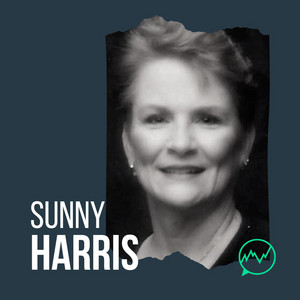
In this episode, Tessa speaks with Sunny Harris, a highly driven, methodical stocks and futures veteran day trader.
Sunny didn't survive the four major market crashes, she thrived through them, a strong believer of technical analysis and backtesting.
Sunny leveraged her background and skills as a mathematician and programmer to develop and refine her own trading system that she has come to rely on throughout her trading career.
Thanks, Ian. I'd also like to add that Sunny has been trading for nearly 42 years and still going strong.
She's from the Southern California region where I grew up, so I just really enjoyed speaking with Sunny and hope that you will enjoy listening as well.
Happy holidays. Ladies and gentlemen, we'd like to now present Sunny Harris.
How did you first get started in trading?
Well, that's interesting.
I first started programming at Lockheed and moved into the systems programming group and I love to manipulate the zeros and the ones and the assembler language and all that sort of thing, working on the operating system of the computers.
And I got offered an opportunity to move, I was in San Jose at the time, and I got an opportunity to move down to San Diego and join a company that was tiny little company of three guys and they wanted me to turn it into a business.
So I worked with them and we did machine and device independent computer graphics.
So I did that for eight years and then I decided to sell out my part of the business and retire.
So when I was 30, I retired and I got a sizable amount of money and I did what I thought was the smart thing.
I gave it to investors, money managers to manage for me and they lost $75 ,000 in three weeks and I thought, well, I can do that poorly on my own.
I'll take it back. And I started learning to invest and trade on my own.
You mentioned that you've been trading for 41 years.
Yeah, 42 in January.
You know, Sandy, I think you beat all the guests that have been on the show so far in terms of trading experience.
Well, Larry Williams, who was on my podcast a few weeks ago has 50 years.
So he beats me. Wow.
And when you first started trading, what was the trading background?
Was it trading on the floor or a retail trader?
I just decided I needed to invest my own money, manage my own money.
And I started out by trading stocks and did that, you know, long -term, three months, six months time horizon and was just turning profits in stocks.
And I loved it so much that I decided to start learning to trade shorter term.
So I started observing the S &P 500, which was new at the time.
And I started watching that and watching the charts and I got a good feel for it.
So I started trading, I was actually trading 15 minute charts at the time.
It wasn't really short term.
It was just sort of short term, more short term than stocks by all means.
You said that you loved it so much.
What is it about stock trading that you loved so much when you first started?
Well, I have a background also besides math and photography.
And I'm very visual, besides being very left brain mathematician, I'm also very visual.
And if you know how to frame a shot, right?
You're looking at the configuration and the patterns.
And in stock charts, you can see the patterns and recognize what's gonna happen and hopefully predict the future a little bit.
So I was just drawn to it because of the graphics, really.
Do you think that your background as a mathematician programmer really gave you an advantage, maybe in some way with trading stocks?
Did it help? Yeah, I think so.
I definitely think so.
The most important part, you don't need a PhD in mathematics to do this but the most important part is that you do need to be logical.
So there's a lot of if, then, in trading.
If this happens, then I will buy.
If that happens, then I will sell.
So that's programming, if then.
And I just brought that into it.
Right. In your earlier trading, did you find the support that you needed?
How did you find support in...
Because I would imagine a lot of traders, they start out with not knowing many other traders and it would be a lonely journey.
How did you find your support if you had any when you started?
I started subscribing to...
Back then newsletters were very popular and on Saturday night they put out a newsletter that you got delivered on Sunday morning and you'd read these newsletters and they all had advice for what they thought was happening next and how you should do it and trade this now, trade that the next day, you
know, that sort of thing.
The markets about the turn, all kinds of advice.
And I probably took a dozen of those newsletters and I, not knowing any better, would just call up the authors and ask them questions.
So I was just calling up all these people and meeting them, you know.
And one of the ones that I met, I was taking Larry Williams' newsletter and I realized on the newsletter that he lived just down the street for me.
So I called him up too.
You know, I probably should never have had the nerve to do that but I called up Larry and said, I'd like to come over to your office and meet you.
So I went to Larry's office and we hung out and he's very generous with his knowledge and he's very generous with his techniques.
I mean, I've got several of his 11 books and he just reveals all kinds of things in these books, they're wonderful.
So he and I became friends.
And it was, I think it was Larry who helped me the most get going.
So Larry was sort of like your support and maybe mentor?
Yeah, I would say he was definitely mentor.
Right, did you have any other mentors in your early years of trading?
Yeah, through Larry I met Jake Bernstein.
He put out a book that I can't find anymore, it's gone and I don't have it in my collection anymore.
But it was a three ring binder.
It wasn't even a published book, it was a three ring binder.
And he talked in there about using ADX and MACD together to trade.
So getting your signals from the ADX rising and MACD has crossed over in the long position.
So I programmed bad and I found that it worked really well on 15 minute charts.
So I would count Jake as another of my mentors.
Right, I'd like to get into a little bit about more of the, you mentioned that you've been through four major market crashes, the crash of 87, the crash of 2000, 2007 slash 2008 and then the recent crash of 20.
The COVID crash. What was that like, you know, when, of course you didn't know it was coming, but you know, what was your, how did you react to that in your trading?
Well, I knew the crash of 87 was coming.
I was looking at my charts and seeing patterns in the charts and I called, I had, you know, you didn't have access to the floor or access to the exchange back then.
You had to go through a broker.
So I called my broker who was in downtown San Diego and I said, I want you to sell everything I have, this was in late August before the crash.
I said, sell everything that I have, my charts are telling me we're going to have a crash.
And he said, oh no, no, charts are nothing.
They have not, this is the biggest bull run in history.
You need to keep your money in it.
You're going to make lots more money.
So I said, no, I want out of everything.
He said, okay, come downtown and have lunch with me.
Show me your charts and let's talk about it.
So I did that and I showed him my charts that he's like, this doesn't make any sense.
This is not real. I'm the stockbroker, you're not.
I said, that's okay.
It's my money, not yours, sell everything.
And he did, and I went to Europe on holiday and watched the crash from my hotel room in London.
Sunny, what did you see in those charts that indicated an imminent crash?
I don't remember exactly what the term is now, but basically I was looking at the dividend on the Dow and seeing that it was approaching limits that almost invariably led to major moves, major corrections.
And it had gotten up so high that I believed that it was coming down.
On Friday, the Dow closed down about 105 points, I think.
And on Monday, it closed down 506.
On Tuesday, I called my broker from London and I said, buy everything you can get your hands on.
Wow. And that turned out to be the right thing too.
Well, you do something like that.
And I'd been trading for six years at that point, and that just cemented it.
I mean, I knew I was a guy in the world trader at that point.
So you were using a lot of technical analysis at the time?
Yes, yeah, I'm strictly technical.
I don't watch fundamentals.
Also with the crash of 2000, did you apply the same approach or was that different?
It was a little bit different.
I did apply the same approach, but in the beginning of a crash, you don't necessarily know it's happening.
So I made some mistakes on that one right in the beginning because it would go down and then as it would bounce, I'd go, oh yeah, right, it's over, we're going long again.
So I'd go long, and pretty soon it'd start back down again.
So I made a number of bad trades right in the beginning of that one.
It's a good lesson.
And then I caught on, Nasdaq dropped, I don't know, 67 % or something like that, but I managed to get short for the rest of it.
Once I realized I was gonna get killed trying to go long.
Yeah, so you were going long and short during all these crashes basically.
You were pretty active during the crash.
Very active, all day long.
I still, to this day, I trade from 6 .30 in the morning to 2 o 'clock in the afternoon my time, every day.
It's just, it's my nature now.
How much were commissions back then?
Oh, golly. It was $25 a side for trading the S &P.
Now I pay $1 .20 a side, but it was $25 a side.
So $50 for every trade.
So you really, with a $50 commission, you can't trade really, really short term because the moves are too small.
So you have to trade a longer term chart, which is why I was trading 15 minutes because I could catch longer moves and afford the commission.
The margin at the time on the S &P was $50 ,000.
Have your trading strategies changed over the years?
Yes. I now trade one and five minute charts.
I don't trade 15 minutes anymore, and I also did not hold overnight anymore.
So I'm strictly a day trader.
I do get out before the end of the day, and I don't carry anything overnight.
The markets are active now that we're all electronic.
The markets are active all over the world all the time.
So you can't, I can't see holding a trade overnight when news in Europe might make a big spike in one direction or the other.
Just like we just had a big spike in the S &P.
I don't know what news came out because I don't watch the fundamentals, but we had a really big spike, just about, I'm looking at a one minute chart.
So about 15 minutes ago.
How long did it take you to, from the time you first started trading, how long did it take you to finally find your rhythm and become a disciplined trader?
Well, I spent the first 18 months just watching the market and not trading.
So I still count myself as a trader back then because I was full time, well, I was 12 hours a day researching because I wanted to figure out what to do and why and prove it.
As a mathematician, I got to prove things.
So I was testing and testing and I have eight bankers boxes of my original research from that time, because I would keep notes and I would keep spreadsheets and I would print them all out and I tested everything.
I tested every technical analysis indicator known at the time to see if there was anything that worked.
And the thing that worked back then really was that ADX or MACD combination.
And I eventually got away from that because I realized a lot of things, one of which is moving averages produce a lot of whipsaw.
So using my math background, I programmed some original math that creates a moving average.
I call my dynamic moving average.
And I call it that because it dynamically allocates its inputs with every tick of the market.
So you might have a standard moving average would be nine and 18, nine for the short term moving average and 18 for the long term that's the default.
So what I did is create something that calculates its own inputs based on the speed of the market.
So that's my dynamic moving average.
And that's what I've been that and an extension of it called Sunny Bands.
That's what I've been trading with ever since.
So about 35 years I've been trading with Sunny Bands in my EMA.
At what point did you switch to day trading and why?
After the crash of 87, I decided it was more profitable to do short -term trades and day trading than it was to just be buying and selling stocks.
I mean, I had plenty of money to buy lots of shares of stocks, but I realized that the short -term thing and especially trading futures, S &P, it's the most liquid contract in the world.
I always say, don't buy something you can't sell.
Don't buy a lumber contract because you're gonna have a hard time getting out of it.
So I started with the S &P because it was the most liquid and it was easy to trade.
And I just switched probably right after the crash of 87 and switched to intraday trading.
And you're still doing that today?
Still doing it. And how much time do you spend on programming or did you spend on programming versus looking at the stocks?
Well, I did both at the same time.
So I mean, I like to work.
It's my thing. So I work 12 hours a day.
The market's open six and a half.
I've spent six and a half watching charts and five and a half programming.
So I do a lot of things at once.
Yeah, I read somewhere or heard somewhere probably on your podcast or your website, but your passion is also, besides trading, you also like to teach people how to trade.
I love to teach. I do love to teach and I like to make good traders out of people who are losing money.
And so my passion really is in helping people become good traders.
And I actually went to ask this earlier in your background, but when you first started trading, I bet, I mean, you were one of the few women out there trading.
And so how was that?
How was that like? I've never noticed it because when I went to school, in college, there were all men in my classes that was one woman, that was an issue.
And at Lockheed, it was all men.
And I just, I don't notice it.
I just, that's my universe.
But I had a couple of floor traders on the floor in the S &P pit, and I would call and I'd say, hi, this is Sonny Harris, accountant number such and such.
Please buy one SPZ at the market.
And they'd say after a couple of times to that, they said to me, you don't need to say all that.
Just say, it's Sonny, buy.
If you need the front month, just say buy.
I'm like, okay, why?
And he said, because you're the only woman that calls the floor.
So, yeah, I didn't have to identify myself.
There wasn't anybody else.
Yeah. I also wanna know, do you feel that there's a difference between the way women trade, possibly the way they approach the market versus men?
That's a good question.
I think women tend to be more meticulous and more willing to do the testing.
Whereas men seem to be a little more adventuresome and wanna just dive in there and start doing it.
And the women sort of stand back and think, I need to analyze this first before I get into it.
Does that have something to do with possibly, I could be wrong, but maybe women sometimes tend to be more risk adverse.
Oh yeah, I'm not risk adverse at all.
So I don't fit in that category.
I love to take risks.
But yeah, I'm a scuba diver.
I'd love to do things that are challenging.
I mean, I learned to scuba dive because I was afraid of the ocean.
So I'm like, okay, let's just get over that.
Let's go under there and see what's there.
But I think a lot of women are more risk adverse and they're more logical about their approach, I think.
It's not true for everyone of course, but there still aren't many women traders though.
I think also, Tessa, that part of the reason is because as girls in grade school, we're taught basically that the sciences and the engineering and the math are for the men, for the boys to learn, not necessarily, you need to learn homemaking and sociology and all kinds of, quote, women's things.
You're not encouraged as a young girl to go into men or physics or engineering.
And I think if more girls were encouraged, there'd be more women traders.
That's a good point.
Well, we'd like to move into maybe one or two of your most favorite current strategy, trading strategy that you're using today, if you don't mind, maybe just share with us what you're doing today and how you do it.
I'd be happy to share it.
It's really simple.
I use my sunny bands indicator, which is based on my dynamic moving average.
And I've got one in front of me right now that's on a one minute chart and I'm watching the market.
And I've been long since about 8 .15 this morning.
So I got this nice little pop up, whatever that was about.
When price comes down and touches the bottom band and the candles change color, so from blue to red on my chart, then I, sorry, they're going down on red and they change to blue, which is a little bit of an up move, then I go long.
When it gets to the top of the channel, top of the sunny bands, and it's going up on blue turns red, I go short.
I mean, it's as simple as that.
There's not much to it.
Because I developed it myself, of course, I completely understand it, but it's just long and short, long and short.
How long have you been using this?
35 years. The same ones.
You call it sunny band because is that something you created yourself?
Yes, yes, oh yeah. I created the math and then programmed it and tested it.
I use Trade Station and it's in my Trade Station.
It's one of the indicators.
And I do make that available to other people, but it's mostly because that's how I trade.
It's for my own success.
And then if other people want to benefit from it, then that makes me happy too.
Is there any off the shelf technical indicator, which is kind of close to your programmed indicator out there these days?
No, no. I get asked a lot of my indicators like bands and it's not.
If you put the two on a chart together, you can see they're very different.
Mine does an amazing job of calling tops and bottoms.
I mean, I've tested Bollinger bands several times and it just doesn't do what mine does.
But it looks a little bit like Bollinger bands just visually.
Does your indicator incorporate the ADX?
No, not at all. It's just the dynamic moving average, which avoid swip saw, those are purple and gold lines in the middle of this channel.
And then two bands on either side formed with average two ranges from the VMA.
And that's all. I mean, I don't use any other indicators.
Sometimes I'll put volume on a chart, but I don't really even use volume very much.
And what is the timeframe on your trading?
I trade one and five minute charts.
So I'm looking at a one minute chart right now and watching the market.
And I use five minute charts for the setup and one minute charts for the entry.
As we mentioned earlier that you are heavily a technical analysis based trader.
And I know that different people have different ways to trade and there are people who don't believe in using technical analysis and they're still able to do well in their trading.
Why is it that some people don't use it at all, technical analysis and some people do, but they believe strongly that they can still get there in the same way.
Yeah. Well, there's nothing wrong with that.
I mean, we need all kinds of opinions to make a market.
If we all agreed on what we thought it was gonna do, it wouldn't do it.
And I've found over the years, I've taught thousands of people to trade.
And I haven't found any one of those people I've taught who has the same idea of how the market works as any other one.
They all have a different outlook to it.
Some are fundamental.
And if that works for them, that's phenomenal.
Some are technical.
And if that works for them, and it wouldn't work for the guy who's fundamental.
He wouldn't want that technical stuff.
And the broker I told you about who said, no, this is the biggest bull running in history.
He was looking at fundamental.
And it also depends on the personality of the trader.
How important is that to know your personality, how you like to trade and finding the right way to trade based on your personality?
I think it's very important to thy own self be true.
Find out what works for you and test it, check out how it, whether it works or not.
And then my advice is trade it methodically.
Just do what the system says.
If you haven't tested it enough, you won't be confident in it.
Chat With Traders is brought to you by Tasty Trade.
Tired of trading on rookie apps?
Then get the platform for serious trading.
Tasty Trade. Tasty Trade gives you the tools to trade your way.
Chart your heart out with over 300 indicators.
Know your odds with probability of profit and move fast with quick roll.
Trade what you want and trade it your way.
Stocks, options, futures and more.
All in one account on one platform.
No wonder why serious traders choose Tasty Trade.
Visit tastytrade .com and see for yourself.
Tasty Trade Inc is a registered broker dealer and member of FINRA, NFA and SIPC.
Hey, I got a great update from Trade the Pool.
Now it's even easier to get funded.
As you know, Trade the Pool built a unique program to evaluate stock traders like yourself and provide you with the company's funds to trade with.
It's real shares and you no longer need to worry about the PDT rule.
But that's not all.
Trade the Pool has introduced a new tier with $20 ,000 in buying power, making it easier to pass the evaluation and speeding up the process of getting funded much faster.
You don't wanna miss this opportunity.
But if you've tested and proven it, then follow it religiously.
Right. And you did mention that you trade everything except for options, right?
Options, yeah, I do not trade options.
Yeah. I had lunch with Larry Williams one day and we were talking along about stuff.
And he said, tell me something, Sunny, you're a mathematician.
You figured out how to trade options, haven't you?
And I said, how? Absolutely not.
Order filled. Oh, do you hear that?
That's my automated strategy, taking a trade.
He just went short.
So I said, no, I haven't figured out options.
He said, all I can do is lose money with options.
I said, that's all I know how to do too.
And that's not my goal here, so I quit trading options.
He said, well, you've done the math with all the Greek sandwiches.
And I said, yes, I've done that.
And that's not a problem.
I've programmed the whole thing.
But you could call the trend of the market perfectly and lose money on options.
So that's why I don't trade options.
I'm not into money.
I'm not into losing money.
I find that very interesting, just like Larry mentioned, because, yeah, with your background, you would think that you would like to trade options better than other people with different backgrounds.
It's very interesting, because I am probably the least logical trader out there.
But I cannot trade anything else but options.
Is that funny? See?
Well, that's just back to my premise.
Know yourself and know what you can do, and then do it really well.
Larry said another thing in my podcast that I thought was very interesting.
He said, find out what you're really good at and then become passionate about it.
Instead of the other way around, follow your passion.
He said, no, no, no, find out what you're really good at and become passionate about it.
I think that's sage.
Is that what you did?
Probably, yeah, probably so.
Because when I first started trading, I just had a knack for it, and I was good at it.
So it just became my passion and my overall efforts.
I mean, everything I do is about trading, one way or another now.
Back on the options question real quick, only because I'm a little bit biased because I trade options, but what is it about options which makes it difficult to figure out, you think?
For me or for other people?
For you and for other people in general.
Yeah. I think a lot of people can figure it out because I've talked to a lot of traders who do trade options and they're like, oh, Sunny, it's easy.
You do this, this, and this.
Well, that's too many things to think about.
All I have to think about with the E -mini is up or down.
I've got to figure out where it's going next.
And so it's easy and because it's easy, which is the same reason I majored in mathematics in the first place.
I took my first calculus class in my freshman year of college, and I found out that it was really easy for me.
And I said to a friend, if I get an A in this class, I'm going to major in math.
This is just so much fun.
And I got an A plus and the rest is history.
You know, so because it was so easy, it just made sense to do it.
And of course, that became my passion, that and programming.
For other people who trade options, it's just easy for them.
They just see the answers.
They feel it. You know, I look at the market, I'm trying to figure out where the trend is.
And I think options should follow the trend.
Another order field.
Yeah, another order.
Sorry about that. No worries.
I just think you do what you gravitate toward.
And if you gravitate towards options and you understand them, more power to you.
Yes. And so. OK, we talked a little bit about your strategy and you use sunny bands.
Same indicator you've been using for 35 years.
And what is your typical routine?
Like this will help new traders to listen from someone who's been trading for a long.
What is your typical routine when you get ready, you know, before you start trading and then you get ready to trade and and then you're trading and then what's your end of day routine?
Do you mind kind of walking us through your typical day?
Well, I get up at five o 'clock in the morning, 4 .45.
And race down to my office, which is downstairs.
And see what the app, the the night market has been doing, because it kind of seems like the first thing in the morning at the open, the market goes opposite of whatever the night market was doing.
So it did. Night market is going down or open in the morning, went up, down, up quite a bit.
So it recovers from whatever's been going on overseas.
And I make sure to make a pot of coffee.
I'm an avid coffee breaker.
And then I sit down and start trading.
And I trade for six and a half hours.
Sometimes I will just like you see my you heard my automated strategies trading right now.
If I have a podcast like this, or I have a student that I work with, I like to work with them during market hours.
So I let the automated strategy trade while I work on something else.
When it stops at the end of the day, I print out my charts.
Every day I print out my charts.
And every day I analyze what did the market do?
What did I think it was going to do and what did it actually do?
And what can I learn from looking at this chart?
So I do that. And then after I'm through analyzing my charts, I write the book that I'm working on.
So I spent I spend half the day trading and the other half of the day offering if you will.
Yeah. So my book is now seventeen hundred pages.
Wow. It's not quite.
We'll get into the books that you write in a minute.
But for your process, do you have like a business plan or a trading plan?
Do you use a trading plan every morning?
I used to have. No, I used to have a trading plan, which was basically the rules of my sunny bands written down.
And I would keep them tacked to the wall above my computer screen.
And, you know, I'd follow those rules religiously.
The times that I've lost money have been because I haven't been following the rules.
So I used to have that.
But, you know, after 42 years, you get pretty good without having it in front of it.
So I don't have one anymore.
And although I started out with one and I advised everybody to have a trading plan and a business plan, because this is a business after all.
This is not a game.
That's a very good point.
So you started out with a plan, but over time, it became such a habit, I'm guessing, that you don't need that plan anymore because it's so ingrained in you.
Right. That's exactly right.
Well, what about trading journals?
I see that a little bit differently than trading plan.
A journal is more reflective, I guess, of what happened.
Are you keeping that today?
Well, of course, I write indicators for everything, anything I need in my own trading, I'll program it.
And I have an indicator that allows me to keep notes in the indicator itself.
So I can type in for every trade.
I can type in what it was that I was looking at, what I thought was happening and why.
So I do keep a journal of sorts, but it's on my computer.
As you mentioned, treating business, treating trading like a business, because it is a business, is really important.
And I think that's where maybe a lot of traders get stuck in that they there's they're not in that mindset yet.
And starting out from the beginning of seeing it as a business, not not a hobby.
Yeah. Well, it is a business.
Then you have to take into account the business expenses.
You've got to, you've got to pay for your computer.
You have to pay for your software.
You have to pay for whatever space you're working in, unless it's your dining room or something, commissions.
I count losses as a business expense because that's, that's a cost to doing business, right?
So you have to take all of these things into account, the data that you have to pay for, I pay a couple hundred dollars a month for data.
Yeah. All of that comes into it.
And you need to have that all in a spreadsheet in front of you so you can know, and I've got an indicator call, I call it potential hourly wage.
And it measures the amount of money that it's possible to make off the chart that it's on.
I look at my PHW and I say, will this not only cover my business expenses, but will I make profit for it?
And how many dollars per hour am I going to make?
If you can't make more than $15 an hour, you ought to be working in McDonald's.
So in your, um, so just backing up a little bit, are you looking for specific risk reward ratios when you're looking for positions to put on?
How do you look for opportunities?
Basically? Well, that's back to being really simple to do on.
What I do is follow my sunny bands.
I bottom and sell at the top.
And I don't look at risk reward.
I look how, how far apart the two bands are.
Cause I know that since it goes from the bottom band to the top band, if there's enough room there, then there's money to be made.
If the distance between the bands, there's only a dollar.
I'm not interested in taking a dollar, but if the difference between the bands is $50 or a hundred dollars, then that's my potential reward.
And so I take the trade.
What is your basic risk management strategy or how do you apply risk management?
And, and includes, um, position sizing as well.
I don't do that. You don't need to do that.
Life is simple. Life is simple.
No, I don't, I don't worry about I, I trade five contracts of the S and P at all times.
I don't scale out as I don't take contracts off and scale out.
I keep them all on and close the trade when it hits the other band.
So I'm not, I'm not doing risk management because it's, it's pretty clear from the chart, just exactly what I need to do.
And my stops are at the other band.
So, you know, the other, the other band is where I'm wrong.
So if it goes there and I was long and it goes down to the other band, clearly I'm wrong.
I have to get out. Right.
Would you say that your strategy is very systematic then?
Extremely. Yes. And I, I, as you heard, I do have it programmed, so it'll, it'll run itself.
But it's, it's all systematic.
Where it takes kind of the guessing, most of the guessing out of the trades.
Is that. Yeah. I'd say there's no guessing.
Right. Because it's all part of your process, part of your system.
I see. Yeah. It's just part of what I know to do after 35 years of trading this one indicator.
And so no matter what type of market that we're in, you, do you feel like, the same strategy that you're using can work?
Yeah. And it does. It's worked through those crashes that we talked about.
It's worked through the bullmark great bull markets that we've had.
Uh, it just, and, and remember it's very short term.
So if I'm trading a one or a five minute chart, it doesn't really matter what type of market we're in, if we're in a bear market and the market's going up on a one basis, then that's a, that's a little bitty bull market right there.
And it's today. You know, it's not what's going to happen in the next several weeks.
It's it's today. Tell us a little bit more about your, your testing methodologies, how you develop your testing methodologies so that you can, you know, make the systematic.
Okay. Um, in my book trading one oh two, I outline everything that I do.
It's basically a matter of running tests and for me, it's always in trade station.
I run the test, I issue print to file statements, which puts everything out on my, on my hard drive.
I take it off the hard drive and import it into Excel.
And then I look at the, at the results and I don't just look for the highest results and the most profit, most net profit, which a lot of people do.
And I think that's a mistake.
If you find the tests that have islands of safety comfort zones.
Okay. So if you find these comfort zones where any of the parameters you test is work, they don't necessarily make the most money of the process, but if they all work, pick the one in the middle where you've got safety on both sides that other parameters do work.
And then that one in the middle, I, I, so I'm in the middle of the island.
I'm away from the alligators.
Right. And it's that testing process that I still use to this day and, and especially for clients, you know, I do it since I've got mine tested and I know that it works after 35 years.
I'm confident, you know, when, when his client will come to me and say, I, I need to have something tested and that's the process I go through.
And it can be very tedious, which is why a lot of people don't do it.
Right. I had an idea when I first started trading, I watched the market and I thought, well, this is interesting.
If it closes down on Friday, it seems to open up on Monday.
So I'm, I'm looking, sorry.
I'm looking through the market and I see three, three days in a row.
I see that's true. It goes down on Friday, opens up on Monday.
So I'm like, well, this is fantastic.
I have a system. First, first three trades I made were loosened.
It didn't work. So you, so the less moral of that story is, uh, takes more than three days worth of proofs to find something true.
You know, you need to look back in history a lot further.
And I didn't know that yet.
Excuse the last interruption here.
This is Tessa. We hope you're enjoying this episode so far.
If you love the podcast, please give chat with traders.
The best review you can on whatever platform you're listening from.
This will help us to keep the episodes coming.
Also, if you haven't subscribed to our email list, please hop on to chat with traders .com and click on subscribe so we can keep you posted of information that may be of importance.
Thank you. Now back to the chat with our guests.
Now I'd like to turn to mindset and trading psychology and, um, what, what keeps you in the game and what keeps you going, Sunny?
Oh, that's a, I don't know.
Um, I do, I forgot to say when I come downstairs every morning, I pray before I start trading and helps me with my mindset.
Uh, I adjust my shoulders and adjust my arms and relax, you know, to try not, I used to get really stressed trading.
I don't get stressed anymore doing it, but, uh, I think it's important to be calm.
It's important to know what your system is.
If you need, if you're new at it and you need to repeat it every single day to yourself, say it out loud, you know, and then, and then say, Oh, I'm so sorry.
No worries. You can say, uh, I am a system follower.
I am a system follower.
You know, it's a reaffirmative affirmations, right?
I follow my system.
If you do anything that's not within the rules of your system, then that's called discretionary trading and typically that'll be a money loser.
What were your biggest struggles and hurdles and how did you overcome them?
Well, I haven't had any really big hurts.
I'm a very self -directed, uh, overachiever.
So I just, I don't see hurdles.
I just see challenges.
You know, this is, this is something to be overcome.
And if you work at it hard enough, you can figure it out.
Google helps a lot.
You know, if you, if you find something that you want to know to get better at something, it's on Google somewhere.
I'm, like I said, I'm an overachiever.
So I just continually, uh, try to get better at everything I do and, uh, improve.
And how much does your outlook on life, you know, influence the way you trade?
Oh, I'm sure it's almost everything.
Uh, I don't, I don't deal in negativity.
I don't have regrets.
So I don't worry about what's coming or what was before, because all you have is now.
So I'm very much in the now.
Yeah, that's, that's important.
And do you believe that trading is just trading is a constant practice and learning?
Oh yeah. Oh yeah. And I learned things from the market every day and I, I see things happen.
And I think, oh, I should, I should program that into the system.
Cause that seems to be true.
But then of course I go back to ground zero and start testing it.
I don't ever implement something and think, hmm, this is going to work.
No, go back to the testing.
You do this nose to the grindstone thing.
And while striving towards your trading goals, um, and achieving all these great things upon reflection, did you feel like maybe you were making any sacrifices in other parts of your life?
I did. Uh, especially when I was working at the software house, the computer graphics company that I did.
Uh, I, I neglected my children a bit.
I was working from 7AM to 6PM and picking up my kids at daycare and taking them home, feeding them and putting them to bed and then working more on my computer after they went to bed.
So I mean, I'm sure I could have spent more time with my children, but I retired at 30 and they were, uh, five and eight.
So it still wasn't too late.
I spent the next many years with them traveled all over the world, took them with me, you know, indoctrinating them to my lifestyle that it was, that's, that's really the only thing that has slack and now I do whatever I want to do.
And what I want to do is write this book and trade.
Tell us more about this book you're, you're writing.
It's called the definitive guide to trade stations, easy language and OEL.
So it's like I said, 1700 pages.
It's going to be published in two volumes and I've, easy language is actually easy in trade station.
It's not hard to learn to program it, but I've got some, some, uh, beginners things in it and some intermediate, easy language chapters in it.
And then it gets into trade stations, object oriented, easy language, which is not easy at all.
And there was virtually no documentation for it.
And I wanted to learn it and be able to program it.
So I searched and searched and searched and couldn't find anything.
And so I thought, well, I guess I'm going to have to write it myself.
So this is the, this is the programmer's manual for OEL.
Oh, wow. Earlier you mentioned your kids, did they get into trading?
Did they ever get into trading?
No, no, no, my son's an electrical engineer.
He wasn't, I mean, he does investing for him and his wife, but he doesn't trade.
I mean, he even worked for me for a few years, but he's more of a outgoing friendly sales type person.
And so he, I had him working in the sales side that I was publishing a magazine at the time for eight years, I published a monthly magazine called traders catalog and resource guy, and he helped me with ad sales and all the conferences I would go to and the speeches I would make and all that sort of thing.
One day, one day I was getting ready to give a speech and I, and I said to my son, Shelby, I'm going to run to the ladies room.
I'll be right back.
I got in the ladies room and, you know, did my thing and he comes running into the ladies with mom, what?
He said, your microphones on.
Yeah. So, you know, you, you have these moments.
Yeah. Well, um, it's amazing that you're, today you're doing so much and how do you have all the time in the world?
I mean, you're trading, you're writing books, you're, you're teaching.
How do you do it, Sunny?
I do a podcast. I do a Sunday night newsletter.
Every Sunday I do a live trading room on Tuesday mornings.
Newsletters free trading room is free.
Books not going to be free.
But, um, I'm a master organizer.
I'm a Virgo. In fact, I'm a double Virgo.
So to me, and you know, my spices are alpha.
It's just, it's about organization.
And if you keep things organized and plan out your your route, you know, I have, I use Google keep and I keep a list of everything I need to accomplish today.
And I make sure that all those get checked off and I put things on my Google calendar to do today.
And, uh, I turn them red so that I'll do them.
They're urgent. And then I turn them gray when they're accomplished.
So I keep a list of things that I'm going to do today and whether they're done or not.
What advice would you say, or share with, um, other fellow traders regarding mindset and personal care?
What do you mean personal care?
Like caring for yourself, having balance, you know, uh, cause not everyone can, can do so much.
Right. Maybe everyone's different, but yeah, one of the things I do is I eat very well.
I'm very careful what I eat.
And the other is, uh, three days a week.
I go to the gym at one 30 for an hour and a half.
Uh, so I'm not, not accessible at that time, but I think it's important to maintain your health.
Uh, and a large part of that is we are what we eat.
Uh, and I think it's really important to get exercise.
Yeah, I have, I know we're almost up for time and I respect your time.
Uh, I have, I think maybe two more questions.
Um, sure. One is okay.
I'm going to save that one last, but the one before that is how would you, oh, I think I know the answer because you kind of said it, I was going to say, how would you approach the markets in 2023?
Or where do you think it's going in 2023?
And how would you approach it?
And what do you think my answer is the same?
You're going to use the same strategy.
I'm going to use the same sunny man strategy and long -term to me is 15 minutes.
So do I have a clue where it's going in 2023?
Not at all. Not at all.
Yeah, that's awesome.
And I think this might be the final question.
Uh, maybe, um, is if you could go back in time, what advice would you give to your younger self?
Uh, be confident because I, you know, I, I, from a very young age, I, I was driven.
I was driven to give straight age in school.
I was driven to save money and go to college because you know, my parents were not college educated and I grew up dirt core in Appalachia and I was just driven to succeed.
I, when I was 16 years old, I went to the counselor in my high school to get advice on what to major in and what kind of jobs were available.
And he said, well, you've got A's in everything you've taken.
You can do anything you want.
What would you like to do?
And I said, I want to do the job.
I want to get the degree that I can get the fastest to make the most money.
You know, and that was math for me.
I did my first degree in three years.
He also said, well, what do you want to be when you grow up?
And I said rich and eccentric.
And I think I've achieved that.
Wow. Thank you so much for sharing all this, Sunny.
And it's been a really great honor to have you on the show.
Thank you so much. And if listeners want to ask you questions and get in touch with you, how is the best way for them to get in touch with you?
Best ways to give me a call.
My phone number is 760 -908 -307.
And I'm accessible except when I'm at the gym.
I even answered at the gym.
I just tell you, I'll call you back.
But so you can give me a call.
I'm in California, so respect the 6am timeframe.
And the other way of course is through my website.
My email is sunny. S -U -N -N -Y at moneymentor .com.
Thank you, Sunny. Thank you very much.
Absolutely. Thank you, Tessa and me.
And I've really enjoyed it.
Thank you. Thank you.