I like to think about what am I going to be thinking about on my deathbed?
And I know for me, the things I will regret are things that I did not try or that I knew I could have done or thought I could have done if only I put in more effort or things that I didn't do because I was fearful.
Those are the things that I'm going to regret.
It's not going to be the times where I make a mistake.
And so for me, there is no other option but to see how big of an impact I can have.
I'm on a mission to build the world's leading indoor air quality company.
I've scaled from zero to $250 million a year.
And in the next five to 10 years, I intend to take that to a billion dollars plus.
And I wake up every single day, you know, working on my business and thinking about how I'm going to grow it and ultimately build out my vision.
Welcome to The Knowledge Project.
I'm your host, Shane Parrish.
In a world where knowledge is powered, this podcast is your toolkit for mastering the best of what other people have figured out.
If you want to take your learning to the next level, consider joining our membership program at fs .blog .com.
As a member, you'll get my personal reflections at the end of every episode, early access to episodes, no ads, including this, exclusive content, hand -edited transcripts, and so much more.
Check out the link in the show notes for more.
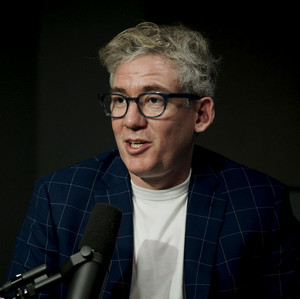
Today, I'm talking with David Heacock, who left his Wall Street career to build a business selling air filters.
What sounds like an unlikely bet has become FilterBuy, a $250 million manufacturing company producing over 100 ,000 filters daily and serving more than 7 million customers.
David shares the real story behind his empire, walking away from Wall Street, constructing his first plant, navigating Amazon, and even the freight decision he now calls his biggest mistake.
No startup platitudes, just hard -earned lessons from someone who's been in the trenches.
We dig into what actually matters in building a business, hiring, managing at scale, branding versus marketing, why many direct -to -consumer brands aren't really direct -to -consumer at all.
David talks candidly about balancing between obsession that you need for success and with family life at home.
And importantly, throughout the podcast, you'll see the mindset of a founder in real time.
Whether you're starting a business, scaling one, or simply curious about turning a bold idea into reality, this conversation is packed with actionable insights from someone who's done it and is doing it.
It's time to listen and learn.
You said you felt like an outsider at Goldman.
Why did you stay so long?
Well, I'm stubborn.
And honestly, I had manifested my job at Goldman in a way.
It's something that for years I had idolized and made happen in my life.
I didn't go to an Ivy League school.
I didn't come from a rich Noreastern type family that had family and private equity and all the traditional feeders that lead to a finance career normally.
I went to the George Washington University and about my sophomore or junior year, I really decided I wanted to go into finance and the premier place to work was Goldman Sachs.
And so I became very obsessed with working at Goldman Sachs.
And there's no pathway from the George Washington University to Goldman Sachs, at least not at the time.
It's just not how they hired and recruited.
And I studied economics and statistics in college.
And I was in Washington, DC, and I just happened to be really close with the economics professors because I was probably the top economic student in college and did a paper on predicting currency crises using a diffusion index kind of geeky thing.
And my professors were really impressed by it and kind of ended up forwarding it to somebody within Goldman that saw it.
And then I ended up interviewing within the economics research department.
So I ended up coming to New York and doing seven or eight interviews and they hired me.
It was less formal of a hiring process than the traditional Goldman process.
So I kind of got in through the back door that way.
And it was great for me.
I mean, I, I, I loved it.
It was such a challenge.
And honestly, I would not be where I am today without the skills that I honed in that.
So what did you learn there?
Like what specifically, what lessons did you take away from that?
It's really the ability to make a decision quickly and then own that decision and manage the risk of that decision.
And so when I fast forward to my business career, like one of the things that I think that I excel at is making decisions quickly and owning those decisions and not, you know, second guessing or not kind of like once I make a decision, I make a decision and I and I move on.
But I also am very aware of my risk.
And like if it's a decision that has a lot of risk associated with it, it's something that I, you know, make sure that I'm taking that into account.
And so Jeff Bezos has this concept of one -way doors versus two -way doors.
So you have to be with two -way doors where you know that you can always get out of it very quickly.
I make decisions quicker than anybody and then manage that and don't worry so much about it.
But I'm also hyper -aware of those one -way doors where you need to be super careful doing something that is irrevocable more or less.
And so I think the hyper -awareness around that and living that on a day -to -day basis really accelerated the learning curve for me later on.
Well, let's double click on that for a second.
You said growing quickly at FilterBuy was a one -way door.
How did you think about that decision?
Well, I don't know that I said that explicitly, but I don't know that that would be untrue.
You know, I committed to my entrepreneurial journey fully when I made that decision.
And so for me, it's ultimately a decision that I knew that I was going to own completely and there was no failing.
And so if I was going to frame it in the one -way door world, it would be around that.
It's like I'm burning all the boats and I'm all in on my vision.
And there was a long convoluted story about how I ultimately got into that business.
But when I left my job at Goldman And, you know, I didn't know exactly what I was going to do, but I was determined to make it successful and to make it something big.
And, you know, a big motivation for me going so public with my personal brand in the last couple of months is really about burning the boats behind me because, you know, I'm on a mission to build a world's leading indoor air quality company.
And, you know, I don't want there to be any other option for me.
And I know if I come here and I tell you that and I tell the people that are watching that, that I've effectively burned all the boats and I'm fully committed to that because I'm going to wake up every day and work towards that bigger vision.
And so that was a very calculated one -way door, as you put it, because I don't want to give myself any other alternative.
I love that. You mentioned the word obsessed earlier.
That seems to take a negative connotation in culture, but I think you embrace it.
Yeah. I mean, I think if you want to do anything big, you have to be obsessed, because if not, you're competing with somebody who is.
And, you know, it's completely okay not to be obsessed.
I mean, and not to be super driven or like there's no, there's nothing wrong with not having that.
But if you want to be the best at something, or if you want to have a disproportionate outcome in life, then you have to be, you have to recognize that you're competing with other people that are obsessed.
And so I think that you're being quite naive to believe that you can achieve anything big competing with the world's marketplace without being obsessed.
And so I think that it just depends on what you want out of life.
Take me up close. What does obsession look like?
What does it look like on a day -to -day basis?
And what are the tolls or the costs that people don't see?
I have unfiltered by for 12 years, more or less.
And there's not a day I don't wake up.
And it's the first thing I'm thinking about seven days a week.
You know, if I go on vacation, there's, there's no, you know, not checking in or no, no, not thinking about it.
I actually view vacation as a great time for me to mentally reset.
But that reset comes around framing about, hey, what is my next move going to be?
Right. So there is no other part of my business life outside of that.
I mean, I'm fortunate.
I do have a great family, and I think it's possible to have good personal relationships and be a good father and whatnot.
I don't think that those things are mutually exclusive, but I don't have any hobbies.
It's my family and my business, and that is my life.
And I wake up every single day working on my business and thinking about how I'm going to grow it and ultimately build out my vision.
And that is what obsession is.
I mean there is no – like I saw there was some controversial post a few days ago about how people shouldn't work on weekends and talking about the importance of work -life balance and stuff.
And everybody is different, and that's completely fine.
But for me, my lived experience is if I want to do something in a big way, then I have to be all in on that.
And, you know, for me, that's, you know, burning all the boats and, you know, waking up every day, working towards one vision.
And that's what it looks like for me.
After you had the first plant up and running, how did you decide what next?
Walk me through sort of like how do you go from that?
How do you determine what the next step is?
Well, I think that people like to look back and, you know, kind of idolize and act as if there's, you know, there was a plan, it was a plan all along when oftentimes it's, you know, evolution of skills and an evolution of your thinking.
And, you know, honestly, you know, for the first eight years, we only operated in Talladega, Alabama, where I'm originally from.
And I knew it was important for us to diversify geographically, but I was too scared to do it because it felt like such a big risk and such a big undertaking.
and I didn't have the guts, quite frankly, to go in and to do it.
And then COVID happened and I worked with the team to figure out how we were going to work through it.
And we were getting so slammed and about two to three weeks into that process of working with it, Amazon stopped third -party sellers from sending products into their warehouses.
And at the exact same time, FedEx made the decision to cap the number of trailers that we were able to ship from our Talladega location because they were getting overloaded, basically saying, you know, we can't take any more business.
And I was faced with the decision, do I either expand my geographic footprint, and I made the deal with FedEx to allow me additional capacity if I would expand it out and not overload just their southeast network, or do I just raise my prices like a lot of our competitors did and milk this for what it's
worth and, you know, stay as we are.
And I made the decision to open our Ogden, Utah plant in May of 2020, after those discussions.
And by July of 2020, we were shipping products out of there.
And that was when I made the decision to really go all in and kind of stop being scared about it to an extent, and was really kind of the point that led us from where we are today.
In 2019, we did about $70 million of revenue.
So we had gotten to some size just grinding, but it was not super profitable and it was still just really difficult.
And now in 2024, we'll do about $250 million of revenue.
And so it was COVID.
COVID was a big tailwind for that.
But because we're in a consumable product where customers need to come back after they find you and COVID was such a good customer acquisition time for us that my decision to actually lean in and figure out a way to service those customers at scale is really a key point that allowed me to get to where I
am today. Walk me through building the first plant and the problems and challenges that you had to overcome.
You know, it's one of these things that is extremely difficult to articulate because it almost sounds far -fetched so much of it and it's hard for me to even believe I lived it.
You know, in retrospect, and being a bit more mature now, when I look back on it, it was a very much a hubristic move to say I'm going to go out.
I have zero experience in manufacturing, zero experience in manufacturing an air filter, never been in an air filter manufacturing plant.
But I'm going to start the process of manufacturing air filters at scale.
So, you know, when I look back at it with, you know, kind of more mature eyes, it seems quite crazy.
But, you know, I was younger and I guess I was very self -confident and I knew, just had the self -belief that I was going to figure it out.
But it really took me three to four years to get to the point where we could manufacture a product profitably.
And what I mean by that is until that three or four year period, it would have been cheaper for me to buy the product we were selling from a large manufacturer of air filters.
And just repackage it.
And repackage it. And so we weren't actually losing money in that our business model was different, and we were lucky that I was good with the online marketing piece of it.
And I brought a lot of those skills that allowed us to kind of get through that period that I did it myself.
But any time in that first four years, if you had looked at it, you would have said that this manufacturing makes no sense because we weren't making any money.
In fact, we were losing potential money by doing it, and it was taking up so much of my energy, and we had so many employees in that, and it was constantly bringing problems.
But I knew that to do it at real scale that I needed to have that manufacturing, so I stuck with it.
I was living in New York City at the time.
My wife still is a radiologist at NYU.
and um we were living here and I would travel um every Monday morning to Alabama I actually kept a car in Atlanta at the you know parking go where I would um go there on Monday morning and then drive from Atlanta to Talladega it's about a two -hour drive and I would stay there Monday through Friday and come
back and so for the first three years I did that essentially every week you know, building the manufacturing during the day and doing all of my programming work or marketing work or whatever you need at night for, you know, that first three years.
I mean, and I still did a lot of those functions for the first eight years of the business.
And, you know, because I couldn't afford to actually hire anybody else to do any of those things.
So I did all the finance, all the, I managed all of our development team, all the marketing, You know, and that's what the reality of bootstrapping a business actually looks like.
You were doing the manufacturing during the day and trying to figure that out at night.
You were doing all the admin work, all the marketing.
That's often, my friend Brent Beshore calls this the ceiling of brute force.
And it's where a lot of businesses get stuck, a lot of small businesses.
It's the limitation on the entrepreneur.
And how did you decide when to hire people, when to go big, when to take the next step?
You as an entrepreneur have to really understand your business if you want to be able to scale and do anything big.
And it's almost impossible, in my opinion, especially when you're smaller, to hire somebody that's going to build the systems that you need to really do something big.
And you kind of have to do it yourself.
And at least that has been my experience.
And, you know, I think that it sounds great to say, hey, I'm just going to go and hire somebody to do all of these things.
But the reality is that if you really want to do something big and if you want to do something different that there's not an established playbook for, which is what we have done, then it's your responsibility as the entrepreneur to go and figure all of that out.
And, you know, we have a mutual friend and Dr.
Garner and I actually have been working with her for about two years now.
And I've really enjoyed that.
But the one thing that she and I have been talking about a lot lately is that, you know, I think that I'm at my best when I'm out there, you know, building new systems, new frameworks and getting them started to the point that and solidify to the point that then I can bring in other people to actually
manage them and improve them going forward.
And so that's the framework that I like to think about it.
And I only know my lived experience.
I don't know how other people live this stuff.
But I think the fact that I understand our finance function, I understand our marketing function, I understand our manufacturing and operations function, I understand our shipping function, all with a great level of detail, puts me in a position that if you want to go and hire all of that out for your
business, and you want to compete with me, you're going to struggle.
But it doesn't mean I do all of those things now.
And I have a great team.
And I've really worked hard at building a management team in the last couple of years to allow me to build, you know, to grow and build this business.
But I think as an entrepreneur, if you really want to grow a business, then it ultimately is your responsibility to go and figure out the systems and processes you need to grow.
If you just want to maintain a business, that's a very different calculus.
But if you really want to grow, then I think you as an entrepreneur have to take on that responsibility.
Let's walk through a particular example.
So you're doing all the functions and then what was the key role you hired first?
And I want to walk through how you hired them.
Did you hire somebody who's done this at scale before?
Did you hire somebody who, like, what were you looking for?
Maybe it's a COO, maybe it's a CFO.
What was that first role And how did you decide, I want somebody who's done this at $100 million?
Because you're trying to build a billion -dollar business.
I'm not trying. I'm going to do it.
But I just – I hate the word trying.
It's a pet peeve of mine.
But, yes, I intend to build a – I love that you corrected me.
I intend to build more than a billion -dollar business, honestly.
I think I intend to build the world's leading indoor air quality company, which I think is a $10 billion -plus opportunity for a business easily.
I scale from $0 to $250 million a year.
And, you know, in the next 5 to 10 years, I intend to take that to a billion dollars plus.
You know, I don't like putting an exact timeline on it because I don't believe that, you know, that is even that helpful.
But that is the trajectory that we are on.
And, you know, like I think we need to have an honest discussion about what you're talking about because I am not the poster child you're going to put up for great hiring practices for management teams and whatnot.
I don't want the poster child.
I want the raw rule.
The reality is, I've been in this business for 12 years.
And basically, there's one person there that I hired four years ago, and they were my first marketing hire.
So like, I'd had some people that it kind of helped along the way.
So like, you know, somebody's watching this, like there were there were a few other people that came in and out.
But I effectively did all the marketing for the first eight years.
And, you know, so then the last four years, you know, I've slowly been offloading pieces and pieces of it.
But I'm still heavily involved in our marketing function as an example.
But, you know, now, like 18 months ago, I hired a CMO to be our chief marketing officer that oversees our marketing team.
And she was probably the first of the higher level hires that I actually made.
And she's still with us today.
And, you know, late last year and early this year, I really focused on recruiting and learning how to build management teams.
I studied a lot of, you know, the operating systems that you hear people talk about, like Traction or the Rockefeller Habits, you know, which have a lot of similarities and overlap and really, you know, did a lot of soul searching about like, how am I going to put together the management team for me
going forward? And I worked with a couple of recruiters and hired a CFO and a VP of ops to handle both the finance and the operations function that have been with me for, you know, six to eight months now.
And I'm very happy with how we're, you know, how that's progressing.
But it's really very recently that I've really started to figure out how to do what I would call management level hiring.
You know, over the years, like I have people that are in charge of manufacturing facilities when that's where a lot of our people are.
So like it's more hiring and then training rather than hiring people that have experience because nobody has experience doing exactly what we're doing.
That's how I've done it.
But, you know, I've had people that have been in place in each of our manufacturing facilities that have been important to keeping our operational piece of our business in check.
And that's really where I spent most of my time and energy.
And until recently, I largely did all the higher level management functions.
Like I built all of the systems that do our finance and accounting.
I want to come back to the systems, but I really want to get specific on like, how did you identify you're building a huge company?
How do you identify the talent?
Is it somebody who's done this before at a different scale, the scale you're trying to reach?
Or is it somebody that has different traits that you're looking for?
or? I think that it evolves over time, but how I think about it now and where I found success, and I've worked a lot with Dr.
Gerner about this actually, but I've realized you need to find people that have done the tasks that you're looking to get done today or before.
Maybe it rhymes, maybe it's not exactly, but if you want to hire a CFO, for example, I want to find somebody that has done the things that I know we are lacking before.
And so like in my example, I hired a CFO that came from US Foods that has a lot of distribution, managing distribution centers experience and really cost accounting and understanding, you know, zero -based budgeting and this kind of stuff.
That's what we were lacking.
That's what we needed.
And so I went out and I searched for somebody that had done exactly that before.
and, you know, that is how I chose him and, you know, he's been successful in his role with us so far.
So I do think that historically, I have made the mistake of hiring aspirationally because if I like somebody or I think, oh, they've got a lot of good energy and a lot of potential, then I have been burned by that so many times in my career and I really had to take a step back a bit.
And I think it's, for me at least, hiring somebody that's done what I'm looking to solve before is really kind of an important factor for me.
But that doesn't mean that you cannot then grow those people or mentor those people or bring them up into other things.
And I've had some success with that.
But I think that I've made the mistake historically of hiring aspirationally when I think that you're much better off, or at least I'm much better off hiring somebody that's already solved the problem that I've already noticed I need to solve.
And is it important that they've solved that recently, or is it just that they've solved it before?
Is there a nuance there?
I gravitate towards people that are high energy and really looking to grow and build something big.
I mean, I'm a big believer and culture being, culture fit being super important because part of the reason why I do all these videos, I want people to know who I am and know that, you know, I'm looking to grow quickly and looking to do big things.
And I need people that are excited by that.
And so generally what I found is people that fit that mold, you know, have had some type of recent experience of doing something similar to what I'm doing.
And then they are, you know, of they gravitate towards us because they feel a little bit stuck and they want to be able to grow and do and you know do more and that's really the type of person that i think i've found to be most successful in working with me at least we're so done with new year new you
this year it's more you on bumble more of you shamelessly sending playlists especially that one filled with show tunes more of you finding gemini's because you know you always like them.
Or of you dating with intention because you know what you want.
And you know what? We love that for you.
Someone else will too.
Be more you this year and find them on Bumble.
I can say to my new Samsung Galaxy S25 Ultra, hey, find a keto -friendly restaurant nearby and text it to Beth and Steve.
And it does without me lifting a finger.
So I can get in more squats anywhere I can.
One, two, three. Will that be cash or credit?
Credit for. Galaxy S25 Ultra, the AI companion that does the heavy lifting so you can do you.
Get yours at samsung .com.
Compatible with select apps requires Google Gemini account.
Results may vary based on input.
Check responses for accuracy.
We're down like eight levels in the inception here.
I want to come back to marketing in a second.
But what have you worked with Dr.
Garner? What are the lessons that you've learned in terms of management -level hiring?
The most important thing that I get from her and I would recommend for anybody to consider is, first of all, I'm a bootstrapped entrepreneur.
I own my own business.
I don't have a board of directors.
And so I don't have accountability that's baked in, right?
And I ultimately have the power to make effectively any decision within my business.
And that's great. Super important for me.
But also accountability is very important.
And having her in my life was me forcing that accountability or one of the ways that I was forcing that accountability because I know if I tell her in a week that I'm going to focus on X, Y, or Z next week, that she's going to be asking about it the next week or asking for an update.
And I want to be able to deliver on that because that's just how I'm built.
And so for me, the most important thing with her has been building that accountability.
but then the second part of it is having somebody to bounce around things that are maybe going on in my head and help me to become self -aware about you know what I deep down know the right answer is because I think so often we know in our gut and like the actions that we need to be taking and you know
they say that the easiest person to fool is yourself at the end of the day and so it's so easy to talk yourself into believing things that you want to believe, but maybe that's a little bit different than what you know the truth actually is.
And by talking it out with her every week, then it allows me to get to that truth and make those decisions quicker, I think.
And so when you talk about management -level hiring, she's been super important for me in figuring that out.
And part of the reason why I feel so comfortable going public with everything is I feel like I'm really getting better at that and really have a solid team around me that can help me to achieve these bigger goals.
But I think the biggest thing that she brought to that was forcing me to be honest with myself in conversation every week about, you know, what really the root cause of maybe a problem is or what I've maybe overlooked in the past in examples where this has gone poorly and we examine those and she forces
me to articulate those.
And oftentimes by the end of an hour -long conversation, I've come to the conclusion myself just because I have somebody to talk about it with.
And because I don't really have anybody else to talk about those types of problems with or in a detailed way.
And she's been very key in allowing me to kind of have that self -exploration in a very thoughtful way.
I want to come back up one level here.
You mentioned earlier that you've been studying how to build operating systems for companies.
Walk me through some of the different models and what you think about them.
Oh, that's a good question.
I don't know that I'm the right guy to exactly walk you through how a traction works or how Rockefeller habits work.
But my general sense or my takeaway from them is you have some that are way more rigid and others that are more pushing responsibility down through your teams.
you have some that are that are very rigid about recommending like only x number of people can report up to you know one person and they hold them closely and then i look at it in a context of a business like ours where you know we do so many different things that that it really actually makes no sense
how i look at it is like i look at everybody has a different opinion on how you structure meetings, how many meetings you should have, how formal you should be around those meetings.
So where did you land on this?
What's your business operating system?
For me, it's different based off departments.
Every department is different.
And that was kind of the nuanced thing that I found.
So how we operate within our marketing department is very different than how we operate in our manufacturing facilities, for instance.
And so I have one person who I should mention is I have a chief of staff named Karan who actually gave me COVID on her second day of the job when I'd hired her here in New York just before the COVID lockdowns.
And we always laugh because she gave me COVID.
And she was my executive assistant at the time and then was very instrumental in helping me manage the people part of our business through COVID up to now.
And And so now she has the title of chief of staff.
And so she's the one that would kind of be responsible for helping me in this organizational structure, more or less.
And so, you know, we really in the last couple of years have started to outline how we expect different departments to operate and behave.
It's like in our manufacturing, you know, where like some of our manufacturing plants have 350 people or whatnot there that do various functions from shipping to actually manufacturing to material management and this kind of stuff.
We actually built out a model for that specifically that works for us with performance reviews that are geared towards that type of employee.
But then we actually have a different kind of more traditional traction -like framework for some of our other departments, like our marketing department, where we're really working on, I guess they call them rocks and tractions.
But like we have, you know, certain goals and objectives that we are looking to meet in every on a quarterly basis and on a yearly basis.
And we have a three to five year plan and we operate within those departments more on that that type of model.
But the thing that I think is actually most important or the thing that was most impactful for me that I took away from all of these operating systems was it all starts with a clear vision and a clear mission for the business that then has to roll down to all of the people that are working for that business.
And I think one of the things that we lacked as a business, and my big takeaway from doing all the research around these operating systems was ultimately the operating system doesn't matter as much as like, what are you looking to accomplish?
And I think that we had not done a great job of articulating that to our employees and to maybe to our customers or even to myself prior to this year, because it's like, okay, we're an air filter company.
We're an air filter brand.
What is our mission?
Or is it just to manufacture air filters and ship them well and do that at scale?
Is that your vision or is it more than that, right?
And we had never or I never really put any thought into that.
And so the first step for me after doing this research was really building out a mission statement and our values.
And I spent two or three months really soul searching on that and thinking through like, you know, what matters and like, what do I want to accomplish?
and what do we as a company stand for and what type of people do we want to attract and how do we want to judge our people, you know, rate our employees and whatnot.
And I ultimately built out our mission statement, which, you know, to build the world's leading into an air quality company more or less, and we defined what that means as well as the company values.
And from operating system perspective, the thing that I realized is the most important across all of them is your values are what allow you to coach your employees to behave in the way that you as a business value and want to stand for.
And what that means is, is like bias to action is one of our core values.
And it's a core value that I have in my life.
And sometimes like if an employee makes a mistake like that it's like, Oh, Joe didn't call me back.
So I, therefore I couldn't do this thing.
Right. Like, you know, that would be an excuse that somebody may come and give you, but then you're like, okay, how do I actually coach you on this?
Because you know, what am I supposed to say?
Like he didn't call you back.
So you, you failed, right?
Oh, it's not your fault.
That would be one way of approaching it.
And it's a hard thing to refute.
But if you have a core principle or of core value of bias to action, then you can say, well, we at FilterBy have a bias to action.
And what that would mean is in this example, you need to call him if he didn't call you back, or you need to make sure you're following up with him and doing everything you can to get that fixed because that's just what we do.
And we use that as an example.
And so the reason the values are so important, and this goes across the department, is that that is what allows you to frame all of your discussions with employees or with partners or whatever the case might be in the way that you as a company or you as an organization expect.
And that is why the value piece of an organizational structure or the operational structure is really, ironically, the most important.
And two years ago, if you had told me that, I would have said, oh, that's just a waste of time.
Or why am I going to waste my time going through this, right?
I mean, I would not have thought much of it because I always figured, oh, I own a whole business.
I'm going to go just kind of figure it out as I go.
I don't need to be so rigid, and I think that that was a real mistake.
I think a lot of our listeners would think when you say vision statement, mission statement, values, that they have the exact same skepticism that you might have had.
How do you use the vision and the mission statement?
Often they're things on a website or on a wall, and people just like, whatever, doesn't matter.
I loved the example of how you actually took the values, and you use them to coach people, and use them to make a difference in the company.
So that was the big kind of aha moment for me actually was realizing we actually had a problem with a particular person.
When I was doing, when I was building these values and just kind of going through the motions with it, we had a problem with an employee that, on the surface you would say, well, was there really anything they could have done?
But I knew there were actions that they could have taken that would have taken a little more effort to get it done.
I thought, well, this is the great example where if we have a biased action in this example as a core value, it's a coaching moment where we can say, hey, this is what we stand for.
This is what is important.
You're going to be reviewed on these values that we have, and we take them seriously.
Then all of a sudden, that gives you a way to frame it with an employee, but the reality is that in my example, they're so personal to me, and so I've been able to build this business on my own, and I think that's unique, and I would not recommend it for most people.
I actually think for most people, or I don't know what's right for most people.
I only know what's right for me, and so once I realized that I could kind of personalize it and then get buy -in from the people around me that because they saw how these values that we exhibited were the differentiator for us in growing this business.
And we have tangible examples around each of those.
Once I got the buy -in from that, then it's much easier to articulate and show to everybody within the company that, hey, we actually take these seriously.
And we have, we give out an Employee of the Month award now that we started earlier this year, where we highlight somebody that actually exhibited one of our core values.
We pick a different core value every month and we find somebody that actually exhibited that and use that as a kind of coaching mechanism or as a way just to reward somebody who is living up to our values.
And so like, once I realized how powerful that could be, then I really became, I really bought into it.
But the key is they have to really be true.
Like you can't just make them up.
I think that so many people go through the exercise and it's aspirational and it's great to be aspirational.
But if you're not willing to actually live by that, you yourself first, but then also, you know, if you have somebody that maybe is a high performer, but is clearly not consistent with your values, you have to be willing to part ways with them, even if that's going to be tough for a while for your company.
And, you know, we take it to that level of extreme because to me, it's extremely important.
And I think if you want to be successful with this, that you have to have that level of commitment.
I want to rewind a little bit back to when you were doing all the jobs, you were traveling, you were spending all week in the factory.
And then at night, you're sort of doing the other step.
You came from Goldman.
You didn't know anything about DTC marketing.
How did you learn in marketing.
It's not a hundred percent true in that I've been an entrepreneur since I was probably 10 years old and I was born in 1983 and, you know, really came of age in the 90s when the internet was just starting to come up.
And so I always had side hustles and things that I was working on.
And in my teenage years, I was, you know, basically assembling computers and selling them on eBay, and my eBay screen name was Momentum Corp.
And I've always been a believer in momentum, I guess, from the early days.
And I just think momentum in life and in business is so important, and I fight to maintain momentum always.
And anytime I lose momentum, I hate it.
But then I remember I got to go and create that momentum again.
We can maybe dig into that later.
But I always was kind of tinkering around with online businesses, and actually in 2007, I had just moved to the trading desk from my economics research desk, and that was the beginning of the financial crisis.
And I saw a lot of turmoil and saw a lot of people around me starting to get fired, and I was convinced I was going to lose my job.
and my wife was in medical school at the time and we had not taken on any debt for her medical school because I was paying for it and I was determined not to take on any debt and I started a side hustle where I was effectively an affiliate for StubHub and it was quite scammy what I was doing.
I was using Craigslist as a traffic source where I had a team of guys in Vietnam who were helping me to basically spam Craigslist to get traffic to a site that then ultimately would lead them to StubHub and I would get a commission.
But in 2008, I made about half a million dollars that year just on this side hustle doing affiliate marketing.
And at the time, I realized that there's obviously a lot of money to be made in this kind of world.
Wouldn't it be great if I owned the whole offer rather than being an affiliate if I owned my own product, so to speak?
And I started a company called My Office delivered where we were effectively drop shipping office supplies.
And in 2009, sold six and a half million dollars or so of office supplies, primarily on Amazon.
And when I looked at the actual underlying data of it, about 60 % of that was either air filters from a small company in Creole, Alabama called Filters Now, or ink cartridges.
Those are the two big markets or the two big things that drove a large portion of our revenue.
So then fast forward into 2009, like the financial crisis ended up being great for me from a career perspective, and I got promoted, and my career really took off.
I ended up shutting down that business because I didn't have the energy to continue to do both, so I shut it down.
But the reason I give you that answer, and it's something I talk about a lot with people is, you know, people always talk about money being the limiting factor in starting a business or doing something new.
And I think that the reality is the limiting factor for most people is the skills and the curiosity.
And I, from an early age, was building those skills, building the online marketing skills, building the entrepreneurial skills that ultimately I'm still honing today.
And it's just been an evolution over that long period of time.
So it was something I was curious about from an early age and kept tinkering and figuring it out.
And so by the time I actually started the business, it was just a culmination of me, of all of those skills that I had already started to build.
And then I just continued to build them and I see opportunity and I lean into that opportunity.
And I think that that is the reality of how most successful people operate.
And I think that, you know, people are always looking for that cheat code or, you know, that, that aha moment that's going to then change their life forever.
And, you know, if that happens for people, I've certainly never experienced it.
For me, it's more of a slow evolution and a compounding of skills, and a compounding of knowledge over a long period of time, but with a consistent focus that's long term that is immutable.
And I think it's so hard for people to hold both of those things to be true.
I know it's been hard for me in the past, but it takes a long time to compound to something meaningful and for skills to compound.
And, you know, it's easy to get impatient.
But if you do it over a long period of time, you'll be shocked how far you can go.
But it would not be fair to say, oh, I just woke up and learned marketing skills on this day.
It was something that I had been interested in and kind of toyed around with for years and ultimately honed them more and more and still am homing them today.
You know, it's a never -ending process.
So let's talk about marketing.
What does that look like?
Is it Amazon, Google?
I mean, I would assume people have intent when they're buying a filter.
How do you think about marketing and branding?
Yeah. So branding and marketing are two very different things to me.
And, you know, we can go as deep as you'd like on it.
But I actually would like to start with the brand a little bit in that I, from the very beginning, was focused on building a brand.
To me, like if you look at any big company that stands the test of time or has real value, it's really the brand.
Nobody is searching for – there are people that are searching for shoes and there are people that are searching for Nike.
You want to own the company that is Nike because then people – you have no competition if somebody is searching for Nike.
They're only looking for you.
If there's somebody searching for shoes, and you have to compete with all those people that are selling shoes, that's a much harder game and not likely to be, to stand the test of time.
And so I recognized that early on, and it was important to me to build a brand.
But you don't build a brand overnight.
It's much like a reputation.
It takes a lifetime to build and it takes a second to ruin.
And that's just true.
But from the beginning, we really focused on, I really focused on branding.
And, you know, there's lots of nuances that go into that.
But simple things like how we package all of our products, you know, and a lot of our competitors, especially early on, didn't do any packaging at all.
They were just putting, you know, generic filters into a box.
And we've really, you know, gotten more and more, much better over the years at really differentiating within our brand.
And like, we've actually rolled out some new media with a partner with Kimberly Clark to do it.
And like we really kind of innovated and worked to make sure that we have a best -in -class product that people see, they resonate with it, and ultimately led us to launching in Walmart two and a half months ago, which retail I think is something you may want to double -click on later.
Anyways, branding was extremely important to me from the beginning.
And marketing to me is anything to raise awareness about that brand.
But marketing without a good product or without a good experience is completely wasteful because especially if you're in a high customer acquisition type business, that you need that recurring revenue or that repeat revenue in order to be able to make it into a business.
You have to have a good product and a good customer experience.
So a brand all starts with that, just like a reputation.
It's like building that over a long period of time and all the elements that go into that.
But then from a marketing perspective, the business originally was built almost exclusively on what I would call intent -based marketing.
And so, you know, basically if you search for air filter or any iteration of an air filter, like 20 by 20 by one air filter or 20 by 25 by five air filter or furnace filter or AC filter, HVAC filter on Google or Amazon or Bing, then, you know, you're going to see us.
And that's been the case for about a decade.
Early on, my strategy was I wanted to suck all the oxygen out of the market in that, you know, I knew we were vertically integrated and that allowed, that means that our cost of delivering a product to a customer is as cheap or cheaper than anybody else's possibly could be.
That's part of the nuance of our business model because, you know, we are completely vertically integrated and, you know, we're really in the logistics business, not the air filter business.
We manufacture an air filter for about $2 and sell it on average for 12.
The, you know, unfortunately, that's not all just profit between the two.
There's a lot of logistics involved in getting that product to the end customer.
But because we've optimized all of that, you know, I know that there's basically nobody that can compete with us on price if that was a deciding factor that I wanted to go out and compete on.
We don't compete on price.
It's just not something, you don't build a brand that way.
But I knew that because of that, I had the kind of staying power from a marketing perspective and an intent -based marketing perspective to suck all the oxygen out of the rest of the market.
And I did that even when it was hard early on, but I knew that if you were searching for an air filter or something related, that we needed to be the obvious choice based off of taking over all the ad spots that would be related to that.
And so So that was, you know, effectively the marketing strategy that got us to, you know, to where we are today, more or less, right?
I mean, that combined with great product, quick delivery, great branding, great quality, you know, all of those things combined with, you know, sucking all the oxygen out of that intent -based marketing world is how we built the brand we have today.
I mean, you fast forward now, you know, on Amazon, we know because it's, you know, we have access to the data.
It's pretty public.
Between one and four and one and three filters purchased in the furnace filter category on Amazon is one of ours.
So, like, we've really taken a ton of market share in that specific category just off of that long -term marketing strategy.
How do you think about turning an Amazon customer where you don't get the data yourself?
Or do you? Are you shipping?
Are you doing all the logistics?
We fulfill 100 % of our orders on Amazon.
So you get all the customer data.
I mean, we get their address.
I mean, we have to ship it to them.
Do you get their email address and stuff?
No, you don't get their email address.
But I know the question you're asking, and I think it's the wrong question, and I'll tell you why.
If you are a brand, if you're a CPG brand, your goal should be to sell and be wherever your customers are.
And I shouldn't care where you buy my product.
I just want you to be buying my product.
And so 60 % of product searches start on Amazon.
That's just a fact.
So if you are selling a product that you, for whatever reason, say, oh, I don't want to sell on Amazon, then you are basically ignoring 60 % of your potential buyers.
And so from the beginning, and a big motivation for me starting this business and the way that I did is I wanted to build a brand and a product that I could work with companies like Amazon rather than trying to compete with them.
And when you own a brand and you own all of your manufacturing, then we're in a unique position to be able to do that.
And it goes back to that earlier experience I had.
I told you in 2009, a long time ago, we sold six and a half or I sold six and a half million dollars of office supplies on primarily on Amazon.
Like that was where I saw all these people were buying stuff.
And so to me, the opportunity was, you know, I want to find a product that I can sustainably sell on Amazon as a channel because I know that that's where the customers are.
And so I think anybody that kids themselves and says, oh, you know, I'm too good to sell on Amazon or I want to ignore it is just incredibly naive.
Imagine what's possible when learning doesn't get in the At Capella University, our game -changing FlexPath learning format lets you set your own deadline so you can learn at a time and pace that works for you.
It's an education you can tailor to your schedule.
That means you don't have to put your life on hold to pursue your professional goals.
Instead, enjoy learning your way and earn your degree without missing a beat.
A different future is closer than you think with Capella University.
Learn more at capella .edu.
Oh, sheet. Honey, chill.
It's just laundry. Not that.
I'm talking about these Arm & Hammer power sheets.
All the power of Arm & Hammer laundry detergent and a convenient tossable sheet.
Oh, sheet. That's what I'm saying.
And Arm & Hammer power sheets deliver an effective clean at a great price.
Think of all the laundry we'll do.
And all the money we'll save.
Oh, sheet. Arm & Hammer, more power to you.
a lot of people spend a lot of time going yes i want to be on the amazon channel but then i want to take that person that buys on amazon and convert them into a direct relationship because with amazon i don't own the relationship with the customer amazon is the the middle person and for better or worse
and i don't have an opinion on this because i don't sell on amazon at all they want to take that and have a direct relationship with that consumer how do you think about that Early on, I would spend some time thinking about that.
And honestly, I realized, at least in our case, and maybe everybody's different, it's a fool's errand.
I mean, it's like there's a reason why customers choose to buy on Amazon.
I mean, there's a funny story.
She'll maybe get mad at me for telling it, but I will.
About two years ago, we needed some air filters at our house, and my wife actually ordered our air filters on Amazon.
And it really irritated me at the time because I said, how in the world, why in the world would you go on Amazon and buy our air filters?
But for her, she was just doing a chore and she was looking for the easiest way to, she wanted to solve that problem.
And we buy a lot of stuff on Amazon.
And so she just went and clicked order on Amazon.
And so that's my wife that made the decision to go and buy our product on Amazon.
So I, quite frankly, gave up on spending any energy and worrying about it.
You know, I'm focused on building our brand and making the best products we can and giving the best customer experience we can.
And if people choose to buy on Amazon, then that's great.
I don't care where people buy us.
Early on, I thought I would never get into retail, to be honest with you.
And here I am. We just launched in 505 Walmarts and really have a big retail strategy going forward.
you know, 84 % of retail transactions still happen in store.
So, you know, I can sit here and say, oh, I'm just going to sell online because I want to be a pure direct to consumer company.
And that's fine. But to me, that is very short sided.
And you're losing a lot of potential customers in that process.
I mean, that's the decision that you're making, but you'd have to at least know that you are making that decision.
So that's really how I think about think about that is I really stop thinking about it.
I love all the detail.
Thank you for this.
Keep going with this.
Do you outsource the marketing to somebody else or do you have it all internally?
And is that important and why?
It's mostly internal.
We do have an agency that we work with that I hired a few years ago that does manage some of our ad accounts that are more on autopilot, but it's just keeping best practices and keeping, you know, things together.
Like I I built out all of our, like all of our intent based ad campaigns.
Our budget next year is $42 million for our marketing in general.
So like we've spent about $42 million a line item for us, at least going to next year, I think it was $38 million this year.
So it's a big line item for us and we managed most of it internally.
But what's so interesting still to me, my marketing team may not like, they hear me say it, but it's like most of that money is still built on ad campaigns that I effectively launched 12 years ago and honed over that period or 10 years ago.
In Amazon's case, they rolled out their advertising a bit later.
But it's not like those things have shifted all that much.
One of my big goals personally, I really am going all in on brand and on building the roles leading into our quality company.
And we're getting into the service business and doing some other things.
And so for me, the next kind of step of marketing is building top of the funnel brand awareness.
And that's part of the reason why I'm going so public now.
And then we're going to start alongside me.
I'm going to have people doing the same thing for the core filter by brand that may appeal to different demographics than I would appeal to.
And we're really kind of going all in on that top of funnel brand awareness.
We gave a Jeep away last year.
We're doing big giveaways every month.
We're doing things that are not related to air filters, but that get us into to a customer's mind.
That's kind of where our marketing is going.
And almost all of that's done in -house.
You mentioned retail earlier.
Why retail? Well, like I just said, you know, 84 % of transactions still happen in a store, whether you like it or not.
And I just realized that, you know, I know I keep coming back to it, but I truly am mission -driven.
I really live that.
And I just know if I want to achieve my mission that I need to be where the customers are.
And And a lot of those customers are in retail.
And as I tell the retailers, you know, they offer a very different value proposition than we do.
And I think it makes sense that they exist and we exist in that, you know, for us to get our shipping economics down, we incentivize customers to buy, you know, a four or six pack at a time because that's where you really get the best value or we can deliver the best value to a customer.
So online, on average, we ship five and a half filters to a customer at any one transaction.
But in retail, because it costs us the same to ship every single filter, whether it's wrapped in four or one, it still takes up the same amount of truck space.
We can give them one -packs, and they can compete in retail with our four -pack per unit price on the one -pack on the shelf.
And so they're offering a different value proposition to the customer.
The customer obviously has to go in and pick it up and they have to do that extra work themselves.
But if they're already there, maybe it's something that they would like to take.
But for me also as a brand, we now are selling between 10 ,000 and 20 ,000 units a week in Walmart.
And that's 10 ,000 to 20 ,000 potential new -to -brand customers a week that we are reaching just in our kind of trial 505 -store period in Walmart.
And so as for a brand, you know, that's a huge potential future customer acquisition channel for us, right?
Because you have all these people that are now being exposed to our brand that maybe weren't being exposed to it before.
And so that's really the motivation for going into retail.
Why do people buy air filters?
Like what makes them buy your filter over 3M?
Is it price? Is it convenience?
Is it? Like how you put in versus 3M.
Our arch enemy, at least they think so, although we're actually very different games.
You know, there are a lot of factors, and it's a simple question that is a little more complex.
Take a little bit of a step back.
You know, one of the things that makes us the most unique, I think, is that we sell to both the residential and to the business -to -business market.
So business to business is actually our fastest growing segment now where we sell direct to hospitals, hotels, gyms, you name it.
And all of our product that we manufacture is geared towards that commercial customer.
And so it's a higher quality beverage board and a double -sided frame and little nuanced type things that really make it a quality product that can stand up even if it was put on an outside air handler unit.
But that's the exact same product that we're selling to residential and to consumers.
And we're able to do that at a comparable and oftentimes cheaper price than 3M.
You know, I'm not knocking them at all.
I'm not looking for a fight with it.
It's just, but they're just, they and a lot of the other companies that sell into the residential world only sell like residential grade or filters that are not really made for that commercial use.
And so when they're putting them in stores, they're basically limiting themselves to to residents to homes.
Same way with online, they're basically limiting themselves to homes when 70 % of air filtration is actually commercial.
And so 70 % of air filters that are purchased are purchased for a commercial setting.
And so I think online, one of the reasons why we have been able to gain so much market share is because, you know, a lot of those commercial people see that and end up purchasing our product.
But you combine that with the fact that, you know, we manufacture 300 different sizes as standard, and we have a team, you know, an aggregate of 50 or 70 people that make custom filters all day, every day.
So like if you have a crazy size filter, which in the U .S.
is quite common, you know, that you don't have a, you can't go to the store and buy.
And if it's not one of even the 300 sizes that we have, then we will make it for you and still ship it same day.
So you get it next day or two days, depending on where you are.
And so we have the infrastructure to do all of that.
Whereas like the typical brands that are selling into places like Walmart may have a total of 20 different sizes that they sell and they only sell through retail and they don't do all the rest.
And the reality is there are a lot of homes that have multiple sizes.
And so if you have one odd size and you have all these other standard sizes, then we ultimately get your business because we have the whole catalog and we can get it to you quicker.
So there are a lot of little factors like that that make a huge difference.
Is that what you mean when you're in a different business than 3M or is there another nuance to that when it comes to air filters?
Yeah. So 3M, best I can tell, they can refute it if they want.
But they mostly sell through retail, so like places like Walmart, Costco and whatnot.
And that is their major distribution channel.
And until this year, we did literally zero retail.
So they did that, and they sell online, but that's basically the extent.
And when they sell online, they're basically doing it through Amazon and Walmart and other retailers, which means they're effectively trucking in product to a distribution center.
Then that distribution is taking it off the truck on taking it out of the case packed box is likely, then moving it around the country to their distribution network, then putting it back on a shelf and then picking it again and putting it in another box and sending it to an end user.
All of those are steps that we do not have in our supply chain, which means that the cost structure for us versus, you know, them through that network is very different.
And my opinion that a lot of these big companies actually subsidize companies like 3M, maybe unknowingly, to compete on price online on some of these products because the economics of shipping them and putting them through their distribution networks just would not make sense.
Again, that's my opinion, but have studied the market pretty closely.
But their market is mostly retail, whereas we're traditionally direct -to -consumer, but more and more direct -to -businesses.
And so we have school systems where we may sell $500 ,000 a year of filters to, and we have other types of non -pleated air filter products like the V -Sale HEPA filters and ring panels and other things that we don't actually market online, but we're able to, but we manufacture to sell into, um, B2B businesses.
And so like basically the filtration market is mostly you're either commercial and you focus on that.
And a lot of brands you've probably never heard of, or you're a hundred percent residential, um, which is, you know, 3M is by far the biggest in that, but there are a few others and we're unique in that we play in both and our distribution allows us to play in both.
And that, that's really, you know, the kind of nuanced difference between us and them.
Is that what you mean when you say that you're a logistics business?
Correct. We're a logistics business because the reason why we exist is because we're able to deliver an air filter to an end user as cheap, if not cheaper, than anybody else.
I mean, that's my belief.
There's basically no other company that's purpose -built just to do what we do.
There are a lot of manufacturers of air filters.
There are a lot of retailers and distributors of air filters, but there's nobody, at least at our scale, that does the whole thing from raw material to effectively in delivery.
And we've optimized that over the years.
And we've also aggregated a lot of customers that give us the economies of scale to be able to do that.
You mentioned a lot of companies that think they're DTC brands aren't actually DTC brands.
Walk me through that.
Yeah. So, you know, when I started Filterby, you know, it was really at the time where you had a lot of direct -to -consumer brands coming to market.
Companies like Dollar Shave Club and Harry's were really big at the time.
And you've seen a lot that have come out over the last decade or so.
And my pet peeve is they call themselves direct -to -consumer.
I'm not talking about any one specific company in this case.
I don't know all of the details of how they do things.
But for the most part, when I observed them, they're brands, but they're not really direct to consumer because they are manufacturing their product in Asia and using third -party fulfillment to fulfill their orders.
They're really just brands that are using e -commerce as a sales channel, which is actually quite limiting, right?
Because we just haven't talked about retail and B2B and all these other potential sales channels.
Why would you be so proud of the fact that you're a brand that is limiting yourself to one channel?
And I just find it to be one of these kind of mind games that is quite interesting if you actually think about it.
Because what is direct -to -consumer at the end of the day?
What it meant to me and what it still means to me is if you actually are vertically integrated, you do all of your own manufacturing and you sell that product to the end user.
That's how I would always describe my business early on when we were just an air filter business.
I would say we are completely vertically integrated.
We manufacture all of our own product and we sell it direct to the person who's installing it.
That is what direct -to -consumer means to me.
But basically every direct -to -consumer, quote -unquote, brand that I'm aware of is effectively, you know, manufacturing their product with an overseas contract manufacturer, putting their name on it.
And maybe they're doing some innovation in the product itself.
I don't know. But they're putting their name on it.
And then they're bringing it into the U .S.
and using third -party fulfillment to sell it.
And that's not direct -to -consumer.
That's just a brand using e -commerce as a primary sales channel.
And I think that that's how it should be spoken about.
And, you know, I actually have no interest in being anymore.
I do not want to be considered a direct -to -consumer brand.
I want to be an indoor air quality brand.
I mean, that's really what I want to be, because I think direct -to -consumer is so limiting.
And I think, you know, words and categorization matters.
And so you need to be really thoughtful about what it means if that's what you're pursuing.
Speaking about words that matter, one word we lingered on earlier, we're still in this rabbit hole here a little bit, was momentum.
Yep. Talk to me about what it is, why it's important.
Momentum is everything.
And it's such an intangible thing at the same time.
In life, you know, in anything, you're either progressing or you're regressing.
You know, there's really no steady state in reality.
Our bodies deteriorate over time with no activity.
There are just so many examples of this throughout life.
And in business and in personal life or in health, I think it's very much the same.
It's like you either are improving and building on something day in, day out, or you're declining.
And the reality is, is that once you go through these periods of decline, even if it's micro periods of decline, it's oftentimes so hard to get your, you know, positive momentum to get to that, that improving again.
And, like, I've actually experienced it some this year in that, you know, like, in a business, you know, you kind of ebb and flow.
Like, I feel like you go through times, or at least I experienced times of kind of growth, and you're pushing forward, and you're, you know, you feel all this positive momentum.
You're doing things, and then for whatever reason, things kind of settle in a little bit, and then it gets a little bit harder, and then you have to reignite that momentum again.
And we had a lot of technical issues over the summer, including on Prime Day.
I actually did a short about this, but we had a big Prime deal that was running, and by some glitch of the system, I got a call at 3 o 'clock in the morning from someone at Amazon that our deal was not running, and they were looking at fixing it.
I got up, started monitoring it, and by 9 o 'clock in the morning, like still nobody could purchase any of our product that was on a deal on Amazon.
And I had to kill that deal just so we could go back to being viable.
And normally we would have expected an incremental $2 million or something of revenue on that deal that we didn't get.
But I use it as an example because we had a few things like that that happened that just, stuff happens when you're in business.
And we had a much slower kind of few months in the summer than we were expecting.
And I hated it. But like, I'd actually just hired a new CFO a couple months before.
And like, he really took it personally.
And he was like, he was, I think, maybe even a little bit worried.
He's like, wow, like, you know, we had all these kind of problems stack up.
And like, but for me, I've been through that kind of situation so many times, it didn't even bother me.
And like, we've actually now as a business, like, gained a lot of momentum.
And Like, we're really kind of overindexing now from what we would have expected a few months ago.
And that came from a conscious effort to really build momentum and, like, you know, build, like, all the building blocks that you know you need in order to get that momentum from, you know, from marketing and from, you know, sales and all the things that go into that.
And it's just day in, day out grinding and pushing all of those things forward.
And then you wake up one day and you're like, wow, we're over -indexing again.
And it's because you built that momentum in your system to allow that to happen.
And I've done it so many times in so many aspects of my life that I know inherently when I've kind of lost momentum or maybe I've lost focus on something that's important and I need to regain it.
And I can consciously push that momentum forward or do the fundamental things that I know I need to do in order to regain that momentum if I repeat that consistently over some period of time.
So it's definitely a muscle that you build.
But that's how I feel about it.
And I think so many people have bad things that happen to them.
And rather than going back to the fundamentals and like, hey, how am I going to start to dig out and regain that positive momentum in this, they linger on it for too long and let it atrophy, and then it's much harder to get that momentum.
So anytime I see things, whether it be my health, my relationship, or business, or anytime I see things that are like starting to show some cracks and starting to slow down a bit, then I'm very conscious of that and say, oh, what do I need to do to get back to fundamentals to be able to put myself back
on the path that I want to be on?
What are the core fundamentals you use personally?
Well, you know, in doing this YouTube series, I've actually thought about this a lot.
And so I do have a few traits that I can speak about that are important to me.
But the very first one, which I recommend for everyone, but I, whenever I say these things is really a reminder to myself more, more than it is advice, although I think it is great advice, but it's focus.
time and again in my life, or really as an entrepreneur, I should say, I've had the tendency to get distracted by a shiny object or by potentially another new business model that sounds interesting or would be fun to pursue.
And every time I've started one of those things, I realize it's a lot harder than it probably looks and I end up shutting it down or refocusing on my core activity, and I'm always better for it.
And I started a freight business during COVID and that I could kind of squint and say made sense because I'm in the logistics business after all, right?
But it ended up being a big mistake.
And I have a lot of examples like that.
And every time that I've really refined my focus and I just kind of come back to the fundamentals as we talked about, I've been better off.
And so that's why having the focus around my mission and why you hear me talk about it all the time, because I'm reminding myself, I got to stay focused on that.
Like either every activity that I'm doing has to be towards that singular focus, or I should not be doing it.
And that's what focus means to me and why the mission part of it is so critical.
And I think, you know, people would be better suited to really be self -aware with themselves about what it is they really want out of life and be focused on, you know, building the, becoming the person that gets them that.
And so all those things are wrapped up in focus for me.
Second kind of principle for me is persistence.
And, you know, what I mean by that when I say it is that things take time.
It's not easy, you know, but like you've got to, when you're focused on something, then you're obsessed with it.
You're going to be you're going to be persistently working towards that thing.
And time and again, I start off something thinking, oh, how hard can it be?
Or I'll get this done in a few months.
And it takes a lot longer to get it done.
I mean, wrapped up with that persistence is really patience.
I would say persistence and patience, or I sometimes talk about them separately, but they're really the same in that, for me, in that things take longer than you want.
You consistently overestimate what you can achieve in a year and underestimate what you can do in a decade.
I say that often, and I've lived it so often.
And that's just a reminder to myself that it takes time to really build anything that's meaningful.
And so you have to be persistent and on that journey.
Then resilience, because bad things happen, like we talked about with momentum or like that prime day example, bad stuff happens.
But resilience is the muscle to know that, hey, I'm going to be able to solve it.
There's no problem that is not solvable.
And within business, I fundamentally believe that.
It's your responsibility as the entrepreneur or the business owner to solve them.
And that's where resilience comes in.
And so when bad things happen, you just have to remind yourself that that's just part of the game.
And you got to step up to make it happen.
And then the last thing that I really live by is accountability and building accountability into my life and being accountable first and foremost to myself, but then having the self awareness to know the areas where I'm weak and to build in the accountability structures in order to hold me accountable.
And so Dr. Garner would be a good example.
I realized I needed accountability within my business in a way that I didn't have.
And so I put in the guardrail by working with her.
I also work with a personal trainer six days a week, you know, religiously.
And I'm accountable to him at 6 .30, six days a week, even if I'm traveling.
When I'm traveling, we do Zoom and I'm in person, we do it in person.
And we do that religiously.
And I've done that for three and a half years.
And I really decided to take my health seriously.
And I knew that if I just relied on myself and my own willpower to make that happen, that it was something that wouldn't happen for me because I am obsessed with my business and I'm all in on that.
And I'm always going to find excuses not to do it.
But I created that accountability with the trainer.
And so I look for ways when I know that I'm weak at something to create the accountability to force myself to do it.
So those would be like the general kind of self -principles that I live by and remind myself of every day.
Eventually, everybody loses the battle with willpower.
Willpower is not a strategy.
You know, that's why kind of going back to your obsession point, the people that think are really successful are obsessed because when you're obsessed with something, you're not like, you don't need willpower because it's just, it's all consuming for you.
And that's what you do.
And, you know, I think that, you know, that's really why people need to lean into things that are more natural for them or interesting for them.
It's not that, oh, follow your dreams and everything's going to be great.
I think that's awful advice, but you do need to lean into the things that you enjoy and are genuinely curious about.
It's not like I enjoy air filters in and of themselves, but I love business and I love the puzzle of that.
And there are lots of pieces of that that I can easily become obsessed with that are wrapped up in it.
And so I think that, you know, figuring out where your natural curiosity is, is super important because that obsession wins, whereas willpower will break inevitably time and time again.
I like that. Obsession wins, willpower breaks.
Describe the hardest moment that you went through.
Was there a moment when you wanted to quit and give up?
Yeah, I told this story a few times and I'll give you the short version because it's a bit tricky to articulate.
But I had been working on manufacturing air filters for about three years, maybe two and a half years.
And there's a part of the manufacturing process, which is the beginning where you basically laminate or put glue onto like this chicken wire that goes onto the media to give the media the rigidity in the air filter.
So it's called the laminator.
And when I bought the initial machines, I bought what's called a cold glue laminator, which means like Elmer's glue type consistency that goes on and then it dries and it's supposed to dry before it gets rolled up into this roll that then goes into the next part of the manufacturing process.
Well, there was a May in Alabama when it was super humid and it was super humid in our manufacturing facility and the glue was not drying.
It was not drying in the way it was supposed to because there's so much water in the air.
And so we were making all of these components or all of this raw material that's supposed to, you know, feed our whole manufacturing process.
And the glue was – the rolls were ultimately getting stuck to each other because it hadn't dried properly and it became unusable.
And so we were wasting about half of our raw material any given day, which was extraordinarily expensive and also was keeping us from being able to manufacture the product that we needed for our customers.
And I was panicking because I didn't know how to solve this problem.
What am I supposed to do differently?
And I started calling around like desperately and found a company in Indiana that had what's called a hot glue version of this laminator where you use hot glue rather than cold glue to do it, which I did not even know existed.
And by some act of God, they had one on the floor that – I've never had that happen since where I've been able to find a machine that was built to order.
But for some reason, they had one on the floor and I spent like $55 ,000, probably close to the last $55 ,000 I had, to buy that hot glue laminator.
I drove up on a – I rented a 20 -foot Penske truck in Anniston, Alabama.
I drove to New Albany, Indiana, got there about 2 o 'clock in the morning, woke up, got trained on that laminator all day that Friday, then drove through the night back to Alabama, and early Saturday morning trained the team on that hot glue laminator, and that solved all of our laminating problems.
And if they had not had that piece of machinery in stock, I do not know that I would have been able to continue manufacturing air filters because that was my breaking point and I really didn't know how to solve it.
But I ultimately found that solution and went and figured it out.
And actually, you won't be able to see it here, but I actually have a scar on my finger where I almost cut off my finger on that machine when I was training them as I made a mistake.
And I literally almost cut off my finger that Saturday morning when I got back.
So I have the scar to remind myself of that experience.
But that was really the turning point for us because after that, things started really coming together.
But that was two and a half years into my entrepreneurial journey.
And I would not have had the financial or, quite frankly, mental staying power to continue to do it if I had not been able to find that solution.
But it's also very formative for me in that ever since then, I've been hit with a lot of problems.
Some of them seem seemingly bigger than that.
I mean, and that's just life.
And that's certainly life in business.
But I realized as I've gotten older that I've built the muscle of dealing with those problems and, you know, actually almost thriving in those situations because I get hit with something that maybe it's always annoying.
but you say, but I have the confidence that I'm going to go and figure out a solution to it, and that's definitely one of my superpowers, and I think that you have to embrace that if you want to do something big.
Where does that confidence come from?
You know, some of it is you're born with it probably, if I'm honest.
I mean, I don't know the alternative.
I'm just uniquely determined in a lot of ways, and I see that, and that's why I always hate giving advice to people because I know what works for me is different than what would work for somebody else, and what I want is very different than what somebody else might want.
And, you know, I think I was blessed with a lot of unique skills that allowed me to do what I do.
And I don't think that most people would be happy in living the life that I've chosen to lead.
And I think that people need to have self -awareness around that.
But, you know, I had two loving, wonderful parents that, you know, I think were very helpful for that.
And, and, um, so, you know, they definitely helped to instill that in me.
Um, and I think that, you know, without, I would be remiss if I didn't give them some credit for that.
You know, I have a theory, maybe you can, you can correct me if I'm wrong, but people who are obsessive and information gathering all the time and are hands on tend to have a lot more confidence.
Do you think that they have the confidence because they have the information?
Yeah, the more you know how things work, the more confident you become that you're able to kind of turn the system in your favor, I guess.
So I think that there's a lot of truth in that.
I mean, like I definitely have proven that to myself time and time again.
I think that there are people that are doers and then there are people that just let life happen to them, I guess.
And I think that because I've been able to, over time, build more and more skills, more and more resources, or just compound things positively, that you get more and more confidence as time goes on.
And that comes from experimenting and going down rabbit holes and that kind of stuff.
And I think that that lends itself ultimately to confidence.
I mean, I see so many people, so many friends even from my finance days that you look at and they made a lot of money on a relative basis.
And some of them still make a lot of money but don't have the confidence.
And I think it's because when you're working for somebody else or relying on other people to pay you or validate you, that you never really get the confidence that you can build as an entrepreneur when you're kind of out there making things happen on your own.
And I think that, for me at least, that's been super important.
And part of the reason why I wanted to leave Goldman when I did is I wanted to go out and build my own life, and I knew that I would find freedom in that.
As I sit here today, it's like if I lost everything tomorrow, I have the confidence that I have the skills and the knowledge and the ability to, you know, go out and do something else that's big.
And, you know, that is where I have found real freedom and where I think real freedom lies.
And that's why I always push back so much on people that think that money in and of itself gives freedom.
I've seen so many examples where it's actually quite the opposite.
And, you know, a corollary to that that I think is important is when people get money that they maybe didn't deserve or they didn't earn, then they're forever living in a scarcity mindset because they're afraid of losing it.
Because if you have something that you covet that you have no way of getting back if you lose it, then you have to hold on to it so tight.
And that is not conducive to living a happy life or accomplishing big things.
You need to have, in my opinion, an expansive mindset, and the way you can build that expansive mindset is to have the confidence that you can go out and build something or get that money again.
You're not afraid of losing it because you know you're going to be able to go out and make it happen again, and that's really the mindset that it takes to do something big, I think, and that just comes from building the confidence and that muscle over time that you get more and more confidence as you
build. And, you know, I'm certainly more confident than I was a decade ago.
And I think a decade ago, I was more confident than I was a decade before that.
But it's all about building the momentum towards that.
I love that. Talk to me about the freight decision.
What went into that?
How did you realize it wasn't working?
What did you do when you realized it wasn't working.
Oh, you want to rub some salt in my wounds.
You know, I could actually give you a couple of other examples too.
But freight, long story short, in COVID, I'm talking in 2020, freight became very hard to source and it was very expensive because there was just so much demand to move this stuff.
And again, a bit hubristic, I would argue if I was looking back at it.
I thought, well, you know, I'm so good at this business thing, right?
How hard could running a freight business be?
And I have a lot of demand for freight, so I can just do my own freight and then sell the excess to other people.
And also in the U .S.
tax code, as a bit of an aside, there is a section that basically allows for accelerated depreciation.
And what that means is that if you bought a million dollars of equipment, like trucks, then you could write off that million dollars against your taxes in that year.
Oh, wow. And it actually still exists currently this year.
You can only do 60 % with Trump back in office.
My guess is it'll go back up to 100%.
But it's for something that you don't see talked about a lot.
But like if I bought a million dollars of trucks, I could effectively borrow a million dollars from a bank because they love to finance against trucks.
And you could also, if you had a million dollars of income, you could then take that income effectively to zero and pay zero income tax.
That's how accelerated depreciation works.
So that's another part of the reason I got sucked into this whole thing.
But I thought, oh, if I can do this and operate a freight business, then I found a cheat code here.
So that was kind of the origin for me getting into it.
And between 2020 and 2021, I bought 50 tractor trailers.
So I bought 50 trucks and actually probably 60 trailers to go along with it.
So I, I don't do things in a small way or I don't make small mistakes.
If I make them, I make them big.
So, you know, it was probably six or $7 million worth of equipment more or less in that neighborhood.
And we operated them and never once did we operate them profitably.
like even in the beginning, like the, you know, it was an example where, you know, freight, the freight business is very cyclical.
And I knew that going in, it wasn't like I knew it, I decided I was, I was smart enough to be able to, you know, mitigate it, which is wrong.
But it's very cyclical.
And, you know, you saw freight rates start to come down pretty quickly in 2022, at the end of 2022, and really into 2023.
But even when they were higher, the managing of that business was both a distraction because, you know, that's a lot of people to manage.
We did not have the right infrastructure to manage it and the right teams to manage it.
I really bit off more than we as a company could chew while still, we're still growing our business at a really rapid rate, right?
And I'm trying to do this as a side.
And so ultimately, I liquidated all of those trucks at the end of 2023.
All in that probably was a three or four million dollar mistake on my side.
But the money is one thing.
The biggest mistake was the lack of focus or the energy that it took in distraction away from the core business, both for me and for people around me that were helping me to manage it.
It cost you three to four million in actual money, but it cost you a lot more in lost focus.
Oh, a lot more in opportunity cost, in my opinion.
I mean, that's why I remind myself, Number one, focus, because that's just an example.
And I have others where, you know, I got off track a little bit, and I convinced myself that it was consistent with what I was doing because you're always the easiest person to fool is yourself, always.
And I convinced myself, fooled myself into thinking it was a good idea.
What's another example that comes to mind where you did that?
Well, we actually did a video about it.
But I effectively, in 2021 with a partner from Goldman, bought an HVAC service business in Hollywood, Florida, which is outside of Miami.
You're still operating this then?
Well, it's different now.
We can talk about what that is.
It's a big part of what I intend to do in the future.
But long story short, we bought this business and when we started operating it, it became clear to us that it was not the business that we were sold.
What scale was it when you bought it?
How much revenue? It was doing about $5 million of revenue and supposedly making $1 .2 million of EBITDA at the time.
That's a pretty good margin.
And, yeah, well, I mean, a typical HVAC service business operates at about a 15 % to 20 % net margin is what you'd find most good HVAC services businesses operate at.
The business we bought was different than the business that was represented.
But, you know, I did that with a partner who still works with me today, and he's the guy that runs our HVAC solutions business.
But I realized that we did that too quickly.
And again, it was an arrogant decision that as I have this belief that any business problem is solvable.
And I still stand by that very clearly.
But I was not as close to that specific transaction as I probably should have been.
And going into a new industry as I was more or less with that, I should have been a lot more careful, even though I knew it was consistent with my longer -term vision.
I rushed into it, and that basically – we ended up having to shut down that business, and it cost us a total of $4 .5 million.
And I've taken the learning from that and now doing it right.
And we're building out filter by HVAC solutions where we operate now in South Florida, and we intend to take that nationwide.
But I'm doing it on my own terms and, you know, really methodically building out our systems and processes, customer acquisition funnels, all of those types of things that I think are really important to be able to scale it.
And so I really took a big step back to get it right this time around.
Talk to me about building that from the ground up.
How are you thinking about it?
It sounds like you're thinking about it as a much larger business than it already is.
So my intention is to build a nationwide HVAC service business, which in the U .S.
does not currently exist.
And so my benchmark for that is, could I, if I wanted to run a Super Bowl ad and have it be effective because it touches everybody that would be watching it, right?
That's what a nationwide HVAC service business is.
And right now, that's a very fragmented market.
There are lots of mom -and -pop type, you know, businesses that have been around for a long time that serve, you know, specific geographic areas, but there's no nationwide HVAC service business, at least that I'm aware of that, you know, and there's been a lot of private equity interest in it because,
as you noted, that there are good margins in that business.
And so the private equity players end up rolling up businesses of different brands, but they can't consolidate them under one brand because they would lose all that goodwill or that brand equity, right?
I'm in a unique position in that we have sold to somewhere around 8 million unique residences across the country.
All those customers, by definition, have an HVAC unit that needs to be serviced.
So I call the air filter our Trojan horse into somebody's home.
And so I think like when somebody is writing my biography in 30 years, I hope that that's what they're talking about is like that was the start of this much bigger indoor air quality company that was ultimately built because that air filter was the Trojan horse that got us that customer's relationship.
So we already have a relationship with customers and, like, the customer acquisition costs and the brand is actually the hardest thing to build from scratch.
And so, like, we already have that as a starting point.
But, you know, my belief is that the way that millennials and younger want to interact with their service people is very different than how the older generation did.
Like generally now people do not want to haggle in price.
They want transparent pricing.
They don't want opaque pricing.
Lots of factors like that that the HVAC service business is actually operates in kind of an old school way.
And I think that there's room for a national brand that has the trust and the reputation backing behind it.
And that's something that the younger generations are actually looking for that does not currently exist.
And we're in a unique position to build that.
But I'd be remiss not to say that part of the reason I'm going so public with my personal brand is I actually think the way I'm going to be able to execute against that is ironically, ultimately, buying and partnering with other HVAC businesses that maybe are struggling or struggling to grow or maybe
are working in a niche market and want to be a part of something bigger.
I want to bring the brand and the kind of operational playbook and expertise to partner with them, potentially, you know, maybe buy a majority stake and partner with them to really grow that business.
Kind of a model is what I ultimately intend to do with my personal brand and why I'm starting to be public about it.
And the difference between when I bought that first HVAC business that failed is I had not built my own operational playbook yet that I was comfortable with going out and doing at scale.
I hadn't really done the work to deserve that yet.
I was just trying to buy somebody else's.
And for me, at least that just doesn't work.
And so now I'm really going through the process of building out that operational playbook that can scale.
And then I'm going to hopefully scale that by acquisition and by partnering with businesses to do it quickly.
What goes into that playbook for HVAC?
Well, I mean, it's really for any business, it would be the same.
It's like, how am I going to deliver a product or service consistently.
So having the infrastructure to do that and, you know, hiring experts in this case, now I'm far enough along, I can really hire experts to help me to build that, make sure that we're, you know, operating in the most efficient way possible, offering the best service possible, doing that consistently,
doing that repeatedly.
So that's one. And the second, and arguably the trickiest, although they're both tricky, is the marketing and branding, right?
And customer acquisition costs in the HVAC service space is very high.
I mean, you may be paying $500 for a new customer on average if you're looking for a replacement or whatnot of an AC unit, but that's an area where we at Filter by Excel is something that I'm obsessed with.
And a big reason why I'm doing all this personal branding is I'm learning you know, how to market a, you know, HVAC service business at scale through social media or through wherever the eyeballs are.
And so really, for me, it comes down to that marketing and that operations.
And I have some really strong people in the operations piece that are taking ownership of that.
And then I'm really focused on building the marketing engine to be able to drive that for the brand as a whole.
There's a popular narrative in sort of like the VC and private equity world that you can buy these low tech businesses at, you know, very small multiples and add technology magically somehow, and all of a sudden sell them for more.
Talk to me about that.
Yeah. I kind of position myself as the opposite of private equity in that, um, and I want like anybody that may partner with me or partner with us to, to, to know that and to believe that, because I believe in adding long -term value and, you know, I have no intention to sell my businesses.
I think there's a world in which we may go public one day way down the road.
But other than that, I'm in it for the long haul and I don't have any intention to buy it and flip it, which is what the mindset of so many of these private equity firms have.
And so I just think that's the first thing that's important to know.
I think that the smaller HVAC service space or any service space is incredibly tough.
And it's a lot tougher than there are a lot of, you know, big social media people currently that are, you know, are big proponents of that type of a model than doing it on small scale.
And all I can tell you is that, you know, I have a lot of resources and have done, and I think I'm a pretty established and good entrepreneur.
And my first acquisition, I lost four and a half million dollars.
And, you know, that, and that was on a, you know, $3 .5 million purchase price, so we managed to lose more than we paid for the business, you know, in trying to fix it.
And so there are risks involved in doing this stuff, and the operational risks are huge.
And so I'm quite skeptical as to, especially on a small scale, people's ability to do it well.
It doesn't mean you can't.
I mean, I think there's huge opportunity if you can, but I think it's a lot more difficult than most people are articulating, and I think it's maybe because they don't really understand the risks that are associated with these.
But to answer your question more specifically, there are certainly private equity companies that do this type of thing well in all types of spaces.
And the ones that do it well understand the business that they're in really well and do build the operations that give you economies of scale for the smaller people or smaller entities that they're running.
So if you can consolidate the ERP system that you're using across all your companies so you have one expert that understands ServiceTitan or whatever that might be, or you consolidate your recruiting practices and really have the playbooks down for all of those things, there are some private equity
companies that are great operators that are able to do that and can go out and roll these things up very well.
But I think that there are a lot of kind of medium and smaller, particularly quote unquote private equity companies, which means they just went out and raised private capital to go and run these playbooks that don't have the operational expertise that they need to really run these businesses well.
And I think that it creates a lot of problems, both for them and for the employees of the companies that they hire.
And I can tell you, you know, almost every major person that I've hired at management level has come from a company that was owned by a private equity company and they absolutely hated it.
And they were looking for, you know, a different path.
I mean, like when I interview for CFOs or for any of these positions, you know, most of what we see are people that are working for a private equity -based company that are miserable because, you know, there really is no clear vision, no clear direction.
You know, they're just looking to optimize, to financial engineer to be able to sell it to the next person up.
I mean, like, I'm not going to say that's all private equity, but that's a lot of private equity.
And the people that are working for them are miserable oftentimes.
And that's why I consider myself anti -private equity.
Why do you think we're attracted to strong missions and visions?
I think that we as human beings need to have a purpose in life and have a reason to wake up every day.
And I've seen that both at high level executive type people all the way down to people that work on manufacturing lines that really take their job seriously and really find meaning and fulfillment.
and working for a company that has a mission and a purpose.
And I think that it's the X factor that gets people excited to come to work and to go the extra mile any given day.
But I just think it's how we're wired.
I mean, I think that we're not wired to get money.
I mean, I think that money is something that's important for everyone and obviously is an important factor in anybody's life, but that's not enough to solve people's problems or to give them fulfillment, most importantly.
There's so many people oftentimes that were given money that are actually miserable, and I've seen that so many times in my life, and I try to avoid that so much because I just see people that have so much money that are so miserable because they don't have any fulfillment.
They have no reason actually for existing or waking up every day, and they know that.
Like deep down, like when you're in that situation, you know it, that you don't have a purpose in life.
You don't have a reason to really wake up and exist every day.
And I think that when that's you, you're miserable.
But when you know like, hey, I'm here, I'm working on this, it can be the most inane problem.
But like if you have if you have a reason for existing on a purpose, then it's something that ultimately can allow you to have fulfillment.
And it's just how we're wired.
And that's why it is something I don't think we talk enough about because we all, you know, focus on the material and the material stuff is important.
Don't get me wrong.
I mean, I'm I think material stuff is very important, but that's not enough.
Just take a little step back about it, about two years ago, and really when I started working with Dr.
Gertner, I was having a little bit of a crisis of self in that what do I want out of life?
I could sell the business and have more money than I could ever spend or my children could ever spend.
I would have been 40 years old or just about to turn 40, could have hundreds of millions of dollars and then just retire to the sunset?
Is that what I should want out of life?
What should I do? And then I ultimately went through that journey and decided that I wanted to have a mission and a reason to wake up every day and a reason for existing.
And I knew that I was not going to be happy if I just became another rich guy that spent all of his time on the, at the beach and on the yacht all day long, I knew I would be miserable on that.
Or with the foundation, even that I just, you know, pretended to, to give a little bit of money away.
So I had, so I had something to do, you know, I just knew that for me, I would only find misery in that.
And so that's what ultimately led to me, you know, creating the, my mission of building the Rosalind Indoor Air Quality Company, because that's something I know I can work on for the rest of my life and be excited about and be proud about, and hopefully rally people around me to work on and achieve
that together. And that's a purpose.
That's my purpose. And I would encourage anyone to go out and find their own unique purpose.
It doesn't need to be that, or it doesn't need to be as big.
It can be way bigger.
It can be anything that you want, but that's the driver.
That's the fuel that gets you out of bed every day, gets me out of bed every day.
And I think that that's how human beings are wired.
And the most miserable people I know are the people that don't have any purpose.
Talk to me about the balance is probably the wrong word, but I'm going to use it anyway, between your obsession and your family.
I was incredibly lucky.
I have great, great parents.
And, you know, I actually married my high school sweetheart.
We've been together since we were 17 years old.
Actually, she was 16, I was 17.
And we've been together that whole time, um, and, you know, 20, 24 years now, I guess.
And, um, you know, I've got three young children and I have a great relationship with them.
And, you know, my, my wife understands who I am at a deep level and, um, you know, never would try to change me.
And, and she trusts me completely, you know, and, and I, and, and so I've been very fortunate for that.
And I think that having a stable, good partner is, you know, is a cheat code in life.
And, you know, I really prioritize it.
You know, I work really hard and I travel a lot, but I'm at home for 6 .30 for dinner almost every night.
When I travel, I, you know, I now have a plane and I go all over the country, But I do my best to minimize myself to one night gone a week.
Worst case, I'm gone two nights.
And the rest of the time, I'm at home by 630 and I see them in the morning before they go off to school.
And, you know, I have a great relationship with them.
And, you know, I think that, you know, people use it as an excuse oftentimes to say, oh, I need balance or I can't have it all or can't be at both.
I don't think you can have at all, but it's like, you know, I, there, there's so much time in the day.
Um, and you know, you just have to prioritize the things that are important to you.
And for me, it's my business and my family.
And, you know, there are a lot of things I don't get to do that other people may do.
I don't get to play tennis and I enjoy playing tennis or, you know, um, I don't golf and, um, you know, I, I, my, um, you know, friendships have probably suffered in that.
Like I don't have, um, you know, friends I hang out with every weekend, um, and, and that kind of stuff.
I mean, those are the, those are the things that are the cost of that, but I have such a fulfilling life with my family, um, and my business.
And, and, um, so I find real, um, purpose in my, my work and I have a family that supports me, um, completely, um, and understands And, you know, I was thankful for that.
But I also get to spend a lot of time with them.
I mean, more than, you know, I think people might think.
And I think I spend more time with my kids than a lot of people that work way less probably.
But it's because I prioritize that.
It's important to me.
I'm the same way. You mentioned disabled partner being a cheat code for life.
What are the other cheat codes?
What would you tell me?
I don't want to sound like a broken record, But ultimately, really self -awareness and knowing what you need out of life is a huge cheat code.
I think a lot of people are trying to live somebody else's life, and then they're wondering why they're unhappy, and it's because they're trying to live somebody else's life.
And that's what's so dangerous about the modern influencer culture because it's so easy to want to live somebody else's life.
We all fall into it.
And Charlie Munger, probably my greatest virtual mentor, has a saying that the thing that drives the world isn't greed, it's envy.
Envy is the real problem because people always want what somebody else has.
And I think that it's very easy for us to fall into that trap.
And that ultimately leads to misery because what works for you is going to look very different than works for me.
And that's what's beautiful about it.
But if I tried to be you or you tried to be me, we would both be miserable, even if we were financially successful, right?
At least that's my belief.
And I think that that self -awareness of knowing really who are you and what really gets you going and what do you really need out of life to have a fulfilled life is the biggest cheat code of all.
And I think it's the thing that most people don't spend any time actually thinking about.
There's a lot of people who get to a certain level of success, be it whatever it is, 5 million, 10 million, 100 million, and they take their foot off the gas and they start living a lifestyle and maybe or maybe not that lifestyle sort of becomes too expensive and they have to go back to work.
A lot of people, I know a lot of people that's happened to you.
What keeps you going?
My mission. I mean, as I told you, I mean, I had a bit of a crisis of self.
I wanted to know, I wanted to answer that question myself, right?
And for me, I like to think about what am I going to be thinking about on my deathbed?
And I know for me, the things I will regret are things that I did not try or that I knew I could have done or thought I could have done if only I put in more effort or things that I didn't do because I was fearful.
Those are the things that I'm going to regret.
It's not going to be the times where I make a mistake.
And I know that I am uniquely gifted in a number of ways, and I feel a tremendous responsibility to those people I touch and the people around me to have a positive impact.
And that sounds corny to say, but it's really a big driver for me.
And, you know, I know that if I just gave up now and sold to a private equity company or, you know, took a big check from somebody and then just kind of went to the sunset that, you know, I'm not fulfilling my full potential.
And I know my deathbed that I would regret that.
And so for me, there is no other option, but to, you know, see how far, how big of an impact I can have.
And what exactly that means is maybe somewhat nebulous, but I intend to have a very big impact on the people that I touch.
And I think I have a duty to do that.
And that really drives me.
And what ultimately led to me building this mission to give me a framework for thinking about it.
Talk to me about the lifestyle creep.
You mentioned you've seen this before with people.
Without mentioning names or anything, is there an example that stands out to you that other people might be able to learn from who are listening to this.
A lot of incredibly successful people listen to this.
Yeah. Well, the examples that I've seen come back to something we spoke about earlier in the conversation.
But when you're relying on other people or a paycheck or one income stream to pay your bills, and then it may be like if you're working in finance and you're making a few million dollars a year, then your lifestyle creeps up to that.
And then you wake up one day and maybe you're not as marketable as you were before and you don't have any other skills and you don't have the muscle of building those new skills, and then you're in trouble.
I know a number of people that have lived that because it's easy to think, oh, this is going to go on forever, and then it inevitably doesn't.
Even if you have a lot of money, it goes back to that scarcity mindset, because you're so afraid of losing it, you can't spend it, you can't invest it, you can't take the risk that you need in order to be able to go out and build that lifestyle again, so to speak.
And so most of the people that I've seen that have been impacted have come from like the finance world that is now declining as a share of GDP.
And so it's just contracting.
There's not as much money as there was before.
And then a lot of those people get to a point where then they're not employable at the same level, but they still have that same lifestyle.
Even if they have a decent amount of assets, they're then ironically taking less risk with them because they're afraid of losing it, which creates this whole negative kind of spiral with that.
So that's what I have seen.
I think it's easy to have lifestyle creep.
I always talk to my wife is like, you know, I, when I travel or go out, it's mostly work related.
So like when I look at our personal expenses, like my wife is not a, not a big spender and as I'm very thankful for that, but I look at it and these things add up so much and you're like, how do regular people do this?
You know, like it's easy, it's easy to that, for that to happen.
And the more successful you are, ironically, the more people take advantage of you and it's in subtle ways, but it's, um, it's definitely one of those things that happens.
So I understand how, you know, things creep up.
But I come at all of these things from a place of abundance.
And, you know, I have the confidence to go out that I know I can go out and build what I've got to build.
And like, you know, I earn more than I spend.
And, you know, and, you know, I really do that through the business and compounding it.
So I'm certainly fortunate.
But, you know, I think the way that you ultimately combat it is to build the skills to be undeniable.
And, you know, then you have the confidence that you can go out and earn what you want.
I mean, I just am such I'm so adverse to the thinking of, oh, I need to, you know, cut my expenses and live like to me, the answer isn't living a lower lifestyle in those cases.
The answer is going out and figuring out a way to add value to be able to deserve that lifestyle.
And that's not great advice for everybody.
I mean, everybody's different, but that's just how I'm built and how I have to frame it and how I have to think about it.
We always end on the same question, which is, what does success look like for you?
What does success look like for me?
You're on your deathbed.
Yeah. It's to not have any regrets of not doing something that I knew I should have done, or not have tried something that where I'm saying only if, you know, like I, that, that is the thing that I think about that every day.
You know, like when I'm making a decision or deciding to go into something, like, am I going to regret not trying it?
And so like, that's why this personal brand thing, I was private for so long and I really was scared of going out and being so public and especially in the way that I am now or to, you know, telling the world I'm going to do something so big, It just really scared me, but ultimately I know that if I
didn't do it on my deathbed, I would say to myself, oh, I wonder only if, and that is just not acceptable to me.
Thanks for listening and learning with us.
The Furnam Street blog is where you can learn more about my new book, Clear Thinking, Turning Ordinary Moments into Extraordinary Results.
It's a transformative guide that hands you the tools to master your fate, sharpen your decision -making, and set yourself up for unparalleled success.
Learn more at fs .blog .com.
Until next time.