I'm a free marketeer.
I think tariffs are not the answer.
We need to work on the underlying issues in our Western democracies.
To try to raise money through tariffs is not the right approach.
In Turkey, I think we lost around 500 million.
What we didn't see was rule of law was a bit of a flexible concept there.
And quite frankly, we have so much going on in Western Europe.
We just don't take the risk.
We stay close to what we can control.
Do you believe the US dollar will be the reserve currency of the world in 10 years?
You are listening to 20VC with me, Harry Stebbings, and we have a titan of the private equity and growth world.
Joining me in the show.
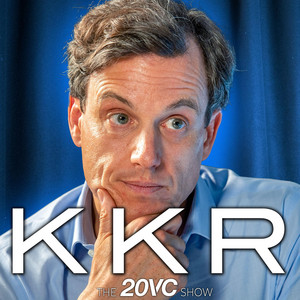
Today we have Philip Fries, co-head of European Private Equity, at the monster that is KKR.
At KKR, Philip manages the largest private fund in Europe, with 8 billion in the fund just for Europe.
At KKR, Philip's led investments in FGS Global, Superstruct, Assel Springer, BMG Rights Management, Get Your Guide, who we just had on the show, and many more.
Now, this was an incredible show that spanned everything from aging demographics to the rise of China in European auto industries, to the future of the private equity industry.
I cannot thank Philip enough for joining me, and I'd love to hear your thoughts.
You can let me know by emailing me, harry at 20vc.com.
But before we dive into the show, today I love seeing the team come together to make this show happen.
What I don't love is trying to keep track of all the information, the data and the projects that we're working on across dozens of platforms, products and tools.
That's why we use Coda, the all-in-one collaborative workspace that's helped 50000 teams all over the world get on the same page, offering the flexibility of docs with the structure of spreadsheets.
Coda facilitates deeper teamwork and quicker creativity, and their turnkey AI solution, the intelligence of Coda Brain, is a game changer.
Powered by Grammarly Coda, is entering a new phase of innovation and expansion, aiming to redefine productivity for the AI era.
Whether you're a startup looking to organize the chaos while staying nimble, or an enterprise organization looking for better alignment, Coda matches your working style.
Its seamless workspace connects to hundreds of your favorite tools, including Salesforce Jira, Asana and Figma, helping your teams transform their rituals and do more faster.
Head over to codaio.
Slash 20VC right now and get six months off the team plan for startups for free.
That's coda.io slash 20VC and get six months off the team plan for free, coda.io slash 20VC.
And while Coda keeps the engine running smoothly, Shopify puts the pedal to the metal when it's time to sell.
When I was 18, I dreamed about being an investor with zero contacts in the industry.
And through persistence, I'm now living that dream.
Maybe you're dreaming of your own business.
And that's where Shopify steps in.
I spend my time exploring successful businesses online.
Often, there's a business behind the business driving success.
For millions, that's Shopify, powering 10% of US commerce.
Shopify offers beautiful templates, AI tools for product images and descriptions, easy marketing campaigns and 24-7 support.
Their number one checkout boosts conversions by 50%, fewer abandoned carts, more sales.
Winner.
Turn dreams into success with Shopify. to Shopify.com slash 20VC for your $1 per month trial today.
That's Shopify.com slash 20VC.
And while Shopify helps you drive sales, don't forget what really keeps those customers coming back.
Trust is the ultimate currency in business and today, customers expect it faster than ever, and that's why over 10000 global companies trust Vanta.
Vanta automates up to 90 of the work for in-demand compliance standards like SOC 2, ISO 27001 and more, using smart AI to centralise workflows, manage risk and get you audit ready in weeks, not months.
So you can stop chasing paperwork and start closing deals.
And a new IDC report found that Vanta customers achieve $535,000 per year in benefits.
That's insane.
And the platform pays for itself in three months.
I had no idea about these.
Whether you're growing fast or just getting started, Vanta connects you with trusted auditors and experts.
Support to help you build trust with customers.
Get $1,000 off your first year at vanta.com forward slash 20VC.
That's vanta.com forward slash 20VC.
You have now arrived at your destination.
Philip, I'm so excited for this, dude.
Listen, I've wanted to make this one happen for a while.
I've heard many good things from Henry and from Johannes at Get Your Guide, so thank you for joining me.
Harry, it's great to be here.
Thank you for having me.
Now, when I was chatting to Johannes, he was like, you've got to start with the Venture Park days.
I was about probably four or five years old, not to age you.
That's a really unfair start.
But it was before the Samwas.
And so I had to start here.
What are your biggest takeaways from the Venture Park days in that really early Web 1.0?
Yeah, just for your listeners to put this in context, you're absolutely right, Harry.
This was 1999.
So this was rock and roll days, the wild west of venture investing in Europe, really.
And I had been a young kid at McKinsey in New York and had encountered Thomas Middlehoff, who was that very visionary CEO at that time at Bertelsmann, who loved Idea Lab.
If you remember, which is still, Bill Gross is still going strong today and really wanted somebody to back to bring that to Europe.
There hadn't been anything like this in Europe and there wasn't anything.
And so we went there in 99, 2000.
We raised a pretty big round.
Goldman was our lead investors.
There was a lot of people involved.
And if you ask me today, what's the lesson?
I think in bull markets you just got to keep perspective and humility and not take yourself for a genius.
So many of us back then, once we had raised, whatever it was, 100 million, thought that was the end of it.
I learned very quickly a few months later, when the dot-com bubble crashed and the new market in Germany crashed, that That the most important thing really was the investors I had on my board.
Because there were two camps.
One did this to have a quick turnaround, to have a quick IPO.
And the other ones wanted to do it literally for eternity.
The big corporates Telefonica, Bertelsmann.
They just wanted this to be their window into venture and innovation.
And I spent, as a young founder I think I was 26 at that time all my time intermediating between these two camps.
As a founder, the investors you choose are so important.
So of course it makes a huge difference.
You know, if you're the founder of Helsing and you choose Daniel Ek, because Daniel Ek understands what long-term business building means.
You know and you don't want those kind of fast buck, financial orientated early stage VCs that you know when the shit hits the fan, that drop you very quickly.
And I learned that lesson very quickly.
I think another really you'll learn one that I don't stick to schedule and two that I literally just use this as a way to get better as an investor myself.
But one thing that also I find really challenging is you have a failure or a mistake and you let a past failure impact a future decision.
So you invest in health care, lose money and you get all health care shit.
How do you think about retaining purity of mind despite success or failure impacting your mindset?
Rigorous analysis, and you want to reflect your rigorous analysis with as many great minds as you can.
There's nothing as helpful as a good failure.
Without that good failure, you cannot become a world-class founder and investor.
My biggest failure was I lost in Pakistan.
In the good times, I thought I knew more than most people did about emerging markets.
Alas, I did not.
And I got taught a hard lesson, learned many things.
What would you say is your most painful lesson and what did you learn?
I'm right with you.
We lost a whole bunch more in Turkey.
I think we lost around 500 million.
Back to a company called UN Roro which we thought was this incredible kind of logistics shipping player in Turkey.
Remember the days where everybody thought that's the next frontier, great demographic.
100%.
Incredible innovation.
Increasing middle class.
Increasing middle class.
You know, what we didn't see was rule of law was a bit of a flexible concept there.
So what we thought was a protected player.
Suddenly there was some other entrant that came in even though that wasn't really possible, and we lost our shirt.
So I'm with you in Pakistan.
I have a similar experience.
Does that mean then that you don't go into emerging markets in the future?
I just take a pretty blunt view that I'm like hey, it's hard enough to build a business, add in political risk, currency risk.
I don't need to take that risk.
At KKR, we made exactly the same decision.
We tried also Africa, Ethiopia, where we were the largest growers of tulips and roses.
That didn't work out for similar reasons.
And quite frankly, we have so much going on in Western Europe.
We stay close to what we can control.
You said that about taking the risk.
Another risk that you can take is market timing risk.
I'm probably expected to take market timing risk more than you, given being much earlier.
Are you willing to take market timing risk and suspend disbelief?
Or do you need to see now is the time for this?
Many people thought at KKR in Europe we were crazy when we leaned in and invested I think a third, if not 40, of our current fund during COVID.
So in 2020, we made some bold decisions because we didn't know what that virus would yield.
But I've learned a long time that you have to focus on what you can control.
So I give you an example.
We invested in Vela, the other haircut brand with L'Oreal.
And there were seriously people who questioned well, once this pandemic is over, will people still go and get their hair colored?
Having three daughters and three sisters, I absolutely was convinced there's not going to be a problem.
And so we invested.
And there's many more examples like this.
Yes, those types of uncomfortable decisions we took and I'll tell you why.
After the great financial crisis, we were pretty much like the rabbit in the headlight.
We didn't invest anything.
The only investment in 2009 we made was BMG, when I took the decision to invest, with Bertelsmann, into music at a time, quite frankly, when music was in freefall.
That was a great investment.
In the end it was a courageous but probably I could only do it at KKR because we didn't make any other investments.
There was no large investments.
But then the crocodile tears came later.
We thought that yes, there was a great financial crisis, but Those types of disruption are exactly when you should go in, and we didn't.
And during COVID there was no discussion with our founders and our leaders around.
Should we invest now?
There was the opposite discussion.
There was a very reflected top-down encouragement don't be afraid, talk to us about what you can control.
Let's deploy.
What do you think was the boldest bet you made in that period?
40% is a lot.
What do you think was the boldest?
What we do is we partner a lot with companies, right?
We don't just buy outright.
So the decision at that time, Coty was the holding company that owned Vela.
And we had seen, again, I give my oldest daughter the credit for this.
One of the Jenners had her cosmetics brand just sold to Coty, which was an unbelievable Instagram success.
And Coty got a little bit in trouble.
They were over leveraged.
We took a 10% stake in the company and then bought out the majority of Vela at the same time.
So it was kind of a combined transaction.
That leap of faith, to do that in the midst of the pandemic, because they had in their mix also a travel retail business, for instance, which you know for cosmetics et cetera.
You could ask okay, when are these airports going to open again?
That was a bold decision because in conjunction these two investments were very sizable in the fund.
You said there were about 40% of the funding COVID.
I was always taught, and again, I really am a student of investing.
I've loved it since I was 13, which is why I had no friends in school.
But temporal diversification is everything.
And actually, really discipline in terms of deployment cycles is crucial.
How do you feel about sticking true to temporal diversification and a three-year fixed cycle and venture?
I don't know what it is for you, versus actually just moving faster and putting 40% out?
It's an excellent question.
What I told you is just a variety on the theme of linear pacing, because we typically have five to seven year cycles.
On average it's probably more like four or five, but we very much believe in you got to have the discipline of linear deployment because it avoids that issue.
So even though COVID hit in 20, if you have a four year cycle, you have to deploy 25%, right?
Most people didn't deploy anything.
We took the decision to go 10 15 above.
But then we got lucky because in 21 we didn't invest almost anything.
And, as you know, my market went very exuberant when COVID gave way to that incredible wave of liquidity.
The answer to your question is it's incredibly important that discipline to deploy linearly over three years in your world and four or five years in ours.
And yours is a different world.
It's a world that I don't know as well.
So it's like a real learning curve for me.
So when we look at I heard your other shows and you said you spent a lot of time on portfolio construction.
And I was like, great.
That's a super place to start to understand where we're at.
How large is the fund then as a starting point?
For KKR is an $8 billion fund.
It's the largest standalone investment fund in Europe.
As you know, I'm a massive voice for Europe.
It's been not always easy.
It's tough sometimes to make the case that we should invest in Europe.
But it helps us to have that vehicle, because it actually very much helps you in that discipline to say, as a global investment firm, Europe is on the map.
We got to deploy relative to a global fund which can just make the decision to deploy in other geographies.
In terms of your question on portfolio construction.
It is so important because traditionally people didn't really think about themes.
They didn't think about growth versus cash flow, didn't think about the underlying industries, the geographies.
So we really focus on that.
Many people in my industry and I know you're going to reflect on that in our conversation sometimes lack is the discipline to say hey.
In a fund of 8 billion, typically you have around 15 investments.
So of these 15 investments, when do you start selling some of them?
When do you start insisting that they should be better?
And when do you just keep them for the long term because they're your winners?
Often, if you make that a work of love for the individual investors in the fund, you start losing perspective.
You have to top down as the leader of the fund, make those calls to say hey, you know my space company in Bremen which is OHP.
We just did that investment.
That's going to be a big winner given everything's going on.
And then there's five others which are great but honestly they do not compound in value consistently by more than 20 or so.
And at some point, if somebody calls you and says hey, we would like to buy that company, you just have to force yourself to sell it.
Do you believe then, that PE and your business very much aligns to the power law nature that my business does?
Or is it much more in the consistent 3 to 5x, get your money back always, and 3 to 5x everything?
I do believe that we overlap in quite a few things.
What is different is, our business model is not to have two massive winners and then have most of the others be failures.
You have to be pretty consistent.
Nonetheless, you need to have some real winners, because you always will have one or two which are not great.
So it's a common misunderstanding that my industry is sleepy, boring and just aiming for those doubles over five years.
If we do that, we don't do our job really.
If we think about 15 companies in the portfolio, as you mentioned there 8 billion fund, what's the average check then?
$400 to $600 million.
$400 to $600 million.
How does the structure work in terms of ownership?
Are we taking majority?
Are we buying?
In the last 10, 15 years, three quarters of all the investments we have made are partnerships.
So I didn't just buy something outright but I went into.
For instance, in Bremer OHB we are 30 shareholder, or Wild in Germany, which was the synthetic flavor business 35.
Reserves.
Do you have a similar?
Most venture firms say, especially early stage.
We have a one-to-one initial to reserves.
Do you have a reserves pause?
Always do, but it's more like 10, 15% of the fund.
So you would, of 8 billion, you would retain, let's say, a billion or so as a reserve, because we do not need as much capital for follow-on rounds because you know, in terms of the maturity of these companies, these are the Spotify's right.
These are very big companies that do not necessarily need any more rounds.
It's more for the follow-ons is typically for acquisitions.
So if they want to buy something, What about capital intensity?
How much does that factor into your decision making about getting involved?
You said that they probably won't need to raise more.
I've never met a company that doesn't need to raise more.
How do you think about the future cash burn of a business when investing?
Yeah, it's extremely important.
If you think about everything we discussed about the crisis, you have to sustain the discipline of capital allocation for the founders and the CEOs of these businesses.
Does the model work in an AI world?
And what I mean by that is when you look at, especially on the model side, these companies are just cash incineration machines.
Regardless, when you look at anything like Harvey and Legal, which has raised a huge amount of money very quickly, they just require so much cash and so much more.
Does the model still apply?
It's fantastically intellectually inspiring and interesting because we are the largest owner of fertility clinics in Europe.
We are expanding very quickly and very broadly in different geographies, in different areas.
I know Elon likes talking about this, right?
The demographic trends are not great.
People do not have children anymore.
We're extending lifespans.
But to answer your question, those are businesses that will not be replaced by the AI models.
These are real businesses that still very much need the cash to open more clinics.
So I know I sound like a younger version of Warren Buffett now, which is crazy, but he's right.
Things are looking different often every five years.
But if you separate the noise from the reality, the underlying principles of capital allocation has to be very thought through and rational.
It hasn't changed.
You will have some AI models where you need lots of capital.
It makes a lot of sense to invest in there.
And you have some others which don't.
So do you think the principles are the same?
You know, I've been, again, a student of venture for 15 years.
And I was always taught the zero to 10 million there was like gold standard in 18 months.
We have three companies that have gone from zero to 100 million there in a year.
Yeah, that's the AI magic.
It's incredible.
And so do the principles actually apply if the revenue and company scaling is like never, ever seen before in history?
So I'm making the bold prediction that you have just seen three of the incredible winners in the space, but they will be not the norm for whatever comes afterwards.
When you see those winners, you better invest and double down and triple down.
But this doesn't mean that software you know SaaS models, investment that is the bread and butter of many in our industry still will not be good investments anymore.
You just have different cycles there.
Do you ever sit around the table at KKR and think God, it'd be an easier job if we just stuck money into OpenAI Anthropic, Anduril and Helsing and we didn't have to be so operationally involved?
We could sell in secondary markets in two to three years for 3x and we could ride the wave very efficiently.
No, I have incredible respect for the Benchmarks and the Harrys, the Daniel X, who found those types of opportunities.
But you know, you asked me my lessons learned from Venture Park.
I tried Harry.
That's what I set out to do.
And I learned the hard way that some brilliant minds can do that and some others that are not so much in that space.
My experience is the truly outstanding investors in venture are ones with deep vertical experience and real knowledge.
I'm a generalist.
I've seen so many things in patterns.
I'm better in the later stage industry.
You look with great admiration at the Excel's benchmarks and indexes and Kleiner Perkins of the world.
But that's not our business.
When we look at 2021, we saw a lot of your D1s, your Co2s, a lot of the crossover firms move earlier and earlier.
I mean, we see kind of insights this day, just kind of the full spectrum.
To what extent do you feel pressure to move earlier and earlier to ensure more and more access?
Growth is a separate team.
I cannot understate the importance of this.
It's not like the same bunch of people does different things.
I don't think that the DNA of KKR and of other later stage firms.
It extends to what Insight does or what growth funds do.
It will never extend to venture because it's a different skill set.
It's a very different skill set.
I think Thrive is the one who's able to cross growth and early stage incredibly well.
But I totally agree with you.
You said there about a different team.
Yes.
In terms of decision making.
The quality of your decision is the quality of your product in our business.
How do you think about decision making today in KKR and what have been your big lessons on how to do it right?
There is not one brain which decides.
We truly are a partnership.
If you have two or three brains around the table thinking through a tough decision, you always get a better decision than if you just have one.
Does that not lead to consensus thinking?
You have to be willing to challenge each other and to be open about concerns you have.
Coming back to your AI point, a lot of this is pattern recognition.
Isn't that fascinating?
The best investor today in the world, full stop, is Warren Buffett, who is, what, 93 years old?
How do you replicate that brain?
So I do want to chat about the big L in our business, which is obviously liquidity.
Mm-hmm.
It's been an interesting few years.
I think there's like structural illiquidity, which is a real problem and a concern that I have.
And it seems to be kind of getting worse in some respects.
How are you thinking about exits and liquidity, particularly for the largest of the positions?
So Harry, I'm going to make an old fart type of comment.
Go on.
I've seen at least three, if not four, cycles where liquidity goes from unbelievable exuberance, like we've seen in 2021, to the drought that we see now, only for people to say at the peak, liquidity is limitless and the party is never ending.
So I don't actually need to sell anything.
I just write all my winners to give way to the hangover and the realization that that was a mirage.
There's no more liquidity.
And then at the bottom, people predict there will never be liquidity again.
And it's structural and the world is coming to an end.
I literally can walk you through the same sentiment in the great financial crisis, after the dot-com bust into certain elements, probably also during the euro crisis.
But we have 3 trillion in locked LP money into private companies.
I hear you.
And you're absolutely right.
The party that was celebrated in 21 22 in terms of the velocity of fundraising and investing, was absolutely artificial, inflated and not sustainable.
And the hangover had to be tough.
The hangover, I don't think it's structural.
It just has to clear the excesses.
I remember very well in 2001 how the venture industry had to digest the exuberance.
You had many funds which had to halve, right?
People gave money back on a grand scale.
We haven't seen that yet.
And the halving, if you will, of the universe of public companies is also structural.
And I'm going to make the point which has led to so many of our partners choosing to be rather with us than to be public.
I mean, the space company, OHB, was a public company.
GFK, the market research firm, was a public company.
Both of them owned by a family foundation and a family who both said the public markets are not helping us because they just can't cope with all that volatility and all that change.
So we'd rather have KKR take it private and be with them for the long term and they help us deal with all of that change.
That's a structural factor.
That's different from 2001.
And so that structural factor is that founders are aware that actually they'd be better off in private markets and they want to privatize.
That is a structural factor.
If you think about my industry, I give you one set for KKR.
Over the last 15 years, only 15% of our exits were actually IPOs.
85 of our exits were either strategic exits, so some large company came along.
So the structural crisis of the IPO market right now is not resulting in a structural crisis for our firm and for our industry.
It's slightly different for venture.
In terms of you said about kind of fund sizes halving and the impact you saw from 2001, I think that AI is kind of the oxycontin that actually venture needed.
It's like we were just coming to the dip.
Absolutely.
And then it's like, but wait a minute, it's the best time ever.
And if you're an LP, there's enough material there to be like, actually, they could be right.
And so I have to keep going.
Do you agree with that?
I agree.
And that is why we don't see fund sizes halving because, exactly of what you said, a lot of these opportunities are so capital intensive, because you suddenly have some interesting places to deploy.
Now it doesn't mean that the fundamental underpinning of what we all do.
It doesn't matter whether it's venture or private equity.
We are the answer to the demographic crisis that Elon Musk is putting his finger on.
We have an aging society everywhere.
People are retiring ever later, but they have to retire.
They have ever fewer babies.
So if we don't have a capital stock compounding and accumulating for the benefits of retirees, people cannot pay for their old age.
Therefore, what is happening right now is a pretty narrow investor base university endowments, insurance companies, sovereign wealth funds, pension funds that underpinned our industry and yours are being complemented by ever-growing elements that were completely excluding alternatives so far, which is the 401k pensions, the individual investors.
You think about it, we have, I think it's $192 trillion of investments savings that are completely excluding alternatives that are in a high net worth and individual investor base.
The innovation that was underpinning Norges Bank, the Norwegian rail fund, to allow them to participate in all of this long-term investing that we do and investing in these growth companies and creating huge values, is now extending itself to individual investors.
I think it's 1% of the 192 trillion are invested in alternatives.
If that only goes to 5%, you suddenly have $10 trillion.
You think about the magnitude relative to the entire institutional investing base.
To answer your question.
While that whole universe on the left is in dire need of liquidity, there's others who are dying to provide liquidity.
So there's a market, right?
So what's happening is secondaries as an asset class is going through the roof.
They are going and buying fund stakes, providing liquidity to some LPs who need it.
And also there's innovations in the industry which I hadn't seen in my lifetime before, where you have evergreen products.
Because you think about the treadmill system that we have in our industry, which is you have to go every three to five years and present your case again to the LPs.
Then you have a new fund.
Then you have another new fund that is being replaced.
I mean, I call it very much the Warren Buffett.
I remember still at that time again, I was a young Turk at KKR and our brilliant mind Scott Nuttall, who's now my co-CEO.
He came up with this idea to go public for KKR by merging, with a public LP vehicle actually, which hadn't worked because the public markets were assuming that we would lose 80 of every one of our investments.
So he said to the public if you value more stability, why don't you become a 30 order of KKR's general partnerships, of our partner economics in exchange for that pool?
And that's how we ourselves became owners of a 5 billion pool that had been valued at one and that became 10 and that's now 30.
So we are actually the largest investor in our own things.
To cut a long story short, what he saw at that time was that Warren Buffett had innovated in an incredible way, where he got Geico and other insurance companies, who provide the liquidity for all the investments he made, right.
Because he owns these insurance companies.
So all the people who write, who have insurance policy, they pay up front, the cash comes in.
And normally it sits in interest-bearing accounts earning nothing.
And now he uses that source to buy whatever companies he buys, American Express.
That is now the innovation that we see in our industry on top of this retail money.
So basically, we Apollo and others have now taken under our wings insurance companies that provide all this liquidity.
So you see the innovation goes beyond what some people talk about, continuation vehicles, et cetera.
It extends to completely new areas of the market.
Will KKR's Europe fund be $20 billion in 10 years?
I think that the answer is not the fund.
If you ask me, will KKR Europe's asset under management double and triple over the next 10 years?
The answer is yes, because the universe for what we do is radically expanding.
When I did the BMG deal, that was a one and a half billion deal for a 50 stake in that music company.
You fast forward 10 years and we had a 10 billion deal to buy half of Axel Springer, which again was a 50-50 deal with the family.
You can very easily see how that could scale further.
The capital itself will be doubled and tripled.
The source of it won't be necessarily a fund.
It could be those retail funds that I mentioned, or it could be some part of the insurance capital.
So the funnel becomes much bigger.
We are responsible for a much broader scope of capital to invest, and the demand for what we do in Europe is also growing much faster.
There's more segments of the market want private equity investment.
To what extent you can share, what percent of your LPs are European?
I'm very happy to say, I think I probably have 10% that are European, 90% of mine.
I'm going to disclose one thing to you.
The large majority is America.
You have some pockets in Europe like Holland and Norway that are very strong.
The Middle East is incredibly innovative and takes a large chunk.
Do you find it ironic though, that when we make a huge amount of money from European companies, that we just ship it back to a load of people in the US?
First of all, I'm grateful for any capital that comes into Europe, regardless of the destination, because we need more capital in Europe.
Mario Draghi is right.
We need to invest 750 800 billion a year alone to catch up with on innovation AI, but also to complete in other industries defense, high tech, etc.
Nonetheless, for the future, you're absolutely 100, spot on.
We got to wake up in Europe.
As for instance, Germany has now decided to invest 25% of its GDP and make sure when we make these investments, we build equity value.
It's being done here in the UK with the mansion house complex.
We need to professionalize together our pension systems and allow more investments and alternatives to build capital accumulation.
And that means in 10 20, 30 years.
Hopefully we retain a larger percentage of the value creation we make with alternatives investment.
Are you fundamentally investing in a different type of company today?
And what I mean by that is, you know, in past generations there might have been a Fotolia, there might have been a Get Your Guide kind of similar to me in that respect.
And now you know we have the most terrible challenges with energy, with defense, with infrastructure.
You mentioned obviously your space company.
I mean, we are woefully under-equipped when it comes to space.
Are you investing in a fundamentally different class of company, given this need for capital in all of these very hard but new industries?
Mario Draghi is right.
We are behind in defense, for instance.
But look, in scarcity and hours of need, innovation kicks in.
And look at what happened.
Because of the hour of need and that innovation that we in Europe have seen the US has done by saying 10 of the spend of the Department of Defense needs to go actually in the innovative ecosystem.
And space, the same, right?
SpaceX was just the result of opening it up to the private sphere.
That is coming here now.
We have had a terrible tragedy in Ukraine for years now.
And they're still standing.
And it's because of the innovative companies like Helsing that have supported them.
So short answer to your question is, yes, innovation is the answer to these problems.
I wouldn't be so negative.
They are coming now much faster than some people realize.
Do you feel we're taking more risks than ever, given the volatility that now exists in the world on a daily basis?
We were talking before about some tweets and events that happen that just kind of change everything with a tweet.
My point being the world seemed relatively stagnant or plateaued at certain points.
And now it seems like it is more volatile than ever.
Do you think we're taking more risks than ever?
Well, you started this conversation with AI.
You're right.
I mean AI is a fundamental transformation of all the assumptions that we had made around productivity, around the innovation cycles you need in certain industries like healthcare defense, etc.
So that alone was already massive.
And then, at the same time, you have this incredible pivot from the post-war consensus of how everything works right.
After the Second World War there was an institutional ecosystem built with the IMF and the World Bank and the United Nations and there was a clear understanding of how everything works.
People had forgotten about the 1900 to 1930 period, when it was much more bilateral and it was much more nation states and it was much more everyone for itself.
People also thirdly had taken for granted the unique role of the US dollar as a reserve currency.
Also that is being questioned now.
Ray Dalio fourthly points out that when you have large amounts of debts accumulated, we are just one step away from a major crisis, because debt bubbles at some point get resolved by internal strife, war or massive transformations in the monetary system.
So we have four disruptions at the same time technology geopolitics, monetary sphere and, at the same time, huge demographic crisis we talked about right.
There's a feeling of unparalleled inequality between certain segments of the population and others, in certain regions of the world and others.
We are investing against an unbelievable backdrop of risk and volatility and uncertainty.
But especially in times like this, I remind myself of what Warren Buffett says you got to focus on what you can control.
I have a spectacular founder like Murat at Hamilton.
I have a large market that will be transformed by technology.
And if I see that there's unparalleled openness to actually institute change for the better, which I think is the case in Europe right now, then I invest.
I just have to be able institutionally to be patient and to hold for longer.
Because you're not able to predict what's going to happen in three years.
It's impossible.
So if something goes wrong, you just have to be able to hold longer.
Do you believe the US dollar will be the reserve currency of the world in 10 years?
Yes.
I think that it's impossible to replace reserve currencies that quickly.
Will the US dollar be the reserve currency in 50 years?
I couldn't tell you.
I do think in 10 years time the percentage of reserves the US represents will probably have reduced slightly.
The problem that the monetary system has is, if you want to replace one thing, you need to decide what you replace it with.
Right now, the only credible alternative is the Euro.
And we in Europe, we need to get our act together.
It's a fantastic opportunity for us to take larger share.
You don't think it's Bitcoin?
I think Bitcoin is a very interesting innovation and will take larger share, but it's too early now for us to call that that will be the reserve currency of the world.
And you know, Harry, why?
Nobody talks about quantum computers anymore.
Think about what that means, right?
If we have quantum in terms of all the impact of that and...
People will just not replace 80% US dollars with Bitcoin overnight.
I think Bitcoin will take a larger share, as will the euro, but it's going to be more of a mix.
We mentioned the kind of four disruptions.
The hard thing with disruptions is they change the world in such unprecedented ways that they make a lot of prior assumptions really invalid.
We mentioned kind of thematic thinking earlier.
I don't like thematic thinking, because I think the world is so unpredictable that COVID can happen and industries are changed overnight in ways that we can't comprehend.
To what extent do you think thematic thinking and a prepared mind is actually valid in a world that changes so much, so quickly?
Can I put a Buffettist spin on the idea of thematic thinking?
A hundred percent.
I think it's very relevant.
If you think about Buffett, he will tell you whatever noise there is in the world.
I'm going to look at a few essential elements.
I'm going to look at the founder.
I'm going to look at the business itself.
Is it in a large market?
Has it an unassailable position in that market?
Is it innovative enough to have product cycle innovation?
And is it having a good return on capital?
And then I'm putting incentives in for these people to just keep running fast at it.
I love his thinking.
That is a very different thing as saying I invest in energy and I invest in certain industry verticals.
He has a human spin on thematics.
That said, I do think thematic investing is valid.
If you now think, in Europe, Draghi is right and there are certain elements where we just have to invest, and that, for instance, is space and defense.
If that is part of your investing theme, then it makes sense, because you can't just overnight say hey, I was a healthcare investor, now I'm a space investor.
You need to build.
Going back to our original conversation about what makes a good venture investor need to have a deep thematic investment.
But do you?
Sorry, I don't mean to be difficult, but I've met so many space, not space, defence companies.
Every defence company is trying to be the next, obviously, Helsing in Europe.
I've met so many defence companies.
I don't know how much time, to be fair, but none of the founders that I've met touched Torsten.
Even if I knew nothing about defence, which I don't, to be very clear, nothing.
I love nothing more than having such a massive consensus with Hugh Torsen as a rock star.
Yeah.
No debate.
And so if I get Matt Ullman, even though I know nothing, I know he's the best.
He is the best, for sure.
That's the good news about markets and innovation cycles.
Henry Crevice was the best by far in his industry.
He set up a whole industry.
People are fast to copy.
People are fast to innovate.
They're fast to follow.
Torsten is the best, but in five years' time we'll look back and say of course, Torsten couldn't have done it all by himself.
There will be more at Hamilton.
There will be others.
To what you're saying, I always say, if you want to invest in the next Helsing, don't.
Just invest in Helsing.
I spent my life with investors who are like oh, I'm trying to find the next OpenAI, the next Android.
Don't.
Just put your money in the winner.
Well, you always want to back your winners.
I completely agree with that.
And like winners compound.
Winners totally compound.
But it doesn't mean that you can put your entire fund into one winner, right?
This is what we discussed before.
How much money would you put into a company, a concentration of funds?
So we are absolutely rock solid, you know, disciplined on this.
You don't do more than 10% of one fund.
You know, I think in terms of underwriting, the absolute maximum is 15%, but it's in that range.
I love Brian Singerman at Founders Fund.
He says the enemy of great venture returns is capital concentration limits.
And that's why we did 33% into Airbnb.
And I just always remember thinking, my God, that's conviction.
33% into one single company.
Yeah, that's absolutely in my industry, not the right approach.
Can I ask, we were talking about Europe.
Europe has an incredibly fragmented public market.
Yes.
How much of a problem is the complete lack of functional public markets for Europe today?
That's a beautiful question.
We come back to Mario Draghi.
The second thing he said after you got to invest 750 billion a year to catch up is we need a capital market union.
We need to come together and do away with artificial limits between 27 nation states and the UK when it comes to concepts like securitization or going public laws.
Yes, of course, we need a European SEC.
Yes, of course, we need a bit more of one pan-European place where people can go public.
It's extremely important.
I completely agree with you.
I think a unified European liquidity mechanism would be great.
To what extent do you worry also about an EU AI Act?
Bluntly, it's incredibly prohibitive.
Well, we are experimenting today and, blunt speaking, which I'm happy to experiment in, we absolutely over-regulated that space.
We need to unleash the power of that technology, technological innovation, and not stifle it by too much innovation, for sure.
Germany has a challenge in the auto industry.
Do you worry as much as I do about the rise of BYD, Xiaomi and China in bluntly destroying much of the European car market?
So I'm going to answer that question indirectly by saying what I'm observing because we own fantastic investments in related industries is the dearth of good engineers.
And what we see is, when the automotive industry is shrinking because of some of the factors you mentioned, those people immediately find jobs in other industries which are growing, whether that is sensors, whether that is defense.
Of course we need to have a fair playing field right between different economic regions in the world.
I always worry when certain industries do not find fair conditions to compete.
Should we tariff the shit out of Chinese cars then?
If they're subsidized by the Chinese government in terms of their creation and they're able to flood our markets.
If we're playing fair, do you not just tariff them?
I just think generally I'm a free marketeer.
I think tariffs are not the answer.
I know that's a controversial statement in today's world.
You know, we need to work on the underlying issues in our Western democracies.
For instance, we have too high deficits.
Those deficits lead to exceedingly high indebtedness.
We are therefore not crisis prone.
To try to raise money through tariffs is not the right approach.
What do you think is the best way to deal with the current situation we have in terms of deficits?
If you think about 20, 25, 30% of all of our budgets going to two sources.
One, to just serve as the interest of the existing debt stock.
It's huge.
I mean, in many countries, these are higher expenditures than our healthcare or defense budgets.
Then it becomes very clear that the only way to restrain that is on the expenditure side, where on the, for instance, on the pension systems and the benefit systems, we do not benefit from the capital accumulation and the wealth creation.
It is mind boggling.
You know, if you and I were Norwegian, we wouldn't worry a bit about this, because the Norwegian's sovereign wealth fund, through everything they have done, has created such a capital stock that every single person doesn't need to worry about their pension.
I had Nikolai on the show and he said every single Norwegian is a millionaire.
He is a genius.
And he's doing a great job, by the way running.
I asked him if he'd invest in my fund and he said of course.
Our minimum check is 10 billion.
But you know, imagine if we had the, you know, the German, the British, the French, Norges Bank right.
What that would have meant.
And that's the conversation I had with Angela Merkel 10 years ago.
It was absolutely possible.
We slept through it.
It doesn't mean because we missed it, we couldn't do it in the future.
We must do it.
I think one interesting one for me is again I'm a student of economics and history as well and it's like you know, if you look at Japan in the 1980s, their deficit was huge.
Yes.
And the question is like everyone's like well, we've got to worry about the deficit and we've got to control it.
Why can't we just let it go higher?
I know it sounds terrible, but they kind of kicked the can down the road in the 80s.
To what extent can we not just do it now?
You and I are going to have a hobby economist conversation because it's a fascinating conversation.
You know, the chickens will always come home to roost.
That's what I've learned in economic theory, because here's what we miss sometimes.
A lot of this is very much virtual.
What's the biggest coin of the realm?
What's the biggest currency of our business and of our economy?
Trust.
Those numbers don't mean anything, but if people convince themselves that spending 20 25 of an ongoing budget in any country on interest for your debt is too high and you can't pay for innovation, for healthcare, for defense, et cetera, at some point there will be calls for one of two things.
Either increased taxation, which typically means that a lot of your value creators leave your country, or radical cuts in spending.
We have seen, both in Japan and the United States of America, that it's extremely hard for a political system that is elected every four years to actually have the discipline of reducing these expenditures.
I mean, Japan still has a structural deficit the way they have.
So if you can't really raise taxation and if you can't really reduce expenditure, the only other way to do it to get rid of your interest income, if your interest load is to inflate away your debt, right.
So you do financial repression, which means you force your interest rates to be below the rate of inflation, which means, in real terms, everybody who has assets loses.
And that is a very inflammatory way of dealing with it.
We know what that meant in the 30s, right?
And quite frankly, we're having a philosophical debate now.
Our generation, so the people that are not retired yet, will ask the questions.
The statistics I give you Italy as an example, are that in a few years' time, every fourth person is a person in pension age, so over the age of 65.
How can you sustain any balance between toiling every day and feeling that in your own retirement you actually will have anything to live from?
And then at some point, societies get an imbalance, right?
I mean, look at our political systems all over the Western world and the election results, right?
Populism rises.
This goes much beyond now what we do as a job, but there's a direct correlation between all of this.
So I come back to what you and I do every day.
There's much of a purpose in it.
It's not about just making returns, or it's actually making pension affordable for millions and millions of people.
And we need to have a political system where what we do benefits as broad a population as possible.
Do you think AI will have the productivity gains that people suggest it might do?
It's too early to tell.
Well, I think it will.
However, productivity gains, which will be extremely beneficiary to the world, don't mean that the challenges I just mentioned will be solved, because there will be this disruption phase where many, many people who are- Won't they be worsened?
Because you'll have more and more people who are removed from the labor force actually, and so even people of working age will not be working.
It only works if Norges Bank let's assume Norges Bank, which is the Norwegian sovereign wealth fund, would suddenly be the British bank.
And everybody of us has a stake in those companies.
So if we had a fund that is actually catering to the pensions of everyone which owns 20 of OpenAI, you would be celebrating that development right.
Because we find a new balance between work and leisure.
And there will be different jobs, but you people don't have to, you know, trepidate the outcome of this.
The problem is right now there's no such mechanism because we don't participate in the value creation.
You don't think we're going to have massive structural unemployment because of AI in the next 10 years?
So the point I'm making, if we in Norway had structural massive unemployment... We'd be fine.
We'd be fine because Norges Bank has led to that structural unemployment, because they're the largest investor in the AI company and therefore they could redistribute the spoils of it.
I do think there will be a transition now where white collar jobs will be impacted.
And we need to answer the question on a societal level.
How do we cope with that in terms of the earnings and the results from the investing, to make sure they are broadly based for everyone impacted by this?
You said about owning 20% of OpenAI.
The challenge with the extension of private markets is the wealth creation is shared between a very few number of people, compared to public markets, where it's obviously available to many more.
You're an August bank in countries of the world.
To what extent are you worried that we're seeing the concentration of wealth to few people with the extension of private markets?
It's a brilliant question and it's the most important question.
And that's exactly why our industry, the investing industry, needs to open for the many.
That's why what I said earlier, the fact that we were only allowing 1 of all the private individuals to participate in our industry, in the alternative investing industry That is not sustainable.
If your dad and my dad and others have the ability to save for their own retirement and they can select 5 10 of their capital pot that we have now said everybody can have for their future retirement.
And they allocate it to us, and we invest it in OpenAI.
It becomes suddenly available to the many, right, rather than the few.
So that's the answer.
The answer is broad-based participation in the alternatives industry.
And that is why this is so important.
Do you think we will see that broad post participation?
How does that actually look?
That looks like retail backed funds.
So I think what we, I think, yes, we will see it.
I think if I mean I remember I was in McKinsey some time ago but I still have a 401k plan from that.
I mean, I wasn't there that long, but I still have whatever the number is.
You don't check it?
I do.
And I allocate it every year.
I'm just a long-term investor, so there's no point in checking it every quarter.
But if I check it every five years and I reallocate it to the same allocation, by the way, I allocate, I think, 30 to my industry and the rest is SP 500 and a bit of bonds.
But if you do that, imagine everybody was able to do that.
I sleep well at night and I look again in 10 years and I see the compounding that has resulted.
There's no reason why what America allows or Norway allows shouldn't be available for all of us in Europe.
It's just a regulatory question.
And the question of courage for the political systems to say I go from a pay as you go pension system to one that has a private capital accumulated.
You know, Totally agree with you there.
I do also think it massively increased education standards actually on the company level.
I got one brilliant advice, which is that if you want your children to give a shit about companies, buy them one single stock.
Because the minute you have any form of ownership, your interest level will go through the roof.
Absolutely.
That's a personal one.
On money, how do you think about your relationship to money?
Mine's a weird one.
I used to think it was everything.
And then I got it and I realized it's relatively nothing.
I mean it's nice to have as a foundational layer, but it wasn't the jar of happiness that I thought it would be.
Can I disclose a secret to you?
Yeah.
Gotta go and see the new Brad Pitt movie, F1 the movie, which I think is spectacular.
If I had had a say in how we call it because one of our production companies produced it it wouldn't be called f1, the movie it would be called.
It is not about the money and you'll see when you see the movie why.
That's the message that i would give to people when they ask me what my relationship with money.
Was it never about the money or was it like me?
Wait, you think it is, but then it's not I just stumbled into.
So when I made the decision to leave a high-paying job at McKinsey, people thought I'm absolutely crazy because I gave up the safety net for no certainty at all.
And you know how it is to be a founder.
You are one day...
You think on paper a gazillionaire and the other day you are broke.
It's the most incredible experience that because you learn very quickly from that that it's not the money that matters.
It's the learning.
When I went to KKI, it was a startup.
Let's make no mistake, right?
It was when I joined whatever 39 people and I had no idea what it means to build a career track record in investing in funds.
You know it is the important, Jacek.
My job is to create results for all these pensioners and for what we do.
But it's only an output, okay?
It's not the main reason we do that.
For me, at least, it's not.
I mean, I enjoy every day speaking with people in completely different ways of life.
You may know that I'm a crazy music fan.
And You love the opera, huh?
I'm crazy about trying to innovate the Bayreuth Festival, which is the Richard Wagner Festival in Germany.
I'm also a trustee of the Royal Opera House.
I do love the opera, yes, but I love all kinds of music.
But I love it because I learned so much from these artists, right?
When you see the shining eyes of the opera singer or the ballet dancer.
I mean it was so incredible to experience during COVID when they couldn't perform what it meant to them once the curtain could rise again.
So in many ways, whether you are a Formula One driver or you are an artist, or you're an investor, if you don't love what you do, then you ain't be good at it.
And if you're really good at what you do and you love it, there will be money that follows.
Listen, I could speak to you all day.
Can we do a quick fire round?
So I say a short statement.
Okay, so let's roll with which investor do you most admire and why then?
Warren Buffett.
Incredible ability to just separate the noise from what really matters.
What's the most painful investing lesson and what did you learn?
Venture Park.
I set it up, it failed and I learned to keep going, to remain humble and to really, really really think about your investors.
What do you know now that you wish you'd known when you started at KKR?
That is a marathon and not a sprint.
I think as an investor, you just have to go for the long term.
What does that mean?
It means when you're in the eye of the storm, like COVID or like now, do not make the mistake to think that it's structural.
Got to stay through it.
You got to look for the long term and when you look back now it's also obvious.
But it's never obvious.
You just got to endurance is what matters in our industry.
You never give up.
I so agree on endurance what matters.
I always say.
When you're in the eye of the storm, like now, i'm seeing so many people sacrifice trust yes, for short-term financial gain.
Never do it so dangerous yes.
Totally agree with you there.
Um, biggest lesson from working with henry kravis Arrogant skills is what he taught me.
I will never forget when I was the new kid on the block in KKR and I entered for the first time in the office and I didn't know what to do, quite frankly.
I was just shy.
He and his cousin came over and just said hi, you know, we are Henry and George and this is the firm we built, and tell us about you.
I was so mortified, but so inspired by it.
If KKR were a band, what genre would it be and who's the front man?
Listen, I love the opera.
I love classical music.
I love many things, but it's an orchestra, quite frankly, where the tuba player, the violinist, the bassist, all of them are world class.
But my job is to be the conductor and try to motivate everybody and bring them together as a team.
What's one European startup you wish KKL had invested in?
Spotify.
I was the first institutional investor through the door.
I just didn't have the fund to invest.
I know, but this is, again, every failure you have in life is an opportunity.
I learned from it.
Because of that, we did Get Your Guide, which is a fantastic success now.
Is there one that you've said no to, like you did have the chance?
Oh my God, I have to hide now under the table.
We literally at KKR, had the chance to invest in Alibaba a long time ago and that came on my desk and I said no big mistake.
That wasn't your desk, that was someone else's desk.
It was literally at that time kind of early angel, kind of family, KKR stuff and I was the maverick in terms of having done venture investing.
What do you make of all venture firms coming into your field?
Now you have Andreessen's, your Lightspeed's, your General Catalyst's, just eating the financial stack.
Do you worry they're coming into your field?
I think the industry is big.
Everybody has his place.
I have done venture myself to know that it's an entirely different skill set.
So I'm not worried about it.
Final one.
KKR 10 years from now and you in it, where do you want to be?
We said about kind of AUM.
Where do you want it to be in 10 years?
Very important question.
We have...
670 billion under management now.
This number will go up massively.
But what I want to see?
I think historically the kind of individual retail type broad-based investor base is roughly 20, maybe 30.
I want to see that to go to 50% just to have that spread of what we discussed before.
Listen, Philipp, thank you so much for joining me.
As I said, I've been looking forward to this one.
So many good things from you, Hannes.
So thank you so much, very welcome.
It's great to be here.
That was such a fun show to do.
I want to say a huge thank you to philip for giving up the time and joining me in the studio.
If you want to watch the full episode, you can find it on youtube by searching for 20 vc.
That's 20 vc, but before we leave you today, i love seeing the team come together to make this show happen.
What i don't love is trying to keep track of all the information, the data and the projects that we're working on across dozens of platforms, products and tools.
That's why we use Coda, the all-in-one collaborative workspace that's helped 50000 teams all over the world get on the same page.
Offering the flexibility of docs with the structure of spreadsheets, Coda facilitates deeper teamwork and quicker creativity.
And their turnkey AI solution, the intelligence of Coda Brain, is a game changer.
Powered by Grammarly Coda, is entering a new phase of innovation and expansion, aiming to redefine productivity for the AI era.
Whether you're a startup looking to organize the chaos while staying nimble, or an enterprise organization looking for better alignment, Coda matches your working style.
Its seamless workspace connects to hundreds of your favorite tools, including Salesforce Jira, Asana and Figma, helping your teams transform their rituals and do more faster.
Head over to Codaio.
Slash 20VC right now and get six months off the team plan for startups for free.
That's Coda, C-O-D-A dot I-O slash 20VC and get six months off the team plan for free.
Coda.io slash 20VC.
And while Coda keeps the engine running smoothly, Shopify puts the pedal to the metal when it's time to sell.
When I was 18, I dreamed about being an investor with zero contacts in the industry.
And through persistence, I'm now living that dream.
Maybe you're dreaming of your own business.
And that's where Shopify steps in.
I spend my time exploring successful businesses online.
Often, there's a business behind the business driving success.
For millions, that's Shopify, powering 10% of US commerce.
Shopify offers beautiful templates, AI tools for product images and descriptions, easy marketing campaigns and 24-7 support.
Their number one checkout boosts conversions by 50%, fewer abandoned carts, more sales.
Winner.
Turn dreams into success with Shopify.
Go to shopify.com slash 20VC for your $1 per month trial today.
That's shopify.com slash 20VC.
And while Shopify helps you drive sales, don't forget what really keeps those customers coming back.
Trust is the ultimate currency in business and today, customers expect it faster than ever, and that's why over 10000 global companies trust Vanta.
Vanta automates up to 90 of the work for in-demand compliance standards like SOC 2, ISO 27001 and more, using smart AI to centralize workflows, manage risk and get you audit ready in weeks, not months.
So you can stop chasing paperwork and start closing deals.
And a new IDC report found that Vanta customers achieve $535,000 per year in benefits.
That's insane.
And the platform pays for itself in three months.
I had no idea about these.
Whether you're growing fast or just getting started, Vanta connects you with trusted auditors and experts.
As always, I so appreciate all your support and stay tuned for an incredible episode with Rory O'Driscoll and Jason Lemkin on Thursday.