The industry today is run basically by principals, associates, and junior GPs.
A principal is not actually waiting for an exit.
They just want a promotion, man.
We are in the industrialization of startups playbook land where everybody's trying to churn out some piece of ridiculous arbitrage every week in order to get through the end of their incubator and raise their seed round.
There is absolutely a belief that too much capital can mess up a company.
This is 20 VC with me, Harry Stebbings.
Now, our guest today has been a friend of mine for about eight or nine years, if you can believe it.
He's very modest, and so he doesn't really want the intro to be about him.
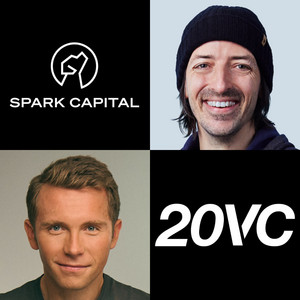
So I'm going to leave it with Nabil Hyatt is a general partner at Spark Capital.
Spark is one of the leading firms of the last decade, with portfolio companies including Twitter, Anthropic Coinbase, Affirm Discord Deal and more.
And I do just want to say again on Nabil.
Nabil helped me, advised me, was a friend When the show was very small and no one cared.
That to me is the sign of true kindness and so I really appreciate the friendship, Nabil.
But before we dive in today, let me tell you about Riverside.
Did you know that every virtual 20VC interview you listen to yes, including with incredible guests like Marc Benioff and Sam Altman is actually recorded using Riversidefm?
It's the one tool I genuinely cannot live without.
Riverside delivers incredible audio and video quality, and it's just ridiculously easy to use.
And the best part, my guests love how simple it is.
They don't need an account or software, just a simple click and they're in.
When you're hosting someone like Mark or Sam, it kind of really matters that it's also really reliable, which it is.
And Riverside doesn't just stop at recording.
Their AI editor is a personal favorite.
They make it so easy to create shareable clips, turning an epic interview into bite-sized moments that go viral on social media.
If you're thinking about starting a podcast or upgrading your current setup, trust me, this is the way to go.
Check it out at riverside.fm forward slash 20VC and see why I can't live without it.
Now let's tackle those messy expense reports.
You know those receipts that seem to multiply like rabbits in your wallet, the endless email chains asking can you approve this?
And don't even get me started on the month-end panic when you realize you have to reconcile it all.
Well, PLEO offers smart company cards physical, virtual and vendor-specific so teams can buy what they need while finance stays in control.
Automate your expense reports, process invoices seamlessly and manage reimbursements effortlessly all in one platforms.
With integrations to tools like Xero, QuickBooks and NetSuite, Plio fits right into your workflow, saving time and giving you full visibility over every entity, payment and subscription.
Join over 37,000 companies already using Plio to streamline their finances.
Try Plio today.
It's like magic, but with fewer rabbits.
Find out more at plio.io forward slash 20VC.
And don't forget to secure trust with your customers.
Trust isn't just earned though, it's demanded.
That's why over 9000 companies, including Atlassian, Quora and Factory, rely on Vanta to automate their security compliance.
So Vanta helps businesses achieve certifications like SOC 2 and ISO 27001, turning months of tedious work into this beautifully fast and straightforward process.
Their platform automates compliance across over 35 frameworks.
It centralizes workflows and it proactively manages risk, all while saving you time with automation and AI.
So, whether you're just starting or scaling your security program, Vanta connects you with auditors and experts to get audit ready quickly and build trust with your customers.
Get $1,000 off your first year by visiting vanta.com forward slash 20VC.
That's V-A-N-T-A dot com forward slash 20VC.
You have now arrived at your destination.
Nabil, it is so good to have you here, dude.
I'm also excited because you said before, we have quite different views and that always makes for a great show.
So thank you for letting me turn a coffee meeting into an interview.
It's showbiz, man.
You're doing your job.
I get it.
Dude, it is great to have you here.
Now, I want to just dive right in.
You said to me your single biggest concern right now or sorry, something that you're thinking about is how we need to change our investing mindset in a new world of AI.
I'm really concerned that actually the way that we've always invested maybe more spreadsheet, SaaS investing It's going to make us dinosaurs if we don't move with the times.
How do you think about this and the mindset shift that needs to happen in investing?
Well, I think it's happening already, whether we like it or not.
I think we can't really preach that a founder is supposed to adapt to a market and understand that the market is there.
There's a thing called founder market fit.
And there's also, frankly, a thing called VC market fit.
And this market for AI is wildly different.
I don't think anyone would argue it's not wildly different.
And then the question is, in what way is it different?
We had a B2B SaaS amazing, wonderful bull run in 2021 and a little bit afterwards.
And I think we got really good at like Greg Treverton uses this phrase of puzzles versus mysteries, which is just like puzzles are this thing that you can, like you know, use that raw horsepower to solve.
And mysteries are, you know, there you have to go on the journey.
There's like fog of war and you cannot work it out ahead of time.
In many ways like the B2B SaaS blow up of that era was all about the industrialization of venture capital.
It was all about figuring out all of the puzzles needed to hire 100 associates to do all of the work, to figure out exactly the right SaaS metrics and then grind it all out.
And no one has any idea what a model is even going to do in a week.
So I don't know how that isn't a mystery.
And so I think you have to build a firm with that set of talent.
Can we invest in mysteries alone?
Puzzles, they're kind of doable, but challenging.
The mysteries.
This is what I find so challenging, which is like the world was turned upside down by deep seek.
Yeah.
And then something will happen again in three months.
You know that.
I do.
Yeah.
And so how do we think about adjusting to investing in a world of mysteries when we've been so used to puzzles?
How long have you been doing this?
The show?
10 years.
Yeah.
So I've been a VC for a little bit over 10 years.
So we're in the same generation in the sense of trying to think about unpacking this puzzle.
I was a founder beforehand.
I would say the early stages of venture capital, the real early stages of venture capital, if we're thinking about the beginning of Sequoia and so on.
That was all mysteries, man.
That wasn't puzzles.
And so I think the truth is it may sound incredibly old school, but it's going back to the way things were really done before.
It is an artisanal business.
Serial founder tick, pedigree founder tick, in a good big market tick, knowable go to market, knowable customer base.
This is completely different.
Yeah, it is.
I am not saying that if you built an awesome strategy to dominate the world and therefore you're probably regarded as like a tier one brand or whatever you were four years ago, you're probably dead without completely changing.
And that was exactly the right strategy for that era.
You go tick down the box.
We were kind of like in late stage capitalism for startups.
Everything was red ocean.
And so it was all about optimization and speed and like minor arbitrages.
We are now in a world where like you need rampant creativity inside of an org.
You need like all of it is in the nuances.
And so you need to build a firm that can kind of like grok to that.
Do you think many venture firms are adapting in the way that they need to?
No.
No, you know this cycle because the cycle in VC evolution is like horribly, horribly slow, because it also loops back to LPs.
They don't get to act on their own, right?
They don't get to just like make a decision tomorrow.
They have to go back and raise another fund against a new mandate, which probably requires, like I don't know, maybe you turn over half the team.
Three quarters of the team may actually lead to bad messaging to LPs.
Because if you are managing a firm that needs to be very drastically reshaped for this new age, LPs find instability very disconcerting.
That is a red mark in your box.
That's right.
And it may take three years to show that transition worked, by which point they will have churned because they will have gone, Nabil.
You changed your team entirely.
You moved this, this, and this.
Next fund, no.
LPs want stability at a time when there's rapid change, so it's the wrong market fit.
You have to ask, who's the person making that decision at that firm?
So if they were sitting on all the wonderful, amazing B2B SaaS markups from four years ago and so now they're the head honcho at that place, do you think they're really making this call?
So what should we be doing?
I learn from amazing guests like you on the show.
I am building a firm.
When we think about reshaping our firms to a new world of venture and startups.
What needs to be done?
I think you need to think like a founder.
I think you need to be okay with a small team that makes subjective bets and think about the craft of what a founder needs today, which is that honestly, what a founder needed four years ago was a lot of playbooks.
You needed every single arbitrage-y simple way to make everything move a little bit faster.
The conversations I have founders calling me about now, after a board meeting, before a board meeting, they are all unknowables.
They are all trying to like figure out what is the new user experience that I should use when models go multimodal.
And like there are explorations, not necessarily I have the answer, for they're not coming to me for answers.
It's a sounding board, right?
And they need a sounding board of board members that are actually using their products and actually have a curiosity to use the rest of AI products and get more native, instead of just, you know, watching Twitter and looking at markups.
In terms of the heuristics for how you define quality.
A lot of traditional investments are made with oh, they're at X million in error and it's been 18 months to X million error.
That was a classic, like 18 months to 10 million error, gold standard.
AI has just completely blown that out of the water and we see multiple products hit 10 million error in a couple of months.
Yes.
That will probably be dead in two years.
So how do we think about revenue as a heuristic for quality?
Can I push back a little bit or step up one level from even that?
I think why did these simple heuristics of revenue, you can pick one, you have to hit 10 million.
You can pick another set of metrics or dashboards that turn green so that you can get your partnership to agree to let you go do the thing you really want to go do.
How did those things evolve?
Because that's not how partnerships were 20 years ago.
So why did that happen?
That happened because you added people to the partnership.
You have to look at the core of the org and then work downstream from that.
What happens is if you take a room which used to have seven partners and that room becomes 25 partners, or 30 partners or 500 partners at a certain set of firms, like what really happens.
And I think the industry today is run basically by principals, associates, and junior GPs.
That incentive system is what we're all swimming in, which did not exist 20 years ago.
Why does that matter?
Because what does a principal want?
Well, a principal is not actually waiting for an exit.
They just want a promotion, man.
They just want to move up the ladder.
A promotion or a better job.
They want to bounce to Sequoia or bounce to be a GP somewhere else.
And the industry moves fast enough that they're not going to wait until an exit or cash to get that other job.
You're giving them a promotion, or you're giving them more respect in two years, or they're going to try to go somewhere else.
That's better, right.
So what does that mean?
Well, that means, if I want to get a promotion and I'm inside of schmooby schmooby VC firm, then I need markups.
So if I need markups, how do I quickly get markups?
I figure out what the guy one stage after me is interested in.
And so my job is not really to go figure out what the future is, but to go figure out how to be aligned with a founder and do great work, or figure out how to get really deep with AI and figure out.
It's to go have a dinner with KOTU or whoever else and figure out what they're into this month and then invest in it one month earlier, get the markup four months later, so they can get a promotion.
And that's basically the entire industry right now.
Jason Lemkin always says that the adventure is a packaging industry.
I need to get this, package it up, and then shift it on to the next person.
Yeah.
Do you hate that analogy?
I hate that analogy deeply.
Well, to a certain extent- You understand it.
You just hate it.
I understand it.
I don't think it's good for startups and I don't think it's good for founders.
And I also, maybe more importantly than just some kind of value judgment.
I think it's a losing strategy when no one knows what's about to be hot in nine months, without being very, very deep in the work.
And so a winning strategy respectfully is back amazing founders with unique insights and go long.
Some of the hardest sports are the ones where the things you say out loud are easy to say but hard to execute.
Yeah.
I remember Bruce Dunleavy.
I said to him once so what do you think of all of these transitions in the industry and how difficult it is?
He said, venture is an incredibly simple business.
Yeah.
Very simple.
Very simple.
And I always kind of go back to that.
So like that's not the right way to do it.
You mentioned that kind of principals and associates running firms totally agree.
Is it not also just the explosion of startups that we actually have meaning?
We need simple heuristics to gauge yes or no.
Worth meeting, not worth meeting.
There are so many companies.
If you don't have a framework for is it interesting enough?
You're just going to be meeting everyone.
Yeah, but principles and associates don't even solve that problem, right?
You have a 100x increase in number of startups, and you added like nine principles.
I'm sorry, you didn't cover the industry suddenly, unless you're doing pattern matching.
And I think the more fundamental question is, can you pattern match in this market?
I don't know that the Brita filter version of investing is the right way to evaluate or at least I'm not executing the way that I want to do my job and the way that I think my partners should do their jobs together in that kind of like trying to win the coverage game.
What's the Brita filter of investing?
You know, take all the founders, put them in the top and then you hope you sift out a handful of the good ones at the bottom.
And that's a very inbound, inbox-oriented view of the world.
And if you do that, then your job is to tweet as much as humanly possible, market as much as humanly possible, bring everything into the top of the filter and then do a really, really fast job filtering this incredible amount of inbound in order to be very, I would say, call it like transactional in nature.
Get through the funnel as quickly as possible, say no as quickly as possible to move on to the next one.
When you reflect back on your prior portfolio in the last decade, was that a pattern matchy approach that was successful?
Have you had to change?
No.
I also think I was really badly shaped to be an investor in 2021.
I mean, I think we got lucky.
Spark was started in the early Web 20 era, like right at that age, in the same cohort as USV and Benchmark 20 at the beginning of the girly era and a handful of other firms that I think all treated mobile really well and did mobile really well which felt similar.
You didn't know what the metrics were supposed to be.
It was a wide open, crazy world.
And you're looking at something that was maybe a fart app in the morning and then Uber in the afternoon.
It was an insane situation.
I think our DNA was very fixed by that.
Our values were set by that navigation.
And I'll be the first to say that I don't know that.
We navigated the B2B SaaS era four years ago.
This kind of industrialization.
We didn't do the things that a lot of our peer firms did.
We had been very successful.
We could have very easily raised $5 billion.
We could have very easily tripled or quadrupled the size of the team.
We didn't do that.
We stayed seven people, six people partnership.
We all write checks.
We all do work with our founders.
We like the service work.
I would argue that made our job a lot harder four or five years ago, to be honest.
And it makes it a lot easier now because we feel very well shaped for this phase.
Do you agree with Doug Leone that we have seen the transition of venture from a high margin village community to a low margin commoditized industry?
I think he is executing the strategy of Sequoia as if that is true and still trying to keep the rest of it compact and true right.
They're trying to execute a strategy where they're doing all the things, right?
I would argue.
Actually they're in the same vein as Spark actually, which is kind of sitting in the middle.
Like that seed fund is $190 million.
Yeah, that's what I was going to say.
Their growth funds are like a billion and a half or two.
Don't get me wrong.
It's a huge amount of money combined, as is Spark, by the way.
I'm not going to let you just get away with that one.
But it's not the mega mega.
That's right.
So I think they kind of sit in the middle.
But do you agree that it's moved to this low margin commoditized industry?
I think when we look back at this specific era right now, it will not feel that way.
Why?
Most of the firms are executing strategies that are not particularly effective to this market.
That means you're actually only competing with a smaller subsegment of people on any given deal.
One thing I find challenging is it is very difficult to win great companies when you are optimizing for performance and your competitors optimizing for deployment.
That's true.
And we've lost two deals in 24 months where literally they trebled the price and went to common stock.
Yeah.
And I'm like to the founder, you should take it.
It's free money.
Yeah.
But that is a different game.
That is a different game.
And we won't win all of those.
And we absolutely, I have that same list.
I have a same list of FOMO deals that you wish you had done.
And then the price just got insane and got crazy.
Were your best deals all highly priced?
Yes.
I'm not a value investor.
No, I get you.
But everyone often says, oh, the hottest deals don't turn out to be the best.
Yeah.
Often is said.
It's the ones where they weren't competitive at all, actually.
And then they turn into something great.
I think we forget.
Dude, you're on a podcast.
Just give us a soundbite.
Like just yes.
Like I reject that notion.
This industry is all about exceptions.
That's literally the industry we're in.
Why are we building a bunch of playbooks if the whole thing is about exceptions?
Like.
You have to build a firm and, as a founder, you have to be okay with the idea that there's going to be an exception next week to all the things you knew before, or else you wouldn't be doing this.
Do you give a shit if something's one of many?
And what I mean by that is like we're looking at a company now and I'm fighting with someone on the team about it because I'm like it's not a generational defining company.
They're one of 50 data providers.
I'm just not interested in being one of 50.
And they're like, well, there's 15 data providers that make over a billion dollars a year.
Good response back.
Fair enough.
If you're thinking about enterprise value. but like being one of many others.
Do they have some competitive barrier to entry?
Some reason that they might be a lasting institution?
Or is it an iceberg in the sun?
Lots of boats in the sea.
They all have their own individual slice, but it's a data provider like all the others are.
I think that one feels like an easy no.
If you just don't feel like they have a competitive edge, then that's hard.
Oh, all these things are going to be big.
It's maybe not big enough or maybe if a small enough fund.
But we're trying to invest in companies that we hope will be public, long-lasting institutions decades from now.
You have to believe that they have some enduring value that will last for a long time, right?
You guys move a lot of money on large checks, especially growth checks.
Yep.
Can you do that on mysteries where companies can be turned upside down overnight?
So we operate an early-stage fund and a growth fund.
How big is the early?
How big is the growth?
The early-stage funds, a little over $700 million, and the growth is double that.
I mean, it's not small for an early fund, is it?
It's seven partners.
I didn't say you have to write small checks.
I said you have to be subjective and come from first principles in your investing.
And if you're spending all of your time trying to set up checklists for what is okay or not to bring into a partnership, if you're spending all of your time trying to work the politics of the org in order to get something done, that is all taking away from trying out the fundamental truth of whether this set of founders with this amazing idea is going to turn into something great.
That's what I mean.
Love that.
How do you remove the politics?
How do you remove the politics?
I mean, I think, venture.
Somebody said at one point you probably know the quote, because you're good with quotes venture is the most politics per human inside of like almost any org.
And I think there's a reason for that, right?
The reason for that is that all of the measurements before exit are all false profits.
Until the thing is actually a return back capital and you see this wonderful enduring institution.
It's all just games and packaging.
And that really means that if I internalize trying to build up respect with my peers in order to be thought of as being able to do good deals, I'm in a packaging product business for just my peers.
So you just have to work with a point where people start with respect.
How do you approach coaching and mentorship within a partnership?
How do you think about coaching in a partnership effectively?
Yeah, it's really hard because people call this an apprenticeship business, but in many ways especially the way that Spark does our job it's more of a process of self-actualization.
If I was trying to be Bijan when I joined or trying to be Santo when I joined, I can't be the mini-me version of that person.
And so I think the mentorship has to come from that phrasing.
It's really the journey of trying to get to know another person and trying to figure out what their superpowers are.
How are they going to be the best partner to a founder?
How are they going to fall in love with a founder?
Because a lot of this really is falling in love and then pulling that out of them.
If you're doing a good job with somebody, Then three months in, six months in, you're noticing things about them their pattern of investing, their weaknesses.
What are the bad deals they fall in love with all the time?
Like we call crap on each other all of the time.
I would not want to do this alone, because I actually think my partners know me better than I know myself.
And they're like, we use a phrase internally being your brother or sister's keeper.
We actually feel like the debate is not a political fight to try and get something approved.
It's a room that's a search for truth.
When did you doubt yourself most as an ambassador?
COVID era.
It's kind of the worst version of venture, of what I really didn't want startups to become, which is everything was pushing to Zoom.
There's a reason we're doing this in person.
I like making eye contact with people.
I like connecting with people.
It's the reason I like doing this.
I like being serviced with founders.
Well, I can't be in service with founders and trying to work with them if all we're doing is we're on Zoom for an hour and then I'm supposed to write a term sheet eight hours later, which was that era.
I thought about leaving this industry.
Did the quality of your investments go down, do you think?
I didn't write checks.
The best thing I did during that era is while everything was being marked up like crazy and everybody was having go-go a couple of years, I wrote the fewest checks I've ever written in my career.
I think I wrote like two checks in a year and a half.
Do you think sparks went down?
I think our quality of investing went down on the early stage team and has since recovered.
Our growth team navigated it quite well.
I think they actually did an incredibly good job of processing things.
And there's a reason we have a separate growth team and an early stage team, because I do think they're different sports man.
They're just different animals.
And we do them in our Spark way, but they're different things.
Why do you say that?
Because I have someone incredibly smart like you and then I have someone incredibly smart like Kush who tells me the opposite.
Why do you think that they are very different and actually it requires different teams?
I just watch what our growth team does, and they do their job incredibly well.
We talk about deals all the time.
Again, there are seven people.
They're also a small team.
But they can be a little bit more hierarchical.
They can have principals.
They can have associates.
They can do more diligence.
You can look at the numbers.
You can call 25 customers.
I'm not calling 25 customers.
Most of the time I'm investing, there aren't 25 customers.
And so it's a different process.
It's a different muscle.
Why would I try and play two sports?
You can try and be Jordan and play basketball and baseball.
Some say that you actually become a better early stage investor, especially with a late stage mindset.
You know what later stage wants.
But you're also closer to public markets.
You have a closer understanding of what makes a fundamentally great business.
Again, this is all amazing and wonderful pitches for 2021.
Who knows what the public markets are going to like in AI in seven years?
What are you doing?
And so if you spend all your time trying to internalize what the public markets are thinking about this month, you are absolutely going to make the wrong calls.
What do you think of these VC armchair investors who love macro?
You just got to hope that the cycle comes a background for them in exactly seven to 10 years, when those companies want to go public.
And if it does, they'll do great.
You said service as a word quite a few times.
Keith Reboy says on the show and very publicly, the best founders don't need the help of a VC.
Do you agree?
And how do you think about that in conjunction with service?
Look, I had a bunch of venture that I raised as a founder.
I raised eight rounds of venture capital as a founder.
I never had a horror story from a VC.
I had nobody who was like terrible and horrible.
I basically had mostly VCs that were fine.
They fall into the Keith Reboy camp.
Like they show up to board meetings, it's okay, and I'm just going to run my company.
I just imagine that in any other context of life.
If I had somebody who was on my team, anyone else on my team and they were fine, what would be the feedback?
Marriage.
Actually, it wouldn't be fine.
It's not fine.
It's disastrous.
That'd be good, Matt.
If your executive assistant or your VP of engineering or your head of product was fine, so why are we accepting?
You'd be European.
Why are we accepting mediocrity at that level?
I think what you want is people who are engaged, who look at the details, who are invested emotionally, who want you to win and are doing the detail work to be able to not just give you armchair VC advice that they got from the one other board meeting they were in this week with the other hot company that they're in.
Because every single startup is a different journey.
And so until you get under the covers of what's really going on inside of this org, aka how do these co-founders fight?
What are the problems inside of the executive team?
Then you're going to give different advice to somebody if you really understand them.
And so it's worth understanding them.
If you go out and raise look, I've had really tough rounds to raise, both as a founder and as a VC.
Who's back to seed company or a series A?
That's not working out well.
So look, if you cannot find that amazing and wonderful VC that you think is going to be deeply engaged and use your product, then go for the no-op VC.
Go for the VC who will at least do no harm.
Oh, yeah.
High price fuck off.
Fine.
I get it.
But where you flip that to being the goal, mediocrity is the goal.
That's not the goal.
Every time you have an ability to have an investor or an employee or really anyone enter your orbit as a founder.
Your goal should be somebody who is going to be obsessed with you and think about your mission and try and help you.
Otherwise, you shouldn't be engaging.
And if you fail at it, fine.
But many second time founders I meet say listen, the thing I've learned about the first time is what I want for my venture.
Investor is good money, good terms.
Get out of the way.
And again, I just say they're setting their bar too low.
That's the bottom line.
Like they're settling for mediocrity because they're afraid of risk.
And that's why it's important you do more marketing.
There we go.
I win this debate.
Can you do that at scale though?
I mean, you do what, two checks a year?
Two to four at the most, but yeah, like two checks a year.
You can't do many.
You can't have high service and high volume.
Absolutely not.
It's a model.
What do you do when you lose faith in the founders?
Hopefully you have had many, many conversations before you get to that point.
When I use a word like service, or falling in love with a founder, or being dedicated or loyal, that doesn't not come with tough love.
That doesn't not come.
You use the marriage analogy.
If you're just smiling all the way through marriage, you're not executing it right.
You need to have tough conversations.
And so yeah, sometimes you're having a tough conversation that you feel like that person has lost their way.
When they've lost their way, what did you not see that you should have seen?
It hasn't gone well for mostly two reasons.
The first is that they're conflict avoidant, and I didn't pick up on it early enough.
And it's very hard to pick up on early because you're going through a period where ideally, you love them, they love you.
There's not that much conflict.
Maybe until late term sheet or something like that, but there's not that much conflict.
And then you go through 25 conflicts in the first month of the company, or three months of the company, and you realize that they're conflict avoidant.
They're not facing the problems of that company, because every company has a thousand problems obviously.
That's the first one.
You try to read for it, but you can get it wrong.
The second one is that every founder is like this is one of those things that I did not have as a framework 10 years ago.
But after you make a bunch of mistakes and you look back on things, they can become more clear.
Every founder you want to move really, really fast.
We all talk about execution speed.
You can imagine somebody on the very, very far end of execution speed.
We also want them to have taste and judgment.
We also want them to be, especially in the world of AI.
Only taste is going to matter in the future, because execution is just going to happen, right.
So these two things are directly in conflict.
If you are always the shoot first, ask questions later person, you probably are not really deeply introspective about the choices that you're making.
You're just shiny penny running after whatever happened on Twitter yesterday.
And if you are deeply, deeply, deeply full of taste, you didn't ship anything.
Like you just sat navel-gazing forever trying to find the perfect thing.
And so the casting for a founder needs to match the opportunity of that startup.
You have to have good taste, especially in this world, and you have to be very fast.
But where you are on that spectrum is incredibly illuminating.
You mentioned earlier, you would totally get a company that was like very, very competitive N of 35.
Should I invest in this thing?
It's like, well, that's an execution play.
That person needs to be in the top 00005 on the planet of being able to execute, because the roadmap ideally, is probably pretty clear.
And even if it's not clear, some competitors about to do it tomorrow.
Sure.
And so you could see it and you can run faster than them.
And if you can aggregate everybody's innovation that's happening industry across all 25 of your competitors, you will win.
There's many other situations, especially for the deals that we do at Spark, which are often creating a new market that didn't exist before.
You have to have incredible taste.
Your granolas of the world, respectfully, I put in the like incredible taste.
Yes.
I'm sure he's great at execution too, but there's real taste.
Real taste.
And I'd say Granola is a great example of a situation where everybody else competing in that market would have taken the execution angle.
They would have built a me too product.
Slight arbitrage looks like fireflies or any of the other things with like a little bit faster, or maybe a chat bot in a slightly larger box, or whatever it is.
And they would try to run faster than their competitors.
Chris, his product changed completely from the seed round to the series A, which we led like complete reset, even though the internal metrics were okay.
And it was because it didn't feel right to him.
He could kind of like self-inspect and realize it wasn't working.
And that takes real taste.
But he's in a competitive market to be clear, and he knows it.
Like he's got to be pretty high on the execution path.
Oh my God, he's a hard combination of both actually.
And that is where I think the best founders can manage and understand at any given moment what is the muscle that I'm using and how am I using it?
I think the mistakes for founders is realizing that one I like got them wrong on one of these access you know quite a lot.
Or I casted correctly.
Like maybe you casted somebody who was very execution oriented with a good amount of taste.
And then the market flipped.
Something crazy happened.
Well, this is what I was going to say, which is something crazy happens.
And the sustainability of value today seems to have completely eroded.
And what I mean by that is something crazy happens.
An open AI release a new model and it just completely kills granola overnight.
Or the data provider example that we have.
I don't know if any of the large foundation models decide that actually that's the prime easy market for them.
They have all that.
And overnight, the data providing goes and it just goes rolled into their core products.
How do you think about sustainability of value in such a changing world?
I think you have to find a founder who is continually innovating.
You can ask all the simple questions about barriers to entry and all the rest of it and have some decent answers.
But the truth is, if you are not reinventing yourself- But you've got no fucking idea.
Deep Seat tells you that you've got no idea about barriers to entry.
I'm saying you have to justify it to yourself to go to sleep at night and maybe have some base where it says, like for right now, this is what I think the barrier to entry is.
This is how I think their next year is going to be good.
But some kind of compounding effect where we think, no matter what happens after this year, it's eBay.
They just launch a product and 40 years later the product looked basically exactly the same, and it's just fine.
Those ages are not right now.
Those might metastasize inside of smaller vertical markets and AI in the next couple of years.
But by and large, it is a sea of speed and taste at the same time right now.
Do you give a shit about market size?
You said about kind of the market creation angle there.
How do you think about market size?
It's such a simple heuristic for investors to fall back on.
We don't talk about or look at market size at all, unless it's sometimes there's a confirmation that it's a small market.
If the guy's starting an ice cream truck, then it's probably not for us.
But usually if you're creating a-.
But with respect, I would still push back and say crumble one of the fastest-growing businesses in America, which is the cookie business.
That is looking like a venture-sized outcome at this point.
Starbucks was also a venture-backed business.
I didn't say they can't be good businesses.
I said they're not spark businesses.
Again, we're not trying to canvas the entire world for every single possible thing that we can invest in.
We're not trying to be the Brita filter of venture capital firms that has to look at absolutely everything.
I need to do a good deal a year.
That's the job.
It's not that hard.
It's incredibly hard to execute.
It is a simple thing in its essence.
And so if I try and win every single war across every single front, I will be average across the whole board.
So we try to be good at what we're doing.
We try to partner well with founders who want that product.
We try to look for new market opportunities which, by the way, in the world of AI.
You can imagine why I'm a kid in a candy store right now.
I'm the most excited I've literally ever been in my entire career, including as a founder.
It's just an amazing opportunity.
And if you're asking what makes a new market opportunity, I think it's you're looking for a new behavior.
Looking for a new behavior where when you try it, it just like sears into your brain.
You can't stop thinking about it.
That's Again, it sounds simple, but if you just do that, is this really a 10X better product?
You just don't see that many of those.
That simple thing, you just don't see very often at all.
You are such a product-centric investor.
I spoke to Kyle at The Bot Company.
I spoke to Andrew at Descript.
I spoke to Ritu before.
I really stalked the shit out of you.
Very impressive.
But everyone was like, his product centricity makes him such a unique investor.
And I thought it was just so interesting because product is the one transient element of investing.
If you think about market, people and product, it's the one thing that will really change.
I mean, market can do, but often less so.
People iterate around the same market.
Why do you focus on the one that is so transient?
So you used market, people and product as your three cores.
I think if you just look at right now, market, do we understand any of these markets?
How fast are they all changing in the world of AI?
They're all shifting like crazy, and who knows which ones are going to become commodity markets with absolutely no margin whatsoever, anyway.
So if it's a big market maybe it was a big market two years ago and it's about to become a really small market and the same thing in reverse.
People is very interesting.
And I think there are firms that do a really good job at just making people bets.
I think you have an instinct about people that just you get over the line and you make your bet on people.
Thank you.
Yeah.
My turning down of Chris at Granola and the Prezi shows that, doesn't it?
Thanks, Nabil.
You can't be 100% all of the time.
Or Alex at Deal.
Or Christina at Vanta.
I have my fair share of issues.
I just managed to bring the real best.
And I don't think of product like, am I the product master?
I think of product as an instantiation of what the founder does.
So let me recast it a different way.
How do we separate hucksters from good executors?
Because they're here pitching us as VCs.
The way we separate hucksters who do a good pitch from people who are real executors is you look at the thing that comes out of their hands?
You look at the thing that this petri dish of humans has created in the world and you try and evaluate and ask questions against that.
So when you say I'm a product investor, I would push back slightly in that I've never evaluated a company by looking at the product using the website and being like oh, this person should have a 15 million check.
I don't think that's right.
You look at the product and you try and learn about the humans behind the product by evaluating the product.
It's the questions that you ask somebody like Kyle, who started Cruises, now doing BotCo, and you ask him why he made the decisions he made in this thing that you were using.
And that's where you can get a sense of who this person is and what they're going to do from there.
I had an absolute fucking meltdown with the team the other day because i have like a seat.
You're gonna hate this, but like you're gonna freaking hate this, but like a ceo template for how we analyze ceos.
And they took that ceo template and put it on a cpo and ask the same things and i'm like that is criminal.
Like we changed the template entirely to what product decision are you most proud of?
What would you most like to build?
But you have constraints that mean you can't build it.
What are you most embarrassed about building?
And this is actually what i don't actually care the specific answers, it's the way that they think around those questions.
That's right.
It's the way we conduct any deep level investigation on a person.
You're not asking them like, give me your TAM answer and give me your margin answer.
You're trying to figure out how they think about the things they're doing.
And what are the best?
If you're talking about an early stage startup, what is the thing they have thought about the most?
They produced a TAM slide or they produced something.
They did that for the deck for you.
So they put, what, two hours into that, three hours into that?
Nowadays.
They probably sent it over to Gem or some other product and just had it spit out those slides.
If you're trying to get to what they have been obsessed about, it's like this thing that you're using they've spent the most time thinking about.
So it's where you're going to get the most insight into who the human is.
How many companies do you meet a week?
No, 20, 30.
20 to 30 a week?
Sometimes.
Yeah, email, email.
But like on a call?
I don't do that many on a call.
I probably one to two a day.
Okay, one to two a day.
How long do you have?
I think the one hour call is the worst call anywhere because it's like too short to get a real read and too long to get the kind of speed dating version of the world.
So a half an hour.
I'm just trying to figure out whether I like the person at all and I want to have a second call, right.
And then I'd rather go from a half an hour to two hours.
So you do the first one and you're just trying to get a read.
Is there a kismet?
Is there a connection?
Is there any chemistry here?
Do you feel it?
And then after that, it's like, yeah, we should just, let's just go for a walk, man.
Let's go have a conversation.
Let's go really talk about everything.
Will you ever invest if you haven't met them in person?
Probably not.
There's some world where you met them five years ago, you know them quite well.
Chris from Granola is a prior Spark founder, and so he was one of the first people I met after I joined Spark, because I was supposed to go sprinkle growth fairy dust on him in New York and talk about growth marketing and growth hacking and all the rest of those metrics things that I don't really aspire to now.
And I said, you know, Discord, Jason, I knew for seven years.
We were founders together before investing in Discord and also smartly passed twice on Discord before investing.
So, like you know, like a lot of long-term relationships and a lot of short relationships, where you passed and then spent time.
Cruise back in the day with Kyle, I passed.
We did a huge deep dive on why I thought his business wasn't going to work.
He disappeared for nine months and wouldn't return my emails.
And then he comes back nine months later and he's like, yeah, this is We've re-pivoted.
We've gone from trying to put aftermarket things on top of Audis and we're now going to build a full self-driving stack.
I'm going to show you a demo.
You and like five other investors a demo, because I really liked our last conversation.
And so you knew somebody for eight, nine months.
You've thought of how they internalize information and you really know them.
Now that can't always happen with every investor.
The last investment I did was a company called Wordware and that was a very, very fast, very very competitive.
They had term sheets for quite a bit higher.
But, you know, I'm getting dinner with the founders.
I'm going for walks in the morning.
Like I met with those guys six, seven times before we invested in the span of a week.
You don't have time, but in the span of a week, because you care.
Wordware, granola, Descript.
These are all pretty big valuations, actually, and pretty hot rounds.
They were.
How price sensitive are you?
I'm not that price sensitive.
I mean, there's always a number.
We can go through the deals that we didn't do because the price got away.
There's always a price where it just doesn't make economic sense anymore.
But we're looking at a series A now and it's like we put down like 10 on 60 and the founder's like I want 100.
And then the partner's like, we'll do 80.
And I'm like, we'll do 80 but not 100.
I feel like for us, valuation is always a test on conviction.
Like if you liked it at 60, but don't like it at 65.
But 60 goes to 100 and that is different.
That is different.
But 60 to 80 is not that different.
And then 80 to 100 is not that different.
Do you see what I mean?
We can push it.
Harry, is this a hard job?
This is a hard job.
What did you turn down because of price that you most regret?
Because we run a fund.
The way that we run a small number of investors, six investors with a 700 million fund, is kind of broken in venture capital.
And so what it means is usually it's not about valuation.
Usually it's about check size.
So in our model, if you really believe in the company and you want to have the ownership that you have and you believe that they're at the right stage, then it's about whether you're going to write a 5 million check, a 10 million check, a 15 million check, a 20 million check.
And so sometimes you say valuation, but I root back to maybe that founder is raising around and you don't think they're going to spend 20 million.
Very well, and it will mess up the company.
There is absolutely a belief, for me at least, that too much capital can mess up a company.
And so sometimes it's not about valuation, although obviously it's algebra.
These things are all related.
It's about, you know, a $25 million round here is probably going to kill this company.
And so if it was a $10 million round, I'd be in.
And also we'd have the ownership properly and it'd be a good partnership.
But I just, I think this company will be different with this amount of capital into it.
And so the company changes.
Which one stands out most?
Mine is Figma.
It was quite a while ago now.
It was still pre-launch.
So it was trying to write like a very large check pre-launch.
For me, it's that because also there was just like a connection with Dylan.
It's not just that it was a large valuation.
It's that I think that that journey would have been fruitful and interesting and an amazing way to spend five to 10 years of your life.
Before we do dig in on AI, you said there about kind of capital inefficiency within companies.
One challenge and real concern that I have is a lot of growth investors who have too much cash bluntly are going.
I'm willing to pay up because I believe it's going to be a 5 billion company.
Fine, I might not get a 5x, but I'll get a 3x and I'm playing a deployment game.
That's right.
But it's the wrong actual thinking because you're assuming that it's equiprobable and that putting a preemptive round in place will still lead to that 5 billion.
But me and you both know, if I try and shove cash in before it's ready, I could destroy that potential 5 billion and make it a 1 billion.
It's another good example of where we have a different world now that we had four years ago.
That company will probably raise another 100 million and then they might just die.
In fact, they probably will die.
Their probability of dying eventually.
It'll take a long time because it got a lot of money goes up.
So then, if that happens, if you feel like that company has raised too much capital, you can watch their hiring velocity.
You can look at the quality of the people they're hiring, their execution speed.
You can see it all teetering and then maybe invest in something else in the market, even though there's a lot of money in the market.
When you say no, don't raise that round.
Do they listen?
Never.
Do you engage in secondary markets actively?
No.
Why not?
With the huge influx of private late-stage capital and the continuing delays of public markets.
We need liquidity.
At some point, you have to deliver cash to your investors.
I do too.
Do you not think that becomes an ever more important part of our role?
I'm not saying you never sell secondary.
I'm not saying it never happens.
Again the primary job of trying to figure out a little bit about the future.
Listen to those founders who have that little glimmer of the future, have a beginner's mind enough to be open to it, so that when somebody comes into you with some cockamamie idea that was way off piece from how you thought the world was going to work, that you're open to shifting to it.
That takes time, energy, research.
It takes trying every product.
It takes curiosity.
The question is, where are your hours coming in the day?
And so, sure, there's secondary that happens.
Sure, there's later stage valuation that happens.
Sure, you can decide to figure out you want to do growth.
Sure, you could run a conference every month.
Sure, there's a thousand things you can do.
But doing the simple thing at the highest level takes time and energy.
And I don't even think I'm good at it yet.
So I'm still just trying to get good at my first job before I do the second, third and fifth job.
When we think about AI companies specifically, you said to me before, and I love this, there's three categories of AI startups.
Yeah.
I love like a framework.
I know you do.
But we're not in the age of frameworks anymore, guys.
Just remember that.
Says the guy with three categories of AI startups.
Just saying.
It's helpful to bucket things and have lenses.
Totally.
No, very much.
Can we say lenses and not frameworks?
And then I'm with you.
Lenses works well for me.
But what is the three categories of AI startups and how should we think about that?
This actually is a framework that came in the mobile revolution for us at Spark and then reapplied.
So this is an old lens reapplied, which is adaptation, evolution, and revolution.
And there are versions of this that have existed as people have talked about AI generally.
Can I use the mobile analogy to kind of get you there?
So adaptation is the obvious, like I'm going to take the thing and I'm going to make a copy of the thing for AI.
And so in the mobile revolution this was the New York Times makes newyorktimescom on mobile, and that's the product right.
And that's obviously a world where 2023 was kind of the big adaptation push.
And that was when Adobe Firefly launches, it's when Spotify DJ launches, it's when Canva Create.
I think it's called.
It's when the big boys came to town with their AI products and everybody had a year to go think about what they were going to do after the GPT era and ship their incumbent advantage stuff.
That's all adaptation.
Evolution, I think the easiest way to separate it is it's when there's a new workflow.
It's when the behavior has changed slightly.
The good example of this is in the mobile era is Instagram, where you're suddenly doing a different behavior than you used to when you think about Flickr or prior photo websites.
It's a new behavior that is native to that medium.
This can be done by incumbents and by startups, by the way.
Like sometimes a really fast moving startup will do it.
Sometimes it's an incumbent.
Granola is a good example of this, right?
They are an evolved product.
You are treating, I don't know if you want to call that an AI meeting note software.
I don't know if you want to call it transcription software.
I don't want to call it just Apple Notes with AI in it, but it's a different behavior.
It's a different way of using the product.
I think Replit Agents, the way that they've rebuilt another really good example of like evolving the medium in a way.
Descript is another example.
You cannot take the incumbent UI and just slap the script on.
It is a rethinking of how you would do audio and video editing from scratch with AI in mind.
So that's evolution.
And then the last one, revolution.
This is the canonical like.
I'm sure this gets talked about every week on your podcast, but this is Uber right.
This is like, it's an entirely new platform that would only exist because this technology exists.
Where do we have the most and where do we have the least?
Oh, we are in the industrialization of startups playbook land where everybody's trying to churn out some piece of ridiculous arbitrage every week in order to get through the end of their incubator and raise their seed round.
So we mostly have evolved products that are not good enough or we have adapted products with a coat of paint on top that says AI.
What do you find most interesting?
We invest most of our largest exits at spark over time and most of my the most satisfying work over time has been on the revolution and sometimes the evolution category.
So we have no desire to invest in anything that's an adaptation we're trying to lean towards the more disruptive, the higher risk, knowing that that won't always work out, but at least it's a journey worth traveling.
When we think about value accrual in the new landscape, Kyle at the bot company said that bluntly.
You've hedged this and you have bets in foundation models and models, and then you also have bets in application layer.
How do you think about where sustainable value accrues?
And the GPT wrapper, oh, there's no value in application thin layer.
I wouldn't call that hedging.
I believe both could win.
We were a very early investor.
You maintain that today with models.
Absolutely.
Yeah.
I mean, we were early investor in Anthropic and very happy about the investment and think there's a lot ahead for it and feel really, really positive about it.
Absolutely.
And then on the other end... Can you paint the ball case for me with Anthropic?
Sure.
The thing to understand about Anthropic and OpenAI ChapGP they're direct competitors, obviously is to think about it in the terms of this adaptation, evolution revolution framework.
I'll just use this thing we just talked about a minute ago as a way to make this point.
If you are trying to make the next best model and you're running out of data, then what do you need?
You need to understand how people want to use your model.
If you want to understand how people want to use your model, then you need a lot of people using your model.
And so the fact that those two companies have a user interface, which has both insights to how a user would use it but also frankly, data exhaust on how people are trying to navigate a model and get through it, gives you insight that no one in some academic lab, somewhere just popping up a model, is going to be able to advance as fast as you.
You can make a faster algorithm, but you can't get new data and new data exhaust from consumers.
But the level of consumer data is probably 10x? more for OpenAI than it is Anthropic?
I didn't say it was the only competitive benefit, but for both of those companies you said, make the case for these.
I think for both of those companies, I think that's a major, major case, right?
They will have a user interface.
They will have user data that will help them be smarter.
I'm sorry, does everyone not?
Like DeepSeek, sitting on number one is getting more consumer data and more consumer insight than anyone else.
I mean, Xi Jinping is having a data fest.
But I mean, respectfully, there's so many that do.
I mean, u.com has a pretty good user interface.
I wouldn't say it's that much worse than Claude.
It's like, it's okay.
Do they have enough users and enough growth?
No.
Do they have enough scale?
No.
I think you want to own the interface with the customer.
And if you own the interface with the customer, you have the chance to iterate on the interface with the customer and stay ahead of everybody else.
It's not just model quality.
So I don't think foundational models are just model quality.
There's also your ability to continue to innovate, your taste, your execution speed.
And then do you have a relationship that's very direct with the customer, with which you can still keep iterating with them faster than everybody else.
So if I compare that to somebody who's spending a bunch of money on compute for an academic lab for a very large foundational model, I don't think those things accrue very well over time.
I think you need to be full stack.
Does DeepSeek change how OpenAI and Anthropic should operate?
I just had Jonathan from Grok on the show and he said if I was Sam Altman I would open source today.
You will die if you don't open source.
I don't know that DeepSeek changes that much for the way that I think about the future, strangely enough.
And maybe that's an odd thing to say when everybody in the world is freaking out about DeepSeek this week.
I don't know that I ever really believed personally that the 100 billion or 500 billion or 1 trillion training was the only barrier to entry for making these models.
Because surely Sam was telling us and everybody else, we're going to win the capital game.
Capital game is the only way to win.
And so there's no reason to build a competitor.
So we didn't believe that back then, or else we wouldn't have invested in Anthropic.
And so it's still true today.
I think Anthropic wins them because of product taste.
I think Anthropic wins the same way that every company wins, which is that they are executing very fast with taste.
They are listening to their customers and delivering what their customers want.
What do you think will be a bigger business, the API business or the consumer?
I think, when you're at the front end of innovation, when you're moving really fast, I think you want to be vertical.
I think you want to have as much connectivity layer between the model you're trying to build and the thing that the consumer is trying to wrestle with the world to make happen.
You said about data exhaust and you said to me before about it.
I just want to make sure I get the quote right that data exhaust is more important than models.
Yeah.
That being the consumer insights layer?
Yeah.
Well, I'll give you an example.
If you're Descript today, you don't just sit on this amazing and wonderful interface which kind of changed the market and reinvented what this was.
You also sit on every single edit that every single person has done to try and go from a rough cut where somebody like me comes on your podcast and says ridiculous things, and then cut that down to something that actually sounds like a wonderful production.
That's internalizing the wisdom of experts.
One of the things that we're seeing right now in this world.
OpenAI and lots of other companies are paying a bunch of PhDs to like, by hand, go figure out PhD math equations so they can internalize the model.
I think Web 2.0 was very much the kind of wisdom of crowds.
And we're at an age where it's the wisdom of experts.
We're not trying to get what the average output of every single human is.
We're trying to get what really amazing people, at whatever their field is, across every field in the world, would do in this situation.
And so if you are running a next gen product with AI deeply embedded and you have the best users using that product, that will inform you to make better products for those users and inform the models that you're building.
This is about trying to build a top of market product and then trying to make decisions for AI.
The promise of AI is this thing, this little alien in your computer is going to help you be smart and as smart as the best person who does this thing. walked with manny medina from outreach and he's building essentially a stripe for agents and he was talking to me about kind of the future of agents and he was saying hey the future is actually hyper verticalized in what would have been non-interesting small markets but because you're replacing labor it's actually so much bigger than you could have ever thought and so an example is that happy robot this andreessen company which is brokers calling truckers to organize loads and transport Before you're like, that's not very interesting.
But actually, if you replace the broker, that's a multi, multi-billion dollar market.
How do you think about the future of an agent economy in that respect?
Are you excited by that?
Do you spend time thinking about it?
I spend a lot of time thinking about it.
I think most of them fall into, if you just really think through the second order effects of it, fall into kind of like near term arbitrage which might just take that whole market to zero, especially if you are meeting the market where it is today, with the models of today.
You need to assume that you still have a second, third and fourth act in your business, because you're going to need to keep innovating.
Or else how are you not going to get lapped by 25 other competitors who are also going to build call agents into your vertical market tomorrow?
And so I think you do have to ask some of these questions.
Sensibly, how hard is the job to be done?
This is a direct contrast.
If I just took my 200K check and I just joined an incubator and I'm trying to show 10 week over week growth so I can raise my seed round in three months, then I want something that the models can solve for tomorrow.
And so I might go into a market that I don't know.
A little bit of transcription from AI.
It like solves it and we're kind of done.
If that's really the extent of your innovation, you're probably going to be awash with 50 other people who also joined all the other incubators and are also doing the exact same thing.
And so your marginal benefit to the world is zero.
If you are doing something at the very edge.
I mean, I definitely am constantly trying to advise founders and encourage founders to think about what the models might do in six months or nine months and start to chart there, because Is that a worthy exercise?
And what I mean by that is it's so unpredictable.
Six to nine months of product roadmap prediction for model providers.
Good luck.
You can try and figure out what it... I'll put it more simply.
And then who cares?
18 months, they decide to change.
DeepSeat comes out, they get hit by that.
Let me try a different wording.
Pick a job that's hard.
Venture.
Uh...
No, I mean, if you're a startup- Being a doctor.
Pick a job or a decision that is not solved by today's AI perfectly.
Pick a job that you think it will be worth trying to pursue for the next decade, because that's the nature of the startup.
And so if you can solve it fully, which are the most satisfying things as a founder I can satisfy this fully.
By the time I get to the end of my three-month incubation period in my little seed round and I'll be done, then you probably are going to get lapped.
If you think the The best you can get is an MVP that hallucinates constantly, because this particular problem is incredibly hard.
But people will pay a little bit and I'll get a little bit of traction.
And if I do that, I can make a little bit more progress.
And I can imagine working on this project for the next 10 years and still innovating seven years from now.
Okay, so now you're in a right path.
And then, by the way, if the model takes an extra three months, or more three months left to hit its level of fidelity, you'll be okay.
What's been your biggest loss in the bill?
Loss?
Yeah.
My mother?
I mean, what do you mean?
Have you had a zero?
Oh, have I had a zero?
I'd push back, man.
I don't know that you should look at your losses.
I mean, maybe if you felt like the decision that you made at the time, if you look back on it and like you just were in a bad place when you made the choice and you should try to not be in the bad place the next time you make the choice.
So you made the choice for the wrong reason.
But I don't know, we're in the business of the things that work.
And so you study your successes?
Yeah.
How did I find that founder?
What were the signals that happened there?
What are the lessons I can learn?
What are the things, what are the types of founders that connect well with me and I connect well with them?
What are the market dynamics at that time?
What was the product like at that time?
Those are things worth deeply investigating.
Are you incredibly bullish about the future of the US right now?
I am incredibly bullish about the long term of the U.S. right now.
You're in a market dynamic where... I don't understand you Americans, respectfully.
Too positive?
No, because a lot of you are like, oh, you know, Harris, Harris, Harris.
Trump comes in, does a load of really efficient stuff.
Markets go to the fucking moon.
And you're still like... I'm like, you ungrateful, ungrateful champagne socialists.
And we sit here with the Lego head chancellor who does negative growth on us.
And we're meant to just take it.
I don't know that the president affects the economy in the US as much as you would think that any president affects the economy.
I think you would normally be right except Trump.
The confidence that is instilled now in the U.S. public markets, I think, is unparalleled.
But I'm not investing in the U.S. public markets today.
So when you ask me, how do I feel about America, am I optimistic about America and all the rest of that stuff, my immediate, my pronation of thinking about the world is like oh well, why do I think about 10 years from now?
That's my thinking.
I'm a long, long, long, like I don't get to do anything today.
I get to invest today for something to seven, 10 years from now.
But I think a huge amount of people want to move their money to the US, want to invest in the US, in data centers, in real estate, in you name it.
Yeah.
Because of the state of the economy.
Sure.
And that trickles down.
It does.
It does.
But what's your point?
I'm optimistic.
I would be optimistic about the US in either case.
No matter who won this election, I'd be optimistic about the US.
Are you optimistic about Europe?
You've got granola here.
You spend some time here.
No.
There's exceptions to every rule.
What do you think the challenges that Europe faces then?
If I was a founder starting a company, my default state is dead.
Things are really hard.
It's hard to recruit.
It's hard to raise money.
All of it's hard.
You're pitching the worst of the world, that you're dedicating your life to this thing and you're all in quote.
And so if that's true and you're trying to risk, mitigate all the things that are going to kill you, and it's the age of AI, I don't know why you're not in San Francisco.
Forget the opposite case.
Can somebody succeed in London?
Can somebody succeed in Berlin?
Like, of course they can.
But the real question is like, if as a founder, why would you make that choice?
So that's the problem.
The problem is that more of the people who are actually all in not just telling you they're all in more of the people that are actually all in, who are actually trying to do everything on the planet to put themselves in the best case to win and are willing to sacrifice for it.
They're going to want to be at the dinner where they're learning about AI people.
They're going to want to be able to recruit the best people.
All those people are in San Francisco right now.
And so why wouldn't you do it?
They are just the only challenge that I push back on.
It's like talent acquisition is so freaking hard there.
Competition for talent is so high.
Salaries are so high.
Churn is so high.
You guys are very promiscuous with your jobs.
Oh, well, you know what?
This isn't that hard anymore.
I'm sorting off to somewhere else that's way harder.
Oh, well, Anthropic's new up round isn't as big as X's, so we're moving.
Christ, you jump around.
So what does that incentivize?
That incentivizes a system where you have to keep innovating and you have to have speed.
Or you have to have synthetic growth.
There's a downside to it.
I agree.
You have to be smart enough to separate those two things.
Final one before we do a quick fire.
So much of our job is like you sit down with the founder after investing and they're like what do I need to get to raise my A?
And you're like, well, and you kind of plot the path.
I just had this conversation.
Yeah.
And then you kind of plot the path to A. It goes back to that.
I don't like that conversation.
I understand it and I have it, but it goes back to the packaging and just putting a ribbon on you and then passing you along.
How do you feel about that conversation of what do I need to get an A and how do you approach it?
Yeah.
How do you get to the next round?
I usually try and start from asking them a lot of questions about how they think about the future and trying to separate them from the way a VC thinks about the future.
Because ultimately, we're listeners more than we are really tellers.
I get that part of this job is for us to be tweeting, for us to be on podcasts like this, and so on and so forth.
But the future is invented by founders.
The question is what can you surprise an investor with in the next year that they weren't asking, versus the other way around?
A down round.
Yeah.
Like if that conversation has often led to situations like well, everybody kind of expects us to do 8 to 10 million ARR.
I was like, oh, well, everybody expects you to do 8 to 10 million ARR.
Then I got to tell you, they probably won't invest if you do it.
Because what they want is for you to exceed expectations.
What they're trying to invest in is the best.
If they think you've already got eight to 10 in the bag, then it's not going to work.
So I'm so glad we had this conversation.
Now, what do you think would really surprise yourself about this business?
If you woke up a year from now, what would shock you?
What would make you feel amazing?
Do you think you can storytell that to VCs?
Can we work on packaging that?
Let's make...
20% of the time, 25% of the time, the founders are down for it.
After we invest, I immediately try and have a conversation and get a pitch deck together for the next round.
Just a glossary, just a table of contents.
What would you want your next pitch to be?
Could be story, could be product, could be data, could be anything.
It's storytelling.
It's always storytelling.
Let's get the story down.
And I think people default back to numbers when they have no other story to tell.
So let's start from the beginning.
Tell the story about what you want, to be able to tell the world in 18 months about this product that you're building, this company that you're building.
And then we can figure out whether we think that that's actually like viable enough.
Or are you sandbagging?
I love that.
I'm going to take that.
So it's just a one pager.
It's like a memo.
Yeah.
Okay.
When we look at all the cohort of enterprise companies who've raised seeds and A's over the last three to five years and they're brought up on the triple triple double, double style kind of pathway and they're at 8 to 20 million in ARR.
What happens to them?
Because new growth investors are going, pfft.
Doesn't fit my AI company growth cycles.
Lovables at 10 million so fast.
Axes, bolts at X so fast.
I don't have a smart answer here, man.
I don't know.
You don't know?
I don't know.
I don't either.
I don't know.
I'm worried.
Yeah.
I can tell you that some of the founders that I've worked with that are stagnating and don't have that next chapter.
They're doing the things that founders do.
It's not even they're stagnating, it's they're doubling.
And that's not exciting enough now for VCs who are used to AI revenues and they're like.
Yeah.
I even use the word stagnating and you're right.
It's not.
They're still growing.
Yeah.
They're still growing.
Yeah.
Listen, I want to do a quick fire, my friend.
So I say a short statement.
You ready?
I'm ready.
Okay.
So what have you changed your mind on in the last 12 months?
I don't think you should evaluate any company by the models that are underneath it, even model companies.
The business school have just gone out of business.
I'm thrilled.
I can't work in Excel spreadsheets.
Teams like, hi, if you do equal sum, I'm like, oh, came up with a bracket.
What about the way that your parents brought you up?
Did you do differently with your kids deliberately?
I don't know that I did very much differently, because I think my parents did not understand me at all and yet were incredibly open to me walking my path.
My mother was a first-generation immigrant.
She just wanted me to be a doctor or a lawyer or whatever.
Except, unlike a lot of first-generation immigrant families, she never told me that and I never even felt it.
She could tell that I was going to walk a weird path.
She didn't even know what entrepreneurship was.
She didn't know any of that stuff, and she just wanted me to find my place.
So no, I'm more trying to mimic my parents than I am the opposite.
Are you hands-off as a parent?
No, I'm pretty hands-on as a parent.
But you let them do what they want to do.
Consigliere.
I like the role of consigliere in the world.
We can talk like crazy with a founder or my two sons about what they're going through.
And then, with earnest and like deep heartfelt, coming from a real place, be like it's your decision at the end.
It's okay.
And I don't know what the truth is.
So I'm not telling you what's right or wrong.
You got to walk your own path, but it doesn't mean we can't like exhaustively talk about it at all.
I said the other day to my mother the best thing you ever did for me was fuck all.
When I left university and I was a law scholar to do a podcast.
And to be fair, it's not fuck all, it's trusting in your child and their conviction enough.
Yeah.
I mean look, I had a moment where I came home after my sophomore year in college as a computer science major.
You're like oh, he probably can maybe get a job.
I wasn't even sure then.
And I was like, I want to leave.
And I'm not even sure if I'm going to go to university.
I might just start another company.
I don't know.
I just I can't do this.
I ended up going to art school and my parents were completely supportive.
Could not have been more supportive.
Does being rich make you a better investor?
If I had any superpower joining venture, it was that I had no long-term desire to be in venture.
I was very happy to be in venture if it worked out.
And I'm still very happy to go start a company.
I would be very happy as a founder as well.
It's just not what I chose to do.
And I really love this job deeply.
But if it had not worked out, it was okay.
And so I came in with a nothing to lose mentality which allows you to sit on the front end of creative risk and being willing to take that extra risk which, of course, that's what this business is about.
Versus this kind of protectionist, like, I just want to make sure I have my job.
I just mean when I get to the next fund, which is where I think you make most of your mistakes.
If you were sitting down with the HBS banker style young investors today who've been used to the last five years, what would you advise them to prepare them for the next generation?
You know, there's this thing where musicians struggle with their second album when it works, and that is completely untrue about athletes when they get to their second year of being a pro.
If you're a tennis player and you go to your second year, you get better.
You get smarter, you get better.
Musicians, it actually gets harder.
Why is that?
Why do you have the sophomore album problem?
And it's because one is a core creative exercise where you're not trying to A your tests.
You don't know what the next answer is.
With athletes, you know it's a fixed game.
Venture is not a fixed game.
It is more a creative exercise than it is a maths exercise.
And that is because the markets are changing constantly.
The venture market is changing constantly.
The founders are changing constantly.
The products are changing constantly.
And so it's just not like putting a ball in a hoop.
I don't know how to talk to somebody about navigating that, but I try to get them to a world where they understand how to navigate uncertainty with confidence and without terror.
Which company in the last 24 months did you not do that you reflect on?
Most think many of the decisions that are made wrong in how people build venture firms and how people hire people and how people invest is about not being fundamentally attuned to that fact.
And because it's so unnatural for humans to work in a kind of incredibly intrinsic way.
Do you feel like you did a good job today?
I came in six months after this job and I'm like, and I look, I was at, I sold a company to Zynga beforehand.
I was in this early growth hackers of Silicon Valley kind of groups.
I was AB testing everything with some of the very first people who were helping Mixpanel and Amplitude build out their data dashboards.
I was an all-in data guy.
And so you can imagine, I'm three, six months in, and I'm like, am I doing a good job?
And I'm trying to measure literally everything to figure out whether I'm doing a good job.
And I give so much credit to Bijan, who was the person who really recruited me into Spark, who just kind of would always reflect back to me.
He was just like, did you enjoy the work you did today?
Do you think you put all in?
Do you think you want to come back and do it tomorrow?
That's it, man.
Just do it well.
Did you make much money from selling your company?
What I'm going at here is how did making money change your mindset?
I don't think that making money changed my mindset very much.
I don't actually think I execute that differently than when I had a term sheet pulled on me and I had to sell my car in order to make payroll for my team and those stages of early entrepreneurship.
I don't know that I process the world that differently, mostly because I like playing the game for the joy of playing the game, whatever the game is.
And the score takes care of itself.
And I get that we all get measured on a leaderboard.
I don't get to keep doing this if we don't make a lot of money for our LPs and our founders aren't happy and all the rest of it.
But I just enjoy the work.
And I still enjoy the work.
And I can go do other things if this doesn't work out.
What question have I not asked that I should have asked?
I don't know.
The big broad thing that I think about right now is I can complain a lot about the way the VC market is structured today and think that it's not structured that well frankly, for innovation and it's not really in service to founders in the right way.
That doesn't really answer how should this whole market actually work.
If you could wave your wand and it was 10 years from now, We might agree that, especially in worlds of high levels of innovation, you can't look at a checklist and decide whether a company is amazing or not.
And that's not how you make exceptions.
And we're in the business of investing in exceptions and exceptional companies.
But that doesn't really lay out like, what should this whole thing look like?
If we really believe that startups are the font of innovation and that they help the world move forward and also create great capital value for people and all the rest of it.
What should it feel like and what should it look like?
I don't know the full answer for that, but I think that's a more productive conversation, because once you've talked about the way you think it should all work, then maybe piece by piece together we can all try and nudge the world there.
I'm seeing more and more founders want no pref shares, like all common shares.
How do you feel about that?
Venture as an industry was a very weird thing when it was invented, right?
This idea that you wouldn't take majority share in a business and you'd be a passive investor with just a board seat.
A small voice instead of a loud voice.
That was a unique thing when it happened.
And so we've always been a world where we were in the lean back instead of lean forward control PE mechanism of it, whether that means we're preferred or common, or the term sheet changes and our lick prefs are different, and all of these things have, like altered over time, I'm open to it.
I just want to make sure founders can build good companies and that they treat the people that they're bringing into their orbit as people who should be committed to the same cause.
And I think treating everything transactionally is kind of like the enemy of what I'm trying to work on.
It's like, It's probably as simple as that.
It's been such a pleasure to have you.
Honestly, I love doing it in person.
It makes such a difference being able to do this.
So thank you so much.
I look forward to you sending me a picture of when you ring the bell for Granola at the IPO.
I'll just send a picture back of me crying.
Thank you so much for having me on.
I love what you do.
It's like insane what you've done over the last 10 years.
And it's really, really amazing.
I do just want to say the thing that really strikes you when you spend a lot of time with Nabil in person is just what a good human being he is.
How genuine, authentic, sincere, and just kind.
Nabil is one of the special ones.
This was such a joy to do.
I so appreciate his friendship.
And you can watch the episode on YouTube by searching for 20VC.
That's 20VC on YouTube.
But before we leave you today, let me tell you about Riverside.
Did you know that every virtual 20VC interview you listen to yes, including with incredible guests like Marc Benioff and Sam Altman is actually recorded using Riversidefm?
It's the one tool I genuinely cannot live without.
Riverside delivers incredible audio and video quality, and it's just ridiculously easy to use.
And the best part, my guests love how simple it is.
They don't need an account or software, just a simple click and they're in.
When you're hosting someone like Mark or Sam, it kind of really matters that it's also really reliable, which it is.
And Riverside doesn't just stop at recording.
Their AI editor is a personal favorite.
They make it so easy to create shareable clips, turning an epic interview into bite-sized moments that go viral on social media.
If you're thinking about starting a podcast or upgrading your current setup, trust me, this is the way to go.
Check it out at riverside.fm forward slash 20VC and see why I can't live without it.
Now let's tackle those messy expense reports.
You know those receipts that seem to multiply like rabbits in your wallet, the endless email chains asking can you approve this?
And don't even get me started on a month-end panic when you realize you have to reconcile it all.
Well, PLEO offers smart company cards physical, virtual and vendor-specific so teams can buy what they need while finance stays in control.
Automate your expense reports, process invoices seamlessly and manage reimbursements effortlessly all-in-one platforms.
With integrations to tools like Xero, QuickBooks and NetSuite, Plio fits right into your workflow, saving time and giving you full visibility over every entity, payment and subscription.
Join over 37,000 companies already using Plio to streamline their finances.
Try Plio today.
It's like magic, but with fewer rabbits.
Find out more at plio.io forward slash 20VC.
And don't forget to secure trust with your customers.
Trust isn't just earned, though.
It's demanded.
That's why over 9000 companies, including Atlassian, Quora and Factory, rely on Vanta to automate their security compliance.
So Vanta helps businesses achieve certifications like SOC 2 and ISO 27001, turning months of tedious work into this beautifully fast and straightforward process.
Their platform automates compliance across over 35 frameworks.
It centralizes workflows and it proactively manages risk, all while saving you time with automation and AI.
So, whether you're just starting or scaling your security program, Vanta connects you with auditors and experts to get audit ready quickly and build trust with your customers.
Get $1,000 off your first year by visiting vanta.com forward slash 20VC.
That's V-A-N-T-A dot com forward slash 20VC.
As always, I so appreciate all your support and stay tuned for an incredible episode coming on Wednesday with Max Levchin founder, at Affirm.