Hello, welcome to Roundtable, where we serve up piping hot debates on the issues that sizzle in China and beyond.
I'm Niu Honglin. Imagine a classroom in Nairobi where Chinese language classes are buzzing with energy.
Or a cultural festival in Beijing where African music and dance captivate the crowd.
These are just glimpses of the vibrant cultural exchanges happening between China and Africa.
Today we'll explore how people, especially the younger generations, are carrying forward this long-lasting friendship through innovative projects, special events, and training programs that bring our two continents closer together.
For this episode, I'm joined by Yushun and Steve Hathorley.
Now grab your virtual compass and follow us to the heart of the discussion.
Did you know that China and Africa's friendship goes way beyond just trade and politics?
From language exchanges to cultural festivals, young people from both regions are finding creative ways to connect and learn from each other.
Now as we examine the various projects, events, and exchange programs designed to foster people-to-people connections, let's uncover how these initiatives are strengthening ties and promoting mutual understanding and deepening friendships.
And the reason we are eyeing this specific friendship is because a major event is currently going on in Beijing.
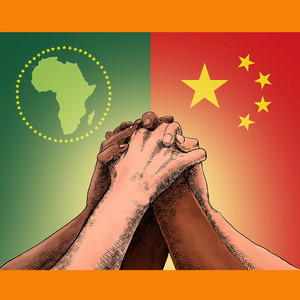
Yes, so this is called the 2024 Summit of the Forum on China-Africa Cooperation.
And it is held in Beijing from September 4th to 6th 2024.
The theme of the summit this year is joining hands to advance modernization and build a high-level China-Africa community with a shared future.
The leaders and representatives of this FOCAC's African members attend the summit.
And this year's meeting marks also another grand reunion of the China-Africa big family following the 2006 Beijing Summit, the 2015 John Spurge Summit, and the 2018 Beijing Summit of the FOCAC.
It's an exciting time here in the city.
I was downtown over the last few days as they were preparing for the summit.
And there was a buzz. There was an energy downtown, actually.
And there was lots of security around, beefed up security, because so many important heads of state are here for the conference.
And it just felt important.
It didn't just look important, it had an important vibe to it as well.
When you're in the city, you can actually feel it.
And it actually makes a lot of sense because if we think about it, China is the world's largest developing country.
And Africa, the continent with the largest number of developing countries, it is natural that these two groups of people would have this long, well, and also with the long-lasting friendship, historical roots.
And it is natural for them to, for us to continue deliver mutual benefits and conduct all of these different types of forums talking about our shared future and what are the things that we can do together.
Absolutely. And what are some of the highlights or takeaways this time?
Yeah, of course. So, during this meeting, there are going to be a lot of high-level activities, high-level meetings, the China Africa Entrepreneurs Conference and bilateral meetings.
So according to Vice Foreign Minister Chen Xiaodong, this year's summit has four high-level meetings on the topics of state governance, industrialization, and agricultural modernization, peace and security, and high-quality, belt and road cooperation.
So there are a lot of these areas that it is covering.
So not only, as Nihonlin said about culture, music, we also have these kind of music and dance and performances on this meeting to showcase that not only the cooperation, but also the friendship between these two regions.
It's definitely a very important event.
And in the meantime, I feel like one is the heads of states and governments, one, they are gathered together.
They talk about the direction of the future development.
All of the theme sounds way too big to start, for us, to start discussing.
It's not like just one event and we know the theme of the event and we can talk about what are some, let's say, activities held under the framework.
It's more like the future direction and that is something way, way more, way bigger.
But under this framework, you also get to see that there are some very concrete referendum being signed and there are very many, very solid projects that are being made.
Absolutely. And of course, it kicks off with the niceties, right?
Like the opening ceremony and the welcome banquet and then they have artistic performances as well.
But then they get down to business and Sun Hong is a researcher from the Institute of African Studies at the China Institutes of Contemporary International Relations.
And Sun Hong said that through high level meetings with specific topics, everyone involved, all parties can exchange in-depth views on really important issues in China-Africa cooperation and then they can discuss real concerns between the two countries as well and then they can build on those conversations and they can build consensus on development between the two
nations as well. Yes. Also, I think cooperation or collaboration is a very important part in this meeting because a lot of these, no matter it's Chinese entrepreneurs or African entrepreneurs are having some exchange ideas.
So we can see Shun Xiang, who is the director of the West Asia and Africa department under the Ministry of Commerce said that a conference of Chinese and African entrepreneurs is also held during the summit featuring two discussion topics on industrial and supply chain cooperation and the development of emerging industries and the discussions enable the sharing
of successful experiences in cooperation between Chinese and African entrepreneurs.
Relatively speaking, these are all still the bigger pictures and of course, we love the bigger pictures but there are a lot of concrete results coming from all of these meetings and summit and framework and one very tiny but interesting example I can think of is that do you know that African grown avocado are now presented on the luxurious hotels in Dubai and the reason that can actually
happen is because of the transportation infrastructure built in Africa so that these very delicious and relatively delicate fruit can be shipped out of the continent and to these different places and that is the details that we're looking at to the results that we're witnessing and I think these kind of tiny examples are also very interesting to be discussed
and meanwhile when it comes to comes back a little bit to the bigger pictures, we get to see that since the establishment of the FOCAC in 2000, China has actually helped countries in Africa build or upgrade more than 10,000 kilometers of railways via such drives as the 10 cooperation plans, 8 major initiatives and 9 programs, nearly 100,000 kilometers of highways,
roughly 1000 bridges, 100 ports, telecom network services covering nearly 700 million user terminals have been also built or upgraded and these are actual numbers and facts and figures helping people in Africa having a better state of life.
Yeah and they've also dispatched China about 25,000 medical teams to over 40 African countries and they've treated approximately 230 million patients, 230 million people receiving the health care that they needed.
As I was looking up because it's not something that I search often on the internet, projects ongoing projects between China and different African countries, but there are a lot and a lot of really impressive things going on.
One is the Mombasa Nairobi Railway System.
So this is actually Kenya's century old dream of building a new railway became a reality through cooperation with China.
It is launched in May 2017, the railway spending approximately 480 kilometers connects the large Indian Ocean City of Mombasa with Nairobi, the country's capital and largest city.
And it is Kenya's first modern railway since independence and is held as a flagship project under the Belt and Road collaboration between China and Kenya.
This was a big deal, right?
Because it really reduced travel time.
Absolutely, the railway has reduced the travel time between the two cities from more than 10 hours to about five alleviated congestion at Mombasa port, reduced operating costs for manufacturers and improved supply chain efficiency like what New Orleans just said.
And another thing I would like to mention is according to Kenya's railway authorities, the project has contributed over 2% to the nation's GDP.
That's huge. And another aspect I think what we said, yes, we have all of these railway and infrastructure facilities to be built.
And it is, of course, I think beneficial for the whole transportation system.
But also I think with all of this construction, it is creating a lot of job opportunities.
It is making, I think, of course, China is exporting a lot of experts into African countries and also they're creating jobs for African people, I mean local people there.
That is mainly the structure of these kind of projects.
That is, some Chinese people would go to African countries and then they hire local people.
And by doing that, another interesting side effect is that of African people, more and more African people are exposed to Chinese culture and Chinese people's way of thinking and that their coworkers are basically their information source about the Chinese society.
And it is making them thinking about the cooperation between China and Africa a bit better.
And actually, according to a survey conducted by CJTN and Remy University of China through the New Era International Communication Research Institute for African Respondents, the young African respondents aged from 18 to 24 fully affirm the concept and achievements of Chinese style modernization and development because they think that is a pattern, that is a path
that they can follow through, they can learn from.
And we see that the survey found that the young people generally have a high favorable impression of China.
More than 98% of young people view China as a successful country, more than 96% of them think China is an important country to learn from.
And around 94% people believe that it is a country that, well, they hope they have opportunities to travel, study or visit in the future.
Yeah, and a lot of people have visited already.
You know, talking about the relationship with Kenya specifically, this is from AfricanNews.com.
The relationship between the two countries, they established bilateral ties.
In 1963, I was surprised that it went back that far.
But as a result of those bilateral ties, thousands of Kenyans have benefited from scholarships to pursue advanced studies in China since the beginning of that relationship.
So lots of people are curious about the country, lots of people want to come, and now we know lots of people have come and are studying here and learning here as well.
Oh yes, for those of you who do not know this, actually, there is a China Africa University's 20 plus 20 cooperation plan ever since 2010.
It links 20 African universities with 20 Chinese universities, and it has been scaled up to China Africa 100 universities cooperation programs.
So it is a framework that as an African student or Chinese student, that you can participate and go to each other's different universities to learn and to be exposed to a brand new culture that can be fascinating.
And actually right before the show, I talked to a friend from actually, his name is Gatun Fasa.
He's from EBS TV. He's a journalist and a TV show producer.
He has been to China for several times and the first time was back in 2018.
And he learned his master's degree in international communication in China and actually in Beijing.
And he's now back in Ethiopia, hosting a show called 2030, focusing on young generation in his country.
The reason I talked to him is because I feel like our shows, having this special link because we all want to feature a little bit of a lifestyle, especially the lifestyle of the younger generation.
And he told me that actually African people have a really good impression on China, even when sometimes some of many of them have never been to our country.
Most of the people I meet hold a high opinion of China, the people who have never been in China and some of say that China is a powerful country and also the others say that China is the world's most logical leader given the consistent stream of new and amazing innovations it presents.
And that is his view or his observation.
And he has a lot of viewers.
So he has shared a lot of different videos and opinions on his social media account about China, about his experiences.
And one thing funny for me is that there's that when I asked him what impressed you or surprised you the most or what was the kind of like a cultural shock you get when you first came to China, what was that?
Can you guess what's the one thing that got him feel a little bit surprised and unexpected?
What was the year that he came?
2018. Huh. What would your guess be, Yushin?
I would guess Chinese food then because I think that it would be the first impression that everyone would have, right?
That is a good guess. Yes, he talked about infrastructure.
He talked about technology, but you're right.
Food is actually the most or at least one thing that left him with the most impression.
I was impressed by China technology and the people's hospitality, the infrastructures.
But when I first came to China, the food culture was a bit challenging for me.
Yeah, it was my first time even to go out from Ethiopia.
I didn't have the opportunity to try foods from other countries besides Ethiopian cousins.
As a result, I initially struggled with trying new foods.
However, that experience become a turning point that transformed my approach to nutrition.
We tend to eat the same dishes repeatedly.
So coming to China expanded my horizons in terms of food and I quickly fell in love with Chinese foods.
Now my diet has changed.
I have at least once a week Chinese foods in Ethiopia even.
And I asked him, do you have a lot of Chinese restaurants or ingredients in Ethiopia?
And he said yes. Oh really?
For him, yes, because he's now in Ethiopia back home and he cooked Chinese food and he said there are currently many Chinese people in Ethiopia.
So yeah, when it comes to personal stories, when it comes to these kind of very personal and firsthand experiences, you get to see the kind of, let's say, benefit that you can get from this kind of experience.
Yeah, no doubt. I didn't realize.
I thought he was in Beijing right now.
Ethiopia. He cooked Chinese food once a week.
That's not that big a deal.
He's in Ethiopia right now.
That's cool. The food obviously left a very good impression on him.
Yes. And we also talked a little bit about cultural differences and mentioned a little bit about a gift giving.
And he's impression about, well he also had this evolving impression about Chinese culture because initially he felt that giving presents to each other and especially if he's giving a present to a Chinese friend, the Chinese friend would say, I view our relationship and our friendship way more than the gift.
So I cannot accept the gift.
But that has already changed through his different visits to China.
And now mostly Chinese people would sometimes return, not return the exact same gift, but gift him something else with Chinese significance.
And that is quite lovely.
So there are actually a lot of different types and different cultural exchanges and people to people exchange programs these years between China and Africa.
And what do you think is a example that you have to mention if we're talking about cultural exchange programs?
When you are saying that the habit of Chinese people will have to exchange gifts, I think it is also reflecting on a lot of these policy and programs are showing.
So I think in the field of education, I think it is something that I would like to mention because Chinese universities have established many cooperative relationships with numerous African institutions.
Through the exchange of students and joint training programs, they have cultivated a significant number of urgently or very needed professionals for Africa.
I remember a university in my hometown actually, it's called Jiangnan University, which is a nationally renowned for its food engineering program.
So Jiangnan University, and I remember back then when I was visiting this university, maybe for when I was in high school, to actually see how this university was.
And I saw there are some programs such as exchange programs.
And at that, at the same time, the teaching of Chinese language has also seen, you know, huge growth in African countries.
And more and more people are learning Chinese.
So for a long time, China-African cooperation has often been perceived as kind of one-sided assistance, but actually it is a bilateral exchange and a contribution from both areas.
I would like to talk about television.
Oh. Yeah. This is from the BBC.
Almost a decade ago, President Xi Jinping promised the heads of state attending the forum on China-Africa cooperation.
In Johannesburg, we mentioned that in the beginning of our chat here, that China would provide over 10,000 remote villages in 23 different African countries with digital TV access.
And with over 9,600 villages having received satellite infrastructure, that project is now almost fully complete.
And it's working out quite well.
I was reading a story about a village called Ola City.
It's about three hours' drive west of Nairobi in Kenya and Nicholas and Guku.
He gathered his friends and family to watch his Kenyan athletes running at the Paris Olympics on TV.
And that was a pretty cool thing for him and for his friends and family, because previously they wouldn't have been able to do that before.
So with the assistance of China, that project was entrusted to Star Times.
That's a private Chinese company already operating in several African countries.
But yeah, it's now one of the largest private digital TV providers in sub-Saharan Africa.
They have more than 16 million subscribers, so obviously that's making a huge impact there too.
Well, since we are on the subject, do you know what is the most popular social media platform in, well, at least the country where our friend is from?
Hmm, if I had to guess. Actually in general in Africa, I would say.
Because Ethiopia, yes, in general in Africa.
I have no idea what that would be.
Let's take a listen. Currently, it's TikTok and also they are using Facebook, other social media, and also LinkedIn is being popular in the youngest generation now.
So they use LinkedIn. They use LinkedIn as well.
So TikTok, Facebook, LinkedIn, and all of the other types of social media platforms are very popular among the younger generation in Africa.
And yeah, I think one thing that I have to admit that I felt a little bit guty about is that before doing this job, before doing some active research on African culture, I feel like I was not that exposed to that part of the world.
I did not get a lot of at least active education about the culture of Africa.
And I think it's overlooked.
Definitely. For example, when it comes to a philosophical idea I learned recently, the Ubuntu, that is one very important philosophical idea in Africa.
It talks about I am because we are.
So as an individual, I exist because the collective community exists.
And I feel like it links, it has this strong connection to Chinese philosophical culture as well.
And it does not emphasize individualism.
It emphasizes your role in the community.
And it's quite important to the philosophical system for the entire world.
And that is one point that Geta actually mentioned when we were talking.
He said he wished that there can be more exposure about African cultures here in China and around the world as well.
And one thing that I'm actually very happy about is that I stumped upon this one particular example that we know, we talked about this on Roundtable, that this year study trips are quite popular.
And this one study trip of a third grade students, group of third grade students in Hunan provinces actually took interest in African culture.
So little kids would be learning a little bit of the history, art forms, dancing and singing and also the making of hair pieces with feather and the meaning behind it and all that.
And that is a really good way to equip our younger generation with the rich knowledge and cultural elements from Africa.
When we have gatherings like this, of course, heads of state make important decisions about economic ties, cultural ties, educational ties between two different countries.
But the great thing for us is that we get to sit here and discuss those things, but we also get to be curious and find out other things about African culture and African food and African entertainment that we didn't know before.
Of course, those business dealings, those government agreements are extremely important, but it gives us an opportunity to remind ourselves that the world's a big place and it has lots of people in it and there's plenty to learn and it never stops.
Definitely. As we've journeyed through the connections between China and Africa, it's clear that the younger generations are playing a pivotal role in strengthening this enduring friendship.
Through shared experiences and mutual learning, they are building bridges that not only honor the past but also pave the way for a future rich in collaboration and understanding.