Discussion keeps the world turning.
This is Roundtable.
You're listening to Roundtable.
I'm Steve today with Lai Ming and Ngo Honglin.
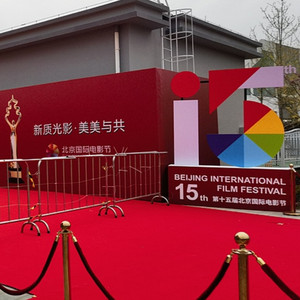
Coming up, the 15th Beijing International Film Festival, running from April 18th to 26th, 2025, highlights global cinematic excellence featuring international and Chinese films while fostering industry networking.
As a premier Asian film event, it spotlights emerging talent and reinforces Beijing's position as a key cultural crossroads.
We have a film from the festival that we would love to introduce to you.
After that, students definitely want them.
Teachers seem to say no, and parents?
Well I guess it depends on who you ask.
Many don't like the idea of having students keep their smartphones in class, but a new Report from China presents an argument for exactly that.
Our podcast listeners can find us at Roundtable China on Apple Podcasts and don't forget we love hearing from you as well so send us an email or a voice note with your thoughts on any of the things that we discuss here on the show to roundtablepodcast .qq .com.
That's roundtablepodcast .qq .com.
And now... The 15th Beijing International Film Festival, or BJIFF, runs from April 18th to the 26th in 2025, and it celebrates global cinema and cultural exchange.
A key event in Asia, BJIFF showcases diverse films, including international and Chinese productions.
It offers industry programs for filmmakers and enthusiasts, and the festival promotes creativity and emerging talent and Beijing's role as a global film hub.
The event this year promises a vibrant mix of artistry and innovation for attendees worldwide.
And we are gonna talk about one of the films presented at the festival this year, I'm excited to learn, Ngo Honglin, you're gonna be the film presenter today.
What is it? Yes, the film I'm recommending today is called Better Me Better You.
It's actually been nominated for the Tiantang Award for this year's Beijing International Film Festival, which is the most important award during this event.
And it is a drama rooted in real life struggles telling the story of two women from completely different worlds who end up saving each other emotionally about their lives, about their fate, basically.
And we have this one character named Bai Li Ping, and she escapes a violent, abusive marriage and flees to the city in search of a new life, by chance, she becomes the live -in caregiver for Tang Shu -jen and Tang Shu -jen is a single elderly woman.
And what starts as a simple job takes a sharp turn when Tang discovers the horrifying scars on Bai's body and refusing to except silent suffering as a way to life, Tang started to push Bai to stand up for herself and under her influence the spy begins studying law, juggling multiple jobs and slowly rebuilding her scene of self growth.
I watched, because the movie is not released yet and I watched the trailer of it.
And in the trailer, I see the elder lady said to her domestic help that I want you to read me some books, read it out, and every book you read, I would give you 20 extra yuan.
It's obviously not for the book reading, it's for her to gain more knowledge she is trying to change her life and the story of two women helping each other, trying to change each other's life, supporting each other is always the kind of theme that I'd be super interested in.
Is that a theme that you would find commonly in the film industry here maybe in the last I don't know...
In the last couple of years we see more and more of women power, of a main strong female, strong and independent female character being praised in different artworks much, much more often.
And one thing about this movie is that the main character, Ma Li, she used to mostly act in comedies.
And for this one, this is not a comedy kind of movie.
It doesn't sound like a comedy at all.
No, it's not. And also she is the executive producer of the movie, and even the movie is not released yet, we can see many comments in the common area of the movie and people are already saying we would love to take a watch, it sounds like a good story and we want to support you as a strong independent woman developing your career I mean, I'm talking about the main character, so I think that is also very nice and in recent years, this trend is definitely taking up here in China Yeah, really.
When it comes to just a storyline of it, and you see a woman from Northeast China coming to the urban area and trying to get along with an elderly woman, you would assume that it's going to be comedy.
And then given the main character there, Ma Li, you would assume that it is comedy.
I just like the surprise and the twist and the twist in the storyline and also like the way the narrative is being shaped because when you talk about elderly folks, some people might immediately think of well living alone, not being able to take care of themselves, these very gloomy images and also people from a different part of the country moving to seek job opportunities or their fortune.
So things can be hard, but then I like to see this twist in the storyline that this is about two women really helping out each other, overcoming the challenges and difficulties.
And so our attention as audience members has been shifted from the dark and gloomy part that people are prone to, that certain sensational news reporting are prone to lead people to.
now we are more focused on perhaps the positive energy that people helping out out each other can lead to and that's something that I can appreciate and as for the movie market and the and the size of the movie industry here in China I've been following the movie industry well I had been following the movie industry for many years in the 2010s, and I'm glad to see now the size of the market has become big enough for not only blockbuster movies intended to attract the most movie goers, but also for relatively smaller productions that might go a little deeper into people's thinking and their emotions.
This This is great news to me.
And since we're on the topic of female working in this industry, actually there is a new Her Women's Film section at the Beijing International Film Festival for several years, and this year, it's the first time it introduced a short film director workshop attracting participation from over 100 emerging female directors.
From this poll, five finalists were selected to produce 10 -minute short films within a limited timeframe.
And each director received a mentorship from a renowned female producer.
So they would get the communication and also the guidance.
And they can definitely have interactions with each other and find a better improvement in their career.
So you have a film about women helping women supporting each other through friendship mentorship a little bit in that film sounds like a side theme there.
And then you have actual activities happening at the international film festival Beijing international film festival where experts are helping those who are interested in becoming better at their craft as well.
The film is called Better Me, Better You.
It showcased at the 15th Beijing International Film Festival running from April 18th to 26th in 2025, and we encourage you to check that out.
Coming up, smartphones in the classroom, the debate rages on worldwide but there was a recent article from China that suggests that allowing students to keep them may come with a major benefit.
Stay with us. Your tuned in Roundtable with myself Steve, together today with Niu Honglin and Lai Ming.
In a world where smartphones are practically an extension of ourselves, the debate over their place in schools is more complex than ever, from strict bans in China seemingly linked to student dropout rates to parent -led movements in the UK pushing for smartphone -free childhoods due to concerns over addiction and mental health.
The issue of phones in schools has sparked passionate arguments.
Is it simply a matter of minimizing classroom distractions, or is something deeper going on?
Today we're going to talk about this, but let's get straight into it.
I want to know what's going on with smartphones in China's classrooms right now.
Recently, actually this month marks the first month of school years, or school terms, new term, and actually, uh, and according to news reports, we are already looking at an increase of prevalence of near -citeness among children.
And it is linked to excessive screen time.
Uh, We see that 2021 research also indicated that 30 % of increased risk of nearsightedness for individuals under 33 associated with electronic device use and students using devices over two hours daily face a higher risk of nearsightedness, and that is partly the reason that since 2021, the Ministry of Education banned students from bringing films to school unless they obtained parental consent and submitted a formal request here in China, and even then devices must be handed to teachers upon arrival and are strictly prohibited in classrooms. Oh, so even if they can bring it to the school or bring
it to the classroom entrance with them, it has to be handed over to the teacher.
And then it's the teachers call.
Okay. So what's the new connection then?
They found, or at least one paper found, there was a connection between taking cell phones from students and a dropout rate among rural Chinese students.
I've never heard of this kind of connection before.
Well, Sheng Hui, a PhD candidate in education at Beijing Normal University, mentioned in her recent article about her experience of volunteering at a rural high school in China's southwestern GuangxiJA, and there she observed a troubling trend.
some high school students choose to drop out of school after their cell phones were confiscated.
And later, Shen discovered that among quite a few rural school dropouts, losing their phone was actually a direct cause.
This highlights a situation where a seemingly routine school policy has significant consequences for student engagement and retention in this specific context.
and further analysis shows that a lot of these just rural students they use the smartphones to stay in contact with their with their parents who may be working elsewhere in a different city so their parents are not always around and the smartphone is probably the only means they have to stay in contact and to communicate with their parents and also because of the a lot of these rural students they still stay in boarding schools so that means when they're in school they have to hand in their phones then that is a very very big issue a big deal for the students because when they don't have their
access to their phones that means they don't have access to their parents to their family but I think we need to take this individually and one thing the smartphone in class that's one issue whereas communication with the parents that's another issue mm -hmm I would I would agree with that.
Let's take a step back though I will count we'll come back to this in more detail in just a sec but let's step back a little bit and look at the bigger picture of phone usage among students here in China.
I'm assuming it's the same as the statistics that you'll find anywhere else where a lot of, if not most of young people have them and a lot of them are using them a lot of the time.
Yeah. A reliable census in 2023 showed that China had 193 million under 18 internet users with a 97 .2 % penetration rate So most students would already have a smartphone, but whether they are retaining it when they are in classroom or not, they have a phone in their life.
And that is definitely not a phenomenon only, very common here in China.
It's definitely a global thing.
Yeah, it's in Canada too.
This is from Statista from April 2022.
Eighty seven percent of Canadian teenagers from 12 to 17 use a smartphone.
the research suggests that the high dependency on smartphones is linked to a reduced reduced attention span, excuse me, and a decline in mental health.
It could also lead to poorer academic performance and hinder learning, and as a result, a number of Canadian provinces, including Alberta and BC and Ontario and Quebec, they've rolled out bans to curb cell phone usage in the classroom.
Yeah, this is not this is not a Chinese issue, this is more of a world issue.
Yes, and we see that in Finland, for example, a bill is in place to restrict cell phone use in schools focusing on reducing classroom distractions and improving focus.
In Norway, a short -term experiment showed that middle school students without phones had fewer mental health problems, less bullying and higher GPAs, and in France, has banned phone use in nurseries, primary and secondary schools since 2018.
In February 2024, the Department of Education published a non -secondary guidance that said schools should develop a mobile phone policy that prohibits the use of mobile phones and other smart devices with similar functions during school days.
That is in the UK. Netherlands, USA, a lot of different countries have such policies.
Hmm. Why is it then that cell phones are so important to these kids?
Well, other than the example we mentioned earlier with rural kids having access to their kids to their parents over the phone, I think smart phones is the reality now.
Because for adults we go around with our phones, we get on a bus with our smartphone, we get in the subway, we buy stuff with the smartphone, we talk to each other.
so we get assignments, work assignments on WeChat.
And homework assignments for students.
Sure, yeah. And my son is in the second year in kindergarten and already every day parents are recommended to take pictures of him reading to...
It's more like a punching kind of activity to try and encourage competition and try and encourage reading among kids.
And parents need to use their smartphones to do that.
so for some students then the phone is actually some sort of tool for self -studying then in that sense yeah if you are a diligent student and if you are interested in stuff outside of the classroom then yes it's likely that miss Shen has found examples of one student using smartphones to learn basic computational skills such as C++ and Java and advanced math.
Sadly, this person dropped out of school when his phone was confiscated according to this PhD candidate.
But, even we say that students do use smartphones to study.
Actually pizza, which is not the food, but the program for international student assessment data shows that a decline in global student performance in science since 2009 and reading since 2012 and it has something to do with the drastic use of electronic devices and a 2018 three -year study in Japan also shows that with an average age of 11 it found that daily internet use was associated with slower language development and reduced brain development?
So in some parts of the world they're taking it quite seriously and when there's a lack of government support then parents in some places are stepping in.
In the UK there's something called the smartphone free childhood campaign and there they've seen a hundred and twenty four thousand parents.
That's not a small number, right?
In the UK. A hundred and twenty four thousand parents across more than 13 ,000 British schools pledged to delay giving children smartphones, until at least the end of year nine.
So that would be about 13 or 14 years old.
And that movement is driven by parental concerns over their smartphone addiction, and social media, and mental health, and all the things that we've mentioned so far.
And some schools and local authorities in the UK, they're taking action.
For example, in one primary school in North London, they're banning smartphones entirely from September.
there's another area that plans to become the first in Britain to ban smartphones in all of its public schools that'll affect around 63 ,000 children and even at Eaton I'm not sure if you've heard of that school before it's an elite private school but they're banning smartphones for new students and what they do they've taken a different angle they're providing students with a basic phone instead okay so they're taking one of their devices and giving them a dumb phone.
Yeah, that's exactly what they're doing and we're seeing similar trends in other areas of the world as well.
What's your reaction to that?
My question is twofold.
Number one, parents getting involved to the point where they feel like they have to.
And number two, offering a different sort of solution rather than banning them altogether.
What do you think? Well, I think it's smart to offer them different solutions.
In the case of the rural parents and their kids not being able to communicate without the smartphone, and as discovered by PhD candidate Miss Shen, I think it really helps solve the problem, because the phones, they are very powerful tools.
They not only can help you communicate with people, they also offer platforms for you to download games and get you engrossed in the games for hours, non -stop, without being mindful of other stuff around you or in school.
So it can be a very huge, powerful tool, it can be also a very huge distraction for young students who are yet to learn to be disciplined all by themselves.
So I think that's smart and for parents to take some action when governments are not doing a blanket ban on on smartphone use, I think is also wise.
While I agree, I also believe that our civilization is on a one -way trip when when technology is here.
And certain generations might have reservations about a new technology but the next and the next generation certainly will feel nothing about taking technology for granted and they might have to use it anyway.
So, I think what I think the trend is irreversible I think is honorable for individual parents to do something to their parents because I think individual sufferings.
One child not being able to catch up in school, not being able to get the best job that he or she is capable of or has the potential for is his or her own individual misery and that misery should also count.
And also, when parents are asking schools and government to do things, they should also take a look at how they behave at home, whether or not they're being in a good role models for kids.
For example? Because we see another research from the University of Birmingham they find that spending longer on phones and social media in general was linked to lower grades, poor sleep, disruptive behavior, and a lack of exercise.
But these outcomes did not differ from schools that banned phones and those that did not.
And that is because for those who do not use phones so much at schools might be using phones at home.
And it's kind of like a compensation use of phones at home.
So for students who are, whose phone are taken away by their teachers when they go home, their parents are always on the phone working or playing, it's definitely a bad example.
Yeah. The six tone article from the media outlet here suggest that we should be looking at instead of simply banning the phones it's worth considering the underlying reasons why students are so reliant on these devices and one as you mentioned Leiming might be the connection to their family the literal connection to their family right but I would take it even a step further I mean we know already don't we that young people not just students, young people in general, we say addicted.
But I'm not sure if using the word addicted is working anymore.
What I mean is, we've talked about this before, young people are born with their devices, right?
Essentially, they are an extension of who they are.
So how I feel is when you're banning the students, or when you're stopping the students from having them in the class, number one, you're taking away something that's vital to them.
It's not just a device.
It's not just a tool.
This is something they've grown up with their whole lives and you're taking it away from them.
I think the biggest problem with that is that you're telling them, when you take it away from them, you're telling them, I don't trust you, right?
You're establishing that precedent in the relationship at a very young age.
So rather than simply ban them, say, you can't use this.
I think it's better to say, we have to use this responsibly.
And if that means banning a couple of apps, then okay within the school grounds, or what have you.
But simply telling them no, I don't think it's sending them the right message.
Well, it's the new reality, and once it's here, it's not going to go away.
And we just have to learn to deal with it.
The schools, the parents and the kids.
100 % true. That's today's roundtable.
Thanks so much for being with us today.
Thank you Ngo Honglin and Lai Ming.
Thank you for your time as well.
I'm Steve, and we hope that you can join us again next time.