Sometimes it takes just a single inspirational thought to massively impact your life.
And today I wanted to share several of these life lessons and small little mindset changes that have helped me so much ever since I first learned them.
And I hope it might do the same for you.
I also briefly wanna thank our friends over at Headspace for sponsoring today's video.
Headspace is my favorite meditation app, but we're gonna chat more about them a little bit later.
For now, grab a drink, get cozy, and let's get started.
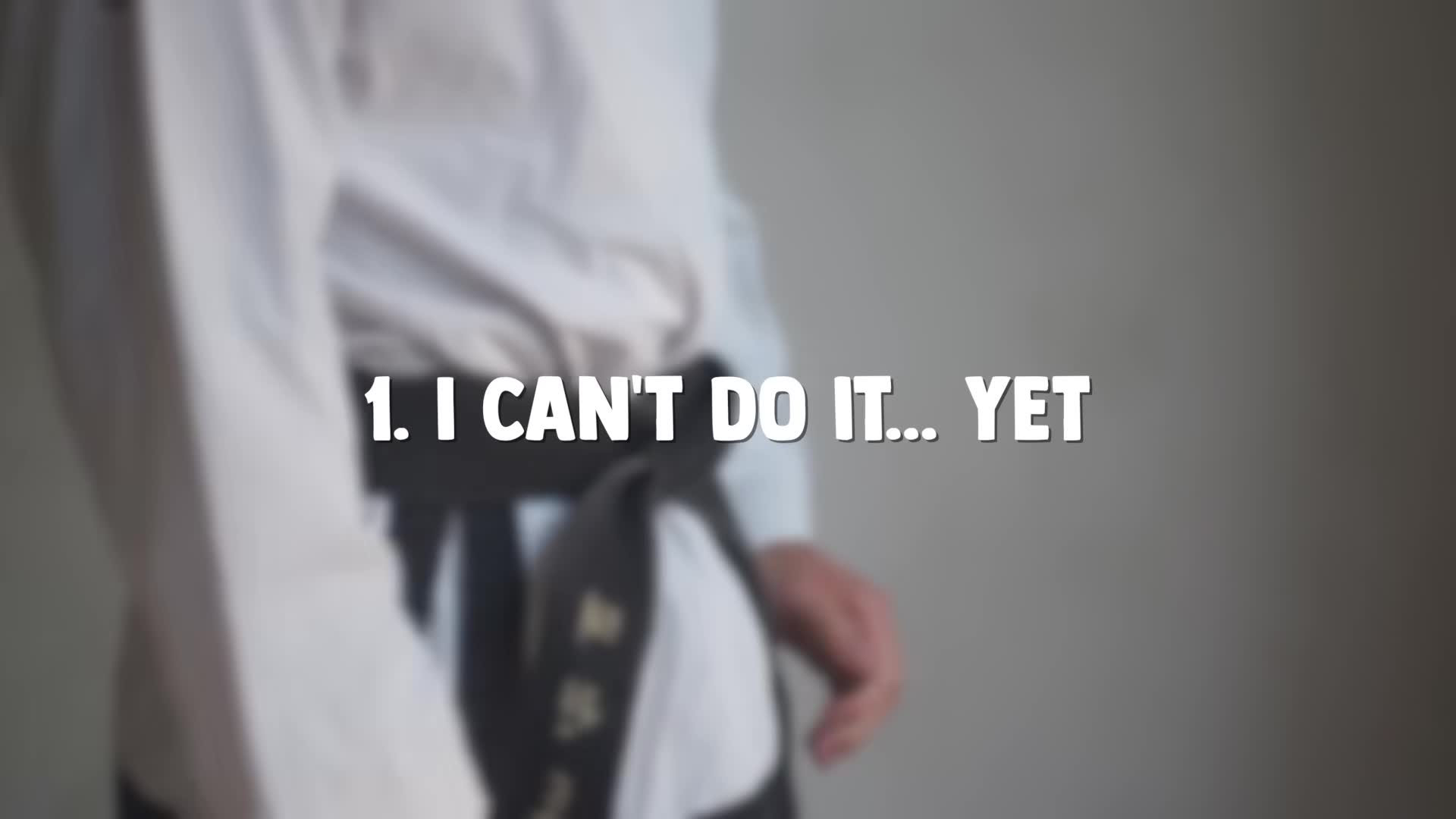
When I first met my partner Robin, he was telling me a story about how, when he was a little boy, he was taking Taekwondo lessons.
And sometimes he just couldn't kick high enough or he couldn't break the wooden planks and so frustrated he'd say I can't do it.
And his teacher would reply, no, I can't do it yet.
And five years later, that little boy got his black belt.
And what I love so much about the story is that, from a young age, this teacher was essentially instilling in him a growth mindset instead of a fixed mindset.
Because somebody with a fixed mindset believes that skills and talents are innate, something that they're born with.
Whereas somebody with a growth mindset believes that hard work, rather than talent alone, is important in success.
And it's one of the most powerful mindsets that you can have, because it essentially makes time your ally.
Eventually, everything is possible.
So anytime you catch yourself thinking, I can't do it, switch it to I can't do it yet.
In social situations, I'm hyper aware of whether what I'm saying or doing is coming across as awkward.
Or if I'm at the gym, for example, I'm nervous that people are watching my every move and silently critiquing my form.
And what I've come to learn is that this anxiety in psychology has a name.
It's called the spotlight effect.
It's when you feel like all eyes are on you.
But in reality most people are too wrapped up in their own concerns to pay much attention to anyone else.
As Eleanor Roosevelt once famously said, you wouldn't worry so much about what others think of you if you realized how seldom they do.
Most people simply don't care.
And I have found that thought so liberating because it's helped me feel more comfortable just being myself.
When we want to make a diet change, when we want to eat more healthfully, it can be really tempting to want to eliminate foods that we think are harmful, like cutting out chocolate and chips, for example.
The problem with restrictions though is it can really mess up our relationship with food.
And I'd like to think that all food has a place at the table and it's more just about finding balance rather than strict elimination.
So what if we shifted our focus from exclusion to inclusion?
So instead of saying something like I wanna stop eating donuts, we would say I wanna eat more fruits and veggies.
Instead of saying, I wanna stop eating out, we'd say, I wanna make food at home more often.
It's more forgiving and more motivating because we're not focusing on what we want to eliminate.
We're emphasizing what we want to add, creating a diet based on abundance.
I wish somebody had told me this sooner that it is okay to change.
When I was in university and I had to change my major or later in life, when I completely changed career paths, I was consumed with this fear that I was just throwing away all of this time and effort that I had invested, and I was so embarrassed to admit to other people that I had changed my mind again.
And it just felt like everybody else had their path figured out And my uncertainty just felt like a personal failure.
And the same fear even gripped me when I decided to go plant-based.
I was hesitant to share the news with other people because I didn't know what they were going to think.
But what I've come to learn is that change is not something to be ashamed of.
It's actually incredibly inspiring, because it's a sign that you're listening to your inner voice and you're evolving into the person you're meant to become.
But, most importantly, be patient with yourself when you're journeying to a place you've never been before.
My sister once told me, how you brush your teeth is how you do everything.
And literally the night before, I was thinking to myself oh my gosh, I'm so restless when I'm brushing my teeth.
I just want it to be over with as quickly as possible so I can move on to the next thing.
And this kind of restlessness also spills over to other areas of my life.
Like I am always rushing when I'm walking, or rushing when I'm doing the dishes.
And I think that's exactly what my sister was trying to tell me that the way you do one thing is the way you do everything.
If we're always feeling like we're in a hurry, if we're always feeling like we need to do more, our entire life starts to feel frazzled, overwhelming and anxiety inducing.
And so the only antidote, I think, is to learn to slow down.
But it's not just as easy as wanting to slow down right.
Because it takes practice, especially if we're used to rushing through life all the time.
And this is where Headspace has made the biggest difference in my life.
So Headspace is a mindfulness app that helps you find calm and clarity.
And if we're talking just a few life lessons in this video, consider Headspace to have hundreds of life lessons packed into it.
It has helped me learn to slow down.
It's helped me learn to let go of things I can't control and just embrace whatever situation I'm in.
I'm just going to come back to that feeling of being present, of being balanced in both body and mind.
So within the app, you're gonna find everything from mindfulness walks to becoming a more mindful eater, to meditations that are specifically designed to help you unwind and enjoy a better night's sleep.
And Headspace has been gracious enough to offer to our audience an exclusive 40 discount on their subscription.
So if you wanna snatch it up it's just for a limited time this offer you can scan this QR code right here or check out the link I'll leave for you in the description box below.
I have been using Headspace for nearly a decade now and it has changed my life, so I'm really excited for you to try it out too.
If you're consistently falling short of meeting your goals, the problem might not be you, but how you're setting up the goals.
So let me explain.
If you're somebody who's always feeling like I wanna get an A on my exam, or I want to win first place, or I wanna reach 10000 views on my video, these things can seem like great targets, but they're based on outcomes outcomes you can't fully control.
And so if you don't hit the targets, it can start to feel really discouraging.
So see if you can instead shift your focus from end results to actions that you can control instead.
So, for example, instead of saying I want to reach 10000 views on my video, you can commit to producing two videos a week, or commit to training three days a week, or studying a couple hours every night.
With these goals, we're focused on inputs, actionable and measurable goals that we can achieve.
And when we focus on what we can control, the results often just take care of themselves.
Imagine having everything you've ever wanted in your life right now.
But would it even be possible, given that we have so many conflicting desires?
Like we dream of traveling the world, but we also crave the stability of a permanent home.
Or maybe we dream of starting a family, but at the same time, we cherish our independence.
Like I remember a few years ago I was video chatting with my mom and I was telling her how homesick I was.
On the one hand, I loved living in Europe and I was building this life with my partner, and it was amazing.
But at the same time, I so fiercely missed my family back home in Canada.
And my mom said you will have everything you've ever wanted in your life, just never all at the same time.
And that grounded me.
It helped me so much.
It helped me realize that our dreams and our goals, they often unfold in stages.
And while we might wish that everything happens all at once, there's a beauty in each dream materializing in its own time.
When I was working as a dietician and somebody would come to me and say hey, I wanna follow this specific diet, or I wanna try this juice cleanse, or I wanna eliminate this specific food.
What do you think?
My response was always, can you imagine sticking to this way of eating for the next five years?
If the answer is no, it's probably not the best approach.
And it's just a simple question to help us rule out if what we're trying to follow is a quick fix.
And when it comes to quick fixes, usually they only give short-term results.
But real change happens with consistent effort over time.
The daily habits.
As Gretchen Rubin once said, what you do every day matters more than what you do once in a while.
So if you ever come across someone who says you should eat a certain way or you shouldn't eat a certain food, before you give in, just ask yourself honestly can i see myself following this advice not just for the next week, but can i see myself eating this way consistently for the next five years?
And if the answer is no, it's probably a good idea to find a more balanced approach.
I was once talking to a therapist.
I was telling her about this goal I really wanted to achieve, but I was so afraid of failing.
And she asked, are you afraid or are you excited?
And I said, no, I'm afraid.
And she asked again, are you sure?
Because the physical sensations of fear and excitement are very similar.
We often think that fear means we're doing something wrong.
But what if it's just showing us that we care about the outcome that we're invested?
What if we saw fear as excitement for what could happen next?
In the words of the author Corey Allen, going from being worried about what might happen to being excited about what might happen is only a mindset shift away.
And so now anytime I feel fear, I'll say out loud, nope, I'm excited.
It literally transforms the paralyzing effects of fear and anxiety into an openness to try new things.
We're stuck with ourselves every single day.
Other people come and go, but we're with ourselves forever.
And so it's really important that we are intentional and kind in the way that we talk to ourselves.
And so this is a little trick that I use.
It's gonna sound weird, but just bear with me.
Anytime you're talking about yourself in your mind, try to use the third person.
Because I think we tend to beat ourselves up a lot and we say things like I'm so dumb or I'm so ugly.
But if we shift to third person instead and say Sadie's so dumb, she's so ugly, it kind of sits weird, because we're not used to talking about other people like that.
Hopefully,
But we will talk about ourselves like that.
And so when we switch to third person, I find that we tend to soften our words.
So we might instead say you know, she felt so dumb because she didn't know what to say, or she feels really ugly because she doesn't like what she's wearing.
It makes the whole thing feel less intense and more just like we're working through a problem instead of attacking ourselves.
Look, you can walk away from a bully, but you can't walk away from yourself.
So you want your mind not to be a place where you feel scared and criticized, but a place where you feel safe and supported.
So just make sure you're building yourself up and not tearing yourself down.
But now for the best part.
I am so curious to know if there are any thoughts, life lessons, quotes that you've learned that have helped to improve your life.
If you're willing to share it.
I think everybody's going to love just going through the comments and absorbing all of the wisdom that's down there.
I know I'm looking forward to it.
So I'll see you in the comments.
Thanks so much for hanging with me today, friends.
I really appreciate it.
Makeup Limes signing off and I'll see you in the next video.