
[The Resolution of the Mountain of Flames: Wukong’s Redemption and the Bull Demon King’s Surrender]-[079 The Mountain of Flames]
📋 Summary
The Final Confrontation and the Transformation of the Bull Demon King
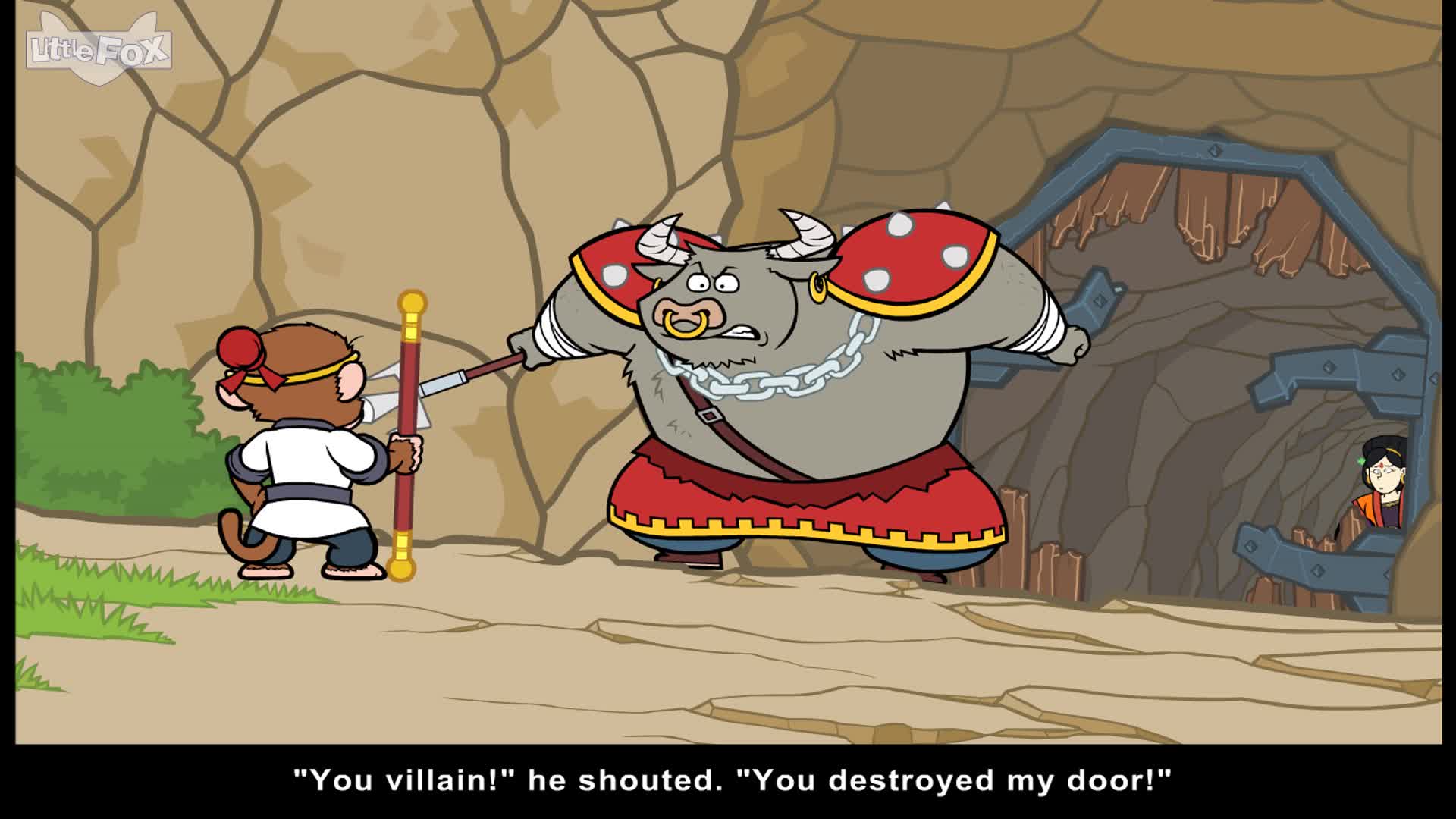
The narrative of Chapter 79 follows the climactic battle between Sun Wukong and the Bull Demon King. Fueled by righteous anger after being tricked, Wukong returns to the cave, demanding the return of the fan. The conflict escalates into a high-stakes supernatural duel. The Bull Demon King initially attempts to escape by turning into a "crane," but Wukong mirrors his shape-shifting prowess by transforming into a "phoenix" to pursue him. The chase continues through various forms, with the demon shifting into an "antelope" and eventually a "huge white bull." This sequence highlights Wukong’s relentless determination to secure the tool necessary to save his master’s journey.
Divine Intervention and the Surrender
The tide of the battle turns when the Jade Emperor sends "soldiers from heaven" to assist Wukong. Surrounded by celestial forces, the Bull Demon King is forced to abandon his resistance. The intervention of the "iron immortal," the demon’s wife, adds a layer of emotional complexity to the scene. She pleads for mercy, claiming, "He didn't mean to be evil." The soldiers, representing order and moral authority, demand that the demons show genuine contrition for "stopping the Tang monk from continuing his journey." Ultimately, the Bull Demon King and his wife promise to "be good Buddhists from now on," securing their safety and finally relinquishing the fan to Wukong.
The Revelation of Wukong’s Past
A pivotal moment occurs when the soldier reveals the origin of the Mountain of Flames. Wukong learns that the inferno is, in fact, a consequence of his own history: "It was when Laozi tried to burn you up in his pot." Wukong had "disturbing the fire in his workroom," causing a "burning ember" to fall to earth and ignite the mountain. This revelation shifts the narrative from a simple quest to a journey of personal accountability. Wukong, who once viewed his past actions as merely chaotic mischief, now recognizes the tangible suffering they caused.
Redemption and Environmental Restoration
Equipped with the fan, Wukong returns to the village and successfully extinguishes the fire with a single wave. The transformation of the landscape is immediate and symbolic: "the valley start to turn green," "leaves grew on trees," and "birds sang in the branches." This restoration serves as a powerful metaphor for Wukong’s own spiritual growth. By extinguishing the flames that he himself ignited, Wukong transitions from a figure of destruction to one of salvation. The story concludes with Wukong reflecting on his past, noting that while he "had done evil things a long time ago," he was now actively "fixing them," marking a significant milestone in his path toward enlightenment and service to the Tang monk.

Deep Learning with ListenLeap


