
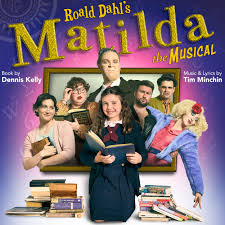
[The Prodigy of Crunchem Hall: Matilda’s Intellectual Awakening]-[05 Chapter Five]
📋 Summary
The Prodigy of Crunchem Hall: Matilda’s Intellectual Awakening
A Sanctuary of Literature
The narrative begins in a local library, where a young girl named Matilda seeks refuge. Unlike most children, she navigates the library with independence, politely requesting the location of children's books. Mrs. Phelps, the librarian, observes as Matilda spends her afternoons "devouring one book after another." Matilda’s transition from children's literature to "a formidable list of adult books" by authors such as Jane Austen, J.B. Priestley, and Ernest Hemingway marks her rapid intellectual maturation. Despite her youth—described as a "tiny dark-haired person with her feet nowhere near touching the floor"—she possesses a profound appreciation for literature. When she struggles to understand some of Hemingway’s concepts regarding men and women, Mrs. Phelps offers sage advice: "Sit back and allow the words to wash around you like music." This immersive approach allows Matilda to feel as though she is "right there on the spot, watching it all happen."
The Discovery of Extraordinary Talent
Matilda’s brilliance does not go unnoticed. Mrs. Phelps describes her as a "remarkable little girl," a sentiment echoed by Miss Honey, her teacher at Crunchem Hall. On her first day of school, Matilda displays an intellect that far surpasses her peers. When Miss Honey initiates a lesson on multiplication tables, Matilda does not merely recite the two times table; she continues well beyond the standard range, calculating complex equations like "2 times 487" to arrive at "974" with ease.
Miss Honey is left stunned by this "astonishing" and "self-taught" ability. She notes that Matilda’s parents "haven't helped a scrap" in her development, highlighting the child's innate curiosity. Despite her intellectual superiority, Matilda remains humble, speaking "quietly and politely, without any sign of showing off." Miss Honey remarks that Matilda seems to have a "calculator inside her head," a trait that extends beyond mathematics into spelling and literature.
The Promise of a Gifted Mind
As the story progresses, Miss Honey continues to probe the depths of Matilda’s talents. After confirming her mathematical prowess, she moves on to spelling, finding that Matilda can spell any word provided. The transition to poetry confirms that Matilda’s skills are not limited to logical or analytical tasks; she reads a book of humorous verse "smoothly, without a pause, and at a nice speed."
This summary highlights a critical turning point in Matilda’s life: the meeting of a gifted child and a supportive mentor. While her peers struggle to keep up, exemplified by Lavender’s frustration, Matilda represents an outlier whose potential is boundless. The synergy between her love for reading and her natural cognitive speed positions her as a unique figure at Crunchem Hall, setting the stage for a journey where her academic gifts will undoubtedly shape her future.
Deep Learning with ListenLeap


