
[The Deception of the Gourd and the Sage's Test: A Journey to the West Retrospective]-[043 A Visit from Laozi]
📋 Summary
The Deception of the Gourd and the Sage's Test
The Battle of Wits and Magic
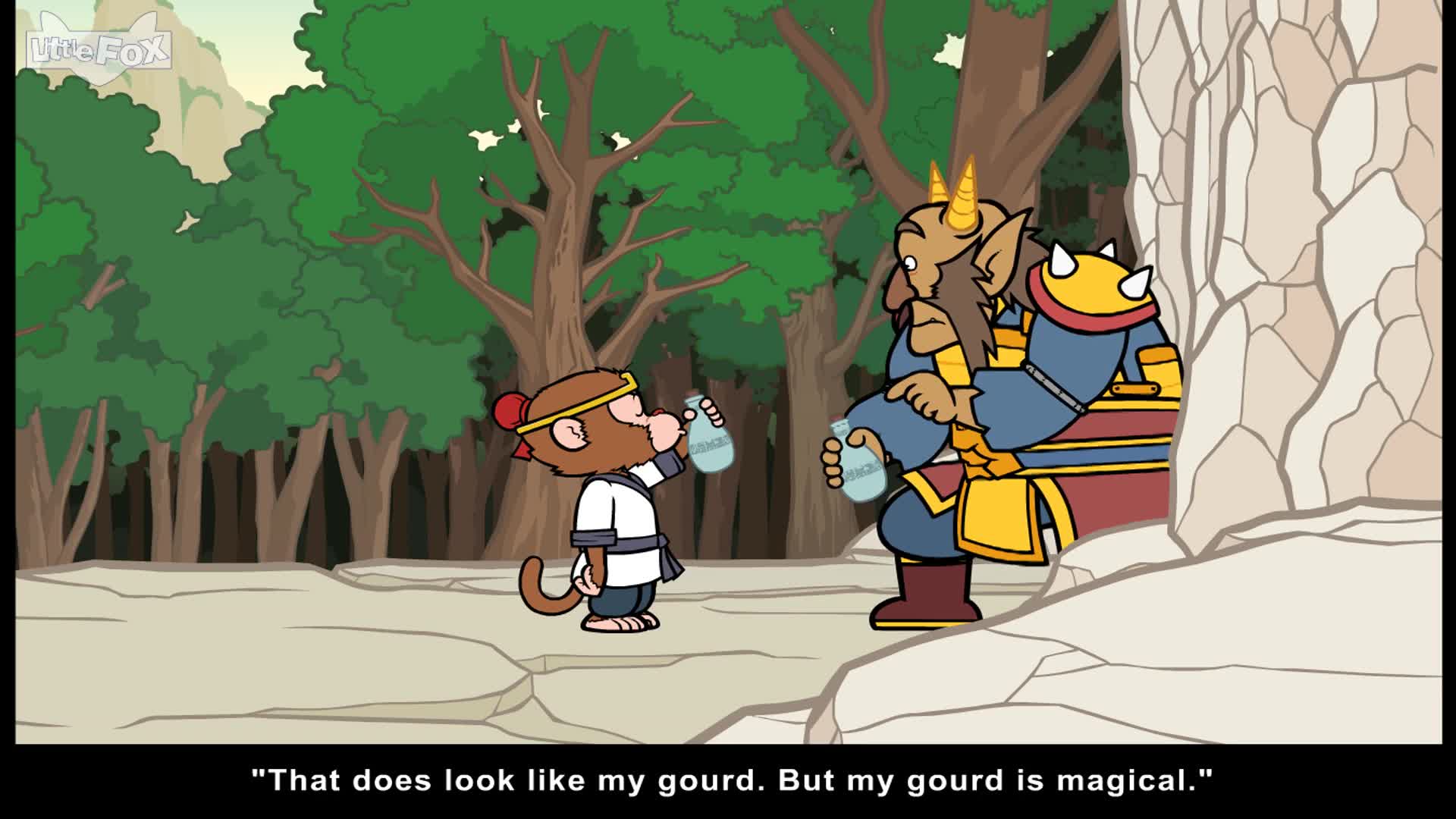
The encounter between Sun Wukong and the demon Goldenhorn serves as a masterclass in tactical deception. The conflict centers on a high-stakes confrontation involving a "magical" gourd. Goldenhorn, skeptical of Wukong’s claims, challenges the monkey king to a duel of artifacts. Wukong, ever the trickster, employs a classic bait-and-switch strategy. When prompted for his name, Wukong provides a pseudonym, "Kong San Wu," effectively neutralizing the demon's ability to command his own weapon.
Upon successfully luring Goldenhorn into a false sense of security, Wukong invokes the demon's true name: "Goldenhorn!" The immediate result—the demon being "sucked into the gourd"—demonstrates Wukong’s superior mastery over the magical tools at his disposal. By turning the enemy's weapon against him, Wukong secures a swift victory, proving that in the world of Journey to the West, intelligence often outweighs brute force.
The Liberation of the Pilgrims
Following the defeat of the demon, Wukong proceeds to clear the cave, utilizing his "iron bar" to intimidate the remaining demons, who "screamed and ran out of the cave" in terror. This scene highlights Wukong’s role as the protector of the group. Upon reuniting with the Tang monk, Bajie, and Wujing, the dialogue reveals the group's vulnerability. While Bajie expresses frustration, questioning, "What were you doing for all that time?" Wukong remains composed. He explains that his delay was a calculated necessity: "I had to get rid of the demon first." This reinforces his commitment to the safety of his companions, prioritizing their long-term security over immediate, risky rescue attempts.
The Revelation of Laozi and the Divine Test
The narrative takes a theological turn when the travelers are confronted by an old man who demands the return of the gourd. The transformation of this figure into "Laozi the sage" provides a crucial revelation: the entire ordeal was a manufactured trial. Laozi admits, "Golden Horn works for me. I sent him here to cause trouble for you."
This interaction frames the demons not merely as adversaries, but as instruments of a higher purpose. Laozi clarifies that "Buddha wanted to make sure you are all serious about reaching the Western Paradise." This adds a layer of spiritual complexity to the journey; the obstacles the pilgrims face are sanctioned by the divine to test their resolve. Despite Wukong’s cheeky claim that he "was just joking around," the encounter serves as a sobering reminder that their trek is a monitored pilgrimage.
A New Mystery Unfolds
The chapter concludes with a shift from the divine to the mysterious. As the group seeks rest at a monastery, the atmosphere of security is shattered. The Tang monk, characterized by his inherent empathy and fear, encounters a "man... dripping wet" who begs for help. This final, cliffhanger moment serves to remind the reader that the journey is relentless. Whether the challenges come from celestial sages or unknown, desperate strangers, the pilgrims are constantly pulled into new narratives, ensuring that their path to the Western Paradise remains fraught with tests of character and compassion.

Deep Learning with ListenLeap


