
[The Mandate of the Journey: Guan Yin’s Mission and the Departure of the Tang Monk]-[013 The True Scriptures]
📋 Summary
The Divine Necessity for Enlightenment
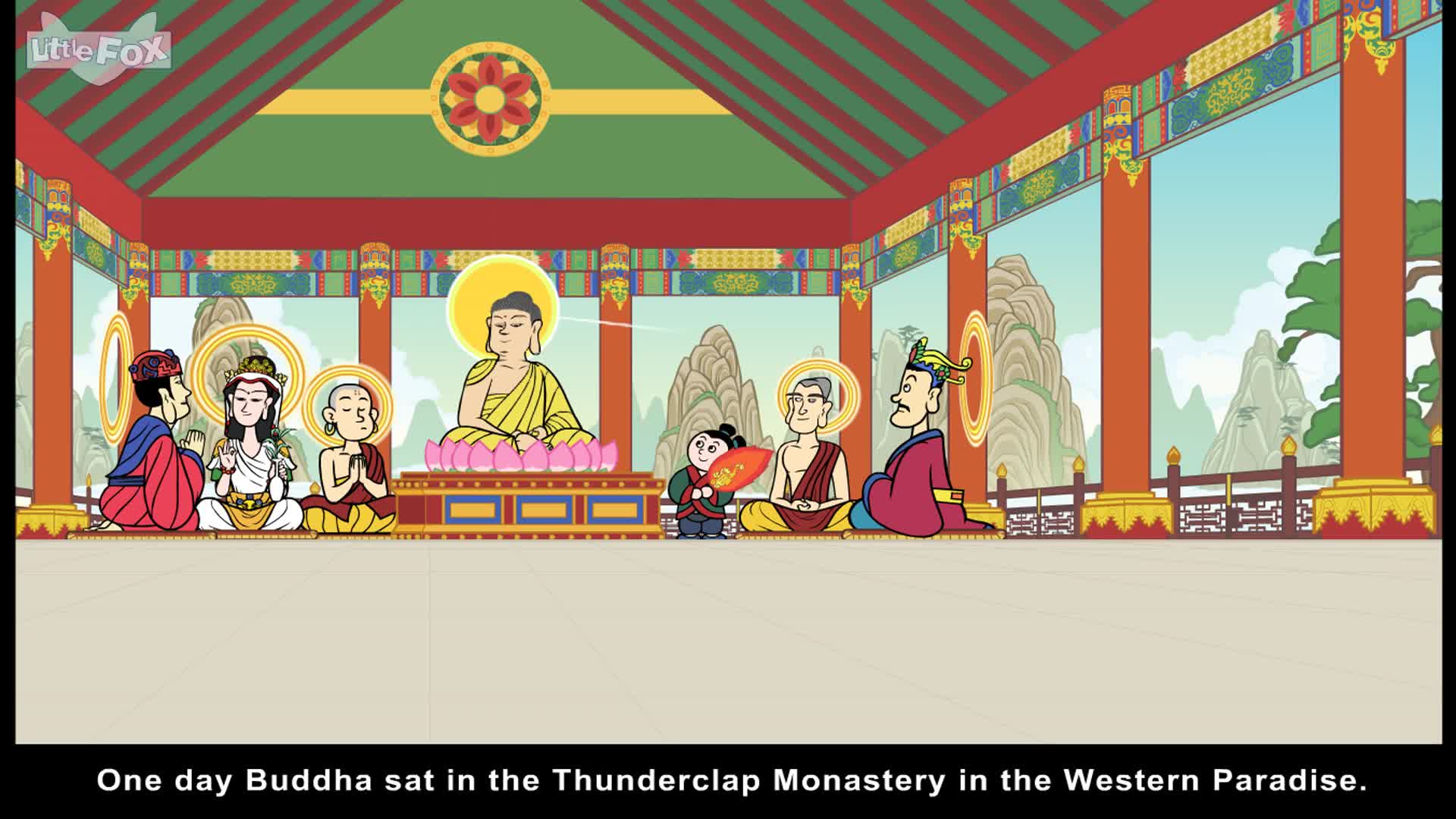
The narrative begins with a reflection on the passage of time, noting that "500 years passed" while the Monkey King, Wukong, remained "trapped under the mountain." Amidst this atmospheric backdrop, the focus shifts to the "Thunderclap Monastery in the Western Paradise," where Buddha observes the moral decay of the "Tang Empire." According to Buddha, the people in the East "lie, cheat and steal" and are characterized by greed and constant conflict. To remedy this, Buddha introduces the "true scriptures," which are intended to "teach the people in the east to act better." Crucially, Buddha asserts that these scriptures cannot simply be delivered; instead, a "true believer, a monk, needs to come here to get them," establishing the prerequisite of spiritual worthiness for the quest.
The Revelation of the Bodhisattva
The quest finds its champion in the Tang Empire. During a public reading, a woman interrupts the proceedings to challenge the monk regarding the "old religious texts," introducing him to the existence of the "true scriptures." She explains that these texts contain "many lessons" that ensure people "never have to suffer again." The monk’s inherent purity is validated when he dons a robe provided by the woman; "beams of light shone from it," causing the emperor to gasp in awe. The woman reveals herself to be "the Bodhisattva Guan Yin," the divine architect of this mission. She warns the monk that the journey will be "very difficult," citing "wide rivers and steep mountains" as physical obstacles, and "fierce creatures and evil demons" as the spiritual and physical threats that will attempt to "attack" him. Despite these dangers, she promises that he "will have help from me."
The Commissioning of the Tang Monk
Following the miraculous revelation of Guan Yin, the Tang Emperor formalizes the mission with a "huge feast." Demonstrating the political and spiritual importance of the journey, the emperor declares, "Your journey will help our empire greatly," and elevates the monk’s status by calling him "my brother," bestowing upon him the title of "the Tang monk." The emperor expresses a hopeful vision that, through this endeavor, their people will "no longer... suffer or treat each other badly." The monk accepts this honor with humility, promising to return "in a few years."
The Threshold of Danger
The final segment of the account details the monk’s departure and the initial confrontation with the unknown. After packing "dried foods" and his "special robe," the monk sets off on horseback. He travels for "over a month" before reaching a "big mountain." As he ascends a "steep trail," the monk experiences a sense of unease, expressing a "bad feeling" and the specific fear that there might be "demons here." The narrative concludes on a cliffhanger, as a "voice boomed," asking, "Who is walking on my mountain?" This moment marks the transition from the safety of the imperial court to the perilous reality of the journey, signaling that the trials predicted by Guan Yin have officially begun.

Deep Learning with ListenLeap


