
[The Cosmic Wager: Sun Wukong’s Confrontation with Buddha]-[012 The Bet]
📋 Summary
The Cosmic Wager: Sun Wukong’s Confrontation with Buddha
The Hubris of the Monkey King
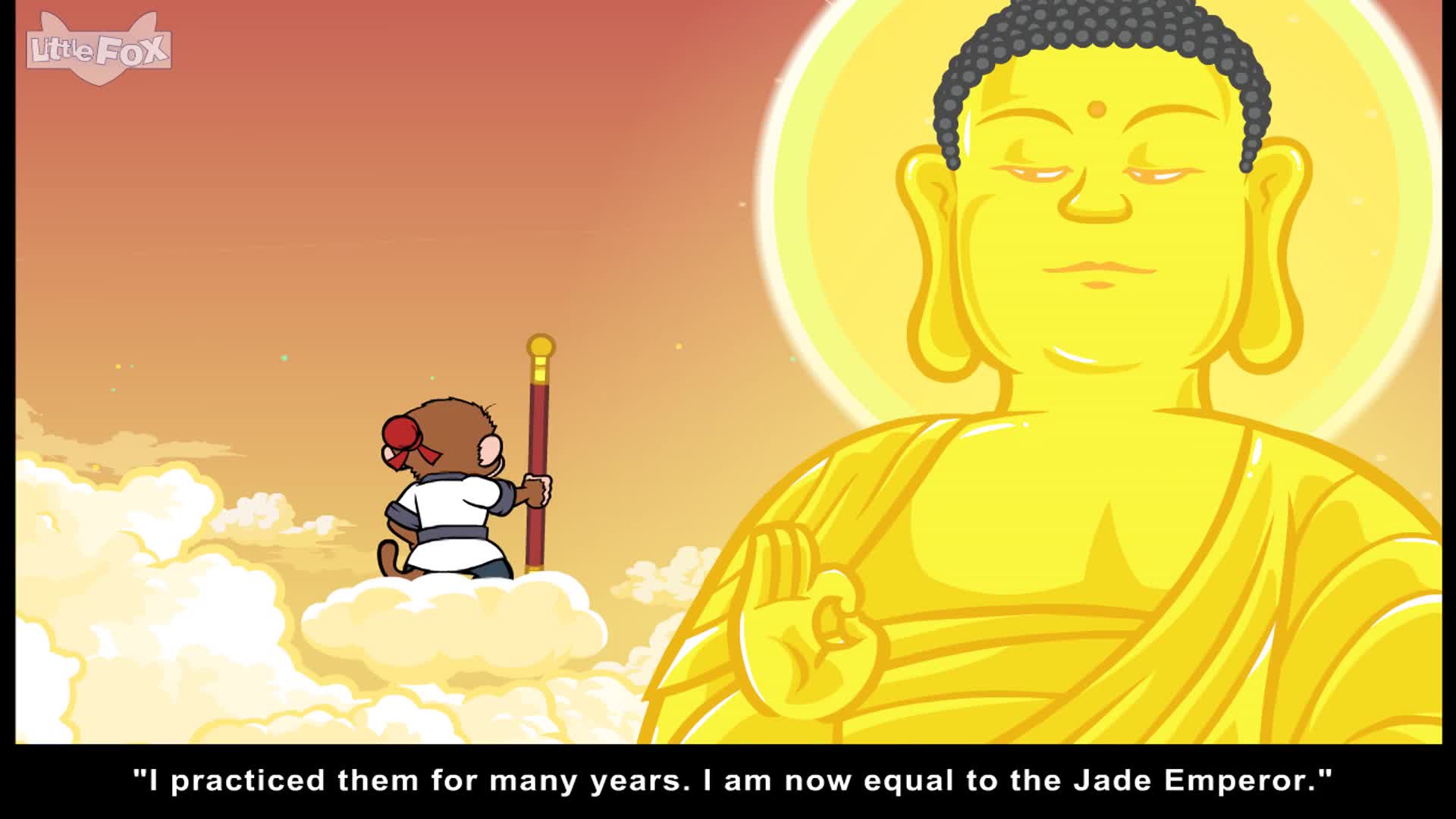
The narrative begins with a direct confrontation between the defiant Sun Wukong and the serene Buddha. Wukong, emboldened by his perceived mastery of "secret formulas" practiced over many years, boldly declares himself "equal to the Jade Emperor." This claim of equality is met with a stern rebuke from Buddha, who highlights the vast discrepancy in their experiences, noting that the Jade Emperor has been refining his own practice for "many lifetimes." Despite Buddha’s warning to "go back to your mountain" and "behave yourself," Wukong remains steadfast in his ambition, asserting, "I'm not leaving until I get to rule heaven."
The Terms of the Bet
Recognizing Wukong's arrogance, Buddha proposes a wager to settle the question of authority. The stakes are absolute: if Wukong succeeds in jumping off Buddha’s hand, he will become the ruler of heaven, and the Jade Emperor will be displaced. Conversely, if he fails, he will be "punished severely." Wukong, confident in his ability to "soar through the sky on clouds" and "jump across entire oceans," dismisses the challenge as laughably simple. He views the task as a trivial exertion of his power, firmly believing that he can "jump farther than you could ever imagine."
The Illusion of the Edge of the World
Upon leaping from Buddha’s palm, Wukong travels a great distance until he encounters "five enormous pillars." Convinced that he has reached the "end of the world," he experiences a moment of triumph, declaring, "Heaven is mine!" In a display of his characteristic mischief and desire for validation, Wukong decides to leave a mark. He utilizes his transformative powers, turning "two hairs" into a "brush and a jar of ink," and inscribes the message, "Son Wukong was here," upon one of the pillars. This act of marking territory serves as his definitive proof of reaching the cosmic boundary.
The Reality of the Palm
Upon returning to Buddha, Wukong demands that the Jade Emperor vacate his throne, certain of his victory. However, Buddha’s response is one of calm correction: "You never left my hand." When Wukong protests, citing his journey and the physical evidence of his graffiti, Buddha directs him to look down. To Wukong’s horror, he finds his own note, "Son Wukong was here," inscribed at the base of Buddha's "middle finger."
This revelation shatters Wukong’s reality. He attempts to dismiss the experience as a "trick" or "some sort of magic," refusing to accept that his vast travels were contained entirely within the span of Buddha’s palm. Wukong’s inability to grasp the vastness of the divine compared to his own limited perception marks the turning point of his rebellion.
The Weight of Divine Justice
Having lost the bet, Wukong faces immediate consequences. Buddha executes his punishment by transforming his hand into a mountain and placing it directly upon the monkey. Though Wukong attempts to resist, "grunting" and pushing with "all his strength" to lift the mountain, his efforts are rendered futile by a "small sheet of magic paper" placed by Buddha. This seal pins Wukong firmly to the earth, trapping him beneath the weight of his own hubris. The story concludes with the definitive containment of the Monkey King, ensuring he remains "trapped until his punishment is over," serving as a stark reminder of the limits of mortal power against the infinite wisdom of the Buddha.
Deep Learning with ListenLeap


