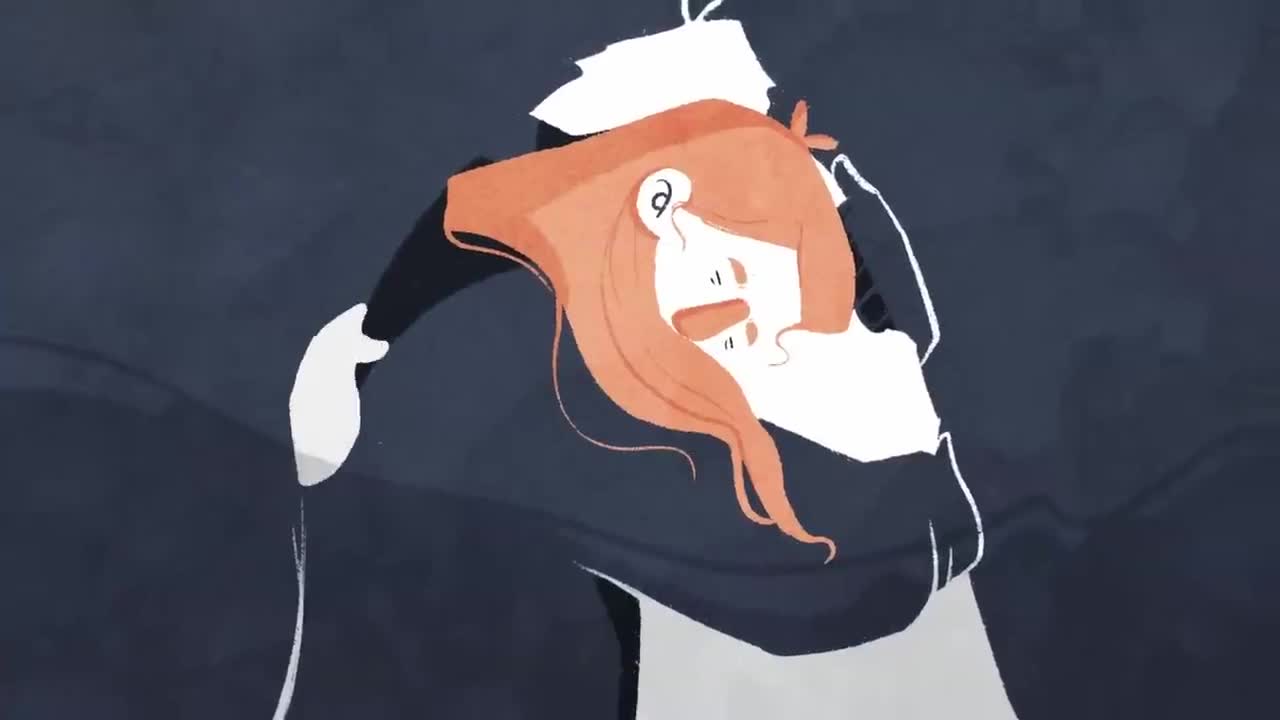
It is a permanently, extremely curious idea, that love, the thing we think we crave and miss so much when we're alone, might frighten us, that we operate, all of us to some degree, with a fear of engulfment.
We might have met them a month ago, perhaps four or five.
We went in at high speed, bored of the usual compromise and cowardice.
We quickly exchanged I love yous and may even have mentioned marriage.
But now they're fully on board.
The barriers are completely down and we, much to our embarrassment, are feeling unusual.
The fear doesn't manifest itself as fear exactly.
We're a mixture of numb, nauseous, and frightened, all without apparent cause.
Someone is in the background trying to feed us something of uncommon sweetness, and we are queasy.
They brought flowers last night.
Whenever the phone pings, we hope it might be someone else.
The nickname they have for us, once so welcome, now feels like a burden or demand.
We have told all our friends and booked a holiday next month, but we deep down want, to our profound embarrassment, to run away.
Not for the first time, we wish there were a service that could, no questions asked, teletransport us to a new life on a different planet.
The difficulty lies in how impossible our message to them is.
We would ideally like them to love us a bit less in order that we be able to return their feelings.
We wish they could be a little more distracted, a little busier, a bit less responsive.
Could they be somewhat meaner?
We need, as a first step, to understand what is at play.
Almost always, it's a question of our childhoods.
This is a logical panic, given where we've come from.
In order to survive, we once had to put up a very high wall between ourselves and anyone who might come close.
We might be quite funny and charming, we might sincerely crave company, and yet we made a refusal to rely on others a central feature of our characters.
We had no choice.
Had we remained at ease around sincere connection, we would have been devastated by Dad's rages or Mum's sarcasm, the favouritism shown to our sister or our brother's illness.
Our nausea is an understandable panic at having to surrender the suspicion and independence that got us through life until now, at having to give up the paranoia that helped us to survive.
There is the option of fleeing and starting again.
We might pick on something halfway believable to legitimate an ending.
They were too serious, they looked a bit wrong, they didn't share our tastes in music, or their friend sided with the wrong political factions.
We might spontaneously feel their eyes are too close together, or their forehead is too high.
We can take up many decades on this sort of rigmarole.
But more interesting would be to grip the fear of engulfment and try to tame it.
We need to start by finding a way, however halting, to discuss what's going on.
I don't hate you, I'm just a bit strange.
Love, when it's returned, feels alarming.
People can understand a lot once they're given a chance.
We need some practical steps too.
Every night together won't be a good idea.
Space becomes important.
Not sharing a bed is fine.
We can carefully explain our choices.
This isn't about not loving.
It's about our fear of dissolving.
We're doing this not because we don't care, but because caring a lot is bound up with the terror of losing our capacity to survive alone.
It helps if, as is almost always the case, there are in fact two people who are frightened of this.
Too often, the blame for the fear gets attached to the person who is more, if only marginally, scared than the other.
They then have to carry the weight for both of them.
They get labeled the evasive one, while the other gets to bask in a private glory of being unceasingly up for love.
We need to strive to be fair.
This is both of our problems.
Finally, as so often, we need to laugh at the absurdity, a rich, redemptive laughter that helps to bind us.
We want them so much we don't want them anymore.
We're trying to love and we're scared of love.
We're in the here and now, and we're small children with pasts we can barely remember that make us do things we don't understand.
This is a matter for a hug, a confession, and a very dark laugh.