Discussion keeps the world turning.
This is Roundtable.
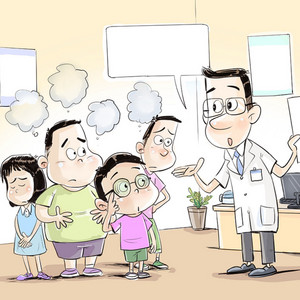
While children today face growing health challenges from nearsightedness to obesity, a powerful solution is emerging.
Personalized exercise prescriptions and community -wide efforts to get kids moving.
By combining medical expertise with fun, tailored activities, activities, doctors and educators are turning the tide on sedentary lifestyles, proving small changes can yield lifelong health benefits.
We are live from Beijing.
This is Roundtable.
I'm Steve. Thanks so much for being with us.
For today's show, I'm joined by Yushan and Yunqi.
First, on the program.
A silent health shift is happening among children, not from viruses or infections, but from missing ingredients in daily life.
I'm talking about movement and sunlight.
Clinics report summer surges in myopia cases, spinal evaluations, and obesity -related conditions, all tracing back to increasingly indoor sedentary childhoods.
But the response is gaining momentum.
Hospitals now issue personalized exercise prescriptions, schools are reimagining physical education, and entire communities are mobilizing to rebuild the simple, health -giving habits of outdoor play.
This isn't just about treating symptoms. It's about restoring the foundation of childhood health.
And I think we can say childhood fun as well.
Yunxi and Yushan, thank you very much for being with me today.
So let's get into it.
Yushan, you'll kick us off.
So let's talk about the landscape.
What's happening right now?
What health challenges are children facing today as they are in the midst of their holiday period?
As we can tell from recent news reports, there are children's hospitals that have been seeing a clear rise in pediatric visits lately, especially after the summer break.
And that's also reported by the Xinhua News Agency as well, that this jump in numbers suggests that many health issues tend to surface or just get addressed during school holidays, making that time a key window for intervention.
So doctors are already noticing a wide range of problems from, from, say, a spike in myopia, that is near -sightedness, meaning that a lot of children now are wearing glasses earlier than they used to be.
And also other issues include spinal issues and also obesity.
So all of these physical conditions, they are having a growing impact on children's development and overall well -being.
One example shows up in Chongqing Medical University's Children's Hospital in the city of Chongqing in southwestern China.
and there Dr. Liu Xing, an orthopedic specialist, he now sees around 80 young patients a day and that is more than 20 of them coming in specifically for spinal checkups.
I've never heard of you know young kids having spinal issues when like 20 years ago when I was a kid.
And 25 percent of the of the young kids coming into the hospital of the 80 are there for spinal exams. Yeah.
That's a a little alarming, isn't it?
Is it simply about physical issues or are there other issues too?
Well, actually, there are also mental health concerns because we've seen from previous reports, and I think it's been going on for more than just a year in recent years continuously, that depressions, anxiety, you know, things related to mental health among young kids is It's also being spotted.
And I think, yeah, Yunshi, I'm not sure if you've done more readings about that.
I think it's like something that people are quite concerned about nowadays.
Yeah, it makes sense to say that children these days have more physical issues because we are not getting enough sunshine, outdoor activities.
But to talk about now they're also suffering from mental health issues.
That's actually very alarming, as Yushan put earlier.
Some children are experiencing depression, anxiety, the kind of conditions that perhaps only in the past only adults would experience from the work stress.
You tend not to associate those issues with kids, with children, right?
There are also metabolic disorders like type 2 diabetes and also growth issues too.
Preschool myopia. You mentioned it, Yushan, that it used to be rare.
Right. But now it's becoming commonplace almost. There are really rising myopia rates, nearsightedness rates that are that are climbing.
And that's not a good thing either.
At some hospitals, outpatients, endocrinology branches, that's where they study hormones and glands.
And the departments there, they've been observing various growth and development diseases.
Precocious puberty is among those where kids will hit puberty at an earlier age, maybe around eight or nine years old.
And again, to mention it again, type 2 diabetes.
diabetes. These, just quickly on this part though, these are not health issues that develop overnight.
So what's the connection to summertime then?
Indeed, it's like they're becoming a parent who are addressed, especially during summer vacation, because we know that back in school, kids are kind of following like a school schedule on a daily basis that's scientifically organized by school and educational administers.
But nowadays, experts explain that these issues, they accumulate with holidays providing such a window for examinations and just medical examinations and treatment.
So that's causing the patient surges as well.
Yeah, I guess that makes sense because kids are really busy during their school days.
So during the holidays is the time when you get the necessary checkups, right?
That being said, though, these are pretty serious health issues for young people to deal with.
So what are the reasons behind these?
One major major reason, I think, is just the lack of physical activity.
And many doctors are saying the same.
That is one common thread behind these various health issues among school kids.
So doctors across the board are pointing to increasingly sedentary lifestyles as a key contributor.
That means that they just sit for too long.
It's kind of like, you know, office workers nowadays, we all sit too long.
But for kids, that's really just highlighting how much staying inactive is affecting their general health, their holistic health in general.
Sitting in the chairs in the classroom for a long time, then sitting after school, doing homework for a couple of hours a day, then playing games or however they spend their free time, right?
Yeah, and that's one condition that Yushan earlier brought up that's contributing to a very rare problem taking place in the younger generation, which is the spinal problem that kids are experiencing, their spinal issues.
And so this chief physician Liu Xin has explained that this prolonged slouching, the usage of phone time and the lack of movement, just keep standing this sedentary lifestyle, keep sitting for a prolonged time will cause posture issues that can lead to various problems if not prevented and demediated by physical activities i think scoliosis is the word right where your spine curves in a sideways kind of way and that's the connection between this the the spinal issues and the phone use right because you're constantly staring down at your phone your shoulders are slumped forward and when we do that right
now we can feel that our spine tends to curve in that position.
And if you're doing that for hours and hours on end, that's going to create an issue over time.
And yeah, I was just chatting with Steve before the show that back in the time when I was a kid, let's say, the teachers, the parents, they will scold you really hard if you just, you know, crotch your back or you're not sitting straight, you're not standing up straight.
But nowadays, I would assume the case is very different so that the parents, they don't really, say, give a standard posture for the kids to maintain.
We even have something that's like a ruler that stands vertically on top of the table in order for your chin to get higher than that ruler so that you can sit up straight in class when you're sitting down.
That's something that we used to have back in, say, early 2000s, early 2010s, but nowadays I'm not sure if they're still practiced in the same way.
difícil difficult to look at your smartphone if you've got that ruler thing holding you're holding your chin up well i used to just put my chin on top of that ruler as a way to support as a way to take a break yeah um near -sightedness uh that's an issue too and there's a connection between that and the eye exposure to sunlight that children are apparently lacking yeah that was so surprising when i first heard about it it's something so enlightening as well Because when you receive sunlight, like for example, the morning lights, it's a signal that tells you or rather your brain when to wake up
and sleep. And because sometimes our body just knows in a way that no sun equals tired or groggy days or just a feeling of, well, letting go, I'm feeling low.
But this connection to our eyes is kind of working the same because sunlight, light especially morning light it triggers your retina to signal your brain's body clock it's time to wake up it's time to rise and shine i didn't know that about about our eyes the importance of sunlight with yeah setting your body clock okay helping you wake up in the morning but i didn't know that it helps kids eyesight develop as well like outdoor play will help kids grow proper eyes eyes grow properly and that'll reduce that nearsightedness.
And that's something that I had never heard of before.
Yeah. You know, I am the only person in the studio right now that wears a pair of glasses apart from our editor and both Yun -Chi and Steve, you guys don't wear glasses.
And I remember when I was nine year old, when I was first told by the doctor that, hey, he was telling my mom that your kid definitely need a pair of glasses because her eyesight is falling and and one recommendation that he said if you can take her out say in inner mongolia and farm the sheep for like a month just look afar stop staring at something as close as right on your desk but look from afar to the other side of the hill or grassland you can stay that for like a month or two and then her eyes said welcome back that's a very common practice in the chinese schools it doesn't matter elementary
high schools it's very common practice for the the teachers to remind the students and children to put down their textbooks and then stare look at things that are far and green that's a very common practice in China interesting thing Canada no I don't think it's disgust I don't think it's something that teachers mentioned to the students at least not when I was in school that's interesting to know though there's also a a connection with obesity, with early puberty, as we mentioned, and type 2 diabetes.
So this is kind of a chain reaction connected with insufficient physical activity and overeating, according to the doctors?
Yeah, there's one associate chief physician called Zhu Gaohui, who clarifies that, well, beyond genetic factors, obesity, it can also lead to precocious puberty, that's early early puberty, like kids developing earlier than usual, and also a lack of exercise can hinder growth hormones to just have the kids to grow up on time because sometimes it impacts the height of a children, for example.
So obese children, they often develop multiple metabolic disorders, increasing type, like you mentioned earlier, Steve, type two diabetes.
diabetes that's kind of heartbreaking for me to see.
Yeah it is and it's also maybe a little shocking for people to hear that a lack of physical activity can lead to all of these problems. There's the emotional side of things as well if you don't have enough physical activity for kids then you can that can lead to specific learning disorders it can lead to anxiety and depression depression, and that may lead to other more serious things like motor dysfunction.
Emotional disorders, they say, are indirectly related with low energy and social withdrawal as key symptoms there.
I think this is a vicious cycle then, isn't it?
Because all of the things that can happen when you don't exercise actually makes exercise harder to do.
Yeah, it's also agreed by the doctors as well, because Dr. Zhu Gaohui also knows that obese children, they strain heart, lungs and joints during activities and making them less willing to exercise, even though they realize that they are, say, of a larger size and they really need to exercise a bit more.
And also other experts, they add that children with motor dysfunction or neurotransmitter imbalances are also reluctant perpetuating this cycle, which means that, yeah, it's just hard for children that already has this condition to get motivated into exercising.
And we can understand that quite simply, right?
Because a lack of physical activity leads to the kids maybe not feeling so good either emotionally or physically.
And when you're not feeling good emotionally or physically, the last thing you want to do is get up and run around and move your body, right?
So that's where this becomes a cycle.
What about other external factors like, I don't know, maybe academic pressure, maybe just the environment in general, or maybe even the ideas of how sports or physical activity is approached when talking about children's willingness to do it at all?
I think for a very long time, the academic pressure has been the predominant factor for why our younger generation is having less time outdoor and spending most of their time indoor.
And that's been raised a lot of discussions and a lot of people are paying attention.
I think our bodies are kind of elastic.
The reason why students spend most of the time studying is that they want to get higher grades.
But then people are realizing we need to give our body some resting time in order for us to better study and achieve better results And there's a Xinhua News Agency report encouraging that more students engage in physical activities Actually it's a warning that students engage in these physical activities When they do this, they are primarily doing that for PE tests But actually they're not doing these activities for fun or for enjoyment.
We'll get to the PE classes in just a minute because I want to talk about that a little bit.
But what about outside of the classroom?
I think we can talk about the environment in the community, right?
Having places for kids to go and play as well.
That might be an issue, a lack thereof, so to speak.
One very vivid example I can raise on that is when I was a kid, There's like a small playground that's deliberately set there.
It's like a vast space for kids or adults to just engage in some actual physical activity.
But guess how that place is used nowadays?
It's adapted to park bicycles so that more spaces can be saved for cars to park inside the community.
So that's kind of a thing that reminds us just how lack of suitable environment and access to sports facilities can possibly make it difficult for children nowadays to find places to exercise yeah find places to actually be active right and i think we can use beijing or or any big city around the world it's hard to find a spot that is safe and suitable for for children to play right we know that in beijing there are parks everywhere but even if If the park is, say, let's say it's a 10 minute drive from your house, which is really close.
But if it's evening time, mom and dad come home from work and the kids are ready for playtime, you know, gathering everything up and getting everything in the car.
Even that short little drive can seem undoable for families, I would think.
Same for schools. We know schools, they usually feature large playgrounds.
But when it's off school time or in weekends or in vacations, it's, you know, Chinese schools, they're usually just shutting on the door to prevent any safety concerns happening.
You know, just people from nowhere entering the school for no reason.
That's something we don't want to see and that's some risk we don't want to harbor.
But in the meantime, we're losing such a great venue for kids to run around.
Yeah, I mean, when I was a kid, now mind you, this is rural Nova Scotia, Canada, right?
Right. Our elementary school playground was the place that was the place for all the kids in our community to go and play outside of school hours because it wasn't gated off.
It wasn't closed to the community.
You couldn't go in the school.
The doors were locked, but you could make use of all the playground equipment and the soccer field that was there for us to play in.
So but not a fair comparison because Tatamaguchi is not exactly Beijing in terms of population.
Yeah, the way that I'm looking into this, I'm thinking that do we really need to have like a specifically designed playground or venues for kids to have fun?
Because if I look back into my childhood, like kids, we can play anywhere, anytime, as long as we have the time and space and the buddies to chase after each other.
and I think these days a more serious issue is perhaps because of the social culture changing that children are spending a lot more time they're used to spending their time in the virtual world yeah with their buddies chatting over the microphone it's true and actually I think the kids are lacking social skills and when children they face these psychological barriers that could make them avoid physical activities these anxiety disorders may often make children avoid avoid group activities, missing opportunities for emotional release and peer interaction.
Yeah, those are fair points too, because kids often play games.
That's how they interact with their friends a lot of the time these days, right, is online.
And that could be part of the problem too.
All right, enough about the problems. Let's see if we can find a solution here.
I mentioned it when we got started today, an exercise prescription.
Tell us what that is.
One very very good example is that at Chongqing Children's Hospital different departments they have come together to launch what you just mentioned the exercise prescription.
It's basically a medically guided plan to encourage physical activity among school kids especially for those who are who aren't getting enough movement.
So an exercise prescription is a joint initiative by children's hospitals, and also the departments that's aligned to it, to provide targeted guidance for physical activity.
And basically, it shows just how hospitals, they are now taking a more proactive role in getting kids moving.
So what exactly is it that they are recommending then?
One main advice is that kids, they need to aim for one to two hours of outdoor physical activity every day.
So So this idea is to keep them moving regularly and to get enough natural sunlight when the sun is still out, which kind of supports both physical and mental health as well.
Is that reasonable, do you think, for a young Chinese student, elementary, middle, high school?
I guess we're talking about younger kids here today, but is that a reasonable amount of time, do you think, one to two hours of outdoor physical activity a day?
it sounds very doable, right?
But I'm trying to think from the busy family point of view.
I wonder if that's an achievable goal playing outside for an hour or two every day.
It's a very hard to achieve goal.
I'll just put it in this way because I would imagine that after school, it's hard for both the family and the kid to find a reasonable amount of time not doing homework, not having family time together and just simply go out.
Of course, as going out and maybe play um play games or by that i mean physical pe games and also like just hanging out with your parents can be a way for spending your family time off school but most of these as far as i know happened during school days nowadays some schools in china they're trying to reduce like um just course time or maybe canceling one course per day in order to fulfill that time just pour it into exercising time they don't even name it PE class anymore for some cases so that's something that we can think of and just really how it can be implemented nationwide one to two hours
of outdoor activities is definitely doable depending on how you look at this formula because if the children the parents or the teachers just tell the children tell the kids to just go out play find your buddies that that's like entirely playtime with their peers but um outdoor activity can also be an active participation participation from the parents as well so parents can try to make these outdoor activities like a quality family time just like what my parents they that what they do that they are used to taking a after dinner post dinner uh short walk every day and that already takes at least
45 minutes to an hour of time just to finish a loop around the inner city circle.
And that can count, that will push your children to go out for some stretches.
But at the same time, it also creates a bonding time between the parents and the kids.
That's the added bonus.
Yeah. And you mentioned stretching, right?
So in terms of this prescription, this exercise prescription for the children with the more serious health issues, for example, scoliosis we talked about before, they prescribe stretching for that.
For nearsightedness, they say that badminton or table tennis can really help with that.
We've heard that too.
Yeah. Yeah. Table tennis can help with nearsightedness.
If kids are overweight for the obese children, water activities are really good.
That's part of the prescription because it helps relieve joint pressure.
And then for hand -eye coordination, for it helps with hand -eye coordination with learning disorders as well.
Gentle exercises are also recommended for emotional issues, kids with emotional issues.
So there's lots being prescribed there for very specific reasons.
And one last prescription with a bit of a Chinese characteristics, I'm not sure how common is this outside China, is that we are often told in China that looking at green green things, objects that are far help with releasing and easing the pressure of your eyes and eye fatigue.
And I was wondering, I've been wondering, is this a myth?
We've been just doing this without reasoning how scientific it is.
But actually, so green color does help we ease eye fatigue.
So green sitting in the middle of the light, the visible light spectrum is more friendly to human eyes compared to red and blue on the two ends of that spectrum.
So looking at green objects like greenery, just grass, trees, do help with your eye fatigue and maybe help with your nearsightedness.
Kids, if you're listening, that probably doesn't mean having a green background on your smartphone.
Or a green oar, fighting a green oar.
Yes, exactly. You mentioned you cheat parents and the importance of, of parents being involved as well.
I think you're absolutely on point, you know, talking about going for a family walk after dinner, something like that.
Sure. You get the benefit of bonding time.
You can have the talking time with your children, but being a part of the physical activity, there's a huge difference between telling your kid, okay, it's exercise time.
Oh, you got your prescription, right?
We have to follow the prescription there's a difference between that and saying showing them yeah exactly doing it together saying you know i'm i'm being your role model here in a sense without saying it outright um lots of lots of advantages to that yeah one thing that personally i feel so resonated with is just simply avoid a utilitarian mentality stop thinking that pe class is so it's all it's all for tests, it's all for the PE exams. You need to meet the criteria in order to blah, blah, blah.
There's no, say, amount of value that you can measure in terms of a holistic health, starting from a young age.
And as you grow up, the kids, they can encounter much more.
And without a very basic foundation of good health as their foundation, it's hard for them to just face all of the difficulties in life, I guess.
So it's really important for kids to have such a condition given to them when they're young and also for parents and also school teachers, I'll say.
Stop labeling kids as, oh, he is or she is not good at PE and putting certain kids within certain groups and just labeling them as good at PE or bad at PE because PE is just a class.
It doesn't mean that they can't find that physical exercise that's suitable for them.
Yeah, this is what I wanted to say about the PE classes is that they can be tough for some kids because if you have issues with self -confidence about sports, right, this can be really anxiety inducing time for a young person if they're afraid to do these activities in front of their peers in front of their classmates right and not just the time of doing it it's the lead up the lead up to the class right that's going to be anxiety inducing time as well so making things inclusive i think is is a really important part so that everyone can take part even the kids who aren't so confident make make
sure that they're there to have a good time as well just as a final point we talked about you know what parents can do maybe even a little bit what about what teachers can do?
What about the community?
What about the government even?
How can help come from there?
Yeah, now that we are talking solutions, earlier I said there was one prescription that's China characteristics, but perhaps be universal.
And now there's something that's a solution that might be more China specific, is that we may know that maybe not not just in China, but overall in East Asia, the schooling pressure, academic pressure may be higher than the rest of the world.
And the educational authorities in China, they are taking steps to reduce the academic burdens, freeing up that free time for physical activities because for a very long time, Chinese parents have been stressed, schools, teachers have been stressed, Stressful.
Kids have been stressful.
Summertime is for extra homework time.
Right. So everybody is rushing to get on top of that ladder.
And we know there's this stadium effect that imagine everybody, we are all sitting in a theater watching a movie.
That people at the front row, they stood up to get a better view.
Then people in the middle and at the back, they all have to stand up.
And then eventually everybody is standing up.
We are watching the same thing, but everyone is in discomfort.
So the educational authorities, they're taking steps to reduce this kind of maybe not so meaningful competition between kids, schools, to give the time back to the kids.
And they're mandating pretty strict control over summer homework.
They're curbing holiday tutoring and delayed vacations.
And they're also discouraging smartphone app homework to help reduce the screen time.
Because what's the difference if you're watching or doing your homework on your smartphone versus playing a game on your smartphone?
You know, your parents will say, no more smartphone.
Mom, I'm doing my homework.
Okay, well, what can you say about that?
Yeah. Any final points, Yushan, before we put a bow on this one today?
Yeah, just many local education departments, they are fully leveraging public facilities and resources in order to offer such a diverse summer activity for the young kids.
They try to utilize public facilities like museums, cultural centers, sports venues for just diverse summer activities and just welcome more children and parents and families to engage in this summer outing.
Bring your kids out.
Don't always stay at home.
The homework is just one very small facet of their life.
They need to get out and just get that holistic experience of life.
You're listening to Roundtable.
My name's Steve. I'm with Yushan and Yunqi today.
Please do stay with us.
We have a lot more on the way.